Reviewed · KYOTO TOURS
Roketsu dyeing experience: M course Roketsu Dyeing Experience
Roketsu dyeing gives you a chance to make a Kyoto keepsake with your own hands, not just buy one. At Roketsu73, you choose a fabric item and a design, then work through the craft with help from the owner and his mother, Yoko. The result is personal, and the process offers a welcome change from temple visits and long walks.
Two things I like here are the hands-on control and the same-day souvenir. You can choose from a large range of stencils or bring your own sketch, and the instructors guide you without requiring artistic skill. One consideration: English is limited, so some explanations may be hard to follow, though the work itself is demonstrated and practical.
At a glance
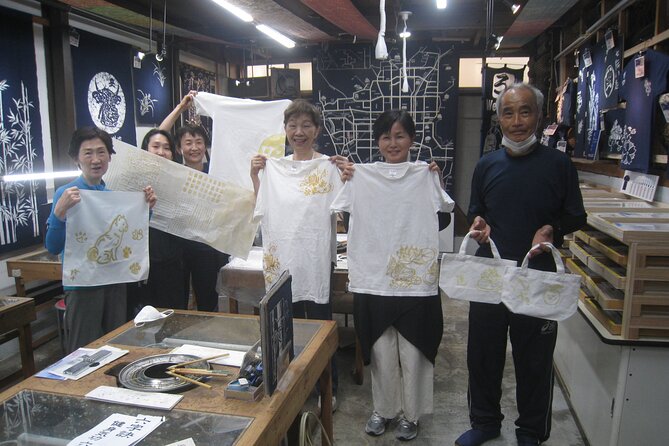
- Choose your own design: Pick from many stencils or bring a sketch for an original piece.
- Make a wearable or display item: Options mentioned include T-shirts, tote bags, and banners or wall hangings.
- Learn by doing: You apply the wax design yourself, with guidance through the process.
- Plan for more than the minimum: The session is advertised at about 90 to 120 minutes, but intricate designs can take around three hours.
- Take it home that day: Your finished item is ready to leave with you after the workshop.
- Good value for a hands-on activity: The listed price is $25.77 per person, and the workshop is capped at 30 participants.
A Kyoto craft break, not another sightseeing stop
This workshop takes place at Roketsu73, in Ukyo Ward, away from Kyoto’s main sightseeing areas. That setting is part of the appeal. You get a few hours to focus on a craft rather than move from one landmark to the next, and you leave with a souvenir you helped make.
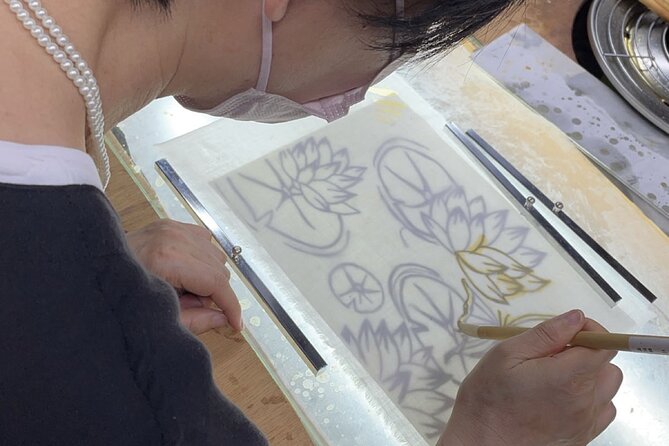
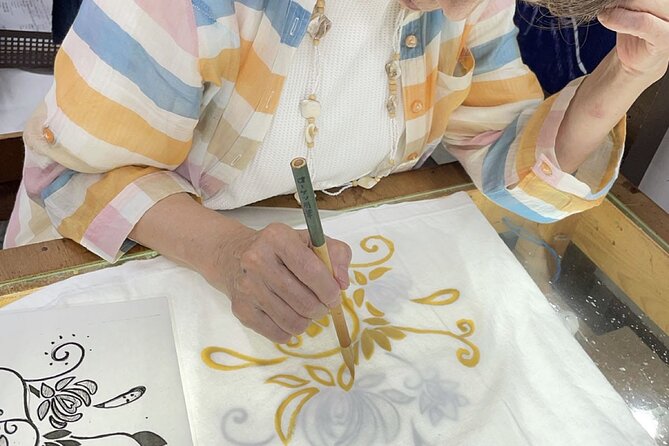
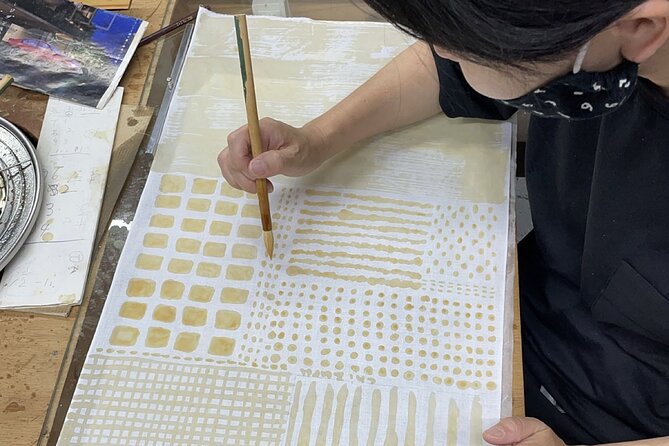
The activity is based on Roketsu, a traditional Japanese wax-resist dyeing craft. You draw or trace a design, apply wax to the fabric, and take part in the dyeing process. The wax creates a resist, helping form the pattern in the finished cloth. The workshop is designed to let you do the work yourself, while the instructors provide help as needed.
This is not an art class where you need to arrive with a steady hand or a portfolio. You can use one of the many available stencils, and the instructors can guide you toward a result that works. If you do have a sketch of your own, you can use it to make a more personal design.
More Kyoto tours in Kyoto:
- PERFECT KYOTO 1-Day Bus Tour
★ 5.0 · 13,518 reviews - Kyoto: Fushimi Inari, Kinkakuji, Bamboo Grove 1 Day Bus Tour
★ 4.8 · 4,316 reviews - Kyoto: Tea Ceremony in a Traditional Tea House in Kiyomizu
★ 4.9 · 3,519 reviews
Choosing a stencil, shirt, bag, or hanging
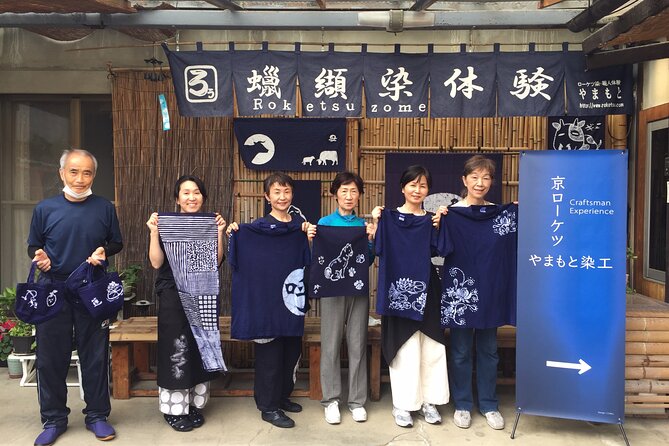
The first decision is what you want to make. T-shirts, tote bags, and decorative banners or wall hangings are among the options described for the workshop. The exact item available to you may depend on the course selection, so check what the M course includes before booking if you have a particular piece in mind.
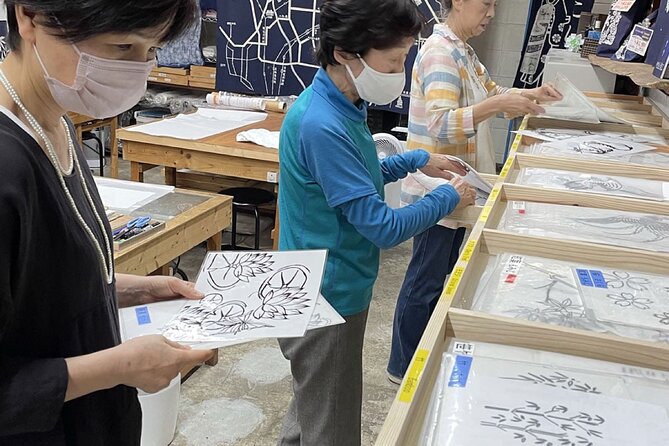
Next comes the design. The studio has a large selection of stencils, with hundreds of designs described by participants. You can select one pattern, or combine elements to create a more individual composition. If you have your own sketch, the studio can help you work from it.
That choice makes this activity flexible. A stencil gives you a clear starting point and can help if you are unsure about drawing. A personal sketch gives you more freedom, but it may also take longer to prepare and apply. Detailed designs can push the visit well beyond the advertised two-hour window, so keep the rest of your schedule loose.
Before beginning on the final item, you may practice on a small piece of cloth. This is a useful step: it lets you get a feel for the technique before committing your design to the fabric you will take home. The instructors can show you how to approach the work and offer help when you need it.
Applying wax and watching the pattern take shape
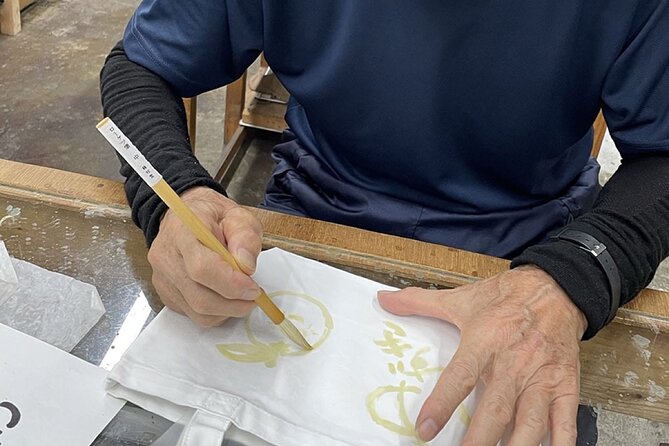
The central task is applying melted wax to your chosen design. This is where you move from selecting an idea to making the textile your own. The process is hands-on, but you are not left to guess your way through it. The owner and his mother Yoko are described as patient guides who demonstrate the steps and give support at a pace that suits the work.
The practical nature of the class helps bridge the language gap. The instructors speak limited English, and that can make a detailed explanation confusing at times. Expect some instructions to be shown rather than fully explained in words. If you are comfortable watching a demonstration and following along, that should be less of a barrier; if you need detailed verbal instruction at every step, it may feel less straightforward.
You remain involved throughout the design work, while the dyeing process is part of the workshop’s full method. The craft has an element of uncertainty: the final result can vary with the conditions and the way the work comes together. That is part of what makes each piece individual. Do not expect a machine-made finish or an exact replica of a sample.
You do not need prior craft experience. The activity is suitable for beginners, including families with children, and the guidance is intended to help you get a good result even if you are not especially artistic. The best approach is to take your time, ask for help when you want it, and enjoy the making rather than aim for perfect lines.
How long to set aside
The stated duration is about 90 to 120 minutes. That is a reasonable planning estimate for a straightforward design, but it is not a hard stop. More elaborate designs and larger family groups can take longer. Some participants have spent about three hours working through detailed designs, without being rushed.
I would set aside at least two hours and avoid booking a tight connection or another timed activity immediately afterward. The workshop is meant to be calm and unhurried. A little schedule slack means you can choose a design you like rather than rushing through the part that makes the souvenir personal.
When the piece is finished, you can take it home the same day. That is a real advantage on a short Kyoto visit: there is no need to arrange a later pickup or wait for delivery. Just remember that your finished item may need to be packed carefully alongside the rest of your trip belongings.
Same city, a different side of it:
- Kyoto Geisha Walking Tour: Gion District & Hidden Gems
★ 4.7 · 3,273 reviews - Kyoto: Tea Ceremony Ju-An at Jotokuji Temple
★ 4.9 · 3,207 reviews - Kyoto: Gion Magical Night Walking Tour with Geisha Trivia
★ 4.9 · 2,393 reviews - Kyoto: 45-Minute Tea Ceremony Lesson Experience
★ 4.3 · 2,378 reviews
What the $25.77 price buys you
At $25.77 per person, this is an affordable way to spend a couple of hours on a cultural activity and leave with something you made. The value is not only in the finished fabric. You also get time with a local craft process, step-by-step help, and a break from the usual pattern of walking, listening, and taking photographs.
The final item gives the workshop a practical payoff. A T-shirt or tote can be used; a banner or wall hanging can become a reminder of Kyoto at home. It is a more individual memento than a standard souvenir, though the price and included materials should be checked against the specific M course details if you have a preferred item.
The workshop accommodates up to 30 participants. That is the maximum, not a promise that every session will have that many people. If a hands-on craft feels most comfortable in a smaller group, ask about the expected group size for your date when booking.
Who will enjoy this workshop most
This suits you if you like making things, want a slower activity between sightseeing days, or would rather bring home a personal souvenir than another shop purchase. It also works well for families: children and teenagers can take part, and family members can choose different designs or items. A six-year-old has joined a session, and a family group of six spent several hours making shirts and a banner.
You can also book on your own. The activity does not require a companion, and the studio’s guided format gives you a clear way into the craft even if you arrive without an artistic plan. If you are traveling with someone who prefers temples and museums, this can be a useful separate activity while they choose another outing.
It is less ideal if you have only a short window, dislike hands-on work, or need extensive spoken instruction in English. The craft is tactile and deliberate, not a quick demonstration where you sit back and watch. The language limitation is worth weighing, but the process is visual enough that many of the steps can be followed by observing and doing.
Getting there and booking with a little breathing room
The meeting point is Roketsu73, Nishikyōgoku Umazukachō, Ukyo Ward, Kyoto, postal code 615-0885. The workshop is near public transportation and is described as easy to find, though it is outside Kyoto’s main tourist areas. Allow time to reach the address rather than assuming it is beside the central sights.
Book ahead, especially if you have a particular date or are traveling as a family group. Confirmation is provided within 48 hours, subject to availability. The ticket is mobile, and the activity ends back at the meeting point.
The stated cancellation terms allow a full refund if you cancel at least 24 hours before the start time. Changes or cancellations inside that window are not accepted for a refund. The activity also requires good weather; if poor weather forces cancellation, you are offered another date or a full refund.
Should you book the Roketsu dyeing experience?
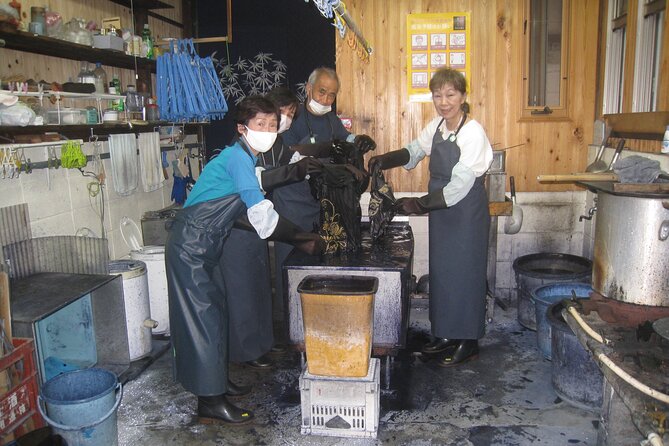
I would book this if you want a Kyoto activity that is both cultural and genuinely participatory. The strongest reasons are simple: you make the design yourself, the instructors are there to help, and you can take home the finished piece that day. At $25.77, it offers good value for a guided craft session and a useful souvenir.
Choose a simple stencil if you want to stay close to the two-hour estimate, or bring a sketch and allow extra time if you want a more personal project. If you are comfortable learning through demonstration and can work around limited English, this is a thoughtful, low-pressure break from sightseeing. If you need a tightly timed outing or detailed English instruction, look for a different fit.
FAQ
How long does the Roketsu dyeing workshop take?
The session is described as lasting about 90 to 120 minutes. Detailed designs can take around three hours, so leave extra time if you want to work at an unhurried pace.
Can I bring my own design?
Yes. You can bring a sketch and use it to create an original work. The studio also has a large selection of stencils.
What can I make?
Items mentioned include T-shirts, tote bags, and banners or wall hangings. Check the M course details if you want to confirm a specific item before booking.
Do I need art or craft experience?
No prior experience is required. The instructors guide you through the steps, and you can choose from stencils if you do not want to draw a design freehand.
Can I take my finished item home that day?
Yes. The workshop says you can take your finished work home on the day of the activity.
What happens if the workshop is canceled because of bad weather?
If poor weather causes the activity to be canceled, you are offered a different date or a full refund.
Newly added in Kyoto
- Uji: Private immersion into Kyoto’s tea and reglious culture★ 5.0 · 17 reviews
- Whisk Your Own Matcha: A Zen Matcha Experience at Temple★ 3.6 · 7 reviews
- Treasures of Kyoto: Gion & historical Walking Tour★ 5.0 · 6 reviews
- Kyoto tea town for matcha lovers★ 5.0 · 16 reviews
- Kyoto Matcha Green Tea Tour★ 4.5 · 23 reviews
- Uji and Wazuka Matcha Farm Half Day Private Guided Tour★ 5.0 · 21 reviews
- Uji Tea Ceremony and UNESCO Heritage Walking Tour★ 5.0 · 20 reviews
- Utilising upcycled Matcha! Creating matcha incense (Uji, Kyoto)★ 5.0 · 6 reviews
Kyoto Tours, compared.


Fushimi Inari, Kinkakuji, Bamboo Grove 1 Day Bus Tour
Read our review →
Tea Ceremony in a Traditional Tea House in Kiyomizu
Read our review →
Kyoto Geisha Walking Tour: Gion District & Hidden Gems
Read our review →
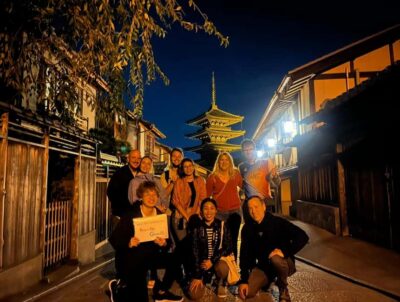
Gion Magical Night Walking Tour with Geisha Trivia
Read our review →