
Reviewed · KYOTO GEISHA TOURS
Kyoto Geisha Show Cultural Hour with an apprentice geisha, Maiko
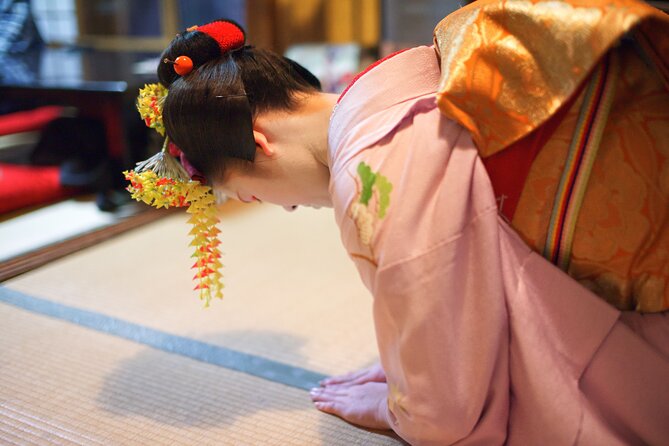
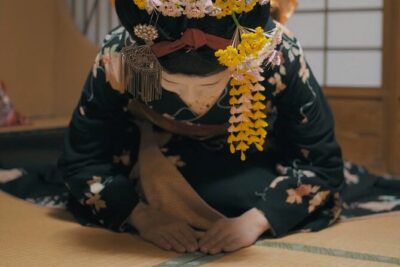
A maiko performs traditional dances and speaks with you directly in this small-group Kyoto experience. An English-speaking guide translates the conversation, so you can ask about her training, work, and daily life rather than simply watch from a distance.
I like two things in particular: the guide’s introduction to the geisha district makes the meeting easier to understand, and the Q&A gives you a chance to learn from the maiko herself. Guides Ken and Saya are named by participants as warm, helpful hosts, with Ken also leading walks past local theatres and agencies.
One consideration: the experience costs $105.42 per person, and the booking is non-refundable. It is also a short, focused introduction, not a long performance or a full evening of entertainment. You’ll get a close cultural encounter, but not an extended show.
Key points to know before you book
- The meeting is the heart of the experience: You have time to ask the maiko about her training, customs, and daily routine.
- Expect a short performance: The maiko performs one or two traditional dances, with one or two songs included in the show.
- The guide translates: An English-speaking guide helps bridge the language gap and explains the setting.
- The group is small: A maximum of 14 people keeps the session more personal than a large stage show.
- The walk adds useful context: The route may pass a geisha district’s theatres and agencies before you enter the venue.
- Plan for a firm booking: The experience is non-refundable, though weather or minimum-participant cancellations come with alternative arrangements or a refund.
A walk through Kyoto’s geisha district
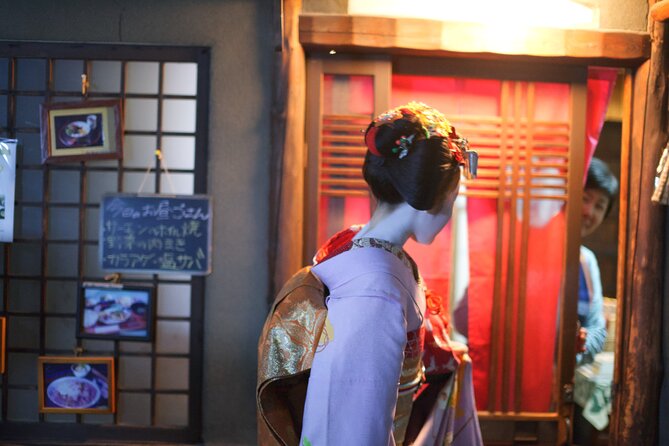
The experience begins at 5-chōme-182 Honmachi, with some sessions meeting near a shrine before the guide leads the group onward. The exact route described by participants includes a walk through a geisha district, past theatres and agencies connected with geiko life. That short introduction helps put the meeting in context: you see the neighborhood around the tradition before sitting down with one of its young practitioners.
Guides such as Ken explain the distinction between geiko and maiko, along with aspects of training and the customs of the district. A maiko is an apprentice geisha, and the conversation gives you a way to learn about her life and work from someone who is living it. The guide’s role matters here. Without translation and background, you might see a beautiful performance but miss much of what makes it meaningful.
The walk is brief, not a full neighborhood tour. Think of it as an orientation rather than a deep exploration of Kyoto’s geisha districts. If you are hoping to spend hours wandering historic streets or visiting multiple cultural sites, this will not fill that need. Its value is that the introduction leads directly into a meeting and performance.
More geisha and maiko experiences in Kyoto:
- Kyoto Geisha Walking Tour: Gion District & Hidden Gems
★ 4.7 · 3,273 reviews - Kyoto: Gion Magical Night Walking Tour with Geisha Trivia
★ 4.9 · 2,393 reviews - Kyoto: Gion Geisha District Walking Tour – Stories of Geisha
★ 4.7 · 2,187 reviews
Meeting a maiko, not just watching a stage
The main event is a meeting with a maiko in a small venue described as a tea house or a cozy theatre. You sit down, hear an introduction, and have time for questions. The guide translates, helping you ask about training, customs, and everyday routines without relying on guesswork or a language barrier.
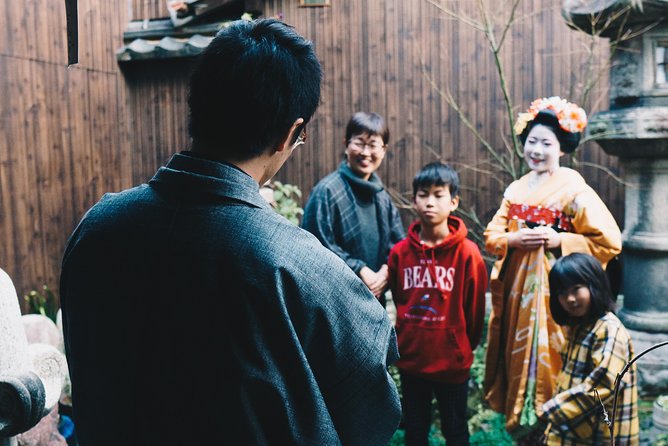
That personal exchange is what makes the format different from a standard performance. You are not only looking at a costume or watching a dance; you can learn about the work and discipline behind the art. Some sessions have included a traditional party game, and the meeting may also allow time for photos. The exact details can vary, so it is best to think of these as possible parts of the visit rather than guaranteed features.
The maiko’s conversation is also a reminder to approach the experience respectfully. You are being welcomed into a cultural setting, not buying a staged photo opportunity. Listen to the guide’s instructions, ask sincere questions, and let the performer decide how much she wishes to share. The small group size, capped at 14, gives the conversation room to breathe while still allowing for a shared experience.
Traditional dance in a small venue
The performance includes one or two songs and one or two traditional dances. It is a compact show, but the small setting lets you pay attention to details that could be easy to miss in a large theatre: the controlled movement, the pace, and the gestures that make the dance distinct. The performance is the visual centerpiece, while the Q&A helps explain what you have just seen.
This is not a long evening of dance, and the listing describes the included show and meeting as about one hour within a total experience of roughly 90 minutes. If your main goal is a lengthy stage program, you may want to look for a different format. If you want a short performance paired with direct conversation, the balance makes sense.
The appeal is not just access to a maiko, but the chance to see her art in a setting where the guide can explain the basics and translate your questions. That combination can make a brief performance feel more substantial than a longer show viewed without context.
What the guide adds
The English-speaking guide is central to the experience. Ken is specifically praised for explaining the district, making participants feel comfortable, and helping with translation. Saya is also named as a kind and supportive host who helped introduce the maiko and answer questions. These names are useful to know, but guides can vary by date.
A good guide does more than interpret words. They help explain how to behave in a formal setting, provide background before the meeting, and make it easier to ask questions without interrupting the flow. Participants have described guides who strike a useful balance: respectful toward the maiko while keeping the group at ease.
The walk and meeting are also practical for visitors who do not speak Japanese. You do not need to arrive with specialist knowledge of geisha culture. The guide provides an entry point, and the maiko’s answers offer a more personal perspective than a general introduction alone.
More shows in Kyoto:
- Kyoto Gion Cultural Walk & Geisha Show with Dining Options
★ 5.0 · 518 reviews - Kyoto Gion Cultural Walk & Geisha Show with Dining Options
★ 5.0 · 483 reviews - 1 Hour Geisha Show in Kyoto
★ 5.0 · 452 reviews - Kyoto: Samurai Kenbu Traditional Sword Dancing Show
★ 4.5 · 426 reviews
Is $105.42 good value?
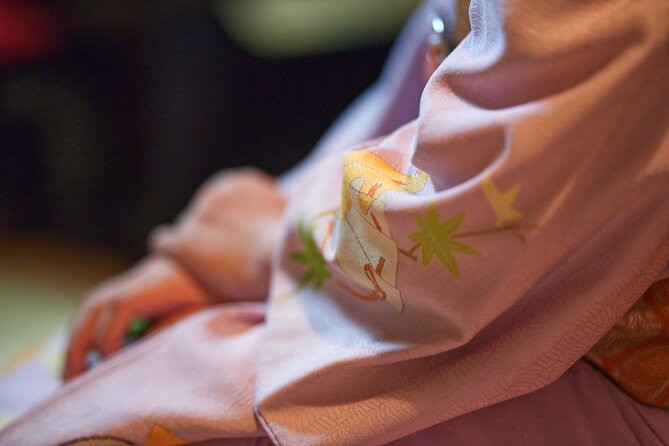
At $105.42 per person, this is a premium-priced 90-minute activity. You are paying for a small-group cultural meeting, a translated Q&A, a guided introduction to the district, and a live performance. The price makes more sense if you value personal access and explanation over a longer show or a low-cost self-guided visit.
It is not the right choice if you simply want the cheapest way to see traditional dance. The session is short, and coffee or tea is not included. Although one account describes enjoying tea, you should not assume a drink is part of the price. The listed inclusions are the show and meeting, plus an English-speaking guide.
For many visitors, the strongest value is the chance to ask questions. You can leave with a clearer idea of maiko training and daily life, rather than only a photograph or a brief glimpse on the street. The average booking lead time is 44 days, so this is worth planning ahead if it is important to your Kyoto itinerary. Group discounts are available, and the ticket is mobile.
Who will enjoy this experience most?
I would recommend this to you if you are curious about geisha culture and want a direct, respectful introduction. It suits people who enjoy asking questions, learning through conversation, and seeing a short live performance. It can also be a good fit for families, since the activity information says most people can participate, though children’s suitability is not specified in detail.
It is less suited to anyone expecting a large production, a long dance program, or a full evening in a traditional entertainment district. The format is intimate and focused. You spend your time with a guide and a maiko, rather than moving between many attractions.
If you already know a fair amount about geiko and maiko traditions, the personal Q&A may still be the most rewarding part. If you are new to the subject, the district walk and guide’s explanations give you enough context to follow the conversation without needing to prepare beforehand.
Practical details and booking cautions
Allow about 90 minutes for the full experience. The show and meeting are described as about one hour, with time for the walk and introduction around them. The maximum group size is 14, and the meeting point is near public transportation.
The booking is non-refundable and cannot be changed for any reason, so check your Kyoto plans carefully before paying. If bad weather cancels the experience, you will be offered another date or a full refund. If the minimum number of participants is not met, you will be offered a different date or experience, or a full refund.
Should you book the maiko experience?

Book it if you want a rare chance to speak with a maiko, learn through a translated conversation, and see a short traditional performance in a small group. The walk past the district’s theatres and agencies adds welcome context, and guides such as Ken and Saya help make the encounter understandable and comfortable.
Skip it if your priority is a long show, a budget activity, or flexible cancellation terms. At this price, the value rests on the human exchange as much as the dance. If that is what you want from Kyoto, this is a focused and memorable way to spend an hour and a half.
FAQ
How long does the experience last?
It lasts about 1 hour and 30 minutes. The show and meeting are described as about one hour.
What is included?
The experience includes a meeting and Q&A with a maiko, a performance with one or two songs, and an English-speaking guide.
Is the conversation translated into English?
Yes. An English-speaking guide translates for you and provides background about the experience.
How large is the group?
The maximum group size is 14 people.
Are coffee or tea included?
No. Coffee and tea are not included in the listed price.
Can I cancel or change my booking?
No. The experience is non-refundable and cannot be changed. If it is canceled because of poor weather or because the minimum number of participants is not met, you will be offered an alternative or a refund, as applicable.
Newly added in Kyoto
- Uji: Private immersion into Kyoto’s tea and reglious culture★ 5.0 · 17 reviews
- Whisk Your Own Matcha: A Zen Matcha Experience at Temple★ 3.6 · 7 reviews
- Kyoto tea town for matcha lovers★ 5.0 · 16 reviews
- Treasures of Kyoto: Gion & historical Walking Tour★ 5.0 · 6 reviews
- Kyoto Matcha Green Tea Tour★ 4.5 · 23 reviews
- Uji and Wazuka Matcha Farm Half Day Private Guided Tour★ 5.0 · 21 reviews
- Uji Tea Ceremony and UNESCO Heritage Walking Tour★ 5.0 · 20 reviews
- Utilising upcycled Matcha! Creating matcha incense (Uji, Kyoto)★ 5.0 · 6 reviews
Kyoto Geisha Tours, compared.
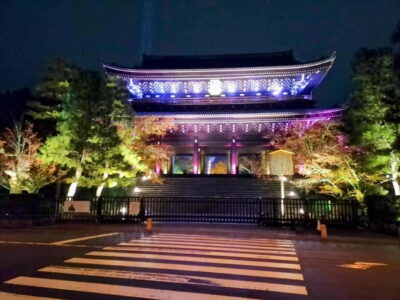
Kyoto Geisha Walking Tour: Gion District & Hidden Gems
Read our review →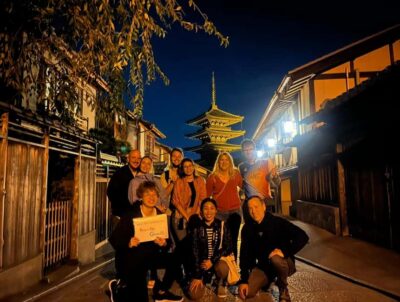
Gion Magical Night Walking Tour with Geisha Trivia
Read our review →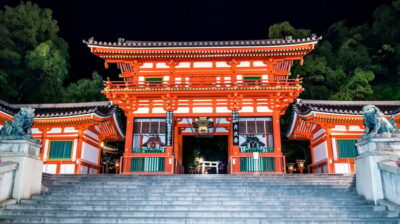
Gion Geisha District Walking Tour – Stories of Geisha
Read our review →
Best of Kyoto: Gion, Geisha, Pagodas & Cobblestones
Read our review →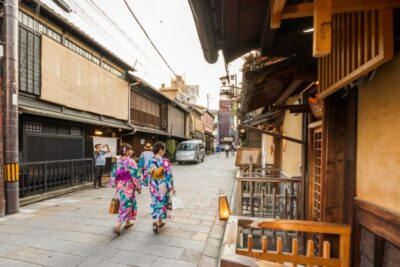

Kyoto Gion Cultural Walk & Geisha Show with Dining Options
Read our review →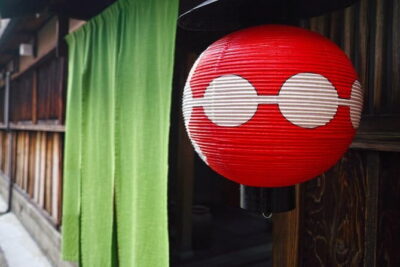
Browse the lists this tour appears in