
Reviewed · KYOTO SAMURAI & NINJA EXPERIENCES
Kyoto: Samurai Kenbu Traditional Sword Dancing Show
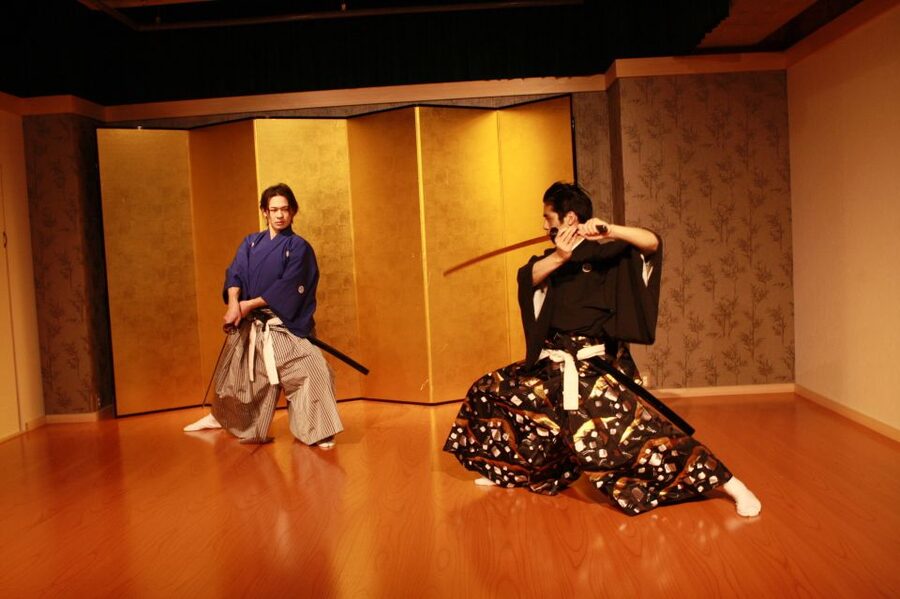
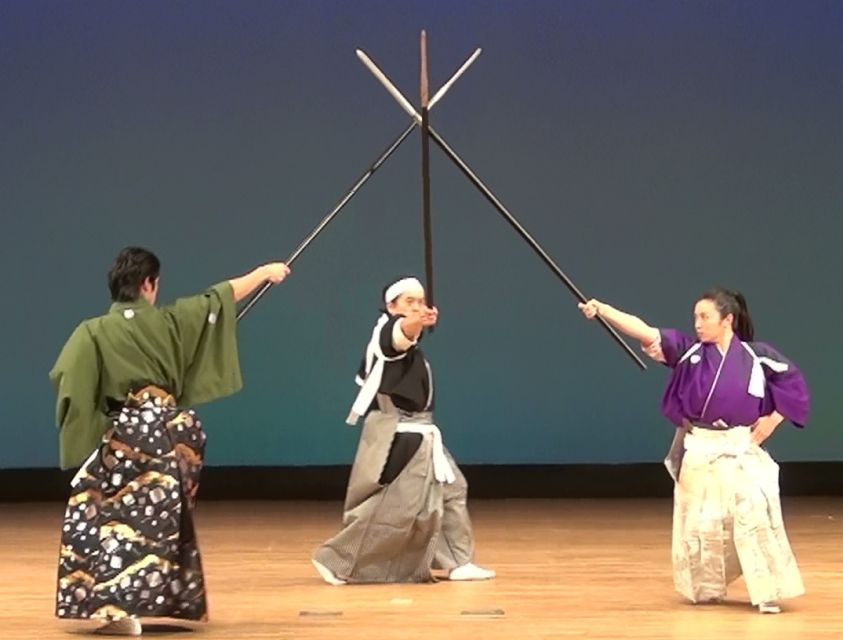
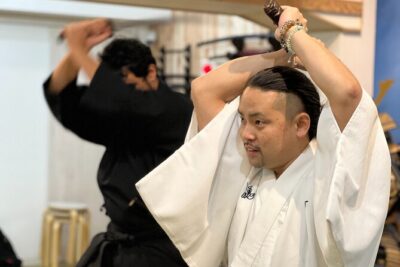
Kenbu is not a sword-fighting stunt show. It is a performance of controlled movement, poetry, and story, with the sword used to suggest the drama of the scene. In this one-hour Kyoto experience, you watch several dances, hear an introduction to samurai culture, then handle a sword yourself under an instructor’s guidance.
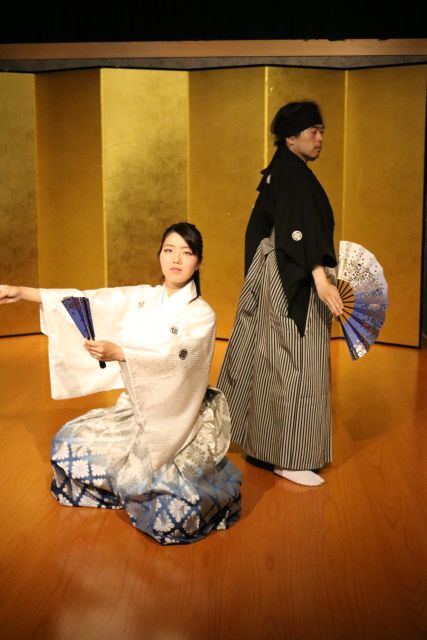
I especially like two parts: the English narration, which gives the stories context, and the short sword lesson, which turns a graceful performance into something you can try with your own hands. You also see how a folding fan fits into the art, a small detail that helps explain why Kenbu is more than simply waving a blade.
One consideration: the show is about expressive movement and samurai traditions, not extended combat choreography. You also need to keep your camera away during the performance. There is time for photos afterward, but if you are hoping to film the dances, this is not the right event.
What makes this Kyoto experience special
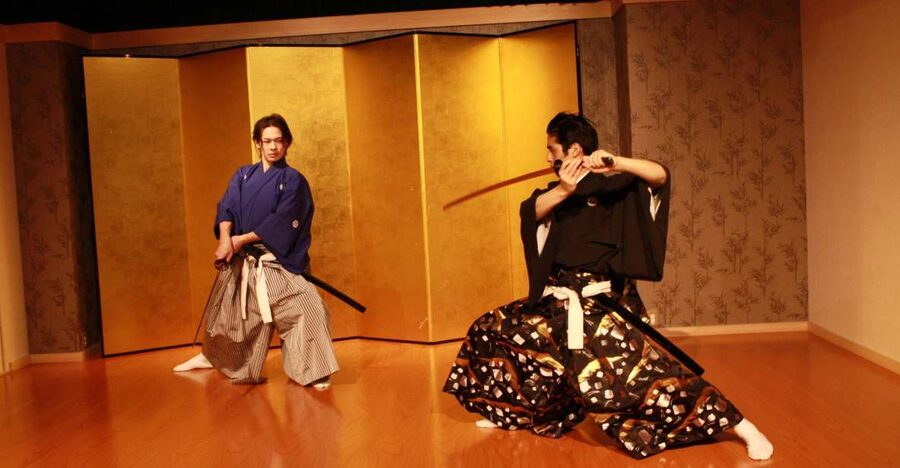
- Stories told through sword dance: Performers use measured movements to act out traditional tales, with narration to help you follow the scenes.
- A look at samurai customs: The introduction and brief history before each dance connect Kenbu with samurai culture from the 12th through 19th centuries.
- Sword and fan techniques: The performance includes both weapons, and the post-show lesson gives you a chance to try basic sword movements.
- A hands-on ending: Under an instructor’s direction, you draw and swing a sword, starting gently and adding force as you learn.
- A compact cultural stop: The whole activity lasts one hour and costs $32 per person, making it easy to fit between other Kyoto plans.
- Practical theater rules: You remove your shoes on arrival, cannot take photos or video during the show, and should arrive 5 to 15 minutes early.
A performance built around meaning, not swordplay
The first thing to understand about Kenbu is that the sword is part of a story. Performers use precise gestures and controlled swings to convey scenes inspired by samurai life and traditional tales. The movements can look graceful and calm, then suddenly feel forceful. That contrast is part of the appeal.
This is not a staged battle with long exchanges of sword blows. The focus is on the form, the story, and the traditions surrounding the samurai. If you arrive expecting nonstop action, you may find the pace measured. If you are curious about how a performance can turn a poem or historical tale into movement, you will have more to watch for.
The hour begins at Samurai Kembu Theater, where you remove your shoes before taking your seat. That small custom sets the tone: this is a theater experience with its own practices, not a large tourist stage show. Arrive five to 15 minutes before the start so you can check in and settle in without rushing.
A performer introduces Kenbu and explains its history and techniques. You then watch several demonstrations, each paired with a short account of samurai culture. The narration is available in English or Japanese, which helps make the performance accessible to visitors who do not know the stories in advance.
More samurai and ninja experiences in Kyoto:
- Kyoto Samurai Experience
★ 5.0 · 1,294 reviews - Kyoto: Kendo and Samurai Experience with Uniform and Gear
★ 4.9 · 815 reviews - Kyoto: Samurai Sword Class by Experts in Traditional Arts
★ 4.9 · 657 reviews
Watching poems become movement
A distinctive part of Kenbu is its connection to poetry. Samurai recited poems before going to battle, and the performers follow those poems with a sequence of movements that evokes the scene. The result is less literal than a play: gesture and rhythm carry much of the meaning, while the narration supplies context.
You will see both traditional-style and newer-style Kenbu. That mix gives you a sense of the form as a living performance practice rather than a single fixed routine. The sword movements are the visual center, but pay attention to posture, pauses, and the way a performer turns or shifts weight. Small changes can make a scene feel solemn, tense, or quietly heroic.
The show also demonstrates techniques with a folding fan. This is a useful counterpoint to the sword: the fan is smaller and less imposing, yet it also becomes a tool for expressive movement. Seeing both helps explain the discipline behind the performance. Kenbu relies on control and intent, not simply on the object in a performer’s hand.
The short histories between dances add cultural context, including samurai practices and the responsibility associated with carrying a sword. That detail matters. A sword was not just a prop or a mark of status; the experience frames it as an object linked to duty and conduct. The presentation is brief, so it will not replace a full history lesson, but it gives you a thoughtful starting point.
The sword lesson is more than a photo prop
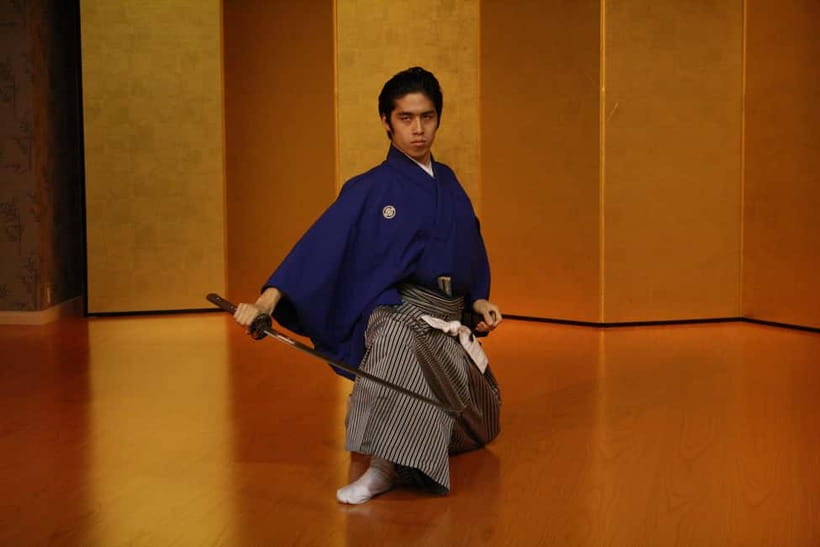
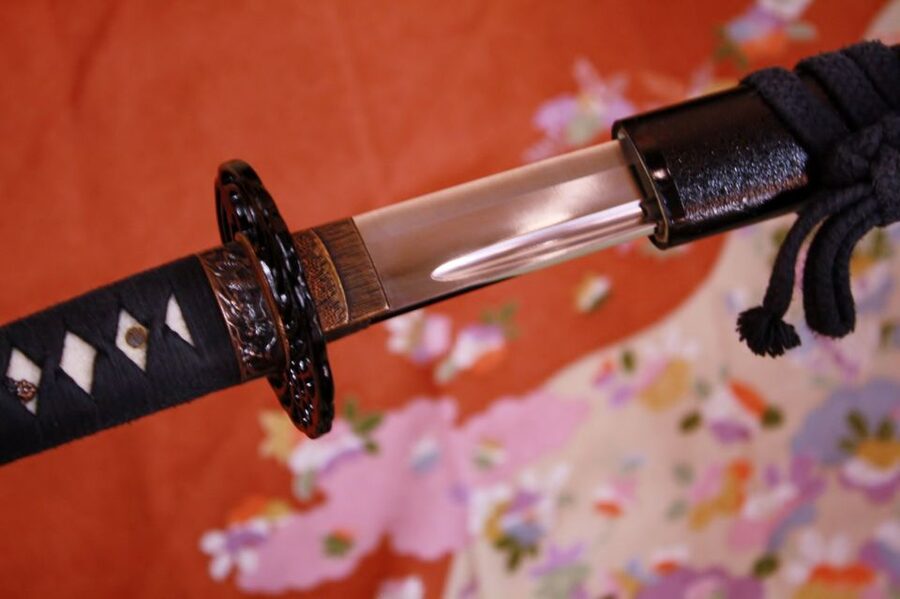
After the performance, the experience changes from watching to doing. The performers return, and an instructor guides you through a short lesson. You pick up a sword, draw it from its scabbard, and practise basic movements at first gently, then with more force when instructed.
This is a brief introduction, not a martial-arts class. Still, even a few movements make the sword work look different. A swing that seemed effortless onstage takes concentration to manage, and you begin to notice how much precision the performers bring to each action. The lesson is also a chance to ask questions and interact directly with the instructors.
If time allows, you may also learn how to use a folding fan. The description makes this dependent on available time, so treat it as a possible extra rather than a guaranteed part of the session. The sword lesson is included, as are the theater entry and performance. Hotel transfers, food, and drinks are not included.
Photos are prohibited during the show, so plan to watch rather than document the dances. Afterward, you can take pictures with the performers and the sword. This is the time to bring out your camera, and the instructors can help capture the moment. For families, the experience has worked for children as young as three, though the performance itself asks for quiet attention and the sword practice is supervised.
What the hour feels like
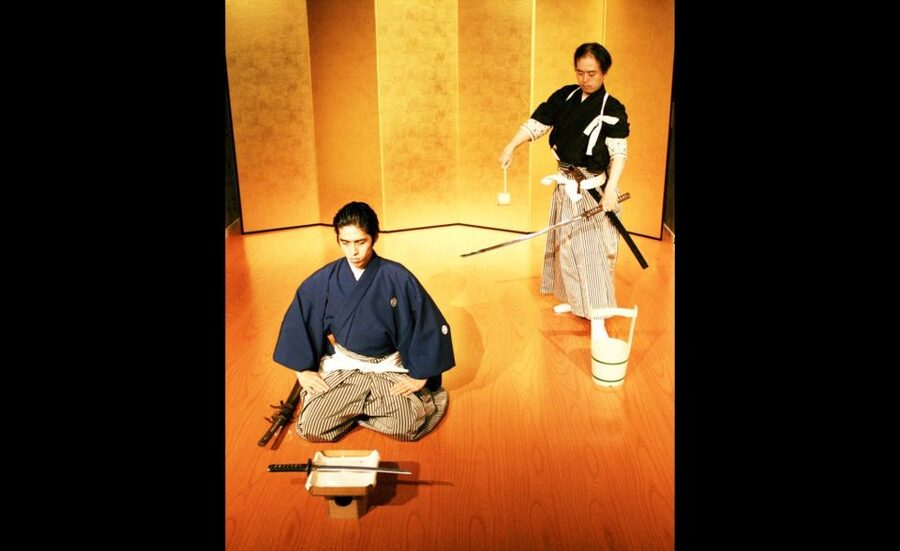
The format is compact and varied: an introduction, a series of demonstrations with explanations, then a hands-on lesson and photo opportunity. That structure keeps the session from becoming one long performance, and the practical ending gives you a clear sense of what you have learned.
The narration is important because Kenbu is not self-explanatory to every audience. You can admire the movements without understanding every reference, but the stories make the scenes easier to read. The language options are English and Japanese. If English is your preferred language, the spoken explanation will help you follow the cultural background, though the movement remains the main attraction.
The tone also has room for warmth and humor. The lesson is taught in a friendly, approachable way, which helps if you feel awkward handling a sword for the first time. The show itself remains professional and expressive, while the practice session is lighter and more interactive.
Do not expect a large stage or a sprawling production. The experience is designed around close attention to the performers and the explanations. That can make it feel intimate, though the exact audience size is not specified and may vary. The one-hour length is a good fit for a cultural break, but anyone looking for a full-length theater event may find it brief.
More shows in Kyoto:
- Kyoto Gion Cultural Walk & Geisha Show with Dining Options
★ 5.0 · 518 reviews - Kyoto Gion Cultural Walk & Geisha Show with Dining Options
★ 5.0 · 483 reviews - 1 Hour Geisha Show in Kyoto
★ 5.0 · 452 reviews - Kyoto: Nishiki Market Tea Ceremony with Koto Performance
★ 4.8 · 294 reviews
Is $32 a fair price?
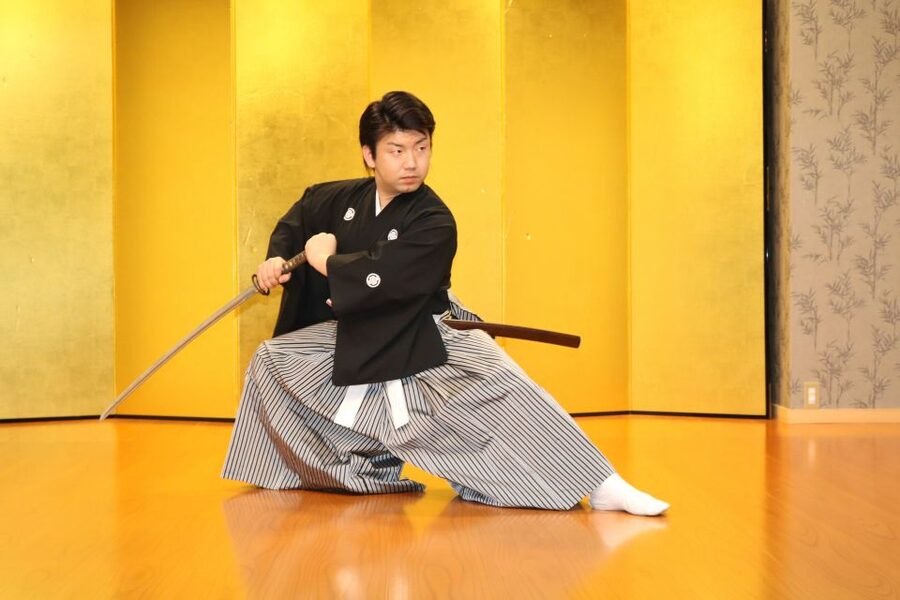
At $32 per person, you are paying for more than a short dance recital. The fee includes theater admission, the Kenbu performance, and a sword lesson. You also get historical explanation and a chance to take photos after the show. For someone interested in Japanese culture, samurai traditions, or stage arts, that combination makes the price reasonable.
The value depends on what you want from the hour. If you are mainly after elaborate combat scenes or a long theatrical production, the experience may not match your expectations. If you want a focused introduction to Kenbu, with context and a hands-on element, the price covers several distinct parts rather than just a seat in the audience.
It also works well as a short activity in a packed Kyoto itinerary. The theater is a four-minute walk from Sanjo Keihan Subway Station and a five-minute walk from Sanjo Station on the Keihan Main Line. There is no hotel pickup, so you make your own way there, but the nearby stations keep the trip straightforward.
The booking offers free cancellation up to 24 hours in advance and a reserve-now, pay-later option. Check the available start times when choosing a slot. Confirmation is provided at booking, and staff check the reservation name at reception on the day.
Getting there and preparing for the visit
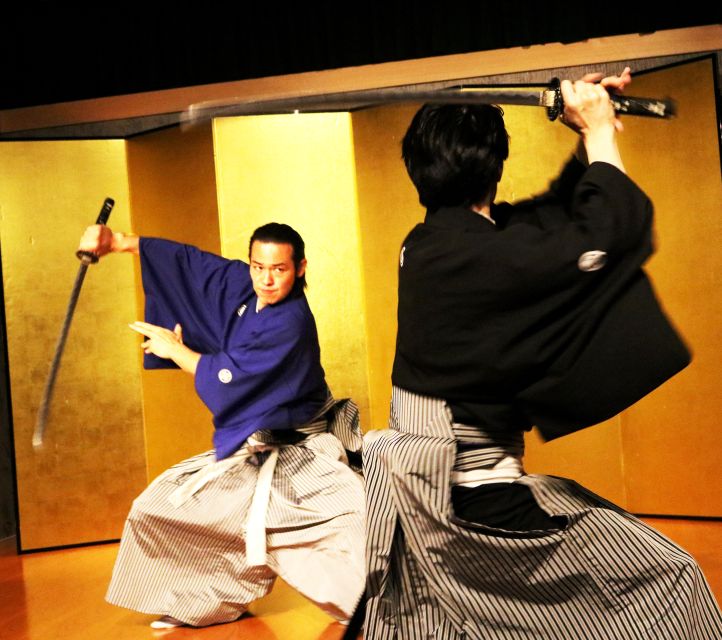
Use the theater name, Samurai Kembu Theater, when planning your route. It is close to two useful transit stops, but one past visitor found it a little hard to locate, so allow time to find the entrance rather than aiming to arrive at the last minute. The stated arrival window is five to 15 minutes before the activity begins.
There is no waiting room, and people without appointments cannot wait inside. The venue also has no room for large luggage or travel bags. Leave bulky bags elsewhere before you come, and do not arrive early expecting to spend a long time indoors.
The theater is listed as wheelchair accessible. If you have a specific access need, it is sensible to confirm details with the provider before booking, since the information provided does not describe the exact facilities.
Avoid arriving under the influence of alcohol. Keep your phone and camera put away during the performance, and save photographs for the time afterward. These rules are simple, but they shape the experience: you can give the dancers your attention, then enjoy a more relaxed interaction after the show.
Who should book this experience?
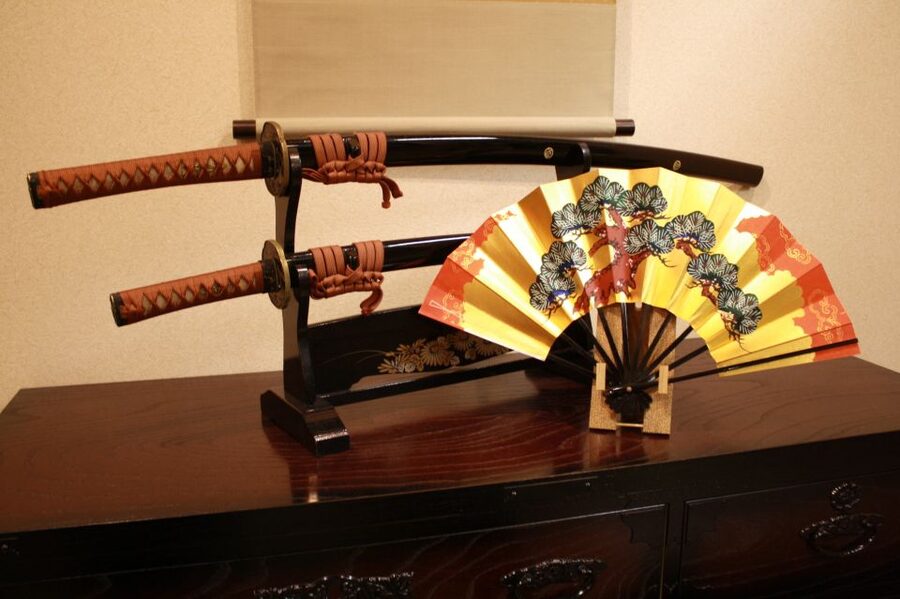
I would put this high on the list for anyone curious about samurai culture but not looking for a full museum visit. The mix of history, performance, and practice keeps the material tangible. You hear about the customs, see the form performed, and then try a few movements yourself.
It also suits families with older children and teens who can sit through a short performance and are interested in Japanese history. The activity has been enjoyed with a three-year-old, but young children vary in how well they handle an hour of listening and watching. The sword portion is supervised, but parents should decide whether their child is ready to follow instructions around a sword.
Kenbu and theater fans will appreciate the blend of movement and storytelling. It is also a good choice for samurai enthusiasts who want something more personal than a display case or film. You do not need prior knowledge, and the English introduction makes the subject easier to approach.
I would skip it if you want to film the entire show, see prolonged sword combat, or take a lengthy class. The performance is about controlled dance and cultural meaning, and the lesson is short. Go for the story, the skill, and the chance to handle a sword under guidance, not for a full training session.
Should you book?
Book this if you want a one-hour, accessible introduction to Kenbu that combines explanation, skilled performance, and a little guided practice. The strongest reason to go is the complete arc: you learn what the art means, watch it in action, and then discover how demanding even a basic sword movement can be.
Pass if your main goal is high-energy fighting choreography or uninterrupted photography. For a reasonable price, the experience offers a focused glimpse of samurai traditions, with a practical ending that helps the performance stay with you after you leave the theater.
FAQ
How long does the experience last?
The activity lasts one hour.
How much does it cost?
The listed price is $32 per person.
What is included in the price?
The fee includes Samurai Kembu Theater entry, the Kenbu show, and a short sword lesson.
Is the performance narrated in English?
The instructor language options are English and Japanese. The performance includes narration introducing Kenbu and explaining the stories and samurai culture.
Can I take photos or videos during the show?
No. Photography and video are not allowed during the performance. There is time for photos after the show.
Do I get to handle a sword?
Yes. The included short lesson lets you hold and draw a sword and practise basic swings under an instructor’s direction.
Where is the meeting point?
Meet at Samurai Kembu Theater in Kyoto. It is a four-minute walk from Sanjo Keihan Subway Station and a five-minute walk from Sanjo Station on the Keihan Main Line.
How early should I arrive?
Arrive five to 15 minutes before the activity starts. Staff will check the reservation name at reception.
Can I bring large luggage?
No. There is no room for large luggage or travel bags, and there is no waiting room for people without an appointment.
Newly added in Kyoto
- Uji: Private immersion into Kyoto’s tea and reglious culture★ 5.0 · 17 reviews
- Whisk Your Own Matcha: A Zen Matcha Experience at Temple★ 3.6 · 7 reviews
- Kyoto tea town for matcha lovers★ 5.0 · 16 reviews
- Treasures of Kyoto: Gion & historical Walking Tour★ 5.0 · 6 reviews
- Kyoto Matcha Green Tea Tour★ 4.5 · 23 reviews
- Uji and Wazuka Matcha Farm Half Day Private Guided Tour★ 5.0 · 21 reviews
- Uji Tea Ceremony and UNESCO Heritage Walking Tour★ 5.0 · 20 reviews
- Utilising upcycled Matcha! Creating matcha incense (Uji, Kyoto)★ 5.0 · 6 reviews
Kyoto Samurai & Ninja Experiences, compared.
Kendo and Samurai Experience with Uniform and Gear
Read our review →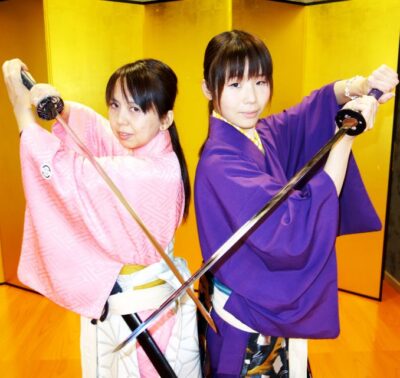
Samurai Sword Class by Experts in Traditional Arts
Read our review →
Skip the lines Basic Ticket at SAMURAI NINJA MUSEUM KYOTO
Read our review →
Ninja 1-hour Hands-on Lesson by Japanese master in Kyoto -Entry
Read our review →
Samurai Training with Modern day Musashi in Kyoto
Read our review →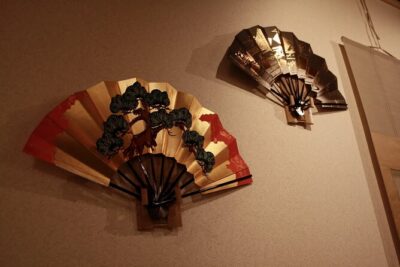
Browse the lists this tour appears in