
Reviewed · KYOTO TEMPLE & SHRINE TOURS
Kyoto: Discover Every Bit of Kyoto Imperial Palace
Kyoto Imperial Palace is more than a set of handsome halls: it is a place to picture the imperial court at work, from grand ceremonies in Shishinden to daily life at the Emperor’s residence. This guided walk gives you a human thread through the buildings and gardens, helping the setting feel less like a collection of historic structures and more like a former seat of power.
I like two things in particular: the chance to hear about imperial customs while standing among the buildings where they mattered, and the quieter garden paths that offer a welcome pause from Kyoto’s busier sights. The tour is also a practical way to get context from an English-speaking guide rather than relying on signs alone.
One point to check before booking: the activity is described as lasting one hour, while the tour itinerary gives a 1.5-hour visit. The palace entry itself is free, so the $38 price is mainly for the guided experience. Make sure the timing and the value of a guide suit your plans.
Key points to know before you go
- Meet at Hamaguri Gate: Find the guide in front of the gate, looking for a yellow DeepExperience sign.
- See the ceremonial Shishinden: This main hall is the focus for understanding important imperial ceremonies.
- Hear about court life: The walk also covers the Emperor’s personal residence and the routines of the imperial court.
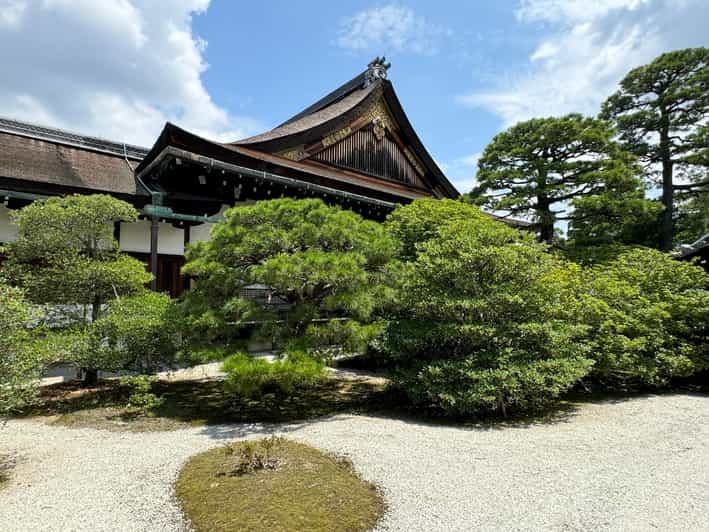
- Expect a garden visit: The palace sits within Kyoto Gyoen National Garden, with landscaped grounds and a notably beautiful interior garden.
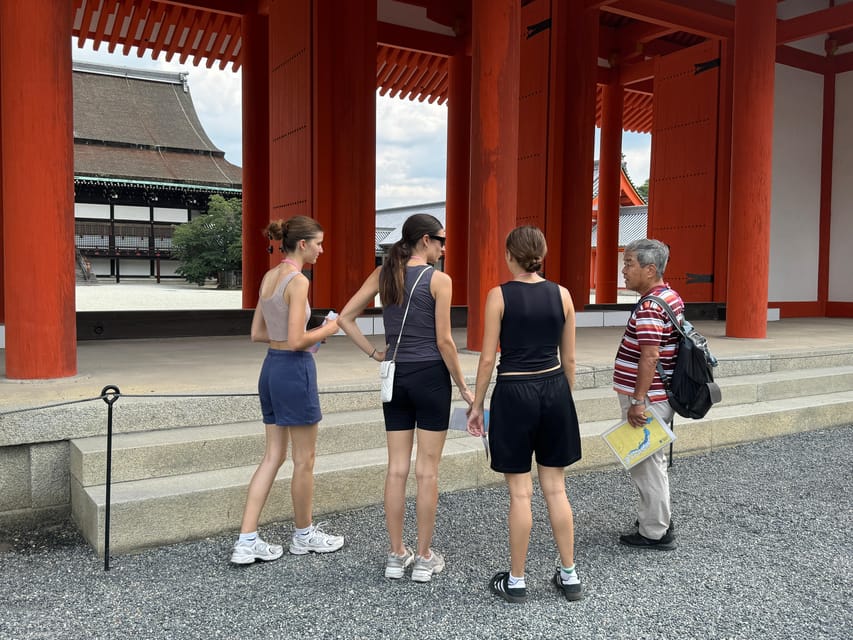
- The guide shapes the experience: Past tours have included Yoshi, praised for explaining historical details and answering questions. Your guide may be someone else.
- Check the duration: The stated tour length and itinerary timing differ, so confirm the expected length when choosing a departure.
Start at Hamaguri Gate
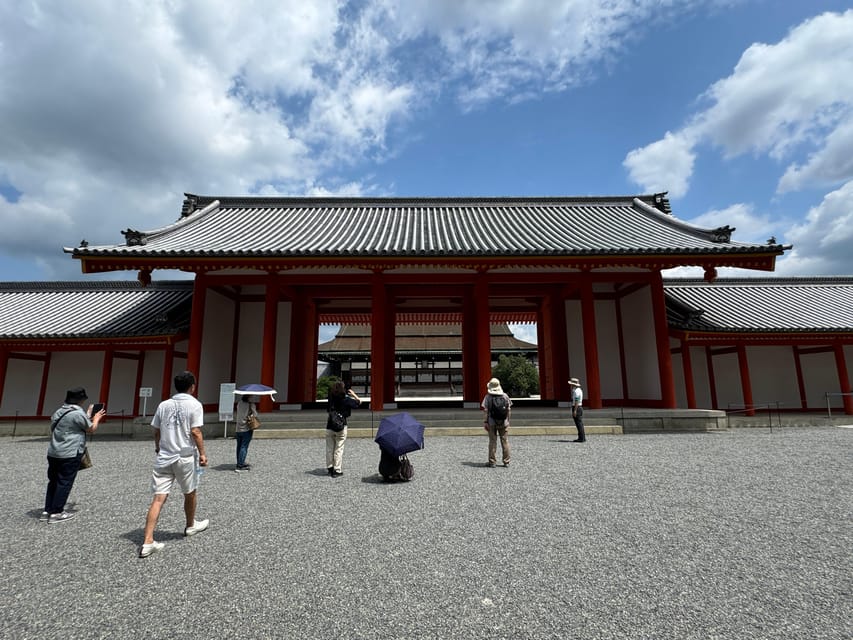
Your meeting point is in front of Hamaguri Gate, also called Hamagurigomon, at Kyoto Imperial Palace. Look for the guide holding a yellow sign marked DeepExperience. This clear meeting point matters in a large garden setting, where arriving at the correct entrance saves time and keeps the start of a short tour calm.
The walk returns to the same gate, so you do not need to plan for a different finish point. The tour is offered in English, and private or small-group options are available. That gives you a choice between a more personal pace and the chance to share the guide’s attention with others.
If you have a question about the court, the buildings, or a detail you notice along the way, ask it while you are there. The tour’s value depends in part on how much you want to interact with a guide. One guide associated with the experience is Yoshi, who has been praised for sharing details and making time for questions. Guide assignments can vary, so don’t assume he will lead your visit.
More temple and shrine tours in Kyoto:
- Kyoto: Tea Ceremony Ju-An at Jotokuji Temple
★ 4.9 · 3,207 reviews - World Heritage Kyoto & Nara Uji Authentic Matcha Experience
★ 5.0 · 1,573 reviews - Arashiyama Bamboo, Temple, Monkeys, or Secret Sake Brewery
★ 4.8 · 886 reviews
Why the palace matters
Kyoto Imperial Palace served as the residence of Japan’s imperial family before the capital moved to Tokyo in 1869. That shift gives the site a useful place in a Kyoto itinerary: it connects the city not only with temples and traditional streets, but also with the court and the country’s former political center.
A guide can help you connect this broad history to the spaces in front of you. Rather than simply walking past buildings, you can learn which halls were used for ceremonies and how the Emperor’s residence related to everyday court life. That context is especially helpful if you have limited time or want a clearer picture of how the palace functioned.
The complex includes buildings used for official functions and important events, alongside garden spaces. It is not a tour of a single room or hall. Think of it as a guided walk through a former imperial setting, where architecture, ceremony, and the surrounding grounds all contribute to the story.
Shishinden and the grand ceremonies
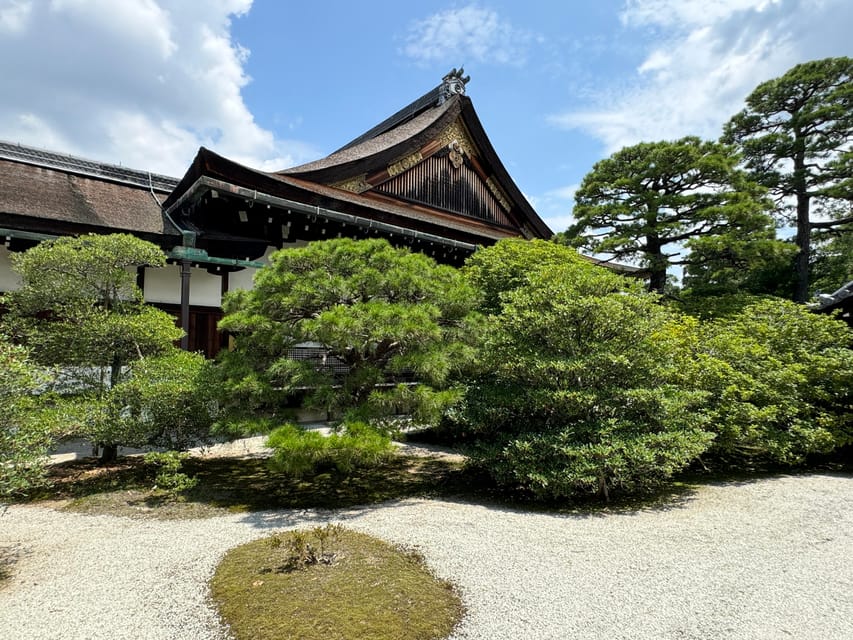
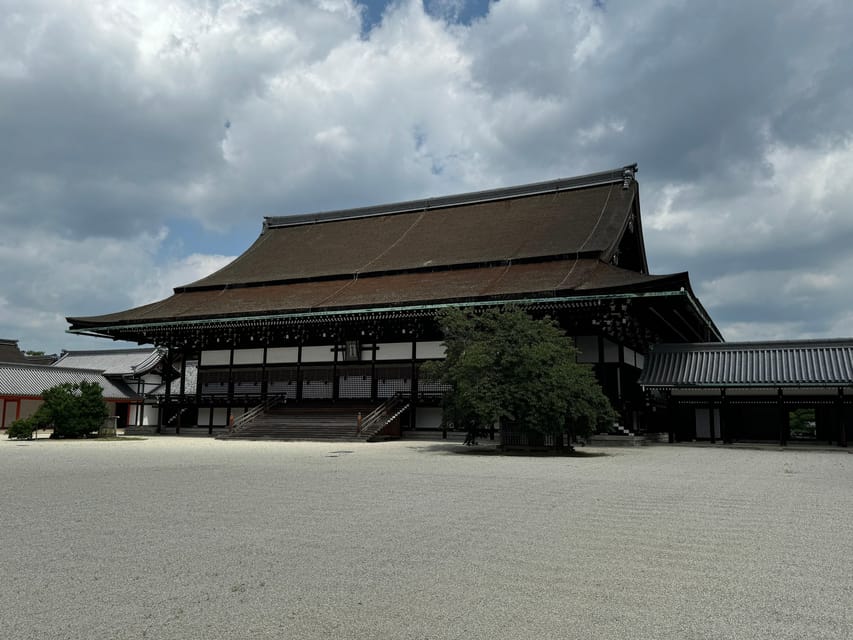
The main ceremonial hall, Shishinden, is one of the most compelling stops. Its significance comes from its role in major imperial ceremonies. Knowing that purpose changes how you look at the building: it is not just an impressive example of traditional Japanese architecture, but a place designed for formal public occasions at the center of court life.
The tour highlights the historical importance of halls used for grand ceremonies and official functions. That is a strong reason to go with a guide if you enjoy connecting a building’s appearance to its role. The facts and explanations can give shape to what might otherwise be a quick look at a large hall and its grounds.
You should not expect a long indoor museum visit based on the information provided. The emphasis is on exploring the palace grounds and seeing significant structures, with the guide explaining their history. If your main aim is to enter many rooms or see extensive exhibits, check what the tour includes before booking.
The Emperor’s residence and daily court life
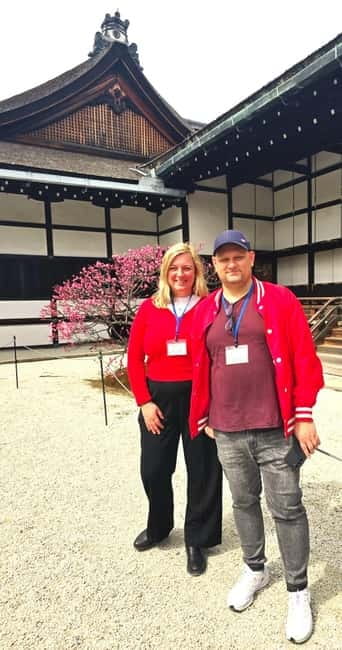
The former personal residence offers a different angle from the ceremonial halls. It helps shift the focus from public events to the routines of the imperial household and the life of the court. That contrast makes the visit more rounded: you get both the grand, official setting and a sense of the domestic side of palace life.
The available description does not promise access to every building or interior, so keep expectations measured. The guide can point out the buildings and explain their former uses, but the experience is best understood as a historical walk through the complex, not as a guaranteed behind-the-scenes visit to private rooms.
If you enjoy asking questions, this part of the tour may be particularly rewarding. The subject naturally invites questions about court traditions and how formal ceremonies related to daily routines. The quality of the answers depends on your guide, which is why the guide’s ability to explain and engage matters as much as the route itself.
More Kyoto tours in Kyoto:
- PERFECT KYOTO 1-Day Bus Tour
★ 5.0 · 13,518 reviews - Kyoto: Fushimi Inari, Kinkakuji, Bamboo Grove 1 Day Bus Tour
★ 4.8 · 4,316 reviews - Kyoto: Tea Ceremony in a Traditional Tea House in Kiyomizu
★ 4.9 · 3,519 reviews - Kyoto Geisha Walking Tour: Gion District & Hidden Gems
★ 4.7 · 3,273 reviews
A quiet walk through the gardens
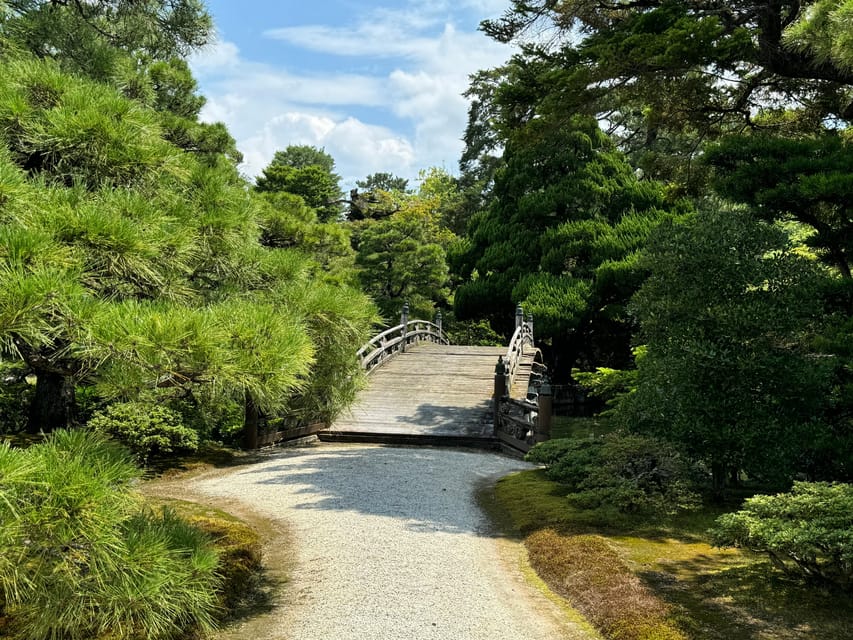
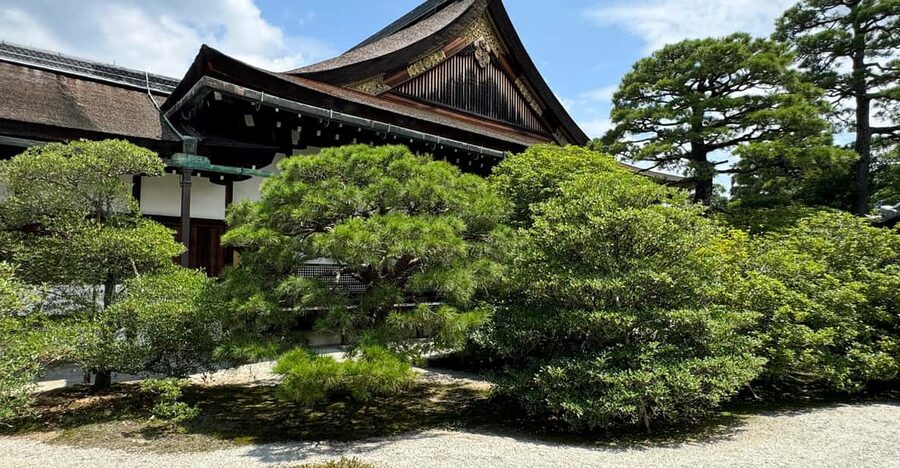
Kyoto Imperial Palace lies within Kyoto Gyoen National Garden, and the gardens are more than a scenic backdrop. They offer breathing room between the palace buildings and give the visit a calmer pace. One visitor described the interior garden as jaw-droppingly beautiful, a strong sign that the garden setting can be a highlight in its own right.
I like that this tour includes both architecture and open-air scenery. If you have spent much of the day moving through crowded parts of Kyoto, a stroll among landscaped grounds can be a pleasant change. The garden also helps you take in the scale of the palace complex rather than treating each building as an isolated stop.
The grounds are serene, but this is still a guided tour with a set start and finish. You may not have as much freedom to pause wherever you like as you would on a solo walk. If lingering for photographs or wandering at your own pace is your priority, consider whether a group tour fits your style.
What the guide adds, and where the tour can fall short
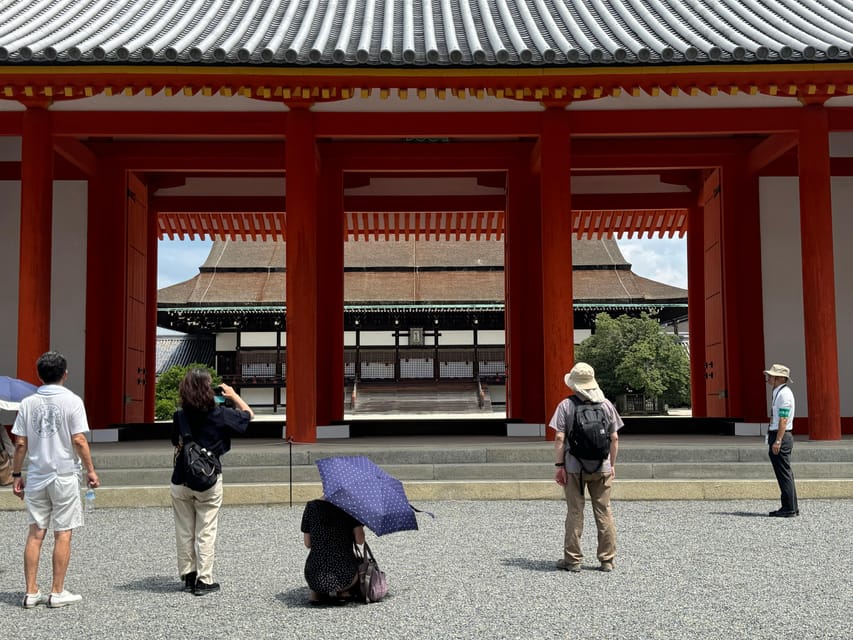
A good guide turns historical names and formal buildings into a story you can follow. At this palace, that means linking the halls to ceremonies, explaining the imperial family’s former residence, and pointing out details you might otherwise walk past. A guide can also respond to questions, which makes the experience more flexible than simply reading signs.
The experience can be uneven if the guide does not provide much explanation. A guided walk that amounts mostly to following someone through the grounds offers less value than a clear account of the buildings and their history. If you book, take advantage of the live English guidance: ask questions, especially at Shishinden and the Emperor’s residence.
Guide Yoshi has been associated with particularly engaging explanations and attention to interesting details. That is useful to know, but it is not a guarantee that he will lead your departure. The broader point is that the guide matters here. If you want substantial historical context, confirm what is included and arrive ready to ask about the places that interest you.
Is $38 good value?
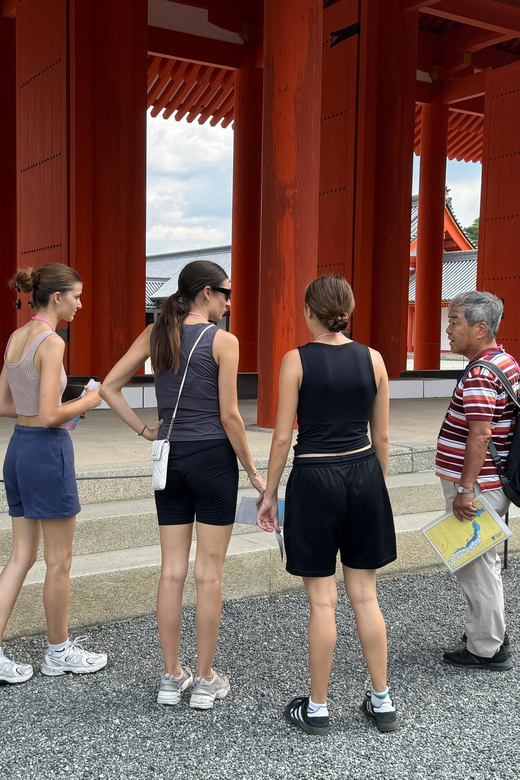
At $38 per person, this is not a paid palace admission, because entry to Kyoto Imperial Palace is free. You are paying for the guide and the structure of a guided visit. That can be worthwhile if you want an English explanation of court traditions, ceremonial halls, and daily life in the imperial household.
If you are comfortable exploring on your own and are happy to see the grounds without much interpretation, you may find the cost hard to justify. The palace is open for free entry, and one visitor felt the accessible sights could be seen without a guide. That is a fair point: the tour’s value rests on the quality of the explanation, not on exclusive access stated in the tour details.
For a first visit, or for anyone interested in Japan’s imperial history, paying for context may make the site more rewarding. For a quick stroll through the gardens, self-guided entry may be enough. Weigh the $38 against how much you want a guide to turn the buildings into a connected story.
Timing and planning your visit
The tour information gives two different timings: the activity duration is listed as one hour, while the palace visit in the itinerary is listed as 1.5 hours. Since that is a meaningful difference when planning a day in Kyoto, check the current departure details before you book and leave a little flexibility around the visit.
The listed route begins and ends at Hamaguri Gate. Arrive at the gate and look for the yellow DeepExperience sign. English is the stated tour language, and private or small-group formats are available, depending on the option you choose.
The booking terms allow free cancellation up to 24 hours in advance, and a reserve-now, pay-later option is available. Those terms offer some flexibility if your Kyoto plans are still taking shape. The key practical decision remains whether you want a guide and how much time to set aside.
Who should book this tour?
This experience suits you if you want a concise introduction to the imperial family’s history and would rather hear explanations as you walk than piece the story together yourself. It is also a good fit if you enjoy traditional architecture, formal ceremonies, and gardens in the same visit.
You may prefer to go independently if you mainly want a peaceful walk, are confident reading the available information on site, or do not need a guide to appreciate the setting. The free palace entry makes that a sensible option, not a lesser one.
Book the guided tour if court history is a real interest and an English-speaking guide is worth $38 to you. Before you commit, confirm whether your chosen visit runs for one hour or 1.5 hours. That small check will help you decide whether the guided context fits both your budget and your Kyoto schedule.
FAQ
How much does the Kyoto Imperial Palace tour cost?
The tour costs $38 per person. Entry to Kyoto Imperial Palace is free, so the price is for the guided experience.
How long does the tour last?
The activity duration is stated as one hour, while the itinerary describes a 1.5-hour visit. Confirm the expected timing for your chosen departure.
Where is the meeting point?
Meet in front of Hamaguri Gate, also called Hamagurigomon, at Kyoto Imperial Palace. The guide will have a yellow DeepExperience sign.
What language is the tour in?
The live tour guide speaks English.
What is included in the price?
The tour includes a guide. Entry to Kyoto Imperial Palace is free.
Which palace buildings are highlighted?
The tour highlights Shishinden, the main hall used for important imperial ceremonies, along with other structures used for ceremonies and official functions.
Does the tour include the gardens?
Yes. The palace complex is set within Kyoto Gyoen National Garden, and the visit includes a stroll through its landscaped grounds.
Are private or small-group tours available?
Yes. Private or small-group options are available.
Can I cancel for a refund?
You can cancel up to 24 hours in advance for a full refund.
Newly added in Kyoto
- Uji: Private immersion into Kyoto’s tea and reglious culture★ 5.0 · 17 reviews
- Whisk Your Own Matcha: A Zen Matcha Experience at Temple★ 3.6 · 7 reviews
- Kyoto tea town for matcha lovers★ 5.0 · 16 reviews
- Treasures of Kyoto: Gion & historical Walking Tour★ 5.0 · 6 reviews
- Kyoto Matcha Green Tea Tour★ 4.5 · 23 reviews
- Uji and Wazuka Matcha Farm Half Day Private Guided Tour★ 5.0 · 21 reviews
- Uji Tea Ceremony and UNESCO Heritage Walking Tour★ 5.0 · 20 reviews
- Utilising upcycled Matcha! Creating matcha incense (Uji, Kyoto)★ 5.0 · 6 reviews
Kyoto Temple & Shrine Tours, compared.
World Heritage Kyoto & Nara Uji Authentic Matcha Experience
Read our review →
Arashiyama Bamboo, Temple, Monkeys, or Secret Sake Brewery
Read our review →
Arashiyama Bamboo Forest, Monkeys, Matcha & Temple Tour
Read our review →
Arashiyama, Nara & Fushimi Inari Shrine w/Lunch
Read our review →
Imperial Palace & Nijo Castle Guided Walking Tour
Read our review →
Kyoto Zen Meditation & Garden Tour at a Zen Temple with Lunch
Read our review →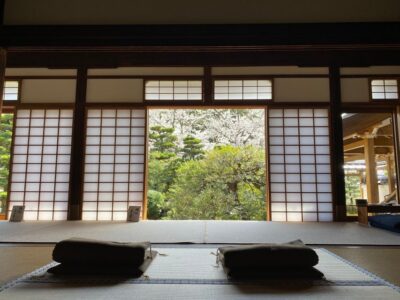
Browse the lists this tour appears in