
Reviewed · KYOTO SAMURAI & NINJA EXPERIENCES
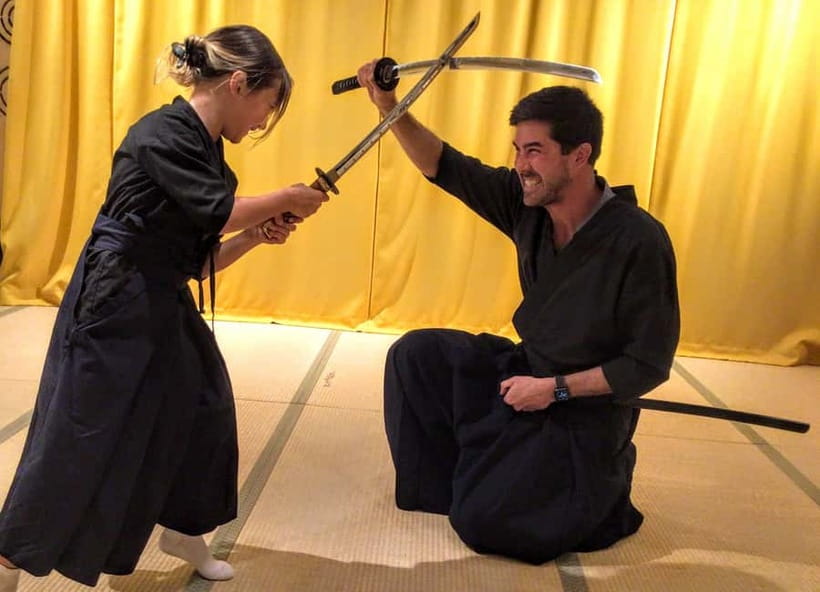
Kyoto : Family-Friendly Sword Lesson at Samurai Ninja Museum
The appeal here is simple: you get to put on samurai armor, learn a few sword movements, and try them yourself rather than just look at a display. The two-hour session also brings in a taste of ninja culture, with a weapons trial and themed photo opportunities.
I like two things in particular: the hands-on katana lesson, which gives the costume a little purpose, and the chance to learn movements from an instructor rather than simply pose with a sword. The photos are fun, too, but the instruction is what makes this more than a dress-up stop.
One thing to weigh is the price: at $66 per person, this is a short, activity-focused outing, not a full day of cultural touring. Children under three cannot enter, and group-size details vary between a stated limit of 10 for small groups and a maximum of 22, so ask about your session if a smaller class matters to you.
The experience at a glance
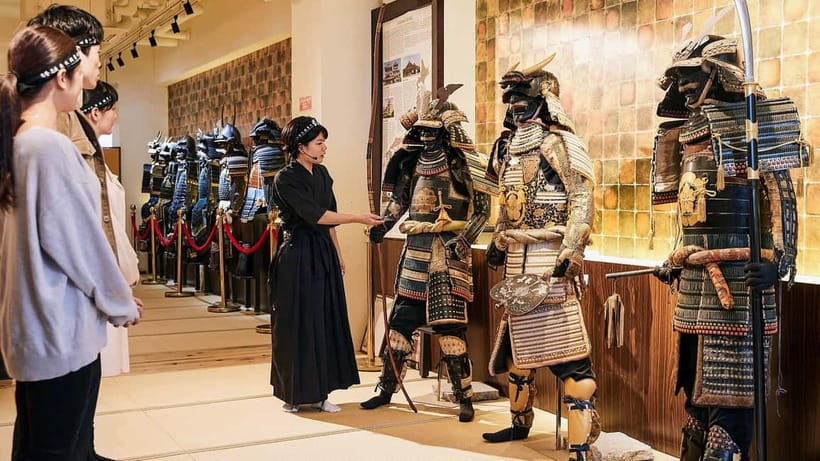
- A sword lesson, not just a costume photo: Watch a demonstration, then practice sword movements with an instructor.
- Samurai clothing is provided: You can wear hakama, armor, and a helmet during the activity.
- Ninja weapons add a second activity: The experience includes a trial with ninja weapons, described in a class account as target practice with shuriken.
- Photos are part of the fun: Pose with swords against studio or samurai-themed backgrounds.
- English instruction and a two-hour format: The session is designed to fit neatly into a day of sightseeing in Kyoto.
- Check the group-size details: Small-group sessions are described as limited to 10, while the activity information also gives a maximum of 22 participants.
From visitor to samurai, one layer at a time
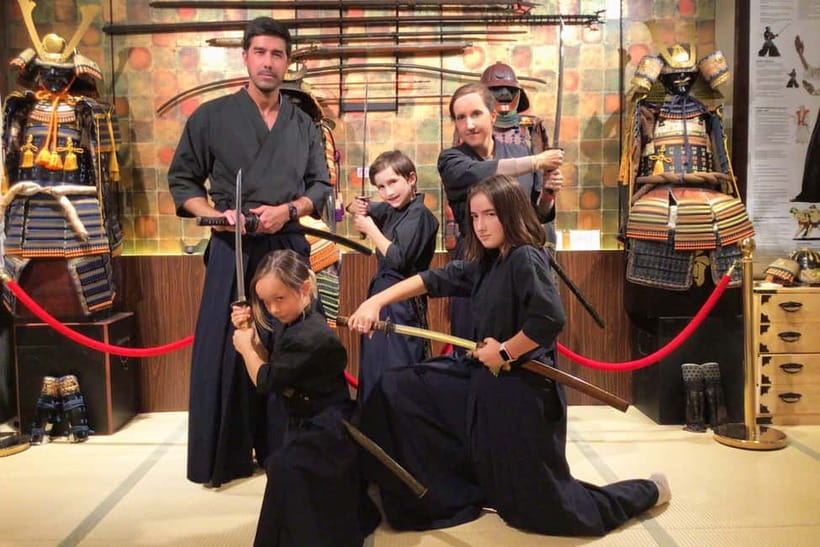
The transformation begins with the clothing. Hakama, armor, and a helmet are included, giving you the chance to step into a recognisable samurai look before picking up a sword. The outfit is a major part of the appeal, especially for families: children can take the role seriously for a few minutes, while adults may find themselves doing the same.
The activity is based at the Samurai Ninja Museum in Kyoto. You do not need to bring your own costume or sword, and the listed experience includes use of the samurai gear. Transportation to and from the activity is not included, so plan how you’ll reach the venue separately. It is described as being near public transportation, though the exact route depends on where you are staying.
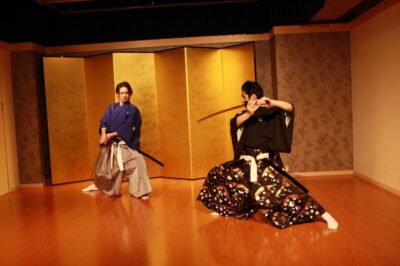
Once dressed, you get an introduction to the sword work. The instructor demonstrates how to swing a katana properly before you try the movements yourself. That order matters: it gives you something to watch and copy, rather than leaving you to guess what to do with a sword.
One class account describes learning two kata, or sequences of movements, with a katana. That is a useful idea of what the lesson can include, but the exact number of movements or sequences may depend on the session. The focus is on trying the actions under guidance, not on becoming a swordsman in two hours. That is probably just as well.
More samurai and ninja experiences in Kyoto:
- Kyoto Samurai Experience
★ 5.0 · 1,294 reviews - Kyoto: Kendo and Samurai Experience with Uniform and Gear
★ 4.9 · 815 reviews - Kyoto: Samurai Sword Class by Experts in Traditional Arts
★ 4.9 · 657 reviews
Learning to handle the katana
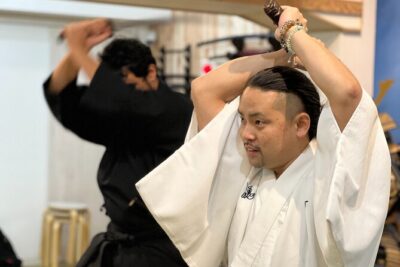
The sword lesson is the centre of the experience. You watch a demonstration, then have a turn practicing. That can be satisfying even if you have never handled a sword before: the instructor gives the activity a clear shape, and you get to concentrate on copying the movement instead of inventing a pose.
The teaching is in English. Instructors named in accounts of the activity include Ken, Raito, Nobu, and Jukia. Your own instructor may be someone else, but the names are useful to know if you are booking with a particular teacher in mind. The personal attention can also matter for younger participants or anyone who feels awkward at first.
A participant described the class with Ken as learning two kata, and the children in that group were especially excited. That points to one of the activity’s strengths: it gives kids an active part to play. Adults can join in rather than watch from the sidelines, making it a shared outing instead of a children’s activity with parents waiting nearby.
Keep expectations sensible. This is an introductory lesson, not a martial arts course or a long study of sword technique. You are paying for a guided taste of samurai practice, the chance to wear the clothing, and the pleasure of trying movements yourself. If you want a serious training program, two hours here will not provide it.
Armor, photos, and a little theatrical fun
The photo session gives the costume a second purpose. You can pose with swords in front of a studio or samurai-themed backgrounds, and the included use of armor and helmet helps complete the look. It is a good fit for families who want a souvenir with everyone in character, or for anyone who enjoys a playful break from temple visits and museum displays.
It is worth thinking about what you want from the photos. This is a themed activity, so the pictures are meant to be fun and memorable rather than formal portraits. If you enjoy dressing up, the chance to pose as a samurai is a major part of the value. If costumes and staged photos are not your thing, the sword lesson and ninja weapons trial may be the stronger reasons to go.
The experience is described as including a guided visit to the Samurai and Ninja Museum. One class account found that visit interesting, with the weapons activity and photos providing the more playful moments. The museum portion adds context to the costume and lesson, though the activity details do not promise a particular exhibit route or amount of time at each display.
That mix works well for a family outing. The museum can give you a chance to look and listen, while the sword and ninja activities let you take part. Still, the balance may feel light on museum time if you are hoping for a long, detailed historical tour. Think of it as an activity with a museum setting, not a museum visit with a full lecture attached.
Trying the ninja weapons
The included ninja weapons trial adds variety after the katana lesson. One participant described target practice with shuriken, the star-shaped throwing weapons associated with ninjas. The activity information confirms a ninja weapons trial, but it does not specify every weapon you will use or exactly how the practice is run.
That uncertainty is a reason to keep expectations flexible. You can count on a hands-on ninja element, but do not assume a particular number of throws, a specific target setup, or a detailed weapons demonstration. The appeal is the chance to try something different from the sword work, under the guidance of the instructor.
For children old enough to enter, this change of pace may help hold their attention. Adults get a turn, too, so you need not spend the session taking photos of everyone else. If your group includes people with very different interests, the combination of costume, sword instruction, museum context, and ninja activity gives you several ways to enjoy the same two hours.
More museum visits in Kyoto:
- Kyoto: Tea Museum Tickets and Matcha Grinding Experience
★ 4.9 · 739 reviews - Skip the lines Basic Ticket at SAMURAI NINJA MUSEUM KYOTO
★ 4.5 · 632 reviews - Kyoto : Geiko Maiko Dance of Kyoto & Visits of Gion Museum
★ 4.6 · 415 reviews - Kyoto Sword Experience – includes Museum Ticket/Ninja Experience
★ 4.5 · 149 reviews
Is $66 a fair price for two hours?
At $66 per person, this is not the cheapest way to fill a couple of hours in Kyoto. The value comes from several elements bundled together: an instructor-led sword lesson, use of hakama and samurai armor, a helmet, themed photo opportunities, and a ninja weapons trial. The museum setting and guided visit add another layer.
I would judge the price by how much your group will enjoy taking part. If you want a costume, a few sword movements, and a playful family photo, the bundle has a clear purpose. If you mainly want to see historical objects, you may get better value from a museum visit that gives more time to exhibits and less time to dressing up and practicing.
The small-group description is attractive because close instruction is useful when you are learning a movement for the first time. However, the activity information gives two different group figures: limited to 10 participants for the small-group format, and a maximum of 22 travelers overall. If a smaller session is important, confirm the number for your chosen time before booking.
The session lasts two hours, which is a manageable block in a Kyoto itinerary. You can fit it between other activities without committing a full day, but remember that transport is not included. Booking information offers free cancellation up to 24 hours in advance and a reserve-now, pay-later option, which can help if your plans are still shifting.
Who will enjoy this most?
This is a good choice for families with children aged three and older who enjoy costumes, movement, and taking part. The under-three age restriction is firm: children below that age cannot enter the venue. For families with a toddler, that can make the activity difficult unless another adult can stay outside with the child.
It also suits adults who enjoy hands-on cultural activities and do not mind a theatrical edge. You do not need to arrive with sword knowledge. The instructor demonstrates the swing before you try it, and the English-language teaching makes the activity accessible to English speakers.
If you are traveling with someone who prefers quiet, detailed museum visits, consider whether the active format will appeal to them. The lesson and photos are central, while the museum component is one part of a broader experience. This is best for people who want to do something, not just look.
The venue is listed as wheelchair accessible and stroller accessible, and it is near public transportation. Those details can make planning easier, but if you have specific access needs, it is sensible to confirm that the setup works for your circumstances before you go. The activity also says most participants can take part.
Should you book the samurai lesson?
Book this if your group is excited by the idea of wearing armor, learning a few katana movements, and trying ninja weapons in one two-hour session. The strongest reasons to go are the instructor-led practice, the included outfit, and the chance for children and adults to take part together. The named instructors include Ken, Raito, Nobu, and Jukia, though you should not assume a particular person will teach your session.
Pass if you want a long, scholarly account of samurai history, a full martial arts class, or a low-cost museum visit. At $66 per person, it makes most sense when your group will use the whole package: lesson, costume, photos, museum context, and ninja activity. For a family looking for an active Kyoto memory, that is a fair trade. Just check the group-size limit and make sure every child in your party is at least three.
FAQ
How long does the samurai experience last?
The activity lasts two hours.
What is included in the price?
The experience includes a samurai sword lesson, use of hakama, a samurai helmet and armor, themed photo opportunities, and a ninja weapons trial.
Is the instruction in English?
Yes. The instructor language is English.
Can children under three take part?
No. Children under three cannot enter the samurai venue.
Is transportation to the activity included?
No. Transportation to and from the activity is not included.
Is the venue accessible by wheelchair or stroller?
The activity information describes the venue as wheelchair accessible and stroller accessible.
How many people can join a session?
The activity is described as a small group limited to 10 participants, while its general maximum is also listed as 22. Confirm the group size for your session if this matters to you.
Can I cancel and receive a refund?
You can cancel up to 24 hours in advance for a full refund.
Newly added in Kyoto
- Uji: Private immersion into Kyoto’s tea and reglious culture★ 5.0 · 17 reviews
- Whisk Your Own Matcha: A Zen Matcha Experience at Temple★ 3.6 · 7 reviews
- Kyoto tea town for matcha lovers★ 5.0 · 16 reviews
- Treasures of Kyoto: Gion & historical Walking Tour★ 5.0 · 6 reviews
- Kyoto Matcha Green Tea Tour★ 4.5 · 23 reviews
- Uji and Wazuka Matcha Farm Half Day Private Guided Tour★ 5.0 · 21 reviews
- Uji Tea Ceremony and UNESCO Heritage Walking Tour★ 5.0 · 20 reviews
- Utilising upcycled Matcha! Creating matcha incense (Uji, Kyoto)★ 5.0 · 6 reviews
Kyoto Samurai & Ninja Experiences, compared.
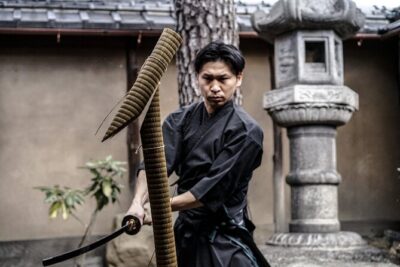
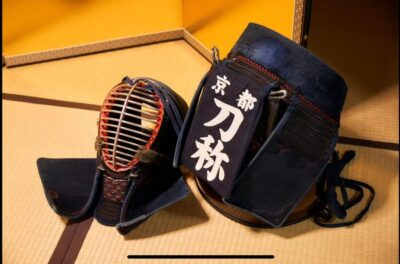
Kendo and Samurai Experience with Uniform and Gear
Read our review →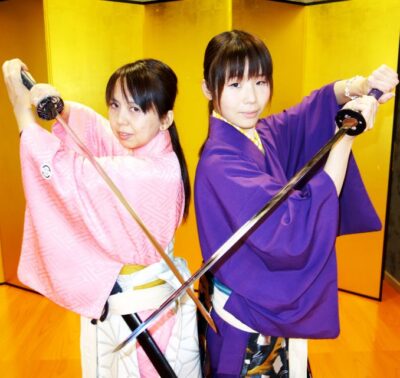
Samurai Sword Class by Experts in Traditional Arts
Read our review →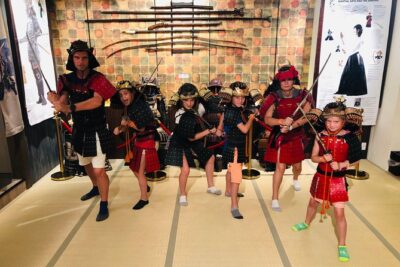
Skip the lines Basic Ticket at SAMURAI NINJA MUSEUM KYOTO
Read our review →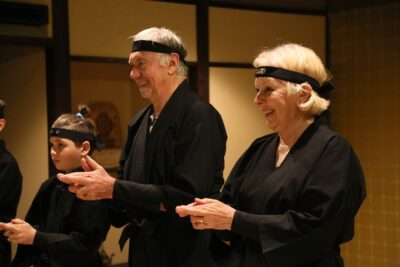
Ninja 1-hour Hands-on Lesson by Japanese master in Kyoto -Entry
Read our review →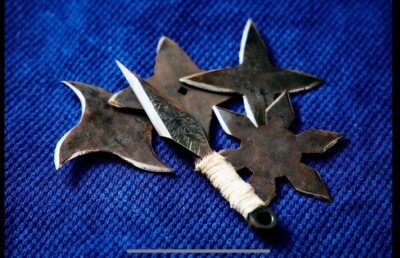
Samurai Training with Modern day Musashi in Kyoto
Read our review →Browse the lists this tour appears in