
Reviewed · FUSHIMI INARI TOURS
Kyoto: Fushimi Inari Night Walking Tour with Guide
Fushimi Inari after dark is less about ticking off Kyoto’s famous shrine and more about seeing it in a different mood. Lantern light picks out the vermilion torii gates, and the quieter paths give you space to notice the symbols and rituals that can be easy to miss in a daytime crowd.
I like two things in particular: the small group, capped at 10, makes conversation with the guide feel natural, and the focus on Shinto customs gives the walk meaning beyond the photos. Guides such as Goku and Kate have led warm, engaging discussions, including conversations that wandered beyond the shrine itself.
The main consideration is scope: this is a guided walk through the lower and middle sections, not a climb across the whole mountain. If you want to reach the summit or spend hours exploring, this two-hour outing is only part of the visit.
- Lantern-lit torii gates: See a quieter, more atmospheric side of Fushimi Inari after dusk.
- Local cultural guidance: Ask about shrine rituals, Shinto beliefs, and the meaning of the gates.
- Small-group format: The group is limited to 10, with time for questions and personal interests.
- A manageable route: The walk covers the lower and middle sections, not the entire mountain.
- Easy meeting point: Find your guide at the single ticket gate at JR Inari Station.
Why visit Fushimi Inari in the evening
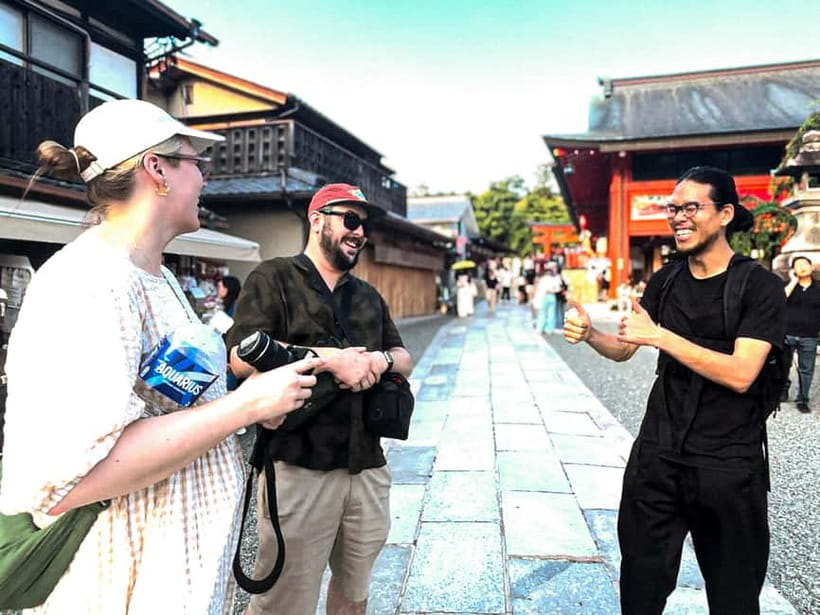
Fushimi Inari Taisha is one of Kyoto’s best-known sights, and its long corridors of vermilion torii gates are familiar even to people who have never set foot in Japan. In the evening, the same place takes on a quieter character. Lanterns glow against the gates and shrine buildings, while fewer people on the paths can make it easier to pause, look around, and listen.
That change in pace is the heart of this tour. Instead of treating the shrine as a quick photo stop, you walk with a local guide who can explain what you are seeing and why it matters. The conversation covers Shinto traditions, shrine rituals, the symbolism of the torii, and customs that shape daily life in Japan.
A guided visit is especially useful if you are new to Shinto. A shrine is not simply a scenic landmark, and its rituals and architecture carry meanings that may not be obvious at first glance. You can ask questions as they occur to you, rather than trying to piece everything together from signs or a guidebook later.
There is also room for quiet reflection and photography at key spots. The aim is not to rush from one gate to another. You still get the striking views, but with context and time to take them in.
Meeting at JR Inari Station
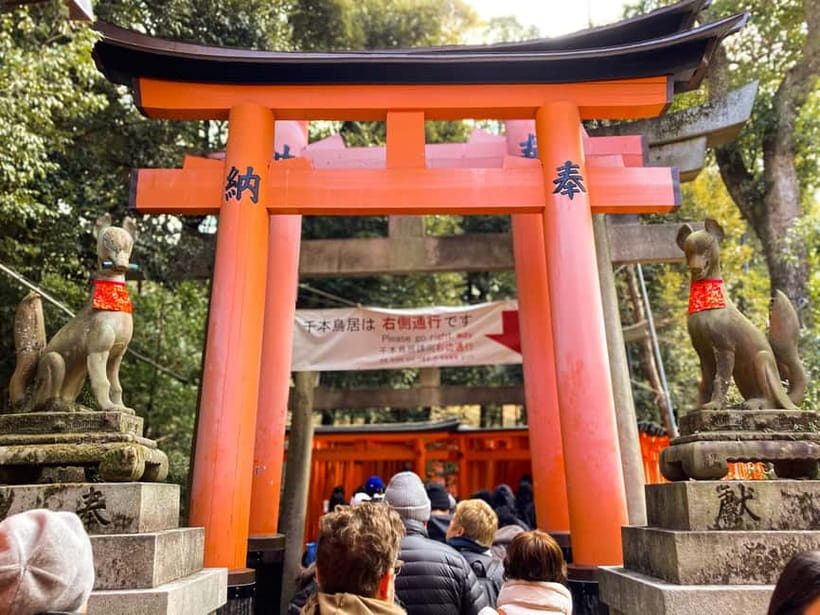
The tour begins at the ticket gate at JR Inari Station, the nearest station to Fushimi Inari Shrine. There is only one ticket gate, so the meeting point is straightforward to find. You meet your guide there before walking to the shrine.
Have WhatsApp or SMS available before the tour. Your guide may use either to contact you in advance, which is useful if you need to confirm the meeting details or your preferred language. English is the default, and French, Spanish, Russian, and Portuguese guides are available on request, depending on availability. Ask ahead rather than assuming a particular language will be offered on your date.
The full activity lasts two hours, with about 1.5 hours set aside for the guided walk at Fushimi Inari. That leaves a little time around the shrine visit for meeting, getting underway, and returning to the station. It is a compact evening plan, easy to pair with other Kyoto plans if you allow enough time to reach the station.
More Fushimi Inari tours in Kyoto:
- Kyoto: Fushimi Inari, Kinkakuji, Bamboo Grove 1 Day Bus Tour
★ 4.8 · 4,316 reviews - Fushimi Inari Hidden Hiking Tour (Private Option Available)
★ 5.0 · 1,750 reviews - Kyoto/Osaka: Nara, Fushimi Inari Taisha, Arashiyama Bus Tour
★ 4.7 · 1,275 reviews
Walking the lower and middle torii paths
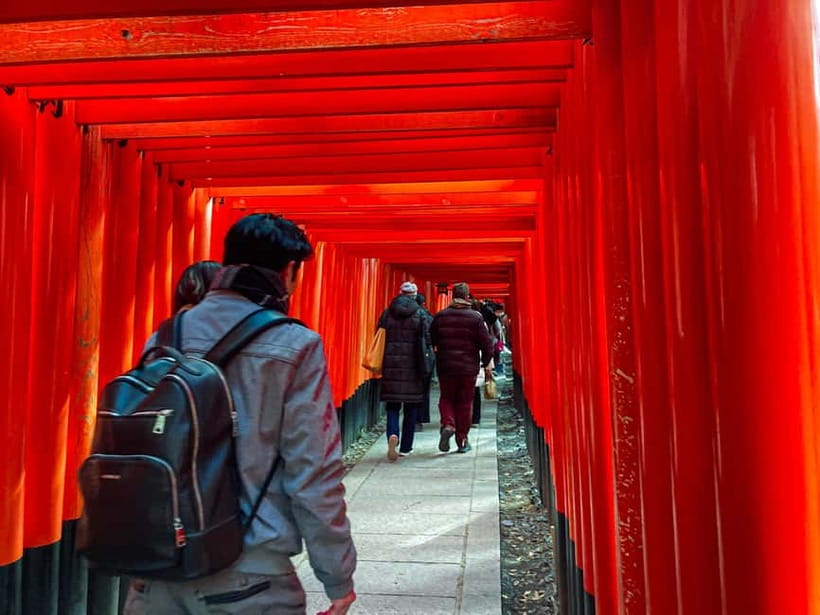
Once you reach Fushimi Inari, the guide leads you through part of the Senbon Torii, the famous passage of closely spaced gates. Their vermilion color is striking by day, but the evening light gives the route a different feel. You can stop for photos and take in the details instead of treating the walk as a race to the next view.
The route uses quieter, scenic paths away from the crowds. That does not mean you have the entire shrine to yourself, but it does make this a good choice if the busy daytime atmosphere sounds tiring. The group limit of 10 also helps keep the walk personal, with a better chance to hear the guide and ask questions.
Keep expectations clear about the distance and scope. The tour focuses on the lower and middle sections of the shrine, not the whole mountain. If reaching the summit is important to you, plan a separate visit or ask about adding time on your own. This guided outing is built around an evening introduction, not a full mountain hike.
Sunset is around 6:00 PM during the season noted for the tour, but the exact mood depends on the time of year and the start time you choose. In winter, a daytime option is also available. Check the available times for your date, and consider the season when deciding whether you want twilight or a fully dark walk.
Making sense of the shrine with a local guide
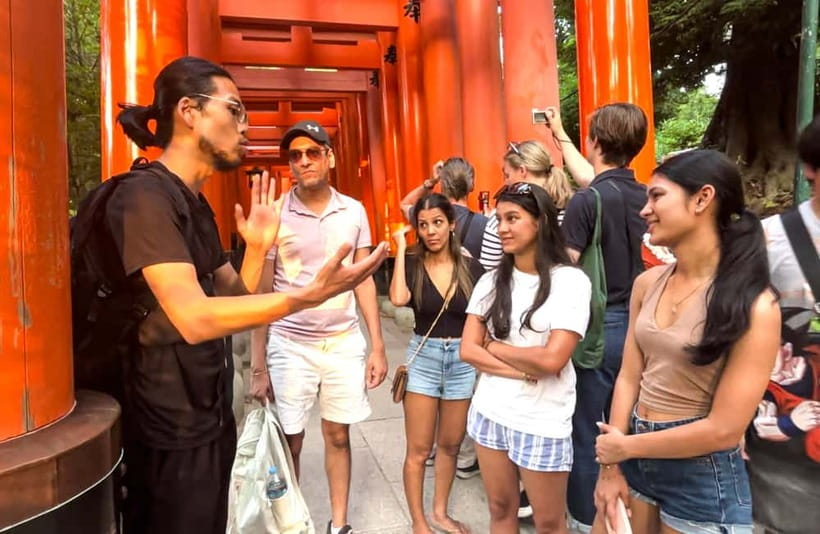
The guide is more than a route leader. Local professionals receive formal training in tourism and Japanese culture, with particular attention to religious traditions, including Shinto shrines and Buddhist temples. On this walk, that background helps turn architectural details and customs into something you can understand without needing prior knowledge.
Expect the guide to discuss the history of Fushimi Inari, the role of shrine rituals, and the meaning attached to torii gates. The explanations can also touch on Japanese customs and differences between Japanese and Western perspectives. The format is conversational, so you can steer the discussion toward what interests you rather than sitting through a fixed lecture.
That flexibility is one of the tour’s strongest points. A January 2026 outing led by Goku was conducted for one participant when no one else had signed up, and the guide still made the effort to run it. Kate led an evening visit in September 2025, when choosing a later time was particularly helpful in the summer heat. These names are useful examples of the guides who have led the tour, but your guide will depend on the date.
The strongest praise centers on clear cultural explanations and the guides’ ability to make conversation engaging. That matters most if you like asking questions or enjoy connecting a famous sight to everyday life. If you prefer a silent walk or only want to take photographs, you may not get as much value from the commentary.
Photographing the gates without rushing
Fushimi Inari’s torii are made for photographs, but the evening setting changes what you can capture. Lanterns cast a soft glow across the shrine buildings and gates, and the quieter atmosphere gives you a chance to wait for a less crowded frame. Your guide can point out scenic spots and leave time for photographs at selected stops.
Bring a charged smartphone, especially if you plan to take pictures or use it to keep in touch before the tour. A phone camera may be enough for casual evening photos, though the guide does not promise any particular lighting or empty stretch of path. Be ready to take a few shots and then put the phone away; the site’s atmosphere is part of the point.
Wear comfortable shoes. The walk takes place across parts of the shrine grounds, and you will be on your feet for much of the guided portion. Food and drinks are not included, so eat beforehand or make a separate plan for after the walk.
More night tours in Kyoto:
- Kyoto: Gion Magical Night Walking Tour with Geisha Trivia
★ 4.9 · 2,393 reviews - Night Walk in Gion: Kyoto’s Geisha District
★ 4.5 · 2,003 reviews - Kyoto Night Foodie Tour in Gion (9+ dishes + 6 Sake tastings)
★ 5.0 · 1,762 reviews - Kyoto Gion Night Walk & Geisha District Guided Tour
★ 5.0 · 786 reviews
Is $38 a fair price?
At $38 per person, this tour is a reasonable buy if you want an informed introduction to Fushimi Inari rather than just a route through the gates. The price covers a professional English-speaking guide, cultural and historical explanations, a small-group walk, and time for questions. The value lies less in getting access to the shrine, which is the setting, than in understanding its traditions while you are there.
The group cap of 10 is useful at this price. A smaller party makes it easier to hear the guide and ask questions, and it suits an experience where conversation is part of the appeal. The possibility of a one-person tour, as happened on one recorded date, is an added advantage for those who enjoy a more personal exchange, though it should not be treated as a guaranteed private tour.
There are limits. The tour does not include food or drinks, and it does not cover the full mountain. If you already know the shrine well, want to hike to the summit, or prefer to explore entirely at your own pace, you may be better off visiting independently. If this is your first visit and you want cultural context in a calm evening setting, the fee is easier to justify.
The booking terms offer flexibility: you can reserve now and pay later, and cancel up to 24 hours in advance for a full refund. Check the available start times before booking, particularly if you have a fixed dinner or transport plan afterward.
Who will enjoy this evening walk
I would choose this tour if you want a compact introduction to Fushimi Inari, value local explanations, and like having room to ask questions. It suits first-time visitors, culture-minded walkers, and anyone who would rather see the shrine in a quieter atmosphere than join the daytime flow.
It is also a good option in hot months, when an evening visit can be more comfortable than walking in the afternoon sun. The September tour led by Kate was praised specifically for the timing during humid summer weather. In colder months, the tour notes that a daytime option is available, so check what is running when you plan to go.
You may want a different plan if your priority is a long hike, a summit visit, or a completely self-guided pace. The walk is limited to the lower and middle sections, and the cultural conversation is central to the experience. It is not simply a guide escorting you to a photo spot.
Should you book the Fushimi Inari night tour?
Book it if you want to see the torii gates after dark and understand the shrine beyond its famous appearance. The combination of a small group, a local guide, and time for questions makes the $38 fee worthwhile for curious visitors who want context as well as photographs.
Skip it if you are set on climbing the entire mountain or would rather wander alone. For a focused evening visit, though, this is a practical way to meet Fushimi Inari at a calmer hour and leave with a clearer sense of the customs and beliefs behind the gates.
FAQ
Where does the tour start?
Meet your guide at the ticket gate at JR Inari Station. The station has only one ticket gate.
How long does the tour last?
The activity lasts two hours, including a guided visit of about 1.5 hours at Fushimi Inari.
Does the tour cover the whole mountain?
No. The guided walk focuses on the lower and middle sections of Fushimi Inari, not the entire mountain.
What languages are available?
English is the default. French, Spanish, Russian, and Portuguese guides may be available on request, depending on availability.
How large is the group?
The small group is limited to 10 participants.
What should I bring?
Wear comfortable shoes and bring a charged smartphone. Keep WhatsApp or SMS available so your guide can contact you before the tour.
What is included in the price?
The tour includes a professional guide and the guided evening walk, with cultural and historical explanations. Food, drinks, and personal expenses are not included.
More walking tours in Kyoto
- Kyoto Geisha Walking Tour: Gion District & Hidden Gems
★ 4.7 · 3,273 reviews - Kyoto: Gion Geisha District Walking Tour – Stories of Geisha
★ 4.7 · 2,187 reviews - Kyoto Gion Geisha District Walking Tour – The Stories of Geisha
★ 5.0 · 1,441 reviews - Nishiki Market Brunch Walking Tour (7 Tastings + Brunch)
★ 5.0 · 1,355 reviews
Newly added in Kyoto
- Uji: Private immersion into Kyoto’s tea and reglious culture★ 5.0 · 17 reviews
- Whisk Your Own Matcha: A Zen Matcha Experience at Temple★ 3.6 · 7 reviews
- Kyoto tea town for matcha lovers★ 5.0 · 16 reviews
- Treasures of Kyoto: Gion & historical Walking Tour★ 5.0 · 6 reviews
- Kyoto Matcha Green Tea Tour★ 4.5 · 23 reviews
- Uji and Wazuka Matcha Farm Half Day Private Guided Tour★ 5.0 · 21 reviews
- Uji Tea Ceremony and UNESCO Heritage Walking Tour★ 5.0 · 20 reviews
- Utilising upcycled Matcha! Creating matcha incense (Uji, Kyoto)★ 5.0 · 6 reviews
Fushimi Inari Tours, compared.

Fushimi Inari, Kinkakuji, Bamboo Grove 1 Day Bus Tour
Read our review →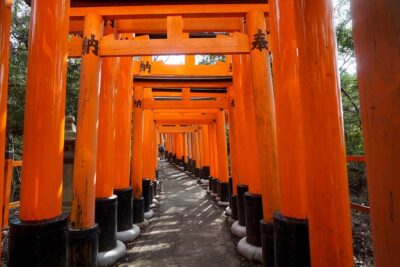
Fushimi Inari Hidden Hiking Tour (Private Option Available)
Read our review →
Nara, Fushimi Inari Taisha, Arashiyama Bus Tour
Read our review →
Arashiyama, Nara & Fushimi Inari Shrine w/Lunch
Read our review →
Nijo Castle, Kiyomizu & Fushimi Inari Guided Tour
Read our review →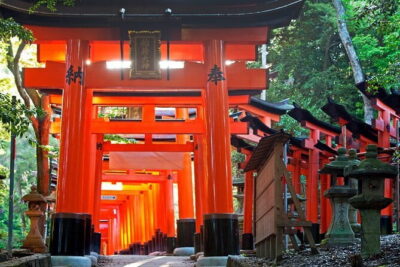
Nijo, Kinkaku-ji, Arashiyama, Kiyomizu & Fushimi Inari
Read our review →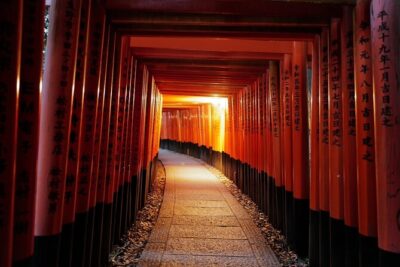
Browse the lists this tour appears in