
Reviewed · KYOTO TOURS
Kyoto: Traditional Concert at Townhouse or Bathhouse
A concert in a Kyoto home, with the musician close enough for you to notice each pluck and pause, is a welcome change from temple-hopping. I like the small townhouse audience, capped at about 11, and the clear introductions to the koto and shamisen, which give you something to listen for beyond a pretty sound.
There is one choice to make: the townhouse is the reliable, cozy option, while the former bathhouse offers a more resonant duet program but runs on irregular Mondays. The address can also take a little care to find, so check your meeting details before setting out.
- The townhouse keeps the music close: Solo performances take place in a traditional home with a maximum audience of about 11.
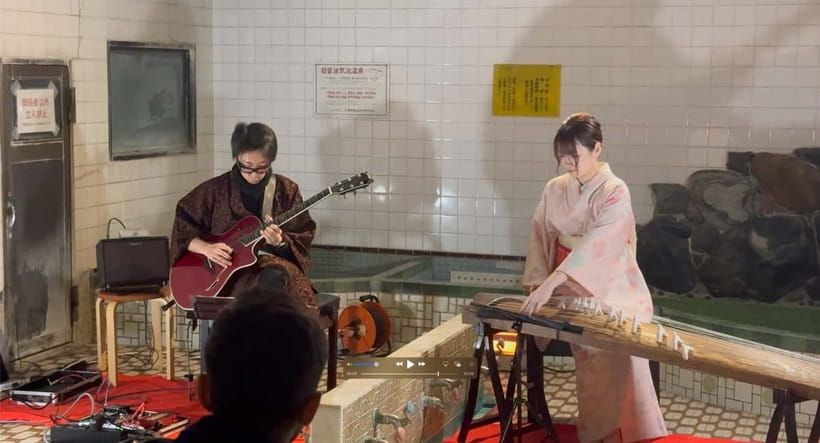
- The bathhouse changes the sound: Tiled walls give the hall a natural echo, and duets pair the koto with instruments such as shamisen, shakuhachi, flute, guitar or taishōgoto.
- The program is not just a recital: Brief bilingual explanations introduce the instruments, playing techniques, notation and pieces.
- You can try the koto: A 35 to 40 minute beginner workshop is available only with the townhouse option.
- Plan around the schedule: Townhouse concerts run almost every day; bathhouse dates are irregular and usually on Mondays.
- Expect a cultural session, not a bath visit: The bathhouse option is for the concert hall only, with no access to bathing facilities.
A small Kyoto concert with room to listen
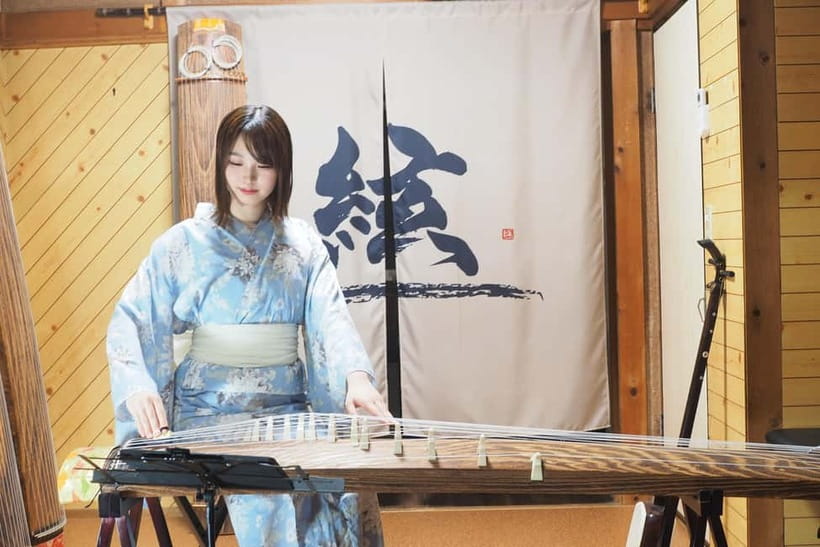
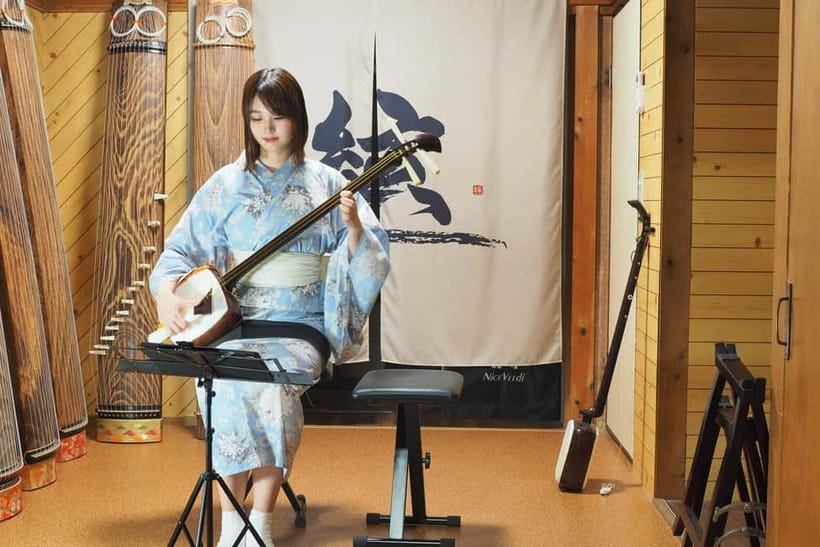
Traditional Japanese instruments can be unfamiliar at first. The koto, a long zither with strings plucked using finger picks, produces clear, ringing notes. The shamisen is a three-string instrument played with a broad plectrum, and its tone can be more percussive. In this concert, short explanations help you recognize how each instrument sounds and how the performer shapes a phrase.
The format is unusually personal. In the townhouse, the musician plays solo sets for a small group, often in a room that feels more like a living room than a concert venue. People who have attended sessions describe audiences as small as seven or nine. At that scale, you can follow the performer’s hands and hear subtleties that might be lost in a large hall.
The bathhouse option offers a different kind of closeness. It can seat up to about 30, and the old tiled walls add a natural reverberation. That echo gives the music a fuller, more enveloping quality, especially when the koto is paired with another instrument. It is not the same intimate home setting, but it brings its own atmosphere.
The townhouse: a solo program in a traditional home
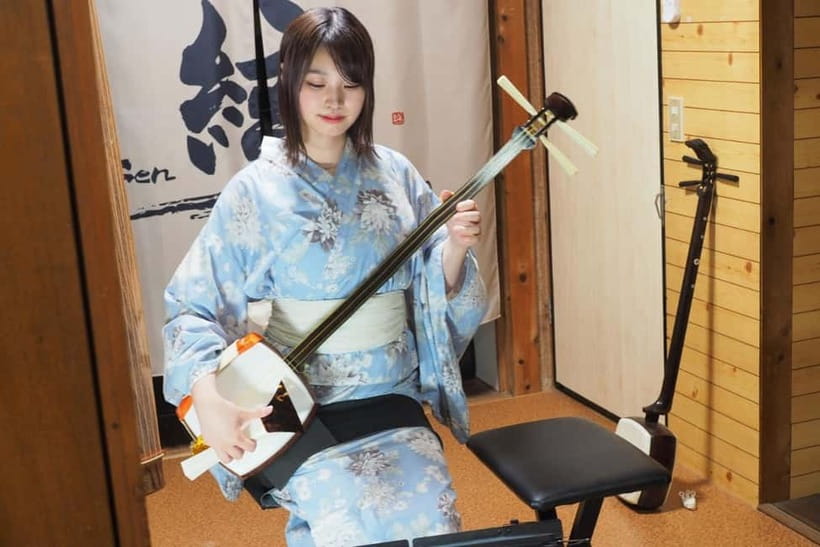
The townhouse is the best fit if you want a quiet, personal encounter with the instruments. A performer plays four or five pieces on koto and shamisen, drawing from classical and contemporary music. Some programs include singing, and selections vary by musician and season rather than following one fixed set list.
That changing repertoire is part of the appeal. You might hear pieces such as Kajimakura, Chidorino Kyoku or Kaede no Hana, but a particular title is not guaranteed. The performer chooses music to show their own style and strengths, so one evening may lean toward traditional songs while another brings in newer works.
The room is small, and that changes how you listen. The sound is direct, the performance feels unhurried, and there is little distance between artist and audience. This is not a staged show designed to impress with elaborate production. The focus is on the instrument, the musician’s technique and the character of each piece.
Seating is on cushions or chairs. If sitting on the floor is uncomfortable, chairs are available, but check the arrangement when you book if you have a preference. The maximum group size is about 11, though the exact number at any session can be smaller.
A few more Kyoto experiences worth booking
- Concerts Played with Traditional Instruments in Kyoto
★ 5.0 · 50 reviews - Kyoto: Japanese Koto & Shamisen Concert and Koto Class
★ 4.9 · 31 reviews - Traditional Concert in Public bath near Kyoto Station
★ 5.0 · 5 reviews
The bathhouse hall: a duet shaped by its echo
The former bathhouse hall offers a broader musical palette. Its program combines solo pieces with duets, usually four or five works in total, not counting the opening piece. The koto may be paired with shamisen, shakuhachi, taishōgoto, flute or guitar, depending on the musicians and the program.
The tiled walls matter. Their natural reverberation lets notes linger, giving the room a dramatic sound that differs from the close, dry feel of a home concert. This is a good choice if you are curious about how traditional instruments work with other sounds, or if you like hearing two musicians respond to one another.
There are trade-offs. The hall can hold about 30 people, so it may feel less private than the townhouse. And its concerts are offered irregularly on Mondays, so you may need to plan your Kyoto day around the next available date. Check the calendar rather than assuming a performance will be running during your stay.
The venue is a historic bathhouse hall, not a bathing attraction. Your ticket includes concert seating, not entry to bath facilities, and food, drinks and transport are not included.
The program: short explanations before the music
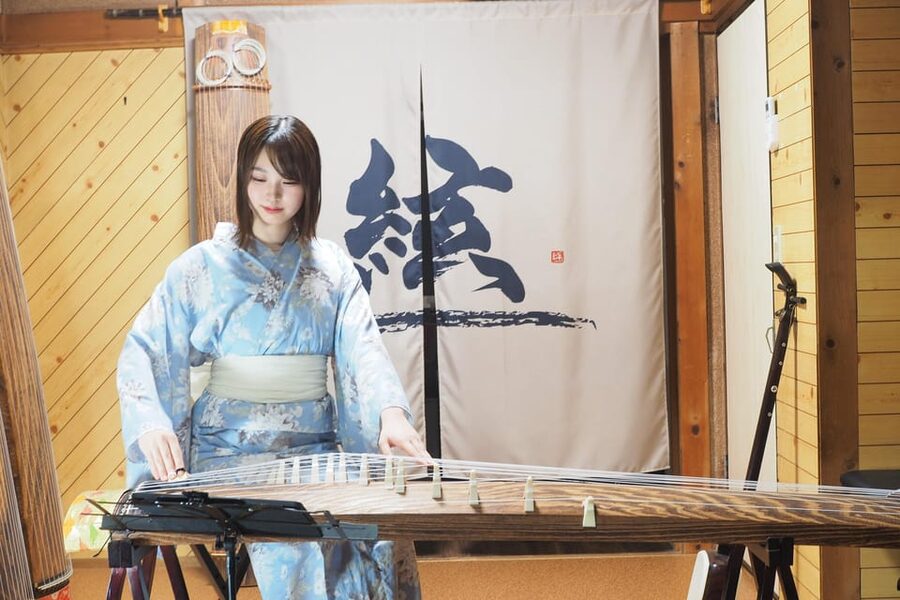
The usual sequence begins with check-in and seating, taking about five to ten minutes. The host welcomes the group and covers venue etiquette. The townhouse uses cushions or chairs; the bathhouse has rows of seats.
Next comes a 10 to 15 minute introduction to the instruments. You learn how the koto and shamisen are played, what their parts and picks do, and how their notation differs from Western music notation. This context is useful even if you have never studied music. You do not need specialist knowledge to follow the session.
The concert itself runs about 25 to 30 minutes. The performer gives commentary, and the program moves through several pieces rather than asking you to sit through a long, unexplained recital. The mix of classical, contemporary and original work makes the contrast easier to hear: tradition is present, but the music is not limited to one historical sound.
Afterward, there is time for a short Q&A and photos, usually five to ten minutes. You can ask about the instruments, the pieces or the performer’s approach. The conversation is a real part of the activity, not just a quick photo line, though time is limited.
With the townhouse booking, you can add a hands-on koto workshop lasting about 35 to 40 minutes. The instruments are sanitized, and the instructor guides you through basic technique and a short phrase. It is designed for beginners, so you are not expected to arrive knowing how to read the notation or use the picks. The point is to feel how the strings respond and try making a simple musical pattern yourself.
The workshop extends the total visit. The overall activity ranges from 45 to 105 minutes, depending on the option and whether you take part in the lesson. If you have a tight schedule, check the duration for your chosen session rather than planning around the shortest advertised time.
What the hosts and musicians add
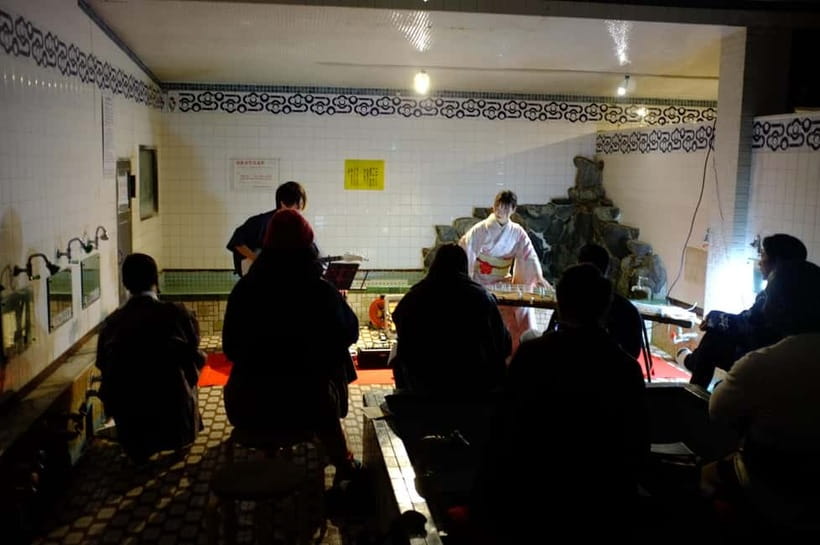
The music is the main event, but the explanations help it land. The host or interpreter gives bilingual commentary in Japanese and English, translating musical details into plain language. That is especially helpful when the performer is demonstrating a technique or explaining how a piece is structured.
The names connected with past sessions include host Gen and musicians such as Furan, Kyoko and Aoi. The performer depends on the date, so treat those names as examples, not a promise of who will appear at your session. The musicians’ backgrounds and programs vary, which is one reason the repertoire changes.
The atmosphere is generally welcoming and conversational. Some sessions have been nearly private because only a few people booked; others have had a fuller room. You may be able to ask plenty of questions, but the exact level of interaction depends on group size and the schedule.
Photography time is included after the performance. Keep your attention on the music while it is being played, then use the designated time to take pictures with the performers. The experience is built around listening first, with a chance to meet the artists afterward.
More Kyoto tours in Kyoto:
- PERFECT KYOTO 1-Day Bus Tour
★ 5.0 · 13,518 reviews - Kyoto: Fushimi Inari, Kinkakuji, Bamboo Grove 1 Day Bus Tour
★ 4.8 · 4,316 reviews - Kyoto: Tea Ceremony in a Traditional Tea House in Kiyomizu
★ 4.9 · 3,519 reviews - Kyoto Geisha Walking Tour: Gion District & Hidden Gems
★ 4.7 · 3,273 reviews
Price and value at $32
At $32 per person, this is a strong-value cultural activity if you want more than a quick demonstration. The ticket includes a live performance of four or five pieces, bilingual mini-commentary, Q&A, time for photos and seating. The townhouse option also offers the koto workshop, though confirm whether it is included in your selected booking or is an optional add-on.
The price makes most sense for music lovers, curious first-time listeners and anyone who wants a quieter counterpoint to a day of sightseeing. You are paying for skilled live music in a small setting, with explanations that make the performance easier to understand. It is not a full-length concert, and the music portion is only about half an hour, so don’t expect a long evening program.
The workshop can increase the value if you are keen to try the instrument. Learning a short phrase gives you a physical sense of the koto’s technique that a performance alone cannot provide. If you would rather simply listen, the concert and Q&A still make a complete visit.
Free cancellation is available up to 24 hours in advance, and the booking option allows you to reserve without paying immediately. Those terms are useful when your Kyoto plans are still taking shape, but the most important practical decision is choosing the venue and date.
Finding the venue and planning your day
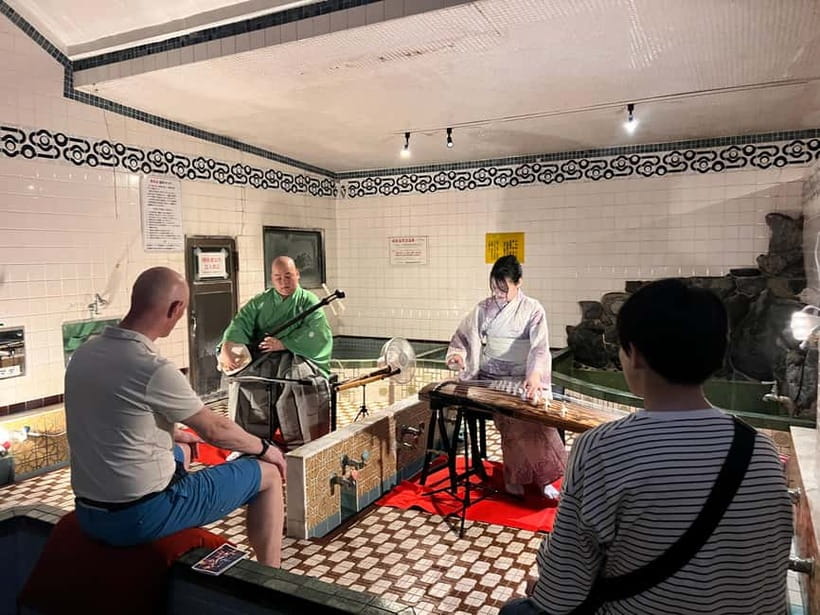
The meeting point varies according to the option booked, so use the exact directions for your session rather than assuming both venues share an address. Some people have found the townhouse location a little difficult to identify. Check the map pin and directions in advance; if the street address does not help, one attendee found the longitude and latitude easier to use.
The activity does not include transfers. For nearby sightseeing, the information provided gives approximate travel times: Arashiyama is about 25 minutes away by walking to Saiin Station, taking Hankyu to Katsura, then transferring to the Randen Line. Nijō Castle is about 20 minutes away, with one stop from Saiin on the Tozai subway line. Kinkaku-ji is about 20 minutes away by bus from Nishioji Sanjō, followed by a short walk. Nishiki Market is about 25 minutes away by direct Hankyu ride to Karasuma or Kawaramachi.
Treat those as planning estimates, not door-to-door guarantees. The venue and meeting point can vary, and local transfers take time. I would leave a cushion between sightseeing and the concert instead of arriving at the last minute, particularly if the address is unfamiliar.
The townhouse’s near-daily schedule makes it easier to fit into a Kyoto itinerary. The bathhouse is less flexible, but its duet format and distinctive acoustics may be worth arranging your plans around if that is what interests you most.
Who will enjoy this most
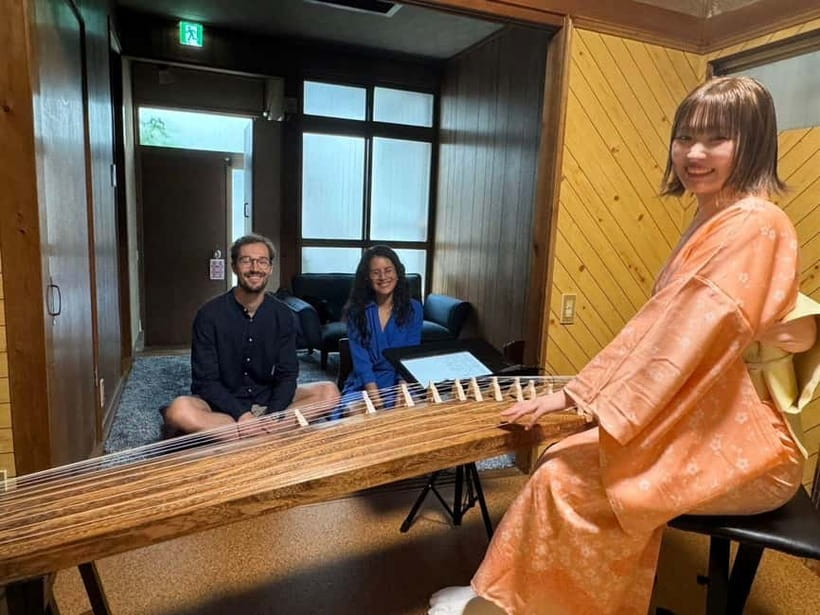
This concert suits you if you are interested in Japanese music but do not already know the instruments. The explanations assume little prior knowledge, and you can ask questions directly. You do not need to understand music notation or recognize classical titles to appreciate the sound.
It is also a good choice if you want a calm hour away from crowded sightseeing. The townhouse format is especially appealing to couples, solo visitors and small groups who value a personal setting. Families with older children may enjoy the workshop, though the activity is not suitable for babies under one year.
Choose the bathhouse if you prefer duets and a larger room with a more resonant sound. Choose the townhouse if you want the closest audience setting, a more regular schedule and the chance to try the koto. Neither option is a substitute for a large formal concert, and that is precisely the point: the scale leaves room for questions and detail.
Should you book it?
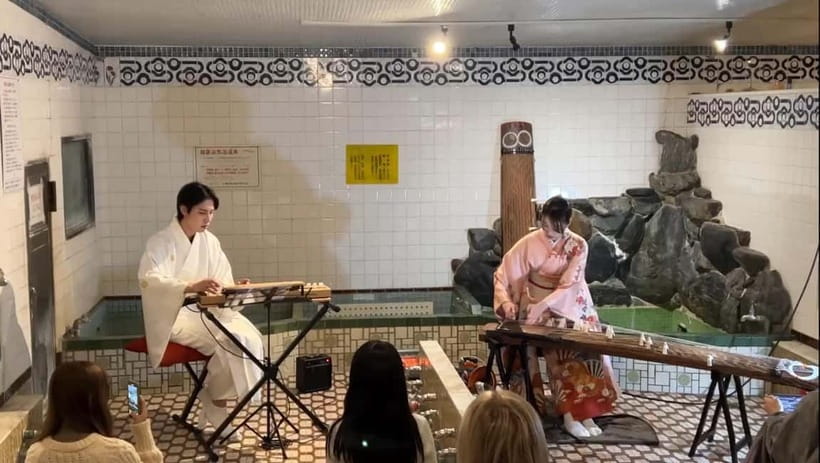
Book the townhouse if you want an intimate performance, a flexible date and the option to try the koto yourself. Pick the bathhouse if the duet program and tiled hall appeal to you, and you can work around its limited schedule. At $32, either choice offers a focused introduction to Japanese traditional music, with enough explanation to make the listening meaningful. Check the venue, start time and exact meeting point before you reserve.
FAQ
How long does the concert last?
The activity lasts 45 to 105 minutes, depending on the venue and whether you add the optional koto workshop.
What instruments will I hear?
The programs feature koto and shamisen. At the bathhouse, duet partners may include shakuhachi, taishōgoto, flute or guitar, depending on the performance.
Is the koto workshop available at both venues?
No. The optional hands-on workshop is available only with the traditional townhouse booking.
Do I need musical experience?
No. The session is intended for people with little or no prior knowledge of Japanese traditional instruments.
Is the bathhouse ticket an admission to use the baths?
No. The booking covers the concert in the bathhouse hall. Bathing and access to the bathhouse facilities are not included.
How many people can attend?
The townhouse holds up to about 11 people. The bathhouse hall can hold up to about 30.
Can I cancel my booking?
Yes. You can cancel up to 24 hours in advance for a full refund.
Newly added in Kyoto
- Uji: Private immersion into Kyoto’s tea and reglious culture★ 5.0 · 17 reviews
- Whisk Your Own Matcha: A Zen Matcha Experience at Temple★ 3.6 · 7 reviews
- Kyoto tea town for matcha lovers★ 5.0 · 16 reviews
- Treasures of Kyoto: Gion & historical Walking Tour★ 5.0 · 6 reviews
- Kyoto Matcha Green Tea Tour★ 4.5 · 23 reviews
- Uji and Wazuka Matcha Farm Half Day Private Guided Tour★ 5.0 · 21 reviews
- Uji Tea Ceremony and UNESCO Heritage Walking Tour★ 5.0 · 20 reviews
- Utilising upcycled Matcha! Creating matcha incense (Uji, Kyoto)★ 5.0 · 6 reviews
Kyoto Tours, compared.

Fushimi Inari, Kinkakuji, Bamboo Grove 1 Day Bus Tour
Read our review →
Tea Ceremony in a Traditional Tea House in Kiyomizu
Read our review →
Kyoto Geisha Walking Tour: Gion District & Hidden Gems
Read our review →
Gion Magical Night Walking Tour with Geisha Trivia
Read our review →
Gion Geisha District Walking Tour – Stories of Geisha
Read our review →Browse the lists this tour appears in