
Reviewed · KYOTO GEISHA TOURS
Kyoto: Try Nishijin Weaving in the Oldest Geisha District
At Kitano Tenmangu’s first grand torii, this tour sets out into a quieter corner of Kyoto: Kamishichiken, the city’s oldest Hanamachi, or geiko district. The route pairs a visit to the shrine with a hands-on Tsuzure-ori weaving class and a guided walk along a historic street lined with traditional townhouses.
I like the mix of craft and neighborhood history: you don’t just hear about Nishijin textiles, you try weaving them with a traditional craftsperson. I also like that the guide connects Kamishichiken’s story to Kitano Tenmangu, giving the shrine visit a local thread rather than treating it as a quick photo stop.
One consideration: the class takes about 90 minutes, so this is a focused introduction, not a long course in weaving. At $131 per person, the price makes most sense if you value the guided context and the chance to make something by hand, not just a walk through the district.
Key points to know before you go
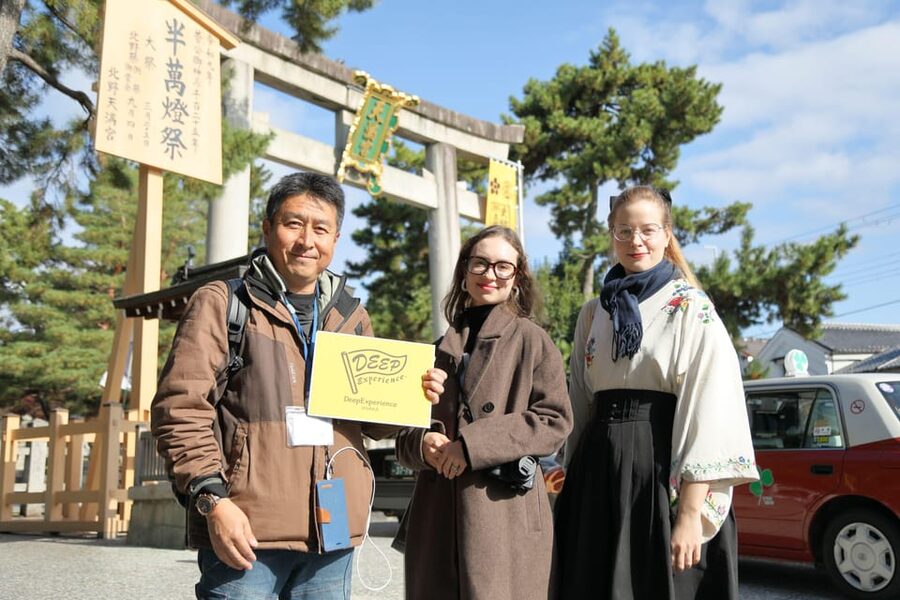
- The meeting point is easy to identify: meet in front of Kitano Tenmangu’s first grand torii, where the guide holds a yellow DeepExperience sign.
- The shrine visit comes first: allow about 30 minutes to see the grounds and learn why Kitano Tenmangu matters to Kamishichiken.
- The main activity is a 90-minute weaving class: learn the basics of Tsuzure-ori and make a selected item in a working workshop.
- Kamishichiken’s historic street is compact: the guided walk covers a roughly 400-meter stretch of traditional townhouses and local geiko and maiko associations.
- The tour is offered in English or Japanese: private or small-group formats are available, though the exact group size is not specified.
- Dango is not guaranteed: tasting depends on the shop’s availability.
Starting at Kitano Tenmangu’s first torii
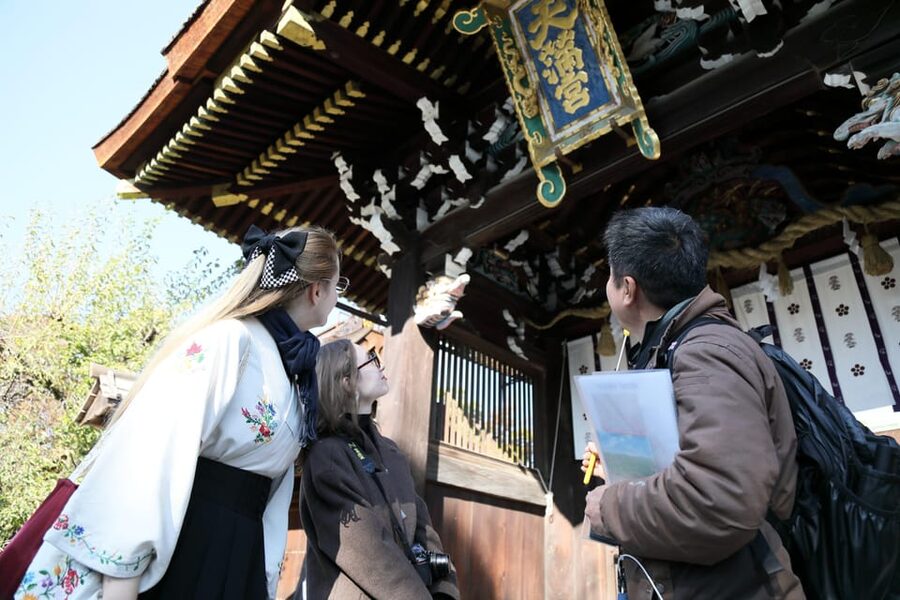
The tour begins in front of the first grand torii of Kitano Tenmangu Shrine. Look for the guide holding the yellow DeepExperience sign. Starting here makes sense: the shrine is more than a handsome landmark on the route. Its history is tied to the creation of Kamishichiken, and your guide explains that connection before you walk into the district.
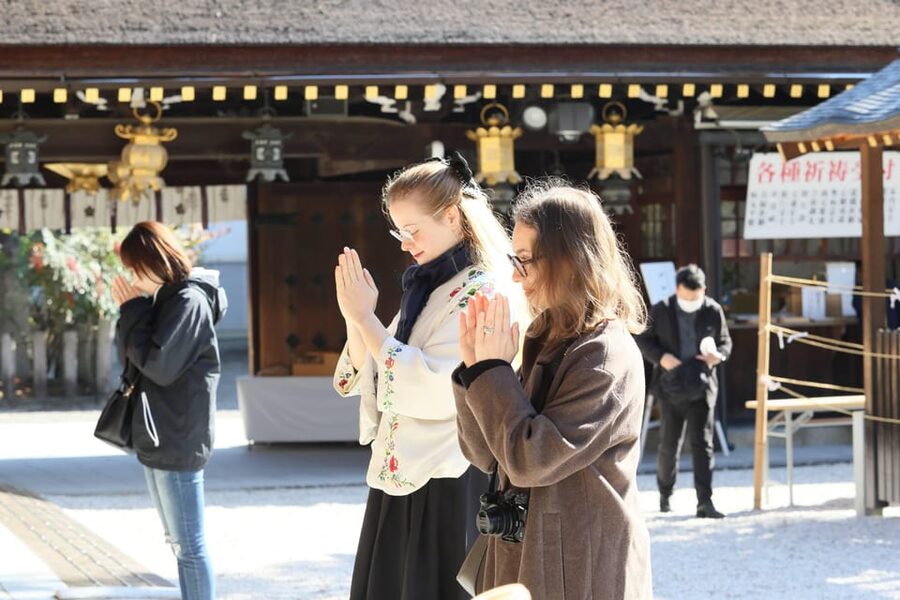
The shrine portion lasts about 30 minutes. You’ll have time to pay your respects and see important cultural assets, including the main worship hall, while your guide points out the grounds and their seasonal scenery. The setting changes with the season, so the visit is not only about architecture. On a rainy or chilly day, the grounds may feel especially quiet, but bring weather-appropriate clothing since part of the tour is outdoors.
This stop is a useful introduction, not an exhaustive shrine tour. If you want a long, independent visit to Kitano Tenmangu, you may want to return on your own. Here, the guide’s job is to help you see the shrine in the context of the neighborhood, then move on to the textile workshop.
More geisha and maiko experiences in Kyoto:
- Kyoto Geisha Walking Tour: Gion District & Hidden Gems
★ 4.7 · 3,273 reviews - Kyoto: Gion Magical Night Walking Tour with Geisha Trivia
★ 4.9 · 2,393 reviews - Kyoto: Gion Geisha District Walking Tour – Stories of Geisha
★ 4.7 · 2,187 reviews
Learning Tsuzure-ori at the loom
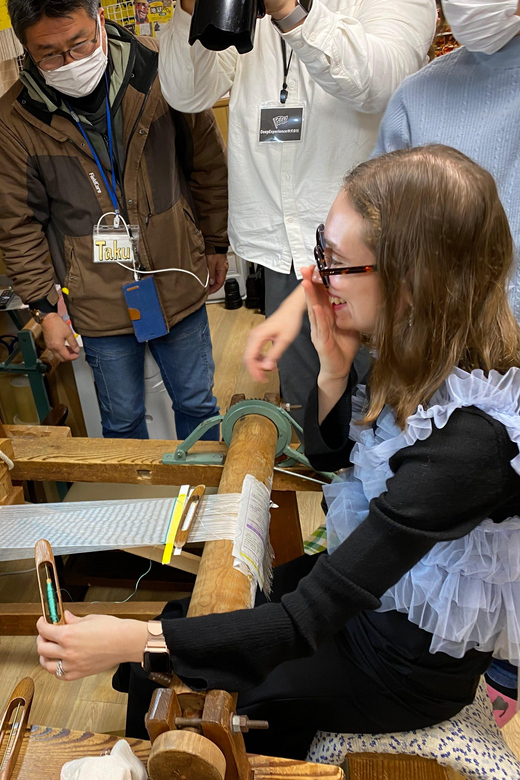
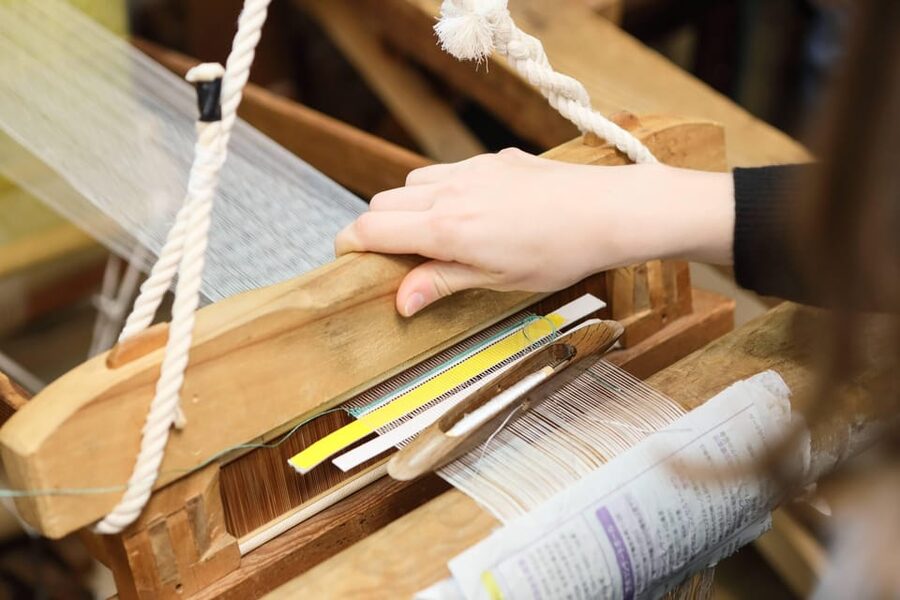
The weaving class is the heart of the experience and lasts about an hour and a half. You’ll be introduced to Tsuzure-ori, a patterned textile technique associated with Nishijin and described on the tour as its oldest technique. The class gives you a chance to learn basic traditional methods and make an item from the available selection.
This is not a demonstration where you simply watch a craftsperson work. You get to try the process yourself, with instruction in a real workshop. That distinction matters: the value is partly in the finished piece, but also in understanding the care and skill involved in making patterned fabric. If you enjoy fiber arts, handicrafts, or learning by doing, this is likely the most memorable part.
The teacher’s manner can shape the class as much as the technique. Hirano Sensei has led the workshop, and participants have described him as patient, humorous, and warm. The guide also helps interpret and connect the craft to the wider cultural setting. Guides have included Kanako, Yayoi, and Juraj, though the person leading your tour may differ.
Keep expectations sensible. You’ll learn the basics and create a one-of-a-kind work, but 90 minutes will not make you a weaver. The item you choose depends on what is available, and the tour details do not specify which products you can select. If you have a particular project in mind, ask before booking rather than assuming it is offered.
A visit to a traditional fabric store has been part of some versions of the outing, adding a chance to see textiles beyond the workshop. It is not listed as a guaranteed stop, so treat it as a possible extra rather than a promise. The dango tasting is also subject to the shop’s availability.
Walking Kamishichiken’s 400-meter street
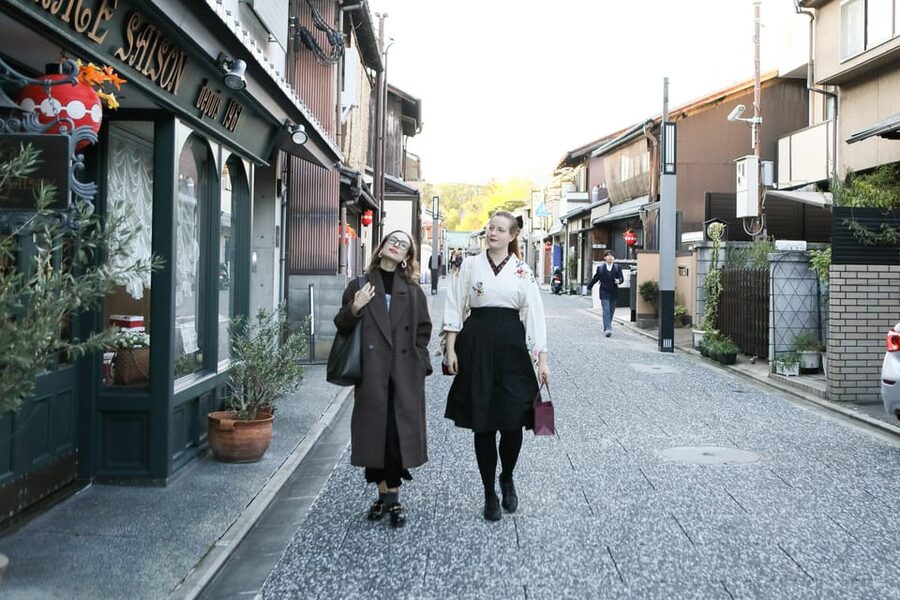
After the class, the tour continues with a guided walk through Kamishichiken. The neighborhood is Kyoto’s oldest Hanamachi, a district associated with geiko and maiko. The featured stretch is about 400 meters long, with traditional townhouses and latticework that preserve a sense of the area’s older streetscape.
The short distance is a strength if you want a calm introduction without committing to a long walking tour. Your guide points out places associated with local geiko and maiko and helps you read the details you might otherwise pass by. The point is not to intrude on residents or treat the district as a stage; it is to understand how a working neighborhood and its cultural traditions fit together.
Kamishichiken is presented as a quieter alternative to more crowded parts of Kyoto. That does not mean every street will be empty, but the tour is designed around a tranquil stroll rather than a rush from one famous sight to another. Keep your camera considerate and follow your guide’s lead around private homes and local businesses.
The route’s compact scale also means this walk is an overview. You won’t cover every lane in the district, and the tour is not a performance or a guaranteed chance to see geiko or maiko in person. Instead, you get context about their connection to the neighborhood and a look at the preserved townscape.
Why the shrine and workshop belong together
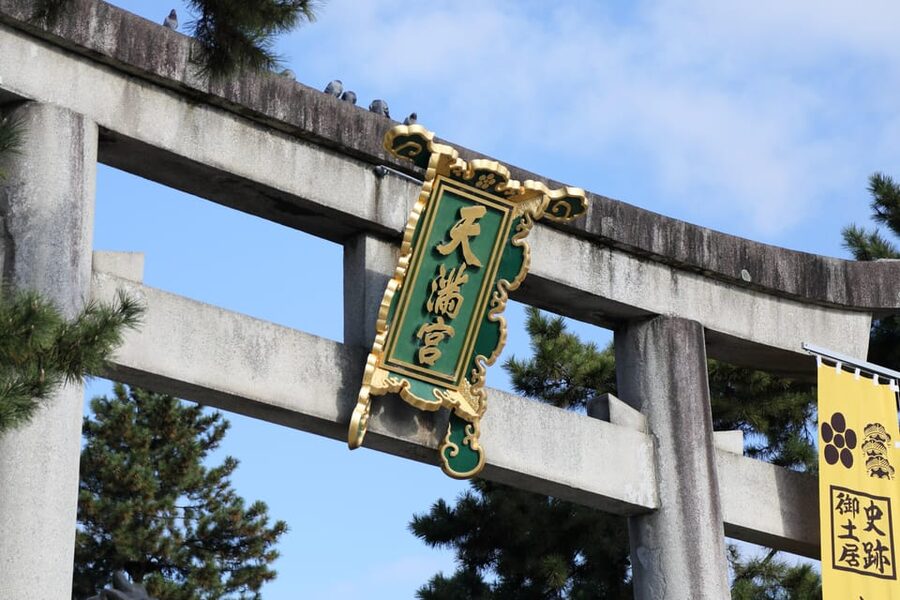
It might seem like an odd pairing at first: a shrine visit, then a weaving lesson, then a walk through a geiko district. The connection is local history. Kitano Tenmangu is described as the guardian shrine of the area and as part of the story behind Kamishichiken’s creation, while Nishijin weaving links the experience to Kyoto’s textile traditions.
That structure helps the tour make sense of what you’re seeing. The shrine supplies the historical starting point, the workshop gives you a tactile encounter with a traditional craft, and the neighborhood walk brings the local setting into view. You leave with more than a set of disconnected stops, though the depth of the experience depends on the guide’s explanations and your interest in the subjects.
The combination also makes this a good choice for a repeat visit to Kyoto. If you have already seen the major temples, you may appreciate a smaller-scale outing that introduces a particular district and craft. For a first visit with very little time, it is still a pleasant half-day activity, but it does not replace the city’s larger headline sights.
More Gion tours in Kyoto:
- Best of Kyoto: Gion, Geisha, Pagodas & Cobblestones
★ 4.9 · 2,058 reviews - Night Walk in Gion: Kyoto’s Geisha District
★ 4.5 · 2,003 reviews - Kyoto Night Foodie Tour in Gion (9+ dishes + 6 Sake tastings)
★ 5.0 · 1,762 reviews - Kyoto Gion Geisha District Walking Tour – The Stories of Geisha
★ 5.0 · 1,441 reviews
Is $131 a fair price?
At $131 per person for three hours, this is not a bargain walking tour. You are paying for an expert guide, a shrine visit, a hands-on workshop with a traditional craftsperson, and a guided neighborhood walk. If you booked each element separately, you would need to find the right workshop and connect it with a guide who could explain the district’s history.
The price is easiest to justify if you’ll genuinely enjoy the weaving lesson. The workshop takes about half the scheduled time, so someone who only wants to see the shrine and old streets may find the cost high for the amount of walking. But if you value trying a craft rather than only observing it, the class gives the tour a clear purpose and a take-home result.
The outing is available as a private or small-group tour. The exact group size is not provided, so ask if that detail is important to you. Reserve now and pay later is offered, and you can cancel up to 24 hours in advance for a full refund.
Who will get the most from this tour?
I’d put this near the top of the list for anyone curious about textiles, traditional crafts, or the less-visited corners of Kyoto. It also suits people who like a guide to explain how a neighborhood’s sights fit together, rather than simply giving directions from one stop to the next. The class is a particularly good reason to book if you enjoy making things with your hands.
You do not need prior weaving experience. The class is described as an introduction to the basics, with a traditional craftsperson guiding you. If you already weave, you may find the short format introductory, but you’ll still get a chance to see a traditional technique in a working workshop.
This is less suitable if your main goal is to spend hours inside Kitano Tenmangu, shop for textiles, or see geiko and maiko. The shrine visit and neighborhood walk are brief, and the fabric-store visit and dango tasting are not guaranteed. Book for the combination of guided context and hands-on making, not for any single optional extra.
Should you book it?
Book this tour if you want to connect Kyoto’s historic streets with a craft you can try yourself. The strongest reasons are the patient, personal teaching style associated with Hirano Sensei and the guide’s role in linking Kitano Tenmangu, Nishijin weaving, and Kamishichiken. At three hours, it offers a focused look at a quieter district.
Skip it if you want a low-cost stroll or a full-day craft course. For the right person, though, the class turns local history into something you can feel at the loom, and the walk gives that work a place in Kyoto’s living culture.
FAQ
Where does the tour meet?
Meet your guide in front of the first grand torii gate of Kitano Tenmangu Shrine. The guide will be holding a yellow sign with the DeepExperience logo.
How long is the tour?
The tour lasts three hours. The listed schedule includes about 30 minutes at Kitano Tenmangu, 1.5 hours for the weaving class, and 30 minutes for the guided walk.
What languages are available?
The live guide is available in English or Japanese.
What is included in the price?
The tour includes an expert guide, a visit to Kitano Tenmangu Shrine, and the Nishijin weaving experience.
What will I make during the weaving class?
You can choose an item from the available selection and make it using traditional techniques. The specific choices are not listed in advance.
Do I need weaving experience?
The class teaches the basics of Tsuzure-ori, so it is presented as an introductory experience. No prior experience requirement is stated.
Is dango tasting included?
Dango tasting depends on the shop’s availability, so it is not guaranteed.
Is the tour private or in a small group?
Private or small-group options are available. The exact group size is not specified.
Can I cancel after booking?
You can cancel up to 24 hours in advance for a full refund. Reserve-now, pay-later booking is also available.
Newly added in Kyoto
- Uji: Private immersion into Kyoto’s tea and reglious culture★ 5.0 · 17 reviews
- Whisk Your Own Matcha: A Zen Matcha Experience at Temple★ 3.6 · 7 reviews
- Kyoto tea town for matcha lovers★ 5.0 · 16 reviews
- Treasures of Kyoto: Gion & historical Walking Tour★ 5.0 · 6 reviews
- Kyoto Matcha Green Tea Tour★ 4.5 · 23 reviews
- Uji and Wazuka Matcha Farm Half Day Private Guided Tour★ 5.0 · 21 reviews
- Slow Cycling Tour at Uji’s Matcha Green Tea Fields and Heritage★ 5.0 · 25 reviews
- Uji Tea Ceremony and UNESCO Heritage Walking Tour★ 5.0 · 20 reviews
Kyoto Geisha Tours, compared.

Kyoto Geisha Walking Tour: Gion District & Hidden Gems
Read our review →
Gion Magical Night Walking Tour with Geisha Trivia
Read our review →
Gion Geisha District Walking Tour – Stories of Geisha
Read our review →
Best of Kyoto: Gion, Geisha, Pagodas & Cobblestones
Read our review →

Kyoto Gion Cultural Walk & Geisha Show with Dining Options
Read our review →
Browse the lists this tour appears in