Reviewed · KYOTO TOURS
Kyoto Highlights & Hidden Gems in Nature (Private Van Eng-Guide)
Kyoto’s best surprise may be the road between its famous sights. This six-hour private van tour with guide Daiki Fukashi crosses the city, then climbs into quieter mountain country, where shrines, old cedars and broad views offer a different side of Kyoto from the packed temple lanes.
I like two things in particular: the van makes far-flung sights practical in one day, and Daiki can explain the religious and historical meaning behind the places you see. The route also reaches secluded corners that are awkward to visit by bus or train.
The trade-off is pace. The plan covers a lot of ground, and several stops are brief. Crowds, opening hours, weather or seasonal conditions can change the route, so treat the schedule as a framework rather than a promise to linger at every site.
- A private, six-hour route links central Kyoto, Arashiyama and the northern hills.
- Daiki Fukashi guides in fluent English, with a focus on Buddhism and Japanese history.
- The mountain section includes overlooks, a local shrine and an unusual giant cedar grove.
- Golden Pavilion admission is extra, as are temple entry fees generally.
- Fushimi Inari gets about 40 minutes, enough for a taste of its famous gates, not the full mountain walk.
- Pickup and drop-off anywhere in Kyoto City help you avoid stitching together a day of bus and train connections.
Kyoto by van, from famous temples to mountain shrines
This tour makes sense if your Kyoto wish list stretches beyond the city center. The Golden Pavilion sits in the north, Arashiyama is to the west, Fushimi Inari is to the south, and the mountain stops lie farther out. In a six-hour day, a private van connects these areas far more directly than public transport.
That convenience changes the feel of the outing. You can cross town without spending much of your day waiting for buses, and the guide can take you onto narrow country roads that are not a natural fit for a standard sightseeing route. The van is described as comfortable, and one family specifically appreciated its air conditioning. Fuel, tolls and parking are included.
It is still a sightseeing drive, not a slow walking tour. Some stops are listed for only five to 15 minutes, while the largest temple visits have more time. If you want long, unhurried visits to every shrine and garden, this route may feel compressed. If you value variety, context and access to places you likely would not reach alone, the pace has a practical logic.
The Golden Pavilion sets a grand opening note
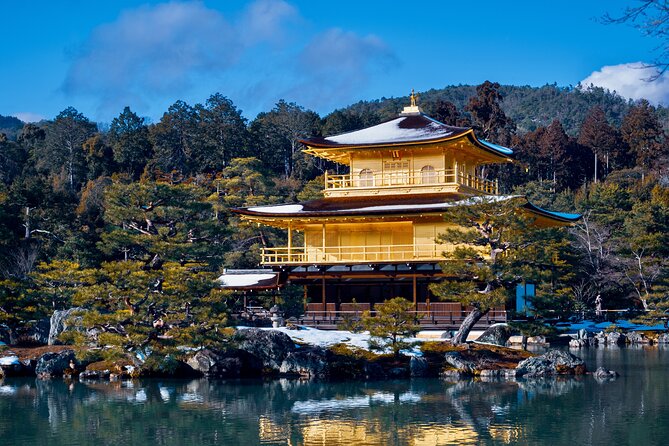
Kinkakuji, the Golden Pavilion, is the best-known stop at the beginning of the route. Its gold-leaf exterior reflects in the pond, making it one of Kyoto’s most instantly recognizable sights. You have about 45 minutes here, with admission paid separately.
This is also where you should expect the most conventional sightseeing atmosphere. The temple is famous, and crowds are part of the bargain. The van makes getting here easier than relying on a bus from elsewhere in the city, but it cannot make a popular landmark feel secluded. Think of this stop as the iconic view, then look forward to the quieter places later.
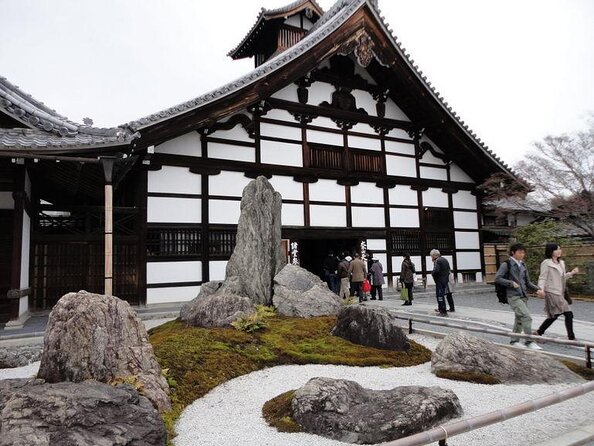
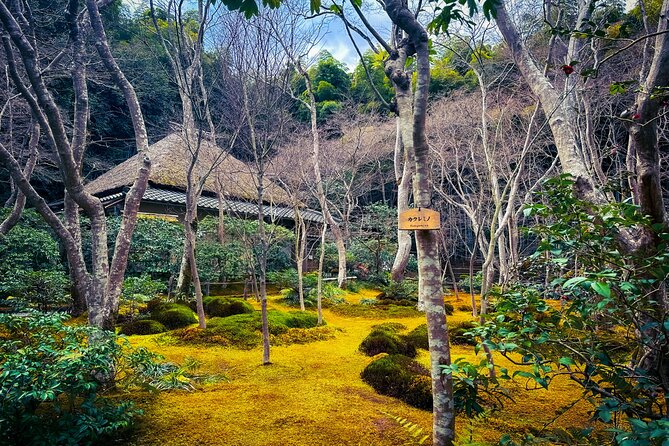
The route moves west to Arashiyama, where the smaller Gio-ji Temple offers a very different mood. Its moss-covered garden and thatched hut bring together several classic Japanese garden details in a compact setting, with bamboo and trees around the grounds. Fifteen minutes is a short visit, but the small scale makes this a useful contrast to the grand pavilion.
More private tours in Kyoto:
- Fushimi Inari Hidden Hiking Tour (Private Option Available)
★ 5.0 · 1,750 reviews - Private Kyoto Tour with a Local, Highlights & Hidden Gems, Personalised
★ 5.0 · 1,543 reviews - Kyoto 6hr Private Tour with Government-Licensed Guide
★ 5.0 · 1,369 reviews
Arashiyama’s bamboo path, with quieter temple corners nearby
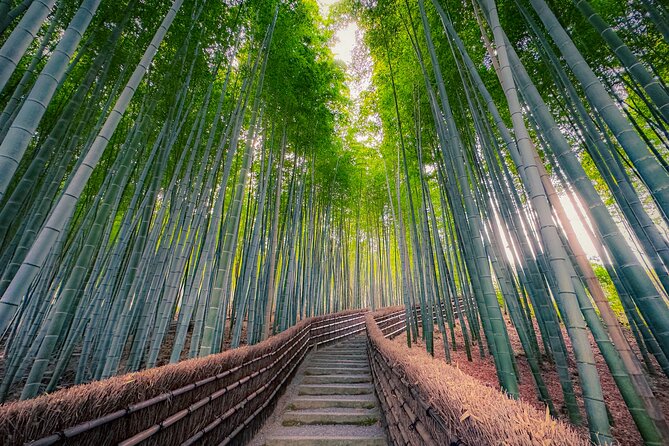
The Arashiyama Bamboo Forest is a famous walk for good reason. Tall bamboo lines the path and filters the light, while a breeze can make the stalks creak and rustle. You get around 15 minutes here, so you can walk the signature stretch and hear the guide’s explanation of bamboo’s place in Japan, including its connection to Edison’s experiments with lighting.
The brief stop is a trade-off. Arashiyama can be crowded, and the route may change if the main path is too congested. On one occasion, the bamboo walk was skipped because of crowds. Keep that in mind if this is your main reason for booking, and ask Daiki about the plan on the day.
Otagi Nenbutsu-ji is farther into the northern part of the Arashiyama district, away from its busiest core. The temple is described as a less crowded place to see old Kyoto scenery, and the grounds give you another quieter pause after the bamboo path. You have about 15 minutes here, and admission is extra.
A useful feature of this tour is that it does not treat Arashiyama as only one famous walkway. Gio-ji and Otagi Nenbutsu-ji add small temples and garden details to the visit. The drawback is that brief stops may not satisfy anyone who wants time to study every feature or sit quietly for long.
Mountain roads open up Kyoto’s less-seen side
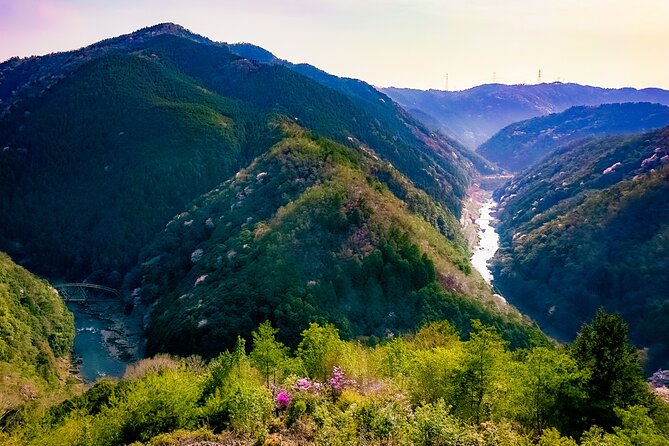
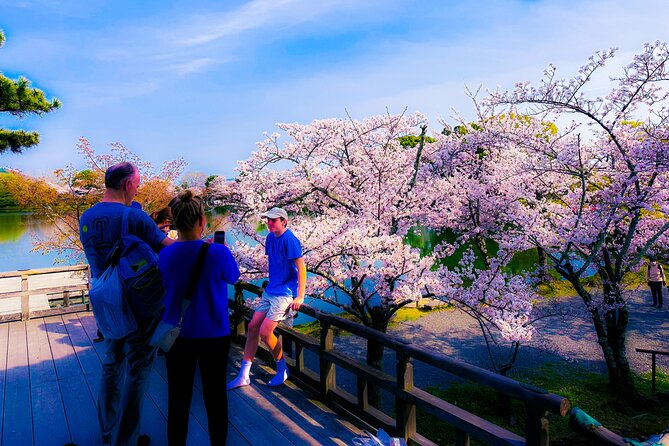
The Arashiyama-Takao Parkway shifts the day from temple paths to mountain scenery. The toll road climbs through hills and is known for cherry trees in April and maple color in November. The drive itself is part of the experience, with the van linking several viewpoints that would be inconvenient to reach on foot.
At Mount Ogura Observatory, the stop is only about five minutes, but the payoff is a view over Kyoto from above. Hozukyo Observatory offers another short pause, this time looking toward Hozu Gorge, known for its fast-water boat rafting. These are photo stops rather than extended hikes, so bring your camera ready and be prepared to get back on the road quickly.
The route then reaches Nakagawa Hachimangu Shrine, a local guardian shrine with an old Japanese cedar regarded as a sacred presence. You can see the tree and, according to the tour description, touch it as a way of connecting with its spirit. The stop is about five minutes. That is brief, but it adds a human scale to the day: this is not just a view or famous building, but a place with local meaning.
The most unusual detour is Kitayama’s giant platform cedars. The trees are shaped into broad platforms, and the grove is reached by a narrow cliff road. This is the kind of stop that gives a private vehicle real value. The area is described as remote and little visited, and you have about ten minutes there. Roads and weather can affect the route, so flexibility matters.
One past outing also included a mountain temple described as a rain temple, which was a favorite for that group. The route can vary by season and circumstance, so do not assume that every day will follow precisely the same order or include every possible stop. The guide’s local judgment is part of what you are paying for.
A drive past geisha streets, then the great torii
The tour also passes a 600-year-old street associated with geisha by car. This is a glimpse rather than a walking visit: the point is to see the historic street without joining the crowds on foot. If you hope to photograph geisha, remember that you need their permission. The experience does not promise a sighting, and respectful distance matters.
Heian Jingu’s enormous torii gate is another quick stop. At 24.4 meters high, it is one of Kyoto’s largest shrine gates and makes a striking roadside landmark. The planned visit is about five minutes, so consider it a brief look and photo opportunity, not a full exploration of the shrine complex.
More guided departures in Kyoto:
- Kyoto Early Morning Tour with English-Speaking Guide
★ 5.0 · 1,427 reviews - Kyoto: Early Morning Tour with English-Speaking Guide
★ 4.9 · 1,128 reviews - Kyoto: Nijo-jo Castle and Ninomaru Palace Guided Tour
★ 4.7 · 1,020 reviews - Kyoto: Izakaya Bars Guided Walking Tour
★ 4.9 · 815 reviews
Fushimi Inari’s red gates are a strong finish
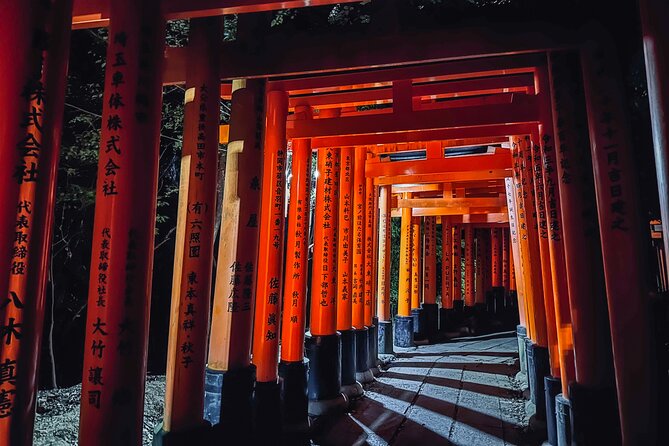
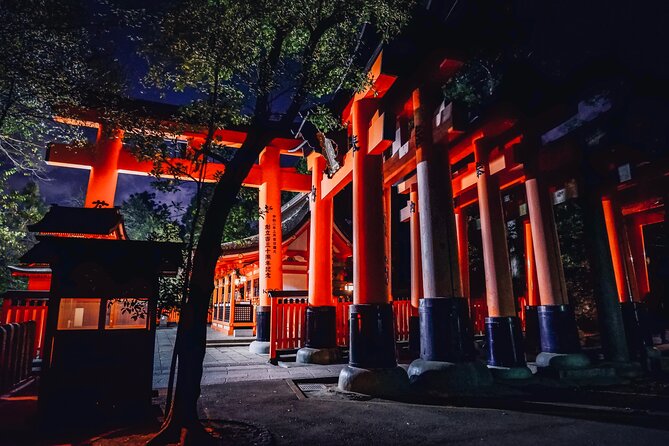
Fushimi Inari-taisha is the tour’s longest stop after Kinkakuji, with about 40 minutes to explore. Its rows of red torii gates are dedicated by individuals and organizations, and the shrine grounds contain more than 10,000 of them. The repeated gates form the famous path that climbs into the wooded hills.
Forty minutes gives you time to walk among the gates and get a feel for the place, but not to complete the full mountain route. If you want to hike farther, ask Daiki whether the schedule can accommodate it. The tour starts at 1 p.m., and the route may be adjusted, so the available time can depend on the day’s flow.
One outing reached Fushimi Inari in the evening, when the gates felt quieter. That can be a memorable way to see the shrine, but the exact timing depends on the route and conditions. The main point is that a private driver can make this southern stop more workable after a day spent across the city.
What the price buys, and what it does not
The listed price is $230.61 per group, for up to one person, which makes the booking terms worth checking carefully if you are traveling with others. The tour is private, and the van, guide, fuel, tolls and parking are included. The information also gives an approximate total admission cost of ¥1,400 per person, paid separately.
For a solo visitor, the price is a substantial outlay. For a family or small group sharing the vehicle, the per-person cost may be more appealing, especially when you account for the time saved and the private pickup. Confirm the final group price and any booking details for your party before paying, since the stated rate is for up to one.
The strongest value is not simply the number of sights. It is the combination of a fluent English-speaking guide, transport between distant districts, and access to mountain locations that are difficult to connect efficiently by public transit. Daiki is described as friendly and easy to talk with, and past outings have been adapted to individual interests and needs. That flexibility can make a full day feel personal rather than like a bus circuit.
Who should book this Kyoto day?
I would choose this tour if you have limited time in Kyoto, want to see both headline sights and the countryside, or are traveling with family members who would find a day of transfers tiring. A private van is especially useful if you want to reach northern mountain stops without navigating unfamiliar roads and bus schedules.
It also suits curious visitors who want more than photographs. Daiki’s English explanations of Buddhism and history can help you connect the temples and shrines to their purpose, while the quieter stops give the day a local dimension. The especially praised elements are the guide’s personable manner, the safe and comfortable drive, and the unexpected places along the way.
I would look elsewhere if your priority is a long, contemplative visit at each temple, a full hike through Fushimi Inari, or certainty that every listed stop will happen exactly as written. This is a broad sampler, not a slow temple study. Ask about current route priorities before setting out, especially if the bamboo path or a particular temple is non-negotiable.
The tour offers free cancellation up to 24 hours before the start time; changes made later are not accepted. Some temples involve walking and stairs, so tell the guide if you need to avoid them. The activity is private, pickup and drop-off are available anywhere in Kyoto City, and the stated start time is 1 p.m.
FAQ
How long is the tour?
The tour lasts approximately six hours.
What time does it start?
The stated start time is 1 p.m.
Is the tour private?
Yes. Only your group participates.
Where can the guide pick us up?
Pickup and drop-off are offered anywhere in Kyoto City.
Is the guide fluent in English?
Yes. The tour includes a guide who speaks fluent English. Daiki Fukashi is named as the guide.
Are temple admission fees included?
No. Admission is not included. The approximate total entry fees are ¥1,400 per person.
Are fuel, tolls and parking included?
Yes. Fuel, toll fees and parking fees are included, along with the private van and guide.
How much time is spent at Fushimi Inari?
The planned stop is about 40 minutes.
Can the route change?
Yes. Parts of the itinerary may change or be updated due to the season or other circumstances.
Can I cancel for a refund?
You can cancel up to 24 hours before the experience starts for a full refund. Cancellations and changes made less than 24 hours before the start time are not accepted.
Newly added in Kyoto
- Uji: Private immersion into Kyoto’s tea and reglious culture★ 5.0 · 17 reviews
- Whisk Your Own Matcha: A Zen Matcha Experience at Temple★ 3.6 · 7 reviews
- Kyoto tea town for matcha lovers★ 5.0 · 16 reviews
- Treasures of Kyoto: Gion & historical Walking Tour★ 5.0 · 6 reviews
- Kyoto Matcha Green Tea Tour★ 4.5 · 23 reviews
- Uji and Wazuka Matcha Farm Half Day Private Guided Tour★ 5.0 · 21 reviews
- Uji Tea Ceremony and UNESCO Heritage Walking Tour★ 5.0 · 20 reviews
- Utilising upcycled Matcha! Creating matcha incense (Uji, Kyoto)★ 5.0 · 6 reviews
Kyoto Tours, compared.

Fushimi Inari, Kinkakuji, Bamboo Grove 1 Day Bus Tour
Read our review →
Tea Ceremony in a Traditional Tea House in Kiyomizu
Read our review →
Kyoto Geisha Walking Tour: Gion District & Hidden Gems
Read our review →
Gion Magical Night Walking Tour with Geisha Trivia
Read our review →