
Reviewed · NISHIKI MARKET TOURS
Kyoto Flea Market Cultural Exchange with English Learners
To-ji’s flea markets offer a good reason to look beyond Kyoto’s usual temple route: stalls of old ceramics, vintage clothes, toys, and collectibles sit within the grounds of a major historic temple. On this private walk, your guide is a local English learner, so conversation is part of the point, not just a way to get from one stall to the next.
I like two things in particular: the chance to chat with a local about everyday customs, and the practical help with friendly haggling. You also get a small-group feel even if you book as a pair, since the tour is private for your party alone.
One consideration: the markets are the focus, but no market dates are specified here. Check that Kobo-ichi or Kotto-ichi will be running on your chosen day, and remember that public transportation is not included in the price.
At a glance
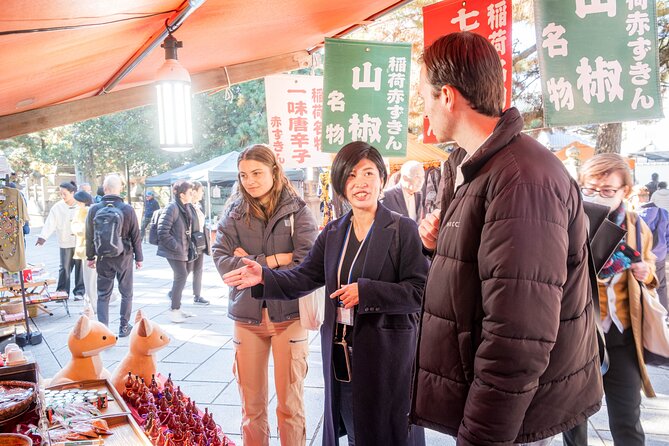
- To-ji market browsing: Explore Kyoto’s Kobo-ichi and Kotto-ichi, with stalls that may include ceramics, vintage clothing, old toys, and collectibles.
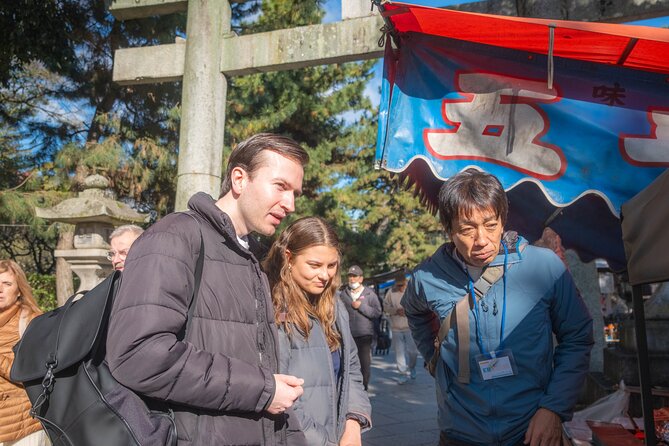
- Conversation with a local: Your guide is learning English and can talk with you about Japanese customs and life in Kyoto.
- Friendly haggling help: Ask your guide for tips and support when negotiating a price.
- A private walk: Only your group joins the activity, which makes it easier to chat at your own pace.
- A modest price: At $13.01 per person, the tour is an affordable way to add local conversation and market context to a Kyoto visit.
- Transit is extra: The experience uses public transportation, but you pay those fares separately.
Why To-ji’s markets make a good stop
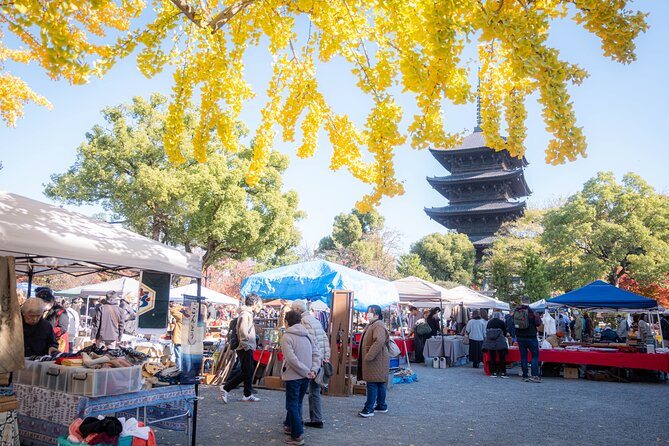
To-ji is known for its five-story pagoda, but the market stalls offer a different way to experience the temple grounds. Instead of focusing only on the main sight, you can browse objects that have been used, collected, or passed along, and watch shoppers look for their own finds.
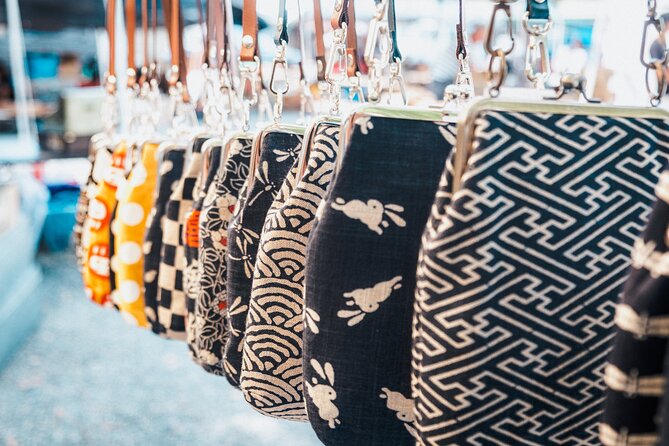
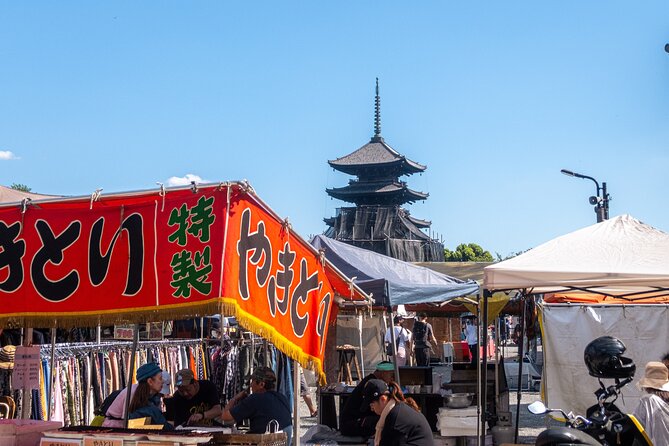
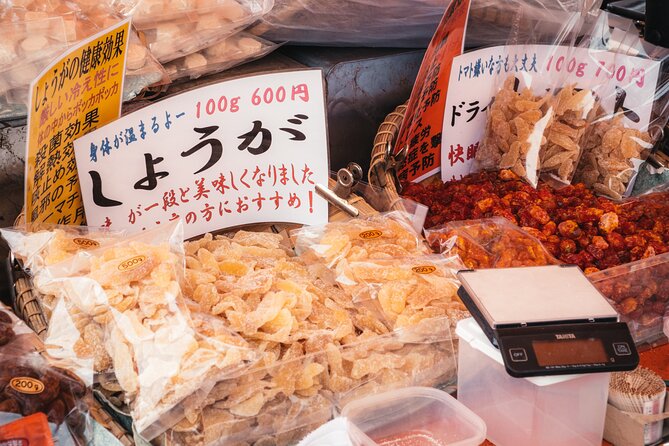
The tour focuses on two market names, Kobo-ichi and Kotto-ichi. You may see antique ceramics, vintage clothing, old toys, and rare collectibles. The exact mix will depend on what vendors bring and what is available when you visit, so treat the market as a place to browse rather than a guaranteed list of particular items.
This is not a specialist antiques appraisal. The useful part is having a local guide nearby to help you make sense of the setting, talk through Japanese customs, and offer advice on negotiating. If you find an object you like, that extra support can make the exchange less awkward and more enjoyable.
There is also a simple pleasure in browsing without a shopping list. You might spot something with an appealing design, discover an unfamiliar household object, or come away empty-handed but with a better feel for the market. The tour can work either way, as long as you enjoy looking and talking.
More Nishiki Market tours in Kyoto:
- Nishiki Market Brunch Walking Tour (7 Tastings + Brunch)
★ 5.0 · 1,355 reviews - Kimono Tea Ceremony at Kyoto Maikoya, NISHIKI
★ 5.0 · 911 reviews - Kyoto Nishiki Market Food and Culture Walking Tour
★ 5.0 · 412 reviews
A local guide who is learning English
The guide’s role is more personal than a standard scripted walk. Your guide is a Kyoto resident who is learning English and wants to share local culture while practicing conversation. That creates a two-way exchange: you can ask questions about Japanese customs, and your guide can ask you about your own experiences and perspective.
One guide on this tour has been described as a student at an English conversation school. The available information does not name the guides, and the guide you meet may differ. Expect a friendly, approachable conversation rather than a formal lecture packed with dates and architectural terminology.
That distinction matters when deciding what you want from the walk. If you prefer a polished history talk with a fixed script, this may not be the right fit. If you enjoy meeting a local person and learning through conversation, the informal style is a strength. Keep questions clear, give your guide time to respond, and be ready to share a little about yourself too.
The most valuable local insight may be practical rather than grand. Your guide can discuss customs, point out things you might otherwise pass by, and recommend places to explore elsewhere in Kyoto. Recommendations are a useful bonus, though the tour’s main focus remains the markets and temple grounds.
Browsing Kobo-ichi and Kotto-ichi
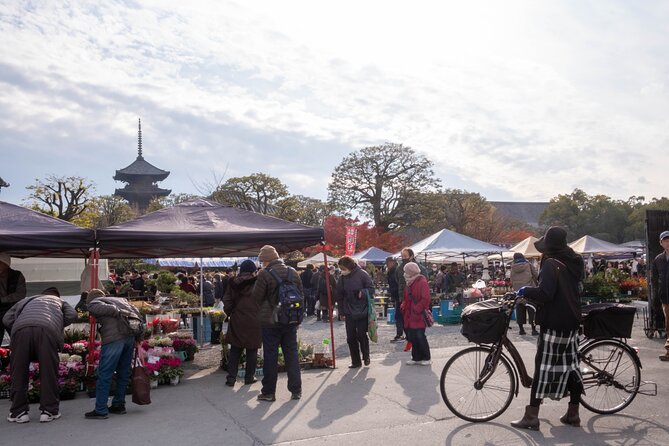
The market portion is the heart of the experience. Expect to move among stalls at To-ji, scanning for everything from ceramics to clothing and toys. There is no fixed shopping list and no guarantee that a certain item will be there, which is part of the nature of flea-market browsing.
Take your time. A quick walk past the tables might show you the broad mix, but a slower look gives you a chance to notice details and ask your guide what you are seeing. If you are interested in buying, decide what an item is worth to you before negotiating. Your guide can help with friendly price discussions, but the final choice and purchase are yours.
The haggling support is a welcome feature for anyone unsure how to approach a price conversation in Japan. Treat it as help with a polite exchange, not a promise of a discount. The goal is to make the interaction easier and more comfortable, while keeping the tone respectful.
Because the experience centers on these markets, timing is important. The tour information does not give market operating dates, so check that the market will be active on your selected day before booking. If the stalls are not running, the experience may not match what you came for.
A look around the To-ji grounds
Along with market browsing, the walk includes time around the temple grounds in the free area. The five-story pagoda is the visual anchor of the stop, and the setting gives your guide a chance to talk about the temple’s history and atmosphere.
You do not need to treat this as a full temple visit with every building included. The stated experience covers the free area, and no paid admission is included or required as part of the described tour. If you want a more extensive temple visit, plan that separately rather than assuming the walk includes access to every part of the site.
The contrast between temple and market is one of the appealing details. The pagoda gives the visit a strong sense of place, while the stalls bring everyday activity and a chance to talk with people. The tour connects those two sides without turning the market into a mere backdrop for photos.
More Kyoto tours in Kyoto:
- PERFECT KYOTO 1-Day Bus Tour
★ 5.0 · 13,518 reviews - Kyoto: Fushimi Inari, Kinkakuji, Bamboo Grove 1 Day Bus Tour
★ 4.8 · 4,316 reviews - Kyoto: Tea Ceremony in a Traditional Tea House in Kiyomizu
★ 4.9 · 3,519 reviews - Kyoto Geisha Walking Tour: Gion District & Hidden Gems
★ 4.7 · 3,273 reviews
The route, timing, and transit
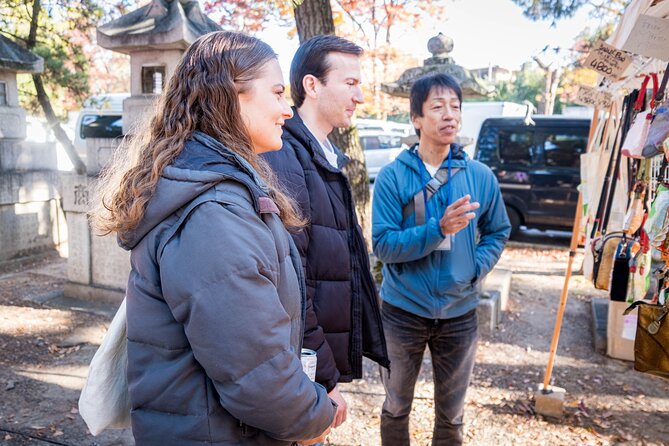
The tour starts at 1:00 pm at 544 Yamabushiyamachō in Nakagyo Ward and ends at To-ji Temple, 1 Kujōchō in Minami Ward. The listed duration is about 90 minutes to two hours, so leave some flexibility in your afternoon rather than scheduling a tight appointment immediately afterward.
The walk uses public transportation, and those fares are not included in the $13.01 price. That is a small but important detail when comparing the cost with a tour that includes transport. The start and finish are in different parts of Kyoto, so the transit portion is part of moving between them, not an optional extra.
The activity is private, meaning only your group participates. That can make a difference on a market walk: you can pause to look, ask questions, or take a moment to consider a purchase without keeping pace with a larger mixed group. It also makes the tour a good choice for a pair or family who would rather keep the conversation within their own party.
Confirmation is received at booking, and the meeting point is near public transportation. Most people can participate, according to the tour information. If you have a specific concern about walking or getting around, check directly with the provider before booking, since no detailed accessibility information is given.
What $13.01 buys you
At $13.01 per person, this is an inexpensive way to add a guided cultural exchange to a Kyoto day. The price covers the private guide experience, and gratuities are included. Public transportation is extra, so bring a little additional cash or another suitable way to pay fares.
The value is not mainly in the length of the tour. Ninety minutes to two hours is a compact outing, and you are not paying for a long itinerary with several paid attractions. You are paying for a local person to guide you through the market, help with conversation and haggling, and offer cultural context along the way.
That makes the price especially appealing if you enjoy people-centered experiences. You may find a memorable object, but there is no promise of a great bargain or a particular purchase. The more reliable return is time spent speaking with a local and getting help navigating a market that can feel unfamiliar.
Group discounts are available, though no discount amounts are specified. Since the activity is private, it may be worth checking the final price for your party size before booking. The listed per-person price is a useful starting point, not a substitute for confirming what your group will pay.
Who will enjoy this walk
Choose this tour if you like markets, enjoy informal conversation, or want a Kyoto activity that puts local interaction ahead of a long lecture. It suits curious shoppers who are happy to browse without knowing what they want in advance, and visitors who would value help with a polite price negotiation.
It is also a good fit if you have already seen some of Kyoto’s major sights and want a change of pace. The mix of temple grounds and market stalls gives you a different setting, while your guide’s English-learning perspective can make the conversation feel mutual rather than one-sided.
You may want another kind of tour if you need a detailed, academic account of To-ji or expect a guaranteed selection of antiques. This experience is social and practical. Its strength lies in the market, the guide’s local perspective, and the chance to talk.
Families and mixed-age groups may appreciate the private format, but the available details do not specify child-focused activities. Most people can participate, though anyone with mobility needs should ask the provider for details before committing.
Booking considerations before you go
The cancellation terms are strict: the experience is non-refundable and cannot be changed for any reason. If poor weather causes the tour to be canceled, you will be offered another date or a full refund. Since the activity requires good weather, consider that policy before you book.
The market schedule is another point to check. Kobo-ichi and Kotto-ichi are central to the outing, but no operating calendar is included in the information here. Confirm the market will be on when you plan to go, especially if browsing stalls is your main reason for booking.
Plan to pay for public transportation separately, and leave room in your schedule for a tour that may last up to two hours. If you hope to buy something, bring a way to pay and set a personal spending limit. The tour can help you negotiate, but it cannot guarantee a particular price or find.
Should you book the To-ji market tour?
I would book this walk if I wanted a low-cost, private outing built around conversation, market browsing, and a local guide’s practical help. The mix of Kobo-ichi and Kotto-ichi, the To-ji setting, and friendly haggling tips give it more purpose than a simple stroll through stalls.
I would pause if I wanted a formal history tour, needed firm details about which stalls or objects would be there, or could not confirm the market schedule. Check that the market is operating on your date, budget separately for transit, and be comfortable with the strict cancellation terms. If those points work for you, this is a small-scale, people-focused way to see another side of Kyoto.
FAQ
How much does the tour cost?
The listed price is $13.01 per person. Group discounts are available, but no discount amounts are specified.
How long does the experience last?
It lasts approximately 1 hour 30 minutes to 2 hours.
What time does the tour start?
The listed start time is 1:00 pm.
Where does the tour begin?
It begins at 544 Yamabushiyamachō in Nakagyo Ward, Kyoto.
Where does the tour end?
It ends at To-ji Temple, 1 Kujōchō in Minami Ward, Kyoto.
Is the tour private?
Yes. Only your group participates.
Which markets are included?
The walk focuses on Kobo-ichi and Kotto-ichi at To-ji Temple.
What might I find at the markets?
Stalls may include antique ceramics, vintage clothing, old toys, and collectibles.
Is public transportation included?
No. The tour uses public transportation, but the fares are not included.
What happens if bad weather cancels the tour?
You will be offered a different date or a full refund if poor weather causes the experience to be canceled.
Newly added in Kyoto
- Uji: Private immersion into Kyoto’s tea and reglious culture★ 5.0 · 17 reviews
- Whisk Your Own Matcha: A Zen Matcha Experience at Temple★ 3.6 · 7 reviews
- Kyoto tea town for matcha lovers★ 5.0 · 16 reviews
- Treasures of Kyoto: Gion & historical Walking Tour★ 5.0 · 6 reviews
- Kyoto Matcha Green Tea Tour★ 4.5 · 23 reviews
- Uji and Wazuka Matcha Farm Half Day Private Guided Tour★ 5.0 · 21 reviews
- Utilising upcycled Matcha! Creating matcha incense (Uji, Kyoto)★ 5.0 · 6 reviews
- Slow Cycling Tour at Uji’s Matcha Green Tea Fields and Heritage★ 5.0 · 25 reviews
Nishiki Market Tours, compared.
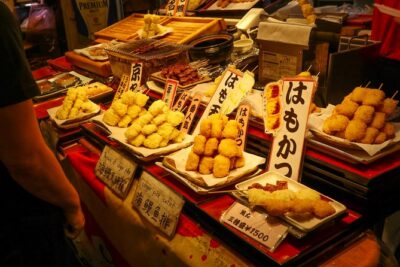
Nishiki Market Brunch Walking Tour (7 Tastings + Brunch)
Read our review →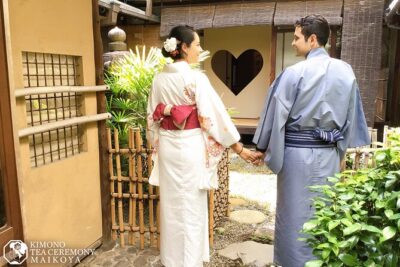
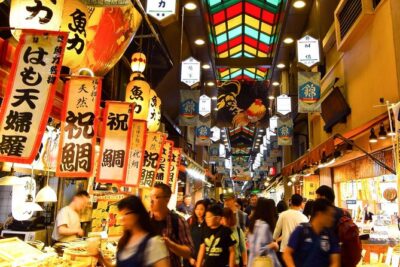
Kyoto Nishiki Market Food and Culture Walking Tour
Read our review →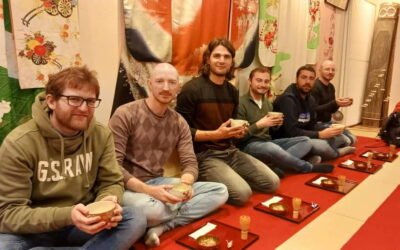
Nishiki Market Tea Ceremony with Koto Performance
Read our review →
Kimono Tea Ceremony Experience at Kyoto Oritzuruya, Nishiki
Read our review →
Nishiki Market and Depachika Food Tour with a Local
Read our review →
Nishiki Market Tour with a Local Foodie & Tastings
Read our review →Browse the lists this tour appears in