Reviewed · KYOTO TOURS
Authentic Knife Making Experience at a Blacksmith in Kyoto
A good souvenir should carry a story, and this one begins with you hammering hot steel into a knife blade. At Studio NIN, you get a real role in the work: forging, grinding, sharpening, and polishing, with an instructor nearby to help. I like that you make a functional object and that the small group size allows for personal guidance.
The main consideration is that this is physical work, not a demonstration where you sit back and watch. Hammering and grinding take effort, and the workshop is in a residential area outside central Kyoto, so plan your route before setting out.
At a glance
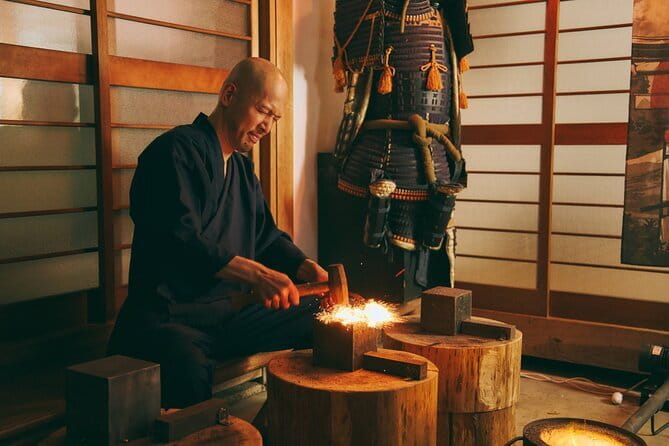
- You forge the blade yourself: Expect to hammer and shape hot steel, then work on the knife’s edge and finish.
- The finished knife is small: It is usually about 13 to 15 centimeters, though handmade dimensions can vary.
- The group is capped at six: That keeps the class small enough for instructors to offer individual help.
- You do not need to bring tools or work clothes: A uniform and the knife-making tools are provided.
- Budget about three hours: The hands-on workshop is described as two and a half hours, while the experience is listed at about three hours.
- The standard handle is iron: This is a simple traditional style, not a wooden-handled kitchen knife.
A Kyoto workshop, not a sightseeing stop
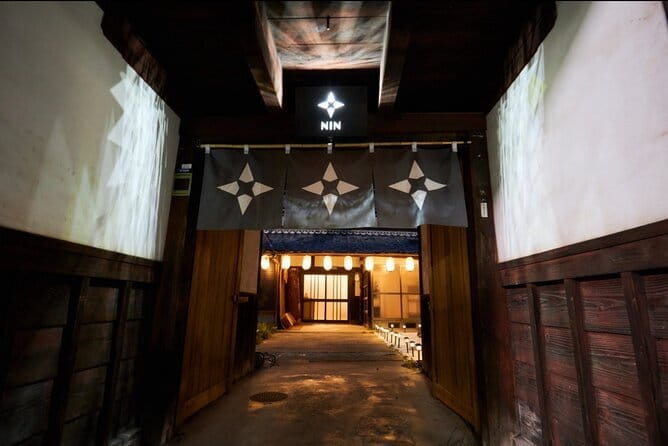
Studio NIN is at Yasenosechō in Kyoto’s Sakyo Ward, in the Yase area. The experience begins and ends at the studio, so think of it as a focused craft workshop rather than a tour that moves between attractions. The listed itinerary includes Rurikoin, but the practical meeting and finish point is the studio itself.
Getting there is part of the outing. The area is outside central Kyoto, and one participant describes arriving by a small, one-carriage train. The studio is tucked into a residential area, and phone signal near the station may be unreliable. I would save the address and directions offline before leaving, rather than counting on a map app to rescue you at the last turn.
That slightly out-of-the-way setting can be a plus if you want a change from temples and shopping streets. It also adds planning time, so leave room in your day for the journey as well as the workshop. The listed experience takes about three hours, but check your route and allow extra time on either side.
More Kyoto tours in Kyoto:
- PERFECT KYOTO 1-Day Bus Tour
★ 5.0 · 13,518 reviews - Kyoto: Fushimi Inari, Kinkakuji, Bamboo Grove 1 Day Bus Tour
★ 4.8 · 4,316 reviews - Kyoto: Tea Ceremony in a Traditional Tea House in Kiyomizu
★ 4.9 · 3,519 reviews
Changing into work clothes and meeting the tools
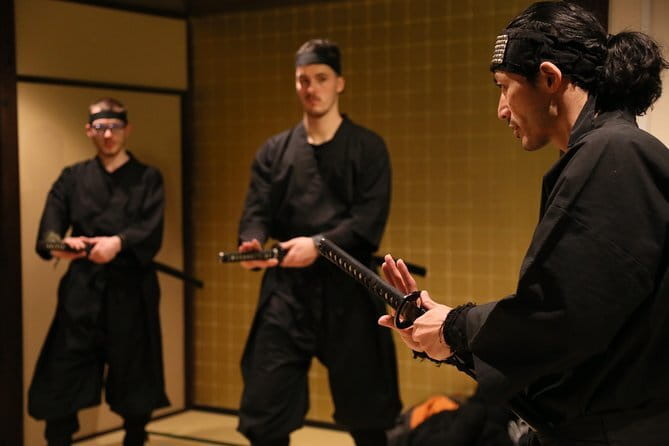
The class starts with a change into a traditional-style work outfit. The uniform is included, as is a set of tools, so there is no need to arrive with protective clothing or equipment. English guidance is also included, which matters when you are handling unfamiliar tools and following a sequence of practical steps.
The studio keeps the group to a maximum of six. That is a useful limit for a hands-on class: the instructor can watch your technique and step in when you need help, rather than trying to manage a crowd around the work area. Daiki is named as an especially engaging instructor, and other classes are described as having patient, friendly staff who correct mistakes without taking over.
You do not need previous blacksmithing experience. The point is to learn by doing, and the instruction is aimed at beginners. Still, pay attention to demonstrations and ask for guidance before using a tool in a way you are unsure about. This is hot metal and grinding equipment, not a craft table with a forgiving glue stick.
Hammering hot steel into a blade
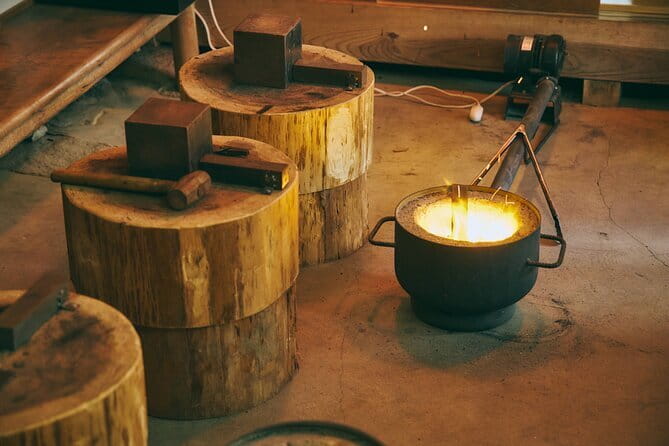
Forging is the heart of the session. You hammer a heated steel billet, working to flatten and shape it into the beginnings of a knife. Expect to spend a substantial part of the class on this stage. One participant described roughly an hour of hammering, which gives you a sense of the effort involved.
This is satisfying work, but it can be strenuous. The metal does not shape itself just because you are wearing an impressive outfit. You will need to swing the hammer repeatedly, and the finished result depends in part on your effort and control. If you have limited strength or stamina, you may want to ask the instructor how much assistance is available before booking.
The staff can help correct your work and guide the process, while still leaving you with a genuine part in making the blade. That balance is the appeal: you are not simply watching a smith perform a show. At the same time, this is a short class, not a full apprenticeship. The instructor may need to make adjustments so the work can move along and the knife can be completed within the session.
Grinding, sharpening, and polishing
Once the steel has been shaped, the work shifts from hammering to refining. You grind the knife on a sanding belt, clean up the shape, and work on the edge before polishing. This stage calls for a different kind of attention. The angle and pressure matter, and small errors can change the look or feel of the blade.
I would ask for a demonstration before beginning each step, especially if you have not used a sanding belt before. Guidance is available, but one participant felt that the grinding angle could have been explained more clearly. That is a fair reminder to speak up early rather than trying to guess your way through the finishing work.
The activity includes sharpening and polishing, but the exact division of labor can vary. Some participants describe doing the sharpening themselves, while another says the instructor handled final sharpening and finishing touches. Expect to take part in the process, but do not assume every final detail will be left entirely to you. The priority is a usable finished knife, not proving that a novice can complete every stage without help.
The workspace has been described as tight. That is worth bearing in mind if you are uncomfortable in close quarters, though a small class helps keep the number of people limited. There is also a practical safety point: one participant wished for more guidance around the sanding belts and sturdier footwear after dropping a knife. Follow the instructor’s safety directions closely, and ask where to stand and how to hold the blade before grinding.
Same city, a different side of it:
- Kyoto Geisha Walking Tour: Gion District & Hidden Gems
★ 4.7 · 3,273 reviews - Kyoto: Tea Ceremony Ju-An at Jotokuji Temple
★ 4.9 · 3,207 reviews - Kyoto: Gion Magical Night Walking Tour with Geisha Trivia
★ 4.9 · 2,393 reviews - Kyoto: 45-Minute Tea Ceremony Lesson Experience
★ 4.3 · 2,378 reviews
What kind of knife you take home
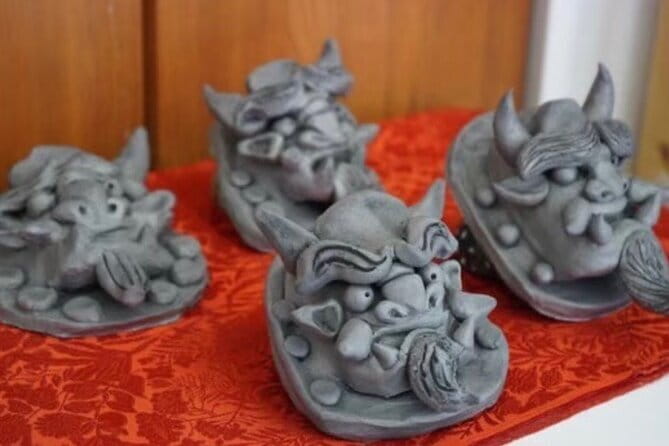
The finished knife is approximately 13 to 15 centimeters long, with some variation because each one is handmade. It is a compact utility knife, not a full-size chef’s knife. The standard design uses an iron handle and a simple construction method. It is still a real, sharp knife, so pack and transport it responsibly.
A wooden handle is not part of the standard description of the class. One participant describes choosing a wooden handle for an additional ¥5,000 and attaching it at home, so there may be an optional upgrade. Since that differs from the standard offering, confirm directly with the studio before counting on it.
A larger cooking knife takes considerably more time and money. The studio gives the example of a regular cooking knife requiring more than five hours and costing more than $400. The shorter class is a way to try the central forging process without signing up for a full-day project or a much higher price.
If you are flying home, plan ahead. A sharp blade may not be allowed in your carry-on luggage, and one participant specifically advises checking a bag. Do not leave that decision until the airport.
Is $158.52 good value?
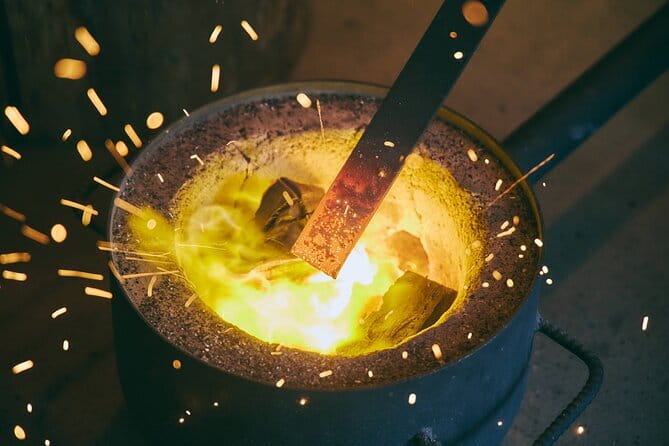
At $158.52 per person, this costs more than a casual craft activity. But the price covers about three hours of instruction, a uniform, tools, and a handmade knife that you have helped produce. The value is strongest if you want an active class and a lasting souvenir, rather than a quick demonstration or a low-cost introduction to Japanese crafts.
You are also paying for the time and attention involved in working with hot steel and grinding equipment in a small group. With a maximum of six participants, instructors can provide help as you go. The class is not a complete course in Japanese knife making, and the compact blade is not the same project as a full-size cooking knife. But it offers a substantial taste of the craft at a fraction of the time and cost of the larger project described by the studio.
The experience has a 4.8 rating from 53 ratings, with 94 percent recommending it. Those figures support the idea that this is a dependable choice for the right person, but the best reason to book is simpler: you want to work with your hands and are happy to leave with a small, handmade knife rather than a polished factory product.
Who will enjoy this most
This workshop suits couples, families with older children, cooks, people interested in tools, and anyone who likes learning through physical work. A 13-year-old has taken part, and families have made knives together. That is encouraging, though the moderate fitness requirement and the use of hot steel make it important to consider the child’s maturity and comfort following safety instructions.
It also works well for a special-interest activity. If you love Japanese kitchenware or have watched blacksmithing programs, you will recognize the appeal of taking part in the process rather than seeing it from behind a barrier. You do not need prior experience, but curiosity and patience will help.
It may be a poor fit if you want a quiet, effortless activity, dislike exertion, or are uncomfortable around sharp blades and grinding equipment. It is also less suitable if your schedule is packed with central Kyoto sights and you have not allowed for the journey to Yase.
Should you book the knife-making class?
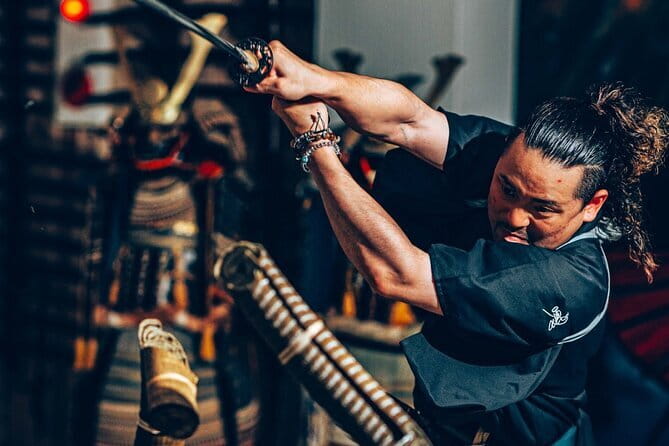
Book it if you want a memorable, hands-on Kyoto activity and will value the work as much as the finished knife. The small class, English guidance, supplied uniform and tools, and genuine forging make this more than a souvenir stop. The instructors’ patient help is a major part of the experience, especially when you are learning how to shape and finish steel for the first time.
Think twice if you want a full-size kitchen knife, expect to master every stage in one short session, or would rather avoid strenuous work. Confirm any handle upgrade before booking, save directions offline, and plan how you will transport the blade home. If those details suit you, this is a distinctive way to spend part of a Kyoto day.
FAQ
How long does the experience take?
The experience is listed at about three hours. The hands-on workshop is also described as a two-and-a-half-hour session, so allow roughly three hours for the activity.
How much does it cost?
The listed price is $158.52 per person.
Where does the workshop begin and end?
It begins and ends at Studio NIN, at Yasenosechō in Kyoto’s Sakyo Ward.
Do I need experience making knives?
No previous knife-making experience is required. The instructor shows you how to use the tools and guides you through the process.
What will I make?
You will make a small handmade knife, usually about 13 to 15 centimeters long. The size can vary because each knife is made by hand.
What is included?
A uniform, an English guide, and a set of knife-making tools are included. Snacks and private transportation are not included.
How many people are in the group?
The maximum group size is six participants.
Is the workshop physically demanding?
It requires a moderate level of fitness. Hammering hot steel takes effort, and the class also involves grinding and finishing the blade.
Can I cancel for a refund?
You can cancel for a full refund up to 24 hours before the experience start time. Changes or cancellations made less than 24 hours before the start time are not accepted for a refund.
Newly added in Kyoto
- Uji: Private immersion into Kyoto’s tea and reglious culture★ 5.0 · 17 reviews
- Whisk Your Own Matcha: A Zen Matcha Experience at Temple★ 3.6 · 7 reviews
- Kyoto tea town for matcha lovers★ 5.0 · 16 reviews
- Treasures of Kyoto: Gion & historical Walking Tour★ 5.0 · 6 reviews
- Kyoto Matcha Green Tea Tour★ 4.5 · 23 reviews
- Uji and Wazuka Matcha Farm Half Day Private Guided Tour★ 5.0 · 21 reviews
- Uji Tea Ceremony and UNESCO Heritage Walking Tour★ 5.0 · 20 reviews
- Utilising upcycled Matcha! Creating matcha incense (Uji, Kyoto)★ 5.0 · 6 reviews
Kyoto Tours, compared.


Fushimi Inari, Kinkakuji, Bamboo Grove 1 Day Bus Tour
Read our review →
Tea Ceremony in a Traditional Tea House in Kiyomizu
Read our review →
Kyoto Geisha Walking Tour: Gion District & Hidden Gems
Read our review →
Gion Magical Night Walking Tour with Geisha Trivia
Read our review →