
Reviewed · KYOTO EARLY MORNING TOURS
Explore Hidden Alleyway with a Local Expert (Morning tour)
Kyoto’s quieter lanes make more sense from a bicycle than from a checklist. On this private morning e-bike tour, you pedal from wooden houses in Miyagawacho to the Kamo River, with a local guide connecting the scenery to the city’s geisha districts and imperial past.
I like two things in particular: the electric assist makes a broad slice of town manageable in three hours, and a private group of no more than six can set a comfortable pace. You also get time to pause rather than simply ride past the sights.
One thing to weigh: this is still a bicycle tour, not a sightseeing van. Rain does not automatically stop it, and the alternative is a walking tour using public transport, so consider your comfort with cycling and wet-weather plans before booking.
- Ride two geisha districts: See the traditional lanes of Miyagawacho and Gion, with a guide to help explain what you are looking at.
- Cover ground with electric assist: Visit several parts of Kyoto in about three hours without making the whole outing a long walk.
- Pause at five distinct stops: The route includes Tatsumi Bridge, Kyoto Imperial Palace, and a rest beside the Kamo River.
- Keep the pace personal: Only your group joins the guide, with two to six people per guide.
- Choose a rain plan: Continue by bike with a free poncho or switch to a walking tour using public transport.
A morning ride through Kyoto’s older lanes
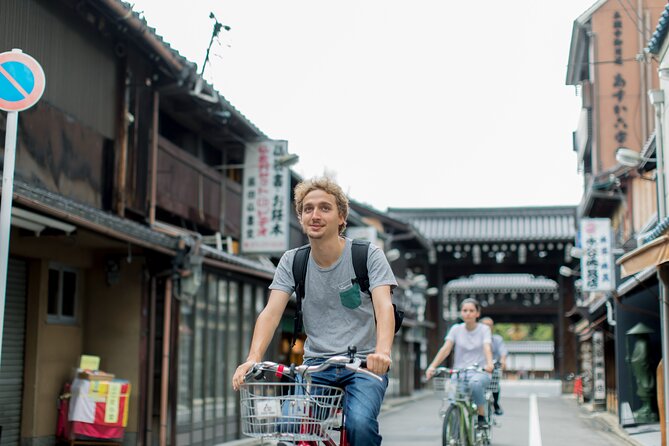
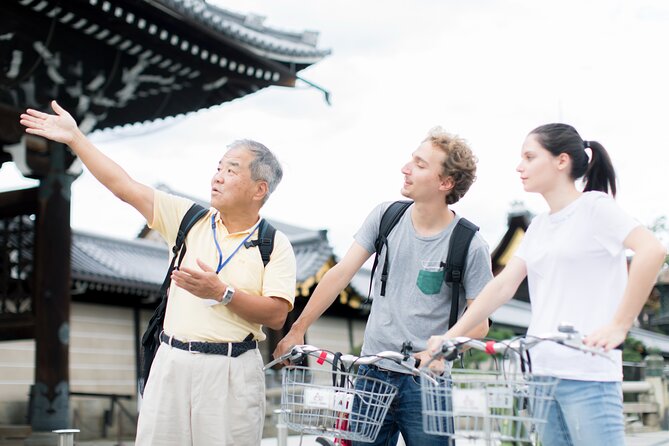
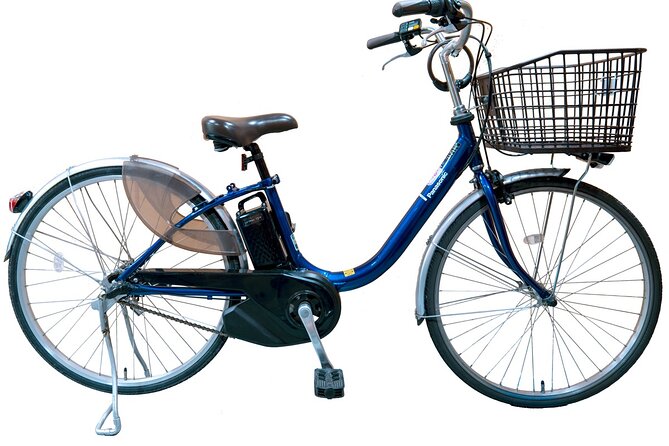
This tour begins at 9:00 am and lasts about three hours. The meeting point is 552-13 Higashiaburanokōjichō in Shimogyo Ward, and the ride returns there at the end. You meet your guide, get the included equipment, and set out together. Since it is private, you do not need to match the speed of a large group, and the guide can respond to your interests and energy.
An e-bike is useful here because the route links several parts of the city. It can spare your legs the effort of a long walk, especially on a hot morning, while still letting you travel at street level and take in the neighborhoods at a human pace. The electric assist is not a reason to expect a strenuous workout, but you should be comfortable riding a bicycle on the road.
The stop descriptions include about 15 minutes each in Miyagawacho, Gion, and at Tatsumi Bridge, 20 minutes at the Imperial Palace, and 20 minutes by the Kamo River. Those timings give you a rough sense of the rhythm, not a promise that every minute will be spent off the bike. The route is designed to balance riding with short visits and a riverside pause.
Miyagawacho’s wooden streets
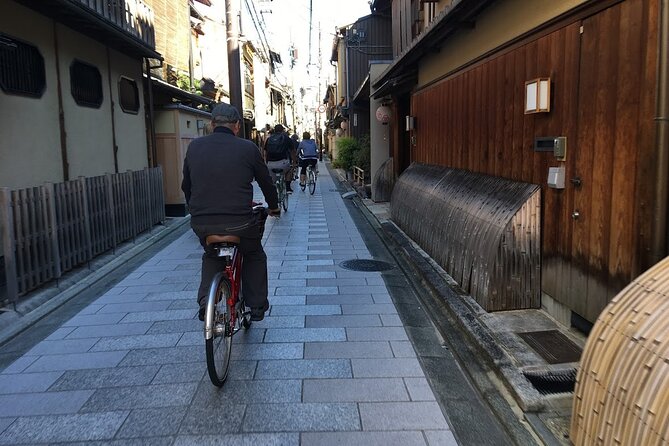
The first stop is Miyagawacho, described as Kyoto’s second-largest geisha district among the city’s five. Traditional wooden houses line the alley, lending the neighborhood a quieter feel than a broad shopping street or major road. The setting gives your guide a chance to explain the district’s place in Kyoto’s geisha culture.
This is a good opening stop because it shows how much character can sit in a narrow lane. The houses and close-set streets make the area feel distinct from the wider city, and the short visit is long enough to look around without turning the tour into a long walking detour.
Keep expectations grounded: this is a neighborhood visit, not a staged performance. The value lies in seeing the streets and hearing context from someone who knows the area. Be considerate as you ride and walk through residential lanes, where people live and work.
More early morning tours in Kyoto:
- Kyoto Early Morning Tour with English-Speaking Guide
★ 5.0 · 1,427 reviews - Kyoto: Early Morning Tour with English-Speaking Guide
★ 4.9 · 1,128 reviews - Nara Early Morning Tour (Kyoto or Osaka Departure Available)
★ 5.0 · 676 reviews
Gion’s geiko and maiko heritage
From Miyagawacho, the route continues to Gion, Kyoto’s best-known geisha district. The tour introduces the area’s maiko, apprentice performers, and geiko, the Kyoto term for established geisha. Its older streets preserve an elegant, traditional character, and a guide can give you a better frame for reading the district than a quick pass on your own.
Gion is a place where looking closely matters. Rather than treating the neighborhood as a backdrop, use the stop to notice the buildings and the way the lanes shape the experience. Your guide may answer questions about Kyoto and Japan more broadly, a feature that has helped make this outing useful early in a stay, when you are still working out what you want to see.
The visit is brief, so it is not a substitute for spending an evening in Gion or exploring every side street at length. Think of it as an introduction: enough to orient you, with the option to return later on foot if a particular corner catches your interest.
Tatsumi Bridge and the willow-lined stream
At Tatsumi Bridge, the route follows a small stream with willows along the water. This is a gentler, quieter interlude between the geisha districts and the Imperial Palace. The bridge and waterside path offer a change of pace from cycling through streets, with a chance to enjoy the scenery before moving on.
The stop is short, around 15 minutes, so take time to look both along the stream and back toward the bridge. It is a simple scene rather than a major monument, and that is part of its appeal: the tour makes room for a pleasant stretch of everyday Kyoto, not just headline sights.
Kyoto Imperial Palace by bicycle
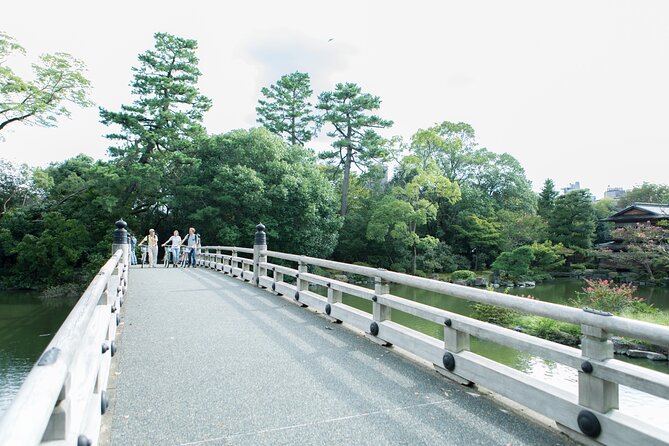
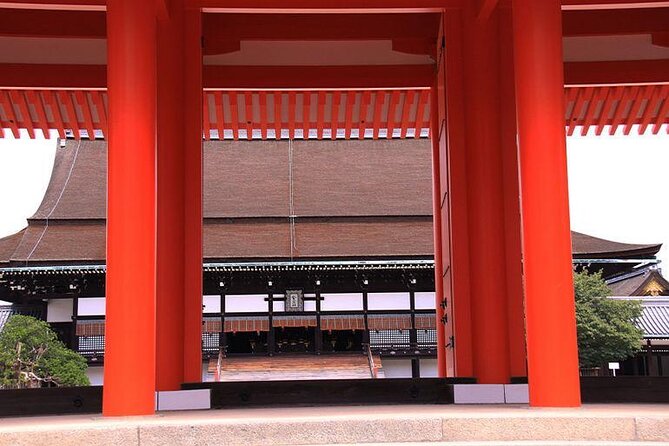
The former residence of Japan’s Imperial Family is now open to the public as a national garden, with seasonal flowers. The tour cycles along gravel paths within the grounds, making this the longest sightseeing stop at about 20 minutes.
The Palace grounds add historical weight and open space to a route otherwise shaped by close lanes and riverside paths. They also show how the city changes scale as you move through it. The gravel surface is worth keeping in mind if you are not used to cycling on anything other than smooth pavement. Ask your guide about the route or pace if you have concerns.
This is a pass-through visit rather than an extended palace tour. You should not expect a full exploration of the gardens or buildings in 20 minutes. Its strength is that it lets you see the grounds as part of a connected ride, without having to plan a separate trip across town.
More Kyoto tours in Kyoto:
- PERFECT KYOTO 1-Day Bus Tour
★ 5.0 · 13,518 reviews - Kyoto: Fushimi Inari, Kinkakuji, Bamboo Grove 1 Day Bus Tour
★ 4.8 · 4,316 reviews - Kyoto: Tea Ceremony in a Traditional Tea House in Kiyomizu
★ 4.9 · 3,519 reviews - Kyoto Geisha Walking Tour: Gion District & Hidden Gems
★ 4.7 · 3,273 reviews
A break beside the Kamo River
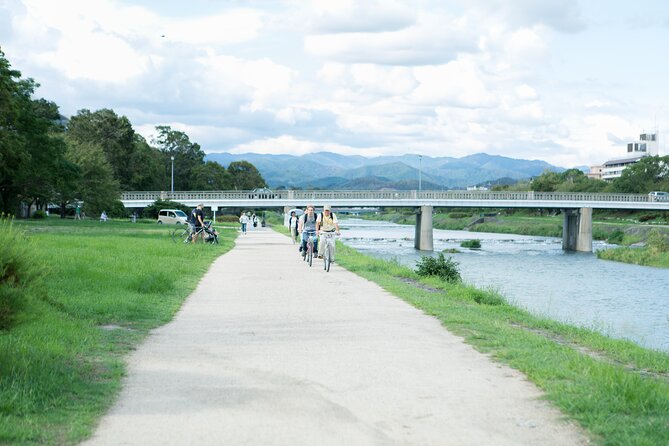
At Kashiwayacho, the group pauses beside the Kamo River, a local favorite for relaxing. The stop lasts about 20 minutes and gives you a welcome chance to rest, take in the river, and chat with your guide. One group fitted in a coffee break at its own request, suggesting there can be room to shape the pause, though you should not assume a café stop is included.
The river break is especially useful on a hot day, when the e-bike helps with distance but does not remove the need to stop and drink water. It also gives the outing a less formal finish than a string of monuments. You return to the original meeting point afterward.
What the guide adds
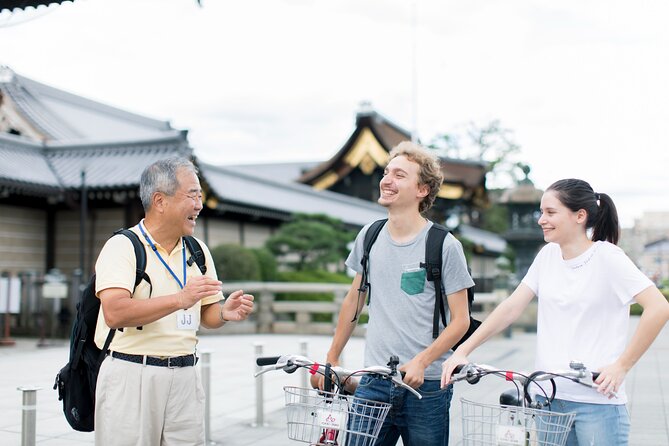
The guide is a central part of the experience. You are not simply renting a bicycle and following a route: the guide provides information about Kyoto’s history, culture, and religions, and can respond to questions along the way. Guides named on past tours include Rich, Yuichi, and Annie, but the particular guide for your date is not guaranteed.
The private format lets you ask questions without holding up a larger group. It also makes it easier to share preferences, such as wanting to spend more time by the river or to take a break. The overall route still has fixed highlights, so think of this as a flexible outing rather than a completely custom itinerary.
Spoken English may not be equally strong with every guide. One account described difficulty having an in-depth exchange in English, while other groups valued their guide’s explanations and conversation. If detailed discussion is a priority, it is sensible to confirm language expectations with the operator before booking.
Is $103.04 a fair price?
At $103.04 per person, this costs more than a simple bicycle rental, but the comparison is not quite like for like. The fee covers a private guided experience, equipment rental, and a route that links several areas without requiring you to plan each turn or navigate Kyoto by map. For a group that wants context and a manageable way to cover ground, that can be good value.
The price is easier to justify if you are travelling with another person or a small group and want to make the most of a half-day. The minimum is two people, and the maximum is six per guide. A group of seven to twelve can request an additional guide. Solo participants are not accepted, so this is not an option for a one-person booking.
The tour averages 47 days’ advance booking, which signals that it is worth arranging ahead if the date matters to you. Confirmation is provided within 48 hours of booking, subject to availability. The experience is not refundable or changeable under the stated cancellation policy, so check your dates carefully before paying.
Weather, age, and riding comfort
The tour operates in rain. You can continue by bicycle with a free rain poncho, or choose a walking tour using public buses or the metro, with that transport included in the tour fee. A very wet day can make the bike option less appealing, so decide based on your comfort rather than treating the poncho as a guarantee of a pleasant ride.
Children must be at least 10 years old, at least 145 cm tall, and able to ride a bicycle safely on the road without help. The tour is described as suitable for most people, but the cycling requirement matters. If you are uneasy on a bike, or have not ridden in a while, consider whether a three-hour city ride is right for you.
For comfort, wear clothes you can cycle in and consider padded shorts if you are not used to bicycle seats. One rider specifically advised padding after the outing, a practical tip for anyone whose idea of a bike ride is more occasional than routine.
Who should book this Kyoto ride?
This tour suits first-time visitors who want to get oriented quickly, see several neighborhoods, and ask questions as they go. It is also a smart choice on a hot day when walking several miles sounds tiring. Couples, families with older children who meet the riding requirements, and small groups who value a private pace are the natural fit.
You may prefer a walking tour if you want to linger at each stop, avoid cycling in traffic, or focus on a single district. And if you need highly detailed English conversation, check that point with the operator before booking, since the guide’s language ability can vary.
Book it if you are comfortable on a bike and want a guided overview of Kyoto’s geisha districts, Imperial Palace grounds, and river paths in one morning. Skip it if cycling or the rain plan would make you anxious. The best reason to choose this tour is simple: it turns a map-heavy morning into a connected ride, with a local guide and enough flexibility to make the city feel less like a list of sights.
FAQ
How long is the tour?
It lasts about three hours, including the listed sightseeing stops and the return to the meeting point.
What time does the tour start?
The start time is 9:00 am.
Where does the tour begin and end?
It begins at 552-13 Higashiaburanokōjichō, Shimogyo Ward, Kyoto, and ends back at the same meeting point.
Is the tour private?
Yes. Only your group participates. One guide can accept two to six people, and an additional guide can be arranged for groups of seven to twelve. Solo participants are not accepted.
What happens if it rains?
The tour still operates. You can ride with a free rain poncho or switch to a walking tour using public transport, with bus or metro costs included in the tour fee.
Can children join?
Children must be at least 10 years old, 145 cm or taller, and able to ride safely on the road without assistance.
What sights are included?
The route visits Miyagawacho, Gion, Tatsumi Bridge, Kyoto Imperial Palace, and the Kamo River at Kashiwayacho.
Newly added in Kyoto
- Uji: Private immersion into Kyoto’s tea and reglious culture★ 5.0 · 17 reviews
- Whisk Your Own Matcha: A Zen Matcha Experience at Temple★ 3.6 · 7 reviews
- Kyoto tea town for matcha lovers★ 5.0 · 16 reviews
- Treasures of Kyoto: Gion & historical Walking Tour★ 5.0 · 6 reviews
- Uji and Wazuka Matcha Farm Half Day Private Guided Tour★ 5.0 · 21 reviews
- Kyoto Matcha Green Tea Tour★ 4.5 · 23 reviews
- Uji Tea Ceremony and UNESCO Heritage Walking Tour★ 5.0 · 20 reviews
- Utilising upcycled Matcha! Creating matcha incense (Uji, Kyoto)★ 5.0 · 6 reviews
Kyoto Early Morning Tours, compared.
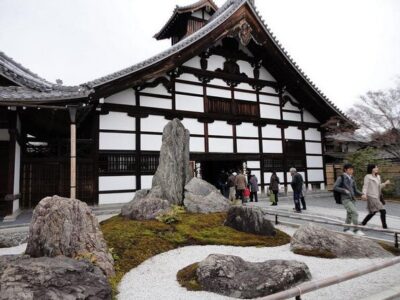
Kyoto Early Morning Tour with English-Speaking Guide
Read our review →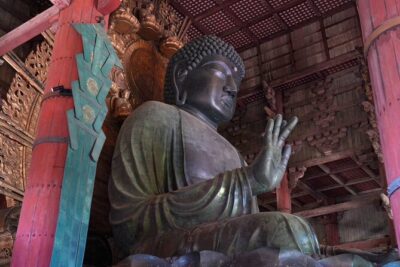
Nara Early Morning Tour (Kyoto or Osaka Departure Available)
Read our review →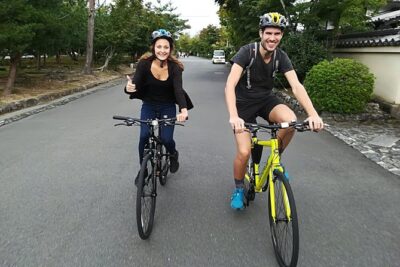
Arashiyama Bamboo Forest & Hidden Gems Bike Tour (Early Bird)
Read our review →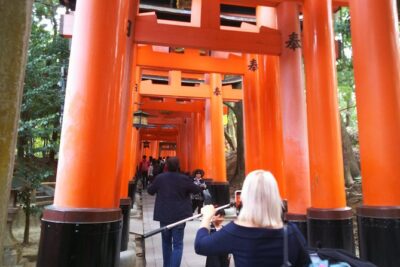
Kyoto Early Bird English Tour: Fushimi-Inari and Arashiyama
Read our review →
Browse the lists this tour appears in