Reviewed · KYOTO TOURS
Fukusa Shibori Class
Shibori makes its patterns by shaping cloth before dye reaches it. At this Kyoto class, you use two methods, kasamaki and nuishime, to bind a square of silk, then dye it and take your finished cloth home. It’s a useful way to see how a Japanese textile craft works, not just admire the finished patterns.
I like that you learn two distinct techniques in one short session, and that the class uses traditional tools and fabric rather than a demonstration alone. I also like the chance to look at shibori examples in the museum, which gives you a better sense of what careful binding can produce.
The main consideration is time: 60 to 90 minutes is enough for an introduction and a small silk cloth, not an in-depth course. At $71.67 per person, it makes most sense if you want a hands-on craft experience and a Kyoto-made keepsake, rather than a full museum visit or a bargain activity.
- Two ways to shape the pattern: Try kasamaki, which uses stitched and wrapped fabric, and nuishime, which gathers cloth along a line of stitches.
- A take-home silk cloth: You make a 38 cm by 38 cm wrapping cloth to keep as a souvenir.
- Guidance at the worktable: A teacher talks you through the process, with traditional tools and fabrics provided.
- Craft examples on display: See shibori work in the museum as well as in its shop.
- A compact class: Plan for about an hour to an hour and a half, with a maximum group size of 15.
A small square of silk, shaped by your own hands
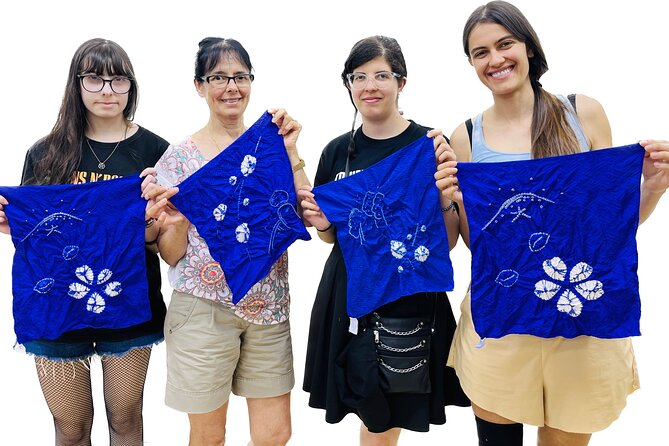
Shibori is a way of making patterns by binding, stitching, or folding cloth before it is dyed. The name covers many methods, and the class focuses on two: kasamaki and nuishime. You will not just see the finished effect; you will help make it by gathering and wrapping the silk yourself.
The project is a 38 cm square silk wrapping cloth. That size is practical for a keepsake and gives you enough material to see the patterns take shape, while keeping the class manageable. The format is focused: learn the methods, apply them to your cloth, dye it, and take the result home.
I would come expecting an introduction, not a master class. The session is short, but that is part of its appeal. It gives you a close look at the process without taking over half a day in Kyoto.
Starting at the Kyoto Shibori Museum
The class begins at the Kyoto Shibori Museum, at 135-5 Shikiamichō in Nakagyo Ward. It ends back at the same meeting point, so you do not need to arrange separate transport after the activity. The museum is near public transportation, and there is space for two cars and bicycles.
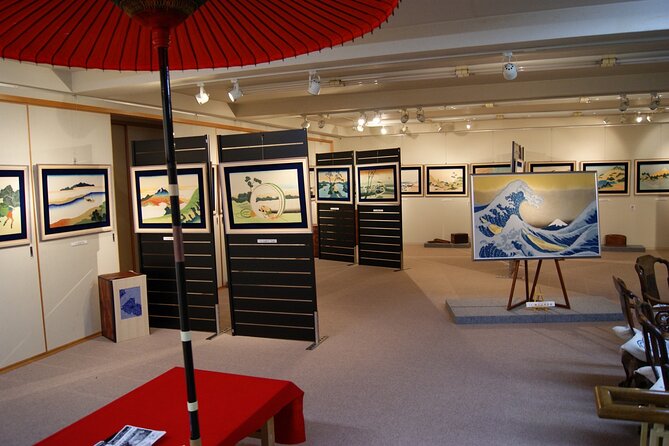
Before or around the hands-on portion, you can see shibori examples on display. That context matters. When you look at a finished pattern first, the tiny decisions in the binding process make more sense: the placement of a stitch, how tightly it is pulled, and how the cloth is wrapped can all affect where dye reaches the fabric.
There is also an information video, which can help you get a handle on the craft before working with the cloth. The class is limited to 15 people, so it is not a private lesson, but the group cap keeps it smaller than a large demonstration. A teacher provides instruction and help as you work. Roy has led a class, though you should not assume he will teach your session.
More Kyoto tours in Kyoto:
- PERFECT KYOTO 1-Day Bus Tour
★ 5.0 · 13,518 reviews - Kyoto: Fushimi Inari, Kinkakuji, Bamboo Grove 1 Day Bus Tour
★ 4.8 · 4,316 reviews - Kyoto: Tea Ceremony in a Traditional Tea House in Kiyomizu
★ 4.9 · 3,519 reviews
Kasamaki: stitch, pull, and wrap
Kasamaki is the more involved of the two methods described in the class. You stitch around the shape you want to create, pull the thread tight, then wind the threads around a cone of fabric several times. The wrapped sections resist the dye, helping produce the pattern.
This is where patient hands help. You are learning how the cloth is controlled, not simply decorating it. A careful teacher can show you how to manage the stitching and wrapping, and how the tightness of the binding affects the result. The craft is precise, but the point is to try it, not to arrive with sewing experience.
For an at-home crafter, this method may be the most useful part of the class. The techniques are introduced in a way that can give you ideas for trying shibori again, though the class does not promise a full home-dyeing course or a list of supplies to buy. You leave with a finished piece and a clearer sense of how the pattern was made.
Nuishime: gathering cloth along a line
Nuishime is the second technique. Here, you stitch along a line and pull the thread tight, gathering the cloth. It is a different way to control where dye reaches the silk, and comparing it with kasamaki helps you understand that shibori is not one single trick.
The contrast between the methods is a strong reason to book this class. In a short session, you get to try two approaches rather than spend the whole time repeating one. You can see how changing the way you bind the fabric changes the process and the finished cloth.
The practical lesson is simple: stitching and tension matter. This is not a paint-on pattern where you can correct a mark with a brush. The cloth is prepared before dyeing, and the final effect depends on the way it has been folded, stitched, gathered, or wrapped.
Dyeing and seeing the result
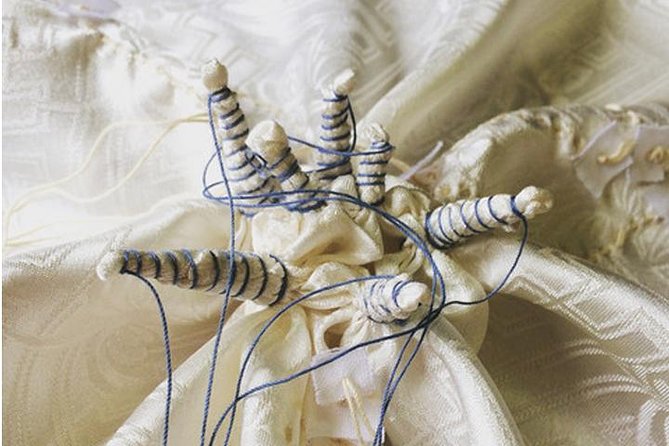
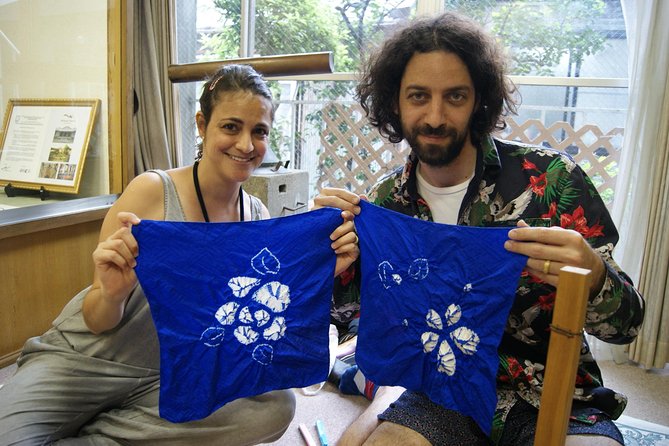
After binding the silk with the two methods, you dye the cloth. The finished 38 cm square wrapping cloth is yours to take home. The final reveal is part of the satisfaction: the pattern that was hidden under the threads becomes visible once the dyeing is done.
The class is hands-on from the start. You should expect to handle the fabric and tools, follow the teacher’s instructions, and watch the process rather than sit through a long lecture. The information video and the museum displays add context, but the heart of the activity is making your own piece.
One practical point: the class lasts around 60 to 90 minutes, and the exact duration is approximate. If you are planning a tightly packed day, leave some breathing room around it. The experience is short, but you will get more from it if you are not watching the clock.
Same city, a different side of it:
- Kyoto Geisha Walking Tour: Gion District & Hidden Gems
★ 4.7 · 3,273 reviews - Kyoto: Tea Ceremony Ju-An at Jotokuji Temple
★ 4.9 · 3,207 reviews - Kyoto: Gion Magical Night Walking Tour with Geisha Trivia
★ 4.9 · 2,393 reviews - Kyoto: 45-Minute Tea Ceremony Lesson Experience
★ 4.3 · 2,378 reviews
What the museum setting adds
The museum setting gives the workshop a useful frame. Shibori examples show how varied the craft can look, while the class lets you focus on the mechanics behind the patterns. It is a good pairing: finished work for inspiration, followed by a chance to make something with your own hands.
You can also browse the museum shop, which displays shibori work. That is worth a look if you want to compare your small project with more finished examples or see how the craft appears beyond the workshop. The class description does not specify how much time is set aside for browsing, so treat the shop and displays as a bonus rather than the main event.
The teaching style is another strength to look for. Roy has been described as careful in explaining the process and helping students understand it. A family class has also included several professional shibori makers nearby, ready to help. Those details suggest a welcoming learning environment, but the specific teacher and amount of assistance can vary by session.
Is $71.67 fair value?
At $71.67 per person, this is not the cheapest way to fill an hour in Kyoto. You are paying for guided instruction, traditional materials and tools, museum displays, and a silk cloth you make and keep. That combination gives the price more substance than a short demonstration where you leave with no finished piece.
The value depends on what you want from the session. If you enjoy making things, want to learn a craft technique, or like souvenirs with a personal story, the price may feel worthwhile. You are not only buying an object; you are learning how its pattern is formed.
If your priority is a broad museum visit, a long workshop, or the lowest-cost activity available, this may not be the best fit. The class is brief, and its project is a single 38 cm cloth. Think of it as a compact craft lesson with a take-home result, not an all-day art course.
The activity is booked an average of 21 days ahead, so it is sensible to plan early if the class is central to your itinerary. Confirmation is provided at booking. You can cancel for a full refund up to 24 hours before the start time; changes or cancellations inside that window are not accepted.
Who will enjoy this class most
This is a good fit for curious beginners, craft-minded visitors, and families with children aged 8 or older. The stated minimum age is 8, and adult pricing applies at every age. The family format can work well if children like practical activities and can follow instructions at a worktable.
It also suits anyone who wants a break from sightseeing that still connects with Kyoto’s arts and crafts. You get to make something, learn the basics of two techniques, and see examples of the finished craft in the museum. That can be a welcome change from looking at art behind glass.
You do not need to be an experienced sewer to take part. Most people can participate, and the teacher guides the process. Still, if you dislike careful handwork or want a highly polished result with no trial and error, a craft class may be less satisfying than simply buying a finished piece.
Should you book the Fukusa Shibori Class?
Book it if you want a short, active introduction to shibori and like the idea of taking home a silk cloth you helped create. The strongest reasons are the chance to try both kasamaki and nuishime, the teacher’s guidance, and the chance to connect the museum displays with the process at your own worktable.
Skip it if you are looking for a long, advanced workshop or a low-cost activity with no extra spend. At roughly an hour to 90 minutes, this is a focused lesson, not a deep course. For the right person, though, it turns a small piece of silk into a more memorable Kyoto souvenir than something picked up off a shelf.
FAQ
How long is the Fukusa Shibori Class?
The class lasts approximately 60 to 90 minutes.
Where does the class take place?
It starts and ends at the Kyoto Shibori Museum, at 135-5 Shikiamichō, Nakagyo Ward, Kyoto.
Which shibori techniques will I try?
You will try kasamaki, which involves stitching and wrapping cloth, and nuishime, which involves stitching along a line and pulling the thread tight.
What will I make?
You will dye a 38 cm by 38 cm silk wrapping cloth using the two shibori methods, then take it home.
What is the minimum age?
The minimum age is 8. Adult pricing applies to any age.
How many people can join the class?
The maximum group size is 15 people.
Is there parking at the museum?
There are parking spaces for two cars, as well as bicycle parking. The museum is also near public transportation.
Newly added in Kyoto
- Uji: Private immersion into Kyoto’s tea and reglious culture★ 5.0 · 17 reviews
- Whisk Your Own Matcha: A Zen Matcha Experience at Temple★ 3.6 · 7 reviews
- Kyoto tea town for matcha lovers★ 5.0 · 16 reviews
- Treasures of Kyoto: Gion & historical Walking Tour★ 5.0 · 6 reviews
- Kyoto Matcha Green Tea Tour★ 4.5 · 23 reviews
- Uji and Wazuka Matcha Farm Half Day Private Guided Tour★ 5.0 · 21 reviews
- Utilising upcycled Matcha! Creating matcha incense (Uji, Kyoto)★ 5.0 · 6 reviews
- Slow Cycling Tour at Uji’s Matcha Green Tea Fields and Heritage★ 5.0 · 25 reviews
Kyoto Tours, compared.


Fushimi Inari, Kinkakuji, Bamboo Grove 1 Day Bus Tour
Read our review →
Tea Ceremony in a Traditional Tea House in Kiyomizu
Read our review →
Kyoto Geisha Walking Tour: Gion District & Hidden Gems
Read our review →
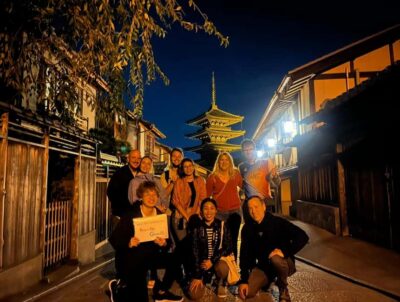
Gion Magical Night Walking Tour with Geisha Trivia
Read our review →