Reviewed · KYOTO TOURS
Hanakoushi cotton Scarf Class
At Kyoto Shibori Museum, you don’t just pick a scarf off a rack: you fold and dye a cotton length yourself, then leave with a Kyoto-made souvenir that carries the pattern of your own choices. The private class keeps the instruction focused on your party, and the scarf is a useful keepsake rather than a trinket destined for a drawer.
I like two things in particular: you get a hands-on introduction to shibori without committing half a day, and the drying time gives you a reason to look around the museum instead of simply waiting. The staff can also show you the tools and examples that put this small craft project in a larger context.
One consideration: this is a short, simplified workshop, not an extended course in every stage of shibori. The activity details also vary on the scarf material and technique, so if those specifics matter to you, confirm them with the museum before booking.
- You make a 70-by-17-inch scarf: The project gives you a full-size, wearable souvenir to take home.
- Your class is private: Only your party participates, so instruction can stay personal and easy to follow.
- The craft is designed for beginners: You choose a color, fold the cloth, and dye it with staff guidance.
- Drying time adds a museum visit: While the fabric dries for about 30 minutes, you can see shibori works, tools, and samples.
- The class is short but not always only 30 minutes: Sessions are described as taking 30 to 60 minutes, with additional time for drying and viewing.
- Technique and material descriptions differ: The title says Hanakoushi and cotton, while other details refer to Sekka and some past projects in silk.
Making a scarf at Kyoto Shibori Museum
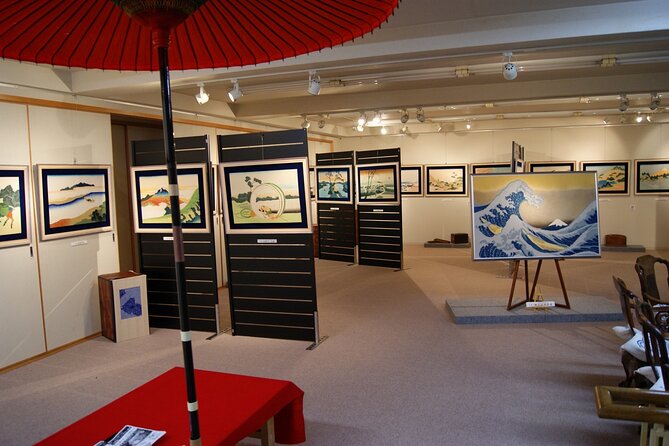
The class takes place at Kyoto Shibori Museum, at 135-5 Shikiamichō in Nakagyo Ward. This is a compact craft experience in the city, suited to an afternoon when you want to make something rather than spend the whole day at a formal attraction.
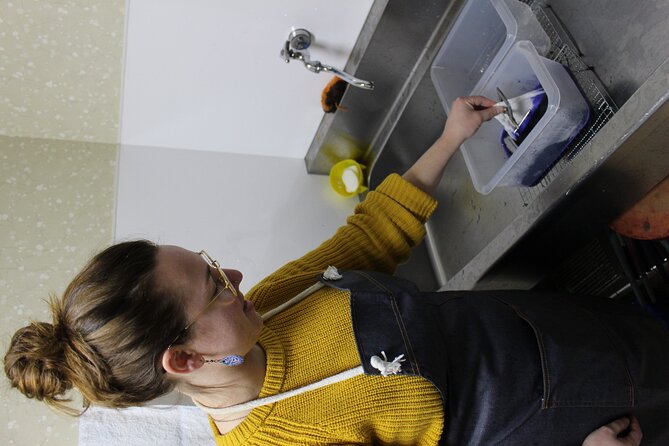
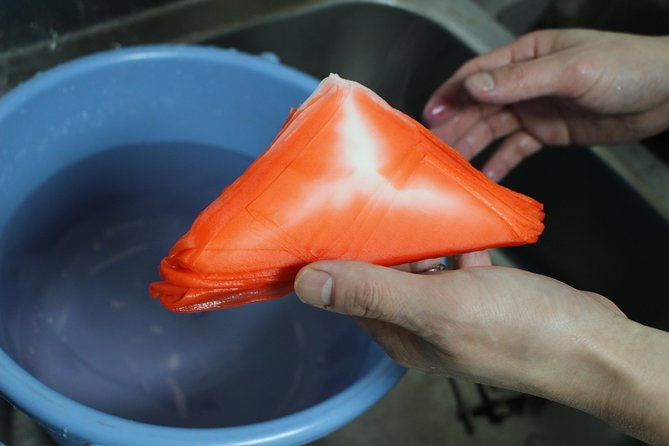
You start by choosing a color and learning how to fold the fabric. The folds help shape the finished pattern, and the instructor guides you through the steps before you apply the dye. You do not need prior craft experience; the process is presented as a simple way to try a traditional technique.
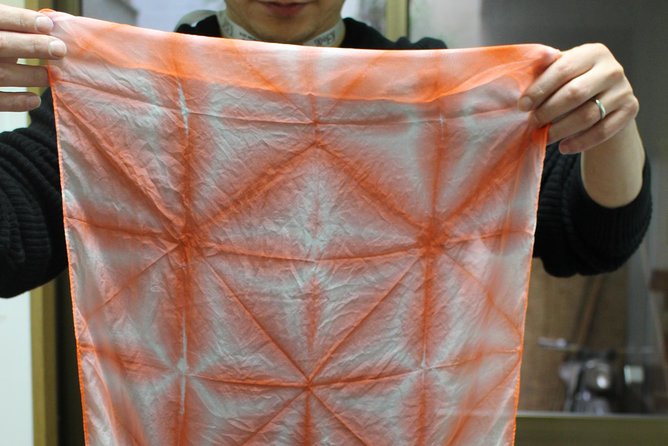
The scarf is listed as cotton, measuring about 70 inches by 17 inches, or 175 by 50 centimeters. That gives you a generous piece of fabric, large enough to wear or give as a gift. Some class descriptions and past accounts refer to silk scarves instead, and the method is described both as Hanakoushi and Sekka shibori. Those differences make it sensible to ask what you will be making in your specific session.
The hands-on portion is intentionally approachable. One visitor described it as a modernized version of the craft, without hours of tying tiny sections of fabric. That is a plus if you want a satisfying introduction in a short visit. It is also the main limitation if you hoped to master a complex process or spend a long time on detailed fabric preparation.
Why the private format helps
This activity is private, meaning only your group takes part. That can make a real difference in a small workshop: you can follow the instructions at your own pace, ask questions, and focus on your own fabric rather than keeping up with a large class.
The class is often described as an individual session, and the stated class time ranges from about 30 to 60 minutes. The experience is suitable for most people, and the simple sequence of choosing, folding, and dyeing makes it a reasonable choice even if you have never tried textile work.
Staff members have been praised for being patient, welcoming, and easy to understand. Nina and Yokahama-san are among the names associated with sessions, but you should not assume either will lead yours. The useful point is that the teaching is described as hands-on and supportive, with English communication noted in one account.
A private class is especially appealing for couples, families, or friends who want a shared activity but prefer something quieter than a group tour. Families have taken part together, and the small class format makes the directions easier to follow. If you are traveling alone, the private setup can still work: one participant has described being the only person in a session.
More Kyoto tours in Kyoto:
- PERFECT KYOTO 1-Day Bus Tour
★ 5.0 · 13,518 reviews - Kyoto: Fushimi Inari, Kinkakuji, Bamboo Grove 1 Day Bus Tour
★ 4.8 · 4,316 reviews - Kyoto: Tea Ceremony in a Traditional Tea House in Kiyomizu
★ 4.9 · 3,519 reviews
The museum makes the waiting worthwhile
After dyeing, the scarf needs about 30 minutes to dry. Rather than treating that as dead time, use it to explore the museum displays. You can see shibori artwork, tools, and samples, and get a better sense of how the patterns and methods relate to the finished pieces.
The museum is compact, so do not expect a large institution that takes hours to cover. Its scale can be an advantage if your schedule is tight, but it also means the visit is best approached as an added layer to the workshop, not as a major museum day on its own.
The displays help explain why shibori is more than a quick dye trick. The finished scarf is the easy, accessible version of a craft that can involve considerable care and skill. Seeing examples and tools gives you context for what the class simplifies, and helps you appreciate the work behind more elaborate pieces.
Some sessions also include a historical video or a show-and-tell element. These can add useful background, though the exact format may vary. The practical lesson is to allow enough time to look around while your scarf dries, rather than planning to dash straight out once the dyeing is done.
What you take home, and what you can buy
The strongest payoff is the scarf you make yourself. It is a tangible reminder of Kyoto, and the fact that you chose the color and helped create its pattern gives it more personal meaning than a store-bought souvenir. The result can also be a gift, though you may find it hard to give away something you made with your own hands.
The museum shop sells shibori items, souvenirs, fabrics, and other handmade goods. You might find purses, garments, or other textile pieces, alongside the materials and crafts on display. Shopping is optional, but the shop gives you a chance to see how the techniques translate into finished products.
Prices for shop items are not specified, so treat any purchase as a separate expense from the class. If you have room in your luggage and enjoy textile crafts, it may be worth browsing after the museum visit. If not, your scarf is already a substantial memento.
Is $43.35 good value?
At $43.35 per person, this is not the cheapest souvenir-making activity in Kyoto, but the price covers more than fabric and dye. You get a private lesson, guidance from staff, a full-size scarf, and access to the museum displays during the drying period. If you value a personal activity and a useful finished object, the price is easier to justify.
The value depends on what you expect. If you want a long, technically demanding class, this is likely too brief. If you want a low-pressure way to try a traditional craft, learn a little about the process, and leave with something you made, it offers a good balance of time and take-home value.
The class is listed as about 30 minutes, while the museum describes classes as usually taking 30 to 60 minutes. Add roughly 30 minutes for drying and time to look through the displays. In practice, plan for more than the headline class duration if you want to see the museum without rushing.
The experience is booked, on average, 23 days ahead. That is a useful planning signal if this is important to your itinerary, though it does not guarantee availability or mean you must book exactly that early. A mobile ticket is offered, and confirmation is received at booking.
Same city, a different side of it:
- Kyoto Geisha Walking Tour: Gion District & Hidden Gems
★ 4.7 · 3,273 reviews - Kyoto: Tea Ceremony Ju-An at Jotokuji Temple
★ 4.9 · 3,207 reviews - Kyoto: Gion Magical Night Walking Tour with Geisha Trivia
★ 4.9 · 2,393 reviews - Kyoto: 45-Minute Tea Ceremony Lesson Experience
★ 4.3 · 2,378 reviews
Who will enjoy this Kyoto craft class
I’d recommend this activity if you want a short, personal introduction to Japanese textile craft and like the idea of taking home something you made. It suits couples, families, and solo visitors who prefer a calm, guided activity to a long sightseeing stop. It can also be a good change of pace between temples and city walks.
It is less suited to anyone looking for a full technical course, a long museum visit, or a highly intricate project. The process has been simplified to fit a short session, and the museum is compact. That is not a flaw if you know what you are booking; it is simply the trade-off that makes the experience manageable within a Kyoto visit.
Before you reserve, clarify whether your session uses cotton or silk and which shibori method is taught. The activity name and descriptions are not fully consistent, while the stated project details specify a cotton scarf and describe Hanakoushi. Asking ahead can prevent a mismatch between the craft you expect and the one you make.
Should you book the Hanakoushi scarf class?
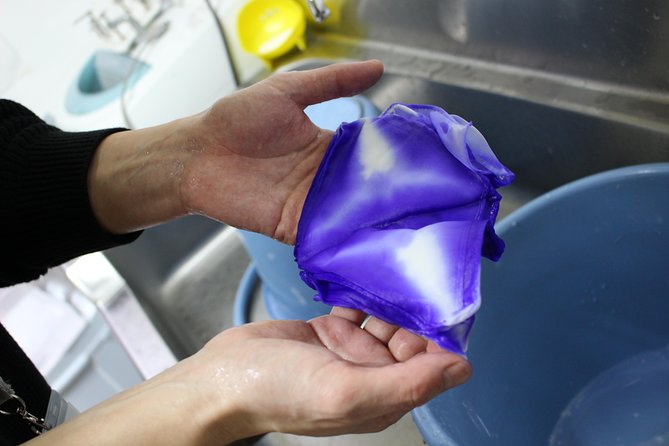
Book it if you want a private, beginner-friendly craft session with a real keepsake and a small museum visit built around the drying time. The finished scarf, kind instruction, and chance to see tools and textile examples make this more meaningful than a quick souvenir stop.
Skip it if you want hours of detailed technique or expect the workshop alone to fill a substantial part of your day. For most people who enjoy making things, though, this is a pleasant, practical Kyoto activity. Just confirm the scarf material and technique before you go.
FAQ
How long does the class take?
The activity is listed at about 30 minutes, while classes are also described as taking 30 to 60 minutes. The scarf takes about 30 minutes to dry, and you can use that time to see the museum.
What will I make?
You will dye a scarf measuring about 70 inches by 17 inches, or 175 by 50 centimeters. The stated project uses cotton, though some descriptions and past class accounts refer to silk.
Is the class private?
Yes. Only your party participates, and sessions are usually individual.
Where does the activity start and end?
It starts at Kyoto Shibori Museum, 135-5 Shikiamichō, Nakagyo Ward, Kyoto. The activity ends back at the meeting point.
Do I need experience with shibori?
No prior experience is specified as necessary. The class is presented as a beginner-friendly activity, with staff guiding you through choosing a color, folding the fabric, and dyeing it.
Can I cancel for a refund?
Yes. You can cancel at least 24 hours before the start time for a full refund. Cancellations made less than 24 hours before the experience are not refunded.
Newly added in Kyoto
- Uji: Private immersion into Kyoto’s tea and reglious culture★ 5.0 · 17 reviews
- Whisk Your Own Matcha: A Zen Matcha Experience at Temple★ 3.6 · 7 reviews
- Kyoto tea town for matcha lovers★ 5.0 · 16 reviews
- Treasures of Kyoto: Gion & historical Walking Tour★ 5.0 · 6 reviews
- Kyoto Matcha Green Tea Tour★ 4.5 · 23 reviews
- Uji and Wazuka Matcha Farm Half Day Private Guided Tour★ 5.0 · 21 reviews
- Uji Tea Ceremony and UNESCO Heritage Walking Tour★ 5.0 · 20 reviews
- Utilising upcycled Matcha! Creating matcha incense (Uji, Kyoto)★ 5.0 · 6 reviews
Kyoto Tours, compared.


Fushimi Inari, Kinkakuji, Bamboo Grove 1 Day Bus Tour
Read our review →
Tea Ceremony in a Traditional Tea House in Kiyomizu
Read our review →
Kyoto Geisha Walking Tour: Gion District & Hidden Gems
Read our review →

Gion Magical Night Walking Tour with Geisha Trivia
Read our review →