Reviewed · KYOTO TOURS
Hiroshima and Miyajima 1 Day Tour for who own the JR Pass only
Miyajima’s great torii gate and Hiroshima’s Peace Memorial sites make a powerful pair for one day: first a shrine island, then a city shaped by the atomic bombing. The trip is built around an English-speaking private guide who meets you at Kyoto or Shin-Osaka Station and helps manage the day’s connections.
I like the contrast between the two stops, and the fact that you can shape the visit with your guide. One guide, Sachiko, also known as Robyn, was praised for handling the travel and ferry arrangements, sharing clear explanations, and taking her group to a local spot on Miyajima.
The main catch is the price: $343.36 per person does not include the bullet train, JR Pass, ferry, or meals. You need to price those separately, and the published duration of 11 to 12 minutes plainly conflicts with a schedule that runs from early morning to evening.
- Two major sights in one day: Visit Itsukushima Shrine on Miyajima, then Hiroshima Peace Memorial Park, the museum, and Atomic Bomb Dome.
- Private guiding from Kyoto or Osaka: Your English-speaking guide meets you at a Shinkansen gate and accompanies your group.
- You arrange the main transport costs: Bullet train tickets, a JR Pass, and the Miyajima ferry are not included.
- Plan for a long day: The schedule starts at 7:30 a.m. and ends in the evening, depending on your return city.
- Lunch and dinner are on your own: Miyajima has a free lunch window, and Hiroshima Station is a suggested place to buy a bento before the ride back.
- There is room to adjust the route: You can ask to skip a stop or add one, though extra tickets and transport may cost more.
Miyajima first, Hiroshima after lunch
The day’s appeal is its sharp change of mood. Miyajima offers a famous shrine setting and views across the water; Hiroshima asks you to spend time with the human cost of the 1945 atomic bombing and the city’s work for peace.
The schedule gives you the morning on Miyajima, including Itsukushima Shrine, then takes you to Hiroshima Peace Memorial Park and the museum after lunch. It is an ambitious plan, but the two stops tell very different parts of Japan’s story. You are not simply checking off sights; you are moving from a centuries-old religious site to a place of modern remembrance.
That contrast is also why this trip works best if you can keep a steady pace. The schedule allows about an hour at the shrine and about an hour at the museum, but the island visit includes more than the shrine itself, and the park has several sites. You may need to decide what matters most to you rather than expect a slow, exhaustive visit everywhere.
The Kyoto or Osaka start, and what you must arrange
You meet your guide at 7:30 a.m. at either Kyoto Station’s Shinkansen Central Gate or Shin-Osaka Station’s Shinkansen Central Gate. The listed train options are Hikari 533 from Kyoto at 8:00 a.m. and Sakura 545 from Shin-Osaka at 8:04 a.m., with arrival in Hiroshima shown as 9:33 a.m.
The guide is included from Kyoto or Osaka, but the train fare is not. The tour is aimed at people who already have a JR Pass, yet the pass itself is also listed as not included. In other words, you need to arrive with a valid pass or buy your own train tickets. Check that your pass covers the trains and route you plan to take before booking.
The ferry from Hiroshima to Miyajima is another separate cost. Local public transportation within Hiroshima is included, but do not mistake that for an all-transport package. You also pay for lunch and dinner yourself.
The schedule is detailed enough to help you plan, but there is a clear mismatch in the stated duration: the summary calls it approximately 11 to 12 minutes, while the listed itinerary covers most of a day. Treat the timetable as a full-day outing and ask the operator to confirm the current train connections and total duration before you commit.
More Kyoto tours in Kyoto:
- PERFECT KYOTO 1-Day Bus Tour
★ 5.0 · 13,518 reviews - Kyoto: Fushimi Inari, Kinkakuji, Bamboo Grove 1 Day Bus Tour
★ 4.8 · 4,316 reviews - Kyoto: Tea Ceremony in a Traditional Tea House in Kiyomizu
★ 4.9 · 3,519 reviews
Itsukushima Shrine and Miyajima’s waterfront
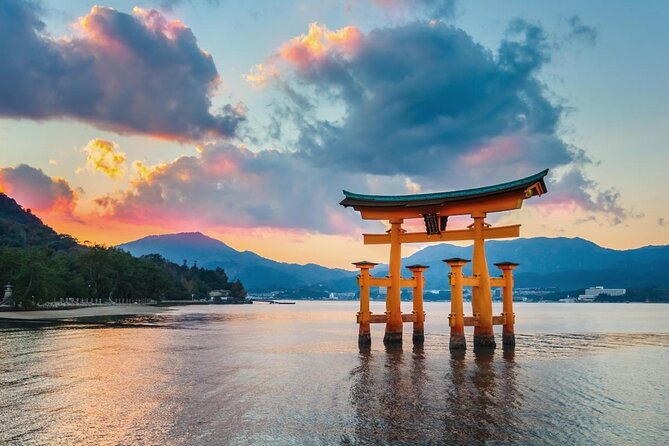
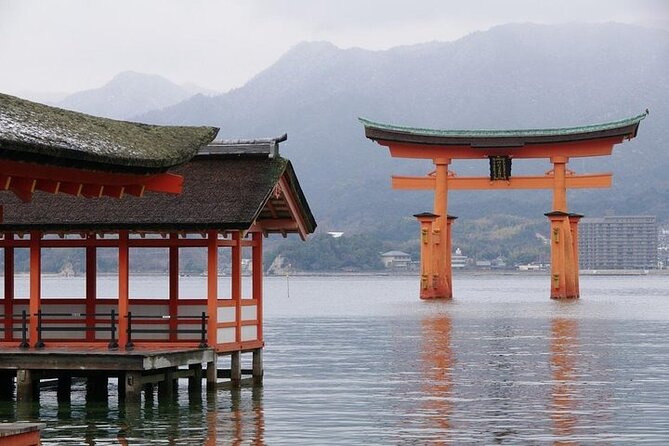
Miyajima is less than an hour from Hiroshima and is best known for its large torii gate, which appears to float on the water at high tide. The island’s formal name is Itsukushima, the same name as its centuries-old shrine. The shrine is the focus of the visit, and admission is included.
The schedule allots an hour for Itsukushima Shrine. That gives you time to see the main site, but it is not a long island stay. If you want to linger, explore more of Miyajima, or take an unhurried lunch, talk with your guide in advance about what can be adjusted and what you would have to give up elsewhere.
One useful detail from the guided experience is that a guide may take you beyond the headline sight to a local place frequented by residents. Sachiko, also known as Robyn, was specifically praised for this kind of stop, as well as for explaining the sights and helping with the ferry. Guide assignment is not guaranteed, so do not book expecting a particular person, but the example gives you a sense of the value a guide can add.
Lunch is free time and at your own expense. That offers flexibility, but the schedule does not name a restaurant or include a meal. If food is a priority, ask your guide about options before the day, and keep an eye on the clock: the next major stop is Hiroshima’s Peace Memorial Park at 1:00 p.m.
Hiroshima Peace Memorial Park and the Atomic Bomb Dome
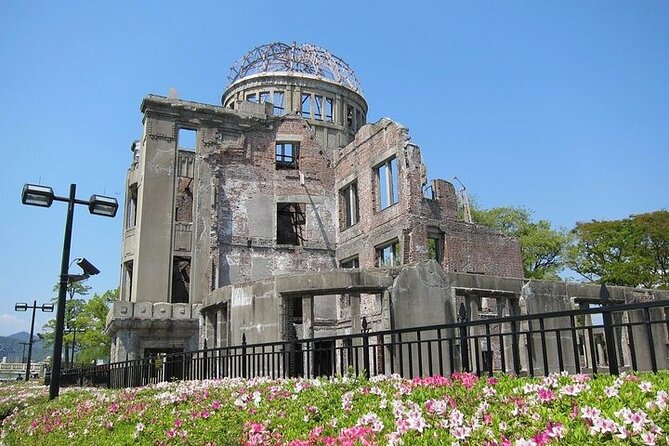
At 1:00 p.m., the schedule moves from Miyajima to Peace Memorial Park. The park covers more than 120,000 square meters and is among Hiroshima’s most prominent memorial spaces. Its scale gives you room to pause, but the time available is limited once you include transport and the museum visit.
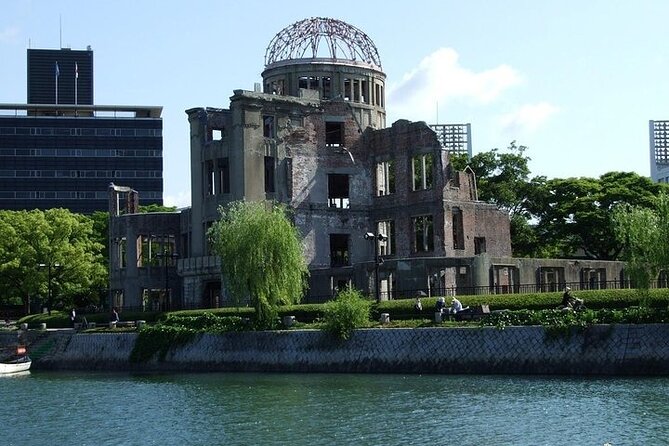
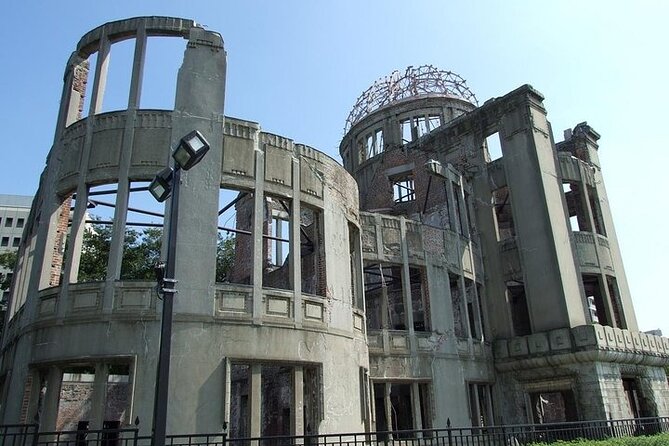
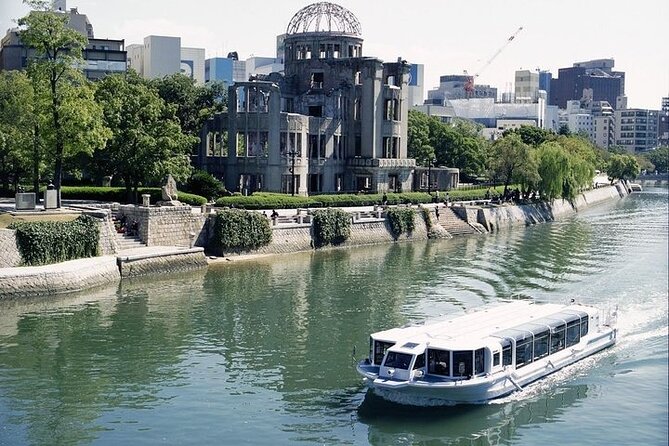
The Atomic Bomb Dome is a central landmark of the area. It was close to the point directly beneath the atomic bomb’s explosion on August 6, 1945, yet part of the structure remained standing. Its damaged frame is a stark physical reminder of the bombing, and it helps give context to the memorials and museum nearby.
The Peace Memorial Museum opened in 1955 and was designed by architect Tange Kenzo. The schedule allows one hour there, with admission included. That is enough for a focused visit, but may feel short if you want to read every display carefully. The subject is difficult, and you may prefer to give the museum more time than a quick pass through.
The guide can help connect the park’s sites and explain what you are seeing. One English-speaking guide was described as fluent and careful in explaining monuments and details. That matters here: a guide can offer context as you move through the area, while the museum itself gives you space to take in the exhibits at your own pace.
Return trains, food, and a demanding timetable
The schedule places you back at Hiroshima Station around 5:00 p.m. It suggests buying a bento there before heading back, a practical option if you have not had dinner. Food is not included, so build meals and snacks into your budget.
The return details differ by starting city. For Osaka, the listed train is Sakura 564, leaving Hiroshima at 5:52 p.m. and arriving at Shin-Osaka at 7:21 p.m. For Kyoto, the schedule shows Sakura 566 at 6:33 p.m. to Shin-Osaka, followed by Hikari 666 at 8:21 p.m. to Kyoto, with arrival listed at 8:34 p.m.
Because the Kyoto connection as written appears unusually tight in relation to the listed arrival times, confirm the exact return train plan with the operator before departure. The trip is a long day even when everything runs smoothly, and train connections are not a detail to leave vague. Your guide can help with travel arrangements, but your rail fare remains yours to arrange.
Same city, a different side of it:
- Kyoto Geisha Walking Tour: Gion District & Hidden Gems
★ 4.7 · 3,273 reviews - Kyoto: Tea Ceremony Ju-An at Jotokuji Temple
★ 4.9 · 3,207 reviews - Kyoto: Gion Magical Night Walking Tour with Geisha Trivia
★ 4.9 · 2,393 reviews - Kyoto: 45-Minute Tea Ceremony Lesson Experience
★ 4.3 · 2,378 reviews
What the price buys, and what it does not
At $343.36 per person, the fee buys a private English-speaking guide from Kyoto or Osaka and public transportation within Hiroshima. Admission is included for Itsukushima Shrine and the Hiroshima Peace Memorial Museum. The group is private, so only your party participates, and group discounts are available.
The price does not cover the largest transport costs: the round-trip bullet train, the JR Pass, or the ferry between Hiroshima and Miyajima. Meals are also extra. That makes the headline price only part of your actual outlay, especially if you need to buy rail tickets rather than use a pass you already own.
The value depends on what you want help with. If you are comfortable navigating Japan’s rail system and would rather visit independently, you can avoid paying for a private guide. If you want one person to meet you at the station, accompany you through a complex day, help with the ferry, and explain the sites in English, the guided format may justify the extra cost.
The small amount of available feedback is very positive, with three five-star ratings. The specific strengths described are practical help with train and ferry arrangements, fluent English, clear explanations, and a local stop on Miyajima. That is encouraging, though a small number of ratings is not enough to guarantee the same guide or style on every departure.
Who should book this day trip
I would consider this tour if you have a JR Pass or have already budgeted for the round-trip train, want a private guide, and are short on time in Japan. It brings together two major destinations that would otherwise take more planning to combine, and the guided format can make the day easier to manage.
It is less suitable if you want a relaxed pace, several hours on Miyajima, or a long museum visit. The itinerary is tightly packed, meals are not arranged, and the train and ferry costs sit outside the tour fee. You should also be comfortable spending a full day in transit and at memorial sites.
The tour allows customization: you can ask to skip a stop or substitute another place, and you can request changes even on the day. But skipping a site does not earn a refund, and added stops may mean extra admission or transport charges. If you are weighing the cost, ask for the exact current schedule, return connections, and any extra expenses before booking.
One final point: the experience is non-refundable and cannot be amended for any reason. Poor weather or failure to meet the minimum number of participants may lead to an offer of another date or a full refund. Confirmation is stated to arrive within 48 hours, subject to availability, so do not treat a booking request as an instant confirmation.
FAQ
How long is the tour?
The stated duration is approximately 11 to 12 minutes, but that conflicts with the schedule, which begins at 7:30 a.m. and ends in the evening. Confirm the actual duration with the operator; the itinerary is clearly planned as a full-day trip.
Where do I meet the guide?
For the Kyoto departure, meet at Kyoto Station’s Shinkansen Central Gate. For Osaka, meet at Shin-Osaka Station’s Shinkansen Central Gate. The listed start time is 7:30 a.m.
Are bullet train tickets included?
No. Round-trip bullet train tickets from Kyoto or Osaka to Hiroshima are not included. The JR Pass is also not included.
Is the ferry to Miyajima included?
No. The round-trip ferry fee between Hiroshima and Miyajima is listed as an extra cost.
Are meals included?
No. Lunch and dinner are not included. The schedule provides free time for lunch on Miyajima and suggests buying a bento at Hiroshima Station before the return train.
Which admissions are included?
Admission to Itsukushima Shrine and the Hiroshima Peace Memorial Museum is included. Public transportation within Hiroshima is also included.
Is this a private tour?
Yes. Only your group participates, and the activity is described as private.
Can I change the itinerary?
You can request changes in advance or on the day. You may skip a stop without a refund, and adding places may require extra admission fees or transport costs.
What happens if the tour is canceled?
The experience is non-refundable and cannot normally be changed. If poor weather or the minimum number of participants causes the tour to be canceled, you will be offered another date or a full refund.
Newly added in Kyoto
- Uji: Private immersion into Kyoto’s tea and reglious culture★ 5.0 · 17 reviews
- Whisk Your Own Matcha: A Zen Matcha Experience at Temple★ 3.6 · 7 reviews
- Kyoto tea town for matcha lovers★ 5.0 · 16 reviews
- Treasures of Kyoto: Gion & historical Walking Tour★ 5.0 · 6 reviews
- Kyoto Matcha Green Tea Tour★ 4.5 · 23 reviews
- Uji and Wazuka Matcha Farm Half Day Private Guided Tour★ 5.0 · 21 reviews
- Uji Tea Ceremony and UNESCO Heritage Walking Tour★ 5.0 · 20 reviews
- Utilising upcycled Matcha! Creating matcha incense (Uji, Kyoto)★ 5.0 · 6 reviews
Kyoto Tours, compared.

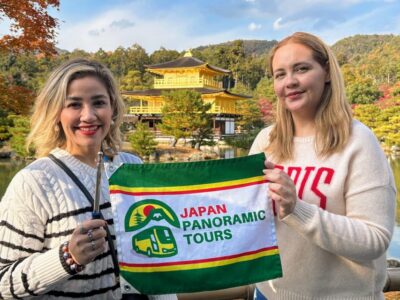
Fushimi Inari, Kinkakuji, Bamboo Grove 1 Day Bus Tour
Read our review →
Tea Ceremony in a Traditional Tea House in Kiyomizu
Read our review →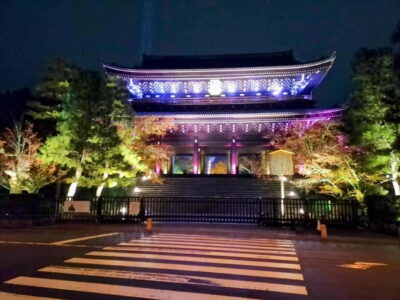
Kyoto Geisha Walking Tour: Gion District & Hidden Gems
Read our review →
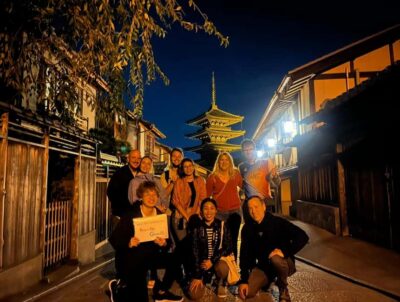
Gion Magical Night Walking Tour with Geisha Trivia
Read our review →