
Reviewed · KYOTO TOURS
Itajime Shibori Scarf Class
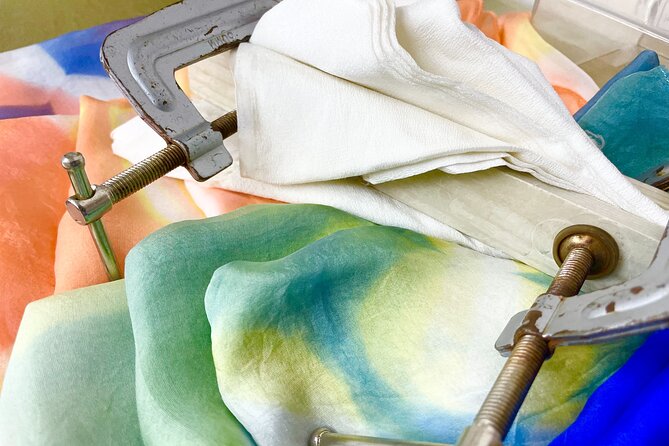
Shibori turns cloth into a record of how it was folded, marked, and dyed. In this short Kyoto class, you choose fabric and colors, make a scarf with a teacher’s help, then see the museum’s collection while your work dries. I like the hands-on craft and the way the museum visit adds context to what you have just made.
One thing to plan for: the class is brief, and finding the classroom can take a little attention. It is on the second floor and may not be clearly marked from the street, so allow time to locate the entrance rather than arriving at the last minute.
- Choose your own fabric, colors, and pattern for a personal scarf.
- Make the scarf with staff guidance, so no art background is needed.
- See shibori on a larger scale in the museum’s upstairs displays and film.
- Allow 30 minutes to an hour, with extra time useful for the museum.
- Small groups are capped at 10, and the minimum age is 6.
- The scarf is yours to take home, a useful keepsake with a story behind it.
A scarf-making class with a museum built in
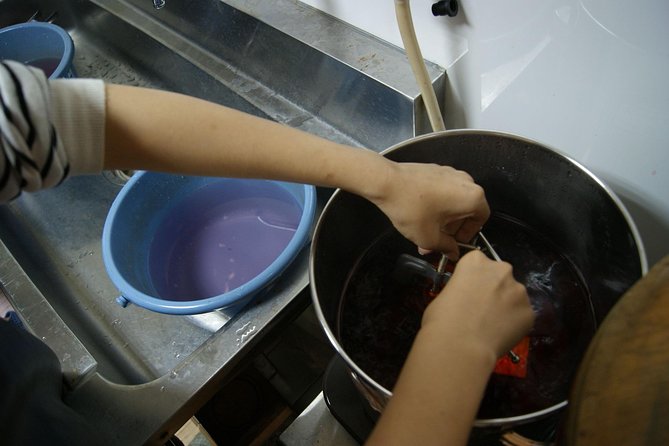
Itajime shibori is a traditional Japanese dyeing craft, and the appeal of this class is simple: you do not just look at finished work, you make something yourself. The activity takes place at Kyoto Shibori Museum, where the class and the displays fit together naturally. First you work with fabric and dye, then you can see examples that make the skill and labor behind the craft easier to appreciate.
The session lasts about 30 minutes to an hour. That is a manageable block in a Kyoto day, especially if you want a cultural activity that does not require a half-day commitment. The time may vary, so do not build a tightly timed plan around the shortest estimate.
The experience is led by museum staff. Instructor June is mentioned for her patient, kind teaching, while Kenji is also named in connection with the museum team. Names and staffing can change, but the consistent point is that the activity is guided step by step rather than left to you to figure out alone.
Choosing fabric, colors, and a pattern
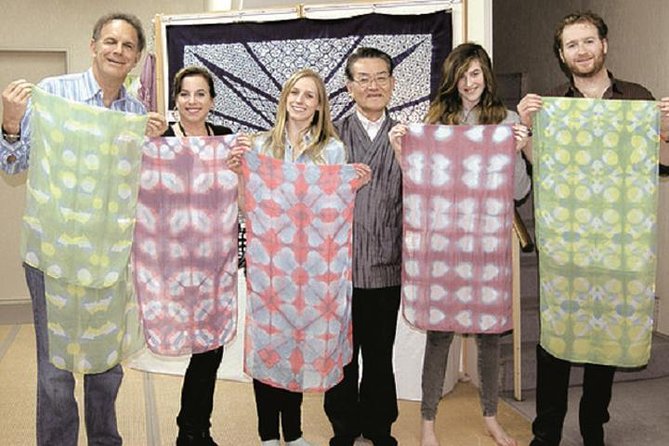
The class begins with a choice of Japanese fabric, colors, and a pattern. That small decision gives you a say in the finished scarf before the dyeing starts. If you are someone who likes to make a project your own, this is part of the fun. If you would rather not choose, ask the staff for guidance.
You do not need to arrive as an artist. The activity is designed for beginners, and the staff explain what to do as you go. The class is hands-on, but the presence of an instructor means you can focus on the process instead of worrying about getting every step right.
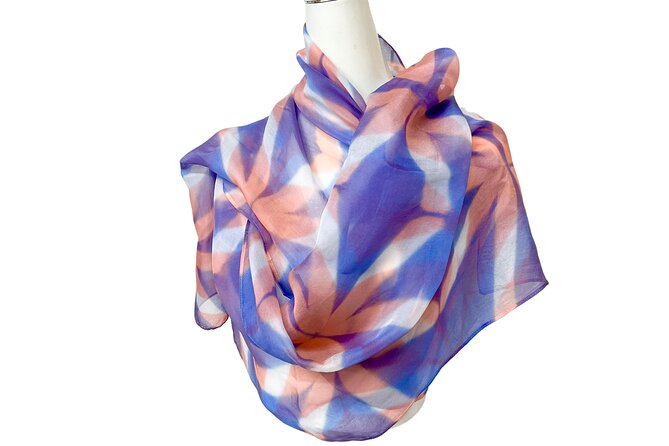
The scarf-making method uses traditional tools and fabrics. The finished design is shaped by the choices you make during the process, so each person’s result can feel individual. That is part of the pleasure: you leave with more than a souvenir bought from a shelf. You have a small, wearable reminder of an hour spent learning a Japanese craft.
The name of the class points to itajime shibori, but the experience is not described as a full technical course. Expect an introduction and a practical project, not an in-depth apprenticeship. If your main goal is to understand the wider craft, make time for the museum too.
More Kyoto tours in Kyoto:
- PERFECT KYOTO 1-Day Bus Tour
★ 5.0 · 13,518 reviews - Kyoto: Fushimi Inari, Kinkakuji, Bamboo Grove 1 Day Bus Tour
★ 4.8 · 4,316 reviews - Kyoto: Tea Ceremony in a Traditional Tea House in Kiyomizu
★ 4.9 · 3,519 reviews
Watching your scarf take shape
The most satisfying moment comes when the work is finished and the result is revealed. The process is simple enough to enjoy without specialist skill, yet the finished pattern can still surprise you. You get a chance to see how your earlier choices have affected the cloth.
Staff add finishing touches, and the scarf is dried and packaged for you to take away. The drying time is useful rather than wasted: you can look around the museum while the scarf is prepared. The timing can depend on how the session runs, so treat the museum visit as a natural part of the experience, not a guaranteed fixed-length intermission.
That reveal is especially appealing if you are making the scarf with children or family. The minimum age is 6, and adult pricing applies to all ages. A family can make the activity together, but do check the total cost for your group, since children do not receive a reduced rate under the stated pricing terms.
The museum’s upstairs collection gives the craft context
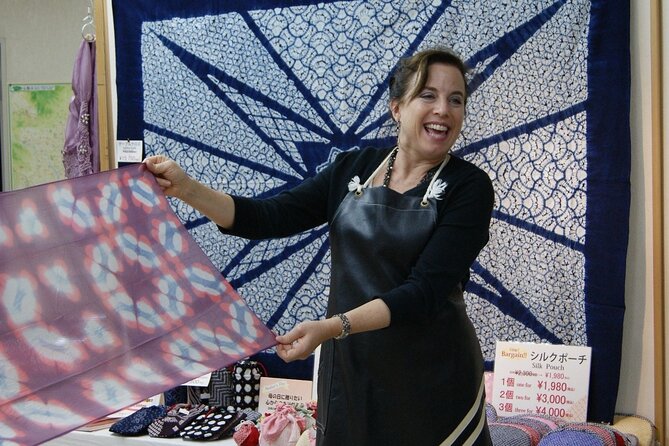
The second-floor museum display is a major part of the visit, not just a place to wait. You can see shibori works and learn about the history and process of the craft. A film also explains how shibori is made, and the displays show the range and detail possible in dyed fabric.
This context matters. A scarf-making class can be enjoyable on its own, but seeing intricate examples afterward helps you understand that the small project is part of a much larger tradition. The museum also gives you a chance to ask questions about shibori and kimono fabric making.
The collection may be the strongest reason to choose this class over a craft activity with no cultural explanation. You are not expected to master the technique in an hour, but you can leave with a clearer sense of what the practice involves and why the finished works take skill and time.
If you are especially interested in textiles, plan to give the displays your attention rather than rushing through them. The class itself is short, so the museum can make the visit feel more complete. There may also be shibori items for sale, including a purse described as combining leather and shibori, but shopping is optional.
A short stop near Kyoto’s historic sights
The museum is described as a short walk from Nijo Castle, making the class easy to pair with a nearby sightseeing stop. One participant placed the museum about two minutes from the castle. That proximity can help you build a compact day around the activity, but leave enough time for the class and museum rather than assuming you can squeeze everything into a narrow gap.
The museum is near public transportation. Two car parking spaces and bicycle parking are available, though the limited car spaces mean driving may not be the simplest plan. The street entrance and classroom can be a little hard to spot, with the classroom on the second floor. Keep an eye out for the museum and allow a few extra minutes to find it.
The experience is capped at 10 participants. That small maximum suits an activity where you need instructions and access to materials, though the exact group size on your date may be smaller. A more personal format can be useful if you have questions or want help with your choices.
Same city, a different side of it:
- Kyoto Geisha Walking Tour: Gion District & Hidden Gems
★ 4.7 · 3,273 reviews - Kyoto: Tea Ceremony Ju-An at Jotokuji Temple
★ 4.9 · 3,207 reviews - Kyoto: Gion Magical Night Walking Tour with Geisha Trivia
★ 4.9 · 2,393 reviews - Kyoto: 45-Minute Tea Ceremony Lesson Experience
★ 4.3 · 2,378 reviews
Is $43.60 good value?
At $43.60 per person, this is more than a quick demonstration, but less than a full-day workshop. You pay for a guided craft activity, fabric and materials, a scarf to take home, and access to the museum displays. The combination gives the price more substance than a souvenir-making session alone.
Value depends on what you want from Kyoto. If you are looking for a short, participatory cultural experience and like the idea of making something useful, the cost is reasonable. If you only want to buy a scarf or see a museum, this may not be the best use of your time and budget.
Adult pricing applies to all ages, including children. For a family, that can add up, but the minimum age of 6 makes it an option for school-age children who enjoy making things. Older children and teenagers may also find it more engaging than a visit where they only look at objects.
The activity is recommended by all of its 84 listed participants, an unusually strong record. That does not guarantee it will suit everyone, but the common strengths are clear: friendly staff, clear guidance, a fun hands-on process, and a museum visit that adds learning without making the session feel like a lecture.
Who will enjoy this Kyoto craft class?
I would put this class high on the list for anyone who likes crafts, textiles, or cultural activities that let you participate rather than just watch. It also suits solo visitors: the small-group setting and individual guidance can make a short class comfortable even if you arrive on your own.
Families with children aged 6 and up can make it a shared activity. The staff’s patient approach is a plus, and the scarf gives each person something tangible to take away. Just remember that adult pricing applies at every age.
Couples and friends get an easy, low-pressure outing with a built-in souvenir. It is also a good choice for a rainy or very hot day, though the information provided does not specify indoor conditions beyond the class and museum setting. The short duration makes it easier to fit around other Kyoto plans.
You may want to skip it if you need a long, advanced lesson in textile dyeing. The class is a brief introduction, not a multi-session course. And if your schedule is packed, the combination of scarf making and museum viewing may take more time than the bare 30-minute estimate.
Booking and practical details
The price is $43.60 per person, and the activity accepts a mobile ticket. Confirmation is received at booking, and most people can participate. The stated minimum age is 6, with the same price applying to children and adults.
You can cancel for a full refund up to 24 hours before the experience starts. Cancellations or changes made less than 24 hours before the start are not accepted for a refund. Those cut-off times follow local time, so check the start time carefully if your plans may change.
For the smoothest visit, arrive with time to find the second-floor classroom, and keep the museum visit in your schedule. The scarf-drying period gives you a reason to look around, and the displays are part of what makes this more than a quick craft stop.
Should you book the Itajime Shibori Scarf Class?

Book it if you want a short, guided introduction to a Japanese craft, enjoy making things, and would value a scarf with a personal story behind it. The museum’s displays and film give useful context, while the friendly, attentive staff help make the activity accessible to beginners.
Think twice if you are looking for an advanced textile lesson, need a guaranteed exact duration, or are counting on a discounted child price. Otherwise, this is a practical Kyoto activity with a pleasing balance of making, learning, and taking something home.
FAQ
How long does the class take?
The experience lasts about 30 minutes to an hour. The museum visit may add time, so allow for more than the shortest estimate if you want to see the displays.
Where does the class take place?
It takes place at Kyoto Shibori Museum in Kyoto. The classroom is on the second floor and may not be clearly marked from the street.
What will I make?
You will make an itajime shibori scarf using Japanese fabric, traditional tools, and your choice of colors and pattern.
Can I take the scarf home?
Yes. The scarf is dried, finished, and packaged for you to take home.
Is the museum included?
Yes. The itinerary includes admission to Kyoto Shibori Museum, where you can see displays and a film about shibori.
What is the minimum age?
The minimum age is 6. Adult pricing applies to all ages.
How many people can join?
The activity has a maximum group size of 10 participants.
Is there parking?
Two car parking spaces and bicycle parking spaces are available. The museum is also near public transportation.
Newly added in Kyoto
- Uji: Private immersion into Kyoto’s tea and reglious culture★ 5.0 · 17 reviews
- Whisk Your Own Matcha: A Zen Matcha Experience at Temple★ 3.6 · 7 reviews
- Kyoto tea town for matcha lovers★ 5.0 · 16 reviews
- Treasures of Kyoto: Gion & historical Walking Tour★ 5.0 · 6 reviews
- Uji and Wazuka Matcha Farm Half Day Private Guided Tour★ 5.0 · 21 reviews
- Kyoto Matcha Green Tea Tour★ 4.5 · 23 reviews
- Uji Tea Ceremony and UNESCO Heritage Walking Tour★ 5.0 · 20 reviews
- Utilising upcycled Matcha! Creating matcha incense (Uji, Kyoto)★ 5.0 · 6 reviews
Kyoto Tours, compared.


Fushimi Inari, Kinkakuji, Bamboo Grove 1 Day Bus Tour
Read our review →
Tea Ceremony in a Traditional Tea House in Kiyomizu
Read our review →
Kyoto Geisha Walking Tour: Gion District & Hidden Gems
Read our review →

Gion Magical Night Walking Tour with Geisha Trivia
Read our review →