
Reviewed · KYOTO PRIVATE TOURS
Kyoto 8hr Private Tour with Government-Licensed Guide
Kyoto’s best day out may be the one that does not try to see all of Kyoto. This eight-hour private walking tour lets you choose four to six sights with a licensed English-speaking guide, so you can focus on a few places instead of racing through a long checklist.
I like two things in particular: you can tailor the route to your interests, and a guide can help make sense of places such as Gion, where it is easy to wander past details without understanding what you are seeing. One thing to plan for: the tour does not include transport, entrance fees, or lunch, and the walking day can cover only a small part of the city.
- Choose four to six sights from a broad menu that includes Fushimi Inari, Kiyomizu-dera, Gion, Arashiyama, and more.
- Set the day around your interests, or ask the guide to suggest a route if you are unsure where to start.
- Expect a walking tour, not a chauffeured day. You meet your guide on foot within a designated area of Kyoto.
- Plan for extra costs. Transport, most entry fees, meals, and personal expenses are not included.
- Book early if you can. The tour is often reserved well in advance, and the operator asks you to book at least two weeks ahead.
A private day built around your Kyoto
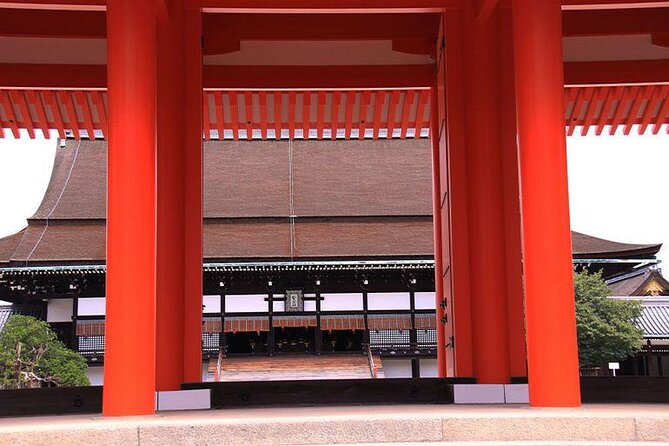
Kyoto can make even a well-prepared visitor feel spoiled for choice. There are temples and shrines in nearly every direction, along with historic districts, gardens, markets, and mountain-side sights. An eight-hour private tour can help you choose a workable handful, then give those places a little context.
After you book, a guide will contact you to plan the day. You can name three or four places you hope to see, then settle on a personalized route. The tour description says you can choose four to six sites, so use the first conversation to confirm the final number and priorities. If you do not have a shortlist, ask for an itinerary based on your interests, such as Zen gardens, old architecture, local food, or Kyoto’s imperial past.
The listed sights are options, not a promise that you will visit them all. The menu ranges from central Kyoto to its northern mountains and western outskirts, so picking sites that sit in the same area is the sensible way to spend more time exploring and less time getting around.
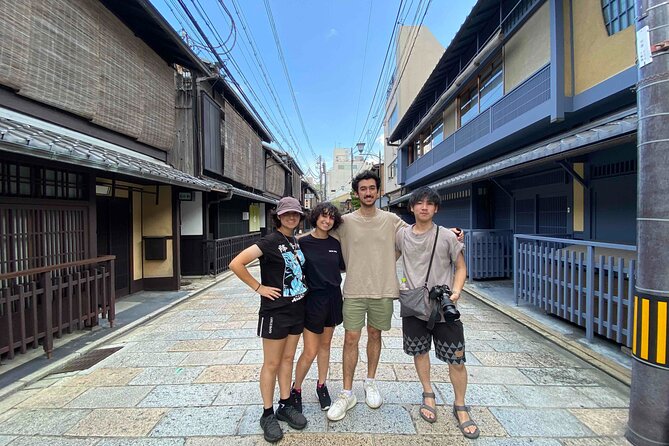
The tour is private for your party, rather than a shared group with strangers. That gives you room to ask questions, set a pace with your guide, and focus on what interests you. A group of six adults found guide Karkoo Tanigawa helpful and accommodating; other guide names associated with the experience include Ichiro, Shu, and Kaeko. You cannot combine multiple tour groups, and the names do not mean you can request a particular guide.
Pick a cluster, not a citywide checklist
The itinerary offers a wide range of possible stops, but Kyoto is spread out. Trying to fit Fushimi Inari, Arashiyama, Kinkaku-ji, Gion, and the northern mountain sights into one day would leave little time at each, even before accounting for transport. I would choose a compact route with a clear theme, then let the guide help refine it.
For a first visit, you might pair Higashiyama, Kiyomizu-dera, and Gion. This eastern Kyoto route brings together temple grounds, preserved streets, and the city’s best-known geisha district. If you are more drawn to gardens and Zen temples, consider a route built around Nanzen-ji, Eikando, and Ginkaku-ji. For a western Kyoto day, Arashiyama can fill the plan with Tenryu-ji, the bamboo groves, and nearby temples.
These are planning ideas, not fixed routes. Before you commit, ask the guide how long it takes to move between your choices and whether all of them make sense in an eight-hour day. The listed stop durations are short estimates, not a guarantee of how much time your private tour will spend at each place.
More private and custom tours in Kyoto:
- Kyoto 6hr Private Tour with Government-Licensed Guide
★ 5.0 · 1,369 reviews - 10 Must-see Spots in Kyoto One Day Private Tour (up to 7 people)
★ 5.0 · 1,108 reviews - Kyoto 4hr Private Tour with Government-Licensed Guide
★ 5.0 · 629 reviews
The eastern route: Kiyomizu-dera, Gion, and Higashiyama
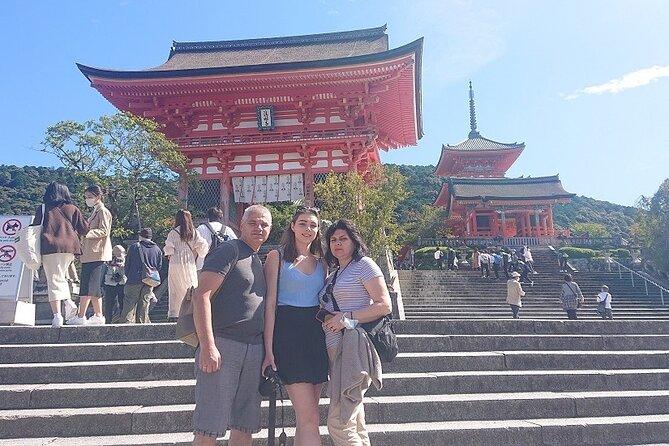
Kiyomizu-dera is one of Kyoto’s most popular temples, set above the historic Higashiyama area. It offers a strong opening for a day focused on architecture and temple life. Admission is not included, so remember to add the temple’s entry cost to your budget.
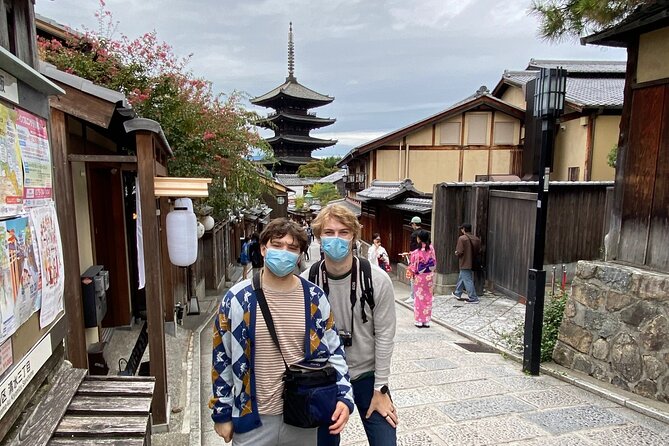
From there, the old lanes of Higashiyama make a good place to slow down and look closely at Kyoto’s traditional streetscape. The district is known for its preserved historic character, especially around the lower slopes of the eastern mountains. A guide can help you choose a sensible route through the area instead of leaving you to navigate every lane on your own.
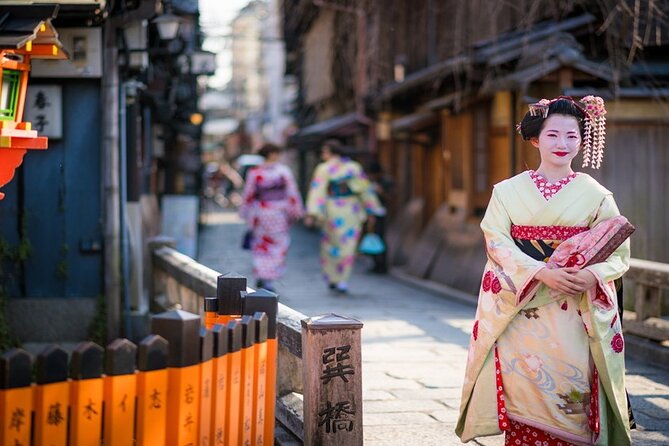
Gion is nearby and provides a different kind of history. It is famous for its geisha culture, and its narrow alleyways can be confusing on a first visit. A guide can point out places you might otherwise miss and explain the district’s character, while helping you keep the visit respectful. The tour does not promise a geisha encounter, and it should not be treated as a staged performance.
If your interests lean toward religious architecture, Sanjusangendo could be a worthwhile alternative. Its main draw is a hall containing 1,001 statues of Kannon. Kennin-ji, close to Gion, offers temple grounds and dry landscape gardens. Its listed visit time is only one minute, though, so confirm with the guide how much time your actual visit would allow.
Shrines and Zen temples: from Fushimi Inari to Nanzen-ji
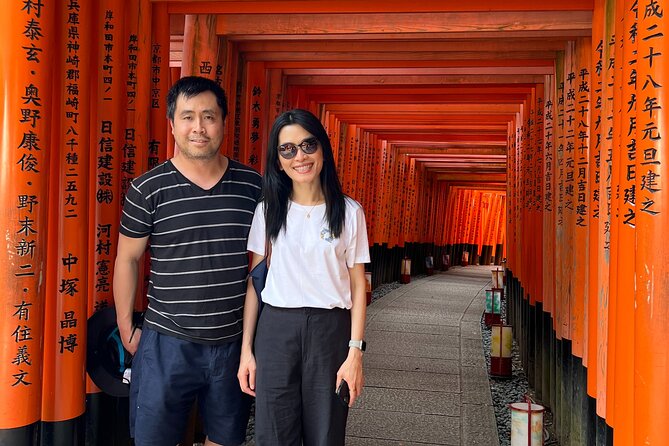
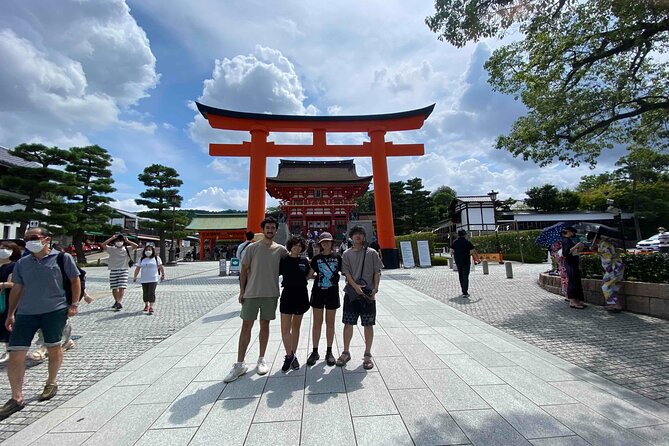
Fushimi Inari-taisha is one of the city’s most recognizable shrines. It is included among the possible stops, but the short listed time makes it important to set expectations: a brief visit is not the same as a long walk through the shrine’s grounds. Ask your guide which part of the shrine makes sense for the time available.
Nanzen-ji is a major Zen temple complex at the base of the Higashiyama mountains. Its grounds are spacious, and the brick aqueduct known as Nanzenji Suirokaku gives the site a distinctive architectural feature alongside its temple buildings. It is a good choice if you want room to walk and a little more variety than a single hall or garden.
Eikando, north of Nanzen-ji, is known for autumn colors and evening illumination. Those seasonal attractions may shape how appealing it is for your visit, but the tour details do not guarantee a particular seasonal display or evening timing. Ginkaku-ji, the Silver Pavilion, offers another eastern Kyoto option, with a history as a shogun’s retirement villa and a Zen temple setting.
You could also choose Tofuku-ji, especially if autumn color is a priority, or Sanjusangendo for its striking collection of Kannon statues. These sights are not all next door to each other, so let your guide help you make a route rather than treating the menu as a list to clear.
Arashiyama: bamboo, temples, and a full western Kyoto day
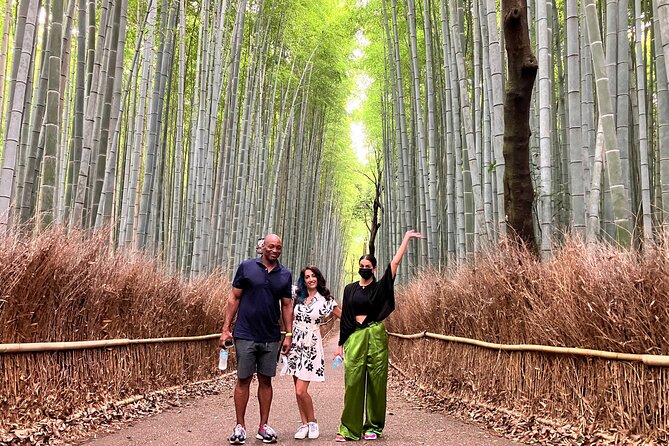
Arashiyama is a popular district on Kyoto’s western edge. Its best-known sights include the bamboo groves and Togetsukyo Bridge, a landmark crossing over the area’s river. The groves are especially appealing when a light wind stirs the tall bamboo, but they are also well-known and can feel busy. Choose them for their setting, not for an expectation of solitude.
Tenryu-ji, a World Heritage-listed Zen temple, is another strong reason to visit Arashiyama. The temple is considered the district’s most important, and its grounds offer a quieter counterpoint to the well-known paths nearby. Okochi Sanso Garden, the former villa of actor Okochi Denjiro, adds gardens and buildings beyond the bamboo route, though admission is not included.
If you want a less central temple visit, Jojakko-ji, Nisonin, Gio-ji, and Adashino Nenbutsu-ji offer different moods and settings. Gio-ji is known for its moss garden and thatched-roof structures; Adashino Nenbutsu-ji has stone figures placed in memory of the dead. Farther north, Otagi Nenbutsu-ji is noted for its 1,200 stone figures, each with a different face.
There is enough here for a day on its own. Adding far-flung sights such as Fushimi Inari or Shugakuin Imperial Villa could turn the day into a transport exercise. If Arashiyama is your priority, ask the guide to help you choose a few places in the district instead of trying to combine it with every famous temple in Kyoto.
More private tours in Kyoto:
- Fushimi Inari Hidden Hiking Tour (Private Option Available)
★ 5.0 · 1,750 reviews - Private Kyoto Tour with a Local, Highlights & Hidden Gems, Personalised
★ 5.0 · 1,543 reviews - Nara Half Day Trip Walking Tour (Private Option Available)
★ 5.0 · 937 reviews - Kyoto: Private Tour with Local Licensed Guide
★ 4.8 · 463 reviews
Northern Kyoto and the imperial sights
Kinkaku-ji, the Golden Pavilion, is a Zen temple with gold leaf covering its upper two floors. It is an iconic sight, but the stop may be relatively brief, and admission is extra. Nearby Ryoan-ji is known for its famous rock garden, a very different kind of experience that rewards a slower look.
Ninna-ji and Daitoku-ji are other northern options. Ninna-ji is a World Heritage-listed temple founded in 888, while Daitoku-ji is a large walled complex with many subtemples. Myoshin-ji, another substantial temple complex, has around 50 subtemples. These larger sites can be rewarding if you like temple architecture, but you should clarify what is open and how much time your planned visit allows.
Kyoto Imperial Palace offers a look at the former residence of Japan’s imperial family, before the emperor and capital moved to Tokyo in 1868. Shugakuin Imperial Villa and Katsura Imperial Villa are also on the menu, each with gardens and buildings tied to the imperial household. The supplied details do not explain access arrangements or reservation requirements for these villas, so confirm those points before building your day around them.
For a very different outing, Kibune and Kurama sit in Kyoto’s northern mountains. Kibune is a small town associated with Kifune Shrine; Kurama is known for Kurama-dera and its hot spring. Both are farther from central Kyoto than the main city sights, so ask about travel time and transport costs before selecting them.
What the eight hours include, and what they do not
The price is $201.46 per person. For a private guide across a full day, the value comes from the planning, local explanation, and ability to adjust the route to your group, not from bundled admission or transport. Group discounts are offered, but the available details do not state the discount amount.
This is a walking tour. Pickup and drop-off are on foot within a designated area of Kyoto, and a private vehicle is not included. You pay separately for transportation fees, entry fees, lunch, and personal expenses. If your route crosses distant districts, those transport costs can add up, so settle the route and travel plan with your guide in advance.
Some listed attractions are free to enter, while many temples and villas charge admission. Guide entry fees are covered only for sights listed under What to Expect, so do not assume every possible site or special area is included. Ask which entry costs apply to your chosen route and whether your guide’s admission is covered at those specific places.
A local tip from one group is especially practical: have Japanese yen and transportation cards ready before the tour begins. That helped a party of six set off promptly. It is a small preparation, but on an eight-hour day, sorting out payments and transit before meeting the guide can save time.
Is this Kyoto tour worth the price?
I see the strongest value here for a first-time visitor who wants help choosing among Kyoto’s many sights, or for a returning visitor who has a particular interest and wants a guide to build a focused day. The private format also suits families or small groups who prefer to move together and ask questions without keeping pace with a larger tour.
The guide’s role is central. The tour is not simply a ticketed route with transport included; it is a walking day that depends on good planning and a useful conversation before you meet. Past guide names include Karkoo Tanigawa, Ichiro, Shu, and Kaeko, and the praise associated with them centers on professionalism, helpfulness, and going beyond the basic plan. Your assigned guide may be different.
At roughly $201 per person, it is a substantial spend, especially once you add transport, admissions, and lunch. It can be good value if you use the customization and guiding to make a day that fits your interests. It is less compelling if you already know where you want to go and are comfortable managing the route yourself.
Should you book this private Kyoto tour?
Book it if you want a guide to shape a full day around four to six Kyoto sights, explain the places you visit, and help you avoid an unfocused dash across the city. Before booking, decide what matters most, ask about route timing and extra costs, and keep your chosen sights geographically close.
Skip it if your main priority is a private vehicle, included admission, or a fixed route that covers every famous landmark. This is a flexible walking tour, not a citywide transport package. The provider recommends reserving at least two weeks ahead, and the tour is often booked around 69 days in advance. If the format fits your plans, book early and arrive with yen and a transit card ready.
FAQ
How long is the tour?
The tour lasts approximately eight hours.
How many sights can I choose?
The included tour is customizable around four to six sites from the listed options. You can discuss your priorities with the guide after booking.
Is the tour private?
Yes. Only your group participates, and multiple tour groups cannot be combined.
Is the tour conducted in English?
Yes. The included guide is a licensed local English-speaking guide.
Is transportation included?
No. Transportation fees are not included, and the tour does not provide a private vehicle. The tour is on foot, with pickup and drop-off on foot within a designated area of Kyoto.
Are temple entrance fees included?
No. Entrance fees are not included. The guide’s entry fees are covered only for sights listed under What to Expect.
Is lunch included?
No. Lunch and other personal expenses are not included.
Can I ask the guide to suggest an itinerary?
Yes. If you are unsure which places to choose, you can ask the guide to suggest an itinerary based on your interests.
How far in advance should I reserve?
The provider asks you to reserve at least two weeks in advance. The experience is booked an average of 69 days ahead.
Can I cancel for a refund?
Yes, if you cancel at least 24 hours before the experience’s start time. Cancellations made less than 24 hours in advance are not refunded, and changes made within that period are not accepted.
Newly added in Kyoto
- Uji: Private immersion into Kyoto’s tea and reglious culture★ 5.0 · 17 reviews
- Whisk Your Own Matcha: A Zen Matcha Experience at Temple★ 3.6 · 7 reviews
- Kyoto tea town for matcha lovers★ 5.0 · 16 reviews
- Treasures of Kyoto: Gion & historical Walking Tour★ 5.0 · 6 reviews
- Kyoto Matcha Green Tea Tour★ 4.5 · 23 reviews
- Uji and Wazuka Matcha Farm Half Day Private Guided Tour★ 5.0 · 21 reviews
- Uji Tea Ceremony and UNESCO Heritage Walking Tour★ 5.0 · 20 reviews
- Utilising upcycled Matcha! Creating matcha incense (Uji, Kyoto)★ 5.0 · 6 reviews
Kyoto Private Tours, compared.
Kyoto 6hr Private Tour with Government-Licensed Guide
Read our review →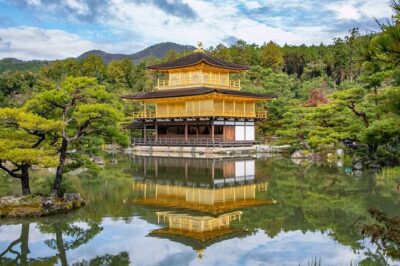
10 Must-see Spots in Kyoto One Day Private Tour (up to 7 people)
Read our review →
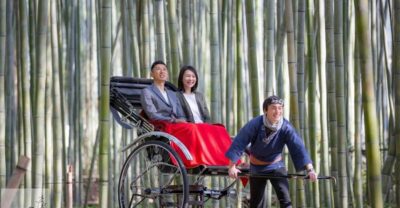
Arashiyama Customized Rickshaw Tour & Bamboo Forest
Read our review →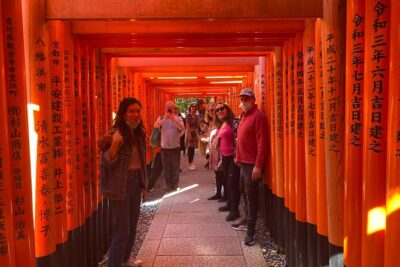
Private Kyoto Tour with Licensed Guide & Vehicle (Max 15 persons)
Read our review →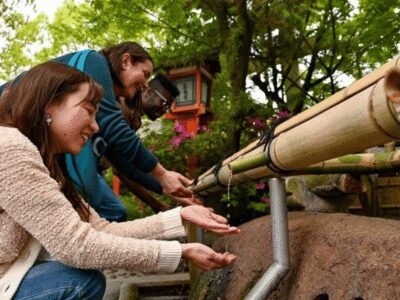
Private Customized Walking Tour with a Local Insider
Read our review →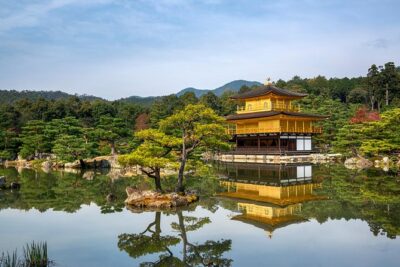
Kyoto Customized Private Tour: See Top Attractions in 1 Day
Read our review →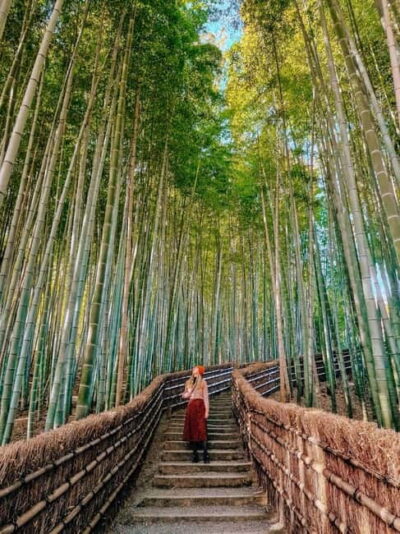
Browse the lists this tour appears in