
Reviewed · FUSHIMI INARI TOURS
Kyoto Guided Walking Tour Highlight of Kiyomizu & Fushimi Inari
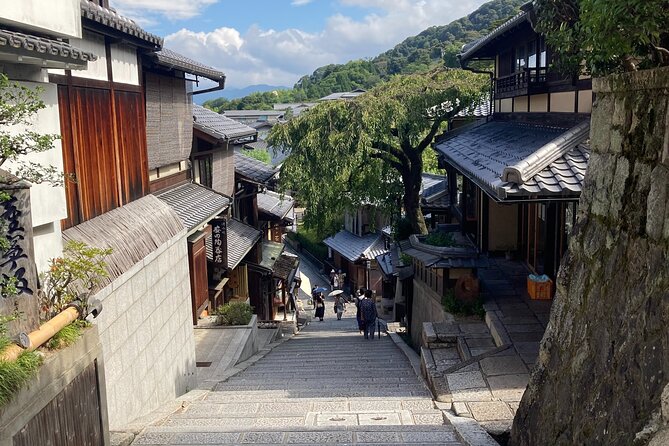
Kiyomizu-dera’s wooden stage, a hall lined with 1,001 statues, and the long rows of red gates at Fushimi Inari: this four-hour walk packs three distinct Kyoto sights into one morning. You get a guide to connect the places, plus a short train ride that saves the effort of arranging that leg yourself.
I like the small group, capped at eight, which leaves room to ask questions and hear the guide without competing with a crowd. I also like the contrast between Kiyomizu-dera’s broad city views and Fushimi Inari’s close, rhythmic rows of torii gates.
The trade-off is the walking. You move between several sites, and the train fare is extra, so wear comfortable shoes and have ¥170 or an IC card ready. The schedule is compact, too, though the three stops are chosen to give you very different sides of Kyoto.
At a glance
- Three major sites in four hours: Kiyomizu-dera, Sanjūsangendō, and Fushimi Inari fit into a single morning.
- A small-group format: The group is limited to eight, a useful size for questions and conversation.
- A practical transit link: A short train ride connects the temple area to Fushimi Inari. The ¥170 fare is not included.
- Two admission tickets included: Entry is included at Kiyomizu-dera and Sanjūsangendō. Fushimi Inari Shrine has no admission charge.
- An early start: The tour begins at 8:30 am at the Kyoto Ceramic Center and ends at Fushimi Inari’s main sanctuary.
- A guide adds context: Naomi-san has led this route, explaining the sites and answering questions along the way.
Three Kyoto icons, with different moods
This route works because the stops do not feel like three versions of the same temple visit. Kiyomizu-dera gives you a famous hillside temple and an open view across the surrounding trees. Sanjūsangendō shifts the focus indoors, to its long hall and striking line of Buddhist figures. Fushimi Inari then brings you into the visual world of Shinto, with its familiar red gates.
That variety is the main reason I would choose this walk over a tour that spends the whole morning at one large site. In four hours, you get a broad introduction to Kyoto’s religious places and architecture without needing to plan the connections yourself. The guide helps make the sequence more than a list of photo stops.
The pace is designed to cover a lot, but it is not a sightseeing sprint. The scheduled visits add up to about two hours and 15 minutes, plus a five-minute train ride. The rest of the time allows for walking between locations and the guide’s explanations. Your actual pace will depend on the group and conditions, so think of this as a focused introduction rather than a slow, exhaustive visit to each site.
More Kiyomizu-dera tours in Kyoto:
- Kyoto: Tea Ceremony in a Traditional Tea House in Kiyomizu
★ 4.9 · 3,519 reviews - Kyoto: Nijo Castle, Kiyomizu & Fushimi Inari Guided Tour
★ 4.7 · 700 reviews - Kyoto: Nijo, Kinkaku-ji, Arashiyama, Kiyomizu & Fushimi Inari
★ 5.0 · 699 reviews
Kiyomizu-dera: a stage above the trees
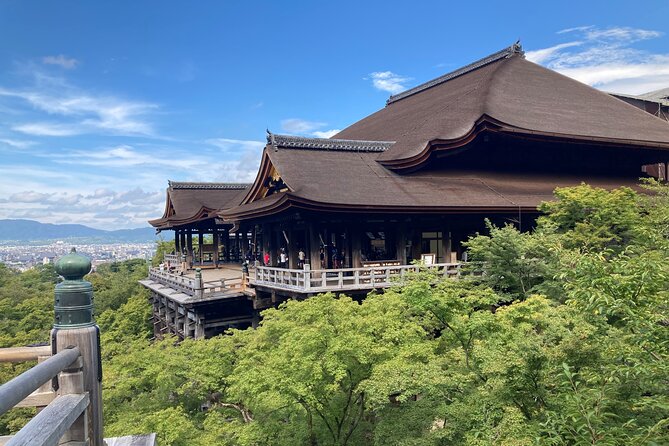
The tour begins at Kiyomizu-dera, a Buddhist temple founded in the late eighth century. Its best-known feature is the large wooden stage, which looks out over surrounding trees and Kyoto beyond. In cherry blossom season, the view is especially associated with the trees around the temple, but the setting has appeal in any season.
You have about an hour here, with admission included. That gives the guide time to introduce the temple and its setting, while leaving you a chance to take in the view and photographs. I like that the visit starts with a place whose scale and open outlook make an immediate impression, rather than beginning with a long indoor explanation.
Expect other people at a famous Kyoto sight, and allow for the fact that this is a walking tour, not a private visit. The temple grounds and approach involve walking, and the route continues afterward. If you want to linger over every detail or spend a long time framing photographs, you may wish you had more than an hour. For a first visit, though, the stop offers a strong overview.
Sanjūsangendō: 1,001 figures in one hall
Next comes Sanjūsangendō, known for its hall containing 1,001 statues of the Thousand Armed Kannon, the Goddess of Mercy. The name refers to the hall’s thirty-three bays, an architectural detail that helps explain why the building itself is part of the experience.
The contrast with Kiyomizu-dera is welcome. Instead of looking out across a broad view, you focus on the interior and the repeated figures within it. The effect is memorable, and the guide can give you historical and cultural context that is easy to miss if you simply walk through on your own.
The scheduled visit is 30 minutes, with admission included. That is a relatively brief stop, so this is not the tour for someone who wants to study every statue at length. But the short visit suits the overall plan: you get a clear sense of why the hall is notable, then move on before the morning is consumed by one attraction.
The train to Fushimi Inari
From Shichijō Station, the group takes a train to Fushimi Inari. The ride is scheduled for five minutes, but you must pay the fare separately. Have an IC card or ¥170 in coins ready. It is a small extra cost, yet useful to know before the morning begins so you are not fumbling for payment at the station.
This transfer is one of the route’s practical advantages. You visit sites in different parts of Kyoto without having to work out the rail connection yourself. The guide leads the group through the change in pace, and the train offers a brief pause between temple visits and the shrine.
The train fare is not part of the $78.18 tour price. That does not change the overall value much, but it is an easy detail to overlook when comparing prices. Count it as a separate expense, and remember that the tour ends at Fushimi Inari rather than returning you to the starting point.
More Fushimi Inari tours in Kyoto:
- Kyoto: Fushimi Inari, Kinkakuji, Bamboo Grove 1 Day Bus Tour
★ 4.8 · 4,316 reviews - Fushimi Inari Hidden Hiking Tour (Private Option Available)
★ 5.0 · 1,750 reviews - Kyoto/Osaka: Nara, Fushimi Inari Taisha, Arashiyama Bus Tour
★ 4.7 · 1,275 reviews - Osaka/Kyoto: Arashiyama, Nara & Fushimi Inari Shrine w/Lunch
★ 4.4 · 754 reviews
Fushimi Inari: red gates and a spiritual setting
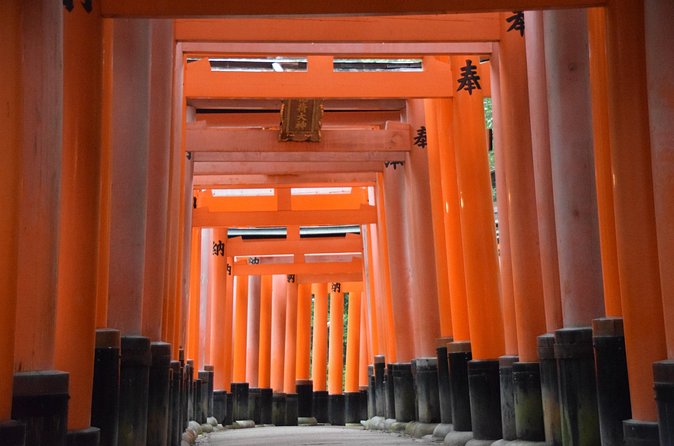
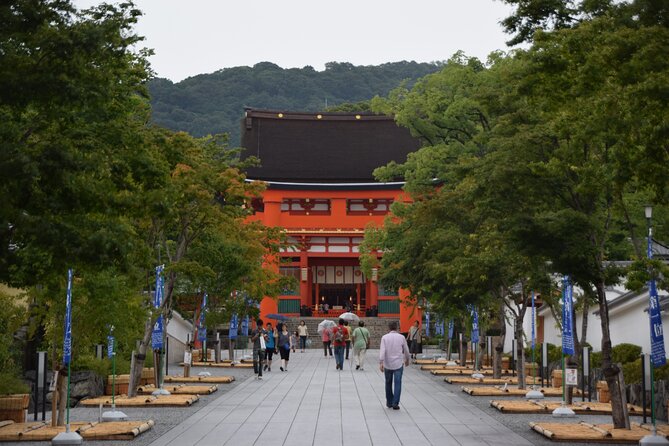
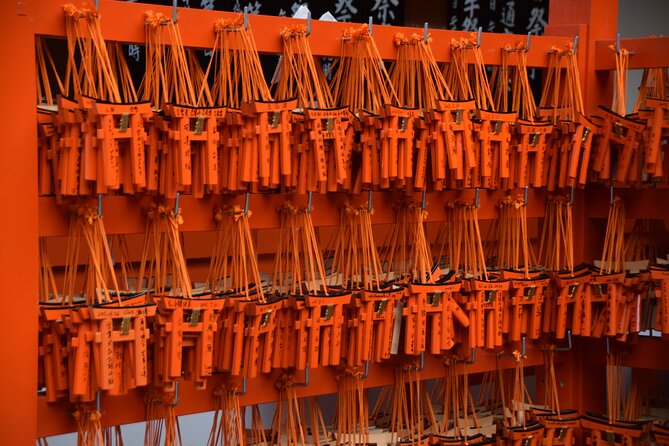
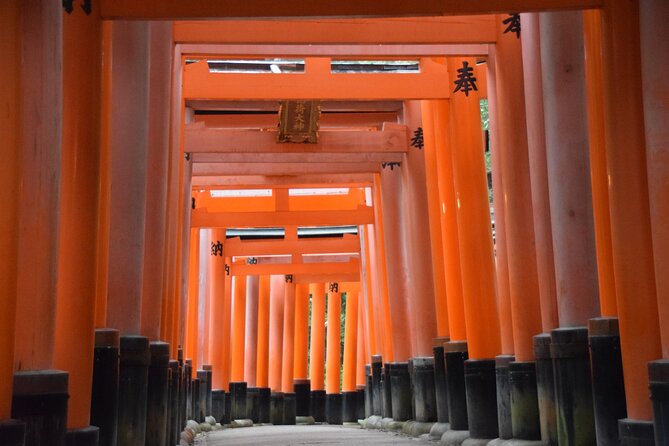
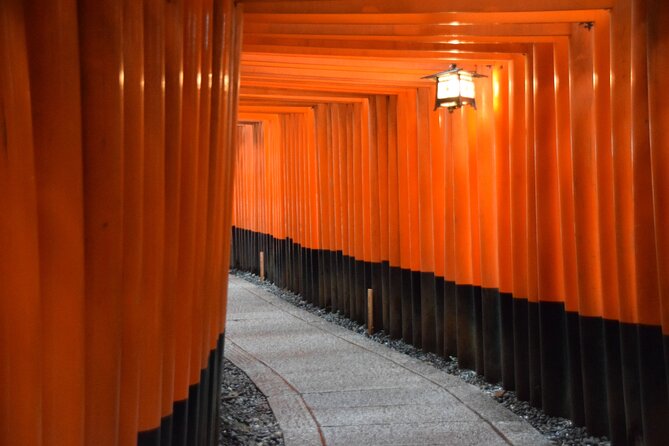
Fushimi Inari is dedicated to Inari, the Shinto deity associated with rice, agriculture, and prosperity. Its rows of red torii gates are among Kyoto’s most recognizable sights, and walking through them gives the visit a distinct feel from the Buddhist temples earlier in the morning.
You have about 45 minutes at the shrine, and admission is free. That is enough time to experience the gates and hear the guide explain the shrine’s significance, but it is not a long visit for anyone hoping to explore at leisure. The tour ends in front of the shrine’s main sanctuary, so you can continue exploring on your own afterward if your schedule allows.
The route may include a quieter path through the shrine grounds. That can be a pleasant change from the best-known photo spots, though the exact experience depends on the group and the guide. The practical point is that Fushimi Inari is more than a backdrop for pictures: its gates mark a sacred place, and a guide can help you approach it with that context in mind.
A guide who makes the walk more than logistics
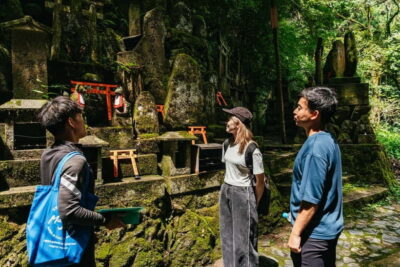
A good guide matters on a tour like this because the value is not just getting from one famous site to the next. The route involves steady walking, giving you time to ask questions and get explanations as you go. Naomi-san has led this tour and is praised for answering questions clearly, sharing history and trivia, and keeping the group engaged with a lively manner.
That personal element is part of the appeal of a small group. With a maximum of eight people, you are more likely to be able to hear the guide and take part in the conversation than on a large coach tour. It can also make the walk feel sociable, especially if you are traveling alone or want to meet a few other people along the way.
Guide assignments are not guaranteed by the tour details, so book for the route and format rather than on the assumption that one named guide will lead your date. The essential offer is a guided visit to three sites, with explanations and time for questions. The guide’s style can shape the morning, but the places themselves remain the core.
What the $78.18 price buys
At $78.18 per person, this is not the cheapest way to see Kyoto’s temples and shrines. You can visit these places independently, and Fushimi Inari itself is free. The value lies in joining the sites into a guided four-hour route, having admission included at Kiyomizu-dera and Sanjūsangendō, and avoiding the need to plan the train connection during your morning.
The price makes the most sense if this is your first visit, your time in Kyoto is limited, or you value the guide’s context. The three stops give you a strong range: a temple with a commanding view, a hall filled with statues, and a shrine known for its torii gates. A small group also means you are paying for a more personal format than a large group outing.
It is less compelling if you prefer to move at your own pace or want to spend several hours at Fushimi Inari alone. The shrine stop is 45 minutes, and the tour continues on a set schedule. You are paying for efficient coverage and guidance, not a full day at each landmark. Add the ¥170 train fare when you budget.
Start early, walk comfortably
The tour starts at 8:30 am at the Kyoto Ceramic Center, at 583-1 Yūgyōmaechō in Higashiyama Ward. It ends at Fushimi Inari Taisha’s main sanctuary, at 68 Fukakusa Yabunouchichō in Fushimi Ward. Since the start and end points differ, plan your next stop from Fushimi Inari rather than assuming you will return to the meeting point with the group.
A moderate amount of walking is involved, including movement between the sites. Wear comfortable walking shoes, and be ready for the tour to continue in rain or shine. The small group limit can make it easier to keep track of the guide, but it does not reduce the amount of walking.
The tour is booked, on average, 46 days ahead, a useful signal if your dates are fixed. Confirmation comes at booking, and free cancellation is available up to 24 hours before the start time. Check the terms when booking, especially if your plans are likely to shift.
Who will get the most from this tour
I would recommend this route to a first-time visitor who wants a guided introduction to Kyoto’s best-known religious sites and has only a morning to spare. It suits people who like asking questions, enjoy walking, and want a guide to explain what they are seeing rather than simply pointing out the next landmark.
It can also work well for a short Kyoto stay, when building an efficient plan matters. You see three sites with sharply different character, and the guide handles the train connection. The small group is a plus if you prefer a more conversational outing.
You may want another option if you have limited mobility, dislike walking, or need a long, unhurried visit at each site. The tour calls for a moderate amount of walking and runs for about four hours. It is also not ideal if your main goal is to explore all of Fushimi Inari at your own pace. You can stay after the tour ends, but the guided portion is brief.
Should you book it?
Book this tour if you want three major Kyoto sights, a guide to put them in context, and an efficient half-day plan. The strongest reasons are the small group, the contrast between the stops, and the chance to ask questions as you walk. Pack comfortable shoes, bring ¥170 or an IC card, and keep in mind that the tour finishes at Fushimi Inari.
Skip it if you prefer independent visits or want to spend most of your day at one temple or shrine. For a first look at Kyoto, though, this is a practical way to see three memorable places without turning the morning into a transport-planning exercise.
FAQ
How long is the tour?
The tour lasts about four hours.
What time does the tour start?
It starts at 8:30 am.
Where does the tour begin?
The meeting point is the Kyoto Ceramic Center, at 583-1 Yūgyōmaechō in Higashiyama Ward, Kyoto.
Where does the tour end?
It ends in front of the main sanctuary at Fushimi Inari Taisha.
How many people can join the group?
The maximum group size is eight travelers.
Is the train fare included?
No. The train fare is ¥170 per person. Bring an IC card or coins.
Are admission tickets included?
Admission is included at Kiyomizu-dera and Sanjūsangendō. Admission to Fushimi Inari Shrine is free.
How much walking is involved?
A moderate amount of walking is involved. Comfortable walking shoes are recommended.
Does the tour run in bad weather?
Yes. The tour takes place rain or shine.
More walking tours in Kyoto
- Kyoto Geisha Walking Tour: Gion District & Hidden Gems
★ 4.7 · 3,273 reviews - Kyoto: Gion Magical Night Walking Tour with Geisha Trivia
★ 4.9 · 2,393 reviews - Kyoto: Gion Geisha District Walking Tour – Stories of Geisha
★ 4.7 · 2,187 reviews - Night Walk in Gion: Kyoto’s Geisha District
★ 4.5 · 2,003 reviews
Newly added in Kyoto
- Uji: Private immersion into Kyoto’s tea and reglious culture★ 5.0 · 17 reviews
- Whisk Your Own Matcha: A Zen Matcha Experience at Temple★ 3.6 · 7 reviews
- Kyoto tea town for matcha lovers★ 5.0 · 16 reviews
- Treasures of Kyoto: Gion & historical Walking Tour★ 5.0 · 6 reviews
- Kyoto Matcha Green Tea Tour★ 4.5 · 23 reviews
- Uji and Wazuka Matcha Farm Half Day Private Guided Tour★ 5.0 · 21 reviews
- Uji Tea Ceremony and UNESCO Heritage Walking Tour★ 5.0 · 20 reviews
- Utilising upcycled Matcha! Creating matcha incense (Uji, Kyoto)★ 5.0 · 6 reviews
Fushimi Inari Tours, compared.

Fushimi Inari, Kinkakuji, Bamboo Grove 1 Day Bus Tour
Read our review →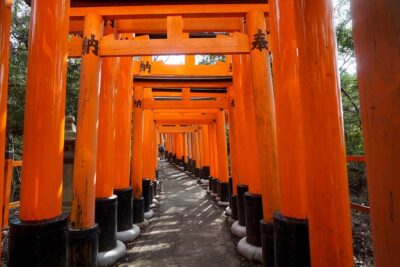
Fushimi Inari Hidden Hiking Tour (Private Option Available)
Read our review →
Nara, Fushimi Inari Taisha, Arashiyama Bus Tour
Read our review →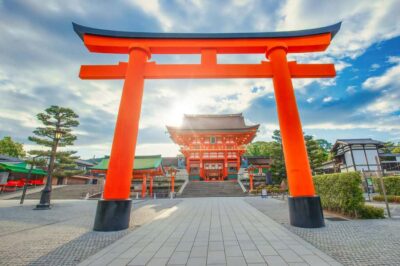
Arashiyama, Nara & Fushimi Inari Shrine w/Lunch
Read our review →
Nijo Castle, Kiyomizu & Fushimi Inari Guided Tour
Read our review →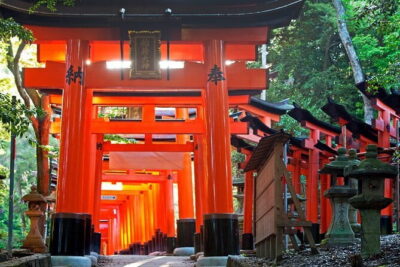
Nijo, Kinkaku-ji, Arashiyama, Kiyomizu & Fushimi Inari
Read our review →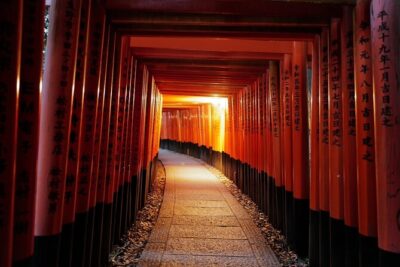
Browse the lists this tour appears in