
Reviewed · KYOTO TEMPLE & SHRINE TOURS
Kyoto Highlights: Half Day Customized World Heritage Walking Tour
Kyoto’s best-known sights sit in different parts of the city, so this private tour’s strongest feature is the freedom to choose a focus and set your start time. I like that you can ask for history as you go, and that the guide can adapt the stops to places you most want to see. Zied is a guide name associated with the experience, with Japanese history and flexibility among the strengths tied to his tours.
The trade-off is that four hours goes quickly. Transportation and entrance fees are extra, so a route with several far-apart sights may leave less time for each stop than you expect.
- Private and adjustable: Your group gets the guide to itself, and you choose the start time and sights.
- A history-minded guide: Zied is a named guide associated with the tour, and the tour includes cultural context and local tips.
- Several route styles: The suggested choices range from northern Kyoto shrines and gardens to central Kyoto temples, castle, and Gion.
- Four hours, not a full-day sweep: Select a manageable set of stops, especially if they are spread across town.
- Extra costs matter: Transportation, entrance fees, meals, drinks, and personal expenses are not included.
A private Kyoto walk built around your priorities
This is less a fixed march from one landmark to the next than a four-hour planning session with a guide and a route shaped to your interests. You can choose attractions and set the start time. If you already have a short wish list, tell the guide what matters most; if you do not, the guide can help you decide.
That flexibility is useful in Kyoto, where a single visit can lean toward temples, feudal-era architecture, traditional streets, or quieter green spaces. The suggested northern route includes the Botanical Garden, Kamigamo Shrine, and Ota Shrine. The central route brings together Gion, Kiyomizu-dera, and Nijo Castle. These are possibilities rather than a promise that every stop fits into one tour.
The tour is private, so only your party participates. That makes it easier to ask questions, adjust the pace, or spend more attention on a subject that catches your interest. The guide is included, and you can select a guide language.
Four hours calls for a clear plan
A half-day is long enough to get a useful introduction, but not long enough to see every major Kyoto sight at leisure. The listed stop times are generally 30 minutes, with one hour for the opening Kyoto stop. Those short visits can work well for seeing a site and hearing its context, but they leave limited room for lingering.
The biggest practical factor is travel time. Transportation is not included, and the attractions are spread across different parts of the city. Moving between them takes time and may add costs, so ask the guide to help you build a route that makes sense geographically. A north-focused plan or a central-focused plan is likely to feel more coherent than trying to combine distant stops simply because they are all appealing.
You can also use the guide’s help to make choices before the clock starts. If Nijo Castle is a priority, say so early. If you care more about a quiet shrine setting or Gion’s old streets, make that clear too. A customized tour works best when your guide knows what you want to get from it.
More private and custom tours in Kyoto:
- Kyoto 6hr Private Tour with Government-Licensed Guide
★ 5.0 · 1,369 reviews - 10 Must-see Spots in Kyoto One Day Private Tour (up to 7 people)
★ 5.0 · 1,108 reviews - Kyoto 4hr Private Tour with Government-Licensed Guide
★ 5.0 · 629 reviews
Northern Kyoto: gardens and old shrines
The northern option pairs Kyoto Botanical Garden with Kamigamo Shrine and Ota Shrine. It offers a calmer counterpoint to the city’s headline temples, with time for plant collections, traditional shrine architecture, and a seasonal iris garden.
At Kyoto Botanical Garden, the appeal is a pause among diverse plants and seasonal blooms. The stated visit is 30 minutes, which is enough for a short walk and a change of pace, but not a leisurely tour of a large collection. If flowers and gardens are a particular interest, ask whether the time can be adjusted or whether another stop should be dropped.
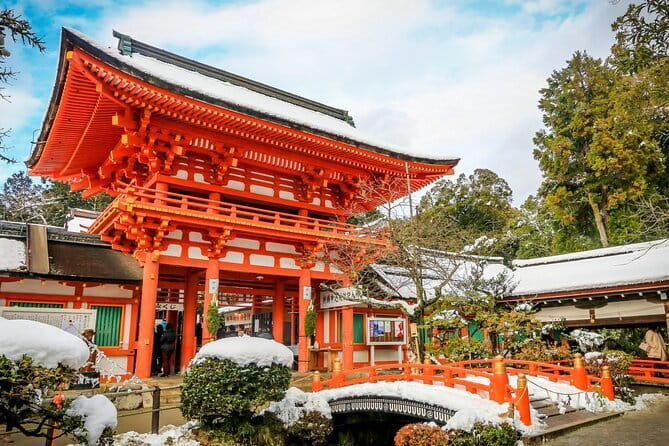
Kamigamo Shrine is one of Kyoto’s oldest Shinto shrines and a UNESCO World Heritage Site. Its traditional architecture and serene setting offer a different kind of heritage from Kyoto’s Buddhist temples and castles. The listed visit is also 30 minutes, so you will want to focus on the grounds and the guide’s explanation rather than expect an extended visit.
Ota Shrine is a smaller-feeling stop in the suggested route, known for its wooded surroundings and iris garden. The garden is especially notable during its blooming season, so the experience can vary with the time of year. If you are considering this route, ask the guide what is likely to be in bloom on your date. The stop is listed for 30 minutes.
These northern stops suit you if you want a quieter half-day and are more interested in shrine settings and seasonal nature than in ticking off the best-known city sights. They are not admission-free by definition: entrance fees are excluded from the tour price, and the listed stops mark their tickets as not included.
Central Kyoto: Gion, Kiyomizu-dera, and Nijo Castle
The central route combines three very different sides of Kyoto. Gion is a historic district of wooden machiya houses, teahouses, and shops, with a strong connection to geisha culture. Its streets are part of the appeal, and the stop is listed as free to enter. A guide can help put the district’s architecture and traditions in context, rather than leaving you to simply pass through and take photos.
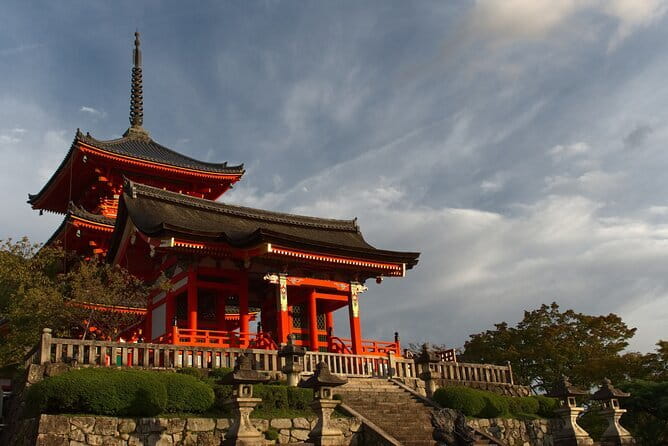
Kiyomizu-dera is a major Buddhist temple, known for its large wooden stage and broad views over the city. The setting is a compelling reason to visit, but a 30-minute stop is brief if you want time for the temple grounds as well as the outlook. Entrance fees are not included in the tour price, so account for possible admission costs when comparing the total expense.
Nijo Castle offers a shift from religious sites to the architecture and power of Japan’s feudal period. It is a UNESCO World Heritage Site, and its famous nightingale floors chirp underfoot. That detail gives the castle a memorable hook, while the larger site helps explain Kyoto’s political past. The suggested visit lasts 30 minutes, so ask whether the route can allow more time if the castle is high on your list. Admission is not included.
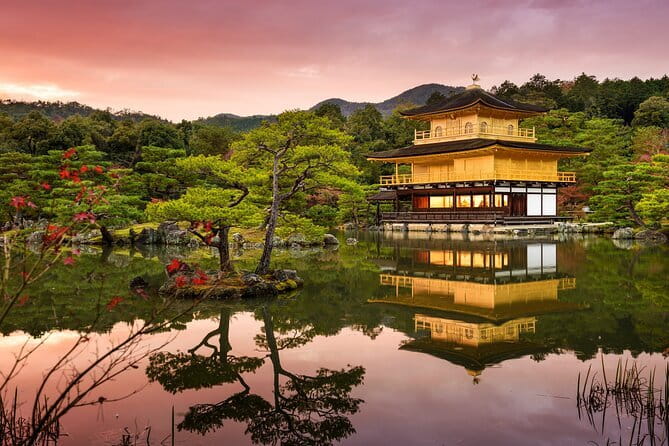
You may also be interested in Kinkakuji, the Golden Pavilion, which is named among the possible Kyoto landmarks for the tour. It is not one of the stops in the two sample routes described here, so confirm with the guide whether it can be added and what you would need to remove to keep the plan within four hours.
What the guide adds beyond directions

A guide’s value here is not just getting you from one site to another. The tour promises cultural insights and local tips, and that context can make a shrine, temple, or castle feel less like a set of impressive buildings and more like part of Kyoto’s story.
Zied is a guide name associated with this experience. The strengths tied to his guiding are clear explanations of Japanese history and a willingness to accommodate requested places. You cannot assume he will be your guide, so if you have a preference, ask when arranging the tour. Whoever leads it, bring a few questions and share your interests at the start. That gives the guide a better chance to shape the conversation around what you care about.
More walking tours in Kyoto:
- Kyoto Geisha Walking Tour: Gion District & Hidden Gems
★ 4.7 · 3,273 reviews - Kyoto: Gion Magical Night Walking Tour with Geisha Trivia
★ 4.9 · 2,393 reviews - Kyoto: Gion Geisha District Walking Tour – Stories of Geisha
★ 4.7 · 2,187 reviews - Night Walk in Gion: Kyoto’s Geisha District
★ 4.5 · 2,003 reviews
Is $125 a fair price?
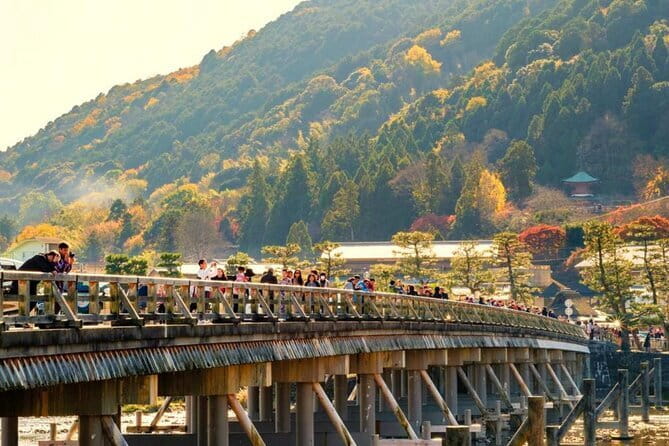
At $125 per person, this is not simply a ticket bundle or a transport package. You are paying for a private four-hour guide and the ability to shape the route. That can be good value if you want historical context, help choosing sights, and the freedom to move at your group’s pace.
The price is harder to judge without counting the extras. Transportation, entrance fees, meals, drinks, and personal expenses are excluded. If your route includes several paid sites or requires multiple rides, your total will be higher than the advertised per-person price. Group discounts are available, which may improve the value for a larger party, though the exact discount is not specified.
For a solo visitor or couple who wants a guide for just a few sites, the private format may feel costly compared with exploring independently. For a family or group with different interests, having one guide adapt the visit can make the added cost easier to justify. The tour is often booked around 32 days ahead on average, so it is sensible to plan early if you have a specific date in mind.
Who should book this half-day tour?
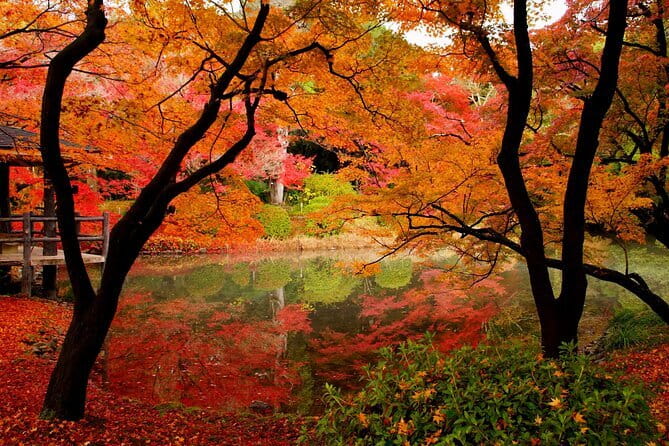
I would consider this tour if you value personal attention and want help making sense of Kyoto’s history, but do not want to follow a rigid group schedule. It is also a good fit if you already know which places matter to you and want a guide to help connect them.
It may be less suitable if your goal is to see a long list of far-flung sights in four hours, or if you expect transport and entrance tickets to be bundled into the price. In that case, compare the full cost and travel time before booking. Keep the route focused, confirm which attractions can fit, and treat the guide’s advice as part of the planning value.
FAQ
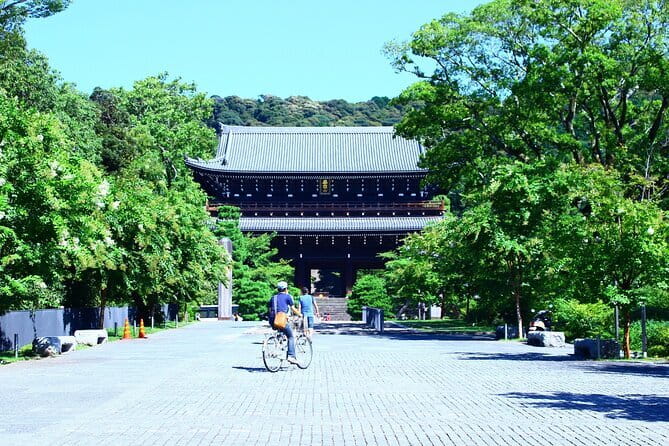
How long is the tour?
The tour lasts approximately four hours.
Is the tour private?
Yes. Only your group participates.
Can I choose the start time and attractions?
Yes. You can set the start time and tailor the attractions to your preferences.
What is included in the price?
The price includes a four-hour customized tour and a guide in your selected language.
Are transportation and entrance fees included?
No. Transportation and entrance fees are not included. Meals, drinks, and personal expenses are also extra.
What is the cancellation policy?
You can cancel for a full refund up to 24 hours before the experience starts. Cancellations or changes made less than 24 hours before the start are not accepted for a refund or change.
How far in advance is the tour usually booked?
It is booked an average of 32 days in advance. Availability for a particular date is not specified.
More temple and shrine tours in Kyoto
- Kyoto: Tea Ceremony Ju-An at Jotokuji Temple
★ 4.9 · 3,207 reviews - World Heritage Kyoto & Nara Uji Authentic Matcha Experience
★ 5.0 · 1,573 reviews - Arashiyama Bamboo, Temple, Monkeys, or Secret Sake Brewery
★ 4.8 · 886 reviews - Kyoto: Arashiyama Bamboo Forest, Monkeys, Matcha & Temple Tour
★ 5.0 · 759 reviews
Newly added in Kyoto
- Uji: Private immersion into Kyoto’s tea and reglious culture★ 5.0 · 17 reviews
- Whisk Your Own Matcha: A Zen Matcha Experience at Temple★ 3.6 · 7 reviews
- Kyoto tea town for matcha lovers★ 5.0 · 16 reviews
- Treasures of Kyoto: Gion & historical Walking Tour★ 5.0 · 6 reviews
- Kyoto Matcha Green Tea Tour★ 4.5 · 23 reviews
- Uji and Wazuka Matcha Farm Half Day Private Guided Tour★ 5.0 · 21 reviews
- Uji Tea Ceremony and UNESCO Heritage Walking Tour★ 5.0 · 20 reviews
- Utilising upcycled Matcha! Creating matcha incense (Uji, Kyoto)★ 5.0 · 6 reviews
Kyoto Temple & Shrine Tours, compared.

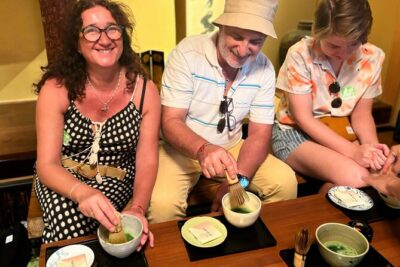
World Heritage Kyoto & Nara Uji Authentic Matcha Experience
Read our review →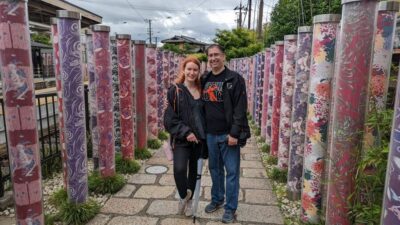
Arashiyama Bamboo, Temple, Monkeys, or Secret Sake Brewery
Read our review →
Arashiyama Bamboo Forest, Monkeys, Matcha & Temple Tour
Read our review →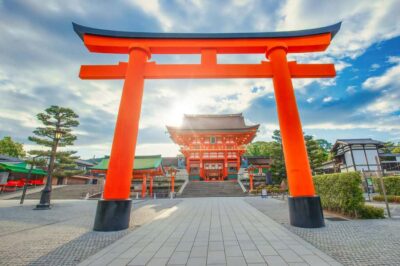
Arashiyama, Nara & Fushimi Inari Shrine w/Lunch
Read our review →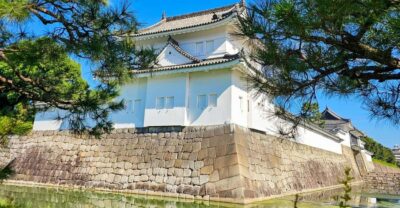
Imperial Palace & Nijo Castle Guided Walking Tour
Read our review →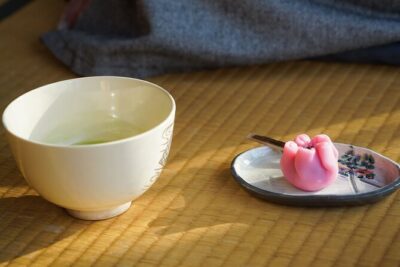
Kyoto Zen Meditation & Garden Tour at a Zen Temple with Lunch
Read our review →
Browse the lists this tour appears in