Reviewed · KYOTO TOURS
Kyoto: Ikebana (Japanese Flower Arrangement)
Ikebana here is more than putting flowers in a vase. The lesson connects a Kyoto flower arrangement admired in 1462 with an art form built around harmony between nature and human space, then gives you seasonal flowers and tools to try it yourself.
I like two things in particular: you meet an ikebana master rather than just watch a demonstration, and the visit continues inside Tondaya, a 140-year-old Kyoto townhouse filled with historical objects and stories. That pairing gives the activity a useful balance of doing and learning.
The main caution is value for money. At $122 per person, the booking promises 90 minutes, but the hands-on portion can feel much shorter, and explanations may be limited if interpretation is needed. Go in expecting a compact cultural visit, not an extended flower-arranging course.
- A beginner-friendly ikebana lesson: Seasonal flowers and tools are provided, so you can focus on the arrangement rather than bringing supplies.
- A Kyoto origin story: The experience links ikebana to a 1462 arrangement that expressed harmony between nature and human space.
- A historic townhouse visit: Tondaya is a 140-year-old machiya designated as a culturally significant landmark by Kyoto City.
- A private group format: You book for at least two participants, with the session reserved for your group.
- A practical wardrobe note: Wear socks, and leave stockings and tights at home.
- A variable language setup: English and Japanese are listed, but an interpreter may need to be arranged and a translation device may be used.
Ikebana Begins With Space, Not Just Flowers
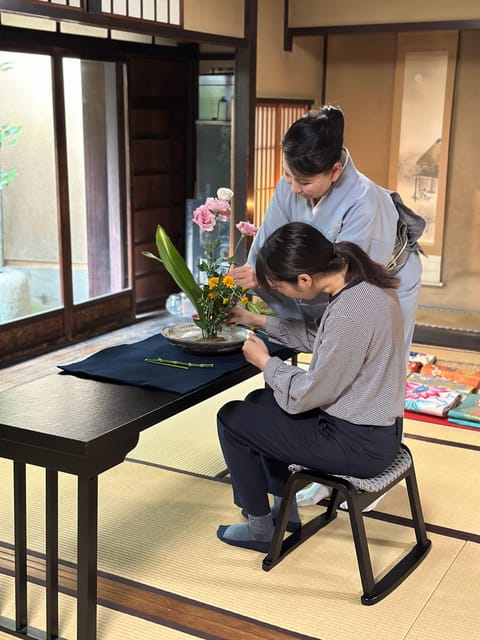
A beginner’s first surprise may be that ikebana is not simply a matter of filling a container with pretty blooms. The art is described here through a 15th-century Kyoto arrangement that was admired for its elegance and for the way it brought nature into a human setting. That idea gives the lesson a point of focus: you are arranging stems in relation to space, not making a conventional bouquet.
The experience starts with an ikebana master guiding you through the basics. Seasonal flowers and the necessary tools are included, so you do not need to shop for materials or bring your own equipment. The supplied details do not name the instructor or specify a particular ikebana school, so if you want to study a formal style in depth, ask what the lesson will cover before booking.
This is aimed at beginners, which makes it a reasonable choice if you have never tried flower arranging. You can watch how the instructor approaches the materials, then make your own arrangement with guidance. One important distinction: the session is described as a guided activity, not a full course with a detailed syllabus or a promised demonstration.
That difference matters. One person may be happiest making something with a master nearby, while another may want a longer explanation of the rules and theory. If you belong to the second group, set expectations early and ask how much time is allotted to instruction and hands-on work.
The Lesson’s Short-Session Risk
The booking duration is 90 minutes, but that figure covers the overall visit, including the museum component. The length of the flower-arranging lesson itself is not specified. Some participants have found the practical session surprisingly brief, with one describing about 15 minutes of activity. Others have valued the teaching and felt they learned a great deal.
That difference is worth taking seriously at this price. A short exercise can still be worthwhile if you want a first look at ikebana and a memorable setting. It is less appealing if you expect a substantial class, a long instructor demonstration, or time to make several arrangements.
A useful approach is to treat the activity as an introduction, not a skills workshop. If you are booking mainly for the flowers, contact Tondaya in advance to clarify the lesson’s format and approximate hands-on length. The staff work across traditional arts including kimono, tea ceremony, calligraphy, and ikebana, but the specific instructor for your date is not given.
The central question is what you want from the visit. If you value a chance to try an unfamiliar art in a historic setting, the combination may justify the cost. If you are measuring value by minutes of direct instruction, you may find the experience thin.
More Kyoto tours in Kyoto:
- PERFECT KYOTO 1-Day Bus Tour
★ 5.0 · 13,518 reviews - Kyoto: Fushimi Inari, Kinkakuji, Bamboo Grove 1 Day Bus Tour
★ 4.8 · 4,316 reviews - Kyoto: Tea Ceremony in a Traditional Tea House in Kiyomizu
★ 4.9 · 3,519 reviews
Photographing Your Arrangement by the Garden
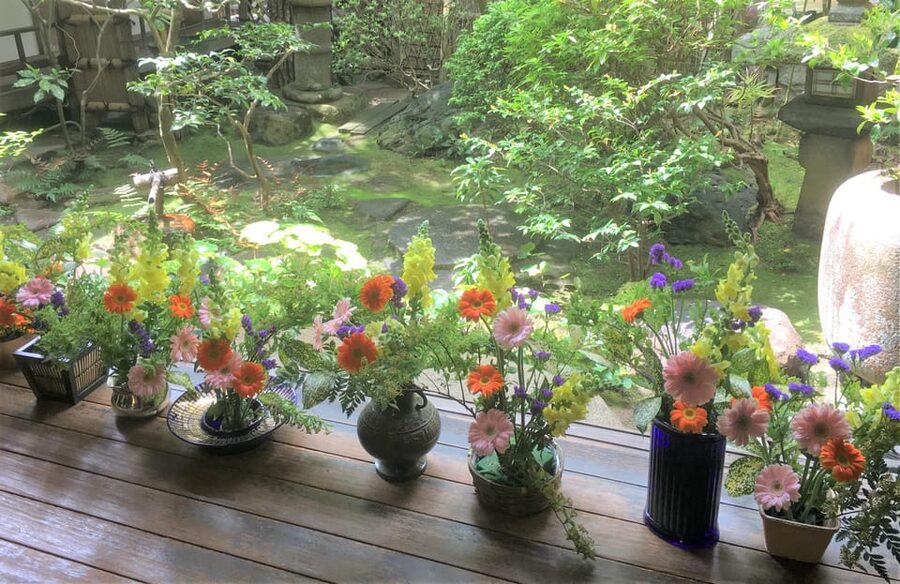
After the lesson, your finished arrangement is displayed in front of the garden for photographs. This gives the activity a natural stopping point and a chance to look at what you have made in a setting that suits the art. It is a small but useful detail, especially if you want a record of the arrangement before leaving.
The photo moment is part of the experience, not a promise of a long garden visit. No further details are provided about the garden’s size, access, or seasonal appearance, so it is best to think of it as a backdrop rather than a separate garden tour.
If you enjoy taking pictures, consider how your flowers look from different angles before you finish. Ikebana’s emphasis on space and shape means the arrangement may read differently from the side than it does straight on. The experience does not specify whether you can take your arrangement away, so ask the staff if that matters to you.
Inside Tondaya’s 140-Year-Old Machiya
The second part of the visit takes you through Nishijin Lifestyle Museum Tondaya, a traditional Kyoto townhouse, or machiya. The building is about 140 years old and has been designated a culturally significant landmark by the Kyoto City Government. The staff share stories and explain objects that help place the house within Kyoto’s living heritage.
This is more than a convenient add-on. The flower lesson introduces a traditional art through your own hands; the townhouse visit gives you another way to understand the culture around it. A machiya is a form of traditional urban home, and Tondaya’s age and collection of historical artifacts make the building itself part of the visit.
The exact rooms, objects, and route are not listed, so do not plan around seeing a specific artifact. Instead, go ready to listen and ask questions. The museum portion may be the part that gives the visit its broader context, particularly if you are curious about traditional Kyoto life beyond the city’s best-known temples.
The offer includes entrance admission. If you have time to spare, this is a good reason to arrive ready for both parts rather than thinking of the townhouse as a brief walk-through after the class.
Language, Group Size, and What to Wear
The experience is for a private group, and reservations require at least two participants. That means you are not joining a large public class with strangers, though the exact size limit is not stated. For a pair or small party, the private format may make it easier to ask questions and receive individual guidance.
English and Japanese are listed as languages. However, not every staff member speaks English, and an interpreter will be arranged when possible. A translation device may be used if needed. If you have particular language needs, contact the provider before booking rather than assuming every part of the visit will be interpreted in person.
Wear socks during your visit. Bare feet are not allowed, and the instructions specifically say not to wear stockings or tights. This is easy to overlook when packing for a day in Kyoto, so bring a pair of ordinary socks if your planned outfit does not include them.
The meeting point is Tondaya, Nishijin Japanese Cultural Experience Museum, at 697 Ishiyakushichō, Kamigyo Ward, Kyoto. Arrive on time for your scheduled start. No transportation details are included, so check your route separately and leave room for finding the address.
Same city, a different side of it:
- Kyoto Geisha Walking Tour: Gion District & Hidden Gems
★ 4.7 · 3,273 reviews - Kyoto: Tea Ceremony Ju-An at Jotokuji Temple
★ 4.9 · 3,207 reviews - Kyoto: Gion Magical Night Walking Tour with Geisha Trivia
★ 4.9 · 2,393 reviews - Kyoto: 45-Minute Tea Ceremony Lesson Experience
★ 4.3 · 2,378 reviews
Is $122 a Fair Price?
At $122 per person, the price covers the flowers, tools, and entrance fee. You are paying for a private cultural activity in a historic house, not just for the raw materials. The setting and museum visit are meaningful parts of the value calculation.
Still, the cost is high enough that the class length matters. If the lesson is brief, the museum visit and the chance to meet an ikebana master need to carry a good share of the value. The experience may suit you if you enjoy traditional arts, want a guided introduction, and would appreciate a look inside a landmark townhouse. It may disappoint if you expect a long, technical class for the price.
A separate kimono option has been offered at an extra cost, along with a short tour of the venue. It is not included in the $122 price, so ask the staff about current availability and cost if that interests you. Do not assume it is part of the standard booking.
You can reserve now and pay later, and cancellation is free up to 24 hours before the experience for a full refund. Those terms offer flexibility, but they do not change the central decision: book for the combined flower lesson and townhouse visit, not for an intensive ikebana course.
Who Should Book This Kyoto Activity?
I would put this near the top of the list for a couple or small private group curious about Japanese arts and daily life. It offers a direct introduction to ikebana, an instructor to guide your first arrangement, and a historic house whose stories add context to the activity.
It also makes sense if you want a quieter cultural stop between larger sightseeing visits. The 90-minute duration is manageable, and all flower materials are provided. Parents considering it for children should ask the provider about age suitability, since no age guidance is supplied.
I would hesitate if your main goal is deep technical instruction, a long demonstration, or the strongest possible value per minute. The hands-on period can be short, and the level of English interpretation may depend on staffing. A brief message to Tondaya before booking can clear up both points.
Book it if you want a personal, introductory encounter with ikebana in a significant Kyoto townhouse. Skip it if you are paying mainly for an extended class. The best version of this visit is one where you arrive curious about both the flowers and the house, and leave comfortable with the fact that this is an introduction rather than a full course.
FAQ
How long is the experience?
The stated duration is 90 minutes. It includes the ikebana activity and a visit to Nishijin Lifestyle Museum Tondaya. The exact length of the hands-on lesson is not specified.
What is included in the price?
Seasonal flowers, the tools needed for the activity, and the museum entrance fee are included. A kimono experience mentioned as an optional add-on costs extra.
Do I need experience with ikebana?
No. The activity is described as suitable for beginners, and an ikebana master guides you through flower arranging.
What languages are available?
English and Japanese are listed. An interpreter may be arranged, and a translation device may be used when necessary.
What should I wear or bring?
Wear socks. Bare feet are not allowed, and stockings or tights are discouraged. No other items are listed as necessary.
Can I book for one person?
Reservations must be made for at least two participants. The activity is offered as a private group.
Newly added in Kyoto
- Uji: Private immersion into Kyoto’s tea and reglious culture★ 5.0 · 17 reviews
- Whisk Your Own Matcha: A Zen Matcha Experience at Temple★ 3.6 · 7 reviews
- Kyoto tea town for matcha lovers★ 5.0 · 16 reviews
- Treasures of Kyoto: Gion & historical Walking Tour★ 5.0 · 6 reviews
- Kyoto Matcha Green Tea Tour★ 4.5 · 23 reviews
- Uji and Wazuka Matcha Farm Half Day Private Guided Tour★ 5.0 · 21 reviews
- Uji Tea Ceremony and UNESCO Heritage Walking Tour★ 5.0 · 20 reviews
- Utilising upcycled Matcha! Creating matcha incense (Uji, Kyoto)★ 5.0 · 6 reviews
Kyoto Tours, compared.

Fushimi Inari, Kinkakuji, Bamboo Grove 1 Day Bus Tour
Read our review →
Tea Ceremony in a Traditional Tea House in Kiyomizu
Read our review →
Kyoto Geisha Walking Tour: Gion District & Hidden Gems
Read our review →
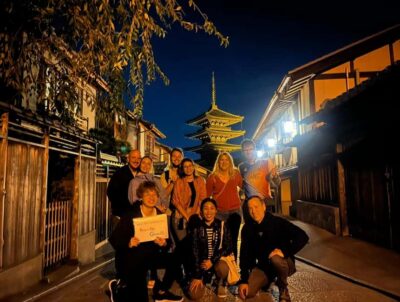
Gion Magical Night Walking Tour with Geisha Trivia
Read our review →