
Reviewed · FUSHIMI INARI TOURS
Kyoto Morning Highlights Tour: Fushimi, Kiyomizu-dera & Gion
Fushimi Inari’s red torii gates are at their most striking in the quiet of morning, before the paths fill with people. This half-day walking tour links that famous shrine with Kiyomizu-dera and Gion, so you can see three defining sides of Kyoto in one outing.
I like two things here: a local guide can explain the customs behind what you see, and the tour includes photos, so you can be in some of your own pictures. The early start also gives you a better shot at calmer moments at the main sights.
The trade-off is that you need to be punctual and ready to walk. You’ll use public transport, pay its fare separately, and spend much of the morning on your feet. The route description also names Kasuga Grand Shrine as a highlight without explaining how it fits into this Kyoto itinerary, so clarify that point before booking.
- Fushimi Inari in morning light: Walk beneath thousands of torii gates at one of Kyoto’s best-known Shinto shrines, with an early start intended to beat the heaviest crowds.
- Kiyomizu-dera admission included: Take in city views from the temple and avoid paying its 500-yen entry fee separately.
- Gion on foot: Finish among the historic streets of Kyoto’s famous district, with a guide to help put the setting in context.
- Culture, not just landmarks: Learn about Shinto and Buddhist traditions, including how to pray at shrines and temples.
- Photos and a sweet sample: Your guide takes photos during the tour, and a sample of Kyoto’s traditional sweets is included.
- A half-day, with some extra costs: The tour costs $81 per person, with public transport at about 400 yen extra. Meals and drinks are not included.
A brisk morning route through three sides of Kyoto

This tour is built for a useful first look rather than a slow, solitary visit. In about half a day, you move from a major Shinto shrine to a Buddhist temple and then into Gion, with a local English-speaking guide linking the stops through stories and customs.
The early start is central to the experience. Fushimi Inari and Kiyomizu-dera are among Kyoto’s best-known sights, and arriving in the morning can make the paths feel calmer than they do later in the day. It does not guarantee an empty shrine or temple, but it gives you a better chance to appreciate the places without the thickest crowds.
You’ll meet at Kyoto Station’s central exit, by the yellow map near the 7-Eleven, with Kyoto Tower visible nearby. Look for a guide holding an OTAKU hopper sign; detailed directions and images are sent after booking. Being on time matters: if you miss the meeting, you cannot join the tour or receive a refund.
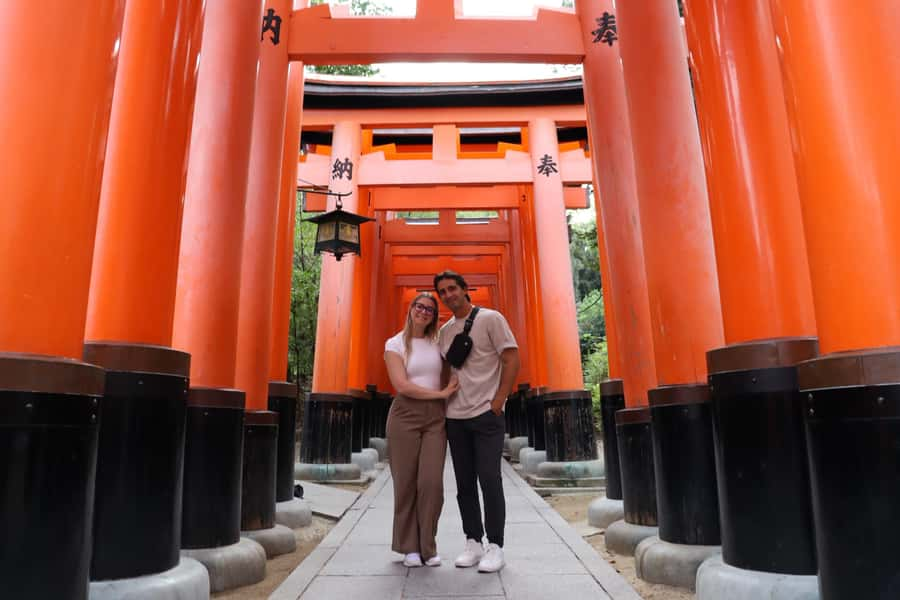
Fushimi Inari’s gates make an unforgettable first stop
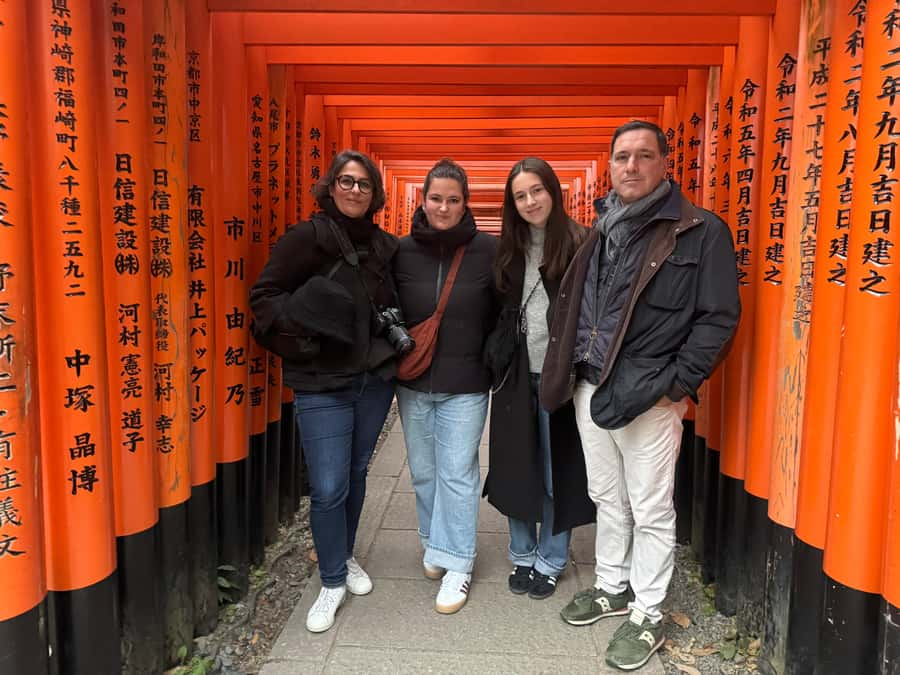
At Fushimi Inari, the rows of red-orange torii gates are the main event. They create a striking path through the shrine grounds, and the quieter morning light can make the walk feel more contemplative than it might later in the day.
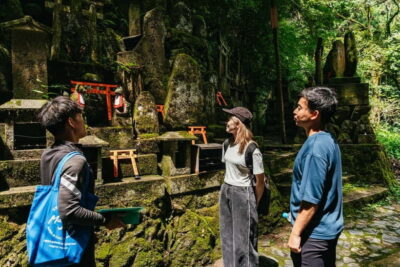
A guide adds more than directions here. The tour is designed to explain shrine traditions and proper ways to pray, details that are easy to miss if you simply follow the path and take photos. Guides have also answered questions about the history, deities and customs associated with the sites, giving you a clearer sense of what you’re seeing.
The trade-off is that this is a walking tour, not a quick photo stop from a vehicle. You’ll be on your feet at the shrine and at the other stops, so wear comfortable shoes and expect a moderate amount of walking. The tour description does not give a precise route length or say how far along the gates you’ll go, so don’t assume you’ll walk the entire shrine complex.
More Kiyomizu-dera tours in Kyoto:
- Kyoto: Tea Ceremony in a Traditional Tea House in Kiyomizu
★ 4.9 · 3,519 reviews - Kyoto: Nijo Castle, Kiyomizu & Fushimi Inari Guided Tour
★ 4.7 · 700 reviews - Kyoto: Nijo, Kinkaku-ji, Arashiyama, Kiyomizu & Fushimi Inari
★ 5.0 · 699 reviews
Kiyomizu-dera pairs city views with temple customs
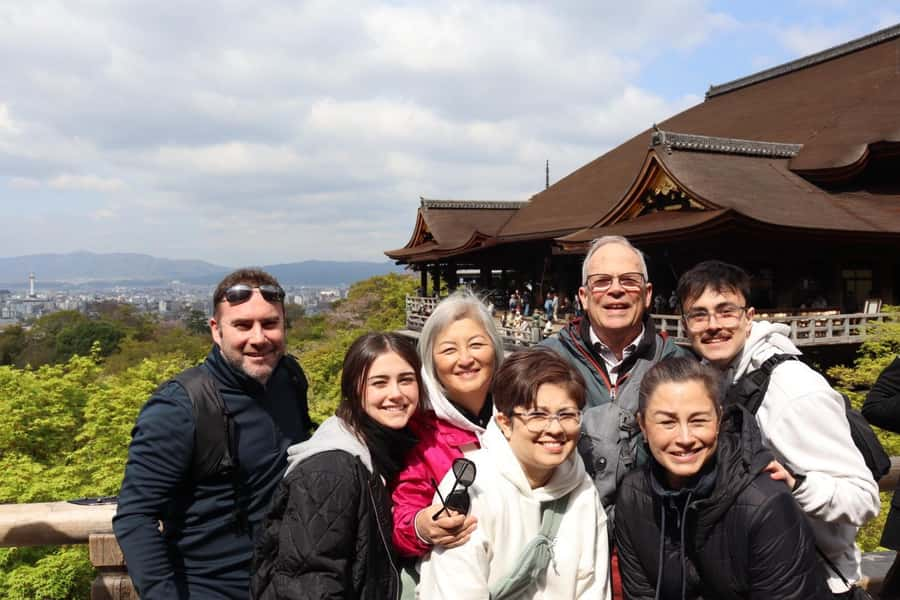
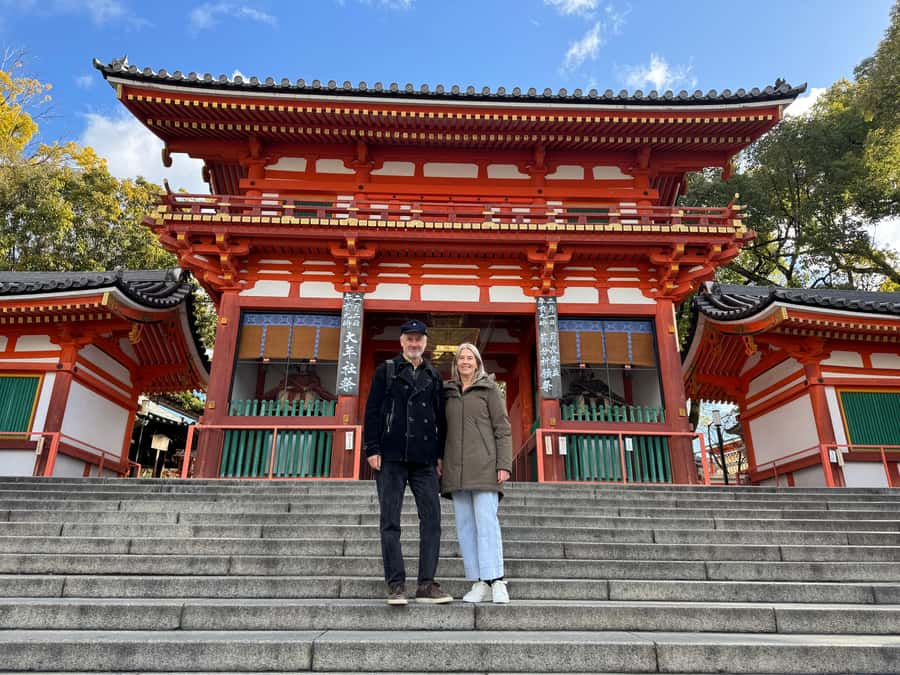
Kiyomizu-dera brings a different mood from Fushimi Inari. It is a Buddhist temple, and its elevated setting offers sweeping views over Kyoto. The contrast between the temple grounds and the city below gives you a useful pause in a morning otherwise filled with iconic sights.
The included entrance fee is 500 yen, which is a small but welcome part of the value. Rather than having to sort out admission on your own, you can focus on the visit and the guide’s explanations of temple traditions. This is also a good place to ask questions: the tour’s strongest cultural element is not just seeing the landmarks, but understanding how people use and approach them.
The view is a highlight, but the temple is no secret. The early timing helps, though it cannot promise that you’ll have the site to yourself. If you’re hoping for an unhurried visit to every corner, remember that this tour covers several major sights in one half-day, and the pace is designed to fit them all in.
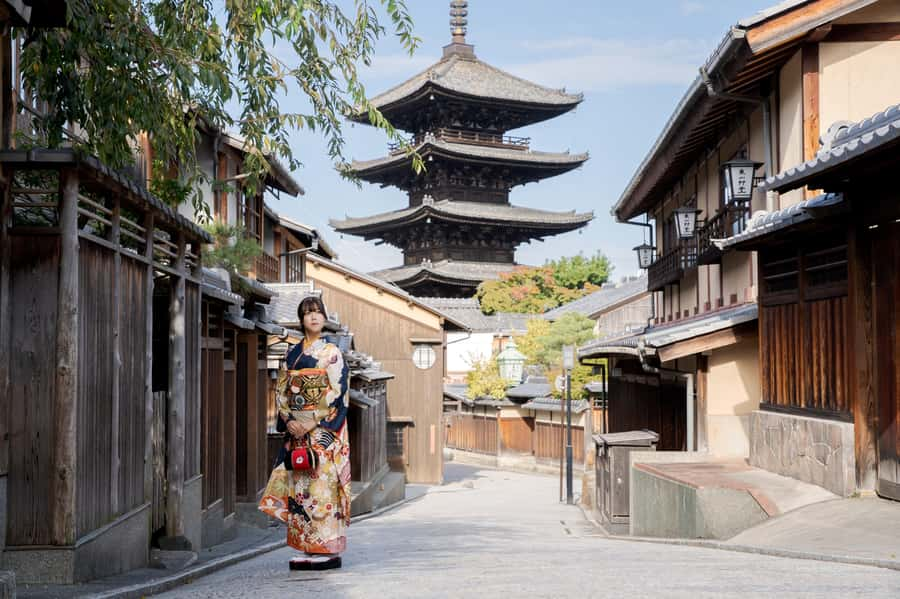
Gion gives the morning a street-level finish
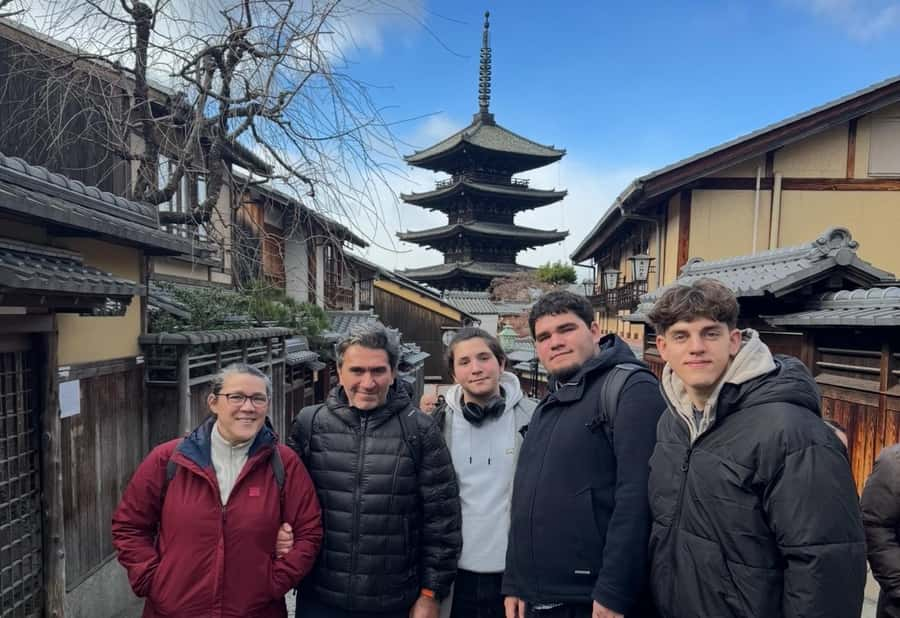
After the shrine and temple, the walk through Gion shifts the focus from sacred sites to Kyoto’s historic streets. It’s a chance to take in the district’s atmosphere on foot, with your guide providing context that can make a short stroll more meaningful than a solo wander.
Gion is one of the city’s most familiar names, but the appeal here is not simply checking off another famous place. A guide can help you notice details and connect the district to the broader story of Kyoto. The tour is also a natural moment to ask for suggestions for the rest of your stay; Ikki, the guide named by several people who took the tour, has offered practical local tips as well as historical explanations.
The description does not specify which streets you’ll walk or how long you’ll spend in Gion. Think of this as an introductory guided stroll, not a deep exploration of the entire district. It ends back at Kyoto Station, which makes the meeting point easy to find again and gives you a clear finish to the morning.
A guide’s explanations are the tour’s real advantage
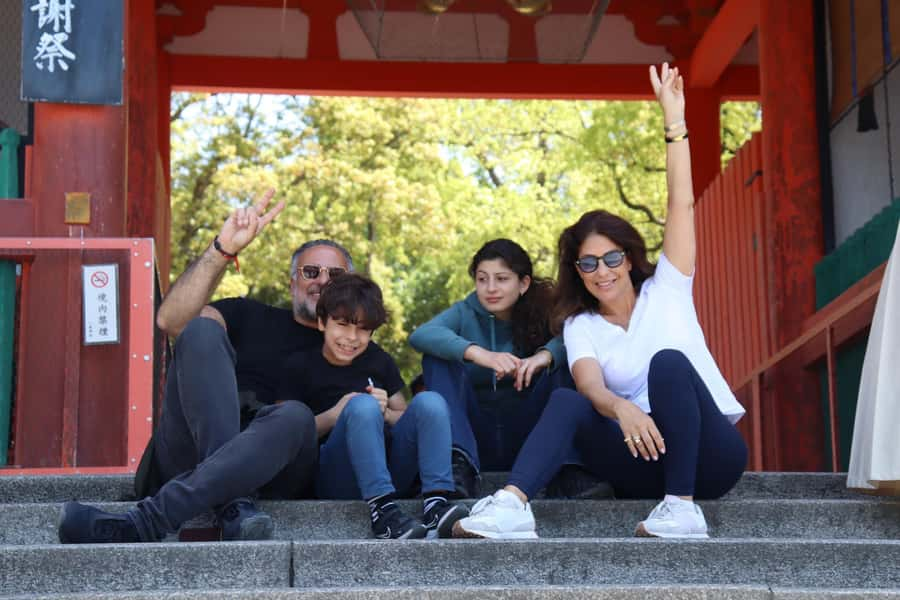
Kyoto’s temples and shrines can be visually impressive even without a guide. The added value is learning how to read the places: which traditions belong to Shinto, which to Buddhism, how to behave when praying, and why the small details matter.
Ikki is the guide most closely associated with this tour. He is described as Kyoto-born, fluent in English and especially good at explaining local customs in a clear, approachable way. If he is leading your departure, expect a guide who can move between formal history and everyday questions about Japan. Guide assignments can vary, so it is sensible not to assume that every tour will have the same person.
The photo-taking is another practical plus. Your guide takes pictures during the morning, including shots of you and your group, so you don’t have to spend every stop behind a phone. A sample of traditional Kyoto sweets is included too, a small taste rather than a meal. Free Wi-Fi is also listed as part of the experience.
More Fushimi Inari tours in Kyoto:
- Kyoto: Fushimi Inari, Kinkakuji, Bamboo Grove 1 Day Bus Tour
★ 4.8 · 4,316 reviews - Fushimi Inari Hidden Hiking Tour (Private Option Available)
★ 5.0 · 1,750 reviews - Kyoto/Osaka: Nara, Fushimi Inari Taisha, Arashiyama Bus Tour
★ 4.7 · 1,275 reviews - Osaka/Kyoto: Arashiyama, Nara & Fushimi Inari Shrine w/Lunch
★ 4.4 · 754 reviews
What $81 buys, and what it does not
At $81 per person, the price is easiest to judge as a guided, half-day introduction to three major Kyoto sights. You’re paying for an English-speaking guide, the Kiyomizu-dera entrance fee, photos, Wi-Fi and a traditional-sweets sample, as well as the convenience of having the route tied together.
Public transport is not included. Budget about 400 yen for fares, and remember that meals, drinks and personal expenses are also on you. The transport cost is modest next to the tour price, but it’s worth knowing in advance so you can compare the true cost with a self-guided morning.
The tour’s best value comes if you want explanations and help navigating the cultural differences, not simply a ride between photo spots. If you’re comfortable researching the sites and managing public transport yourself, you could visit independently. But a guide’s help with shrine and temple customs, the local perspective and photos can make the extra cost worthwhile, particularly on a short stay.
Walking, timing and the Kasuga question
Treat this as an active morning. You’ll travel by public transport and walk between and around the sights, with a moderate amount of walking overall. Comfortable shoes are important; the tour is not suitable for wheelchair users, and baby strollers and carriages are not allowed.
The schedule is also strict at the start. Meet at the central exit of Kyoto Station at the stated time, by the yellow map beside the 7-Eleven. A late arrival means you cannot join or receive a refund, so allow extra time to find the meeting spot.
One detail deserves a question before you book: Kasuga Grand Shrine appears among the tour highlights, but the route description focuses on Fushimi Inari, Kiyomizu-dera and Gion. Since the stated route is a half-day Kyoto walking tour, ask OTAKU hopper whether Kasuga is actually included or whether that highlight is an error. Don’t build a separate plan around it unless the provider confirms.
Who will get the most from this tour
This is a good fit if you have limited time in Kyoto and want a guided introduction to its major sights without spending the whole day on a tour. It suits visitors who are curious about Japanese religious customs, appreciate having a local guide to answer questions, and want some photos of themselves at the landmarks.
It may be less appealing if you prefer to linger for as long as you like at each place, avoid early starts or limit walking. The tour is designed to cover a lot in a half-day, which means you trade independence and flexibility for a clear route and explanations along the way.
Families should note the stroller restriction, and anyone with mobility needs should take seriously that the tour is not suitable for wheelchair users. If you’re in doubt about the walking involved, ask the provider for more detail before booking.
Should you book the Kyoto morning tour?
Book it if an early start sounds like a fair price for a calmer first look at Fushimi Inari, Kiyomizu-dera and Gion. The best reasons are the local explanations, guidance on shrine and temple etiquette, and the included photos. At $81 plus about 400 yen for transport, it offers a focused introduction rather than a bargain sightseeing shuttle.
Skip it if you want a slow, self-directed day or would rather avoid walking and public transport. Before paying, confirm the Kasuga Grand Shrine discrepancy and check the meeting instructions carefully. If those points suit your plans, this is a practical way to see Kyoto’s headline sights and understand more than just what they look like.
FAQ
How much does the tour cost?
The tour costs $81 per person. Public transportation, estimated at about 400 yen, is not included.
Where does the tour meet?
It starts at the central exit of Kyoto Station, by the yellow map next to the 7-Eleven. Kyoto Tower is visible nearby, and the guide will hold an OTAKU hopper sign.
Where does the tour end?
The tour ends back at the meeting point at Kyoto Station.
How long is the tour?
It is described as a half-day tour. An exact number of hours is not provided.
What sights are included in the route?
The route description names Fushimi Inari Shrine, Kiyomizu-dera Temple and Gion. Kasuga Grand Shrine is also named as a highlight, but its place in the route is not explained, so ask the provider to confirm.
Is the Kiyomizu-dera entrance fee included?
Yes. The 500-yen entrance fee for Kiyomizu-dera Temple is included.
Is public transportation included?
No. Public transportation costs about 400 yen and is paid separately.
Is the tour suitable for wheelchair users or strollers?
No. The tour is not suitable for wheelchair users, and baby strollers and carriages are not allowed. Comfortable walking shoes are recommended because a moderate amount of walking is involved.
More early morning tours in Kyoto
- Kyoto Early Morning Tour with English-Speaking Guide
★ 5.0 · 1,427 reviews - Kyoto: Early Morning Tour with English-Speaking Guide
★ 4.9 · 1,128 reviews - Nara Early Morning Tour (Kyoto or Osaka Departure Available)
★ 5.0 · 676 reviews - Arashiyama Bamboo Forest & Hidden Gems Bike Tour (Early Bird)
★ 5.0 · 613 reviews
More Gion tours in Kyoto
- Kyoto Geisha Walking Tour: Gion District & Hidden Gems
★ 4.7 · 3,273 reviews - Kyoto: Gion Magical Night Walking Tour with Geisha Trivia
★ 4.9 · 2,393 reviews - Kyoto: Gion Geisha District Walking Tour – Stories of Geisha
★ 4.7 · 2,187 reviews - Best of Kyoto: Gion, Geisha, Pagodas & Cobblestones
★ 4.9 · 2,058 reviews
Newly added in Kyoto
- Uji: Private immersion into Kyoto’s tea and reglious culture★ 5.0 · 17 reviews
- Whisk Your Own Matcha: A Zen Matcha Experience at Temple★ 3.6 · 7 reviews
- Kyoto tea town for matcha lovers★ 5.0 · 16 reviews
- Treasures of Kyoto: Gion & historical Walking Tour★ 5.0 · 6 reviews
- Kyoto Matcha Green Tea Tour★ 4.5 · 23 reviews
- Uji and Wazuka Matcha Farm Half Day Private Guided Tour★ 5.0 · 21 reviews
- Uji Tea Ceremony and UNESCO Heritage Walking Tour★ 5.0 · 20 reviews
- Utilising upcycled Matcha! Creating matcha incense (Uji, Kyoto)★ 5.0 · 6 reviews
Fushimi Inari Tours, compared.

Fushimi Inari, Kinkakuji, Bamboo Grove 1 Day Bus Tour
Read our review →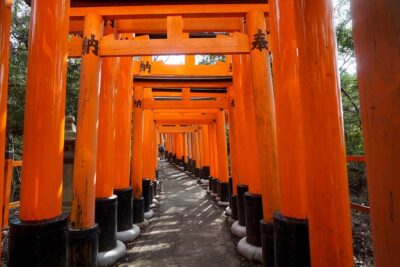
Fushimi Inari Hidden Hiking Tour (Private Option Available)
Read our review →
Nara, Fushimi Inari Taisha, Arashiyama Bus Tour
Read our review →
Arashiyama, Nara & Fushimi Inari Shrine w/Lunch
Read our review →
Nijo Castle, Kiyomizu & Fushimi Inari Guided Tour
Read our review →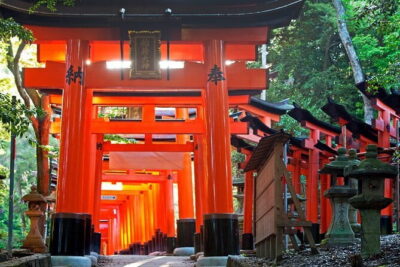
Nijo, Kinkaku-ji, Arashiyama, Kiyomizu & Fushimi Inari
Read our review →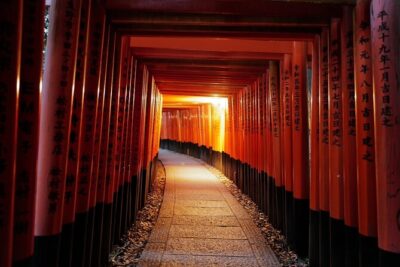
Browse the lists this tour appears in