
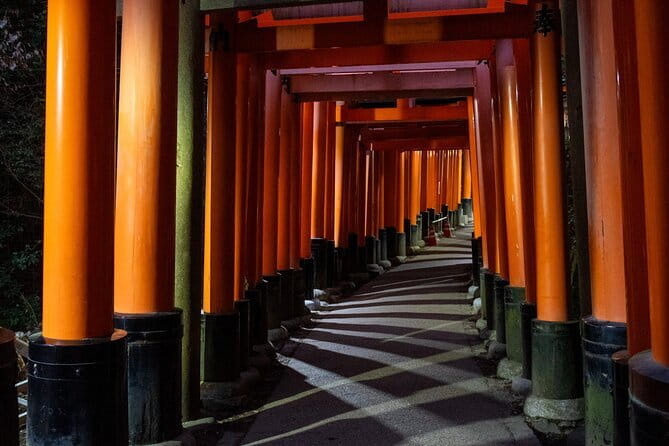
Reviewed · KYOTO PHOTOSHOOTS
Kyoto Photography Masterclass – Private Photography Lesson
Kyoto’s old lanes are photogenic, but getting a strong picture takes more than pointing a camera at a temple. This private lesson pairs a walk through historic districts with practical coaching, so you can work on your settings and composition while photographing the city.
I like that the tour is private and tailored to your skill level, and that it puts hands-on instruction in real locations rather than in a classroom. I also like the chance to review shots and try again, a useful feature of a night session with photographer Irven.
One consideration: the camera is not included, and the three-hour route covers several stops. You’ll want to arrive ready to walk, and to confirm whether you’re booking the daytime or nighttime version.
At a glance
- Three private hours: Your group gets the guide’s attention and can move at a pace suited to your experience.
- Day or night photography: Daytime options feature old streets and the Philosopher’s Path; the night session focuses on lanterns, low light, and long exposure.
- Practical coaching: Work on camera settings, composition, lighting, and other techniques as you photograph.
- Eight named stops: The route includes Gion, Pontocho, Yasaka Shrine, Hokan-ji Temple, and Kiyomizu-dera.
- Bring your camera: A tripod is available upon request, but it is not included automatically.
- $170 per person: Group discounts are offered, and bookings are typically made about 27 days ahead.
A Kyoto walk built around your camera
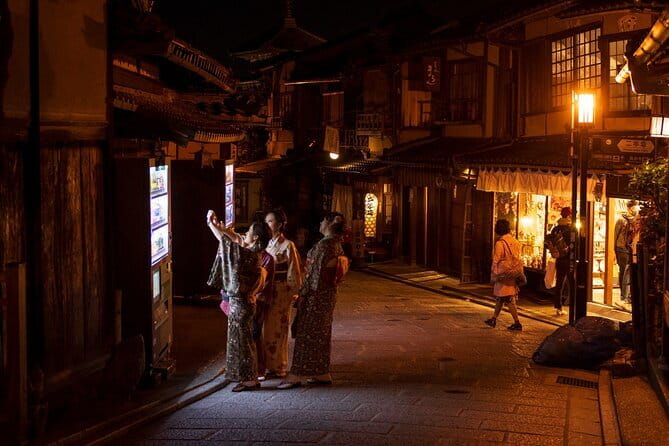
The point of this tour is not simply to collect photographs of famous Kyoto sights. You get a professional photographer and local guide beside you, helping you decide where to stand, what to frame, and how to use the light. That turns a pleasant walk into a working photography lesson.
The coaching is designed to meet you where you are. If you’re new to photography, you can ask about settings and basic composition. If you already know your camera, you can use the time to make more deliberate choices about angles, textures, patterns, and the way old buildings sit within the modern city.
Because this is a private tour, you do not need to keep pace with a group of strangers or wait for everyone to finish a shot. You can ask questions, pause to review an image, or spend longer on a scene that interests you. The guide can tailor the lesson to your skill level, though the exact balance of instruction and walking will depend on your needs.
There are two distinct photographic moods on offer. The daytime version is described around Kyoto’s traditional streets, architecture, and the quiet scenery of the Philosopher’s Path. The nighttime version puts you among lantern-lit lanes and illuminated landmarks, with extra attention to long exposure and the challenges of low light. The named itinerary includes eight stops in and around Gion and Higashiyama, so confirm which version you are selecting when you book.
More photoshoots in Kyoto:
- Kyoto: Maiko Makeover and Photoshoot Experience
★ 4.7 · 239 reviews - Kyoto: Private Photoshoot Service
★ 5.0 · 158 reviews - Kyoto: 2-Hour Maiko Makeover and Photo Studio Shoot
★ 4.7 · 122 reviews
Gion: wooden houses and street scenes
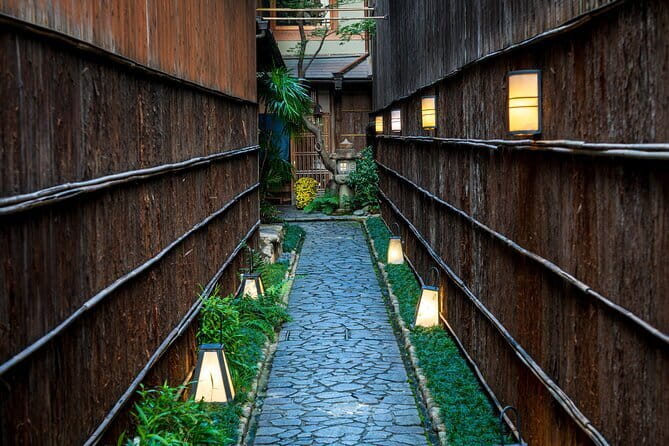
Gion is a natural place to start. Its traditional wooden machiya houses give you plenty to notice: repeated lines, dark timber, narrow frontages, and the contrast between old architecture and daily city life. The goal is not to photograph every street at once, but to slow down and look for a frame with a clear subject.
This is where a guide’s local knowledge can save time. Instead of guessing where to stand or which direction might work, you can ask for help finding an angle and adjusting your settings. The tour description emphasizes locations, lighting, and composition, so expect the lesson to connect practical camera choices with what is in front of you.
As in any historic district, conditions can change with the time of day and the number of people around. The private format gives you some flexibility, but it cannot guarantee an empty street or a particular lighting effect. If you have a specific photographic goal, such as architectural details or street scenes, tell your guide early.
Pontocho and Gion Corner: lanterns and close details
Pontocho District adds a different set of subjects. Its lantern-lit atmosphere is a particular draw for the night tour, where you can practise making a picture in low light rather than relying on bright daytime conditions. The challenge is also the lesson: you may need to think carefully about exposure and how much light the scene provides.
The night session is designed to cover long exposure, and a tripod can be requested. That matters if you want to work with longer shutter times, but it is worth arranging ahead rather than assuming one will be waiting for you. One participant in a session led by Irven used a tripod he brought and reviewed shots step by step, making adjustments before taking another picture. That kind of repeat-and-refine practice is more useful than a quick explanation followed by a rush to the next stop.
Gion Corner is also on the route. The supplied details do not specify a performance or a visit inside a venue, so think of it as a location stop rather than a ticketed show. Your focus remains photography: observing the setting and deciding how to frame it.
Minamiza Theater and Yasaka Shrine
Minamiza Theater brings another architectural subject into the walk. The tour names it as a stop but does not describe an interior visit, so you should not expect a guided theater tour. Its value here is as a place to practise photographing a prominent building within the surrounding streets.
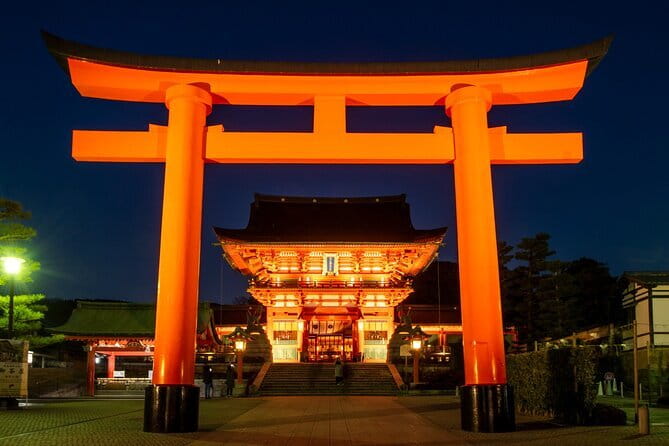
Yasaka Shrine offers a change of mood and visual structure. The night tour description highlights traditional lanterns and the city’s after-dark atmosphere, while the daytime route is framed around Kyoto’s cultural and architectural character. Either way, a shrine setting gives you a chance to work with patterns and details, not just wide views.
The guide’s role is to help you turn that setting into a photograph. You can ask how to handle the available light, how to compose around architectural lines, or how to make a subject stand out from its surroundings. The exact lesson will depend on your camera and experience, so bring questions that matter to you.
More private tours in Kyoto:
- Fushimi Inari Hidden Hiking Tour (Private Option Available)
★ 5.0 · 1,750 reviews - Private Kyoto Tour with a Local, Highlights & Hidden Gems, Personalised
★ 5.0 · 1,543 reviews - Kyoto 6hr Private Tour with Government-Licensed Guide
★ 5.0 · 1,369 reviews - 10 Must-see Spots in Kyoto One Day Private Tour (up to 7 people)
★ 5.0 · 1,108 reviews
Hokan-ji and the lanes of Higashiyama
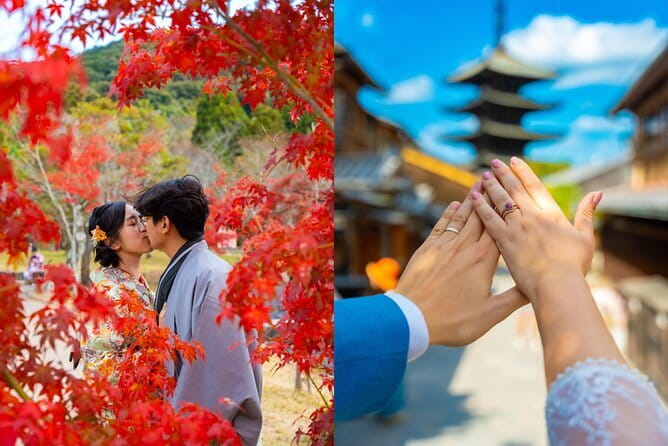
Hokan-ji Temple is another stop on the route, alongside Koju Ninenzaka. Together, these names point to the older streets and temple scenery around Higashiyama, where the character of a photograph can come from the relationship between buildings, lanes, and the surrounding view.
The tour description specifically calls attention to Kyoto’s textures and patterns. That is a useful way to approach these stops: look beyond the best-known sight and notice repeated rooflines, surfaces, shadows, and the shape of a street. Your guide can help you find an angle and make adjustments, but the strongest images still come from paying attention rather than firing off a string of shots.
The itinerary lists several sites in three hours, so this is a guided photo walk, not a long visit at every landmark. If one subject matters most to you, mention it at the start. The private setup makes it easier to shape the lesson around a priority, although it does not mean every stop will receive equal time.
Kiyomizu-dera: a strong finish, especially after dark
Kiyomizu-dera is the final named stop and a highlight of the night-session description. The temple is presented as illuminated against the night sky, giving you a chance to practise working with a bright subject in a dark setting. That contrast can be difficult to expose well, which makes it a practical place to apply the lesson.
The nighttime version is especially appealing if you want to improve in low light. You can work on long exposure and review images as you go, rather than leaving with a collection of pictures you are unsure how to improve. The account of Irven’s session describes patient instruction and repeated adjustments, which suggests a useful teaching rhythm: take a shot, check what happened, and try a better setting or composition.
The supplied description also mentions the Philosopher’s Path as part of the daytime experience, but it is not among the eight stops in the named itinerary. If that route is important to you, ask whether it is included in the specific session you are booking. The places named in the itinerary cluster around Gion and Higashiyama, while the daytime overview presents a broader choice of Kyoto scenes.
What the $170 price buys
At $170 per person, this is a premium three-hour activity compared with a standard guided walk. The value depends on whether you want photographic instruction, not just someone to show you the sights. You are paying for a professional photographer guide, local guidance, a private format, and time to practise with feedback.
That price can make sense if you have a camera you want to use better, or if you are visiting Kyoto for a short time and would rather have help choosing locations and angles. A local photographer can make the walk more purposeful, especially when the light is changing or you are not sure how to handle a night scene. Group discounts may improve the cost if you are booking with others, though the price provided is per person.
If you only want a sightseeing walk, the lesson may be more than you need. The tour is built around learning and taking pictures, so bring a camera and be willing to stop, adjust settings, and try again. A phone may be enough for casual snapshots, but the activity is presented as a photography class and does not include a camera.
Who should book this lesson
This experience suits photographers who want practical guidance in Kyoto, from beginners learning camera settings to more experienced hobbyists seeking help with composition and low-light technique. The private format is particularly useful if you have a specific question or prefer to work at your own pace.
The night option is a good fit if lanterns, illuminated buildings, and long exposures are the pictures you hope to make. Ask for a tripod in advance if you want to use one. For daytime photography, the focus is on historic streets, architecture, and quieter scenery, with the Philosopher’s Path mentioned as a possible setting.
It may be less suitable if you want an all-purpose history tour, an indoor temple visit, or a guaranteed schedule with long stays at each attraction. The emphasis is photography, and the route covers multiple stops in about three hours. You’ll get most from it if you arrive with a charged camera, an idea of what you want to learn, and enough flexibility to follow the light and conditions.
Booking is typically done about 27 days ahead, so plan early if your dates are fixed. Confirmation is provided at booking, and cancellation is free up to 24 hours before the start time. The tour begins and ends at the Statue of Izumo-no-Okuni in Higashiyama, near public transportation.
Should you book it?
Book this Kyoto photography lesson if you want more than attractive snapshots and value one-on-one help with settings, composition, and lighting. The strongest case is the private coaching, especially the chance to review shots and improve them during a night session.
Skip it if you are mainly after a conventional sightseeing tour or do not plan to bring a camera. Before paying, confirm whether your chosen session is daytime or nighttime, and request a tripod if you need one. For the right photographer, three focused hours can turn Kyoto’s streets and temples into a practical classroom.
FAQ
How long is the Kyoto Photography Masterclass?
The private photography tour lasts approximately three hours.
Is the tour private?
Yes. Only your group participates, and the tour can be tailored to your pace and skill level.
What is the price?
The stated price is $170 per person. Group discounts are available.
Is a camera included?
No. You need to bring your own camera.
Can I use a tripod?
A tripod is available upon request. Arrange one in advance if you want to use it.
Is there a daytime and nighttime option?
Yes. The experience describes a daytime photo tour and a separate nighttime session focused on low-light photography and long exposure.
Which places are named on the route?
The itinerary lists Gion, Pontocho District, Gion Corner, Minamiza Theater, Yasaka Shrine, Hokan-ji Temple, Koju Ninenzaka, and Kiyomizu-dera Temple.
Where does the tour start and end?
It starts at the Statue of Izumo-no-Okuni in Kawabatacho, Higashiyama Ward, Kyoto, and ends back at the same meeting point.
Can I cancel for a refund?
You can receive a full refund if you cancel at least 24 hours before the experience’s start time. Cancellations made less than 24 hours beforehand are not refunded.
Newly added in Kyoto
- Uji: Private immersion into Kyoto’s tea and reglious culture★ 5.0 · 17 reviews
- Whisk Your Own Matcha: A Zen Matcha Experience at Temple★ 3.6 · 7 reviews
- Kyoto tea town for matcha lovers★ 5.0 · 16 reviews
- Treasures of Kyoto: Gion & historical Walking Tour★ 5.0 · 6 reviews
- Kyoto Matcha Green Tea Tour★ 4.5 · 23 reviews
- Uji and Wazuka Matcha Farm Half Day Private Guided Tour★ 5.0 · 21 reviews
- Uji Tea Ceremony and UNESCO Heritage Walking Tour★ 5.0 · 20 reviews
- Utilising upcycled Matcha! Creating matcha incense (Uji, Kyoto)★ 5.0 · 6 reviews
Kyoto Photoshoots, compared.

Private Photoshoot Experience in Kyoto ( Gion )
Read our review →Browse the lists this tour appears in