
Reviewed · KYOTO TEA CEREMONIES
Kyoto Tea Ceremony and Samurai Photo Session
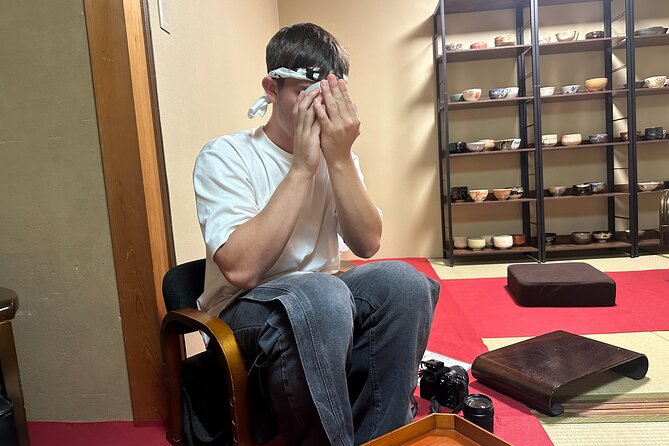
A century-old Kyoto machiya makes an atmospheric classroom for this short introduction to tea culture. I like two things in particular: you make matcha yourself instead of only watching a demonstration, and the session pairs traditional tea with the more modern treat of making a matcha latte.
The possible drawback is the pace. The main tea experience is described as 50 minutes, while the overall tour duration is about 1 hour 20 minutes. That is still a compact introduction, not an extended study of tea ceremony, and the samurai armor photos add a playful finish rather than a deeper historical lesson.
Key points
- A 100-year-old machiya: The setting gives the class a traditional Kyoto backdrop.
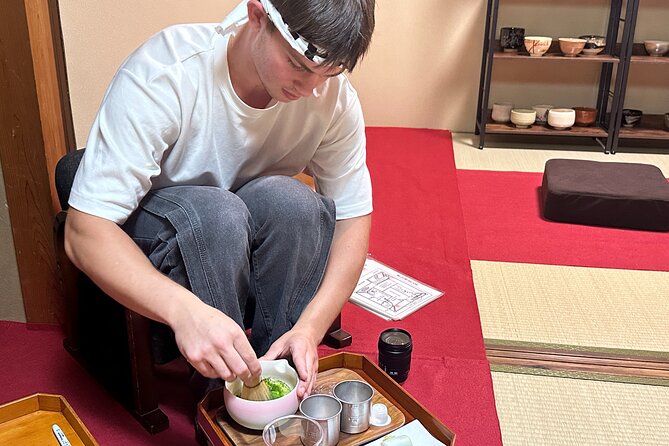
- Make two kinds of matcha: Prepare matcha in the traditional style, then make a Kyoto-style latte.
- Taste seasonal wagashi: Traditional Japanese sweets accompany the tea.
- Learn with Maya: The host explains tea ceremony history and guides hands-on participation in English.
- Finish in samurai armor: Take photos in armor as a memorable, lighthearted closing activity.
- Small group, short format: The group is limited to 10, and the full experience lasts about 80 minutes.
A Kyoto townhouse sets the tone
The meeting point is Samurai Gyoza Factory Kyoto, at 230-1 Kamimyōkakujichō in Nakagyo Ward. The activity ends back at the same place, which keeps the logistics simple. It is near public transportation, so you can fit it into a day of sightseeing without needing a long transfer.
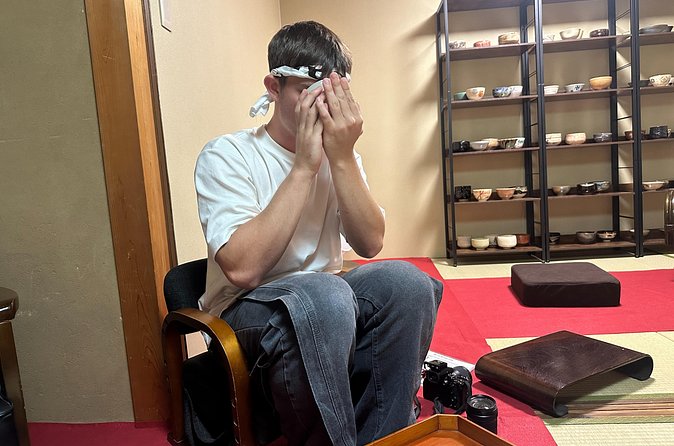
The experience takes place in a 100-year-old machiya, a traditional Kyoto townhouse. That setting is part of the appeal: instead of learning about tea in a generic classroom, you step into a home built in a style connected to the city’s past. You don’t need prior knowledge of tea ceremony to take part. The class is designed for beginners and curious visitors.
Expect an intimate lesson rather than a grand tea-house production. The group can include up to 10 people, a size that should leave room to watch the host and try the preparation yourself. If you prefer quiet, formal ceremonies, keep in mind that the tone here is also described as friendly, funny and interactive.
More tea ceremonies in Kyoto:
- Kyoto: Tea Ceremony in a Traditional Tea House in Kiyomizu
★ 4.9 · 3,519 reviews - Kyoto: Tea Ceremony Ju-An at Jotokuji Temple
★ 4.9 · 3,207 reviews - Kyoto: 45-Minute Tea Ceremony Lesson Experience
★ 4.3 · 2,378 reviews
Maya explains the ceremony before you make tea
The session begins with context about the history of tea ceremony and the role of mindfulness. Maya, the host named in participant accounts, is described as clear in English, patient and encouraging. Her light humor seems to be an important part of the class’s character: the subject is traditional, but the mood is not stiff.
That combination works well for a first visit. A formal ceremony can be difficult to follow if you don’t know what you are seeing. Here, you get an explanation before taking part, so the gestures and preparation have some meaning rather than feeling like a sequence of unfamiliar steps.
Maya also performs the ceremony, giving you a chance to see the process before trying it. The experience is not simply a demonstration, though. You are invited to prepare matcha yourself, with guidance along the way. If you have never used the tools or made matcha from scratch, the hands-on portion is the practical heart of the visit.
The class is intended to introduce the tradition, not train you to perform a full ceremony independently. Think of it as a guided first look: enough explanation to understand the care involved, and enough participation to remember the feel of making the tea.
Matcha making turns the lesson into practice
The most useful part is the chance to make traditional matcha yourself. You learn by doing, which is more memorable than watching someone else whisk a bowl while you sit back. The matcha is described as good quality, and the preparation is explained in a way beginners can follow.
This is also where the lesson’s focus on mindfulness makes sense. Tea ceremony is not only about the finished drink. The attention given to preparing and sharing it is part of the experience. You won’t need to arrive with a meditation practice or a detailed understanding of Japanese customs. Just take the steps at the pace your instructor sets.
After the traditional preparation, the class shifts to a Kyoto-style matcha latte. That modern counterpoint is a smart touch. It shows how the same ingredient can be approached in a different way, and it gives you a second drink to make and taste. If you enjoy matcha but usually order it as a latte, this portion connects the familiar drink to the more formal tea practice.
The class is short enough to stay lively, but that also means there is limited time for extended questions or repeated practice. If you want an in-depth tea ceremony course, this is not that. If you want an approachable introduction with a chance to try both traditional matcha and a latte, the format delivers more than a simple tasting.
Seasonal wagashi adds a small, useful lesson in pairing
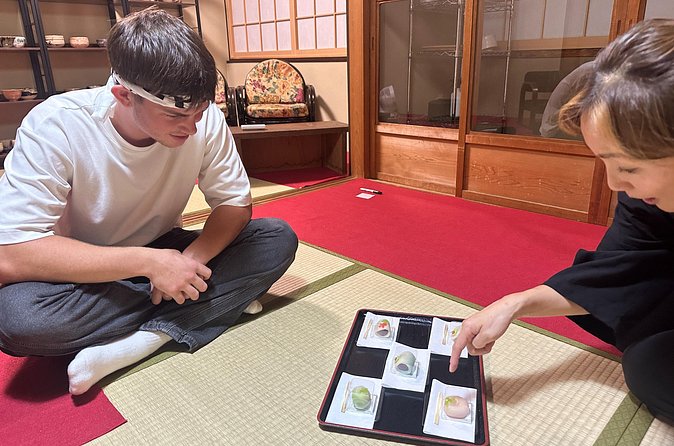
Seasonal wagashi, traditional Japanese sweets, are served alongside the tea. They are not just a snack between activities. Their presence helps round out the tea experience and gives you a taste of a food tradition that is often enjoyed with matcha.
The sweets are described as delicious, though the exact type will vary with the season. That seasonal element is a nice reason the experience may feel a little different at different times of year. It also means you should not expect a specific sweet unless the provider confirms it in advance.
For many people, tea and wagashi will be a welcome pause in a busy Kyoto itinerary. The portion is part of a class, not a full meal, so plan lunch or dinner separately. The value here is in tasting the pairing while learning about the culture around it, rather than getting a substantial serving of food.
More samurai and ninja experiences in Kyoto:
- Kyoto Samurai Experience
★ 5.0 · 1,294 reviews - Kyoto: Kendo and Samurai Experience with Uniform and Gear
★ 4.9 · 815 reviews - Kyoto: Samurai Sword Class by Experts in Traditional Arts
★ 4.9 · 657 reviews - Skip the lines Basic Ticket at SAMURAI NINJA MUSEUM KYOTO
★ 4.5 · 632 reviews
Samurai armor makes a playful final act
The activity closes with an opportunity to put on authentic samurai armor and take photos. After the calm focus of tea preparation, this is a deliberate change of mood. It gives you a souvenir image and adds an activity that can appeal to children, friends or anyone who enjoys a little theatrical fun.
Keep expectations in proportion. The armor session is a photo opportunity, not a samurai history workshop. The information provided does not specify how long you wear the armor or how many photos are taken, so don’t build a detailed plan around those particulars. But as a finale to a short cultural class, it gives the experience a distinctive twist.
This mix of tea ceremony and armor may not suit someone looking for an entirely solemn, traditional setting. I see that as a matter of taste, not a flaw. The class presents Japanese culture in an accessible, entertaining format, and the photos are a lighthearted way to finish.
About 80 minutes, with a short core class
The overall duration is listed as approximately 1 hour 20 minutes, while the experience description calls the tea session 50 minutes. Treat 80 minutes as the safer estimate for planning your day, and allow a little extra time if you have a tight connection or a timed reservation elsewhere.
That distinction is worth noting when comparing the price with longer classes. At $71.74 per person, this is not the cheapest way to have a drink in Kyoto. You are paying for more than a cup of matcha: the machiya setting, the host-led explanation, hands-on preparation of two drinks, seasonal wagashi and the samurai armor photo opportunity are all part of the package.
The small-group limit of 10 helps justify the price. A class this size can offer a more personal experience than a large demonstration, especially when you want to make the tea yourself and ask questions. Still, value depends on what you want. If your priority is an extended, formal ceremony, look for a longer experience. If you want a compact introduction with several activities, this one combines a lot into a short visit.
The activity is booked, on average, 72 days in advance. That does not mean you must book exactly that early, but it is a useful signal to plan ahead if this is important to your schedule. Confirmation is received at booking, and the ticket is mobile, so you do not need to arrange a printed ticket.
Free cancellation is available up to 24 hours before the start time for a full refund. Changes or cancellations inside that 24-hour window are not accepted for a refund. The cutoff follows local time in Kyoto, so check the time zone if you are booking from abroad.
Who will enjoy this tea ceremony
This experience is best for first-timers who want to understand the basics of matcha and tea ceremony without committing half a day. It also suits people who like to learn through participation, rather than watch a demonstration from the sidelines. Maya’s clear English and encouraging style make the class accessible if you are new to the subject.
It is a good fit for couples, friends and small family groups looking for a cultural activity that is not overly formal. The mixture of tea, sweets, latte making and armor photos gives the session variety. If you are traveling with children, the hands-on activities and costume photos may hold their interest, though the information provided does not specify age limits.
Tea enthusiasts may appreciate the chance to compare traditional matcha with a latte and take home ideas for making the drink. One participant was given a recipe to practice at home, but the available details do not establish that every person receives one. If that matters to you, ask the provider before booking.
You may want a different tour if you are seeking a long, quiet ceremony with extensive instruction or a specialist course on tea utensils and etiquette. This experience is more social and compact. Its strength is that it gives you a taste of several connected parts of Kyoto’s tea culture in one visit.
Should you book it?
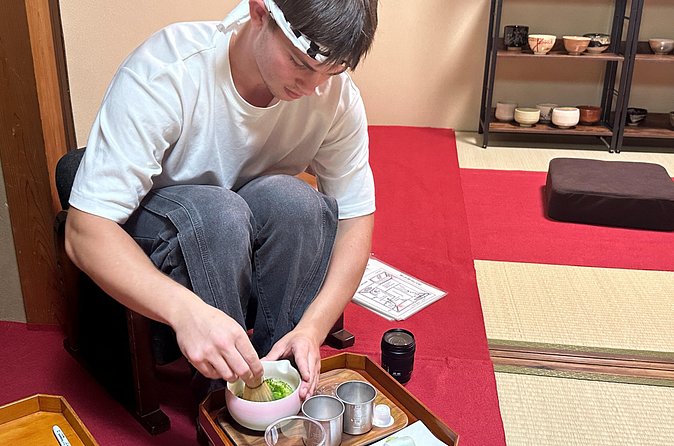
Book this if you want an approachable Kyoto tea experience with real participation, clear English instruction and a fun visual finish. The combination of a century-old townhouse, traditional matcha, a latte, seasonal wagashi and samurai armor photos gives the short session plenty of variety.
Skip it if you want a long, highly formal ceremony or a deep course in tea practice. At $71.74, the value is strongest for people who will enjoy the full mix of learning, tasting and photos. For a first introduction to matcha culture, it makes a practical and memorable addition to a Kyoto itinerary.
FAQ
How long does the experience last?
The overall activity lasts approximately 1 hour 20 minutes. The tea ceremony portion is described as 50 minutes, so allow about 80 minutes for the full visit.
What is the price?
The listed price is $71.74 per person.
Where does the activity begin?
Meet at Samurai Gyoza Factory Kyoto, 230-1 Kamimyōkakujichō, Nakagyo Ward, Kyoto, 604-0025, Japan. The activity ends at the same meeting point.
How many people can join the group?
The maximum group size is 10 people.
What will I do during the class?
You’ll learn about tea ceremony history, watch a demonstration, make matcha, taste seasonal wagashi, prepare a Kyoto-style matcha latte and take photos in samurai armor.
Is the class conducted in English?
Maya is described as speaking English clearly, and the explanations are reported to be easy to understand.
Can I cancel for a refund?
You can cancel at least 24 hours before the activity starts for a full refund. Cancellations or changes made less than 24 hours before the start time are not accepted for a refund.
More photoshoots in Kyoto
- Kyoto: Maiko Makeover and Photoshoot Experience
★ 4.7 · 239 reviews - Kyoto: Private Photoshoot Service
★ 5.0 · 158 reviews - Kyoto: 2-Hour Maiko Makeover and Photo Studio Shoot
★ 4.7 · 122 reviews - Your Private Vacation Photography Session In Kyoto
★ 5.0 · 110 reviews
Newly added in Kyoto
- Uji: Private immersion into Kyoto’s tea and reglious culture★ 5.0 · 17 reviews
- Whisk Your Own Matcha: A Zen Matcha Experience at Temple★ 3.6 · 7 reviews
- Kyoto tea town for matcha lovers★ 5.0 · 16 reviews
- Treasures of Kyoto: Gion & historical Walking Tour★ 5.0 · 6 reviews
- Kyoto Matcha Green Tea Tour★ 4.5 · 23 reviews
- Uji and Wazuka Matcha Farm Half Day Private Guided Tour★ 5.0 · 21 reviews
- Uji Tea Ceremony and UNESCO Heritage Walking Tour★ 5.0 · 20 reviews
- Utilising upcycled Matcha! Creating matcha incense (Uji, Kyoto)★ 5.0 · 6 reviews
Kyoto Tea Ceremonies, compared.

Tea Ceremony in a Traditional Tea House in Kiyomizu
Read our review →

World Heritage Kyoto & Nara Uji Authentic Matcha Experience
Read our review →
Arashiyama Bamboo Forest, Monkeys, Matcha & Temple Tour
Read our review →
Tea Museum Tickets and Matcha Grinding Experience
Read our review →Browse the lists this tour appears in