
Reviewed · KYOTO FOOD TOURS
Kyoto Ramen Noodle Making Class
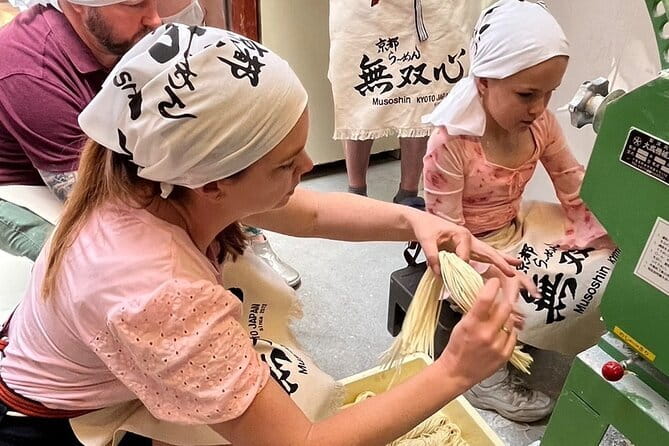
Ramen starts with more than broth and toppings. In this one-hour class in Kyoto’s Gion district, you make the noodles yourself, from mixing water into flour to rolling and cutting the dough with a professional machine. Then the restaurant’s chef serves a bowl of ramen with a vegetable-based broth, local Kyotamba rice, and condiments from local makers.
I like two things in particular: you do the hands-on work, rather than just watching a demonstration, and the group is capped at six, which leaves room for instruction. I also like that the meal at the end makes this more than a quick kitchen lesson. One consideration: this is a noodle-making class, not a full ramen cooking class, so the chef prepares the broth and final bowl.
What to know before you book
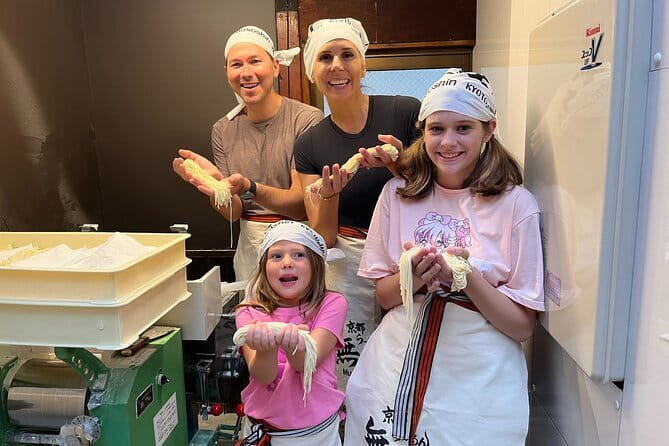
- Make noodles from scratch: Work with dough made from two types of flour, then roll and cut it using a professional noodle-making machine.
- Small group, English instruction: The class has a maximum of six participants and includes an English-speaking instructor.
- Your bowl comes at the end: The chef prepares the ramen, with a savory broth made from vegetables.
- Regional ingredients add a Kyoto touch: The meal includes Kyotamba rice and condiments from local makers.
- One hour, with useful extras included: You get an apron to use, a soft drink, and the bandana worn during the workshop to take home.
- Check dietary needs ahead of time: Vegetarian, vegan, and pescetarian options are available for the tasting session, but the noodles contain wheat.
A Gion restaurant, not a ramen school
The class takes place at Musoshin Gion, the flagship restaurant in central Kyoto. Be sure to head to the Gion shop at 558-2 Komatsuchō, not Musoshin Ramen Academy. That distinction matters: the setting is an operating restaurant, so the lesson is tied to the noodle-making work behind a real bowl of ramen.
Musoshin has three locations in Kyoto and a location in Toronto recognized by the Michelin Guide. That background gives the class a connection to an established ramen business, but the appeal here is practical: you get to see how one essential part of the dish is made, then eat at the restaurant where the lesson takes place.
The meeting point is in Higashiyama Ward, and the activity ends back there. It is near public transportation, a useful detail if you are fitting the class into a day of sightseeing around central Kyoto. The class itself lasts about an hour, so it is a compact activity rather than a half-day commitment.
More food tours in Kyoto:
- Ramen Cooking Class at Ramen Factory in Kyoto
★ 5.0 · 1,937 reviews - Kyoto Night Foodie Tour in Gion (9+ dishes + 6 Sake tastings)
★ 5.0 · 1,762 reviews - Kyoto: Izakaya Bars Guided Walking Tour
★ 4.9 · 815 reviews
From flour and water to chewy noodles
The core of the class is making dough with two types of flour. Your instructor guides you through pouring in the water, kneading the mixture, then rolling and cutting it into noodles. It is an active process, not a demonstration where you stand at the edge of the room and watch someone else do all the work.
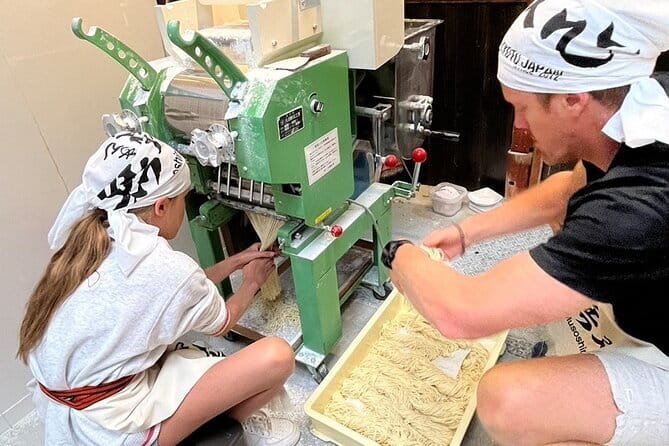
A professional noodle-making machine helps turn the dough into noodles with a more even shape and texture. You still take part in the steps that matter: handling the dough and learning how it changes as you work it. For many people, that is the most useful part of the class. Ramen is familiar as a finished bowl, but less familiar as a dough you can touch and shape.
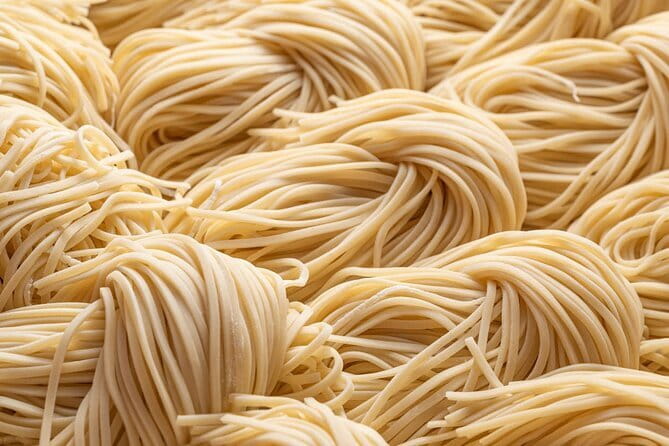
The promise is chewy noodles, a key quality in ramen. You will not be taught every part of making the final dish, though. The class focuses on the noodles, while the chef prepares the broth and serves the bowl. If you want a lesson in broth-making, seasoning, toppings, and assembling a full ramen recipe, this is not that class.
Instructors have included Kaz, Azu, and Amiru, and the class is conducted in English. The small cap of six helps keep the hands-on part personal. You can follow the steps at close range and ask for help as you knead or use the machine, rather than trying to keep up with a large group.
The bowl that follows the workshop
After the noodle-making session, you sit down to a bowl prepared by Musoshin’s ramen chef. The broth is described as savory and made from a blend of vegetables. The restaurant adds Kyotamba rice and condiments from local makers, bringing regional ingredients into the meal.
This finish is important to the value of the class. You are not simply practicing a kitchen technique and heading out hungry. The included bowl lets you connect the work with the finished dish, and the soft drink is part of the package too. The meal also gives you a chance to appreciate what a skilled kitchen does with the components you have just learned about.
Keep expectations clear: the chef makes the ramen you eat, and the class is specifically about noodle-making. The details do not promise that your individual batch of dough becomes the bowl served at the end. Think of the meal as a chef-prepared tasting after your lesson, not as a final test of your own cooking.
What the price includes
At $48.27 per person, this is a short activity, but the price covers more than a seat in a demonstration. Ingredients and tools are included, as are an English-speaking instructor, a rental apron, a bowl of ramen, and one soft drink. You also keep the bandana used during the workshop.
I see the strongest value in the combination of instruction and meal. A one-hour noodle lesson on its own might feel brief, but making the dough yourself, using professional equipment, and eating at the restaurant makes the visit more complete. The group limit of six is another plus: a small class is better suited to a task where you need to handle dough and follow several steps.
It is still worth comparing the class with what you want from a food activity. If your main goal is to eat ramen, you can simply visit a ramen restaurant. If you want a hands-on look at how noodles are made and a meal afterward, the added instruction gives this outing a different purpose. Personal expenses beyond the inclusions are not covered.
More Kyoto tours in Kyoto:
- PERFECT KYOTO 1-Day Bus Tour
★ 5.0 · 13,518 reviews - Kyoto: Fushimi Inari, Kinkakuji, Bamboo Grove 1 Day Bus Tour
★ 4.8 · 4,316 reviews - Kyoto: Tea Ceremony in a Traditional Tea House in Kiyomizu
★ 4.9 · 3,519 reviews - Kyoto Geisha Walking Tour: Gion District & Hidden Gems
★ 4.7 · 3,273 reviews
Dietary needs and practical details
The noodles are made from wheat flour, so this is not a gluten-free activity. Vegetarian, vegan, and pescetarian options are available for the tasting session. You need to tell the provider about dietary restrictions in advance, so do not wait until you arrive to raise them.
The stated dietary options apply to the tasting, while the noodle-making itself uses wheat flour. If you have a serious allergy or need more detail about ingredients and preparation, ask the provider before booking. The available information does not specify how ingredients are handled to prevent cross-contact, so it is sensible to check directly if that matters to you.
Confirmation is provided within 48 hours of booking and depends on availability. Free cancellation is available up to 24 hours before the start time; after that, the fare is not refunded, and changes made within 24 hours are not accepted. The cut-off follows local time in Kyoto.
Who will get the most from this class
This works well for curious eaters who want to understand a familiar Japanese dish through one of its key elements. It is also a good fit for families: the activity is interactive, and the small group makes it easier to follow along together. The class is short enough to slot into a busy Kyoto itinerary without asking you to surrender a full morning or afternoon.
It is especially appealing if you enjoy learning by doing. You pour, knead, roll, and cut, rather than taking notes through a long talk. The final bowl gives the lesson an immediate payoff, and the keepsake bandana is a small reminder of the kitchen session.
On the other hand, this is not the best choice if you want a complete cooking class or a deep lesson in ramen broth. You will not be preparing every component of the meal yourself. It is also a poor fit for anyone who cannot work with wheat, since the noodles are made from wheat flour.
Should you book the Kyoto Ramen Noodle Making Class?
Book it if you want a compact, hands-on food activity in Gion and like the idea of making noodles before sitting down to a chef-prepared ramen bowl. The strongest reasons are the small class size, English instruction, professional noodle machine, and included meal. At $48.27, the value is good if you want both the activity and the food, not just a bowl of ramen.
Skip it if you expect to cook the broth and assemble the entire dish yourself, or if wheat is an issue. Before booking, confirm that the tasting options suit your diet and remember to tell the provider about restrictions in advance. For the right kind of ramen fan, this is a practical way to get your hands into one of Kyoto’s most familiar foods.
FAQ
How long does the class last?
The activity lasts about one hour.
Where does the class take place?
It takes place at Musoshin Gion, at 558-2 Komatsuchō, Higashiyama Ward, Kyoto. The venue is the Gion restaurant, not Musoshin Ramen Academy.
What will I do during the class?
With an English-speaking instructor, you pour water into dough made with two types of flour, knead it, then roll and cut the noodles using a professional noodle-making machine.
Is this a full ramen cooking class?
No. The class focuses on making noodles. The restaurant’s chef prepares the broth and the bowl of ramen served at the end.
Is a meal included?
Yes. The class includes a bowl of ramen prepared by the chef and one soft drink.
Are vegetarian or vegan options available?
Yes. Vegetarian, vegan, and pescetarian options are available for the tasting session. Tell the provider about dietary restrictions in advance.
Are the noodles made with wheat?
Yes. The noodles are made from wheat flour.
What is included besides the lesson and ramen?
Ingredients and tools, an English-speaking instructor, a rental apron, one soft drink, and the bandana used during the workshop are included.
Newly added in Kyoto
- Uji: Private immersion into Kyoto’s tea and reglious culture★ 5.0 · 17 reviews
- Whisk Your Own Matcha: A Zen Matcha Experience at Temple★ 3.6 · 7 reviews
- Kyoto tea town for matcha lovers★ 5.0 · 16 reviews
- Treasures of Kyoto: Gion & historical Walking Tour★ 5.0 · 6 reviews
- Kyoto Matcha Green Tea Tour★ 4.5 · 23 reviews
- Uji and Wazuka Matcha Farm Half Day Private Guided Tour★ 5.0 · 21 reviews
- Uji Tea Ceremony and UNESCO Heritage Walking Tour★ 5.0 · 20 reviews
- Utilising upcycled Matcha! Creating matcha incense (Uji, Kyoto)★ 5.0 · 6 reviews
Kyoto Food Tours, compared.

Ramen Cooking Class at Ramen Factory in Kyoto
Read our review →
Kyoto Night Foodie Tour in Gion (9+ dishes + 6 Sake tastings)
Read our review →
Sushi Making in Kyoto! Same-day bookings welcome!
Read our review →
Insider Sake Brewery Tour with Sake and Food Pairing
Read our review →
Ramen Cooking Class at a Ramen Factory with Souvenir
Read our review →
The Original Small-Group Sushi Making Class in Kyoto
Read our review →Browse the lists this tour appears in