Reviewed · KYOTO TOURS
KYOTO: Tour guidato tra i tesori della città (in italiano)
Kyoto’s big sights sit far apart, and this tour links them into one guided route: bamboo paths in Sagano, the gold-leaf pavilion of Kinkaku-ji, and the hillside lanes around Kiyomizu-dera. I like that a Kyoto-born guide who speaks Italian can explain how the old capital’s temples, aristocratic retreats, and working neighborhoods fit together, rather than leaving you to connect the dots alone.
I also like the mix of transport and walking. Trains, buses, and the subway cover the longer hops, while the final stretch takes you through Sannenzaka, Ninenzaka, Gion, and on to Pontocho. One consideration: it is an ambitious schedule, and you’ll spend a good share of the day moving between busy sights as well as exploring them.
At a glance
- Start at Kyoto Station, finish in Pontocho: The route begins at the station’s north entrance and ends in central Kyoto.
- See Sagano’s bamboo forest: Allow about an hour for a guided walk among the bamboo.
- Visit Kinkaku-ji: The Golden Pavilion stop includes an hour for a guided visit and sightseeing.
- Explore eastern Kyoto on foot: Kiyomizu-dera, Sannenzaka, Ninenzaka, and Gion bring temples and historic streets into the same stretch of the day.
- Travel and entry fees are included: The tour covers the listed transport and monument entrance fees.
- The guide speaks Italian: You can ask about Japanese history, culture, and everyday life as you go.
A Kyoto route that links very different sights
Kyoto’s appeal lies in its contrasts. A quiet-looking bamboo path, a famous gold-covered temple, and streets associated with geiko and maiko all belong to the same city, but they tell different stories. This guided route moves between them, giving you a broad introduction rather than concentrating on one neighborhood.
The tour is operated by Agenzia Turisti Italiani in Giappone. Its Italian-speaking guide is described as a native of Kyoto, and the aim is to explain both the city’s historical sites and the lives of people who live there today. That local perspective can be especially useful when you’re visiting places with customs or history that are not obvious from the view in front of you.
There is a lot packed into the schedule. The itinerary includes train rides, buses, the subway, and several walks, with stops in both northwestern and eastern Kyoto. Think of this as a guided overview with time at each major stop, not a slow, unhurried visit to every temple and lane.
More Kyoto tours in Kyoto:
- PERFECT KYOTO 1-Day Bus Tour
★ 5.0 · 13,518 reviews - Kyoto: Fushimi Inari, Kinkakuji, Bamboo Grove 1 Day Bus Tour
★ 4.8 · 4,316 reviews - Kyoto: Tea Ceremony in a Traditional Tea House in Kiyomizu
★ 4.9 · 3,519 reviews
Meeting at Kyoto Station
The meeting point is outside Kyoto Station’s central north entrance, also called Karasuma-guchi. Look for the space between the two escalators in front of the taxi terminal, which is to the east just outside the entrance. From there, Kyoto Tower should be visible in front of the station, to your upper left.
That detail matters in a station as large as Kyoto’s. Take a moment to orient yourself before the meeting time, and check the detailed meeting instructions sent by the day before the tour. The tour starts here and later returns to Kyoto Station for a one-hour break before heading out again.
The route uses public transport for much of the distance between sights. That keeps the day practical, but it also means your experience includes transfers and travel time, not just temple grounds and photo stops. If you prefer to see Kyoto at a slower pace, a tour focused on one district may suit you better.
Sagano’s bamboo paths
The first major stop is the Sagano Bamboo Forest, reached by train from Kyoto Station. You have about an hour for a guided visit and walk. The tall bamboo is the draw, but it is worth listening to the guide’s explanations too: the tour is intended to place the area within the wider story of Kyoto’s outskirts and their past use as retreats.
Sagano lies in the northwestern part of the city, away from the central station area. The train ride takes about 20 minutes, and the itinerary includes another train journey after the stop. That makes the bamboo visit a good early change of pace, but it is not a long countryside excursion.
The pathway is one of the tour’s walking sections, so wear shoes you can comfortably use on foot. The tour is marked wheelchair accessible, though the route includes walking at several sites; if you have specific access needs, confirm that the route will work for you before booking.
Kinkaku-ji, Kyoto’s Golden Pavilion
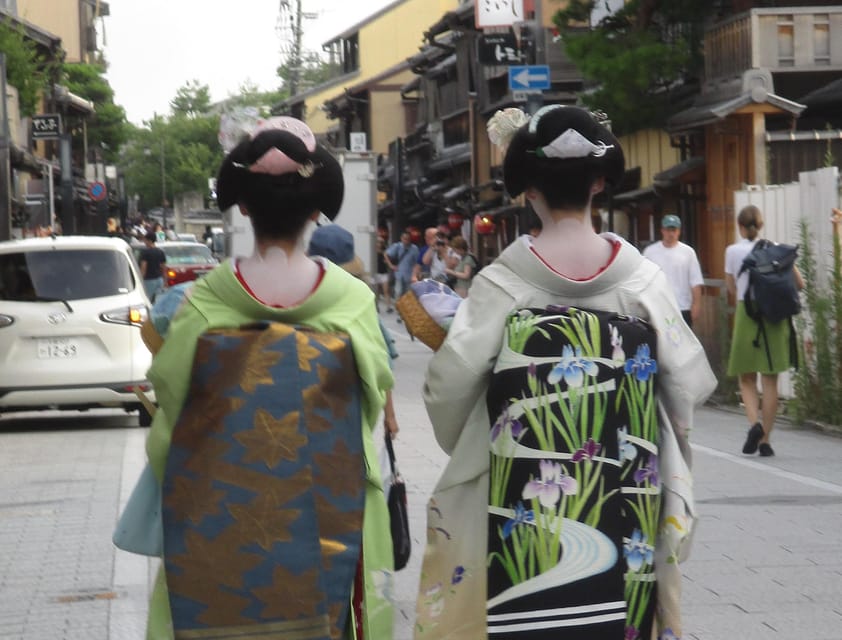
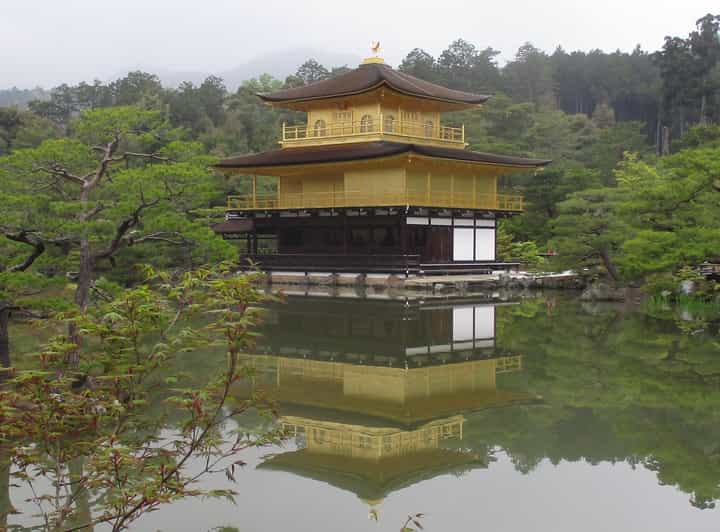
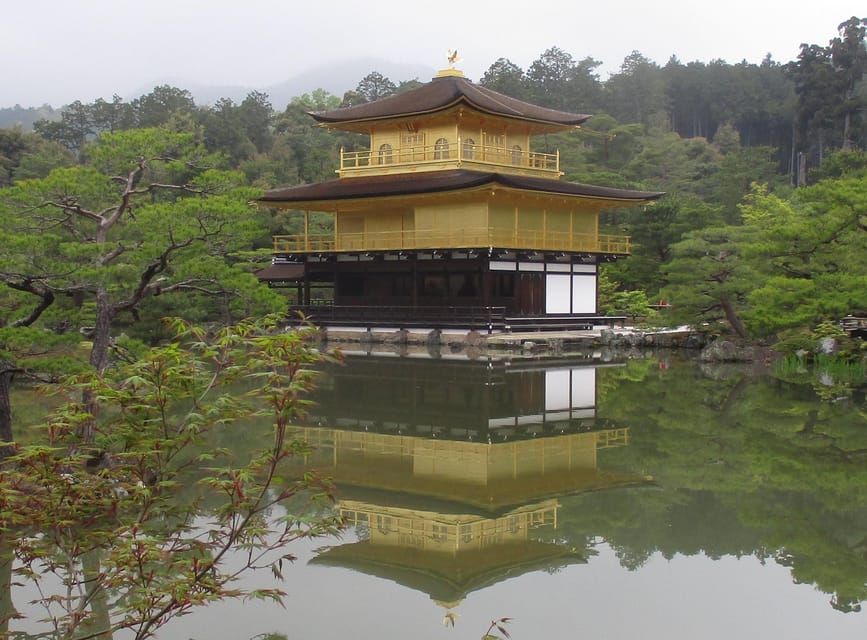
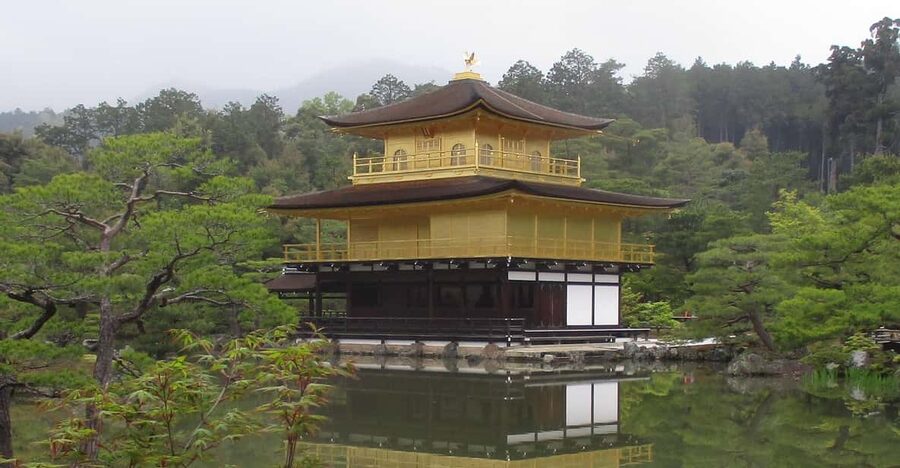
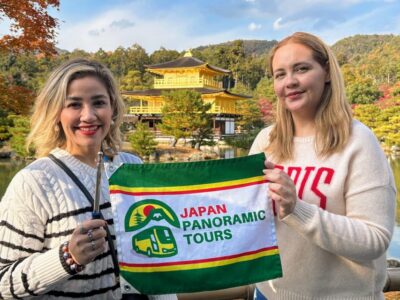
From Sagano, you travel by train and bus to Kinkaku-ji, commonly called the Golden Pavilion. The guided stop lasts about an hour and includes sightseeing around the temple. Its bright gold exterior makes it one of Kyoto’s most instantly recognizable sights, and the guide can help put the building and its setting into historical context.
Kinkaku-ji is a major attraction, so expect a well-known stop rather than a secluded temple visit. The one-hour allocation gives you time to see the grounds and hear an explanation, but it is not designed for a long, independent wander. If you want to linger over every view or spend a great deal of time taking photographs, the schedule may feel brisk.
The tour’s value here is partly in the combination: a guide introduces the site, and the admission fee is included. You do not have to plan a separate journey from Sagano or work out the entrance arrangements on your own.
Same city, a different side of it:
- Kyoto Geisha Walking Tour: Gion District & Hidden Gems
★ 4.7 · 3,273 reviews - Kyoto: Tea Ceremony Ju-An at Jotokuji Temple
★ 4.9 · 3,207 reviews - Kyoto: Gion Magical Night Walking Tour with Geisha Trivia
★ 4.9 · 2,393 reviews - Kyoto: 45-Minute Tea Ceremony Lesson Experience
★ 4.3 · 2,378 reviews
A pause at Kyoto Station
After Kinkaku-ji, the route uses a bus and subway to return to Kyoto Station. The schedule allows a one-hour break before the eastern Kyoto portion begins. It is useful breathing room in a day with several transport changes, though the information does not specify what the break is intended for.
You may appreciate the chance to rest or take care of your own needs before the afternoon visits. Just remember that this is a scheduled pause, not a guided sightseeing stop. The tour then leaves the station by bus for Kiyomizu-dera, so keep an eye on the meeting time and any instructions from your guide.
Kiyomizu-dera and the old hillside lanes
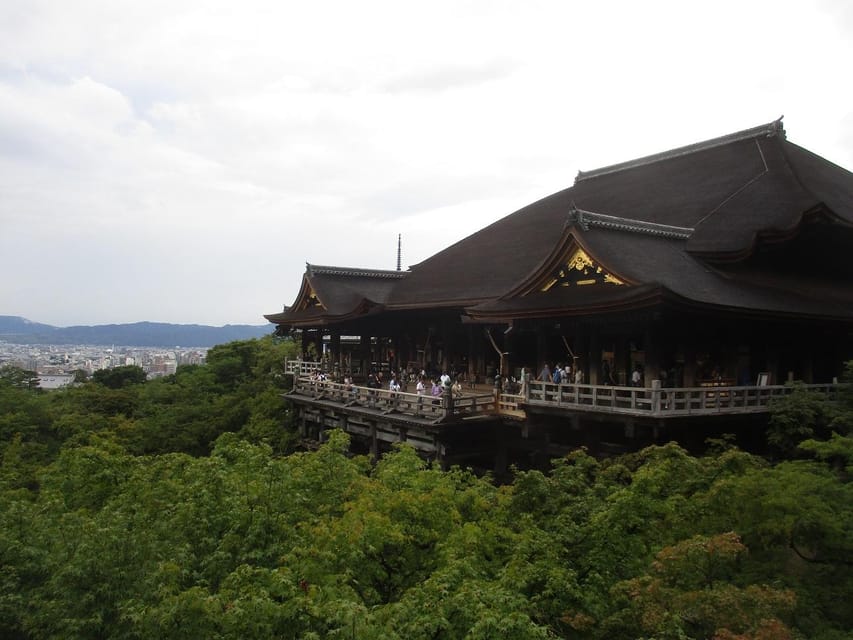
Kiyomizu-dera is the main temple stop in eastern Kyoto, with about an hour for a guided visit and sightseeing. It is one of the city’s best-known historic sites, and its position above the surrounding streets gives the visit a different feel from Kinkaku-ji’s grounds. The guide can help explain the temple’s place in Kyoto’s religious and cultural story.
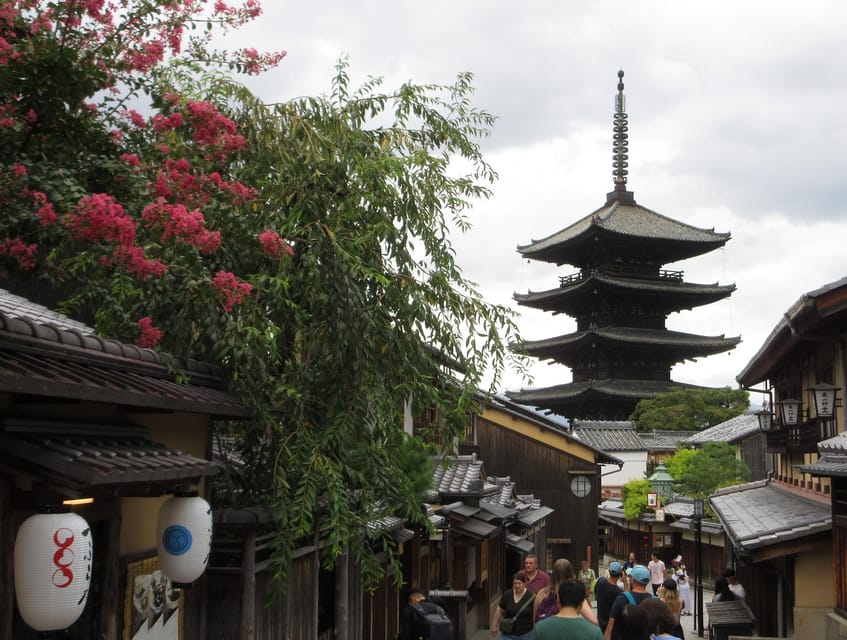
After the temple, the route continues on foot through Sannenzaka and Ninenzaka. These historic streets are part of the experience, not just a shortcut between attractions. Their traditional setting offers a sense of the old city’s built environment, though the schedule gives only a few minutes at each named stop. You will have time to walk through, but not necessarily to browse at length.
This is one reason to think of the tour as an introduction. It brings together the temple and its surrounding lanes in a clear sequence, while leaving you free to return later if one area catches your interest.
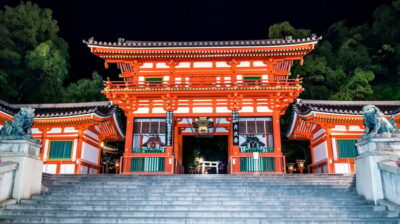
Gion, geiko culture, and Minami-za
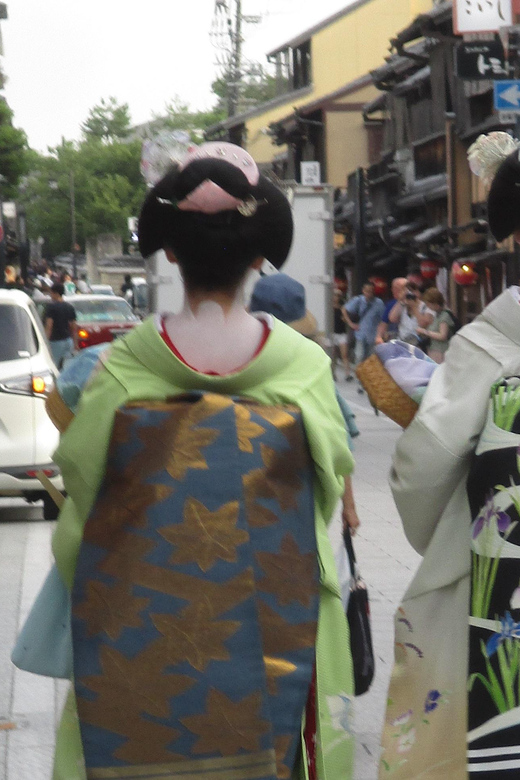
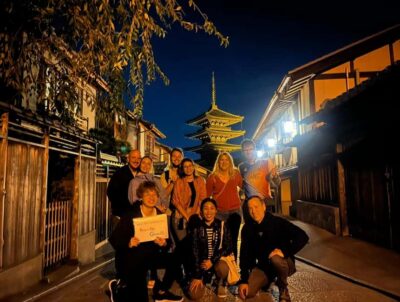
From Ninenzaka, the route continues on foot to Gion, with about 30 minutes for a guided visit. Gion-kobu is associated with the work of maiko and geiko, professional artists often referred to informally as geisha. The guide’s role is important here: this is a living cultural district, and a little context helps you understand it as a workplace and neighborhood, not merely a place to look for performers.
The schedule then includes a brief guided sightseeing stop at Kyōto Minami-za, followed by a short walk to Pontocho, where the tour ends. The route does not promise a performance or a meeting with a maiko or geiko, so treat this section as an introduction to the area and its cultural setting.
Pontocho is a convenient place to continue your evening independently, but the tour itself ends there. You are also free to leave the tour partway through if you do not want to complete the full route. That flexibility is helpful, though leaving early means missing the later sights and guided explanations.
What the guide adds
A well-paced route can show you a lot, but a guide is what helps turn a string of famous names into a story. This tour is specifically for Italian speakers, and the guide is described as a Kyoto native who can answer questions about the city’s history, culture, and daily life.
The two available comments praise the guide’s detailed explanations, clear Italian, and helpful manner. One describes learning the history of each temple and place visited; the other singles out the guide’s fluency and availability. No guide’s personal name is provided, so you should not expect to book a specific individual.
That explanatory focus is a strong reason to choose this tour over simply arranging the transport yourself. If you already know Kyoto well and prefer to set your own pace, you may value independent visits more. If you want historical context in Italian and appreciate being able to ask questions along the way, the guide is likely to make the day more rewarding.
Is $153 a fair price?
At $153 per person, this is not a low-cost way to see Kyoto. The price includes an Italian-speaking guide, transport during the itinerary, and entrance fees to the monuments visited. You are also joining a route that spans Sagano, Kinkaku-ji, and eastern Kyoto, areas that would take planning and several separate journeys to connect independently.
The value depends on what matters to you. If you want a guide to explain the sights, prefer to avoid working out public transport between several districts, and plan to visit the included monuments anyway, the bundled price may be worthwhile. If you are comfortable navigating Kyoto on your own, or would rather spend longer at fewer places, you could prefer to arrange a smaller-scale day.
The tour is offered as a group or individual experience, but no group size or specific starting time is stated here. Availability shows the possible start times, and you can reserve without paying immediately. Cancellation is free up to 24 hours in advance for a full refund.
Who should book this Kyoto tour?
I’d consider this tour if you speak Italian and want a structured introduction to Kyoto’s best-known historical and cultural sites. It is particularly useful if you want a local guide to connect aristocratic retreats, temples, samurai-era life, and the working culture of Gion in one day.
It is less suited to anyone hoping for a slow temple visit, a long stretch of free time in every district, or a guaranteed encounter with maiko or geiko. The schedule covers a lot, and the short walks through Sannenzaka and Ninenzaka leave limited time for browsing. If you want a broad overview and value the guide’s explanations, book it. If lingering matters more than covering ground, choose fewer sights and give them more time.
FAQ
Where does the tour start?
It starts at Kyoto Station’s north entrance, Karasuma-guchi, in the space between two escalators in front of the taxi terminal. Kyoto Tower should be visible in front of the station, to your upper left.
Where does the tour finish?
The tour finishes in Pontocho. The route also returns to Kyoto Station for a one-hour break before continuing to Kiyomizu-dera and the eastern Kyoto stops.
What language does the guide speak?
The live guide speaks Italian. The guide is described as a native of Kyoto.
Which places are included in the route?
The route includes Sagano Bamboo Forest, Kinkaku-ji, Kiyomizu-dera, Sannenzaka, Ninenzaka, Gion, and Kyōto Minami-za, ending in Pontocho.
Are transport and entrance fees included?
Yes. Transport and entrance fees to the monuments visited during the itinerary are included.
How long does the tour last?
The activity is listed as lasting one day. The schedule includes a one-hour break at Kyoto Station and visits in both the northwestern and eastern parts of Kyoto.
Can I cancel or leave the tour early?
You can cancel up to 24 hours in advance for a full refund. You are also free to leave the tour partway through.
Newly added in Kyoto
- Uji: Private immersion into Kyoto’s tea and reglious culture★ 5.0 · 17 reviews
- Whisk Your Own Matcha: A Zen Matcha Experience at Temple★ 3.6 · 7 reviews
- Kyoto tea town for matcha lovers★ 5.0 · 16 reviews
- Treasures of Kyoto: Gion & historical Walking Tour★ 5.0 · 6 reviews
- Kyoto Matcha Green Tea Tour★ 4.5 · 23 reviews
- Uji and Wazuka Matcha Farm Half Day Private Guided Tour★ 5.0 · 21 reviews
- Uji Tea Ceremony and UNESCO Heritage Walking Tour★ 5.0 · 20 reviews
- Utilising upcycled Matcha! Creating matcha incense (Uji, Kyoto)★ 5.0 · 6 reviews
Kyoto Tours, compared.

Fushimi Inari, Kinkakuji, Bamboo Grove 1 Day Bus Tour
Read our review →
Tea Ceremony in a Traditional Tea House in Kiyomizu
Read our review →
Kyoto Geisha Walking Tour: Gion District & Hidden Gems
Read our review →
Gion Magical Night Walking Tour with Geisha Trivia
Read our review →