Reviewed · KYOTO TOURS
Kyoto: Traditional Yuzen Dyeing Experience
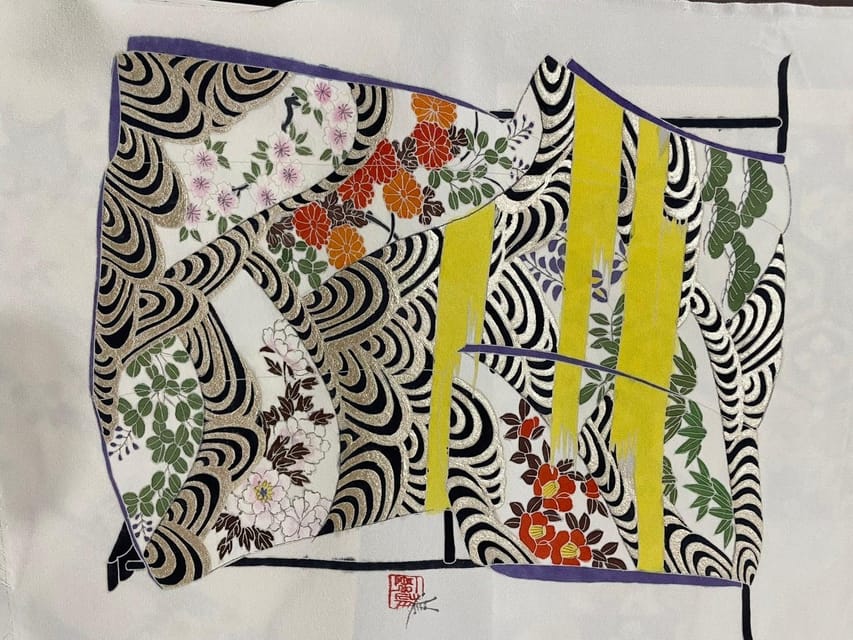
In a quiet Nishijin machiya, you’ll paint a silk design under the eye of a Kyoto Yuzen artisan. This is not a quick souvenir-painting stop: the artist mixes your colors, explains the craft, and helps you turn a pre-outlined design into a piece of your own.
I like two things in particular: you get direct guidance from an artisan, not just a demonstration, and the workshop takes place in a traditional home where you can see Yuzen work on display. The small group limit of six also leaves room for personal help.
One consideration: two hours can feel tight if you spend too long choosing a design or work slowly. Some sessions run past the scheduled end, but that extra time may not be available every day. Wear clothes you can risk getting dye on, and ask ahead if sitting on the floor for an extended session would be difficult.
- Paint on silk: Choose from pre-outlined designs, then apply color with the artisan’s guidance.
- Learn by watching: See how the artisan mixes dye and helps colors work together.
- Step inside a machiya: The class takes place in a traditional home in Kyoto’s Nishijin district.
- Keep your work: Take home the silk piece you make as a personal Kyoto souvenir.
- Small group, live interpretation: Up to six people can join, with instruction in English or Chinese.
- Plan for the details: The class lasts two hours, costs $161 per person, and does not include transport.
A Yuzen workshop inside a Nishijin machiya
Yuzen dyeing is one of Kyoto’s best-known textile arts, and this class gives you a close look at the process without asking you to master it in a single afternoon. You enter an artisan’s traditional machiya in Nishijin, a historic part of Kyoto known for its textile connections, and work in the same home where the artist displays Yuzen pieces.
That setting is part of the appeal. Rather than learning in a large public classroom, you get a small-scale introduction in a private residence. The home itself helps set the pace: quiet, personal, and suited to careful work. One session has been described as looking out toward a small garden, though the exact room and view may vary.
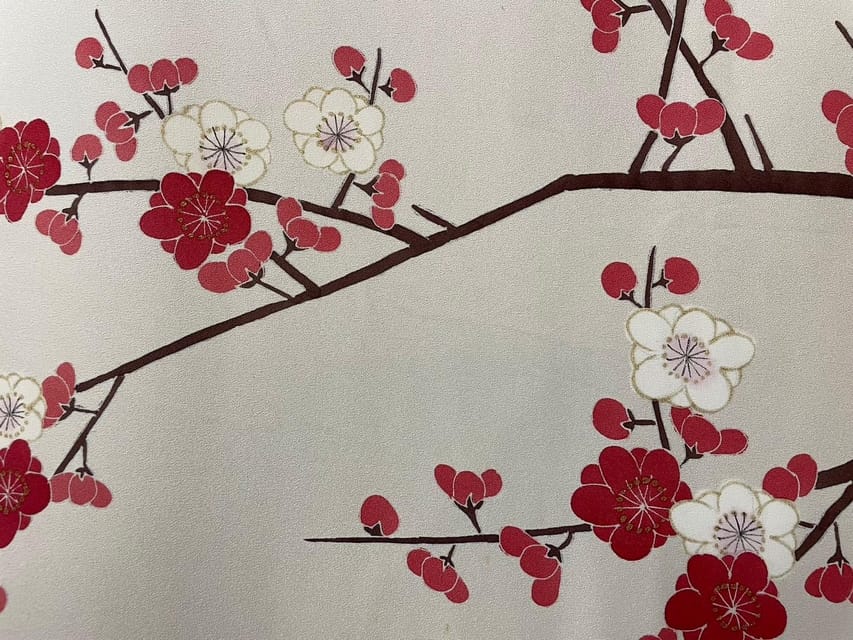
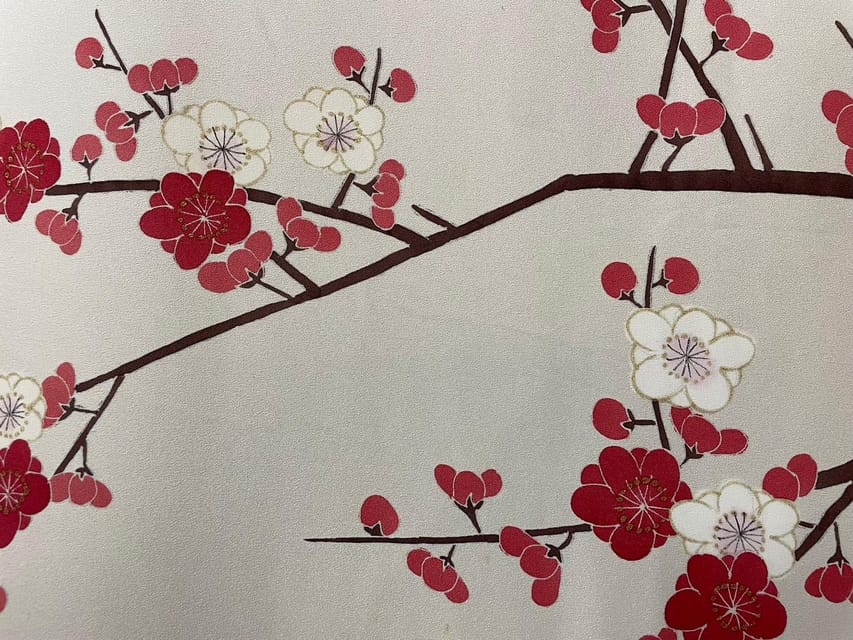
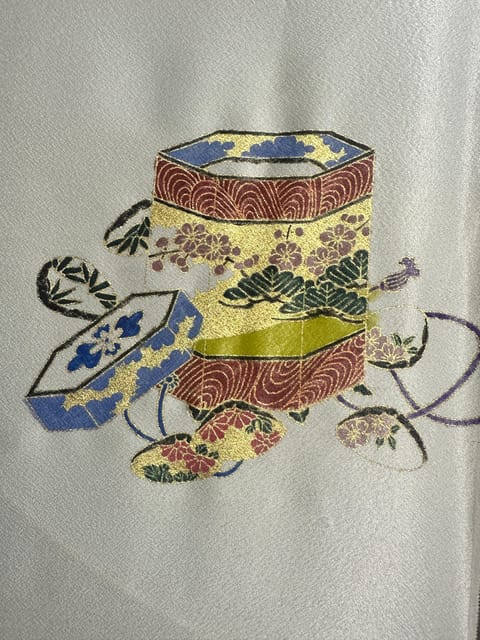
You also get to see the artisan’s work before making your own. This matters because the finished pieces show what the technique can do when practiced at a high level. They give you a reference for color and detail, and help explain why this is more than simply coloring in a picture.
The class is run by the Cultural Edu-tourism Council. Master Shin’ichiro has guided participants through the process, with interpreters helping bridge the language gap. Interpreter Ha has been named in some sessions, though the interpreter may differ on your date.
Choosing a design and setting your colors
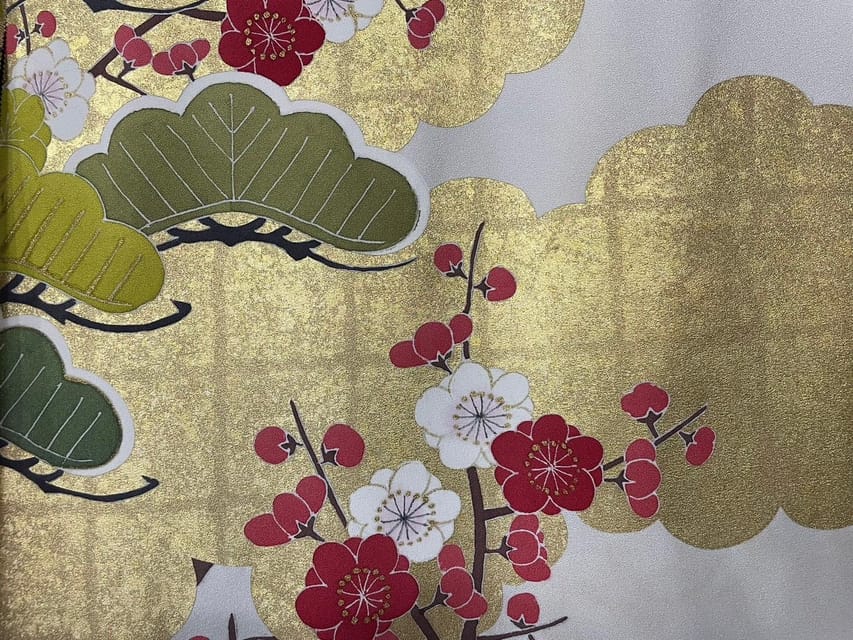
The session begins with a choice of design. The fabric already has a design outlined on it, so you do not need to draw or transfer the image yourself. Designs have included phoenixes, cranes, and fans. The available selection can be limited, so if you like one option, choose it without spending too long comparing.
Once you have chosen, you pick one or two colors that appeal to you. The artisan then suggests other tones to make the finished palette feel balanced and mixes the dyes. You still make the important choices, but you do not have to guess your way through every color decision.
That shared approach is one of the strongest parts of the activity. You get a personal result, while the artisan’s trained eye helps you avoid combinations that may not work well on the fabric. He can also show how a color is likely to appear before you apply it. The goal is not to copy a finished sample exactly, but to make your own choices with skilled advice close at hand.
More Kyoto tours in Kyoto:
- PERFECT KYOTO 1-Day Bus Tour
★ 5.0 · 13,518 reviews - Kyoto: Fushimi Inari, Kinkakuji, Bamboo Grove 1 Day Bus Tour
★ 4.8 · 4,316 reviews - Kyoto: Tea Ceremony in a Traditional Tea House in Kiyomizu
★ 4.9 · 3,519 reviews
Painting the silk, one careful stroke at a time
With the design and colors ready, you paint the dye onto the fabric. The outlined image gives you a clear guide, and the task is meant to be approachable for beginners. You do not need advanced art skills; the work is often described as painting within the lines, with the artisan offering help as you go.
The technique may surprise you if you expect the familiar tie-dye process of twisting and binding a T-shirt. Here, you use a brush to apply dye to a prepared silk design. The fine control is part of the pleasure, but it also calls for a little patience. Use a light hand: too much dye on the brush can cause color to bleed beyond the area you meant to fill.
The artisan can guide your pace and show you how much paint or water to use for a particular shade. That close support makes the class less intimidating, especially if you are new to craft work. Still, the finished piece is your own, not a factory-perfect print. Leave room for small variations and treat them as part of the handmade result.
Time is worth keeping in mind. The booking is for two hours, and the actual painting takes up a good part of that. One participant found that deciding on the design too slowly left less time for painting, while another session ran about 30 minutes over. The artist has sometimes let people continue, but you should not count on extra time. Choose promptly, then enjoy the work.
What you take home, and what you do not
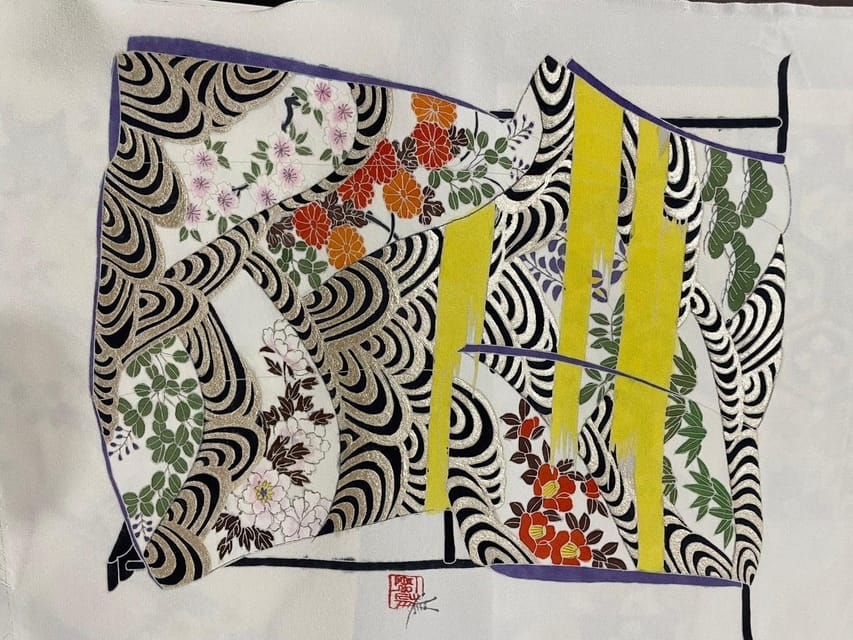
You leave with the silk piece you have painted, giving you a souvenir tied to the time and place rather than a standard shop purchase. The image is based on the design you selected, while your color choices and the artisan’s suggestions shape the result. The artist finishes the work so it is ready to take with you.
The keepsake is a meaningful part of the value, but the larger payoff is the process. You have spent time with a local artisan, learned some of the decisions behind Yuzen color work, and made something under guidance. If you like hands-on activities and small objects with a story, this is likely to mean more to you than another bought souvenir.
You can also purchase works from the artisan, but those purchases are not included in the $161 activity price and may require cash. Treat them as optional. The class itself already includes the dyeing experience, instruction, an interpreter, and the chance to view Kyoto Yuzen works.
Is $161 a fair price for two hours?
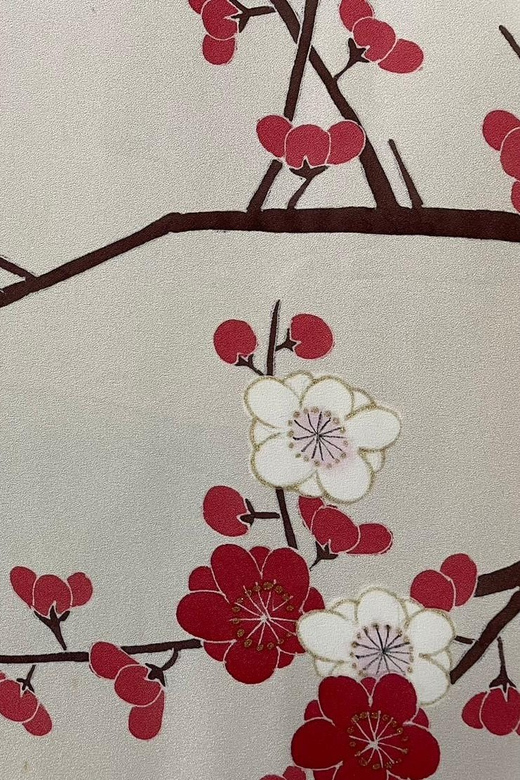
At $161 per person, this is not a budget craft class. The value depends on what you want from a Kyoto activity. You are paying for a small-group session in an artisan’s home, direct instruction, interpretation, a guided introduction to a traditional craft, and a finished silk piece to take away.
The group is limited to six, and some sessions may have only a couple of participants. That can mean more individual attention than a larger workshop, though the exact group size will vary. If the class is full, the instructor still has a small group to guide, rather than a room of dozens.
I would weigh the cost against your interest in craft and local culture. If you want a quick, inexpensive activity, this is probably not the right fit. If you value careful instruction, a private-home setting, and making an object you can keep, the price is easier to justify. Transport to and from the meeting point is not included, so allow for that in your day’s budget.
Same city, a different side of it:
- Kyoto Geisha Walking Tour: Gion District & Hidden Gems
★ 4.7 · 3,273 reviews - Kyoto: Tea Ceremony Ju-An at Jotokuji Temple
★ 4.9 · 3,207 reviews - Kyoto: Gion Magical Night Walking Tour with Geisha Trivia
★ 4.9 · 2,393 reviews - Kyoto: 45-Minute Tea Ceremony Lesson Experience
★ 4.3 · 2,378 reviews
Who will enjoy this class most?
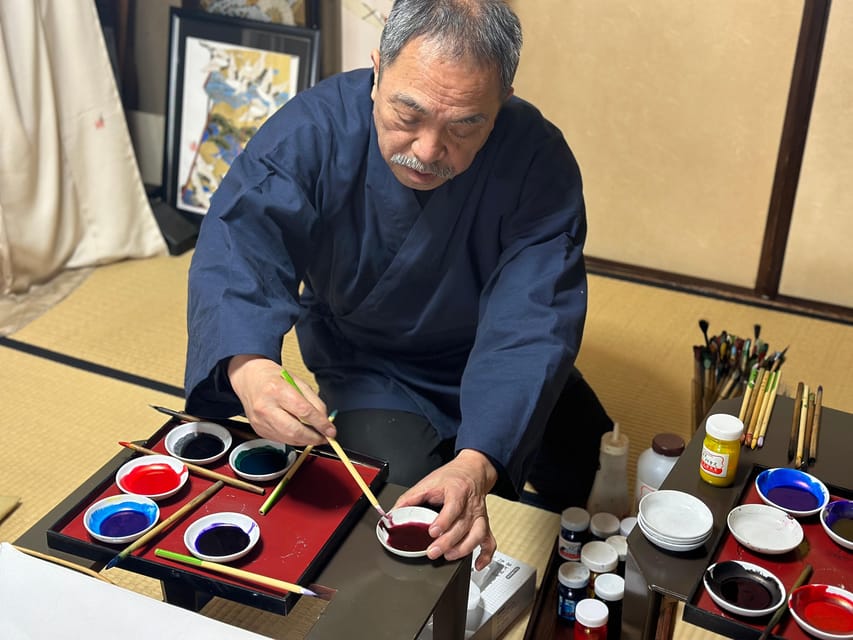
This experience suits art lovers, craft-minded visitors, and anyone curious about how traditional textile work is made. It is also a good choice if you want a quieter break from Kyoto’s larger sights. You are doing something focused with your hands, and the calm pace can feel restorative.
Families can take part with older children. The activity is not suitable for children under 10 or babies under 1, and the work calls for patience and care with dye. If you are bringing a child who is old enough, keep in mind that the class is a two-hour seated activity rather than a fast-moving demonstration.
You do not need to be an artist, but you should enjoy making something slowly. If you are very particular about getting every line perfect, remind yourself that the point is to learn and make a personal piece, not produce a flawless studio sample. The artisan’s advice helps, but your hand is still your own.
The listing says the activity is wheelchair accessible. At the same time, one participant noted that floor sitting could be a concern for some people. If seating or mobility is important for you, contact the provider before booking to confirm how the room will be arranged for your session.
Practical details before you book
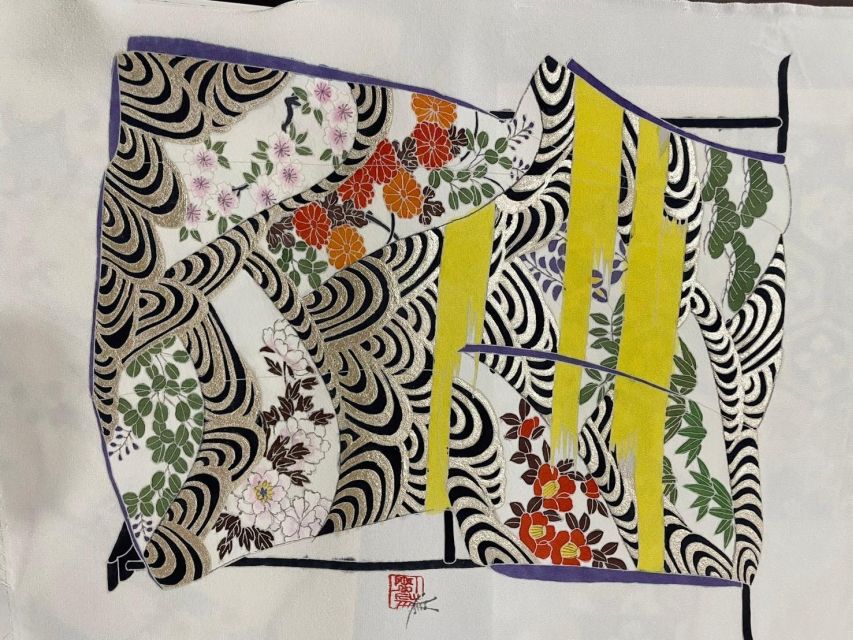
The class lasts two hours, with starting times shown when you check availability. It is offered with live interpretation in English and Chinese, and the group limit is six. Wear comfortable clothes that you do not mind getting dye on. The activity may involve chemicals, so tell the provider in advance about allergies or sensitivities.
Transportation is not included. Alcohol, drugs, fireworks, and party groups are not allowed. You can cancel up to three days in advance for a full refund.
Should you book the Yuzen dyeing experience?
Book it if you want a hands-on look at Kyoto craft and would value meeting an artisan in a traditional home. The best parts are the personal help with color and the chance to bring home a silk piece made through your own choices. It is especially well suited to a slower day, or to a break from sightseeing that still gives you a closer connection to local culture.
Skip it if you want a low-cost activity, dislike careful handwork, or cannot comfortably sit through a two-hour class without first confirming the seating arrangements. If you do go, choose your design promptly, keep dye on your brush in modest amounts, and let the artisan’s color advice guide you. That leaves more time to enjoy the making.
FAQ
How long does the Yuzen dyeing experience last?
The experience is scheduled for two hours. Some sessions may run over, but you should plan around the stated duration.
How much does it cost?
The price is $161 per person. Transportation and any additional purchases from the artisan are not included.
What languages are available?
Live interpretation is available in English and Chinese.
How many people can join?
The group is limited to six participants. The actual number in your session may be smaller.
What will I make?
You will paint a silk piece with a pre-outlined Yuzen design and take your finished work home.
What should I wear or bring?
Wear comfortable clothes that you do not mind getting dye on. No other required item is specified.
Is the experience suitable for children?
It is not suitable for children under 10 or babies under 1.
Newly added in Kyoto
- Uji: Private immersion into Kyoto’s tea and reglious culture★ 5.0 · 17 reviews
- Whisk Your Own Matcha: A Zen Matcha Experience at Temple★ 3.6 · 7 reviews
- Kyoto tea town for matcha lovers★ 5.0 · 16 reviews
- Treasures of Kyoto: Gion & historical Walking Tour★ 5.0 · 6 reviews
- Kyoto Matcha Green Tea Tour★ 4.5 · 23 reviews
- Uji and Wazuka Matcha Farm Half Day Private Guided Tour★ 5.0 · 21 reviews
- Uji Tea Ceremony and UNESCO Heritage Walking Tour★ 5.0 · 20 reviews
- Utilising upcycled Matcha! Creating matcha incense (Uji, Kyoto)★ 5.0 · 6 reviews
Kyoto Tours, compared.


Fushimi Inari, Kinkakuji, Bamboo Grove 1 Day Bus Tour
Read our review →
Tea Ceremony in a Traditional Tea House in Kiyomizu
Read our review →
Kyoto Geisha Walking Tour: Gion District & Hidden Gems
Read our review →
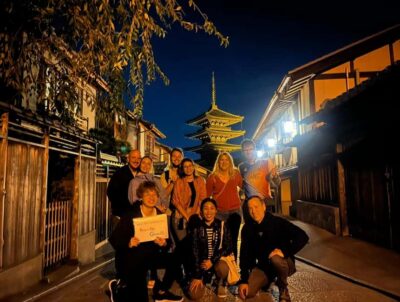
Gion Magical Night Walking Tour with Geisha Trivia
Read our review →