
Reviewed · KYOTO TEMPLE & SHRINE TOURS
Kyoto:Quiet Arashiyama and Sagano Temples
Arashiyama’s temples are more moving when you know whose lives are remembered there. On this walk, you hear about a dancer who became a nun after losing the favor of a powerful lord, and about the dead who once lay unburied in what became Adashino Nenbutsu-ji. The temples are not just stops for photos; their stories give the walk its purpose.
I like two things in particular: the guide’s human-scale stories, which bring religion and history down to the level of ordinary lives, and the route’s mix of temples, old houses, and woodland scenery. Admission is included, and hands-on experiences may help you understand local prayer and meditation customs rather than simply watch from the sidelines.
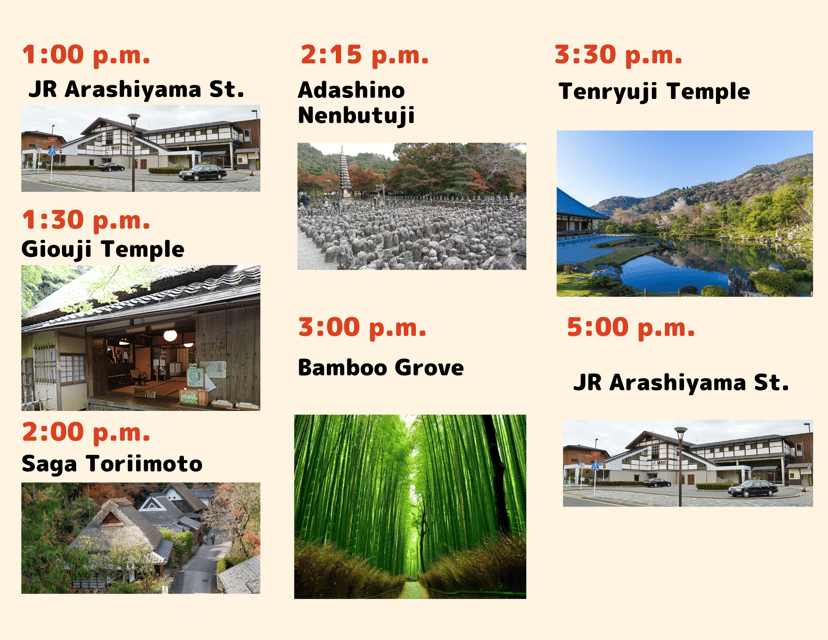
One consideration: this is a lot of walking, and the posted stop times add up to about three and a half hours, although the tour is described as three hours. Ask the operator to confirm the pace and timing before you book, especially if you have a tight schedule.
A few things to know before you go
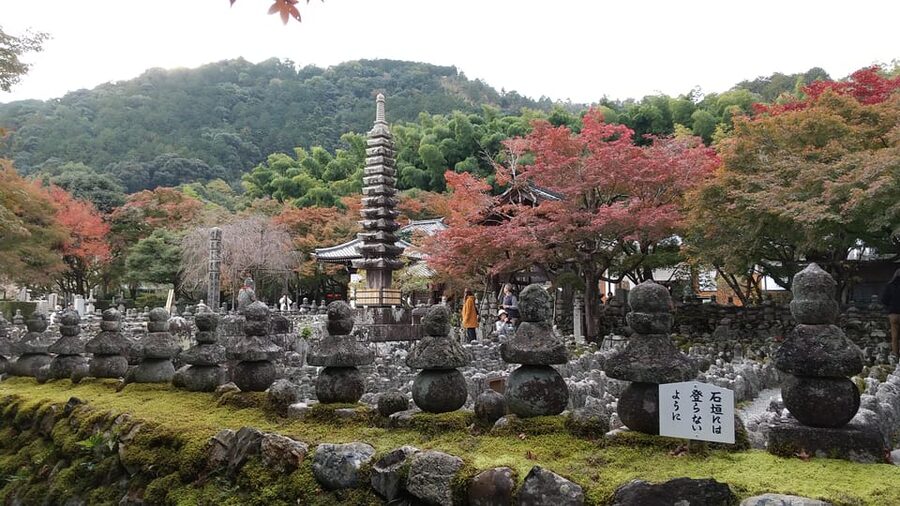
- Adashino Nenbutsu-ji tells a sobering story: Its stone Buddhas honor people who died without relatives to pray for them.
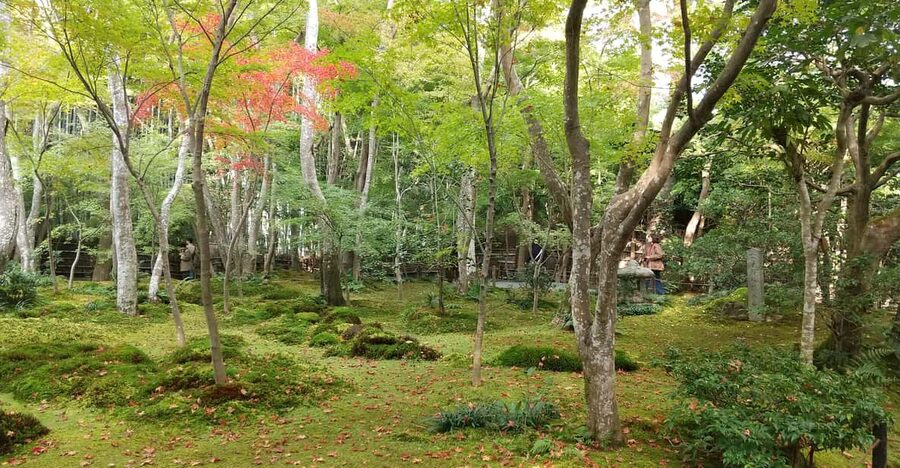
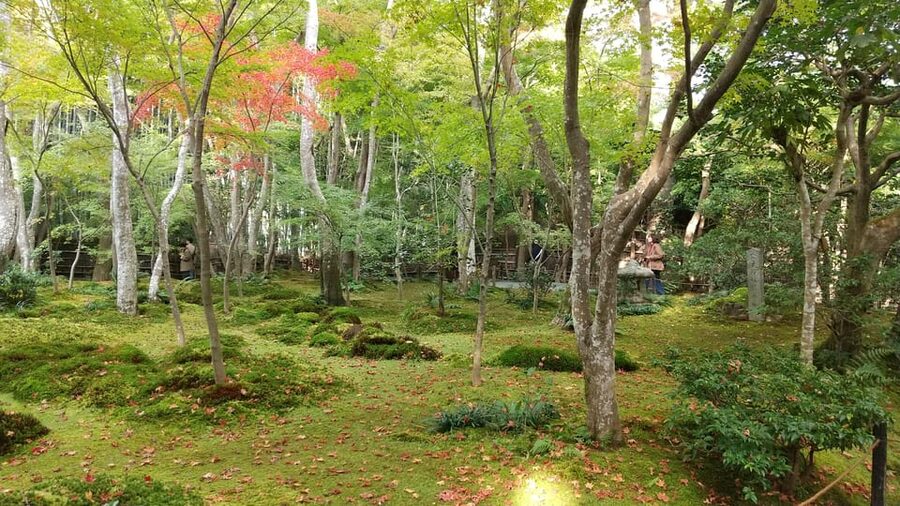
- Giou-ji brings a personal tragedy into view: The story centers on Giou, a dancer who became a nun after being cast aside by Taira no Kiyomori.
- Saga Toriimoto preserves an old Kyoto suburb: Farmhouses and machiya townhouses stand along the historic street.
- The route mixes quiet stops with famous sights: Expect temples and old lanes, plus the Sagano Bamboo Grove and Tenryuji.
- Admission is included at the temples visited: The $38 price covers the guided tour and temple entries, but not transportation or food.
- It is a private, English-language walk: The meeting point is JR Saga-Arashiyama Station, not either of the other Arashiyama stations.
A walk shaped by stories, not just scenery
Arashiyama is often treated as a checklist: bamboo, temple, bridge, photo, onward. This tour gives you a slower way to understand the area, with a guide linking its natural setting to the lives, beliefs, and losses remembered at its temples. That approach suits anyone who wants more than attractive views, especially if you are curious about how Buddhism and local memory shaped everyday life.
The walk starts and ends at JR Saga-Arashiyama Station. Be careful with the station name: the meeting point is not Hankyu Arashiyama Station or Randen Arashiyama Station. Your guide waits in the plaza just outside the ticket gates with a sign bearing your name. Arrive 15 minutes early, so you have time to find the right station and meet without a last-minute dash.
The group is private, and the live tour is in English. Masa has led the walk; he has shared local traditions through demonstrations of prayer and meditation, and has also pointed out artisan shops along the way. Those extras can add a welcome personal touch, but a particular guide or stop is not guaranteed by the tour details. If meeting Masa is important to you, confirm his availability before booking.
More Arashiyama tours in Kyoto:
- Kyoto: Fushimi Inari, Kinkakuji, Bamboo Grove 1 Day Bus Tour
★ 4.8 · 4,316 reviews - Osaka/Kyoto:Kinkakuji,Arashiyama,FushimiInariShrine,NaraPark
★ 4.1 · 1,596 reviews - Kyoto/Osaka: Nara, Fushimi Inari Taisha, Arashiyama Bus Tour
★ 4.7 · 1,275 reviews
Adashino Nenbutsu-ji and the memory of the unclaimed dead
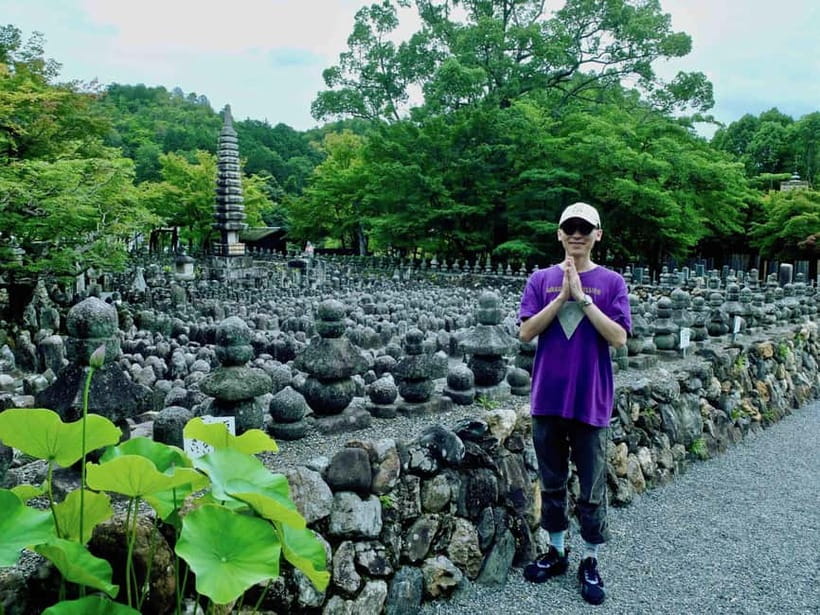
Adashino Nenbutsu-ji is the most sobering stop on the route. The temple is associated with the dead who had no relatives to care for them or pray for them, known as muen botoke. The surrounding area was once used to leave bodies, and the name Adashino is explained as a vain or heartless field. That history changes how you see the site: it is not simply a collection of old religious objects, but a place built around the question of what happens when the dead are forgotten.
The temple’s thousands of stone Buddha figures bring that idea into view. Nearly 8,000 statues were gathered and enshrined here, making the scale of the memorial striking even if you do not know much about Buddhist practice. Your guide can help explain the meaning behind the figures and the temple’s connection to Honen, its founder, who taught the chanting of the nenbutsu.
A yearly observance, Sentou Kuyo, takes place in August. Thousands of candles are lit and flowers are offered in remembrance. If you visit at another time of year, the guide’s explanation still gives context to the statues and memorial customs. If you are in Kyoto in August, ask whether the observance dates overlap with your stay; the tour itself does not promise that you will see it.
The listed visit lasts about 45 minutes. That is enough time for an introduction and a closer look, but the subject is solemn, and you may want more time to reflect. If you prefer a contemplative pace, tell your guide early. One of the tour’s strengths is the conversation, but a tightly timed walk can leave little room to linger at every stop.
Giou-ji and a story of love, loss, and religious life
The tour also introduces Giou-ji, a small temple linked to a story of women whose lives were altered by the favor of Taira no Kiyomori. Giou was a dancer whom Kiyomori loved before turning his attention to another woman, Butsugozen. Giou was driven away and later became a nun, living at Giou-an with her sister and mother.
The story does not end with one woman’s heartbreak. Butsugozen, too, was later cast aside by Kiyomori and became a nun. The women eventually lived together and practiced Buddhism. This history gives the temple a distinctly human focus: power and romance are part of the story, but so are grief, community, and a new life shaped by faith.
Giou-ji is described as dating to the 12th-century Heian period, and its name comes from Giou. Its small scale is part of its appeal. A brief stop can feel more intimate than a grand temple visit, though it also means your guide’s explanation does much of the work. Listen for the details that connect the women’s story to the place where they lived.
Saga Toriimoto’s preserved street
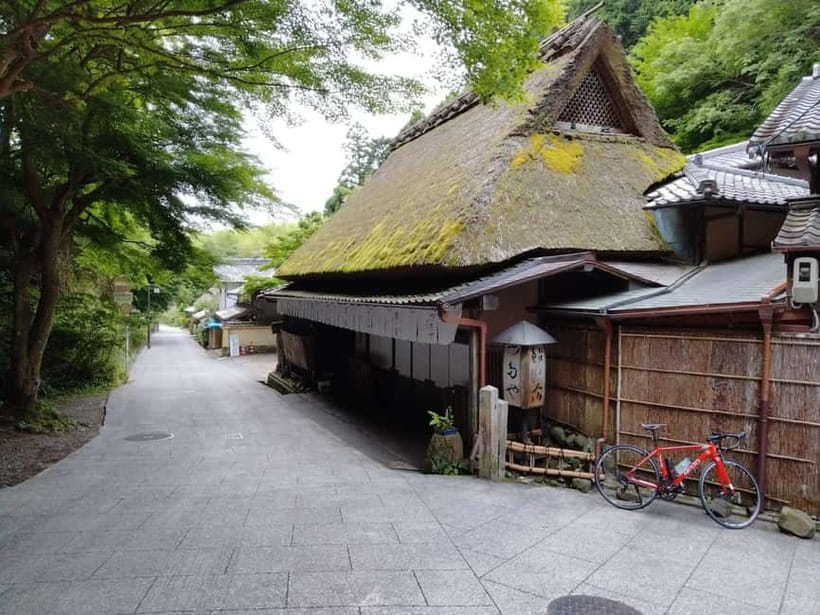
Between temple visits, the route passes through Saga Toriimoto, a preserved old street where farmhouses and machiya townhouses sit side by side. The mix gives you a sense of Kyoto’s historic outskirts, rather than the formal atmosphere of a temple compound. It is a useful change of pace: you can look at how people lived and worked, not only where they prayed.
The scheduled pass-through is about 15 minutes, so treat this as a scenic link rather than a long architecture tour. You will have time to take in the street and hear some context, but likely not to stop at every building. If you enjoy old town streets and local craft shops, ask your guide about what you are passing. Masa has shown visitors artisan shops they might otherwise miss, though a shop visit is not listed as a fixed part of the route.
More temple and shrine tours in Kyoto:
- Kyoto: Tea Ceremony Ju-An at Jotokuji Temple
★ 4.9 · 3,207 reviews - World Heritage Kyoto & Nara Uji Authentic Matcha Experience
★ 5.0 · 1,573 reviews - Arashiyama Bamboo, Temple, Monkeys, or Secret Sake Brewery
★ 4.8 · 886 reviews - Kyoto: Arashiyama Bamboo Forest, Monkeys, Matcha & Temple Tour
★ 5.0 · 759 reviews
The bamboo grove and the walk between stops
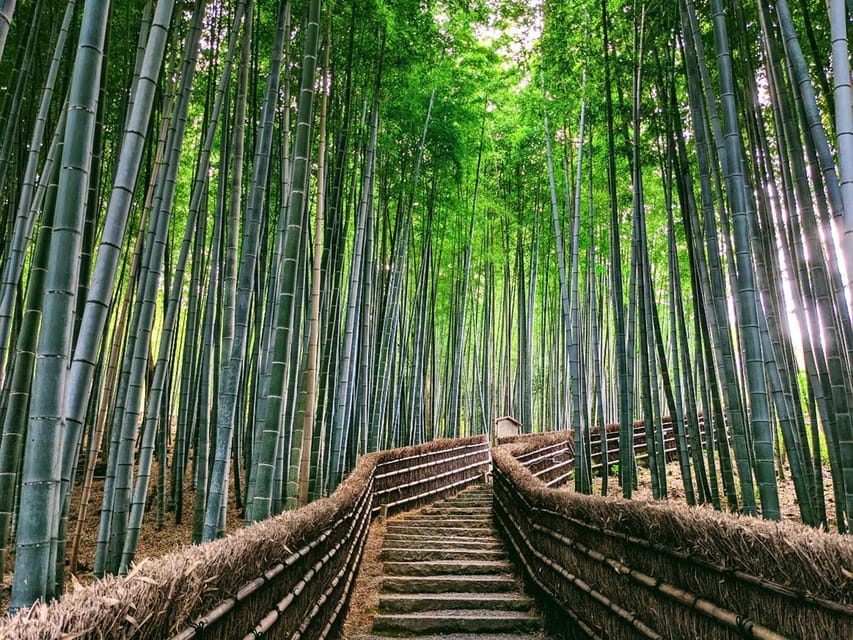
The Sagano Bamboo Grove supplies a change of mood after the temple histories and old street. The itinerary allows about 30 minutes for the grove as a scenic section, rather than presenting it as a long guided visit. The trees are part of the area’s appeal, but this tour’s particular value is the contrast: the route moves between natural scenery and places marked by human stories.
The tour is designed to avoid crowds and seek out quieter parts of Arashiyama. That is a goal, not a guarantee that every stretch will be empty. The bamboo grove is a popular sight, and conditions can change. Go for the full walk, not on the assumption that you will have a famous photo spot to yourself.
You will do a lot of walking, so wear comfortable shoes and bring water. A hat and sunscreen are sensible in sunny weather, and check the forecast before setting out. Smoking is not allowed during the activity.
Tenryuji and the final temple visit
Tenryuji is scheduled for about an hour and a half, making it the longest stop in the route outline. That gives the guide more time to explain the temple and its setting than at the shorter stops. The tour includes admission to the temples visited, so you do not need to set aside a separate entry fee for this visit.
The guided format is useful here because you can ask questions as you go, rather than trying to piece together each stop alone. Still, the published information does not specify which rooms or areas are visited, so do not assume that every part of the temple is included. The value lies in having the guide connect the site to the wider themes of faith, history, and daily life that have run through the walk.
The itinerary says the tour returns to JR Saga-Arashiyama Station. Plan onward travel from there, and do not confuse it with the Hankyu or Randen stations. Transportation to and from the meeting point is not included.
Is $38 good value for this private tour?
At $38 per person, the price includes an English-speaking guide, the guided walk, admission to all temples visited, and hands-on experiences at select temples. That is a straightforward value if you want context at several sites and would otherwise pay temple admission separately. The private format also gives you room to ask questions and, if the group pace allows, tell the guide what interests you most.
Meals, drinks, transport to the meeting point, and personal expenses are extra. The tour is not a substitute for a full day in Arashiyama: it is meant to give you a guided, three-hour introduction, with a particular emphasis on temple stories. One timing detail deserves attention. The listed stops total roughly three and a half hours, not three, so confirm the expected end time before arranging a meal, train, or other activity immediately afterward.
The tour is best suited to walkers who enjoy history and religious culture, and who are comfortable moving between several stops at a steady pace. It is not suitable for wheelchair users or people with mobility impairments. If you want only a quick bamboo-grove photo, this is probably more walking and interpretation than you need. If you want to understand why these temples matter to the people who lived here, the guided approach is the point.
You can cancel up to 24 hours in advance for a full refund, and the reserve-now, pay-later option lets you keep plans flexible. Check available start times when booking, and ask about the timing discrepancy if your day is tightly scheduled.
Should you book it?
Book this walk if you want Arashiyama to make sense beyond its best-known scenery. Its strongest feature is the human detail: Giou and the women who shared her Buddhist life, the memorial to people without relatives, and the guide’s explanations of local practice. Included temple admission and a private English-language guide make $38 a reasonable price for that kind of introduction.
Skip it if you need an accessible route, dislike extended walking, or want to linger for a long time at each stop without watching the clock. And if you have your heart set on meeting Masa, confirm the guide assignment first. For curious walkers with a half-day to spare, this is a thoughtful way to see a quieter, more personal side of Sagano and Arashiyama.
FAQ

Where does the tour meet?
Meet at JR Saga-Arashiyama Station, in the plaza just outside the ticket gates. It is not Hankyu Arashiyama Station or Randen Arashiyama Station. Look for a guide holding a sign with your name.
How long does the tour last?
The tour is described as three hours. The listed stop times add up to about three and a half hours, so confirm the expected schedule with the operator before booking around it.
What language is the tour in?
The live guided tour is in English.
Is this a private tour?
Yes. The group type is private.
What is included in the $38 price?
The price includes a guided tour of Arashiyama, admission to all temples visited, hands-on experiences at select temples, and explanations from an experienced guide.
Are food and transportation included?
No. Transportation to and from the meeting point, meals, drinks, and personal expenses are not included.
Which places are included in the route?
The route includes Adashino Nenbutsu-ji, Saga Toriimoto Preserved Street, the Sagano Bamboo Grove, and Tenryuji. The temple stories also include Giou-ji.
What should I bring?
Bring comfortable walking shoes, water, a hat, sunscreen, and a camera. Check the weather forecast and dress for the conditions.
Is the tour suitable for wheelchair users?
No. The activity is not suitable for wheelchair users or people with mobility impairments.
Newly added in Kyoto
- Uji: Private immersion into Kyoto’s tea and reglious culture★ 5.0 · 17 reviews
- Whisk Your Own Matcha: A Zen Matcha Experience at Temple★ 3.6 · 7 reviews
- Kyoto tea town for matcha lovers★ 5.0 · 16 reviews
- Treasures of Kyoto: Gion & historical Walking Tour★ 5.0 · 6 reviews
- Kyoto Matcha Green Tea Tour★ 4.5 · 23 reviews
- Uji and Wazuka Matcha Farm Half Day Private Guided Tour★ 5.0 · 21 reviews
- Uji Tea Ceremony and UNESCO Heritage Walking Tour★ 5.0 · 20 reviews
- Utilising upcycled Matcha! Creating matcha incense (Uji, Kyoto)★ 5.0 · 6 reviews
Kyoto Temple & Shrine Tours, compared.


World Heritage Kyoto & Nara Uji Authentic Matcha Experience
Read our review →
Arashiyama Bamboo, Temple, Monkeys, or Secret Sake Brewery
Read our review →
Arashiyama Bamboo Forest, Monkeys, Matcha & Temple Tour
Read our review →
Arashiyama, Nara & Fushimi Inari Shrine w/Lunch
Read our review →
Imperial Palace & Nijo Castle Guided Walking Tour
Read our review →
Kyoto Zen Meditation & Garden Tour at a Zen Temple with Lunch
Read our review →
Browse the lists this tour appears in