Reviewed · KYOTO TOURS
Private Japanese Sound Bath in Kyoto
Kyoto has plenty of temples to see and streets to walk. This private sound bath offers a different kind of pause: you lie down while Junichiro plays Japanese instruments, letting their tones and vibrations fill a quiet room.
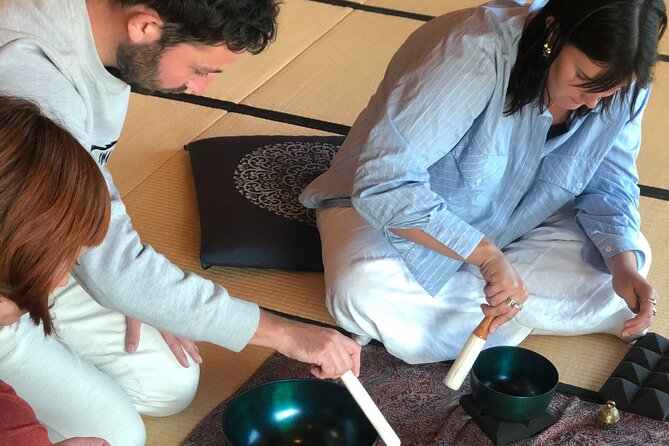
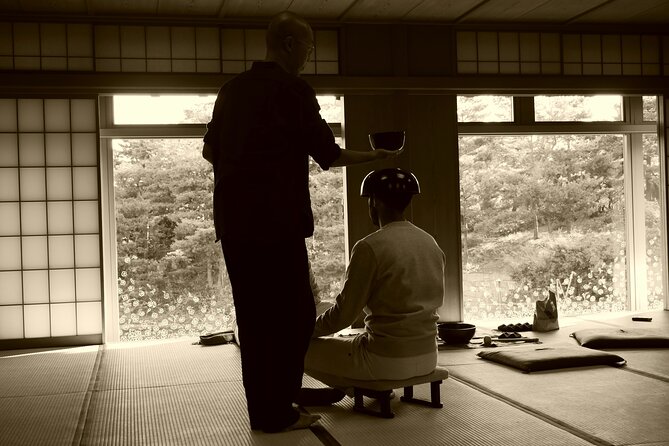
I like two things in particular: the session is private, so you share it only with your own party, and Junichiro uses a handmade Japanese instrument called the Singing Ring. The bowls may also be placed on your body, making the sound a physical sensation as well as something you hear.
One thing to weigh: this is a short, still, indoor activity, not a sightseeing tour. If lying quietly with unfamiliar sounds does not appeal to you, the hour may feel long. The traditional tatami room is also at a separate venue, so check your booking guidance if you choose that option.
- A full hour of sound: The guided session lasts 60 minutes, within an experience listed at about 1 hour 20 minutes.
- Private by design: The standard session is for up to two people, with no one else added after your time is confirmed.
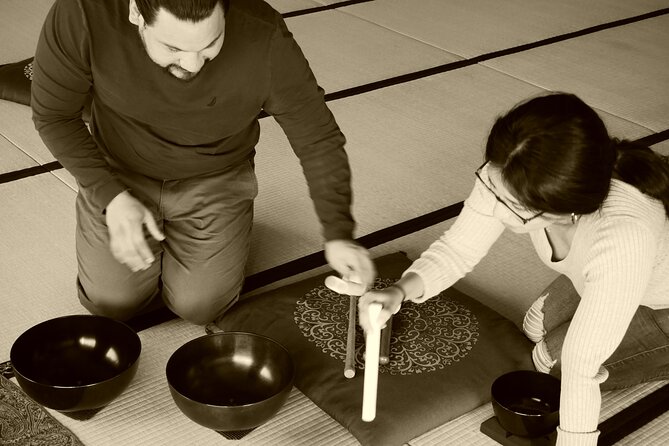
- Japanese-made instrument: The Singing Ring is crafted by Japanese artisans, and the session also uses resonant bowls.
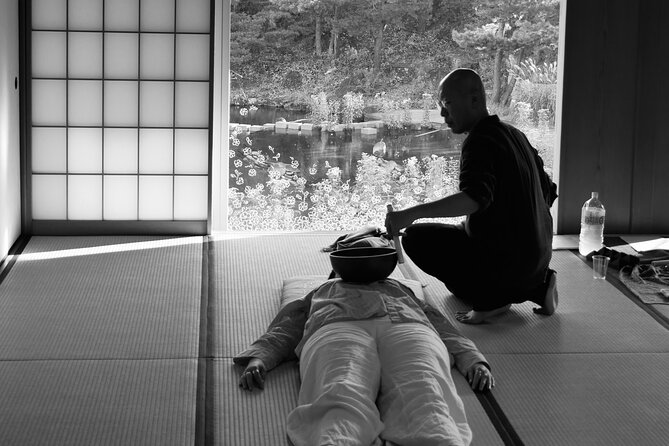
- Feel as well as hear the sound: Junichiro may place a bowl on your body so you can notice its vibration.
- A welcoming introduction: Junichiro explains what to expect, which helps if this is your first sound bath.
- A separate tatami option: The traditional room is at another location, and you need to follow the directions sent after booking.
A quiet counterpoint to Kyoto’s sightseeing
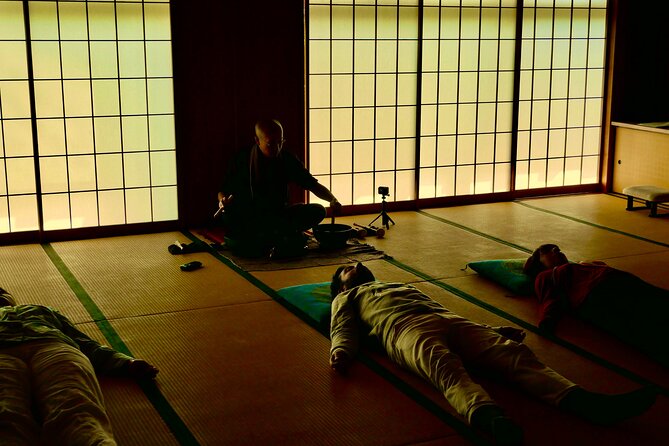
A sound bath is built around listening and rest rather than movement or conversation. You lie down, close your eyes if you wish, and let Junichiro play. The description of the session calls this a kind of Zen experience while lying down, a useful image for setting expectations: you are here to slow down, not to learn a complex practice or cover a list of sights.
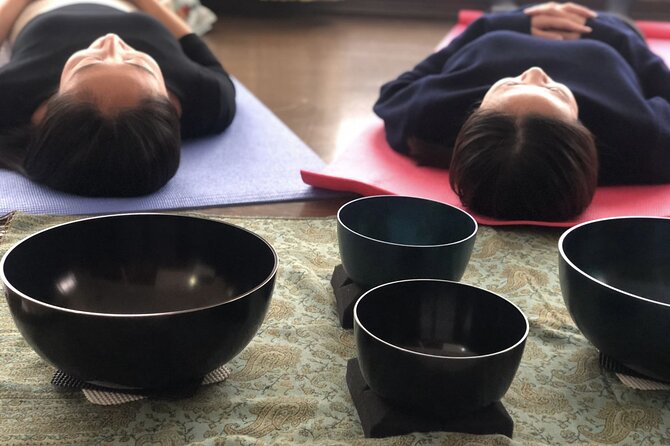
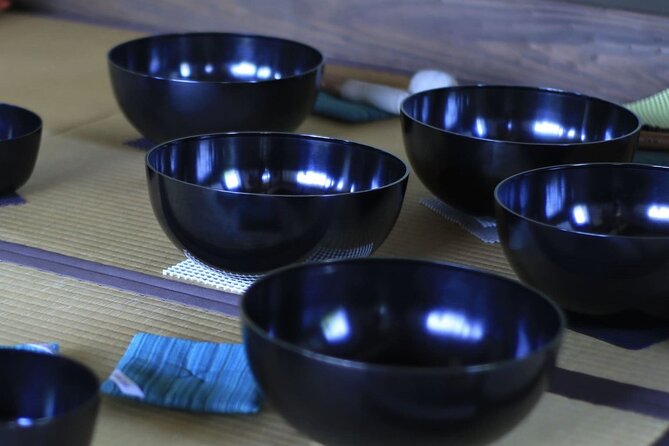
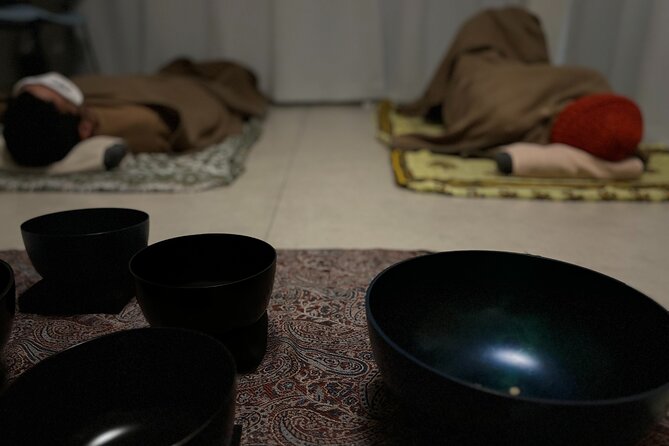
The instrument at the heart of the session is the Singing Ring, a harmonic instrument made by Japanese artisans. The sound is also described through copper bowls, whose tones and vibrations form a central part of the experience. This blend of crafted instrument and close, resonant sound gives the session a specifically Japanese focus, rather than the feel of a generic relaxation appointment.
It is also a personal activity. Junichiro plays near you, and at points he may place a bowl on your body. That contact lets you feel the vibration directly. If you have never tried a sound bath, you do not need to know how to meditate or what to do with your hands. Your part is simple: lie down and listen.
What happens during the 60-minute session
The sound portion lasts 60 minutes. The overall activity is listed at approximately 1 hour 20 minutes, so leave room in your day for more than the session itself. The available details do not set out a minute-by-minute schedule, but the basic format is clear: you arrive, settle in, and let Junichiro lead the sound bath.
A previous participant described a heated mat, blanket, and eye mask. These details give you a sense of the setup, though you should not assume every item is guaranteed unless the provider confirms it. The aim is to make lying still comfortable while you listen.
Junichiro begins by playing beside you. As the session unfolds, the sound moves close enough to feel, with bowls placed on the body at certain moments. The shift from hearing a tone in the room to sensing its vibration against you is one of the experience’s most unusual elements. If you are curious about how sound baths work, that physical dimension can make the session more engaging than simply listening to music.
You do not need to arrive with a particular spiritual outlook. Some people may find the practice meditative; others may simply appreciate a calm hour and a break from walking around Kyoto. The experience is presented as relaxation and stress relief, but those effects are personal. Treat it as a chance to rest, not as a promised remedy for anxiety or a medical treatment.
More private tours in Kyoto:
- Fushimi Inari Hidden Hiking Tour (Private Option Available)
★ 5.0 · 1,750 reviews - Private Kyoto Tour with a Local, Highlights & Hidden Gems, Personalised
★ 5.0 · 1,543 reviews - Kyoto 6hr Private Tour with Government-Licensed Guide
★ 5.0 · 1,369 reviews
Junichiro’s guidance makes it easier to settle in
For a first sound bath, the unknown can be the biggest hurdle. You may wonder what the instruments will sound like, whether you are meant to sit or lie down, or whether you need to follow a technique. Junichiro explains the session and helps put newcomers at ease, according to the information available about the experience.
That introduction matters. A good guide can turn an unfamiliar activity into a simple one: listen, notice what you feel, and let the sounds come and go. Junichiro is described as eager to share his craft and explain the instruments, so you can ask questions rather than treating the session as a mysterious ritual.
The experience has also worked for people who came with a family member who was unsure about trying something new. That makes it a reasonable choice for a pair with different levels of enthusiasm, provided both are comfortable lying quietly for an hour. It is not designed as a lively group activity, and conversation is not the focus once the session begins.
The private format suits one person or a pair
The standard session accommodates up to two people. Once your booking is confirmed, no other party is added to your time slot. That privacy is a real part of the value: you can relax without strangers sharing the room, and you can attend with a companion without turning the activity into a group event.
If you are traveling alone, you still receive a private session. With two people, you can share the quiet without needing to match each other’s expectations. One of you may focus on the tones while the other pays more attention to the vibrations. There is no requirement to have the same response.
A traditional tatami room is offered as an optional setting. It is at a separate venue, not the standard meeting address, and the provider says the location cannot be set on the map shown with that option. Follow the directions in the guidance message after booking. The tatami room may be able to accommodate three people, but contact the provider after booking if you want to ask about that arrangement. Do not assume the standard two-person limit changes automatically.
Finding the meeting point and choosing the room
The stated meeting point is Little Granmy at 85-10-203 Koinarichō, Shimogyo Ward, Kyoto, postal code 600-8208. The activity ends back at the meeting point. It is near public transportation, which makes it practical to fit into a day in the city, though you should check your route before setting out.
One person who attended said Junichiro met them at a nearby FamilyMart so they would not get lost. That is a helpful example, not a guaranteed meeting arrangement. If you are uncertain about the address or the entrance, contact the provider using the booking messages rather than relying on a store meeting point.
Be especially careful if you select the tatami room. It is at a different venue, and its location information arrives separately. Since the room itself is part of the setting, it may appeal if you want a traditional Japanese atmosphere, but the extra location step calls for a little more planning.
More Kyoto tours in Kyoto:
- PERFECT KYOTO 1-Day Bus Tour
★ 5.0 · 13,518 reviews - Kyoto: Fushimi Inari, Kinkakuji, Bamboo Grove 1 Day Bus Tour
★ 4.8 · 4,316 reviews - Kyoto: Tea Ceremony in a Traditional Tea House in Kiyomizu
★ 4.9 · 3,519 reviews - Kyoto Geisha Walking Tour: Gion District & Hidden Gems
★ 4.7 · 3,273 reviews
Is $97.73 worth it for an hour of quiet?
At $97.73 per person, this is not a low-cost way to fill an hour. You are paying for a private session, Junichiro’s guidance, and the use of a distinctive Japanese instrument, rather than for a large group class or a sightseeing route. For a couple, the price adds up quickly, so consider how much you value privacy and a guided, hands-on sound experience.
The handmade Singing Ring and the chance to feel the bowls’ vibrations are the strongest reasons to choose this over simply listening to relaxing music. The format is also more personal than a session shared with a roomful of people. If you have tried sound baths elsewhere, the Japanese instruments and body-contact element may make this one feel different.
On the other hand, you should not expect a packed program. There is no sightseeing component, and the main activity is lying down and listening. If you are looking for a broad introduction to Japanese culture, a temple visit or craft workshop may give you more variety for the cost. If what you need is a quiet interlude and you are curious about sound, the private format may justify the price.
The experience is booked, on average, 38 days ahead. Confirmation is sent within 48 hours and depends on availability. Free cancellation is available up to 24 hours before the start time; cancellations or changes made later are not accepted, and cut-off times follow Kyoto local time.
Who will get the most from this Kyoto sound bath
I would consider this for a solo visitor who wants quiet after busy sightseeing, or for two people who are open to trying a different kind of relaxation together. It can also suit a first-timer: Junichiro explains the session, and you do not need prior experience with sound baths.
It is less suited to anyone who wants to stay active, talk throughout an activity, or see several places in a short time. You should also be comfortable lying still and experiencing sounds at close range. If you have concerns about a particular sound or having an instrument placed on your body, ask the provider before booking rather than assuming every part can be adjusted.
Should you book it?
Book this if you want a genuinely quiet hour, value a private setting, and are curious about the Singing Ring and the sensation of bowls vibrating on your body. Junichiro’s clear explanations and the one-to-one format make it approachable even if you have never tried a sound bath.
Skip it if you would rather spend the money on a more active or varied outing. And if you choose the tatami room, read the separate location instructions closely. For the right person, this is a calm, distinctive break from Kyoto’s sightseeing rhythm; for everyone else, an hour lying still may be a hard sell.
FAQ
How long does the experience last?
The activity is approximately 1 hour 20 minutes in total. The sound bath session itself lasts 60 minutes.
How much does it cost?
The listed price is $97.73 per person.
Is the session private?
Yes. It is a private activity for your party only. The standard session accommodates up to two people, and no other party is added after your time is confirmed.
Where does the session begin and end?
The stated meeting point is Little Granmy, 85-10-203 Koinarichō, Shimogyo Ward, Kyoto, postal code 600-8208. The activity ends back at the meeting point.
Is the traditional tatami room at the same address?
No. The optional Traditional Tatami Room is at a separate venue. Follow the location guidance sent after booking, since the venue cannot be set on the map shown with that option.
Can three people book the tatami room?
The provider may be able to accommodate up to three people in the optional tatami room. Contact the provider after making your booking to ask.
How soon will I receive booking confirmation?
Confirmation is sent within 48 hours, subject to availability. The experience is booked, on average, 38 days in advance.
What is the cancellation policy?
You can cancel up to 24 hours before the start time for a full refund. Cancellations or changes made less than 24 hours before the start time are not accepted.
Newly added in Kyoto
- Uji: Private immersion into Kyoto’s tea and reglious culture★ 5.0 · 17 reviews
- Whisk Your Own Matcha: A Zen Matcha Experience at Temple★ 3.6 · 7 reviews
- Kyoto tea town for matcha lovers★ 5.0 · 16 reviews
- Treasures of Kyoto: Gion & historical Walking Tour★ 5.0 · 6 reviews
- Kyoto Matcha Green Tea Tour★ 4.5 · 23 reviews
- Uji and Wazuka Matcha Farm Half Day Private Guided Tour★ 5.0 · 21 reviews
- Uji Tea Ceremony and UNESCO Heritage Walking Tour★ 5.0 · 20 reviews
- Utilising upcycled Matcha! Creating matcha incense (Uji, Kyoto)★ 5.0 · 6 reviews
Kyoto Tours, compared.

Fushimi Inari, Kinkakuji, Bamboo Grove 1 Day Bus Tour
Read our review →
Tea Ceremony in a Traditional Tea House in Kiyomizu
Read our review →
Kyoto Geisha Walking Tour: Gion District & Hidden Gems
Read our review →
Gion Magical Night Walking Tour with Geisha Trivia
Read our review →