Reviewed · KYOTO TOURS
Private Kyoto with Exceptional Guide Tailored to Your Needs
Kyoto has more temples and shrines than you can sensibly fit into one day. This private tour gives you a say in what makes the cut, whether you want red torii gates, Zen gardens, a walk through Gion, or time to shop for a kimono.
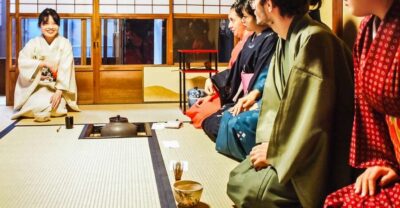
I like two things in particular: you choose the route and pace, and a local guide can help with practical requests as well as history. In one family’s day with Yumiko-san, that meant finding yukata, tracking down a Japanese Giants baseball cap, and taking part in a tea ceremony.
The main consideration is that a custom tour still has limits: you can plan for two or three places in four hours, or four or five in eight. Entrance fees, public transport, and lunch are extra, so your total cost may be higher than the per-person tour price.
At a glance
- Four or eight hours: Plan for two or three places on the shorter tour, or four or five on the full-day version.
- Your interests set the route: Temples, shrines, shopping, food, culture, or another specific interest can shape the day.
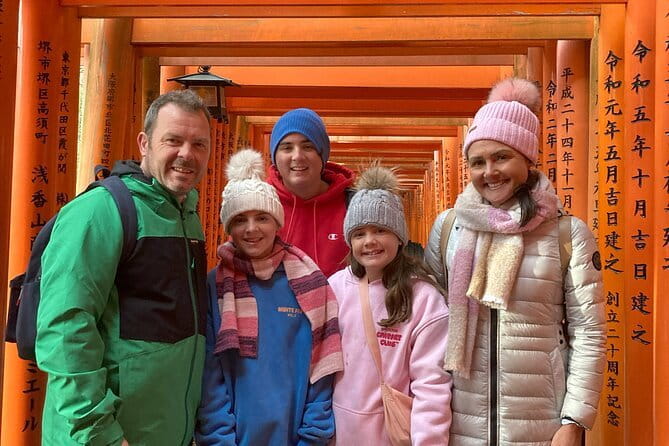
- Fushimi Inari’s red gates: The shrine route climbs Mt. Inari through thousands of torii gates.
- A guide who can help with errands: Yumiko-san helped a family find yukata and a Giants baseball cap, then joined them for a tea ceremony.
- Walking or private car: You can use public transport or choose the private-car option. Transport costs are not included.
- Plan for extras: Lunch, entry fees, and public transport are separate costs.
A Kyoto day built around your priorities
A private guide can change the feel of a Kyoto visit. Instead of racing through a fixed list, you can choose a few places that fit your interests and ask your guide to help shape the route. The tour is for your group alone, so you do not have to negotiate the pace with strangers.
Before the day, think about what you most want from Kyoto. Are you drawn to temples and gardens, or would you rather spend time shopping and learning about daily customs? A focused list helps your guide make useful suggestions and keeps a four-hour visit from turning into a hurried checklist.
The tour offers two lengths. Four hours is best for two or three stops, while eight hours allows four or five. Those are useful limits to respect: Kyoto’s sights are spread across the city, and a long list can mean more time in transit than at the places you came to see.
More private tours in Kyoto:
- Fushimi Inari Hidden Hiking Tour (Private Option Available)
★ 5.0 · 1,750 reviews - Private Kyoto Tour with a Local, Highlights & Hidden Gems, Personalised
★ 5.0 · 1,543 reviews - Kyoto 6hr Private Tour with Government-Licensed Guide
★ 5.0 · 1,369 reviews
Choose between a walk and a private car
You can explore on foot and use Kyoto’s public transportation, or select a private car for a more direct trip between stops. The car is included only if you choose that option; public transport is not included in the tour price.
Walking and transit can suit a day focused on nearby sights or neighborhoods. A private car may make more sense if your selected places are farther apart, or if you want to reduce the amount of walking between them. Either way, the tour expects a moderate level of physical fitness, and the route’s actual walking will depend on your choices.
Pickup is offered, but confirm the details when arranging the tour. You will need to share an email address or download WhatsApp so your guide can contact you. The average booking is made about 50 days ahead, which is a sensible planning target if you have a particular date in mind.
Start with Fushimi Inari’s red torii gates
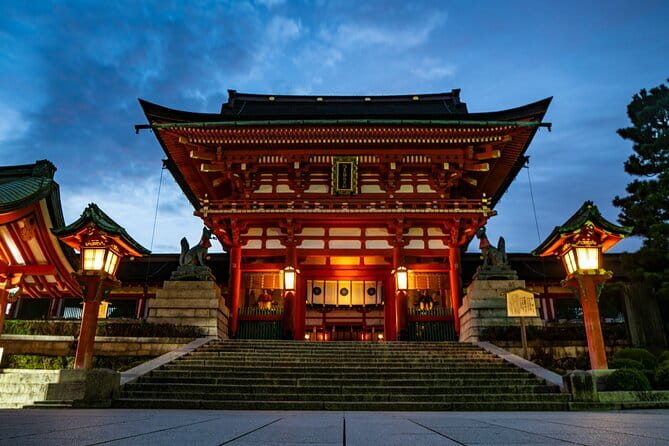
Fushimi Inari is one of the most striking choices on the menu. Its route passes through thousands of red torii gates, climbing from the shrine at the base toward Mt. Inari. The complex is described as the center of about 30,000 Inari shrines across Japan.
You can donate a torii gate, though that is an optional detail, not a required part of the visit. The key planning question is how much time you want to spend walking the route. Its uphill path makes it a more active choice than a short temple visit, so mention your pace and fitness level to the guide when planning.
Compare Kyoto’s temples and gardens
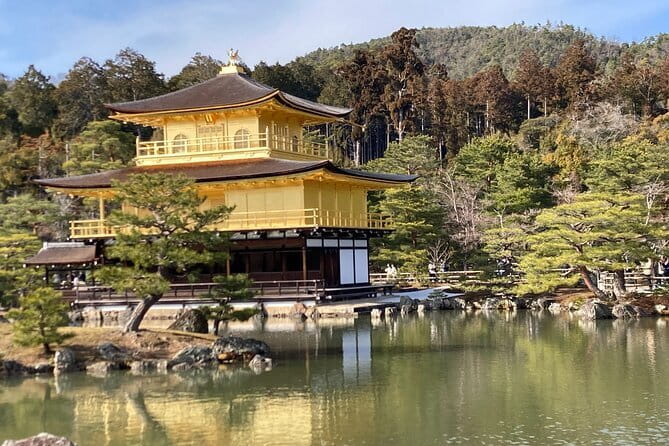
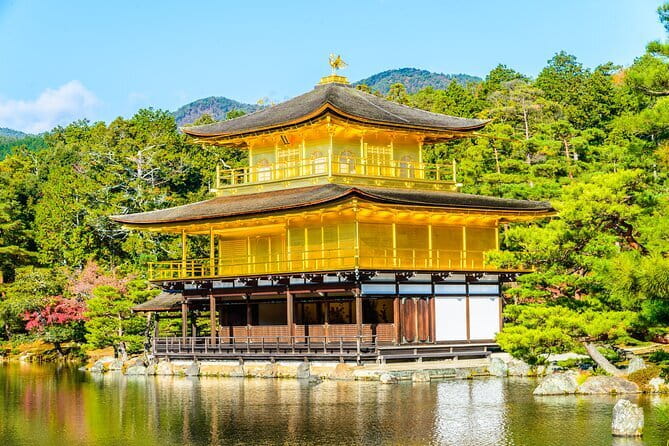
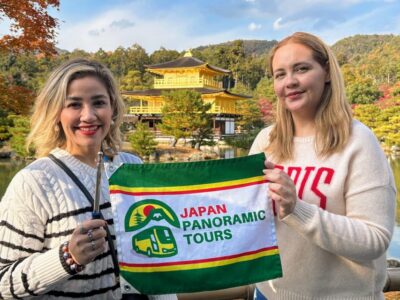
The Golden Pavilion is a natural choice if you want to see one of Japan’s best-known temple buildings. Its gold exterior gives it an unmistakable presence, and the complex holds a container of Buddha’s ashes and bones. It is a popular stop, so your guide can help you decide how it fits with the rest of your day.
Another temple offers a view into the old military government, with a complex originally built to connect the government in Edo, now Tokyo, with the Imperial Palace in Kyoto. Its decorated interiors give the site a different emphasis from a temple garden: here, the story is political as well as religious.
For a quieter change of pace, consider the temple garden with a pond that has been admired for about 600 years. It was a place where Zen monks trained, and its calm design may suit you if you want a break from Kyoto’s more famous sights. The garden’s value is not just in a photograph; allow time to look around rather than treating it as a quick stop.
A temple in eastern Kyoto has served local worshippers for about 1,200 years, including people praying to Kannon Bodhisattva for deceased loved ones. Its approach is popular, making it a good choice if you want to connect a temple visit with the streets leading up to it.
One temple was designed with moon viewing in mind, particularly for the 15th day of the eighth month in the old calendar. Night visits are not allowed, so the point is to imagine the setting and its original purpose rather than expect to see a moonlit ceremony.
A garden famed for its 15 stones invites a slower kind of visit. You can look at the arrangement and consider what it suggests to you, rather than expecting a single explanation to settle the question. That open-ended quality may appeal if you enjoy reflecting on a place; if you prefer a clear historical narrative, ask your guide to put the garden in context.
Other options add different layers. One temple holds many statues of Kannon and guardian figures with roots in ancient Indian deities, and its grounds have also hosted Japanese archery competitions. Another requires advance reservations and is known for a carefully designed garden. A Zen temple founded about 700 years ago combines old buildings with modern garden design, while another temple’s main Buddha statue has survived repeated fires over roughly 900 years.
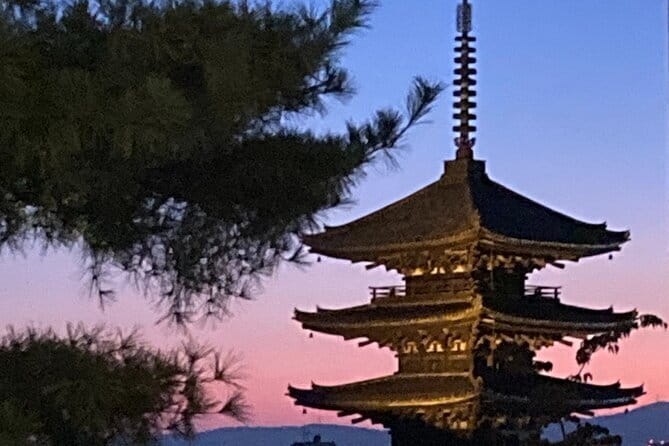
A further temple, founded by emperors about 1,100 years ago, has lost buildings to both natural fires and wars. Some structures were moved there from other sites, including former Imperial Palace buildings. These are worthwhile options if you enjoy how Kyoto’s religious and political history overlap, but the descriptions alone do not tell you which sites will best match your interests. Ask the guide to recommend a set of stops rather than trying to squeeze in every temple.
More guided departures in Kyoto:
- Kyoto Early Morning Tour with English-Speaking Guide
★ 5.0 · 1,427 reviews - Kyoto: Early Morning Tour with English-Speaking Guide
★ 4.9 · 1,128 reviews - Kyoto: Nijo-jo Castle and Ninomaru Palace Guided Tour
★ 4.7 · 1,020 reviews - Kyoto: Izakaya Bars Guided Walking Tour
★ 4.9 · 815 reviews
Make room for Arashiyama or Gion
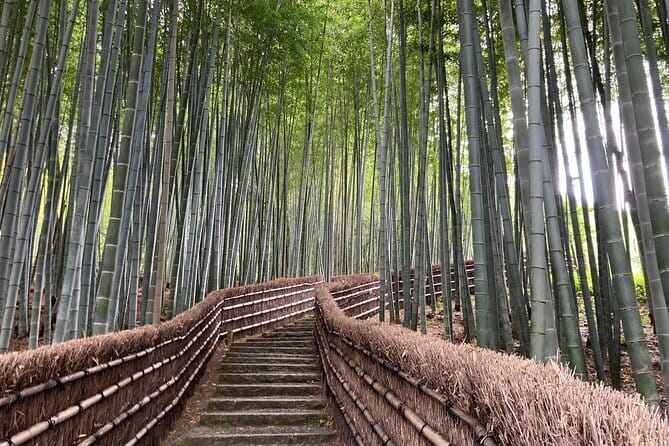
Arashiyama offers a change from temple courtyards and city streets. The area includes Togetsu-kyo Bridge over the Katsura River and bamboo trails, both known as photogenic spots. It is a good pick if scenery and photographs matter to you, though the tour’s time limit means you should decide how much of the area you want to see.
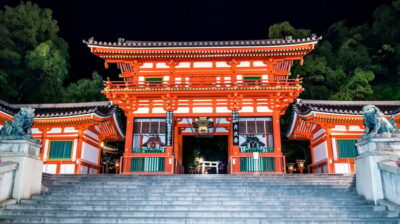
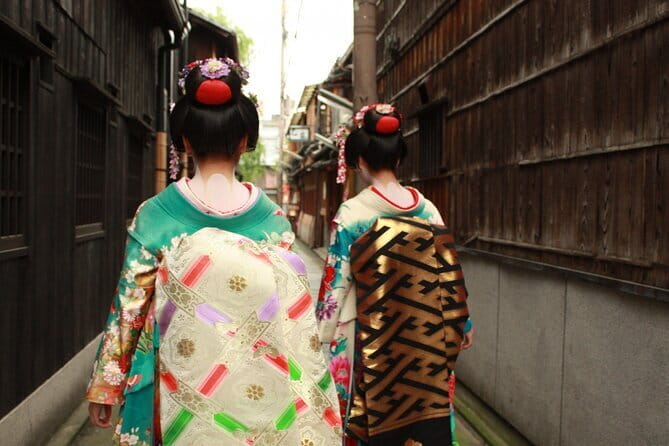
Gion gives you another kind of Kyoto. The suggested route includes Tatsumi Daimyo-jin Shrine and Tatsumi Bridge over the Shirakawa River, both popular photo locations in the entertainment district. If you want to see neighborhood streets as well as formal religious sites, Gion can bring variety to your day.
The itinerary’s choices are not all temples, and that is part of the appeal. You can ask for a route with shopping, Japanese cuisine, local culture, or another particular interest. The guide can also offer advice for the rest of your stay, which is useful if this is your first day in Kyoto and you want help deciding what to do next.
Put the guide to work on personal interests
A private tour is especially useful when your wish list is specific. One family’s full-day outing included searching for yukata, looking for a Japanese Giants baseball cap, and taking part in a tea ceremony. Yumiko-san helped them with those requests, and the tour’s exchange afterward described the tea ceremony as a highlight.
That example is a good reminder to be concrete. If you want to shop, name the kind of item you hope to find. If food, culture, or a certain historical period matters to you, say so before the tour. The guide cannot promise that every request will fit, but a clear brief gives the day a better chance of feeling personal rather than generic.
You can also ask for recommendations on future plans. That guidance is included, and it can help you make better use of the days that follow. A guide who knows what you have already seen can suggest a sensible next step instead of simply repeating the most famous stops.
What the price does and does not cover
The listed price is $149.85 per person. Since the activity is private, only your own group joins, and the cost can represent good value if you want a guide’s time focused on your interests. The exact value depends on your group size, which is not specified here, and on whether you choose the car option.
The price includes an English-speaking guide and bottled water. A private car is included only if you select that option. Lunch, public transportation, and entrance fees are not included; if you ask the guide to accompany you into a paid facility, you also pay the guide’s entrance fee.
Carry Japanese yen in cash. Some shops and restaurants accept cash only, so you may need it for purchases or meals. Lunch is also paid separately, including the guide’s portion, so allow for that when working out your day’s budget.
Booking confirmation is subject to availability and is provided within 48 hours. The experience requires good weather; if poor weather causes cancellation, you can choose a different date or receive a full refund. You can cancel for a full refund up to 24 hours before the start time.
Who should book this private Kyoto tour?
I would consider this tour if you want a guide who can adapt the day to your group, especially if you have a mix of sightseeing and personal errands in mind. It also suits visitors who want help choosing among Kyoto’s many temples, or who would rather discuss a few meaningful places than follow a fixed route.
Families, couples, and small groups with shared interests may get the most from the private format. The day with Yumiko-san shows how well the approach can work when shopping and a tea ceremony matter as much as the major sights. If you prefer a set itinerary, want all admission and transport costs bundled into one price, or hope to see a long list of places in a short time, this may be less suitable.
Before booking, choose your top two or three priorities for a half-day or four or five for a full day. Ask the guide to recommend the order, clarify pickup and transport, and confirm any reservation needs for specific gardens. That small bit of planning can turn a long list into a day that feels like your Kyoto.
FAQ
How long is the tour?
You can choose a half-day tour of about four hours or a full-day tour of about eight hours.
How many places can I visit?
The suggested plan is two or three places in four hours, or four or five places in eight hours. You can ask your guide to recommend stops.
Is the tour private?
Yes. Only your group participates.
Is a private car included?
A private car is included if you choose the private-car option. Public transportation is not included.
What costs extra?
Lunch, entrance fees, and public transportation are not included. If your guide accompanies you into a facility with an entrance fee, you must pay the guide’s fee as well.
What happens if the weather is poor or I need to cancel?
If poor weather leads to cancellation, you can choose another date or receive a full refund. You can cancel for a full refund up to 24 hours before the tour starts.
Newly added in Kyoto
- Uji: Private immersion into Kyoto’s tea and reglious culture★ 5.0 · 17 reviews
- Whisk Your Own Matcha: A Zen Matcha Experience at Temple★ 3.6 · 7 reviews
- Kyoto tea town for matcha lovers★ 5.0 · 16 reviews
- Treasures of Kyoto: Gion & historical Walking Tour★ 5.0 · 6 reviews
- Kyoto Matcha Green Tea Tour★ 4.5 · 23 reviews
- Uji and Wazuka Matcha Farm Half Day Private Guided Tour★ 5.0 · 21 reviews
- Uji Tea Ceremony and UNESCO Heritage Walking Tour★ 5.0 · 20 reviews
- Utilising upcycled Matcha! Creating matcha incense (Uji, Kyoto)★ 5.0 · 6 reviews
Kyoto Tours, compared.

Fushimi Inari, Kinkakuji, Bamboo Grove 1 Day Bus Tour
Read our review →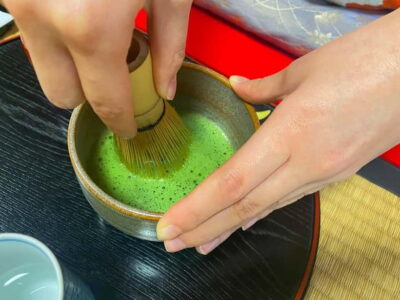
Tea Ceremony in a Traditional Tea House in Kiyomizu
Read our review →
Kyoto Geisha Walking Tour: Gion District & Hidden Gems
Read our review →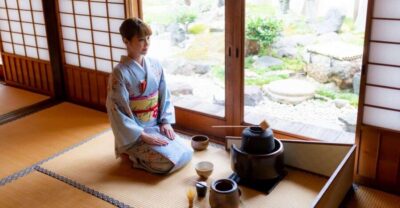
Gion Magical Night Walking Tour with Geisha Trivia
Read our review →