Reviewed · KYOTO TOURS
Sekka Cotton Furoshiki Class
The memorable part of this Kyoto class is that you make a useful object, not just a craft to admire behind glass. With an instructor’s help, you fold a cotton furoshiki, press it between boards, and dye it using the sekka shibori method. The cloth is yours to take home.
I like two things especially: the private lesson gives your group personal instruction, and the wait while your cloth dries becomes a chance to see the museum’s textile art and tools. Together, the hands-on work and exhibition give you a practical introduction to shibori.
One consideration: the dyeing steps are straightforward and fairly standardized, so this is a short introductory class, not an advanced workshop. If you want a long, open-ended lesson, you may find it too brief. If you want a manageable activity with a handmade souvenir, it makes good use of an hour.
At a glance
- Make an 86-by-89-centimeter furoshiki: Fold and dye a cotton wrapping cloth with the sekka shibori technique.
- Learn in a private session: The class is for your party, with an instructor guiding the process.
- See the museum while the cloth dries: Expect about 30 minutes of drying time, during which you can look at textile art, tools, and samples.
- Plan for about an hour: Classes usually take 30 to 60 minutes, and the drying interval gives the visit its two-part shape.
- Pay $43.35 per person: The price includes the class and a finished cloth to take home.
- Meet at Kyoto Shibori Museum: The activity begins and ends at 135-5 Shikiamichō, Nakagyo Ward.
A Kyoto craft you can take home
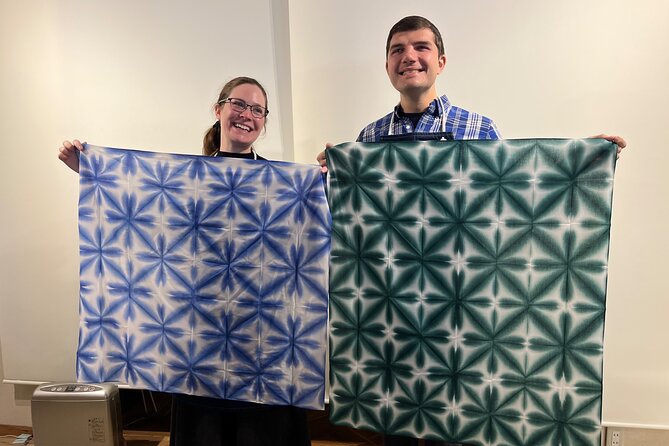
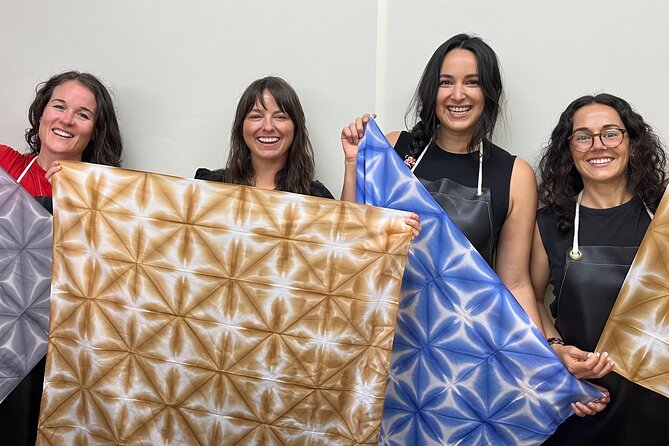
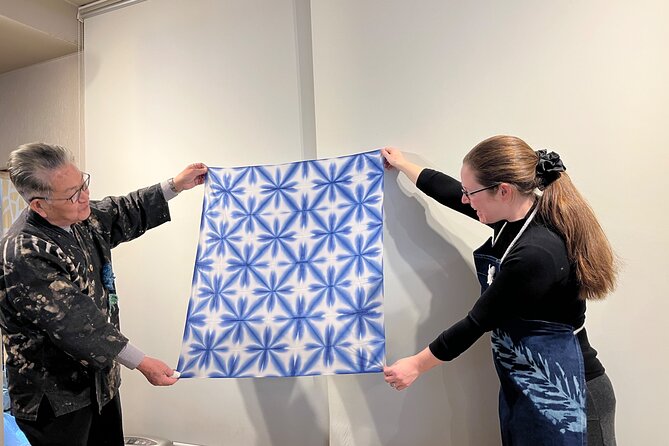
A furoshiki is a square wrapping cloth used to carry or wrap items. In this class, you make one of your own, measuring about 86 by 89 centimeters. That gives the project a practical side: your souvenir is a piece of fabric you can use, rather than something destined to sit on a shelf.
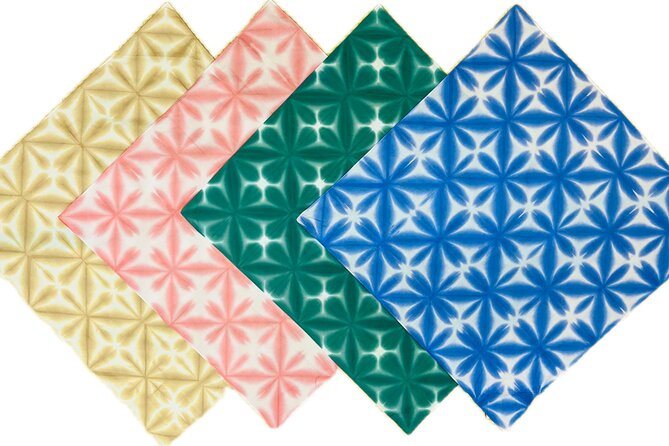
The technique is sekka shibori, a form of traditional Japanese resist dyeing. You choose a color, fold the cloth in a specific way, place it between two boards, then dye it. The folds and pressure help shape the pattern. Your instructor guides the steps, so you do the work yourself rather than simply watching a demonstration.
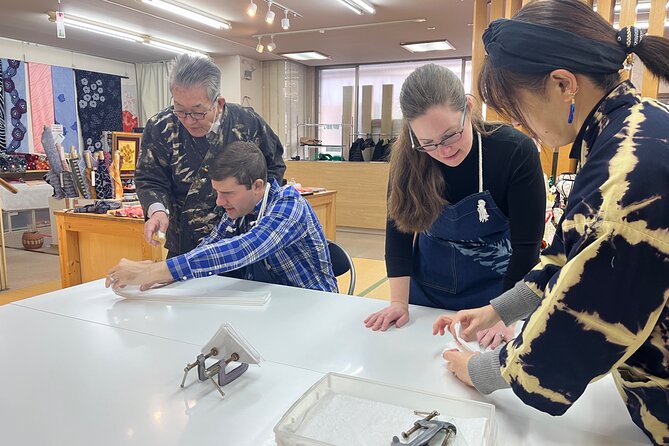
The class is private for your party. That can make a difference if you’re bringing children, have questions, or simply want the freedom to work at your own pace. It also means you won’t be sharing the lesson with a larger, unrelated group.
The teaching is direct and hands-on. The process is not described as technically demanding, and that is part of its appeal for a short visit: you can learn the basic sequence without needing prior craft skills. The trade-off is that experienced makers may want more room to experiment than the standard format provides.
Folding, pressing, and dyeing the cloth
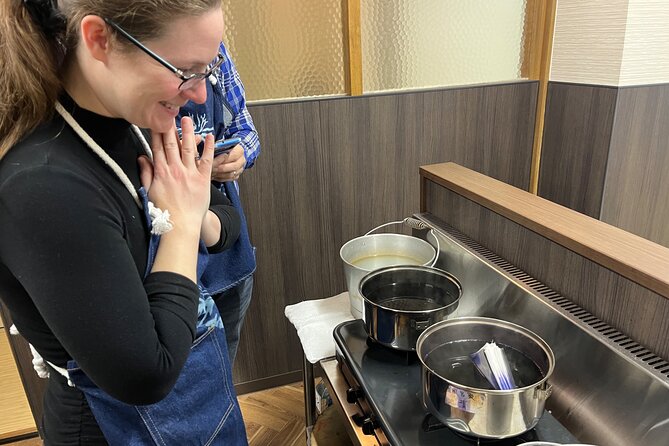
Your session begins at the Kyoto Shibori Museum. After choosing a color, you learn how to fold the fabric. The exact folds matter because they determine how the dye reaches the cloth. Next, you sandwich the folded fabric between two boards, then dye it.
The class is short, but the sequence gives you a useful sense of how a shibori pattern is made. You can see how a simple action, folding fabric and limiting where dye can reach, produces a design. That basic cause and effect is the heart of the activity.
The practical advantage is that you leave with the cloth you made. It is a tangible reminder of the class and, unlike a tiny trinket, it has a clear use as a wrapping cloth. The finished pattern will reflect the method and your chosen color, though you should not expect to design a complex, fully custom textile in a short session.
One thing to keep in mind: the hands-on part is described as easy and fairly standardized. If your idea of a craft class is hours of independent experimentation, this probably isn’t it. If you want a guided introduction and a finished piece without taking up half a day, the format fits well.
More Kyoto tours in Kyoto:
- PERFECT KYOTO 1-Day Bus Tour
★ 5.0 · 13,518 reviews - Kyoto: Fushimi Inari, Kinkakuji, Bamboo Grove 1 Day Bus Tour
★ 4.8 · 4,316 reviews - Kyoto: Tea Ceremony in a Traditional Tea House in Kiyomizu
★ 4.9 · 3,519 reviews
The museum visit during drying time
After dyeing, the cloth needs about 30 minutes to dry. Rather than leaving you to wait without a plan, the museum visit fills this interval. You can look at shibori art, tools, and samples on display, and learn more about the craft while your own piece dries.
This is a smart pairing. The class gives you a small, personal example of the process; the museum shows what textile artists can do with the same broad tradition at a far more ambitious scale. The exhibition includes striking fabric work, and one installation was described as a project made by 50 artisans over 50 years. That kind of scale helps put a quick workshop in perspective.
The museum also adds context that the dyeing steps alone cannot provide. A short lesson teaches you how to make a patterned cloth. Looking at the art and tools shows that shibori belongs to a larger textile practice, with many levels of skill and creative possibility.
Expect the museum portion to be a browse, not a separately timed guided tour with a published schedule. The available information describes time to see the exhibits while the cloth dries, but does not specify a formal tour length or format. If you enjoy looking closely at fabric and craft, this should make the pause feel worthwhile.
What the hour feels like
The class usually takes between 30 and 60 minutes. The cloth’s roughly 30-minute drying period is part of the visit, so it’s sensible to think of the experience as two linked parts: making your furoshiki and seeing the museum while it dries. Your overall visit is about an hour.
That timing works well between larger sightseeing stops. It offers a change of pace from temples, gardens, and crowded streets, without demanding a full afternoon. Since the activity starts and ends at the museum, you don’t need to plan for a separate drop-off point.
The museum is at 135-5 Shikiamichō in Kyoto’s Nakagyo Ward, and it is near public transportation. The activity uses a mobile ticket. Confirmation is provided when you book, and most people can participate.
The session is private, which is especially useful for families or small groups who want to share a hands-on activity. The setting is described as family-friendly, and the clear, simple process makes it accessible for beginners. If you’re visiting with teens, it can give everyone something to make and talk about together.
English-speaking staff have been noted at the museum, but the information does not promise that every instructor or session will be conducted in English. If language is important to your visit, check directly before booking rather than assuming.
Is $43.35 a fair price?
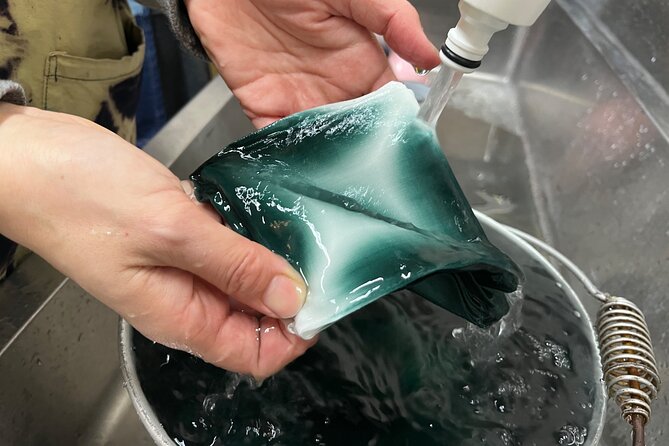
At $43.35 per person, you’re paying for more than the fabric and dye. The price covers a private lesson, guided instruction, the museum visit during drying time, and a finished cotton furoshiki. For an activity that takes about an hour, it is not the cheapest way to spend time in Kyoto, but it combines a workshop with an exhibition and a souvenir you made yourself.
The value depends on what you want from the hour. If you’re mainly looking for a low-cost museum visit, this may be more than you need. If you want to try a traditional craft with personal guidance and leave with a usable object, the price is easier to justify.
There is also a useful contrast between making and seeing. You start with a simple project, then view textiles that represent much greater artistic labor. That shift gives the class a little more substance than a stand-alone souvenir activity. You don’t just carry home a cloth; you have a better sense of the process behind it.
The museum shop sells shibori items, souvenirs, fabrics, and more. It may tempt you to browse after the class, so set a budget if you’re trying to keep shopping in check. The shop is an extra, not a reason to book, but it gives you a chance to look at other examples of the craft.
Same city, a different side of it:
- Kyoto Geisha Walking Tour: Gion District & Hidden Gems
★ 4.7 · 3,273 reviews - Kyoto: Tea Ceremony Ju-An at Jotokuji Temple
★ 4.9 · 3,207 reviews - Kyoto: Gion Magical Night Walking Tour with Geisha Trivia
★ 4.9 · 2,393 reviews - Kyoto: 45-Minute Tea Ceremony Lesson Experience
★ 4.3 · 2,378 reviews
What the class does best, and what it doesn’t
The strongest point is the pairing of hands-on learning with the museum. The dyeing itself is quick and accessible, while the exhibits add a wider view of shibori and textile making. Several visitors have also found the staff kind and helpful, which matters in a class where small instructions affect the final pattern.
It also works well as a family activity. The steps are manageable, and making a cloth together gives children and adults a shared project. The private format can make it easier to ask questions or take the process at your group’s pace.
The main limitation is depth. This is an introduction, not a long course in textile design. The process is structured and straightforward, so you should book it for a pleasant first encounter with shibori, not for advanced instruction or a free-form studio session.
The finished cloth is another reason to choose this activity, but keep expectations sensible. It is a handmade souvenir created within a short class, not a commissioned textile or a complex garment. Its value is in the experience of making it and in having a useful reminder of Kyoto.
Who should book the Sekka Cotton Furoshiki Class?
I’d recommend this class if you want to make something with your hands, enjoy traditional crafts, or need a compact activity to balance a day of sightseeing. It is also a good fit for families and small parties who prefer a private lesson over a larger group workshop.
It may suit you particularly well if you’re curious about Japanese textiles but don’t want to commit to a long course. The class lets you try the basic process, then see more elaborate work in the museum. You can come away with both a small skill and a cloth you made yourself.
I’d look elsewhere if you’re seeking an advanced workshop, a long period of independent experimentation, or a full day devoted to craft. The project is intentionally accessible and brief. For the right expectations, that is a strength; for someone hoping to master shibori in one sitting, it will feel limited.
The experience costs $43.35 per person, and it is often booked about 19 days ahead on average. Free cancellation is available up to 24 hours before the start time; cancellations made later are not refunded. If the idea of making a patterned cloth and seeing the museum appeals to you, booking ahead is sensible.
FAQ
How much does the class cost?
The listed price is $43.35 per person.
How long does the experience take?
Classes usually take 30 to 60 minutes. The cloth takes about 30 minutes to dry, and you can visit the museum during that time.
What will I make?
You’ll dye a cotton furoshiki, a wrapping cloth measuring about 86 by 89 centimeters.
What is sekka shibori?
It is the traditional resist-dyeing method taught in the class. You fold the fabric, place it between two boards, and dye it.
Is the class private?
Yes. The activity is private for your party.
Where does the class meet?
It meets at Kyoto Shibori Museum, 135-5 Shikiamichō, Nakagyo Ward, Kyoto, 604-8261, Japan. The activity ends at the same meeting point.
Can I visit the museum during the class?
Yes. While your cloth dries, you can browse the museum’s art, tools, and samples.
Is the activity near public transportation?
Yes. The meeting point is near public transportation.
What is the cancellation policy?
You can cancel at least 24 hours before the start time for a full refund. Cancellations made less than 24 hours before the start time are not refunded.
Newly added in Kyoto
- Uji: Private immersion into Kyoto’s tea and reglious culture★ 5.0 · 17 reviews
- Whisk Your Own Matcha: A Zen Matcha Experience at Temple★ 3.6 · 7 reviews
- Kyoto tea town for matcha lovers★ 5.0 · 16 reviews
- Treasures of Kyoto: Gion & historical Walking Tour★ 5.0 · 6 reviews
- Kyoto Matcha Green Tea Tour★ 4.5 · 23 reviews
- Uji and Wazuka Matcha Farm Half Day Private Guided Tour★ 5.0 · 21 reviews
- Uji Tea Ceremony and UNESCO Heritage Walking Tour★ 5.0 · 20 reviews
- Utilising upcycled Matcha! Creating matcha incense (Uji, Kyoto)★ 5.0 · 6 reviews
Kyoto Tours, compared.


Fushimi Inari, Kinkakuji, Bamboo Grove 1 Day Bus Tour
Read our review →
Tea Ceremony in a Traditional Tea House in Kiyomizu
Read our review →
Kyoto Geisha Walking Tour: Gion District & Hidden Gems
Read our review →
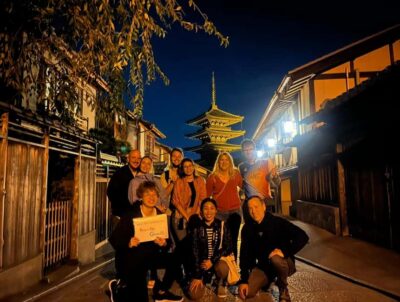
Gion Magical Night Walking Tour with Geisha Trivia
Read our review →