Reviewed · KYOTO TOURS
Shamisen Discovery in Kyoto 【Group】
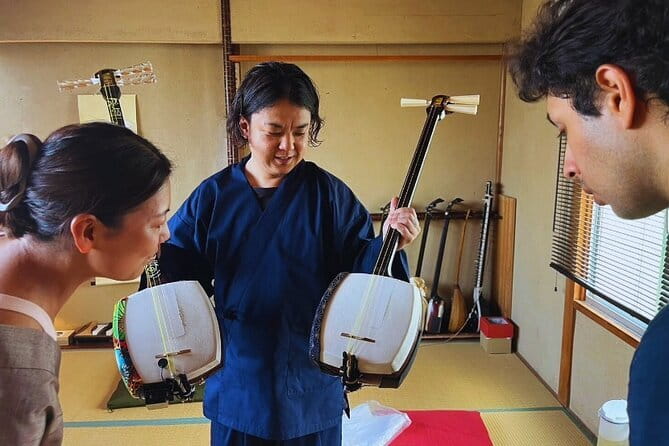
The shamisen is a three-stringed Japanese instrument played with a large plectrum called a bachi. At Shamisen Dojo, instructor Jack turns that unfamiliar shape into a hands-on lesson: you hear about the instrument’s background, learn how to hold it, then try its sharp, percussive sound yourself.
I like two things in particular: the group is capped at five, so you have room to ask questions and get individual guidance, and the hour includes time to play freely with Jack rather than only copy a set of exercises. Coffee or tea and a photo session are also included.
The trade-off is the clock. An hour is enough for an introduction, not a full course, and the lesson takes place in Murasakino, away from Kyoto’s central sightseeing areas. Plan your transport and treat this as a focused cultural activity, not a quick add-on between nearby temples.
What to know before you book
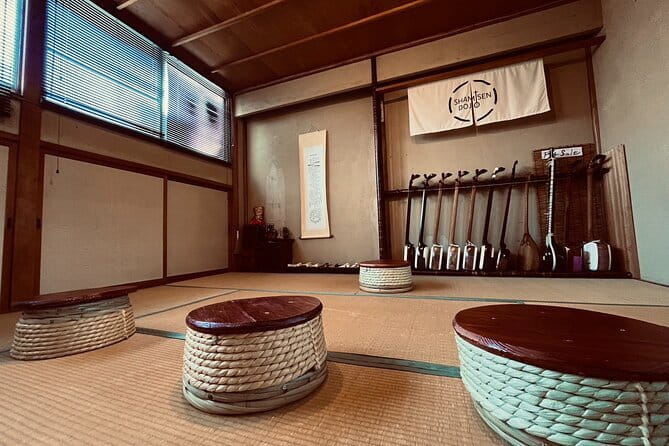
- A small class: No more than five people take part, giving you a better chance to receive help as you try unfamiliar hand positions and playing techniques.
- Jack teaches the lesson: He has more than 20 years of experience and introduces the shamisen’s history as well as its basic playing methods.
- You get an instrument to use: Shamisen rental is included, and left-handed players can request a lefty shamisen.
- The class moves from explanation to playing: Expect an introduction, a basic technique lesson, a scale, free playing and a group jam with Jack accompanying.
- Photos and a drink are part of the hour: There is a photo session with the shamisen, plus coffee or tea, including green tea.
- Allow time to reach the meeting point: The class starts and ends at Murasakino Nakakashiwanocho in Kyoto’s Kita Ward. Private transport is not included.
A different kind of Kyoto hour
Kyoto offers no shortage of temples, gardens and craft demonstrations. This lesson gives you something less passive: you handle a Japanese instrument and make a first attempt at playing it. If you have spent several days looking at historic objects behind glass, the chance to hear and feel an instrument up close can be a welcome change of pace.
The shamisen has three strings and a distinctive sound produced with the bachi. You do not need to know music theory to take part. The class is designed as an introduction, and the teacher covers basic posture and technique before asking you to play. A music background may help you pick up patterns quickly, but the experience is also intended for beginners.
Jack is the instructor named for the Shamisen Dojo sessions. His teaching experience matters in a short class: there is little time for a long lecture or a slow start. The course combines context with practice, so you can understand what you are holding and then put that knowledge to use.
More Kyoto tours in Kyoto:
- PERFECT KYOTO 1-Day Bus Tour
★ 5.0 · 13,518 reviews - Kyoto: Fushimi Inari, Kinkakuji, Bamboo Grove 1 Day Bus Tour
★ 4.8 · 4,316 reviews - Kyoto: Tea Ceremony in a Traditional Tea House in Kiyomizu
★ 4.9 · 3,519 reviews
The first part: history, instrument and form
The lesson begins with basic information about the shamisen, including its types and history. This introduction gives the instrument a place in Japanese musical culture before you start making sound. It is concise by design; the hour is not a complete survey of traditional music, but a practical entry point.
Then comes the photo session, where you can hold a shamisen you like. This is a pleasant chance to get a clear picture with the instrument, but it is also a useful first look at its size and feel. The shamisen is not simply a prop for a photograph: soon after, you will be learning how to hold it and use the bachi.
Proper form can feel awkward at first, especially if you have never played a string instrument. You will be asked to coordinate your hands in a new way and control the attack of the plectrum. Expect a first sound that may be more enthusiastic than graceful. That is part of the fun, and the small class gives Jack room to help correct your position.
Basic techniques, a scale and time to experiment
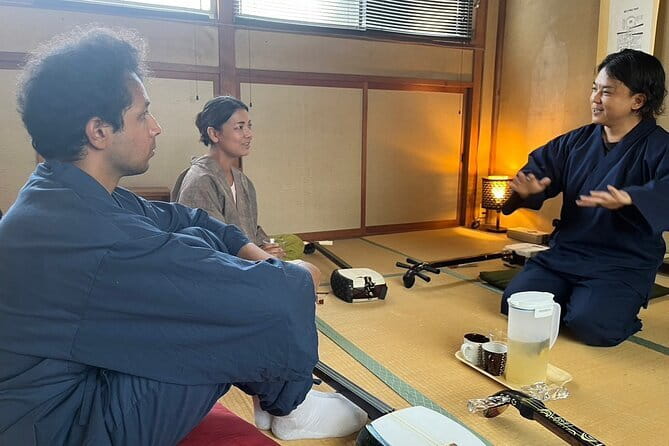
Once you have the basics of holding the instrument, the lesson turns to playing technique. You are introduced to one shamisen scale and shown how to make notes with the strings and plectrum. The aim is not to turn you into a performer in an hour. It is to give you enough structure to move from isolated sounds toward a simple musical idea.
The class also includes time to play freely. That matters because a lesson built only around instruction can leave beginners with little sense of what the instrument feels like in their own hands. Here, you get a chance to test what you have learned, follow your curiosity and ask for help while playing.
The course description refers to working with the five signature sounds of Japan. That adds a broader musical element to the session, though the specific sounds and how they are taught are not detailed in the available information. If this aspect interests you, ask Jack about it when you arrive.
The group jam is the payoff
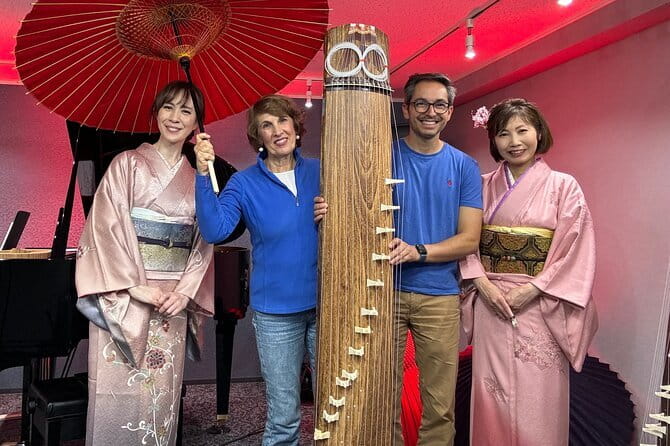
The final part of the lesson is a jam session. Jack provides accompaniment, while participants can make their own melodies. This is the most open-ended part of the hour: instead of just repeating a demonstrated technique, you get to hear how your notes sit alongside another player.
A jam may sound daunting if you have never played music, but the setting is a beginner class, not an audition. You can take a simple approach and build on the scale or techniques you have just learned. If you already play an instrument, you may find it easier to recognize musical patterns and respond to the accompaniment. Either way, the emphasis is on trying sounds, not producing a polished performance.
Some students have played through a song by the end of their session. That is an encouraging possibility, not a promise: everyone starts with different experience, and the class is only about 60 minutes. A fair goal is to leave having held and played a shamisen, learned a basic technique and taken part in making music.
Same city, a different side of it:
- Kyoto Geisha Walking Tour: Gion District & Hidden Gems
★ 4.7 · 3,273 reviews - Kyoto: Tea Ceremony Ju-An at Jotokuji Temple
★ 4.9 · 3,207 reviews - Kyoto: Gion Magical Night Walking Tour with Geisha Trivia
★ 4.9 · 2,393 reviews - Kyoto: 45-Minute Tea Ceremony Lesson Experience
★ 4.3 · 2,378 reviews
Jack’s teaching and the five-person limit
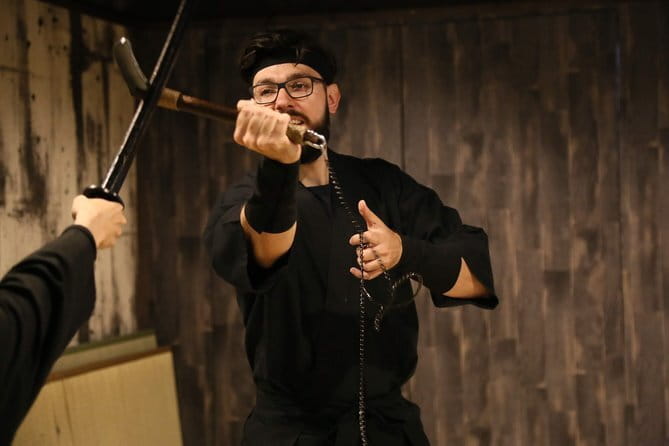
The maximum group size is five. That is small enough to make a real difference in a practical lesson, where a teacher may need to adjust your grip or show you a technique again. You are not watching a large demonstration from the back of a room; you have a chance to work directly with the instructor.
Jack has more than 20 years of experience, and the class is structured so he can guide you step by step. The personal attention is especially valuable for beginners, who may not know what to ask until they have tried playing. If you do have a music background, you can still benefit from the chance to ask about technique, scales and the instrument’s traditions.
A group setting also has a social advantage. You can take the class alone, but bringing a friend, partner or family member gives you someone to share the experience with. You will have a small audience for your first notes, but also company in the learning process. The group format means it is not a private lesson, so you will share the teacher’s attention.
What the $65.89 price covers
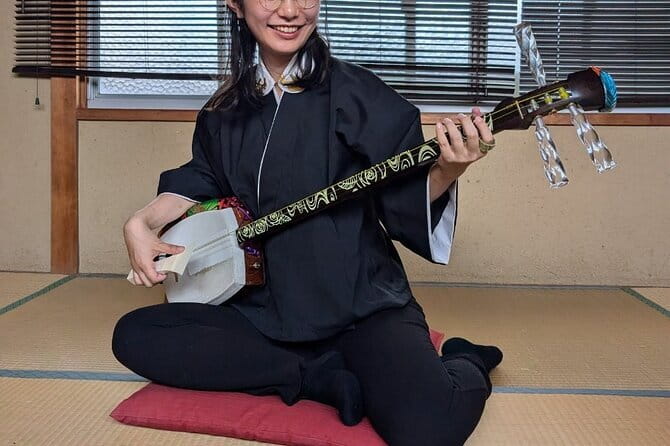
At $65.89 per person, the price includes the 60-minute course, shamisen rental, a photo session and coffee or tea. You are paying for a hands-on lesson with an experienced instructor, not just access to an instrument or a short demonstration. For someone curious about Japanese music, that combination gives the hour a clear purpose.
The value depends on what you want from Kyoto. If you are looking for a full musical education, this is too brief. If you want a guided first encounter with the shamisen, the rental means you do not need to own or bring an instrument, and the instructor’s accompaniment gives the free-playing portion some shape.
There is no private transportation included. Factor in the time and cost of getting to the meeting point in Kita Ward, particularly if your day is already planned around central Kyoto. The activity starts and ends at the same address, so you will need to arrange your onward plans from there.
The experience is booked, on average, 25 days ahead. That is useful to keep in mind if your Kyoto dates are fixed, especially since the class accepts no more than five people. Confirmation is provided at booking, and free cancellation is available up to 24 hours before the start time.
Getting to the Murasakino meeting point
The stated start and end point is Murasakino Nakakashiwanocho, Kita Ward, Kyoto, 603-8312. The activity is near public transportation, but private transport is not part of the package. Check the route from your accommodation and leave enough time to arrive without rushing; a late start would eat into a short lesson.
This location makes the class a purposeful stop rather than something to assume is next door to the city’s best-known sights. One student planned to visit Kinkaku-ji in the morning and then head to the Shamisen Dojo. That can work as a useful way to connect sightseeing in the area with the lesson, but check the distances and timing yourself before setting your schedule.
The session ends where it begins, which keeps the return simple. You will not need to coordinate a separate drop-off point, but you should still plan your next stop from the same Kita Ward address.
Who will get the most from this lesson
This class suits you if you are interested in Japanese music, enjoy hands-on cultural activities or simply want to try something outside the usual sightseeing routine. It is open to beginners, and the course is built around introductory information and basic techniques rather than prior shamisen experience.
Music lovers may find the lesson especially satisfying. People who play other instruments can bring that experience to the scale and jam, while those without a musical background can focus on learning how the shamisen is held and played. The instructor’s step-by-step teaching and the small group size make the format approachable for a range of skill levels.
It also works well for friends, couples and families with older children. A 17-year-old has taken part with a parent, but the information does not specify a minimum age, so check with the operator if you are booking for a child. Left-handed players are catered for with lefty shamisen available, an important practical detail for anyone who might otherwise wonder how the instrument will feel.
You may want to skip it if you need a long, in-depth course or prefer a private lesson. The class lasts about an hour and can include up to four other participants. If your interest is casual, that short format is a plus; if you hope to study shamisen seriously, consider it a first lesson rather than a complete introduction to the instrument’s full range.
Should you book Shamisen Discovery in Kyoto?
Book this if you want to do more than watch a cultural demonstration. For $65.89, you get a small-group lesson with Jack, a rented instrument, a chance to learn basic technique and a jam with accompaniment, plus a drink and photos. The strongest reasons to go are the hands-on format and the limited group size.
Think twice if your schedule is packed or the trip to Murasakino would make the hour feel rushed. And keep your expectations realistic: you are there to get a first feel for the shamisen, not master it. If that sounds like a good use of one Kyoto hour, reserve ahead and plan your route to the meeting point.
FAQ
How long is the Shamisen Discovery experience?
The lesson lasts approximately 60 minutes.
How much does the lesson cost?
The listed price is $65.89 per person.
How many people can join the group?
The activity has a maximum of five participants.
Who teaches the shamisen lesson?
The instructor is Jack, who has more than 20 years of experience.
Do I need to bring a shamisen?
No. Rental of a shamisen is included.
Can left-handed participants take part?
Yes. Left-handed shamisen are available.
What is included besides the lesson?
The price includes shamisen rental, a photo session with an instrument, and coffee or tea, including green tea.
Where does the lesson start and end?
It starts and ends at Murasakino Nakakashiwanocho, Kita Ward, Kyoto, 603-8312.
Is transportation included?
No. Private transportation is not included, though the meeting point is near public transportation.
What is the cancellation policy?
You can cancel at least 24 hours before the start time for a full refund. Cancellations or changes made less than 24 hours before the start time are not accepted for a refund or change.
Newly added in Kyoto
- Uji: Private immersion into Kyoto’s tea and reglious culture★ 5.0 · 17 reviews
- Whisk Your Own Matcha: A Zen Matcha Experience at Temple★ 3.6 · 7 reviews
- Kyoto tea town for matcha lovers★ 5.0 · 16 reviews
- Treasures of Kyoto: Gion & historical Walking Tour★ 5.0 · 6 reviews
- Kyoto Matcha Green Tea Tour★ 4.5 · 23 reviews
- Uji and Wazuka Matcha Farm Half Day Private Guided Tour★ 5.0 · 21 reviews
- Uji Tea Ceremony and UNESCO Heritage Walking Tour★ 5.0 · 20 reviews
- Utilising upcycled Matcha! Creating matcha incense (Uji, Kyoto)★ 5.0 · 6 reviews
Kyoto Tours, compared.

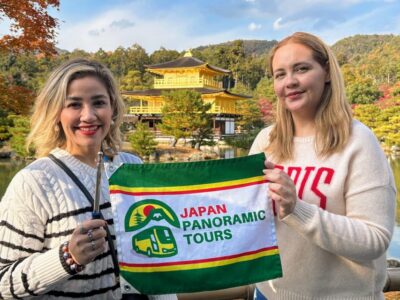
Fushimi Inari, Kinkakuji, Bamboo Grove 1 Day Bus Tour
Read our review →
Tea Ceremony in a Traditional Tea House in Kiyomizu
Read our review →
Kyoto Geisha Walking Tour: Gion District & Hidden Gems
Read our review →
Gion Magical Night Walking Tour with Geisha Trivia
Read our review →