
Reviewed · KYOTO EARLY MORNING TOURS
Traditional Japanese Washi Papermaking- Kyoto morning
Washi begins as a wet mixture of plant fibers, not a sheet waiting to be painted. In this Kyoto workshop, you help form the paper, arrange flowers or leaves in it, and make a finished piece to take home. It is a hands-on look at a traditional craft, not just a demonstration.
I like two things in particular: the small group, capped at four, gives you room to ask questions, and the choice of finished projects lets you make something useful or decorative. Instructors Hiro and Junko explain the steps in Japanese and English, and the class can suit children as well as adults.
The main thing to consider is the clock. The standard session lasts about an hour, so you will have time to make a souvenir, but not to linger over several projects. You can add an extra hour of unlimited paper making for an additional cost.
- Start with the paper itself: Make washi from raw materials, then see how your own sheet takes shape.
- Decorate with seasonal details: Add pressed flowers, cherry blossoms, maple leaves, or paper cut-outs.
- Choose your keepsake: Make postcards, a table mat, a wraparound lampshade, or a tapestry panel.
- Learn in a small class: The group is limited to four, with instruction in Japanese and English.
- Allow about an hour: Add an extra hour if you want more time to make gifts or try more paper.
- Find it near two subway stations: The studio is a short walk from Shijo, Karasuma, and Karasuma Oike stations.
From wet fibers to your own washi
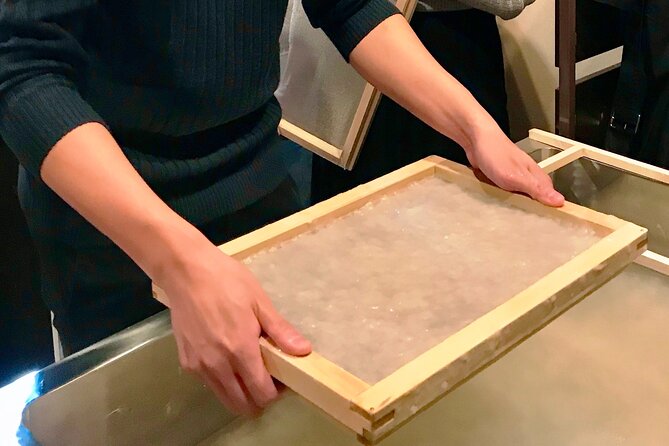
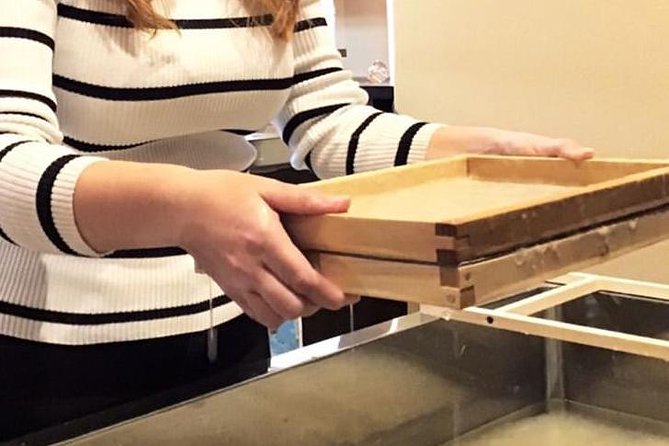
This class takes you through a compact version of the paper-making process, from raw material to a designed sheet. You do not just watch someone else make washi. Under the instructor’s guidance, you take part in forming the paper and then add your own decorative touches.
That distinction makes the hour worthwhile. You gain a feel for the sequence and care behind a traditional craft, rather than leaving with only a finished object and no idea how it came to be. The process is simplified to fit the class, but the hands-on steps still give you a better sense of the work involved.
Washi has a place in Japanese craft and daily life, and this workshop gives you a practical introduction without asking you to commit a full day. The class also includes historical context. A short educational video may be shown while paper is drying, offering a useful pause in the activity and a look at the wider process.
The instructors guide you through each step, so you do not need prior craft skills. That is a useful point if you are bringing children or simply do not think of yourself as artistic. You can focus on following directions and choosing a design, rather than worrying about getting every detail perfect.
Decorating with flowers, leaves, and cut-outs
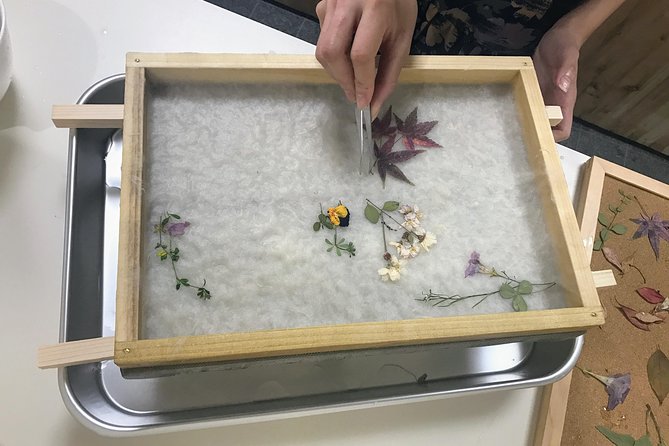
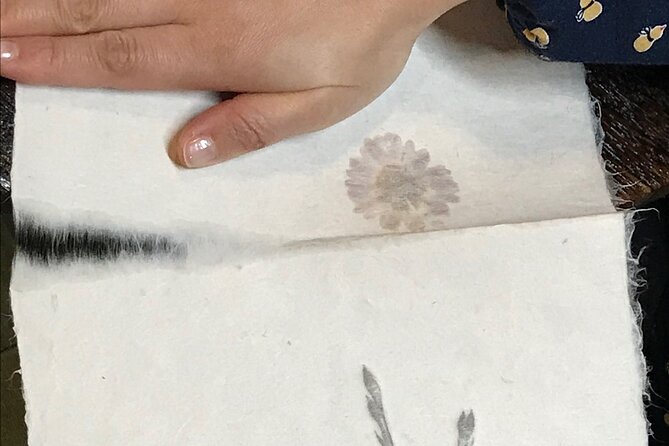
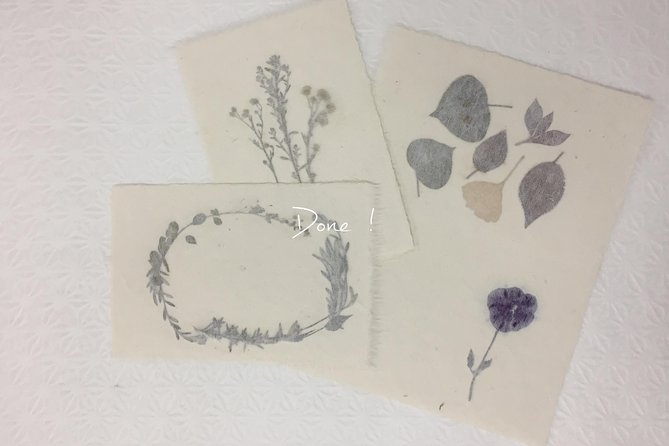
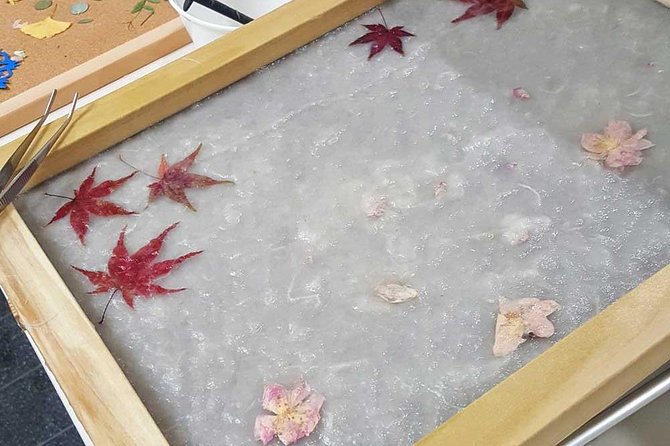
Once you have made your paper, the creative part begins. Choose from pressed flowers and leaves, including seasonal motifs such as cherry blossoms and maple leaves, or use paper cut-outs to build your design. The result is personal, even if you are new to the technique.
This is where the class feels especially suited to a Kyoto visit. The materials connect your souvenir to the seasons and to the place, while the act of arranging them gives you time to slow down. You are making decisions about color and placement, not simply selecting a ready-made item from a shop shelf.
You can choose what to make from your paper: a set of postcards, a table mat, a wraparound lampshade, or a tapestry panel. The standard option includes four regular cards, according to class details shared by a participant. Some of the larger or more involved project choices may cost extra, so check the current options and any supplements when booking.
I would choose a project based on how you plan to carry it and use it. Cards are easy to give away or pack. A lampshade or panel makes a more substantial keepsake, but you will need to carry it home carefully. Finished pieces are packaged, though one participant noted that you may need to keep them with you unless you arrange to leave them behind.
More early morning tours in Kyoto:
- Kyoto Early Morning Tour with English-Speaking Guide
★ 5.0 · 1,427 reviews - Kyoto: Early Morning Tour with English-Speaking Guide
★ 4.9 · 1,128 reviews - Nara Early Morning Tour (Kyoto or Osaka Departure Available)
★ 5.0 · 676 reviews
A small studio with patient instruction
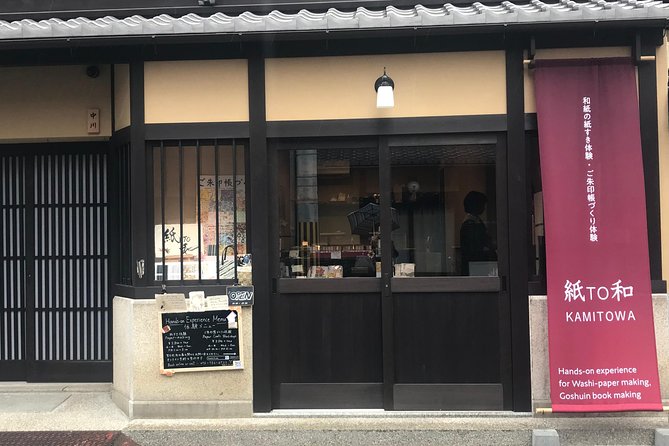
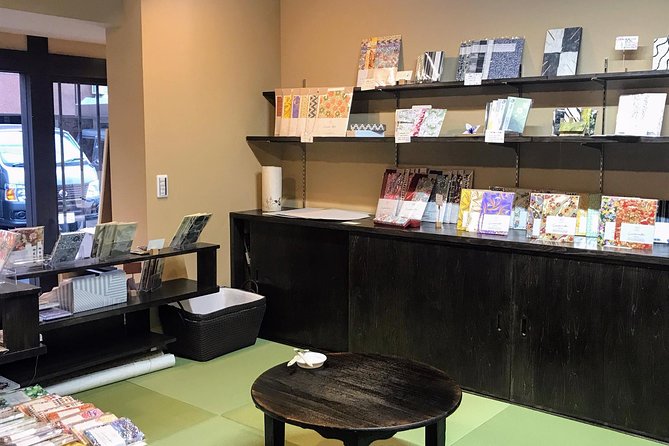
The workshop takes place at 紙TO和, also known as Kamitowa Kyoto, in a traditional Japanese-style house in central Kyoto. The group is limited to four people, a small size that matters when you are learning a process with several steps and handling delicate materials.
Hiro and Junko are named among the instructors, and the class is operated by a multilingual guide who speaks Japanese and English. Clear instruction is particularly useful here: the activity involves doing things in sequence, and you will want to understand what to do before the paper is formed or decorated.
The small setting also makes the class feel more like a lesson than a standard group attraction. You can ask for help as you go, and children can take part with an accompanying adult. The workshop has worked well for families with children as young as nine, as well as teenagers and adults, though every child will have a different level of patience for a craft activity.
The shop itself sells paper goods and locally made items. You can browse after class, but there is no requirement to buy anything. That is a welcome arrangement: your handmade piece is already the main souvenir, and you can look around without feeling that the class is a sales pitch.
One hour, with an option to stay longer
The advertised class lasts about 60 minutes. That is enough time to learn the basic process and complete a project, making this an easy activity to fit between sightseeing stops or around a meal. The experience ends where it begins, so there is no separate drop-off to plan.
The pace is intentionally efficient. One participant described the full traditional process as involving about 20 steps, while the workshop streamlines the activity so you can make paper within the hour. That is a sensible trade-off for a short class: you get to take part in the essential stages, but you should not expect a long apprenticeship in papermaking.
If you want to make more than one item or simply spend longer with the materials, you can add an extra hour of unlimited paper making at your own expense. The additional price is not specified here, so confirm it before you commit. The extra time may be especially useful if you are making gifts for friends and family, or if you want to give your design more attention.
A short video may fill some of the drying time. That adds background while you wait, though the class remains a practical craft session rather than a full-length history lecture. If you want a deep technical course, this is not that. If you want a compact introduction with a finished piece, it fits the bill.
What the $33.03 price gets you
At $33.03 per person, the class offers a modestly priced way to spend an hour learning a traditional craft and making a souvenir yourself. The price includes taxes, fees, and handling charges. You still need to get yourself to the studio, and some project options or the extra hour may carry an additional charge.
The value is not just the finished object. You learn how paper is formed and decorated, get direct guidance in a very small group, and leave with something you helped make from the beginning. That is a stronger memory than buying a postcard, particularly if you enjoy creative activities or want a break from sightseeing.
It is also a practical indoor option for a rainy morning or a pause from Kyoto’s busier areas. Because the class is short and central, you do not need to set aside half a day. But if you want to make a large item, try several designs, or work at a leisurely pace, budget for the extra hour and confirm any supplement for your chosen project.
The workshop has a 5.0 rating from 77 reviews, with 100 percent recommending it. That is an unusually consistent record, and the recurring strengths are the kind instructors, clear explanations, small class size, and the satisfaction of taking home a handmade piece. Those are the points most likely to matter in practice.
More Kyoto tours in Kyoto:
- PERFECT KYOTO 1-Day Bus Tour
★ 5.0 · 13,518 reviews - Kyoto: Fushimi Inari, Kinkakuji, Bamboo Grove 1 Day Bus Tour
★ 4.8 · 4,316 reviews - Kyoto: Tea Ceremony in a Traditional Tea House in Kiyomizu
★ 4.9 · 3,519 reviews - Kyoto Geisha Walking Tour: Gion District & Hidden Gems
★ 4.7 · 3,273 reviews
Finding the workshop in central Kyoto
The meeting point is 345 Sanjōchō, Nakagyo Ward, Kyoto, and the activity ends there. The studio is about a six-minute walk from exit 6 at Karasuma Oike Station on the Kyoto Metro Karasuma Line. It is also about a nine-minute walk from exit 24 at Shijo Station on the same metro line or Karasuma Station on the Hankyu Line.
Those station options make the workshop straightforward to reach by public transport. Transportation is not included, and you make your own way to the class, so leave a little time to find the address rather than arriving at the last minute. It is near public transportation and a covered market, which can make it easy to pair with lunch or nearby shopping.
The maximum group size is four, so book ahead if you have a particular morning in mind, especially if you are traveling as a family or a small party. Children must be accompanied by an adult. Confirmation is provided at booking, and free cancellation is available until 24 hours before the start time. Changes or cancellations inside that 24-hour window are not accepted for a refund.
Who will enjoy making washi
This is a good fit if you like crafts, want a calm activity, or are curious about how a traditional material is made. It also works well for families: the steps are guided, the class is short, and the final item gives children a clear goal. Teens and adults can enjoy it without needing to be especially artistic.
You may also appreciate it if your Kyoto plans are heavy on temples, markets, and walking. Making paper gives you a different kind of cultural encounter, one based on doing rather than looking. The class is small enough to ask questions, and its short length makes it easy to slot into a busy itinerary.
It is less suitable if you want a long, highly technical workshop or a large number of finished pieces within the standard hour. Choose the extra hour if you want more making time, and check the cost of any upgraded project before settling on a lampshade or other larger format.
Should you book this Kyoto papermaking class?
I would book it if you want a small, hands-on cultural activity and like the idea of bringing home something you made yourself. The combination of guided papermaking, seasonal decorations, and a choice of finished projects gives the hour substance beyond a quick craft demonstration.
For the best experience, arrive with a project in mind and allow extra time if you do not want to rush. Choose the regular postcard option for an easy-to-carry souvenir, or ask about the cost and timing of a larger piece. If you prefer to spend your Kyoto hours outdoors or want a full technical course, this may not be the right match. For most curious makers, though, it is a useful, personal change of pace.
FAQ
How long does the washi papermaking class last?
The class lasts about one hour. You can add an extra hour of unlimited papermaking for an additional cost.
What can I make during the workshop?
You can make a set of postcards, a table mat, a wraparound lampshade, or a tapestry panel. Some options may cost extra.
What materials can I use to decorate my paper?
You can decorate with pressed flowers and leaves, including cherry blossoms and maple leaves, as well as paper cut-outs.
Is the class taught in English?
The workshop is operated by a multilingual guide, and instruction is available in Japanese and English.
How many people can join the class?
The activity has a maximum of four participants.
Can children take part?
Yes. Children must be accompanied by an adult.
Where does the class meet?
It meets at 345 Sanjōchō, Nakagyo Ward, Kyoto, at 紙TO和, also known as Kamitowa Kyoto. The activity ends at the same point.
How do I reach the workshop by train?
It is about a six-minute walk from exit 6 at Karasuma Oike Station, or a nine-minute walk from exit 24 at Shijo Station or Karasuma Station.
Is transportation included?
No. You make your own way to and from the workshop.
Can I cancel for a refund?
You can cancel at least 24 hours before the experience starts for a full refund. Cancellations or changes made less than 24 hours before the start time are not accepted.
Newly added in Kyoto
- Uji: Private immersion into Kyoto’s tea and reglious culture★ 5.0 · 17 reviews
- Whisk Your Own Matcha: A Zen Matcha Experience at Temple★ 3.6 · 7 reviews
- Kyoto tea town for matcha lovers★ 5.0 · 16 reviews
- Treasures of Kyoto: Gion & historical Walking Tour★ 5.0 · 6 reviews
- Kyoto Matcha Green Tea Tour★ 4.5 · 23 reviews
- Uji and Wazuka Matcha Farm Half Day Private Guided Tour★ 5.0 · 21 reviews
- Uji Tea Ceremony and UNESCO Heritage Walking Tour★ 5.0 · 20 reviews
- Utilising upcycled Matcha! Creating matcha incense (Uji, Kyoto)★ 5.0 · 6 reviews
Kyoto Early Morning Tours, compared.
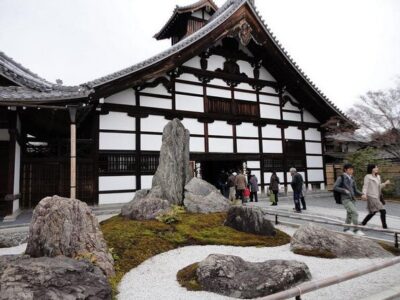
Kyoto Early Morning Tour with English-Speaking Guide
Read our review →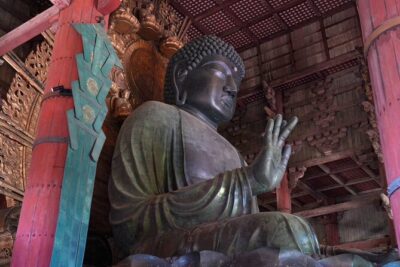
Nara Early Morning Tour (Kyoto or Osaka Departure Available)
Read our review →
Arashiyama Bamboo Forest & Hidden Gems Bike Tour (Early Bird)
Read our review →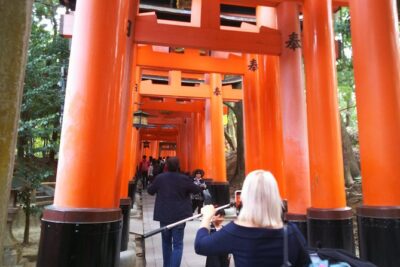

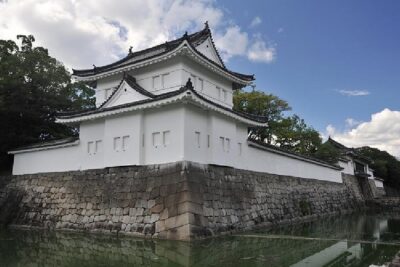
Kyoto Early Bird English Tour: Fushimi-Inari and Arashiyama
Read our review →
Browse the lists this tour appears in