
Reviewed · KYOTO TEA CEREMONIES
Experience a tea ceremony in an authentic tearoom, in Kyoto!
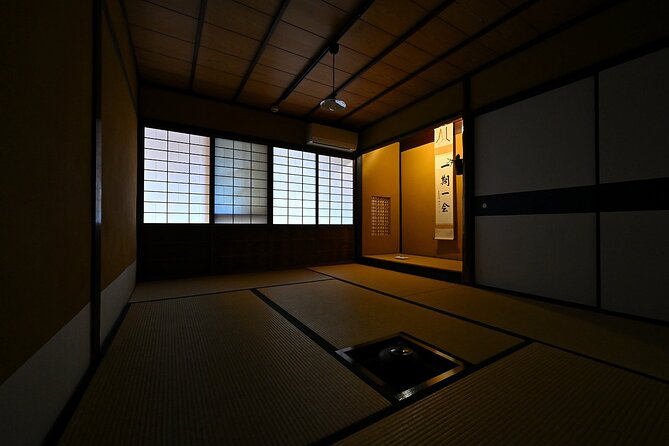
A tea ceremony here begins with an unusual little transition: you enter the tea room from the garden, leaving Kyoto’s busy streets behind. Inside a 130-year-old townhouse, host Kaori introduces the customs and meaning of tea, demonstrates the preparation, and then hands you the whisk to make your own matcha.
I like two things about this experience: you get to take part, not just watch, and the small group limit of 10 can make the session feel personal. The main consideration is value: at $39.63 for about 45 minutes, this is a short introduction, not a long class or a full afternoon of tea culture.
Key points
- A historic setting: The ceremony takes place in the tea room of a 130-year-old Kyoto townhouse, with entry through the garden.
- Watch, then make: Kaori demonstrates the process before you prepare your own matcha.
- A taste of Kyoto sweets: You have matcha with dried sweets from a long-established Japanese confectioner.
- A compact introduction: In about 45 minutes, you cover tea customs, history, tasting, and basic preparation.
- A small group: The maximum is 10 people, though a smaller group is possible and can feel especially intimate.
- A practical takeaway: You learn tips for making matcha at home, even without traditional tea utensils.
Entering the townhouse tea room
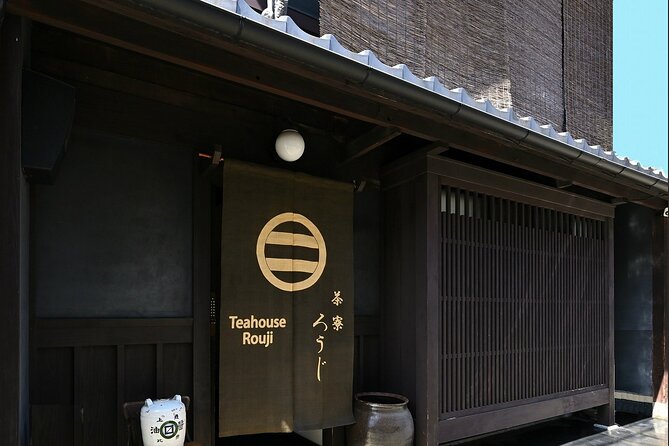
The address is 22-26 Nishinokyō Ikenouchichō in Kyoto’s Nakagyo Ward, an area near public transportation. The activity ends where it begins, so you do not need to arrange a separate pickup or figure out a second destination afterward.
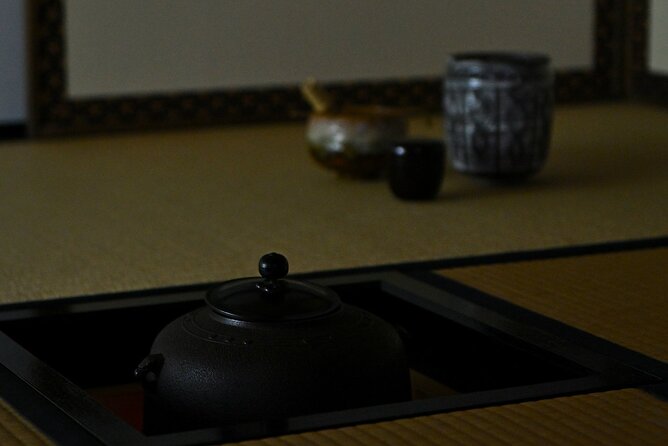
The setting is more than a convenient room for a lesson. The townhouse is about 130 years old, and the experience begins by entering the tea room from the garden. That small change of pace helps mark the ceremony as something distinct from the street outside. You are not simply sitting down for a cup of green tea; you are stepping into a space arranged for a focused ritual.
The ceremony is described as an authentic experience, but it is also designed for people who may be seeing one for the first time. You do not need to know the etiquette in advance. Kaori explains what is happening as the session unfolds, and the structure gives you time to observe before trying it yourself.
A group can include up to 10 people. That is small enough to make questions and direct instruction practical, though it is not a guarantee of a private ceremony. If you happen to book when few others are attending, the room may feel particularly personal. If you prefer a guaranteed private session, check the booking details before paying rather than assuming the group will be only yours.
More tea ceremonies in Kyoto:
- Kyoto: Tea Ceremony in a Traditional Tea House in Kiyomizu
★ 4.9 · 3,519 reviews - Kyoto: Tea Ceremony Ju-An at Jotokuji Temple
★ 4.9 · 3,207 reviews - Kyoto: 45-Minute Tea Ceremony Lesson Experience
★ 4.3 · 2,378 reviews
Watching the tea ceremony before joining in
The session starts with an introduction to the history and culture of the tea ceremony. That context matters: without it, the sequence of gestures can seem like a set of formal rules. With a little explanation, you can begin to notice how the preparation, serving, and drinking of matcha are treated as connected parts of one experience.
Kaori then demonstrates the process. The emphasis is practical as well as cultural. You can watch the movements first, hear how to appreciate and drink the tea, and ask questions before it is your turn. English-language instruction is a particular strength of this experience, and the host is described as patient and welcoming. That helps make the ceremony accessible without stripping away its formality.
The demonstration is not a theatrical show with elaborate staging. Expect a close look at the tea-making ritual and an explanation of its customs, rather than a broad performance or a long lecture. The session is brief, so the teaching is an introduction, not a deep course in tea ceremony practice.
That distinction helps set expectations. If you want a first encounter with Japanese tea culture, the format makes sense. If you already know the ceremony well or hope to study its finer points in depth, 45 minutes may feel limited.
Tasting matcha and Kyoto sweets
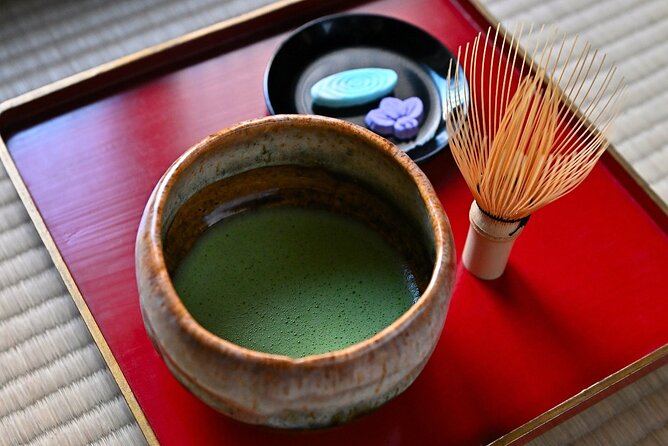
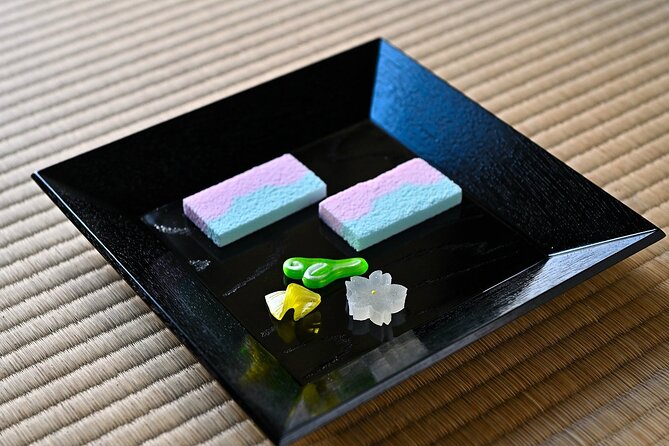
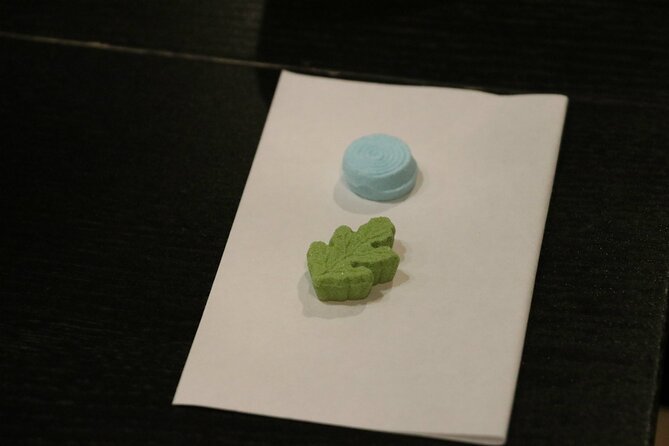
During the demonstration, you are served matcha with dried Japanese sweets. The sweets are associated with a long-established Kyoto confectioner, and the host has identified them as wasanbon-style sweets, made with a type of fine Japanese sugar. The experience description also refers to sweets such as cookies or candy, so the exact sweet may vary.
These small sweets are part of the ceremony, not a substantial snack. Their role is to accompany the tea and give you a taste of a traditional pairing. If you expect a plate of pastries or enough food to replace lunch, this is not that kind of stop.
The matcha is sourced from a historic shop in Kyoto, though the shop is not named in the activity details. You will have a chance to taste the tea and learn how it is appreciated and drunk. For anyone accustomed mainly to sweetened matcha drinks, this can be a useful way to encounter matcha in a more traditional setting.
There is a possible mismatch in expectations here. The sweets are small and notably sweet, and the tea is the focus. If you are booking mainly for a generous tasting or a meal, the price may feel high. If you are paying for instruction, setting, and participation, the tasting is one part of a wider cultural introduction.
Whisking your own bowl of matcha
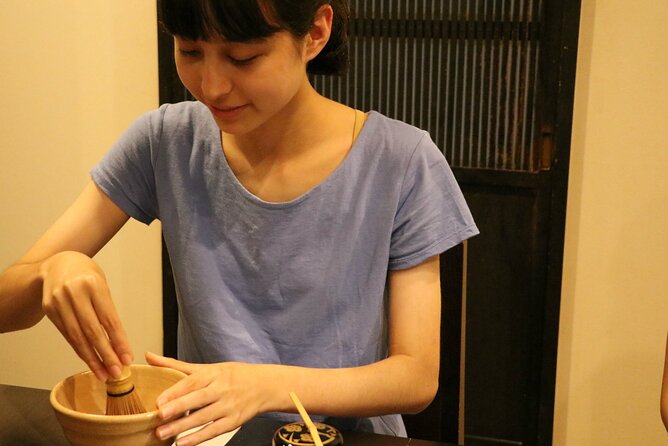
After watching, you make matcha yourself. This hands-on portion is a major reason to choose this session over simply visiting a tea room for a drink. You follow the instructor’s directions and learn the basic steps, so you leave with more than a memory of watching someone else prepare tea.
The lesson is intended for beginners. You do not need to arrive knowing how to use a whisk or how to serve the tea. The point is to learn how the preparation works, then try it with guidance. People who have never made matcha can take part, while those already familiar with it can use the session to connect the practical steps with the ceremony’s customs.
You also get tips for making matcha at home without tea utensils. That is a useful detail for anyone who likes the flavor and wants to repeat the experience after the trip. The instructions will not turn a short visit into formal training, but they can give you a workable starting point.
This practical element also makes the experience a good fit for families and mixed-age groups. The activity is not built around a long period of listening. You watch, taste, ask questions, and take a turn preparing the tea. The format has been described as a good length for a family outing.
More Kyoto tours in Kyoto:
- PERFECT KYOTO 1-Day Bus Tour
★ 5.0 · 13,518 reviews - Kyoto: Fushimi Inari, Kinkakuji, Bamboo Grove 1 Day Bus Tour
★ 4.8 · 4,316 reviews - Kyoto Geisha Walking Tour: Gion District & Hidden Gems
★ 4.7 · 3,273 reviews - Kyoto: Gion Magical Night Walking Tour with Geisha Trivia
★ 4.9 · 2,393 reviews
Sitting comfortably during the ceremony
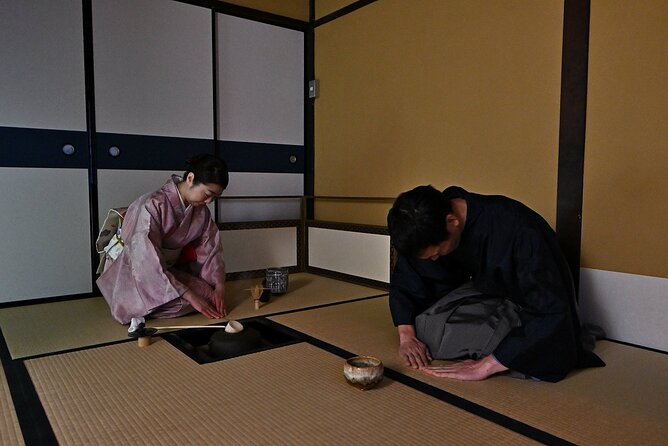
Tea ceremony can involve sitting on the floor in a traditional position. If your knees or hips make that uncomfortable, mention it or ask about seating when you arrive. A stool has been available when needed, and the host has been accommodating when participants could not sit in the traditional way.
That is reassuring, but it is worth planning rather than assuming every seating need can be met in exactly the same way. The provided information does not promise a specific chair or accessible setup for every session. If mobility is a concern, contact the provider before booking and explain what you need.
The experience is otherwise a relatively gentle activity. It takes place indoors in a townhouse and lasts less than an hour by the stated estimate. There is no long walking route described as part of the ceremony itself.
Is $39.63 fair for 45 minutes?
At $39.63 per person, this is not the cheapest way to drink matcha in Kyoto. The value comes from the combination: a historic townhouse, a garden entrance, a guided introduction, traditional sweets, a demonstration, and a chance to prepare your own tea. You are paying for instruction and atmosphere, not simply for a bowl of matcha.
The short duration is both a strength and a limit. Around 45 minutes is easy to fit into a day of sightseeing, and the session gives you enough time to understand the basics and participate. Some descriptions of the experience put it closer to an hour, so allow a little flexibility rather than scheduling a tight connection immediately afterward.
If you want a focused cultural activity between temples, shops, or other Kyoto sights, this can be good value. If you measure value mainly by time, food, or the amount of tea served, you may find it expensive. One person’s experience was that the ceremony felt too brief and the sweets too small for the price. That is a fair concern for anyone expecting more than a short, introductory lesson.
The price also does not appear to include a kimono experience. Do not book expecting to dress up unless the provider confirms that separately. The core activity is the tea ceremony itself, with instruction and a hands-on matcha lesson.
Who will enjoy this Kyoto tea ceremony?
I would consider booking if you want a manageable first introduction to tea ceremony, especially if you value being able to ask questions and make the tea yourself. The welcoming teaching style and clear English explanations suit beginners, couples, solo visitors, and families who want a calm activity that does not take half a day.
It is also a good choice if you want to bring something practical home. The instructions for preparing matcha without traditional utensils give you a way to repeat part of the experience after your trip. You may even decide to buy a matcha whisk later, as some participants have after learning how to use one.
I would think twice if you are looking for a full-scale formal ceremony, a lengthy tea lesson, a large serving of sweets, or a guaranteed private group. The activity is a short sampler, and its appeal depends on how much you value the setting and explanation alongside the tea.
Booking confirmation is stated to arrive within 48 hours and is subject to availability. The activity requires a minimum number of participants; if it is canceled for that reason, you are offered another date or experience, or a full refund. The standard cancellation terms allow a full refund if you cancel at least 24 hours before the start time. Since there has been at least one reported scheduling mix-up, check that your confirmed time matches your booking and keep the confirmation handy.
Should you book it?
Book this if you want a personal, hands-on introduction to Japanese tea culture in a historic Kyoto setting, and you are comfortable paying for a short experience rather than a long class. The strongest reasons to go are the townhouse, Kaori’s patient instruction, and the chance to make your own matcha.
Skip it if you mainly want a substantial tasting or expect a formal, extended ceremony. At 45 minutes, this is best treated as a thoughtful first lesson, not the last word on tea.
FAQ
How long does the tea ceremony last?
The stated duration is about 45 minutes. Some descriptions place it closer to an hour, so leave a little extra time in your schedule.
How much does the experience cost?
The listed price is $39.63 per person.
Where does the tea ceremony take place?
It takes place in the tea room of a 130-year-old Kyoto townhouse. The meeting address is 22-26 Nishinokyō Ikenouchichō, Nakagyo Ward, Kyoto.
Where does the activity end?
It ends back at the meeting point.
What will I learn?
You will learn about tea ceremony history and culture, how to appreciate and drink matcha, and how to prepare matcha yourself. The session also includes tips for making it at home without tea utensils.
Do I get to make my own matcha?
Yes. The instructor demonstrates the process, then you make your own matcha with guidance.
Are sweets included?
Yes. Dried Japanese sweets are served with the matcha. The exact sweet may vary.
How many people can join?
The maximum group size is 10 people. A smaller group is possible, but a private session is not guaranteed by the stated group limit.
Is the experience suitable for beginners?
Yes. The instructions are intended for beginners, and the instructor explains how to prepare matcha step by step.
Can I cancel for a refund?
You can receive a full refund if you cancel at least 24 hours before the experience begins. Cancellations made less than 24 hours before the start time are not refundable under the stated policy.
Newly added in Kyoto
- Uji: Private immersion into Kyoto’s tea and reglious culture★ 5.0 · 17 reviews
- Whisk Your Own Matcha: A Zen Matcha Experience at Temple★ 3.6 · 7 reviews
- Kyoto tea town for matcha lovers★ 5.0 · 16 reviews
- Treasures of Kyoto: Gion & historical Walking Tour★ 5.0 · 6 reviews
- Uji and Wazuka Matcha Farm Half Day Private Guided Tour★ 5.0 · 21 reviews
- Kyoto Matcha Green Tea Tour★ 4.5 · 23 reviews
- Uji Tea Ceremony and UNESCO Heritage Walking Tour★ 5.0 · 20 reviews
- Utilising upcycled Matcha! Creating matcha incense (Uji, Kyoto)★ 5.0 · 6 reviews
Kyoto Tea Ceremonies, compared.

Tea Ceremony in a Traditional Tea House in Kiyomizu
Read our review →

World Heritage Kyoto & Nara Uji Authentic Matcha Experience
Read our review →

Arashiyama Bamboo Forest, Monkeys, Matcha & Temple Tour
Read our review →
Tea Museum Tickets and Matcha Grinding Experience
Read our review →Browse the lists this tour appears in