
Reviewed · KYOTO EARLY MORNING TOURS
Kyoto Early Morning Private Tour with Government-Licensed Guide
Kyoto changes character before the crowds arrive. On this private, four-hour walk, you and a licensed local guide choose two or three sights, then set out early to see them at a calmer pace. I like the chance to focus on places that matter to you, and I like that a guide can add cultural context you might miss while exploring alone.
The trade-off is that this is a walking tour, not a chauffeured city circuit. Transport, admission fees, and meals are extra, and the long list of possible stops is a menu, not a promise to see them all. Choose a compact route, and the early start can be the best part of your Kyoto day.
Key points
- Choose just two or three sights: The route is customizable, so you can build around temples, historic districts, or a mix.
- The early start helps at major sites: Guides have started as early as 6:30 or 7 a.m., reaching places such as Fushimi Inari and Kiyomizu-dera before the usual crowds.
- It is private and on foot: Your group has the guide to itself, but there is no private vehicle or included transport.
- Local context is part of the value: Guides such as Rie, Tomy, Yasu, and Kay have helped explain history, culture, and how to navigate after the tour.
- Budget separately for extras: Entry fees, transport, lunch, and personal expenses are not included.
- The best route is a realistic one: Kyoto’s sights are spread across the city, so two or three nearby stops make better use of four hours than a scattershot itinerary.
An early start buys you breathing room
The appeal is simple: Kyoto’s popular temples and shrines can feel very different before the day’s crowds build. Guides have begun tours at 6:30 or 7 a.m., and one described visiting Kiyomizu-dera and Fushimi Inari while the grounds were unusually quiet. That quieter window can make it easier to look around, take photographs, and hear your guide without competing with a stream of tour groups.
The exact start time and route are not specified as fixed, so confirm the arrangements when booking. Still, the tour’s early-morning format is a practical choice if you are visiting in a busy season or would rather spend the afternoon at your own pace. One guide has noted that even January 2 can be an exceptionally busy day in Japan, which makes timing especially useful around holiday periods.
This is not a bus tour that sweeps through a dozen landmarks. It is a private walk with a licensed English-speaking guide, and the plan is to choose two or three sights from a broad list. That distinction matters: Kyoto’s attractions are spread out, and trying to fit far-flung sites into four hours can turn a cultural visit into a transport exercise.
Build a route around two or three places
You can follow a guide’s recommendations or choose the places you most want to see. The available options range from famous shrines and temples to traditional districts, gardens, and the northern mountain area. Ask your guide to help shape the route around your priorities and the time available.
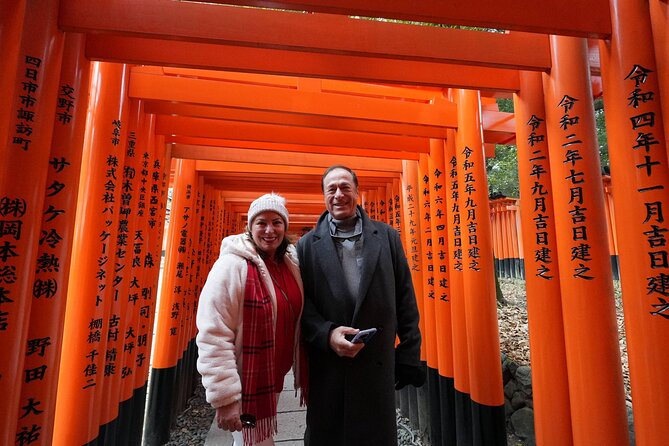
Fushimi Inari-taisha is a natural choice if you want to see its celebrated vermillion torii gates. There is more to the shrine than the familiar tunnel photographs, and a guide can help bring its stories and significance into the visit. The grounds are extensive, though, so be clear about how much walking you want to do before you set off.
Kiyomizu-dera is another strong option, especially if you want a guide to explain the temple’s setting and cultural context as you explore. It is one of Kyoto’s best-known sights, so the early timing can help you experience it with more room to move. Admission is not included, and you should expect extra costs at paid attractions.
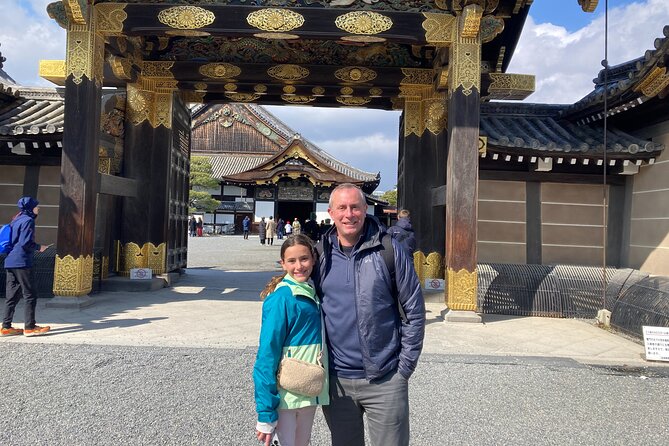
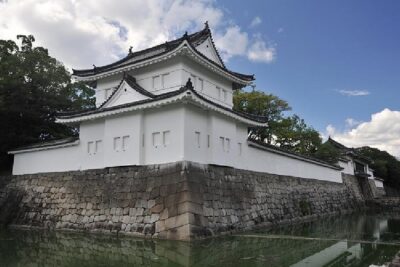
Nijo Castle offers a different perspective from the religious sites. Built in 1603 as the Kyoto residence of Tokugawa Ieyasu, it connects the city to the start of the Edo period. The castle is a good choice if you are interested in political history, but it is not a free stop, and its location may make it less convenient to pair with sights in a distant district.
More early morning tours in Kyoto:
- Kyoto Early Morning Tour with English-Speaking Guide
★ 5.0 · 1,427 reviews - Kyoto: Early Morning Tour with English-Speaking Guide
★ 4.9 · 1,128 reviews - Nara Early Morning Tour (Kyoto or Osaka Departure Available)
★ 5.0 · 676 reviews
Choose between old streets, markets, and temples
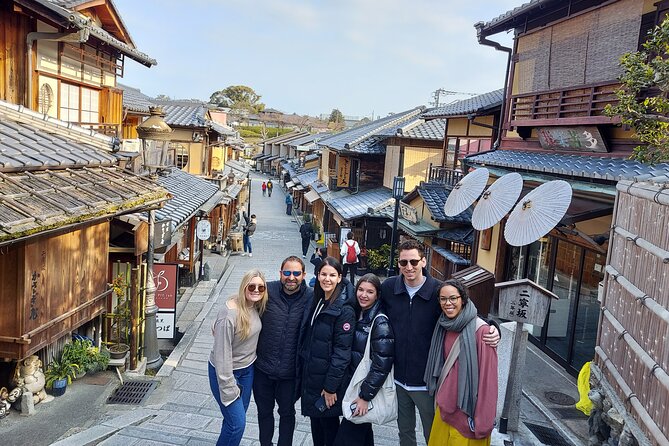
Gion and Higashiyama suit a route focused on Kyoto’s traditional urban character. Gion’s narrow lanes can be hard to navigate on your own, while Higashiyama is one of the city’s best-preserved historic districts. A guide can help you make sense of what you are seeing and keep the walk from becoming a hunt for the right alley.
Nishiki Market gives you a different kind of stop. Known as Kyoto’s Kitchen, it is a five-block shopping street with more than a hundred shops and restaurants, specializing in food. It can be a useful choice if you want to see everyday food culture rather than spend the whole tour among temples. Keep in mind that lunch is not included, and the tour’s early hours may not line up with a full meal.
Pontocho is a narrow dining alley near the Kamo River, known for its restaurants and atmospheric streetscape. It may make sense as part of a neighborhood walk, though its dining focus is more relevant later in the day than during an early-morning tour. The Kyoto Imperial Palace is another option, set within a spacious park and once home to Japan’s imperial family before the capital moved to Tokyo in 1868. Admission fees are not included where they apply.
Pick a temple with the right pace
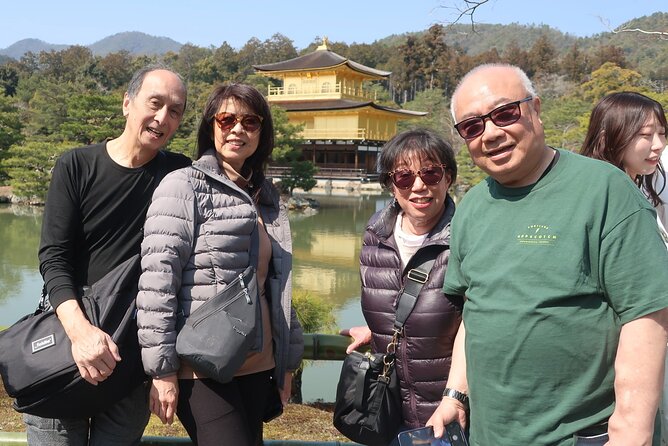
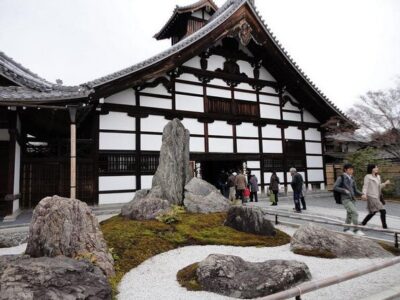
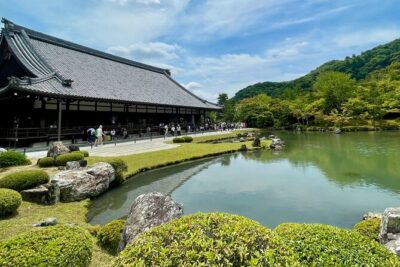
If you want a Zen temple, the choices include Ginkakuji, Kinkakuji, Nanzenji, Tofukuji, Ryoanji, and Tenryuji. Each offers a different reason to go. Ginkakuji began as a shogun’s retirement villa; Kinkakuji is known for its gold-covered upper floors; Nanzenji is an important Zen temple; and Ryoanji is famous for its rock garden. Tofukuji is particularly known for autumn color, while Tenryuji is a major temple in Arashiyama.
These are not interchangeable quick photo stops. A garden or temple visit can reward a slower pace, and admission charges at several sites are extra. If one place is your main reason for booking, tell the guide and allow it enough time rather than trying to add several more.
Ninna-ji, Toji, and Daikakuji offer further historical variety. Ninna-ji is a World Heritage-listed temple founded in 888. Toji dates to the early Heian period, shortly after Kyoto became the capital. Daikakuji began as Emperor Saga’s detached palace in the early 800s. These sites are worth considering if their histories appeal to you, but the tour’s four-hour limit makes a focused plan important.
For gardens and imperial architecture, Katsura Imperial Villa and Shugakuin Imperial Villa are listed as possibilities. Katsura is recognized for its architecture and garden design, while Shugakuin was built in the 17th century for Emperor Gomizuno and is managed by the Imperial Household Agency. The supplied information does not specify access arrangements or fees, so check the practical details before choosing either as a centerpiece.
Arashiyama needs a route of its own
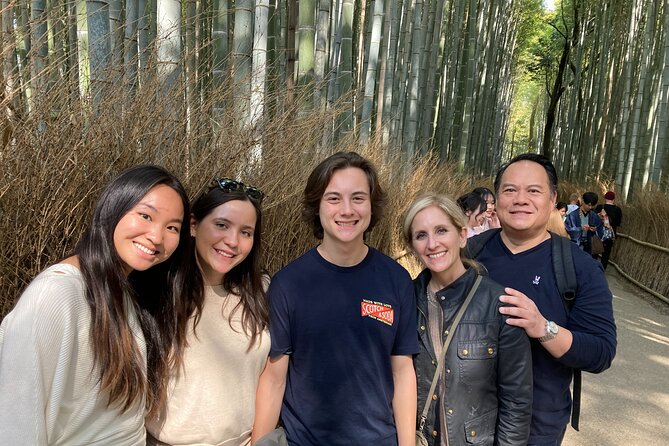
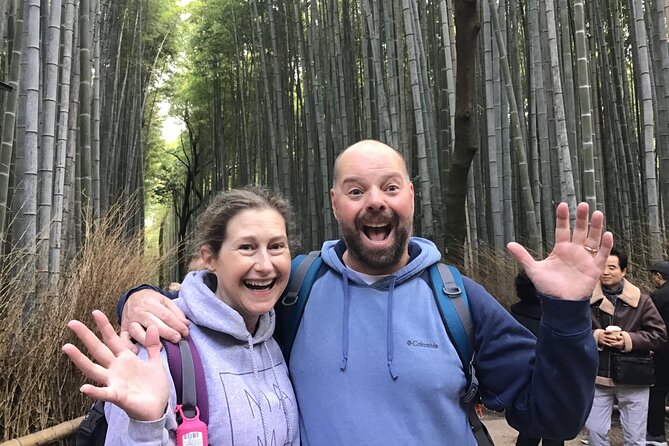
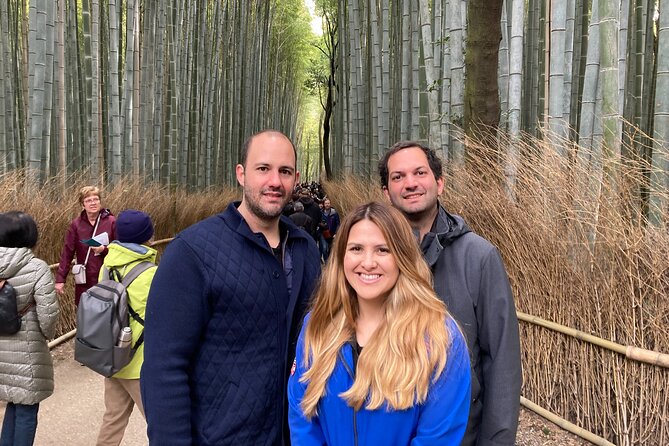
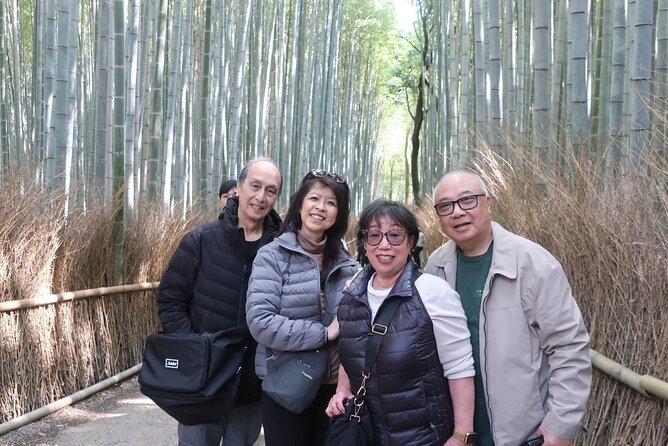
Arashiyama is a district in western Kyoto, with its own cluster of sights. The Bamboo Forest paths, Togetsukyo Bridge, Tenryuji, and Okochi Sanso Garden can make a satisfying area-focused visit. The bamboo groves are especially appealing when the tall stalks sway in a light wind, while Togetsukyo Bridge is the district’s best-known landmark. Tenryuji adds a major temple and garden to the mix.
A guide named Kay has taken guests through the bamboo forest and on to Fushimi Inari, while other guests have chosen Arashiyama’s bamboo paths, Monkey Park, and Fushimi Inari. That kind of combination can work, but those places are not all next door to one another. Ask how the guide proposes to connect your chosen stops, and remember that transport costs are yours.
If you want a quieter temple visit within Arashiyama, Jojakkoji, Nisonin, Gioji, Adashino Nenbutsuji, and Otagi Nenbutsuji are among the options. Their settings and features differ: Gioji is known for its moss garden, Adashino Nenbutsuji has stone figures connected with remembrance, and Otagi Nenbutsuji is noted for its many stone rakan figures. These smaller temples may suit you better than the headline sights if you prefer a slower walk, but entrance costs can apply.
More private and custom tours in Kyoto:
- Kyoto 6hr Private Tour with Government-Licensed Guide
★ 5.0 · 1,369 reviews - 10 Must-see Spots in Kyoto One Day Private Tour (up to 7 people)
★ 5.0 · 1,108 reviews - Kyoto 4hr Private Tour with Government-Licensed Guide
★ 5.0 · 629 reviews - Kyoto: Private Tour with Local Licensed Guide
★ 4.8 · 463 reviews
Northern Kyoto is a different kind of outing
The options extend beyond the central city to Kibune, Kurama, and the northern hills. Kibune is a small town in a forested valley that developed around Kifune Shrine. Kurama is a rural town known for Kurama-dera and its hot spring. Both have a markedly different setting from central Kyoto, but their distance makes them choices for a dedicated route, not casual additions to a central-city walk.
Shugakuin Imperial Villa is also in the north, and the supplied description notes its three sections: Upper, Middle, and Lower Villa. With only four hours, choosing a northern destination means giving up other areas. The guide can help you decide whether the journey fits your interests and timing, but transport is not included.
The itinerary’s long list of 34 places can look like an ambitious checklist. It is better understood as a selection of possible stops: the tour includes a customizable visit to two or three sites, not a full-city tour. Some entries show very short times, while others show 30 minutes, so do not treat those figures as a guaranteed schedule for every attraction.
What the private guide adds
The guide is the main reason to choose this format over walking the same streets alone. You have someone to answer questions, explain cultural details, and help you move through unfamiliar areas. Past guides have included Rie, Tomy, Yasu, Kay, Mayumi, Nabet, and Yoshi. Names are examples of guides who have led tours, not a guarantee of who will be assigned to yours.
Their personal approach can be useful beyond the tour itself. One guide helped a group get around Kyoto by public transport, while another offered advice on navigating to places after the walk. Rie ended a tour at a sushi restaurant she liked, and a guide named Mayumi extended a visit by half an hour to help a guest whose ankle was bothering her. These are individual examples, not standard inclusions, but they show how a private guide can adapt to the group.
There has also been a reported instance of a guide falling ill and not arriving, followed by a delayed refund process. It appears to be an exception among the available feedback, but it is worth knowing that service problems can happen. If anything goes wrong, contact the tour provider and booking platform promptly.
Is $101.82 per person good value?
At $101.82 per person, this tour costs more than going independently, but the comparison is not just about admission tickets. You are paying for a licensed local English-speaking guide and a private four-hour experience tailored to your group. If you value cultural explanation, route planning, and the ability to ask questions freely, that can be worthwhile.
The value improves if you have several people in your group, particularly because group discounts are offered. The exact discount is not provided, so check the current price for your party. You still need to budget for transport, entry fees, lunch, and personal expenses. There is no private vehicle included, and the guide meets you on foot within a designated area of Kyoto.
This tour suits first-time visitors who want orientation, families or friends who prefer a private pace, and anyone with two or three clear priorities. It is less suitable if you expect a vehicle, included admissions, a full-day itinerary, or a guided visit to every place in the long list.
Should you book this Kyoto morning tour?
Book it if you want a flexible introduction to Kyoto and are willing to get up early. Pick two or three sights that make sense together, tell the guide what interests you, and confirm how you will travel between them. The strongest reasons to go are the private format, the chance to learn from a local guide, and the quieter hours at major landmarks.
Skip it if your main goal is covering as many districts as possible without extra transport costs. A short, well-planned route is the better use of four hours. Free cancellation is available up to 24 hours before the start time; changes or cancellations inside that window are not accepted for a refund.
FAQ
How long is the tour?
It lasts approximately four hours.
Is the tour private?
Yes. Only your group participates.
How many sights can I choose?
The tour includes a customizable visit to two or three sites from the available options.
Is a guide included?
Yes. A licensed local English-speaking guide is included.
Does the tour include a private vehicle?
No. It is a walking tour, and a private vehicle is not included.
Are transportation costs included?
No. Transportation fees are extra.
Are temple and castle admission fees included?
No. Entrance fees are not included.
Is pickup offered?
The guide meets you on foot within a designated area of Kyoto. This is not vehicle pickup.
What is the cancellation policy?
You can cancel at least 24 hours before the tour’s start time for a full refund. Cancellations or changes made less than 24 hours before the start time are not accepted for a refund.
Newly added in Kyoto
- Uji: Private immersion into Kyoto’s tea and reglious culture★ 5.0 · 17 reviews
- Whisk Your Own Matcha: A Zen Matcha Experience at Temple★ 3.6 · 7 reviews
- Kyoto tea town for matcha lovers★ 5.0 · 16 reviews
- Treasures of Kyoto: Gion & historical Walking Tour★ 5.0 · 6 reviews
- Kyoto Matcha Green Tea Tour★ 4.5 · 23 reviews
- Uji and Wazuka Matcha Farm Half Day Private Guided Tour★ 5.0 · 21 reviews
- Uji Tea Ceremony and UNESCO Heritage Walking Tour★ 5.0 · 20 reviews
- Utilising upcycled Matcha! Creating matcha incense (Uji, Kyoto)★ 5.0 · 6 reviews
Kyoto Early Morning Tours, compared.
Kyoto Early Morning Tour with English-Speaking Guide
Read our review →
Nara Early Morning Tour (Kyoto or Osaka Departure Available)
Read our review →
Arashiyama Bamboo Forest & Hidden Gems Bike Tour (Early Bird)
Read our review →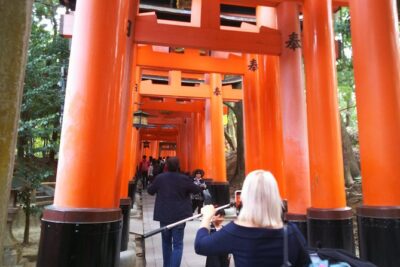
Kyoto Early Bird English Tour: Fushimi-Inari and Arashiyama
Read our review →
Browse the lists this tour appears in