
Reviewed · FUSHIMI INARI TOURS
Kyoto Guided Walking Tour: Secret Zen Garden and Fushimi Inari
Fushimi Inari is famous for its long corridors of red torii gates, but this walk begins somewhere quieter: among Tofuku-ji’s temple grounds and the calm garden at Komyo-in. You get the celebrated shrine and a slower introduction to Zen practice and Kyoto’s spiritual sites in one morning.
I like the contrast between the tucked-away garden and the busy, photogenic shrine, and I like that a guide handles the route while explaining the places along the way. Guides including Mika, Kenta, and Naomi have led the tour, with visitors praising their clear explanations and ability to adjust the pace.
The main consideration is the climb. The route includes uphill walking at Fushimi Inari, and the tour runs rain or shine, so bring comfortable shoes and be ready for changing weather.
- A rare pause at Komyo-in: This lesser-known sub-temple’s Zen garden offers a quiet counterpoint to Kyoto’s major sights.
- Fushimi Inari by a less crowded route: The walk includes quieter paths and smaller shrines before the main torii-gate corridor.
- A viewpoint worth the uphill effort: At Yotsuji, pause for a broad view over Kyoto.
- A small group, capped at eight: That size makes it easier to ask questions and adjust your pace.
- Four hours on foot: The route calls for moderate fitness, with hiking and uphill sections.
- A practical half-day plan: The tour starts at 9:00 a.m. near Tofuku-ji and finishes at Fushimi Inari.
From Tofuku-ji’s maples to a quiet Zen garden
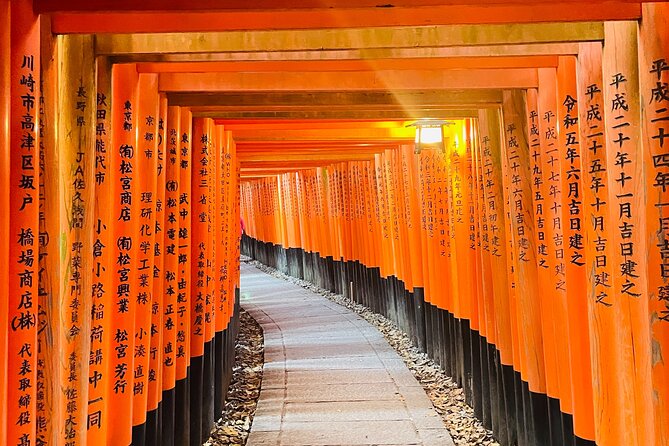
The tour starts at 9:00 a.m. outside the FamilyMart near Tofuku-ji, in Kyoto’s Higashiyama Ward. The first stop is Gaun-kyo Bridge, a short pause for a view of Tsutenkyo Bridge and the maple-filled valley below. The listed stop is just five minutes, so think of it as a scenic opening, not a long temple visit.
The route then takes you into the grounds of one of Kyoto’s major Zen temples, founded in the 13th century. The temple provides a useful frame for the morning: this is not only a walk to a famous photo spot, but also an introduction to the religious traditions that shaped the places you’ll see.
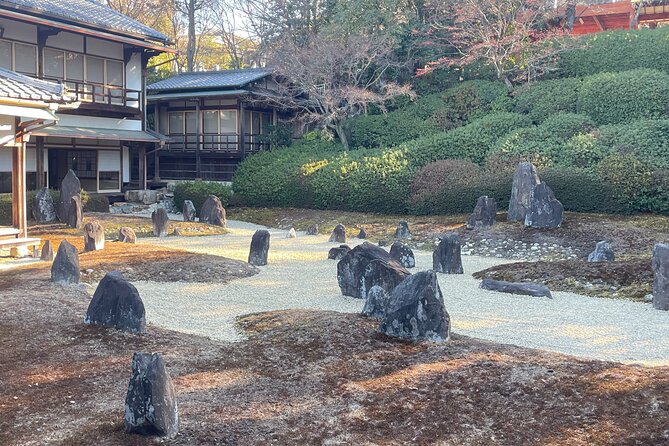
The quietest stretch comes at Komyo-in, a sub-temple known for its Zen garden. You have about 25 minutes here, and admission is included. That is enough time to slow down, look carefully at the garden, and hear your guide explain how to approach it. The tour is described as an introduction to Zen philosophy and meditation, but the available details do not promise a formal meditation session. Go expecting context and a chance to observe, rather than a scheduled class.
Komyo-in is the stop that gives this outing its distinctive balance. Fushimi Inari is a major Kyoto attraction; the garden is a quieter place where you can take in the design without the same focus on crowds and photographs. If you like having a guide explain what you’re looking at, rather than simply passing through, this part of the morning should suit you.
Small shrines before Fushimi Inari’s famous gates
After the garden, the walk turns toward Fushimi Inari. Araki Shrine is a brief stop, around ten minutes, with local associations tied to love, relationships, and well-being. It is a small pause rather than a major landmark, but it adds a more personal side to the route: shrines can be places where people bring specific hopes and concerns, not just architectural attractions.
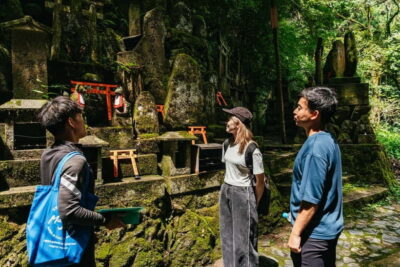
The tour then follows a quieter path through the Fushimi Inari area, including Kumataka Shrine. It is described as secluded and spiritually significant, set away from the busiest torii-gate paths. You get about 15 minutes there. The appeal is partly the contrast: the better-known shrine corridors draw attention, while smaller sites offer a more hushed stop along the way.
That quieter approach matters. Fushimi Inari’s fame can make it tempting to treat the shrine as a quick photo stop. Here, the guide helps you reach the celebrated sections after visiting less familiar places and can explain their religious setting. Past guides Mika and Kenta have been praised for clear explanations, while Naomi has also led the tour. Your assigned guide may differ, but the small-group format gives you room to ask questions as you go.
The route also includes the Okusha Worship Center, where you can find sacred ofuda, omamori charms, and goshuin stamps. The stop is about ten minutes. These items are part of shrine practice, and this is a useful place to learn what they are and where people obtain them. If you collect shrine stamps or want to understand the role of amulets, this stop gives the visit more substance than a quick walk beneath the gates.
More Fushimi Inari tours in Kyoto:
- Kyoto: Fushimi Inari, Kinkakuji, Bamboo Grove 1 Day Bus Tour
★ 4.8 · 4,316 reviews - Fushimi Inari Hidden Hiking Tour (Private Option Available)
★ 5.0 · 1,750 reviews - Kyoto/Osaka: Nara, Fushimi Inari Taisha, Arashiyama Bus Tour
★ 4.7 · 1,275 reviews
Walking beneath Senbon Torii
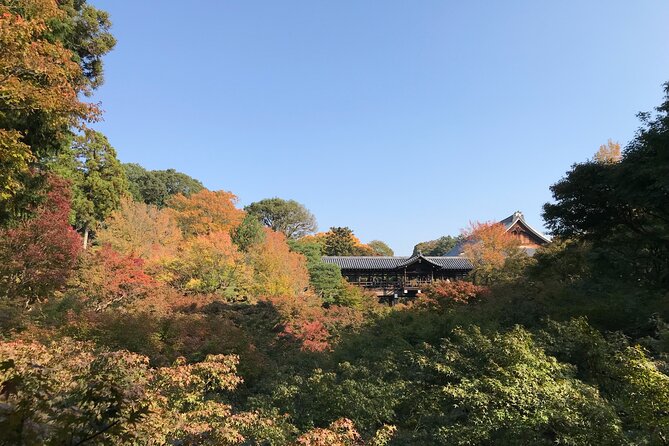
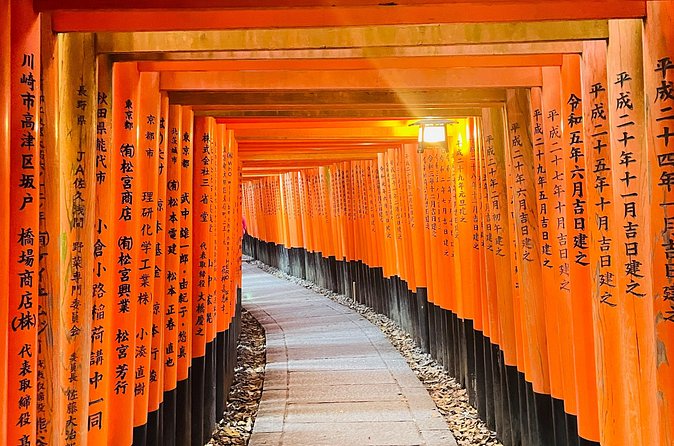
Then comes the image most people associate with Fushimi Inari: Senbon Torii, the dense passage of vermillion gates. This is the tour’s most recognizable stretch, but it arrives after the quieter grounds and shrines, which can make the contrast sharper. You’ll have the guide nearby to explain the site and help you move through the area without having to figure out the route alone.
The gates are striking, but they are also a popular draw. Do not expect a private corridor or complete quiet, particularly as you reach the best-known sections. The tour’s route is designed to include less crowded paths before the famous gates, and the early 9:00 a.m. start helps structure the visit, but crowd levels can vary.
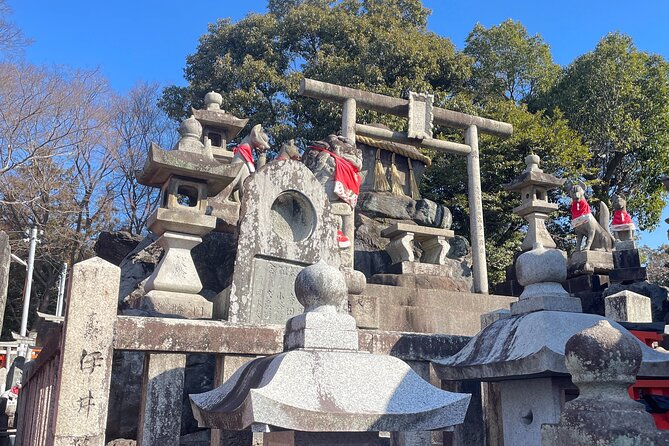
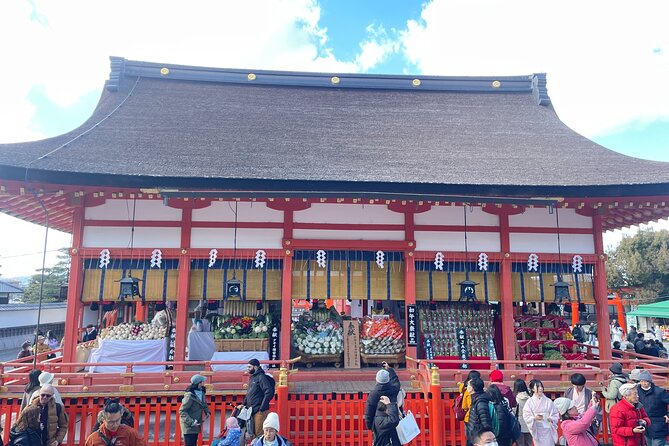
The walk continues to Fushimi Inari’s main shrine, the Honden, where the listed stop is about ten minutes. The main sanctuary offers a different kind of visit from the torii path: it is a place of worship, and a quieter pause to notice the shrine itself rather than focusing only on the gates and fox statues.
The tour ends at the Outer Oratory, within the Fushimi Inari complex. That is a practical finish if you want to stay in the shrine grounds afterward, though the guided portion concludes there. The route covers several distinct sites, so you’ll have a fuller sense of Fushimi Inari than you would from walking only the famous gate corridor.
The Yotsuji viewpoint and the uphill work
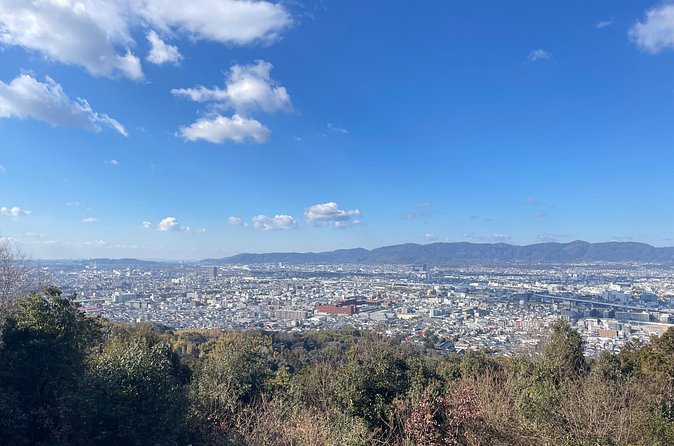
One of the most rewarding points on the route is Yotsuji, the Four-Way Crossroad on the Fushimi Inari trail. You get about 20 minutes there to stop, rest, and take in a panoramic view over Kyoto. It gives the climb a clear payoff, and it is a natural point to catch your breath before continuing.
The view comes with effort. The tour involves a moderate amount of walking and hiking, and one past participant noted that there is plenty of uphill walking. Guides have been praised for matching the group’s pace and allowing flexibility in how long to spend at stops. That helps, but it does not remove the climb. If steep or uneven paths are difficult for you, consider that carefully before booking.
Wear comfortable walking shoes, not shoes chosen only for temple photos. The tour takes place rain or shine, so check the forecast and dress for the conditions. No special equipment is specified, but the basic point is simple: you will be on foot for much of the morning, and the route is more than a flat stroll.
The full experience lasts about four hours, though some past participants found that four to five hours felt right. The listed stop times add up to only part of that duration because the tour also includes the walks between sites. Plan your morning around the full half-day, not just the time spent standing at each shrine.
What the small-group format adds
The group is limited to eight people. That cap is useful on a walking route with several short stops: you are less likely to feel like you are following a large procession, and you have a better chance to ask your guide about a detail that catches your eye. It also makes flexible pacing more practical.
The guide is a central part of the value. Without one, you could visit Tofuku-ji and Fushimi Inari on your own, but you would need to plan the sequence, find the quieter sites, and supply your own context. Here, the guide links the Zen garden, local shrines, and major shrine complex into one morning. Past guides have been praised for speaking clear English, answering questions, and making history easier to follow.
That does not mean every stop gets a long lecture. Some are only ten or fifteen minutes, and a four-hour tour has to keep moving. If your main goal is an extended visit to one temple or a long hike high up the Fushimi Inari trail, this route may feel too broad. It is built to sample several places, not to linger for hours at each one.
More zen and meditation sessions in Kyoto:
- Kyoto Zen Meditation & Garden Tour at a Zen Temple with Lunch
★ 5.0 · 441 reviews - Kyoto: Zen Experience in a Hidden Temple
★ 5.0 · 437 reviews - Kyoto: Tea Ceremony Meditation – Make Matcha with Tea Master
★ 4.8 · 406 reviews - Kyoto: Zen Meditation at a Private Temple with a Monk
★ 5.0 · 202 reviews
Is $78.83 a fair price?
At $78.83 per person, this is not the cheapest way to see Fushimi Inari. The shrine itself is free to enter, and independent visitors can walk its paths without a ticket. The fee makes more sense if you value the guide, the planned route, and the inclusion of quieter stops such as Komyo-in and Kumataka Shrine.
Admission to Komyo-in is included, while the listed shrine stops are free. The more important value is the structure: the tour connects several sites in a coherent half-day, explains their religious and historical context, and reduces the chance of missing the lesser-known parts. With a maximum of eight people, the experience is also more personal than a large group outing.
You should compare the price with what you want from the morning. If you are comfortable navigating on your own and mainly want to see the torii gates, you can visit independently for less. If you want a local guide to explain Zen ideas, take you along quieter paths, and keep the walk organized, the price can be worthwhile.
The tour is often booked well ahead, on average about 37 days in advance. That is a useful planning signal if this specific route matters to you. Free cancellation is available up to 24 hours before the start time; changes or cancellations inside that window are not accepted for a refund.
Who should choose this Kyoto walk
I would choose this tour if you have one morning to connect a major Kyoto sight with a more reflective temple visit. It suits first-time visitors who want context, people interested in Zen gardens and shrine customs, and anyone who prefers to have a guide handle the route. It also works well if you like walking and are comfortable with uphill sections.
It is less suited to anyone seeking a strenuous hike to the top of the mountain, a long meditation session, or a slow, in-depth visit at every stop. The route gives you a broad look at several places in about four hours. That is the strength and the limit.
For a morning with both quiet and spectacle, the sequence is well judged: Tofuku-ji and Komyo-in ease you into the day, smaller shrines show another side of Fushimi Inari, and the famous torii gates bring the route to its grand finish. Book it if you want a guided, varied walk and can manage the climb. If you prefer total freedom or need a level route, visit the sites independently or choose a less hilly activity.
FAQ
How long is the tour?
It lasts about four hours. Some participants have found that the experience takes four to five hours.
What time does the tour start?
The start time is 9:00 a.m.
Where does the tour meet?
Meet at FamilyMart Nakai Tofukuji, at 12-chōme-232 Honmachi, Higashiyama Ward, Kyoto.
Where does the tour end?
It ends at the Outer Oratory in the Fushimi Inari Shrine complex.
How large is the group?
The group has a maximum of eight participants.
How much walking is involved?
A moderate amount of walking and hiking is involved, including uphill sections. Comfortable walking shoes are recommended.
Does the tour run in the rain?
Yes. The tour takes place rain or shine.
Is admission included?
Admission to Komyo-in Temple is included. The listed shrine stops are free to enter.
How much does the tour cost?
The stated price is $78.83 per person.
Can I cancel for a refund?
You can cancel up to 24 hours before the experience starts for a full refund. Cancellations or changes made less than 24 hours before the start time are not accepted for a refund.
More walking tours in Kyoto
- Kyoto Geisha Walking Tour: Gion District & Hidden Gems
★ 4.7 · 3,273 reviews - Kyoto: Gion Magical Night Walking Tour with Geisha Trivia
★ 4.9 · 2,393 reviews - Kyoto: Gion Geisha District Walking Tour – Stories of Geisha
★ 4.7 · 2,187 reviews - Night Walk in Gion: Kyoto’s Geisha District
★ 4.5 · 2,003 reviews
Newly added in Kyoto
- Uji: Private immersion into Kyoto’s tea and reglious culture★ 5.0 · 17 reviews
- Whisk Your Own Matcha: A Zen Matcha Experience at Temple★ 3.6 · 7 reviews
- Kyoto tea town for matcha lovers★ 5.0 · 16 reviews
- Treasures of Kyoto: Gion & historical Walking Tour★ 5.0 · 6 reviews
- Kyoto Matcha Green Tea Tour★ 4.5 · 23 reviews
- Uji and Wazuka Matcha Farm Half Day Private Guided Tour★ 5.0 · 21 reviews
- Uji Tea Ceremony and UNESCO Heritage Walking Tour★ 5.0 · 20 reviews
- Utilising upcycled Matcha! Creating matcha incense (Uji, Kyoto)★ 5.0 · 6 reviews
Fushimi Inari Tours, compared.

Fushimi Inari, Kinkakuji, Bamboo Grove 1 Day Bus Tour
Read our review →
Fushimi Inari Hidden Hiking Tour (Private Option Available)
Read our review →
Nara, Fushimi Inari Taisha, Arashiyama Bus Tour
Read our review →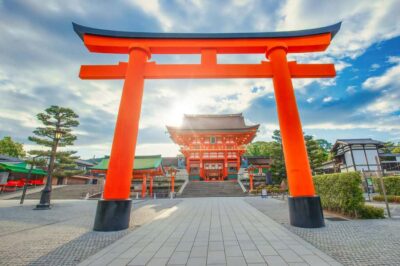
Arashiyama, Nara & Fushimi Inari Shrine w/Lunch
Read our review →
Nijo Castle, Kiyomizu & Fushimi Inari Guided Tour
Read our review →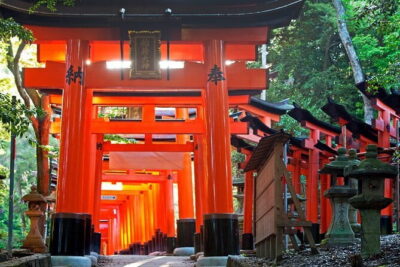
Nijo, Kinkaku-ji, Arashiyama, Kiyomizu & Fushimi Inari
Read our review →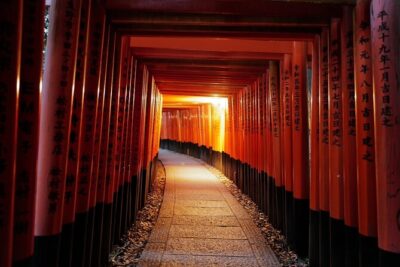
Browse the lists this tour appears in