
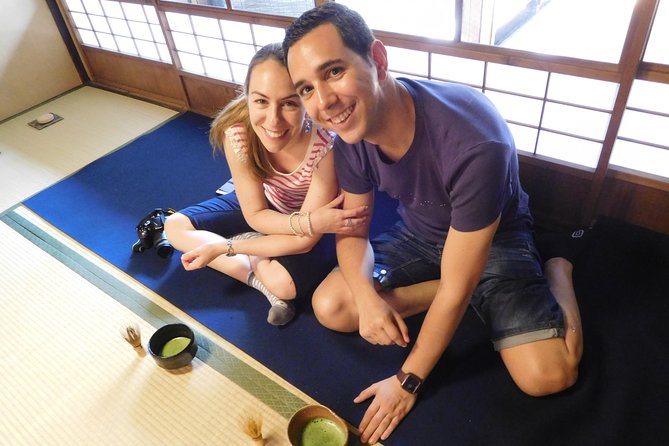
Reviewed · KYOTO TEA CEREMONIES
Tea Ceremony Experience in Traditional Kyoto Townhouse
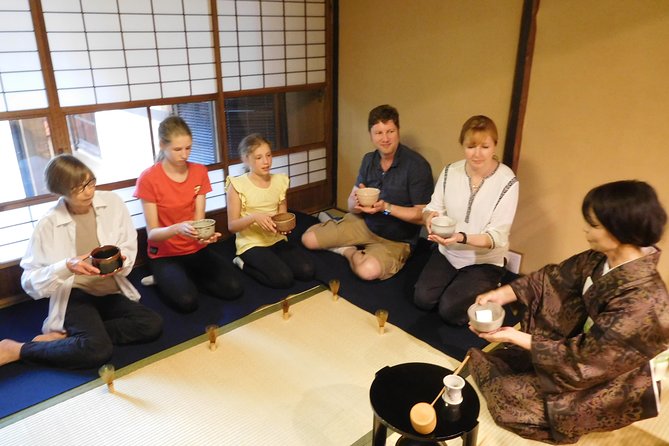
The ceremony happens in a wooden Kyoto townhouse, not a staged room built for tourists. At Ami Kyoto, you enter a roughly 80-year-old machiya for an hour of instruction, a careful tea demonstration, and a chance to make matcha yourself.
I like two things in particular: the small group, capped at six, gives you room to ask questions, and the experience connects the ceremony’s gestures with their practical and symbolic meanings. The Uji matcha and Kyoto sweet also make this more than a lesson in etiquette.
One thing to plan for: the townhouse sits in a traditional residential area, and the address can be tricky to locate if you rely only on English street signs. Give yourself time to find 605 Nishidachō, and check the map information sent with your booking.
Key points to know before you book
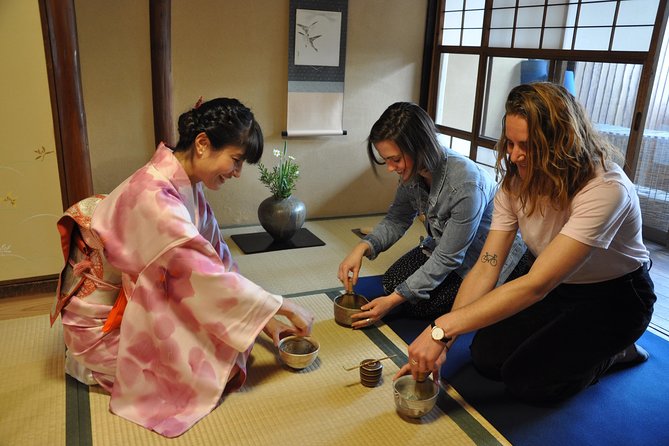
- An old Kyoto townhouse: The ceremony takes place in a wooden machiya that is about 80 years old.
- A compact, hands-on lesson: Watch the hosts demonstrate the tea ceremony, then learn how to prepare and drink matcha yourself.
- A group of no more than six: The small cap makes it easier to follow the movements and ask questions.
- Tea from Uji: Your bowl of matcha comes from a tea farm in Uji City, a well-known tea-growing area near Kyoto.
- A traditional sweet with your tea: A Kyoto confection accompanies the matcha. One sweet served has been identified as suhama.
- One hour, several start times: The session fits neatly into a Kyoto day, and you can choose a time that works with your plans.
Step inside a Kyoto machiya
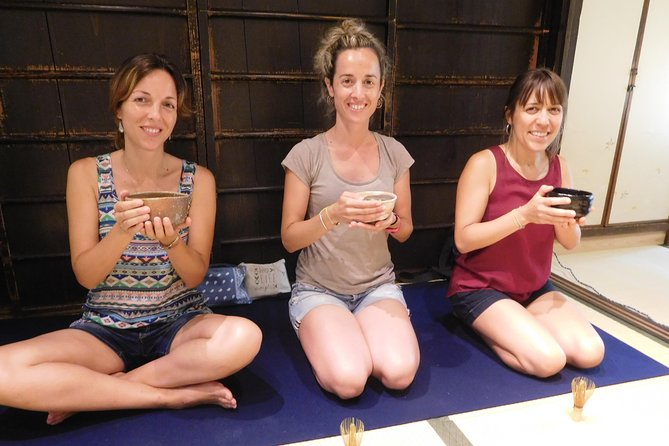
Ami Kyoto’s tea ceremony takes place in a traditional machiya, the narrow wooden townhouses that once formed much of Kyoto’s residential fabric. This particular home is about 80 years old. Its appeal is not grand architecture or elaborate decoration, but the chance to spend time inside a lived-in style of building that is easy to pass without ever seeing from within.
That setting changes the feel of the lesson. Instead of watching a demonstration in a modern classroom, you enter a compact, domestic space where the ceremony’s measured movements make sense. The hosts explain how to enter the tea room and what to do, so you are not left guessing about when to sit, watch, or take part.
The venue is in a traditional residential neighborhood, which is part of its charm and its main practical wrinkle. Kyoto’s street layout and signage can make addresses less obvious than you might expect, especially if you are looking for English street names or numbers. Use the exact address, 605 Nishidachō, and the map link provided with your booking rather than assuming the building will be easy to spot from the main road.
More tea ceremonies in Kyoto:
- Kyoto: Tea Ceremony in a Traditional Tea House in Kiyomizu
★ 4.9 · 3,519 reviews - Kyoto: Tea Ceremony Ju-An at Jotokuji Temple
★ 4.9 · 3,207 reviews - Kyoto: 45-Minute Tea Ceremony Lesson Experience
★ 4.3 · 2,378 reviews
Watch first, then make your own matcha
The hour begins with an introduction to the basic ideas of tea ceremony and the etiquette that shapes it. The hosts explain what is happening as they demonstrate, turning a sequence of precise movements into something you can understand rather than simply admire from across the room.
That explanation is one of the experience’s strongest features. The ceremony can look formal from the outside, but the hosts discuss both the practical and symbolic reasons for the actions. You get a clearer sense of why each movement is deliberate, and how the preparation and serving of tea form part of a larger practice of attention and respect.
You are also shown how to enter the tea room and invited to try the process. The lesson is not just a performance with a short explanation tacked on. You have the chance to take part, prepare your own bowl of matcha, and learn how to drink it according to the guidance you have just received.
Expect instruction rather than a long, silent ceremony. The hosts explain the steps, answer questions, and keep the pace accessible. That suits first-timers particularly well. You do not need to arrive knowing the rules, and you are not expected to master every gesture in one session.
Matcha from Uji and a Kyoto sweet
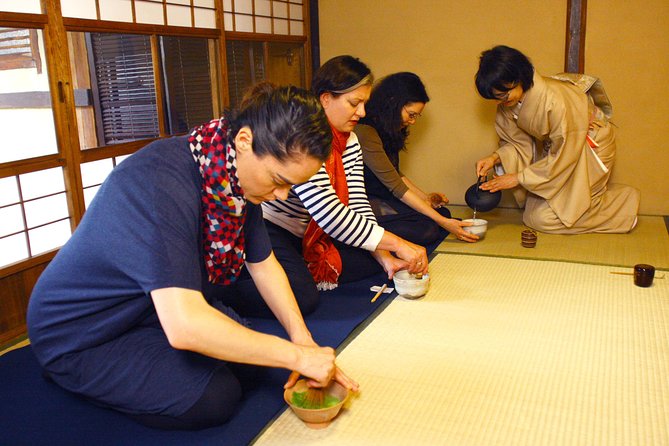
The matcha comes from a tea farm in Uji City, south of Kyoto. The tea is included in the price, as is a traditional Japanese sweet from a Kyoto confectioner. It is a simple pairing, but an important one: the tea ceremony is not only something to watch. You taste the tea and sweet together as part of the lesson.
One of the sweets served has been identified as suhama. The exact sweet may depend on what is offered at your session, so do not count on a particular variety. Either way, the sweet provides a point of contrast to matcha’s pronounced, slightly bitter flavor.
The matcha itself gets particular praise from people who already enjoy the drink, and the hosts may have selected tea available to buy. That can be a useful option if you want to continue making matcha at home, especially after learning how to prepare and drink it. Buying anything beyond the included bowl and sweet is optional.
Why the six-person limit matters
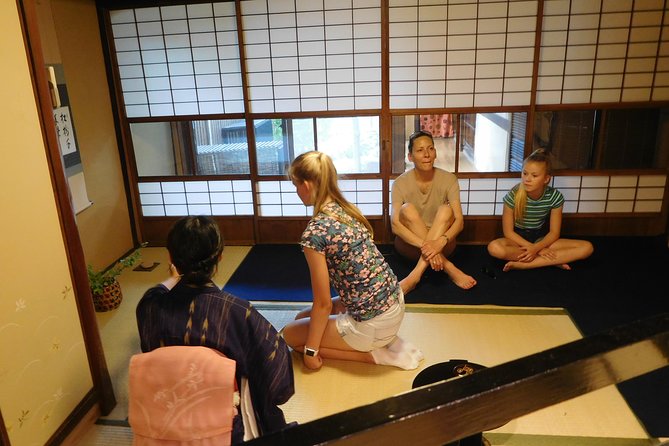
A maximum of six people is a meaningful feature here, not just a marketing number. Tea ceremony involves details that are easier to miss in a large group: the order of movements, how the bowl is handled, and when to follow the host’s example. A small gathering gives you a better chance to see the demonstration clearly and ask for a point to be explained again.
The intimate scale also suits the townhouse. This is a small, domestic setting, not a hall designed to hold a crowd. A few other participants can make the hour feel sociable without turning the ceremony into a tour-group production. Several parties have described attending with a few other people, and the official maximum is six.
Kimi is named as one of the hosts, and the sessions are led by friendly, patient hostesses who explain the ceremony in clear detail. The teaching style is welcoming rather than stern. You can ask questions and learn at a comfortable pace, while still seeing the formal side of the practice.
More Kyoto tours in Kyoto:
- PERFECT KYOTO 1-Day Bus Tour
★ 5.0 · 13,518 reviews - Kyoto: Fushimi Inari, Kinkakuji, Bamboo Grove 1 Day Bus Tour
★ 4.8 · 4,316 reviews - Kyoto Geisha Walking Tour: Gion District & Hidden Gems
★ 4.7 · 3,273 reviews - Kyoto: Gion Magical Night Walking Tour with Geisha Trivia
★ 4.9 · 2,393 reviews
Is one hour enough?
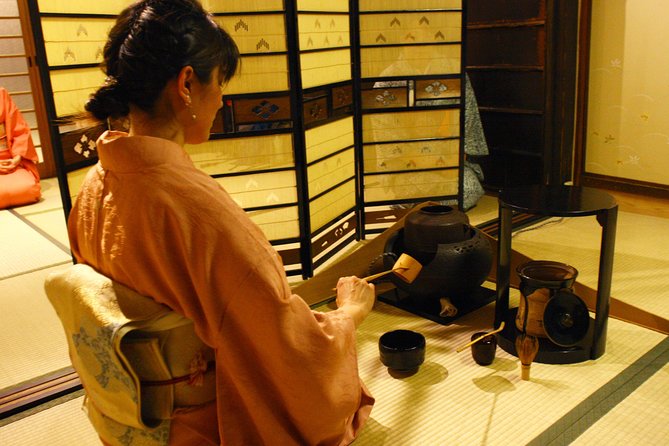
For an introduction, yes. The session lasts about an hour, a length that gives you time for an explanation, a demonstration, a turn at making tea, and a sweet without taking up half your day. Families have found the timing manageable, and the focused format is helpful if you are fitting the experience between other Kyoto plans.
The trade-off is that this is a first look, not an in-depth course. You will learn core ideas and etiquette, but an hour cannot cover every school, historical detail, or variation in tea ceremony practice. If you are already an experienced student, you may want a more specialized lesson. If you are curious but new to the subject, the compact length is a strength.
The session also offers more than a quick photo opportunity. The hosts explain the steps and invite participation, so you leave with a basic understanding of how to prepare and drink matcha. That makes the time feel well used, especially if you have never encountered a tea ceremony before.
What $27.74 gets you
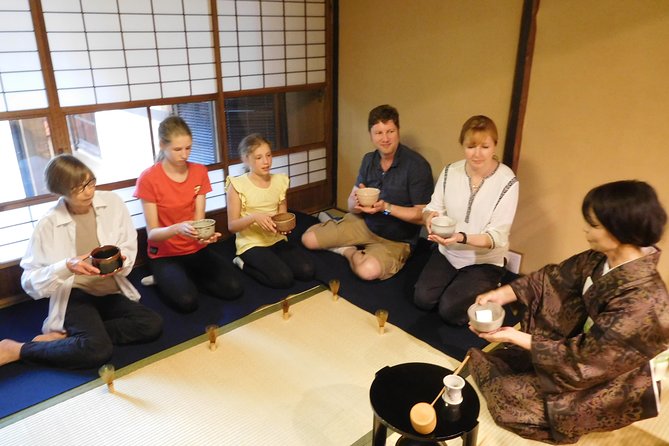
At $27.74 per person, the experience is a reasonable-value cultural activity. The price includes a bowl of matcha and Japanese sweets, but not hotel pickup or drop-off. You are paying for the hour of guided instruction, access to the townhouse, the demonstration, and the chance to make tea yourself.
The value is strongest if you want context, not just a cup of matcha. You could buy tea and sweets elsewhere for less, but that would not include an explanation of the etiquette or a demonstration in a traditional home. The small group and the personal teaching are what make the price easier to justify.
This is also a relatively modest commitment of time and money compared with a longer excursion. You can choose from several start times, and the activity ends back at its meeting point. The experience is recommended by all 38 people whose ratings are included in the supplied information, with an overall rating of 4.9 out of 5. The most consistently praised elements are the hosts’ warmth, the clear instruction, and the chance to participate.
Getting there and planning your hour
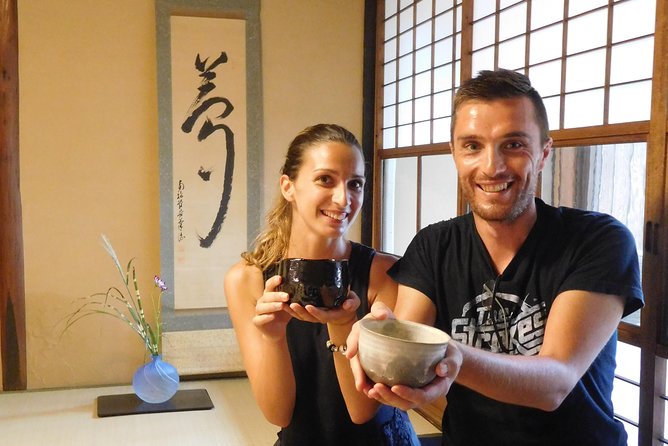
Meet at 605 Nishidachō, Shimogyo Ward, Kyoto, 600-8397. The activity ends at the same meeting point, and hotel transportation is not included. The venue is near public transportation, but the last part of the journey may still take some attention because the house is in a residential area.
The address is more useful when paired with a map link. One visitor found the location difficult to identify at first because English street signs and numbers were not obvious. The building does have a sign outside, but it blends in with neighboring homes. Set aside a little extra time rather than arriving at the last moment.
The session is limited to six people, and confirmation is issued within 48 hours of booking, subject to availability. The activity is booked, on average, about 25 days in advance, so it is sensible to reserve ahead if you have a fixed date in mind. Free cancellation is available up to 24 hours before the start time.
Most people can participate. One family reported that the hosts accommodated a member who used a wheelchair, but that single experience does not confirm every access detail. If you need specific arrangements, contact the provider before booking.
Who will enjoy this tea ceremony?
This is a good choice if you want a cultural activity that gives you something to do, not just something to watch. First-time visitors to Kyoto can learn a few basics of tea ceremony in a friendly setting, while matcha fans get to taste tea from Uji and see how it is prepared.
It also suits families and small parties who prefer a guided activity with a clear beginning and end. The hour is short enough to fit into a busy sightseeing day, and the hosts’ explanatory approach helps make the subject accessible to different ages and levels of interest.
You may want to skip it if you are looking for a long, highly formal ceremony or an advanced study session. The emphasis here is on an introduction, a demonstration, participation, and conversation. That is precisely the point for most visitors, but it is worth knowing what kind of experience you are booking.
Should you book it?
Book this if you want to understand the gestures and basic etiquette behind tea ceremony, taste Uji matcha, and spend an hour in a traditional Kyoto townhouse. The small group and patient instruction make it an approachable first lesson, and the included sweet rounds out the experience.
Think twice if your schedule is so tight that finding a residential address will cause stress, or if you already know the ceremony well and want a more advanced class. For most curious first-timers, though, $27.74 buys a personal, hands-on introduction with a stronger sense of place than a tea demonstration in a large venue.
FAQ
How long does the tea ceremony experience last?
The session lasts about one hour.
What is included in the price?
You receive a bowl of matcha green tea and Japanese sweets. Hotel pickup and drop-off are not included.
How many people can join the session?
The group is limited to a maximum of six people.
Where does the experience start and end?
It starts at 605 Nishidachō, Shimogyo Ward, Kyoto, and ends back at the same meeting point.
Is the experience near public transportation?
Yes. The meeting point is listed as near public transportation.
Can I cancel for a refund?
Yes. You can cancel up to 24 hours before the experience starts for a full refund. Cancellations made less than 24 hours before the start time are not refunded.
Newly added in Kyoto
- Uji: Private immersion into Kyoto’s tea and reglious culture★ 5.0 · 17 reviews
- Whisk Your Own Matcha: A Zen Matcha Experience at Temple★ 3.6 · 7 reviews
- Kyoto tea town for matcha lovers★ 5.0 · 16 reviews
- Treasures of Kyoto: Gion & historical Walking Tour★ 5.0 · 6 reviews
- Kyoto Matcha Green Tea Tour★ 4.5 · 23 reviews
- Uji and Wazuka Matcha Farm Half Day Private Guided Tour★ 5.0 · 21 reviews
- Uji Tea Ceremony and UNESCO Heritage Walking Tour★ 5.0 · 20 reviews
- Utilising upcycled Matcha! Creating matcha incense (Uji, Kyoto)★ 5.0 · 6 reviews
Kyoto Tea Ceremonies, compared.

Tea Ceremony in a Traditional Tea House in Kiyomizu
Read our review →


World Heritage Kyoto & Nara Uji Authentic Matcha Experience
Read our review →


Arashiyama Bamboo Forest, Monkeys, Matcha & Temple Tour
Read our review →
Tea Museum Tickets and Matcha Grinding Experience
Read our review →Browse the lists this tour appears in