
Reviewed · KYOTO TEA CEREMONIES
Tea Ceremony Experience in Traditional Kyoto Townhouse
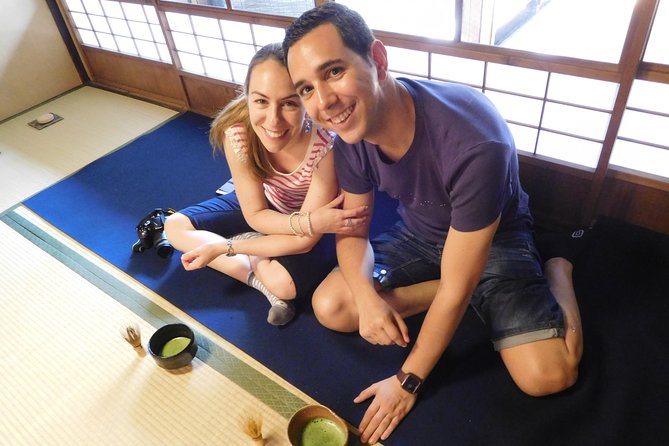
Matcha is more than a cup of green tea here. At Ami Kyoto, you’ll learn how to prepare it and watch a tea ceremony demonstration inside an approximately 80-year-old machiya, one of Kyoto’s traditional wooden townhouses. The session pairs practical instruction with background on a ritual once favored by monks and samurai.
I like the small group, capped at six, and the chance to see how matcha is prepared rather than only watching a ceremony from the sidelines. I also like that tea comes with Japanese sweets from a famous Kyoto confectionary. The main consideration is the short, one-hour format: it suits a focused introduction, not an extended study of tea culture.
What to know before you book
- The setting is an 80-year-old machiya: You get time inside a traditional Kyoto townhouse, not just a neutral workshop room.
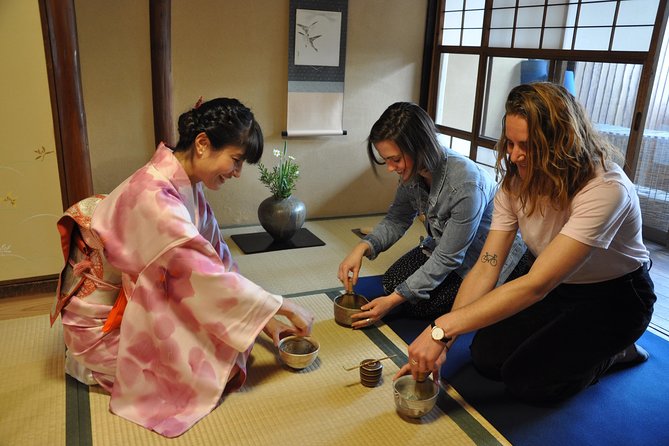
- You make matcha yourself: The session includes hands-on instruction in preparing matcha sourced from an organic farm.
- A ceremony demonstration adds context: You watch a demonstration while learning about the ritual’s history and place in Japanese culture.
- Tea and sweets are included: The experience provides one bowl of matcha and Japanese sweets.
- The group is small: A maximum of six participants allows for a more personal session.
- Plan for one hour: The activity begins and ends at the same address in Kyoto’s Shimogyo Ward.
A machiya makes a fitting classroom
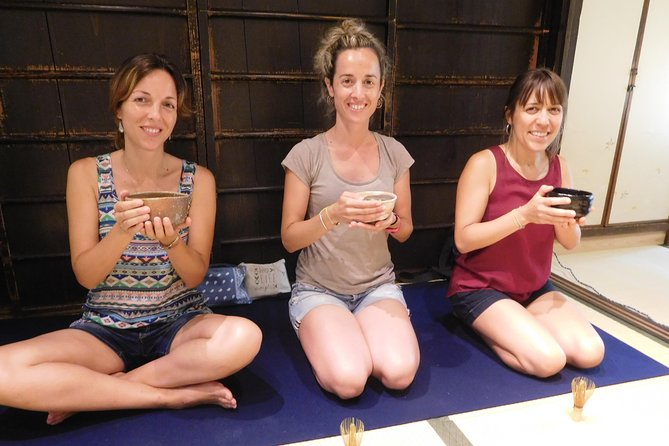
The experience takes place at Ami Kyoto, in a traditional wooden townhouse about 80 years old. Kyoto once had many machiya, simple homes that formed part of the city’s everyday streetscape. Spending an hour inside one gives the tea lesson a sense of place that a modern classroom could not provide.
The house is described as quaint and elegant. That tells you what to expect in broad terms, but the exact room layout and furnishings are not specified. The point is not to tour a grand historic property. It is to spend time in a surviving example of a familiar Kyoto building type while learning a practice with its own formal setting.
This is a useful pairing. A tea ceremony can feel abstract if you only hear about its rules and history. Here, the wooden townhouse gives the lesson a physical setting, while the matcha preparation gives you something practical to do. If you’re curious about Japanese culture but prefer learning by watching and trying, that mix makes the hour more approachable.
Keep expectations realistic: the house is one part of the experience, not a long architectural tour. The focus remains on matcha and the ceremony. You get a rare look inside a traditional home, but the available details do not promise a room-by-room explanation or a broader tour of the building.
More tea ceremonies in Kyoto:
- Kyoto: Tea Ceremony in a Traditional Tea House in Kiyomizu
★ 4.9 · 3,519 reviews - Kyoto: Tea Ceremony Ju-An at Jotokuji Temple
★ 4.9 · 3,207 reviews - Kyoto: 45-Minute Tea Ceremony Lesson Experience
★ 4.3 · 2,378 reviews
Learning to prepare matcha, not just drink it
The workshop’s hands-on element is a strong reason to choose it over a simple tea tasting. You’ll learn how to prepare matcha and make a cup yourself, with guidance from the host. The tea is described as high-quality matcha from an organic farm, although the farm’s name and the exact preparation steps are not specified.
That distinction matters if you already enjoy matcha. You may know its flavor but not the method behind a properly prepared bowl. A guided session gives you a chance to observe the process closely and try it yourself, rather than treating the tea as a drink served without explanation.
The instruction is designed to be clear and simple. That should suit first-timers and families who want an introduction without needing prior knowledge. A previous participant described the explanation as easy to follow and the making of the tea as fun. Another praised the thorough demonstration. Those details suggest that the session balances watching with participation, rather than asking you to sit through a long lecture.
Still, one hour sets a limit. You should expect an introduction to matcha preparation, not an advanced course or a broad survey of Japanese tea traditions. If you want detailed instruction in every step, ask Ami Kyoto what the session covers before booking. The published information does not specify how much time is spent on each part.
Watching the tea ceremony
After, or alongside, the practical lesson, you’ll watch a tea ceremony demonstration. The session includes background on the history of the ritual and explains its cultural importance. The ceremony is described as a practice once favored by monks and samurai, a reminder that tea has had roles beyond refreshment.
The demonstration is a helpful counterpoint to making a bowl yourself. Preparing the tea gives you a direct task; watching the ceremony lets you see how preparation fits into a more formal cultural setting. The guide’s explanation can help you notice the care involved without assuming you already understand the customs.
The available description does not list each action in the demonstration or promise that participants will perform a complete ceremony themselves. Think of this as a guided introduction with a demonstration, not a full formal ceremony in which you take on every role. That distinction helps you choose the right experience if you are comparing it with longer or more specialized tea events.
The strongest feature here is the combination of explanation and demonstration. A previous participant found the ceremony thorough and fascinating, while also noting that the explanations were clear. That is a good sign for anyone who wants cultural context but does not want a session made difficult by unfamiliar terms.
Matcha and Kyoto sweets
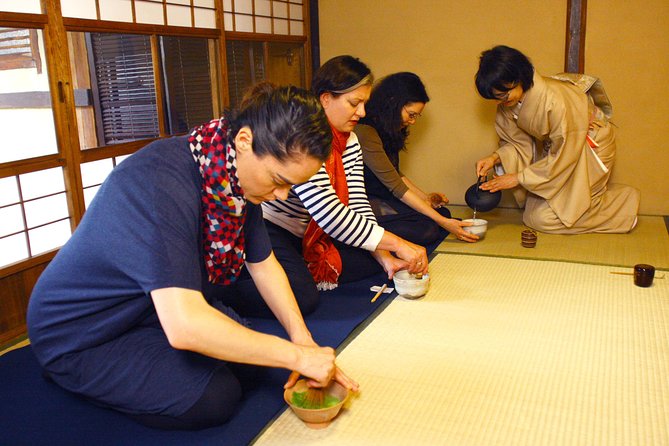
The experience includes a bowl of matcha and Japanese sweets. The sweets are said to come from a famous Kyoto confectionary, giving you a taste of the local pairing that accompanies the tea. The confectionary is not named, and no specific sweet is identified, so there is no basis to expect a particular flavor or pastry.
Tea and sweets are not a side note here. They give you a chance to connect the preparation lesson with the finished cup and the customary pairing. If you have never tried matcha with Japanese sweets, this is a simple way to experience both together.
The inclusion is modest but useful when you assess the price. You are paying not only for a serving of tea, but for instruction, a demonstration, cultural background, a small-group setting, and time inside the townhouse. The experience is still only about an hour, so its value depends on whether those focused elements are what you want.
If you are especially interested in matcha, the hands-on portion is likely to matter more than the tasting itself. If you mainly want a substantial snack or a meal, this is not the right choice: the included food is a bowl of tea and Japanese sweets.
More Kyoto tours in Kyoto:
- PERFECT KYOTO 1-Day Bus Tour
★ 5.0 · 13,518 reviews - Kyoto: Fushimi Inari, Kinkakuji, Bamboo Grove 1 Day Bus Tour
★ 4.8 · 4,316 reviews - Kyoto Geisha Walking Tour: Gion District & Hidden Gems
★ 4.7 · 3,273 reviews - Kyoto: Gion Magical Night Walking Tour with Geisha Trivia
★ 4.9 · 2,393 reviews
A small group and a short visit
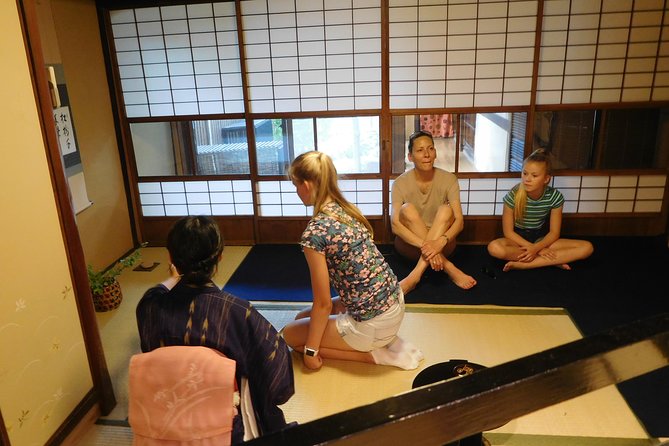
The maximum group size is six. That is small enough for a more personal format than a large demonstration, and it gives the host room to explain the process in a direct way. A participant who attended with parents found the session enjoyable as a family activity, so it can suit different ages and levels of familiarity, though no specific minimum age is provided.
One hour is easy to fit into a Kyoto day. It also means the session is focused. You will not need to set aside half a day, but you should arrive ready to give the activity your attention. The experience begins and ends at the meeting point, so it does not include hotel pickup or drop-off.
The group cap and the intimate setting are a useful match. In a much larger class, hands-on preparation might be harder to follow. Here, you can expect a closer look at the demonstration and an opportunity to take part, though the exact amount of individual guidance is not spelled out.
The tour is recommended by all 19 people who rated it, with an overall rating of five out of five. That is a small sample, so it should not be treated as a guarantee. Still, the praise focuses on the elements that matter most: kind, professional hosts, clear explanations, a thorough demonstration, and the fun of preparing tea.
Is $27.59 good value?
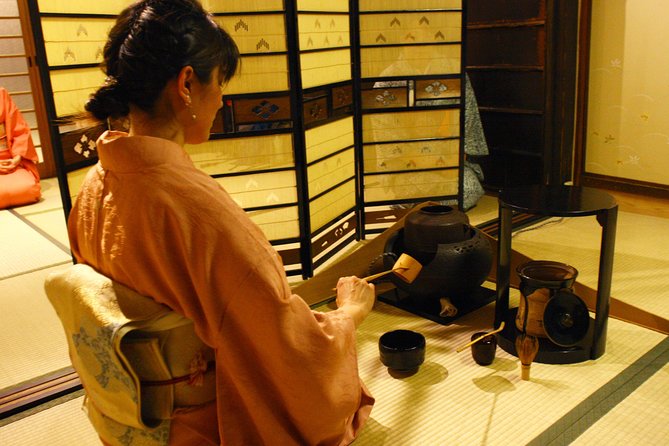
At $27.59 per person, the price is reasonable if you want a guided cultural activity rather than a quick cup of tea. The fee covers the one-hour session, matcha preparation, the ceremony demonstration, a bowl of matcha, Japanese sweets, and access to the traditional townhouse setting. For a small group of no more than six, that is a good range of elements in a compact visit.
The value is less compelling if your main goal is simply to drink matcha. You could likely find tea elsewhere, but that would not include the instruction, cultural explanation, demonstration, and time in a machiya. The useful question is whether you value learning how the tea is prepared and seeing the ceremony in context.
There is no hotel transfer included, so factor in your own trip to the meeting point. The address is 605 Nishidachō, Shimogyo Ward, Kyoto, and the location is near public transportation. The activity ends back at the same point, which makes it easier to plan around a nearby outing.
This experience is booked an average of 19 days ahead. That is a planning clue, not a required lead time, but it suggests you should not assume a last-minute place will be available. Confirmation is provided within 48 hours of booking, subject to availability.
Who will enjoy this tea experience?
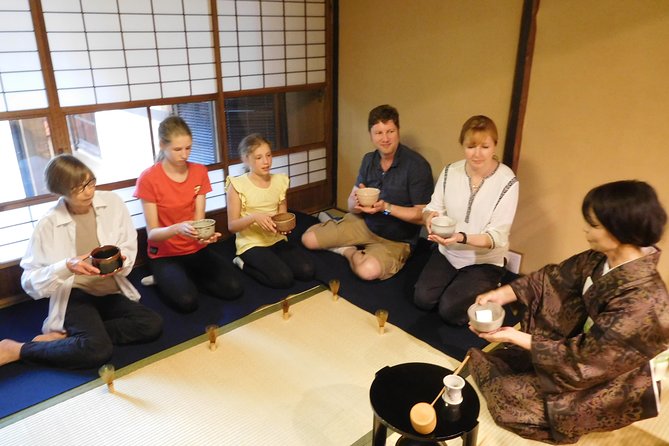
I’d consider it a good fit if you like matcha, want a cultural activity that asks you to take part, or are curious about traditional Kyoto homes. It also works well if you want a short break from visiting temples and other sights, with an activity that gives you something to learn and try.
It suits first-time visitors because the explanations are described as clear and simple. You do not need to arrive knowing tea etiquette or the history of the ceremony. The small group and one-hour length also make the commitment manageable for families and visitors with a full schedule.
It may not be the best choice if you are looking for a long tea course, an elaborate meal, or a detailed tour of the townhouse. The experience is focused on matcha, a ceremony demonstration, and a brief look at the machiya setting. The published details do not promise a full architectural tour or an extended lesson.
If you want to try the tea-making yourself and understand a little of the ceremony’s context, the balance is appealing. If you only want a ceremonial performance to watch, ask how much hands-on time is included before booking. The experience is designed to combine both, and that combination is its main appeal.
Should you book it?
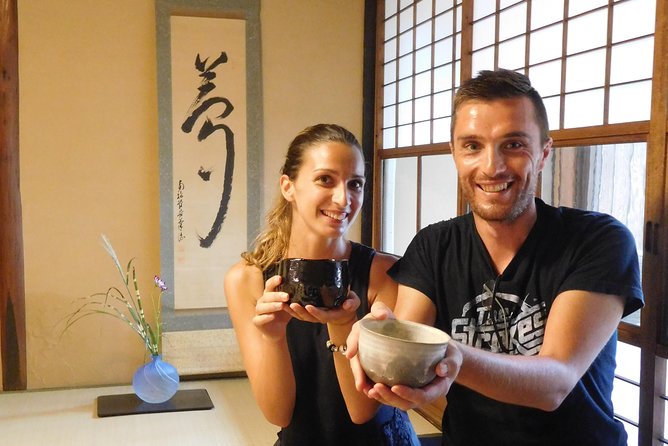
Book this if you want an accessible introduction to matcha and the tea ceremony in a traditional Kyoto townhouse. The strongest reasons are the hands-on preparation, the clear explanations, the small group, and the chance to enjoy tea with Japanese sweets in a setting connected to Kyoto’s past.
Skip it if you need a longer, more advanced class or expect a full tour of the house. At about an hour, it is a focused cultural stop, not an all-day activity. For $27.59, it offers good value when you care about the process and setting as much as the cup itself.
FAQ
How long does the tea ceremony experience last?
It lasts approximately one hour.
Where does the experience take place?
It takes place at Ami Kyoto, 605 Nishidachō, Shimogyo Ward, Kyoto, 600-8397, Japan.
Does the activity end at the same place?
Yes. It ends back at the meeting point.
What is included in the price?
The experience includes a bowl of matcha green tea and Japanese sweets.
Is hotel pickup included?
No. Hotel pickup and drop-off are not included.
How many people can join?
The maximum group size is six participants.
Is the activity near public transportation?
Yes. The meeting point is described as near public transportation.
How far ahead is the experience usually booked?
It is booked an average of 19 days in advance. Confirmation is provided within 48 hours, subject to availability.
Can I cancel for a refund?
Yes. You can receive a full refund if you cancel at least 24 hours before the start time.
Newly added in Kyoto
- Uji: Private immersion into Kyoto’s tea and reglious culture★ 5.0 · 17 reviews
- Whisk Your Own Matcha: A Zen Matcha Experience at Temple★ 3.6 · 7 reviews
- Treasures of Kyoto: Gion & historical Walking Tour★ 5.0 · 6 reviews
- Kyoto tea town for matcha lovers★ 5.0 · 16 reviews
- Kyoto Matcha Green Tea Tour★ 4.5 · 23 reviews
- Uji and Wazuka Matcha Farm Half Day Private Guided Tour★ 5.0 · 21 reviews
- Uji Tea Ceremony and UNESCO Heritage Walking Tour★ 5.0 · 20 reviews
- Utilising upcycled Matcha! Creating matcha incense (Uji, Kyoto)★ 5.0 · 6 reviews
Kyoto Tea Ceremonies, compared.

Tea Ceremony in a Traditional Tea House in Kiyomizu
Read our review →

World Heritage Kyoto & Nara Uji Authentic Matcha Experience
Read our review →

Arashiyama Bamboo Forest, Monkeys, Matcha & Temple Tour
Read our review →
Tea Museum Tickets and Matcha Grinding Experience
Read our review →Browse the lists this tour appears in