
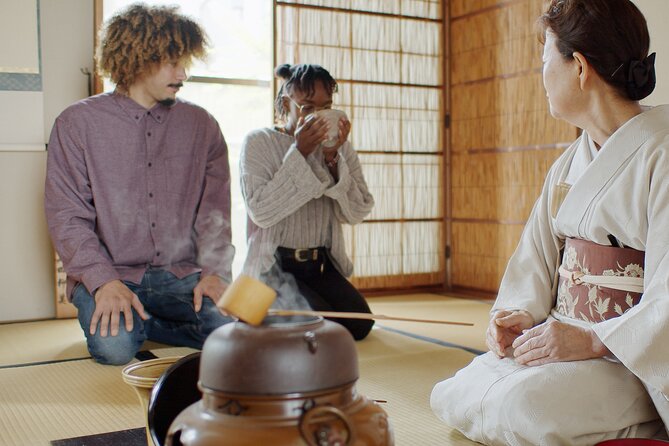
Reviewed · KYOTO TEA CEREMONIES
Kyoto: Authentic Tea Ceremony in a Small Group
A miniature garden, a traditional tea room, and a bowl of matcha you whisk yourself make this a focused way to meet Kyoto’s tea culture. I like the pairing of carefully selected matcha with sweets from a long-established Kyoto wagashi shop, and the chance to learn what the utensils and gestures mean, not just watch a formal performance.
The main consideration is price: $586.38 for the private group, whether you come alone or with up to five others. The hour is intimate and well-appointed, but it is a short cultural visit, not a full tea-school lesson or a broader tour of Kyoto.
Key points to know
- Private for up to six: The fee is per group, so the cost per person falls when you bring more people.
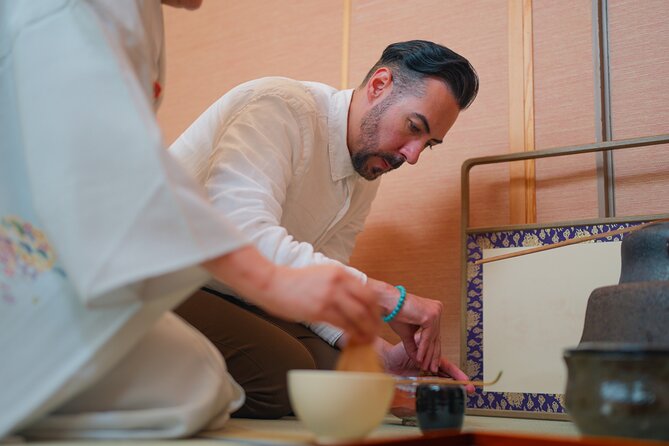
- A hands-on finish: You watch an Urasenke tea procedure, then whisk your own bowl of matcha.
- Two Kyoto treats: Matcha from Marukyu Koyamaen is served with traditional sweets from a long-established Kyoto wagashi shop.
- A garden inside the tea room: The carefully arranged miniature garden gives the visit a distinctive setting.
- A short, structured visit: Plan on about one hour, with the experience beginning and ending at the tea room in Uzumasa.
- A little lead time helps: The experience is booked on average 27 days ahead, so don’t leave it to the last minute if your schedule is fixed.
A quiet hour in Uzumasa
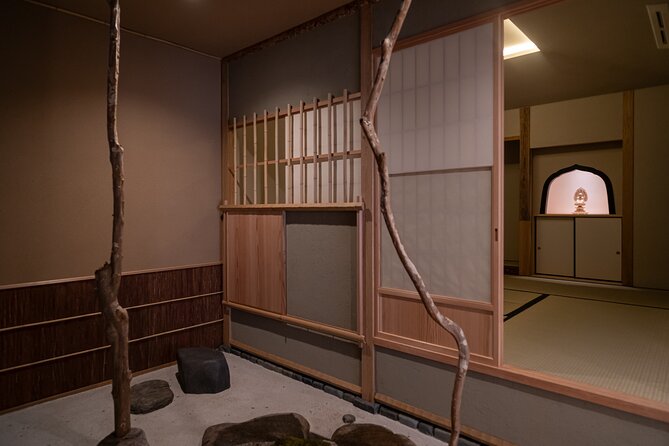
This tea ceremony takes place at Chanoyu The KYOTO Uzumasa, in Kyoto’s Ukyo Ward. The venue is described as a calm retreat in the historic Uzumasa district, with an elegant interior leading into a tea room and a carefully designed garden. It offers a change of pace from sightseeing built around temples, shops, and long walks.
The format is deliberately small. Only your own group takes part, with a maximum of six people, so you can focus on the host’s explanation and the details of the ceremony without sharing the session with strangers. That private setup is especially appealing if you want to ask questions or enjoy the experience at a quieter pace.
The visit lasts about an hour. That is enough time for a guided introduction, a demonstration, and your own turn whisking matcha, but it is not a long course in tea practice. Think of it as a compact cultural encounter, one that gives you more context than a quick cup of tea at a café.
More tea ceremonies in Kyoto:
- Kyoto: Tea Ceremony in a Traditional Tea House in Kiyomizu
★ 4.9 · 3,519 reviews - Kyoto: Tea Ceremony Ju-An at Jotokuji Temple
★ 4.9 · 3,207 reviews - Kyoto: 45-Minute Tea Ceremony Lesson Experience
★ 4.3 · 2,378 reviews
Haori, garden, and first impressions
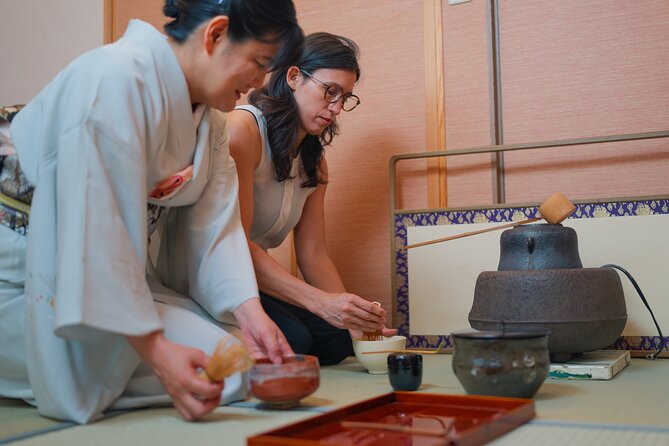
You begin by wearing a traditional haori, a kimono-style jacket provided as part of the experience. It adds a tangible link to the setting without making the visit sound like a full kimono dressing session. The information provided promises the jacket, but not a complete kimono outfit, so set your expectations accordingly.
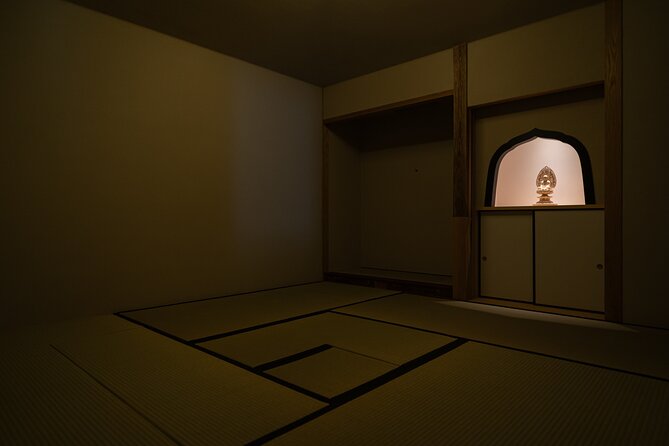
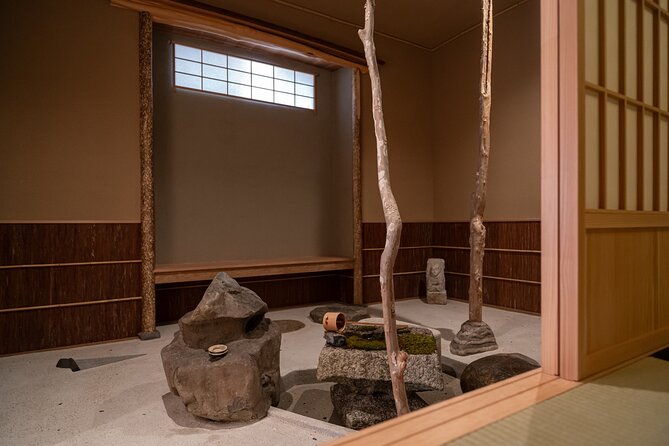
The garden is one of the most distinctive features. It is described as a meticulously arranged miniature garden within the tea room, rather than an expansive outdoor stroll. That small scale suits the ceremony: you can take in its details while remaining close to the room and the host’s presentation.
The setting matters because tea ceremony is about more than the drink. The room, the utensils, the garden, and the way tea is served all help establish a sense of care and attention. Here, the setting seems designed to make that connection clear, even during a one-hour visit.
There is a tradeoff. If you picture wandering through a large traditional garden, this is not that experience. The attraction is the crafted, intimate arrangement and the way it frames the tea ceremony.
Watching the Urasenke tea procedure
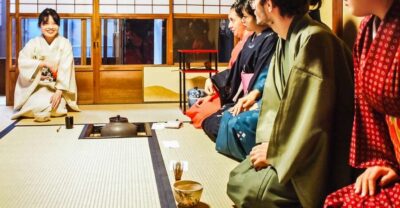
After you have had a chance to appreciate the room and garden, you watch a graceful Urasenke tea procedure. Urasenke is one of Japan’s tea schools, and the ceremony offers a chance to see the sequence and handling of the utensils rather than simply receive a prepared drink.
The host explains the history and cultural origins of chanoyu, the Japanese tea ceremony, and introduces the utensils used. This context is useful: without it, the movements can look like a series of precise gestures with little explanation. Knowing that the utensils and actions carry meaning gives you more to notice.
Expect the demonstration to be calm and deliberate. The ceremony’s appeal lies partly in its careful pace, which contrasts with the more hurried rhythm of a day spent moving between Kyoto sights. The host’s explanations are intended to make the tradition accessible, including for first-time participants.
The session is an introduction, not an exhaustive history of tea. You will get a brief account of the cultural background and an explanation of the tools, rather than a detailed study of every school or historical period. If you want a first encounter with chanoyu, that balance should work well. If you already know the tradition in depth, the introductory level may feel familiar.
Kyoto sweets and Marukyu Koyamaen matcha
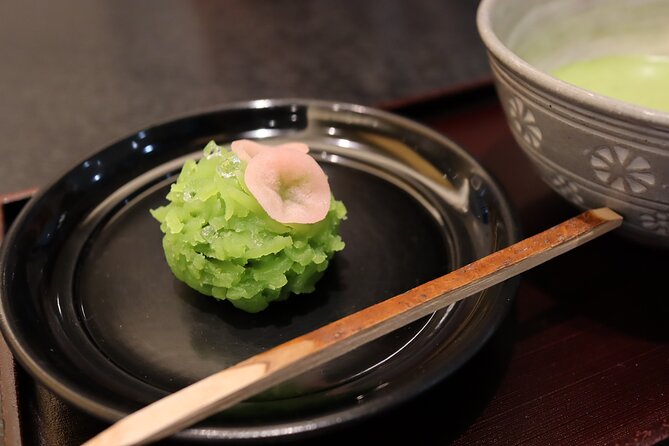
The food and tea are a central part of the experience, not an afterthought. You are served Kyoto sweets from a long-established wagashi shop and matcha selected from Marukyu Koyamaen, a respected tea producer. The careful pairing gives you a chance to taste the ingredients in the setting they are meant to accompany.
The experience includes sweets and matcha, with a second traditional sweet served alongside the matcha you prepare yourself. That sequence makes the tasting more than a single sample: you first observe the ceremony, then take part in preparing and enjoying your own bowl.
Matcha can be an acquired taste, especially if you have only tried heavily sweetened versions. Here, the tea is presented as part of a formal preparation and paired with sweets. The contrast is useful to notice: the wagashi brings sweetness, while the matcha has its own concentrated, earthy character.
The choice of ingredients is a practical reason this experience may appeal to food-minded visitors. You are not just learning about tea as an idea; you are tasting tea and sweets selected for quality. Still, the description does not specify the exact sweets served on a particular day, so don’t book expecting a specific confection.
More Kyoto tours in Kyoto:
- PERFECT KYOTO 1-Day Bus Tour
★ 5.0 · 13,518 reviews - Kyoto: Fushimi Inari, Kinkakuji, Bamboo Grove 1 Day Bus Tour
★ 4.8 · 4,316 reviews - Kyoto Geisha Walking Tour: Gion District & Hidden Gems
★ 4.7 · 3,273 reviews - Kyoto: Gion Magical Night Walking Tour with Geisha Trivia
★ 4.9 · 2,393 reviews
Your turn to whisk matcha
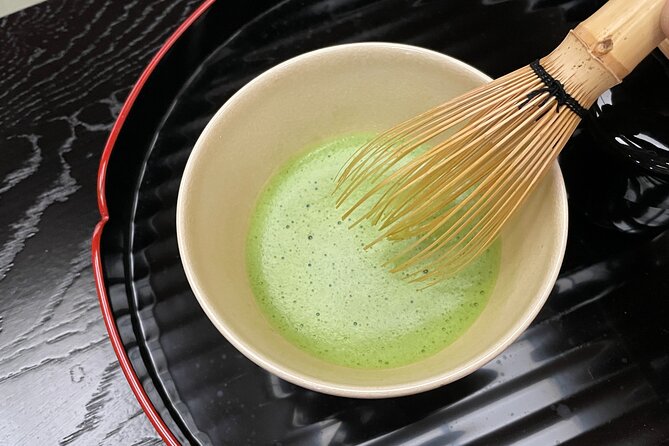
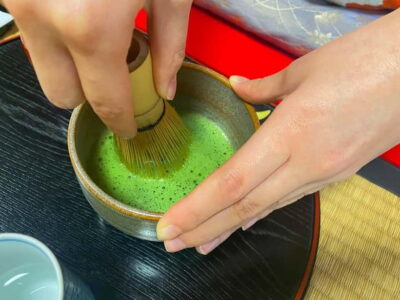
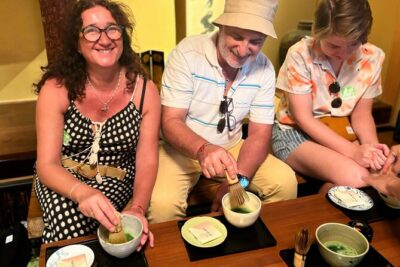
After watching the host, you get to whisk your own bowl of matcha. This hands-on part is a welcome counterpoint to the formal demonstration. You move from observing the procedure to trying one of its central actions for yourself.
The aim is not to turn you into a tea practitioner in an hour. It is to help you understand the care behind preparing matcha and to give you a direct connection to the ceremony. You can pay closer attention to how the tea looks and tastes when you have taken part in making it.
Your bowl is enjoyed with the second traditional sweet. That final pairing brings the visit back to its simplest pleasure: tea, confection, and a quiet room. It is also a gentle way to end without rushing straight from a performance into the next activity.
Is $586.38 a good value?
The listed price is $586.38 per group of up to six. For six people, that works out to about $97.73 each; for two, it is about $293.19 each. If you are travelling as a couple or solo, the price is high for a one-hour activity. With a full group, the per-person cost becomes more reasonable, though it remains a premium cultural experience.
What you are paying for is not simply a bowl of matcha. The fee covers a private session, the haori, the garden viewing, an Urasenke demonstration, an introduction to tea utensils and chanoyu, sweets, and the chance to prepare matcha yourself. The selected ingredients and dedicated tea-room setting add to the value for someone who wants a quiet, carefully arranged introduction.
The value depends on what you want from Kyoto. If your priority is a low-cost taste of matcha, a café will be far cheaper. If you want a guided encounter with the ceremony’s setting, gestures, and objects, this experience gives you more substance than a quick tasting.
The price also rewards sharing. A family or group of friends can divide the fixed fee, while a smaller party pays more per person for the same private hour. Consider both the total and your group size before booking.
Getting there and planning your hour
The meeting point is Chanoyu The KYOTO Uzumasa, at 19 Kita 1F, Uzumasa Izumishikibuchō, Ukyo Ward, Kyoto, Japan, 616-8101. The activity ends back at the same place, and public transportation is nearby. Private transportation is not included, so you will need to make your own way to the meeting point.
The experience is offered with a mobile ticket, and confirmation is received at booking. It is booked on average 27 days in advance. That average is a useful signal to plan ahead, particularly if you have a fixed date or want to coordinate the visit with a larger Kyoto itinerary.
Allow about an hour for the activity itself, plus whatever time you need to reach the venue. The information does not give a recommended arrival buffer or specify the nearest transit stop, so check your route before the day rather than assuming the address is self-explanatory.
The activity is private, but that does not mean transportation or other Kyoto sightseeing is arranged for you. Build your own route around the visit. Its compact length makes it possible to fit into a day of sightseeing, while the quieter setting offers a deliberate pause between busier plans.
Who will appreciate this tea ceremony?
This is a good fit if you are curious about Japanese culture and want more than a demonstration. You see the procedure, hear about its utensils and origins, taste the tea and sweets, and take part by whisking your own matcha. First-timers should find the format approachable because the host provides an explanation rather than expecting prior knowledge.
It also suits a small family or group of friends who value privacy. With only your party in the room, you can share the experience without having to match the pace or interests of a larger group. The haori and garden add visual interest, while the tasting gives the visit a relaxed finish.
Food lovers have a clear reason to consider it. The matcha and wagashi are chosen with care, and the pairing is central to the session. If you are more interested in Kyoto’s food culture than in a long lecture, this offers a focused way to sample both while learning why they belong together.
You may want to pass if you are looking for a low-cost activity, a long workshop, or a full day of tea study. At one hour, the session is intentionally concise. It is best understood as a polished introduction to chanoyu, not a substitute for a deeper course.
Should you book it?
Book this if you want a private, calm introduction to tea culture, value a carefully designed setting, and are willing to pay for quality ingredients and individual attention. The combination of a miniature garden, Urasenke demonstration, traditional sweets, and hands-on matcha preparation gives the hour a clear shape.
Think twice if you are travelling alone or as a couple on a tight budget. The fixed group price makes the most sense when shared among several people. If the price works for your group and you want a cultural pause rather than another quick photo stop, this is a thoughtful choice for a Kyoto itinerary.
FAQ
How long does the tea ceremony last?
The experience lasts about one hour.
What is the price?
The price is $586.38 per group, for up to six people.
Is the experience private?
Yes. Only your own group participates, with a maximum group size of six.
Where does the experience take place?
It takes place at Chanoyu The KYOTO Uzumasa in Ukyo Ward, Kyoto. The address is 19 Kita 1F, Uzumasa Izumishikibuchō, Kyoto, Japan, 616-8101.
Does the activity end at the meeting point?
Yes. It ends back at the meeting point.
Is transportation included?
No. Private transportation is not included. The venue is near public transportation.
What is included in the experience?
It includes Kyoto sweets, matcha, a garden viewing, a traditional haori to wear, an introduction to tea utensils, and a brief explanation of chanoyu’s history and cultural origins.
Will I get to make matcha myself?
Yes. After watching the tea procedure, you whisk your own bowl of matcha.
Is a mobile ticket available?
Yes. The experience offers a mobile ticket.
How far in advance is it usually booked?
It is booked on average 27 days in advance.
Newly added in Kyoto
- Uji: Private immersion into Kyoto’s tea and reglious culture★ 5.0 · 17 reviews
- Whisk Your Own Matcha: A Zen Matcha Experience at Temple★ 3.6 · 7 reviews
- Kyoto tea town for matcha lovers★ 5.0 · 16 reviews
- Treasures of Kyoto: Gion & historical Walking Tour★ 5.0 · 6 reviews
- Kyoto Matcha Green Tea Tour★ 4.5 · 23 reviews
- Uji and Wazuka Matcha Farm Half Day Private Guided Tour★ 5.0 · 21 reviews
- Uji Tea Ceremony and UNESCO Heritage Walking Tour★ 5.0 · 20 reviews
- Utilising upcycled Matcha! Creating matcha incense (Uji, Kyoto)★ 5.0 · 6 reviews
Kyoto Tea Ceremonies, compared.
Tea Ceremony in a Traditional Tea House in Kiyomizu
Read our review →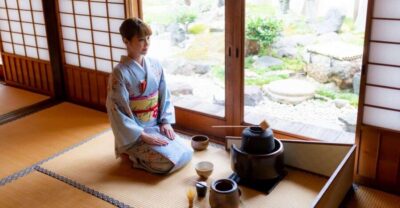
World Heritage Kyoto & Nara Uji Authentic Matcha Experience
Read our review →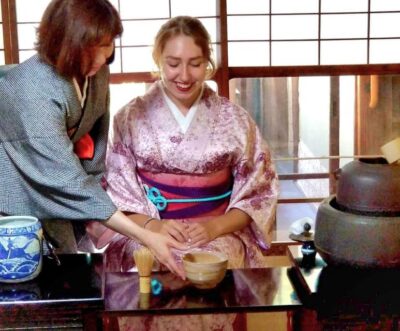

Arashiyama Bamboo Forest, Monkeys, Matcha & Temple Tour
Read our review →
Tea Museum Tickets and Matcha Grinding Experience
Read our review →Browse the lists this tour appears in