
Reviewed · KYOTO TEA CEREMONIES
Kyoto: Shakyo & Matcha in Historic Temple Garden
At Sennyu-ji, a Kyoto temple designated an Important Cultural Property, you’ll slow down to copy Buddhist sutras before sitting with matcha and a seasonal sweet beside a Japanese garden. I like the hands-on shakyo session, which gives you a quiet way to meet Buddhist practice, and the small group, capped at 10, which should leave room for questions and conversation.
One consideration: shakyo can take 60 to 90 minutes, and you’ll sit quietly for much of it. You also walk about 15 minutes each way from Tofukuji Station, so this suits you best if you’re comfortable on foot and ready for a calm, focused outing.
At a glance
- Copy a Buddhist sutra: Brushes, paper, and ink are provided for a 60 to 90 minute session.
- Visit Sennyu-ji: The temple is designated an Important Cultural Property, and the tour includes an English-guided visit.
- Pause for tea and sweets: Matcha is served with seasonal wagashi, with offerings that can vary.
- Take in a temple garden: Enjoy the garden view while you have your tea.
- Plan for a small group: The group is limited to 10 people, and the full experience lasts 150 minutes.
- Walk to and from the temple: Allow for a 15-minute walk in each direction from Tofukuji Station.
A quiet change of pace at Sennyu-ji
Kyoto can fill a day with temples, markets, and long walks. This outing takes a different approach: rather than rushing from one sight to another, you spend a good part of the visit sitting quietly, copying a sutra, and noticing the temple setting around you.
That slower pace is the point. Shakyo is a centuries-old Buddhist practice of copying sutras, and here it becomes a practical way to focus your attention. You don’t need to be religious or experienced with calligraphy to take part. The activity is presented as a chance to reflect and concentrate, with the guide offering cultural context along the way.
I like that the experience pairs an activity with a setting. You’re not simply told about Buddhist practice; you spend time doing one of its traditional forms. The gentle scent of incense and sounds of nature, including birdsong, are part of the quiet atmosphere described for the session.
There’s no need to treat the finished writing as a test of artistic skill. The session is about taking your time. Your pace affects how long you spend on the task, so the 60 to 90 minute estimate is useful when deciding if this is the right fit for your day.
More tea ceremonies in Kyoto:
- Kyoto: Tea Ceremony in a Traditional Tea House in Kiyomizu
★ 4.9 · 3,519 reviews - Kyoto: Tea Ceremony Ju-An at Jotokuji Temple
★ 4.9 · 3,207 reviews - Kyoto: 45-Minute Tea Ceremony Lesson Experience
★ 4.3 · 2,378 reviews
From Tofukuji Station to the temple
The meeting point is the East Gate of Keihan Station. Look for a guide with a yellow fluorescent band on their bag, a simple detail that should make finding the group easier amid station activity.
From there, you walk about 15 minutes to Sennyu-ji. The route is on foot, and the tour returns to Tofukuji Station after the temple visit, with another 15-minute walk. The total experience lasts 150 minutes, so this is a manageable half-day activity rather than a quick stop.
The small group cap of 10 is useful here. A quiet temple visit is more comfortable when you’re not part of a large crowd, and a smaller group can make it easier to follow the guide’s explanations. The tour is in English, which helps you get more from the temple’s cultural and historical context.
There is a separate entrance for skipping the line. That can help keep the visit moving, though the main draw is not getting through the temple quickly. You’re there to spend time in the space and take part in the session.
What the Sennyu-ji visit adds
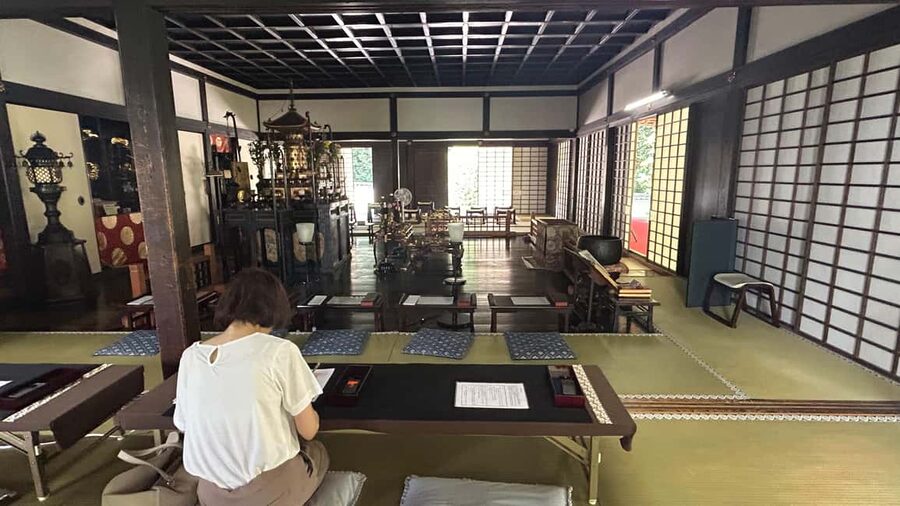
Sennyu-ji is the central stop, with roughly two hours set aside for the temple visit, guided tour, shakyo, tea, and garden views. Its designation as an Important Cultural Property gives the visit a connection to Japan’s cultural heritage, rather than making it only a convenient backdrop for a tea break.
The guide shares insights into Kyoto’s history and Buddhist culture, as well as the temple’s place in Japan’s heritage. That context matters because shakyo can otherwise feel like a pleasant but unexplained activity. A good explanation helps you understand why sutra copying has been practiced for centuries and what the act represents.
The guide’s role appears to extend beyond delivering facts. The experience has also included useful suggestions for planning the rest of the day, which is handy if you’re trying to fit this visit into a packed Kyoto itinerary. The guide is not named in the available details, so there’s no particular person to request.
Photography may be limited in some temple areas. That restriction helps preserve the atmosphere, but it also means you should be ready to set your phone aside rather than expect to document every part of the visit. Treat the temple as a sacred place, follow instructions, and keep your voice and movements respectful.
Shakyo: the main event
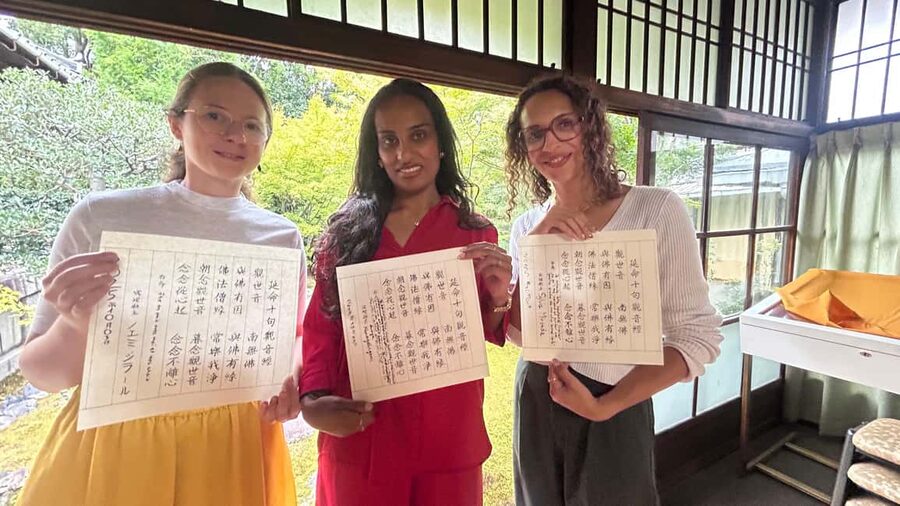
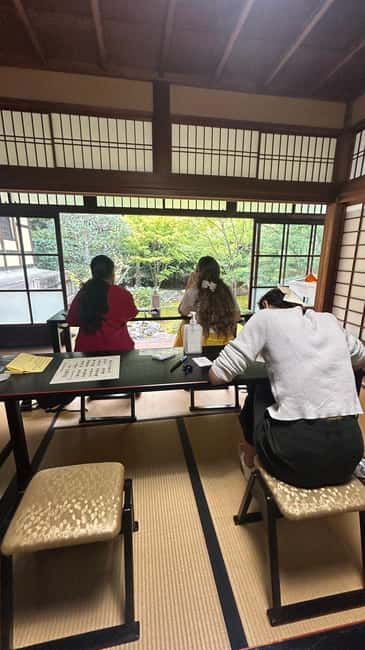
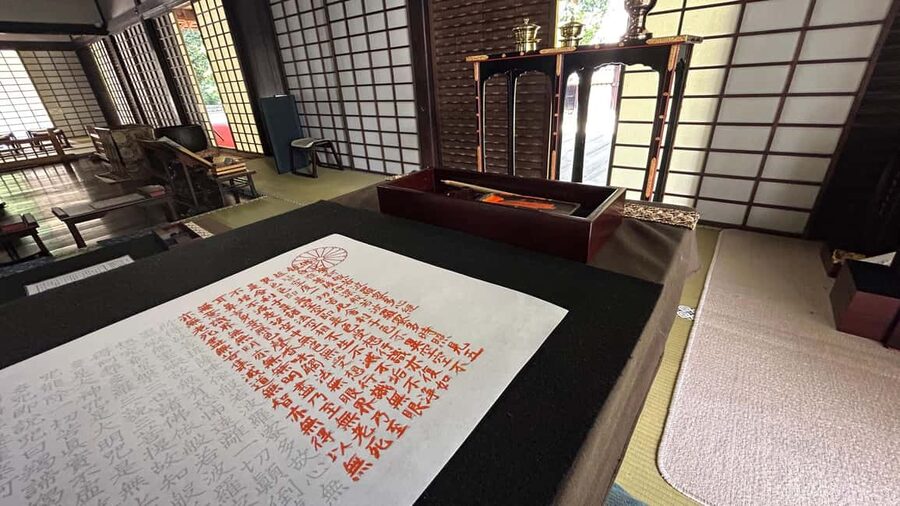
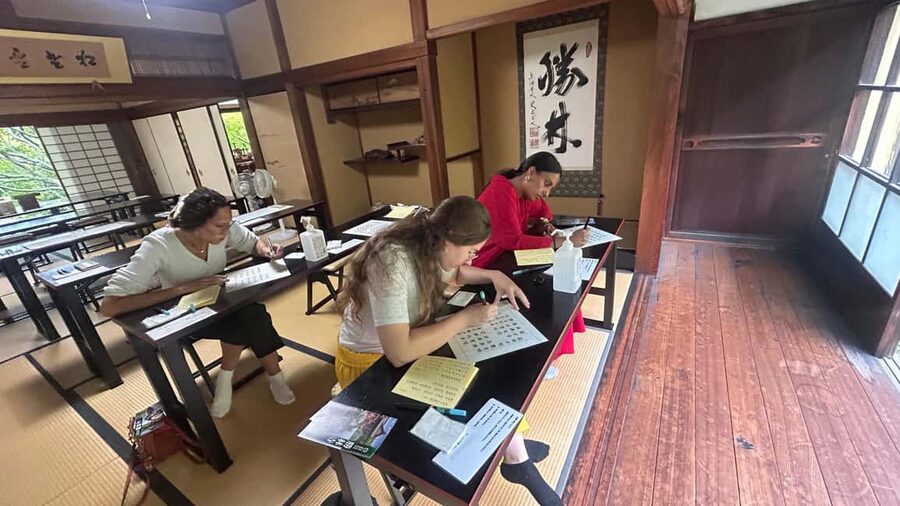
The session is the most distinctive part of the outing. You sit in a quiet space and copy a Buddhist sutra by hand, using the brushes, paper, and ink provided. Materials are included, so you don’t need to bring calligraphy supplies or prepare beforehand.
Plan on 60 to 90 minutes for the writing. That range allows for different speeds, and it’s worth keeping in mind if your schedule is tight. The task calls for patience more than skill: you can work at your own pace, but it is not a quick demonstration where you watch someone else and move on.
The setting is meant to support concentration, with incense, birdsong, and the surrounding calm. If your Kyoto days have been full of transport connections and sightseeing, this can be a welcome stretch of stillness. One person who enjoys this kind of outing may find it restorative; someone who prefers active visits may find the long seated portion slow.
Wear comfortable clothing that works for sitting quietly. The activity is not suitable for children under 10, and it may not fit anyone who has difficulty sitting for an extended period. Mobility access is limited too: the experience is not suitable for people with mobility impairments or wheelchair users.
More temple and shrine tours in Kyoto:
- World Heritage Kyoto & Nara Uji Authentic Matcha Experience
★ 5.0 · 1,573 reviews - Arashiyama Bamboo, Temple, Monkeys, or Secret Sake Brewery
★ 4.8 · 886 reviews - Kyoto: Arashiyama Bamboo Forest, Monkeys, Matcha & Temple Tour
★ 5.0 · 759 reviews - Osaka/Kyoto: Arashiyama, Nara & Fushimi Inari Shrine w/Lunch
★ 4.4 · 754 reviews
Matcha, wagashi, and the garden view
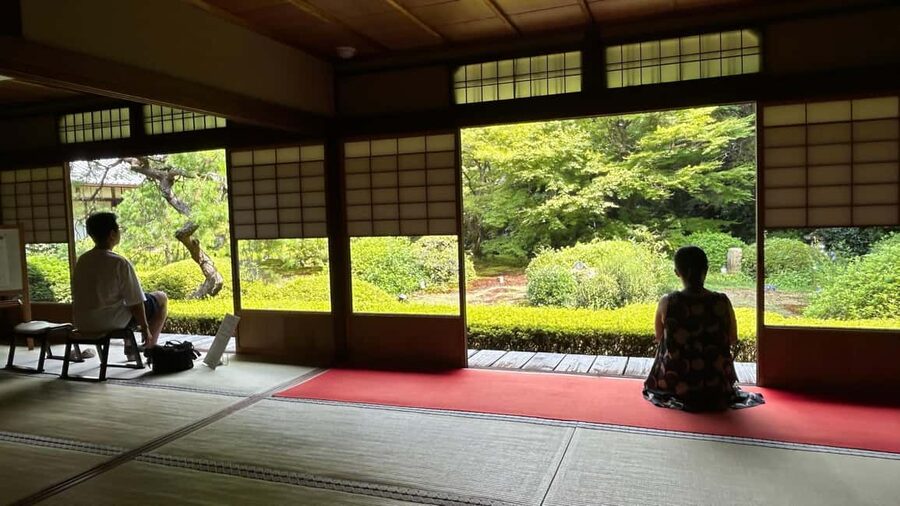
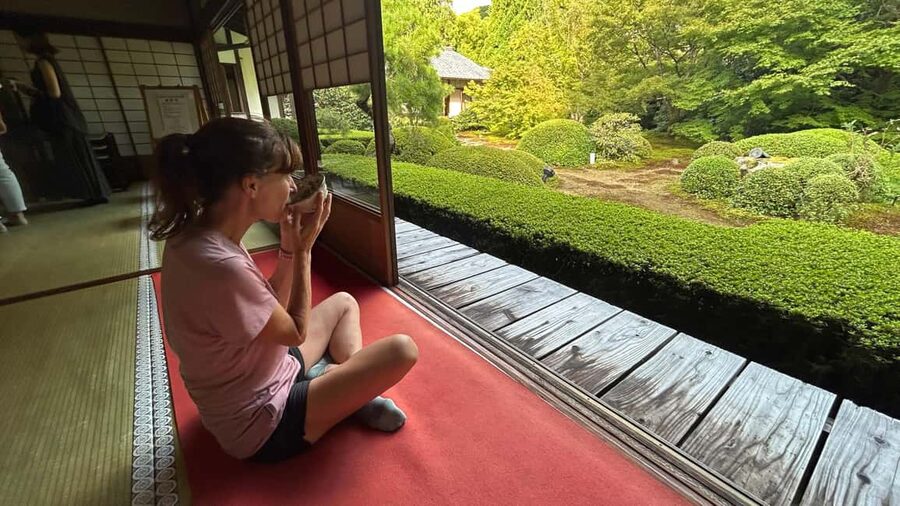
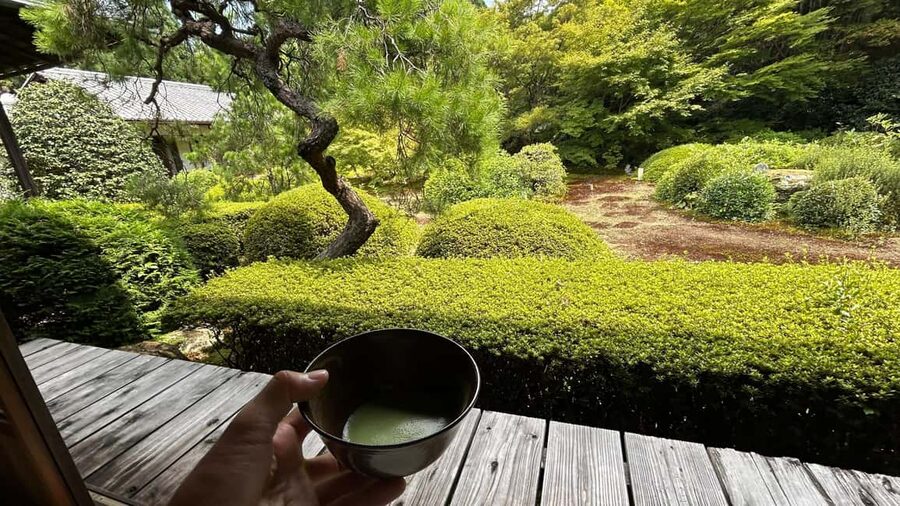
After shakyo, you have matcha green tea and seasonal wagashi, traditional Japanese sweets. The tea is freshly prepared, and the sweet changes with the season, so you should expect variation rather than a fixed menu.
This pause gives the experience a gentle second half. Instead of ending as soon as the writing is done, you can settle in with tea and look out at the landscaped Japanese garden. The garden is designed to evoke harmony and calm, and it complements the reflective mood of the temple visit.
The tea and sweet are included in the price, so this is not an extra stop you need to arrange separately. It also gives you a chance to experience a simple pairing that carries its own customs and seasonal character. If you’re expecting a full meal, though, this is not one: the offering is matcha and wagashi.
Is $35 a fair price?
At $35 per person, the price covers more than admission. It includes the guided temple visit, English-language cultural background, all shakyo materials, matcha, and seasonal wagashi, along with a small-group format. For a 150-minute outing, that is a solid bundle if you want both a guided introduction and time to take part in an activity.
The value is strongest for you if you want a meaningful pause in a busy Kyoto itinerary. The tour gives you a reason to spend time at Sennyu-ji and a structured way to connect with Buddhist practice, rather than simply looking around the temple grounds on your own.
It’s less compelling if your main goal is to see as many places as possible in a short time, or if you want an active tour with little sitting. The shakyo session takes up a substantial share of the visit, and the walk to and from the station adds about half an hour overall.
Booking is flexible: you can reserve without paying immediately, and cancellation up to 24 hours in advance is eligible for a full refund. Check the available start times when planning, since the duration is fixed at 150 minutes.
Who will enjoy this experience most
I’d choose this outing if you’re curious about Japanese Buddhist practice and want something more participatory than a standard temple visit. It also suits you if you need a quiet break between busier sightseeing days, or if you enjoy gardens, tea, and learning the meaning behind cultural traditions.
The small group and English guide make it a good choice if you want to ask questions without joining a large tour. The guide can provide background on Kyoto and the temple, and practical suggestions for what to do with the rest of your day may be useful too.
Think twice if you dislike sitting still, have limited mobility, use a wheelchair, or are bringing a stroller or large bag. Pets, baby strollers, baby carriages, luggage, and large bags are not allowed. Children under 10 are not suited to the activity.
Should you book it?
Book this if you want a calm, hands-on look at Kyoto’s Buddhist culture, and you’re happy to give a couple of hours to one temple. The sutra copying, garden view, and matcha make a thoughtful combination, while the small group keeps the experience personal in scale.
Skip it if your schedule is already too tight for a 150-minute outing, or if a long seated activity sounds uncomfortable. For the right pace and interests, this is a worthwhile way to step out of sightseeing mode and spend time with one of Kyoto’s traditions.
FAQ
How long does the experience last?
The full experience lasts 150 minutes, including the walks to and from Sennyu-ji.
Where is the meeting point?
Meet at the East Gate of Keihan Station. Look for the guide with a yellow fluorescent band on their bag.
Is the tour in English?
Yes. The live tour guide speaks English.
How long does the shakyo session take?
The sutra copying usually takes about 60 to 90 minutes, depending on your writing speed.
Are brushes, paper, and ink provided?
Yes. All materials for the shakyo session are provided.
Is the activity suitable for children or wheelchair users?
It is not suitable for children under 10, people with mobility impairments, or wheelchair users.
What is included with the matcha?
Matcha green tea and seasonal wagashi are included. The wagashi offerings may vary by season.
Newly added in Kyoto
- Uji: Private immersion into Kyoto’s tea and reglious culture★ 5.0 · 17 reviews
- Whisk Your Own Matcha: A Zen Matcha Experience at Temple★ 3.6 · 7 reviews
- Kyoto tea town for matcha lovers★ 5.0 · 16 reviews
- Treasures of Kyoto: Gion & historical Walking Tour★ 5.0 · 6 reviews
- Kyoto Matcha Green Tea Tour★ 4.5 · 23 reviews
- Uji and Wazuka Matcha Farm Half Day Private Guided Tour★ 5.0 · 21 reviews
- Uji Tea Ceremony and UNESCO Heritage Walking Tour★ 5.0 · 20 reviews
- Utilising upcycled Matcha! Creating matcha incense (Uji, Kyoto)★ 5.0 · 6 reviews
Kyoto Tea Ceremonies, compared.

Tea Ceremony in a Traditional Tea House in Kiyomizu
Read our review →


World Heritage Kyoto & Nara Uji Authentic Matcha Experience
Read our review →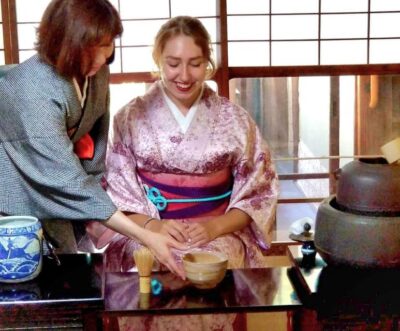


Arashiyama Bamboo Forest, Monkeys, Matcha & Temple Tour
Read our review →
Tea Museum Tickets and Matcha Grinding Experience
Read our review →Browse the lists this tour appears in