
Reviewed · KYOTO GEISHA TOURS
One Hour Geisha Show in Kyoto
A Maiko’s dance lasts only a few minutes, but every gesture carries meaning. This Kyoto experience brings you close enough to see the details of her dress, movement, and stage manner, then gives you time to ask questions, take photos, and try a traditional game. The tour description says there are about 40 Maikos left in Kyoto, so this is a rare chance to meet one.
I like two things in particular: you get more than a performance, with explanations and conversation to give the art some context, and the photos and videos are welcome. The tea house option adds tea, Japanese snacks, and a visit to Kitano Tenmangū Shrine with the Maiko.
The main consideration is that a one-hour show does not mean an hour of dancing. Expect two short dances, about five minutes each, with other parts of the program filling the time. Choose carefully, too: the tea house and Gion Theater are different options, and only the tea house option includes the shrine visit.
The short dance is only part of the experience
The evening is built around meeting a working Maiko, an apprentice Geisha, rather than watching a long stage show. She performs two dances, each around five minutes, then takes part in a Q&A, a game, and a photo opportunity. In some sessions, the guide also explains what the Maiko’s clothing, hair, makeup, and accessories signify.
That format makes sense for this art. Maiko performances are intentionally brief, preserving the form’s grace and exclusivity. You are not buying a full hour of uninterrupted dance. You are getting a compact introduction to the performance, the person behind it, and some of the customs around her work.
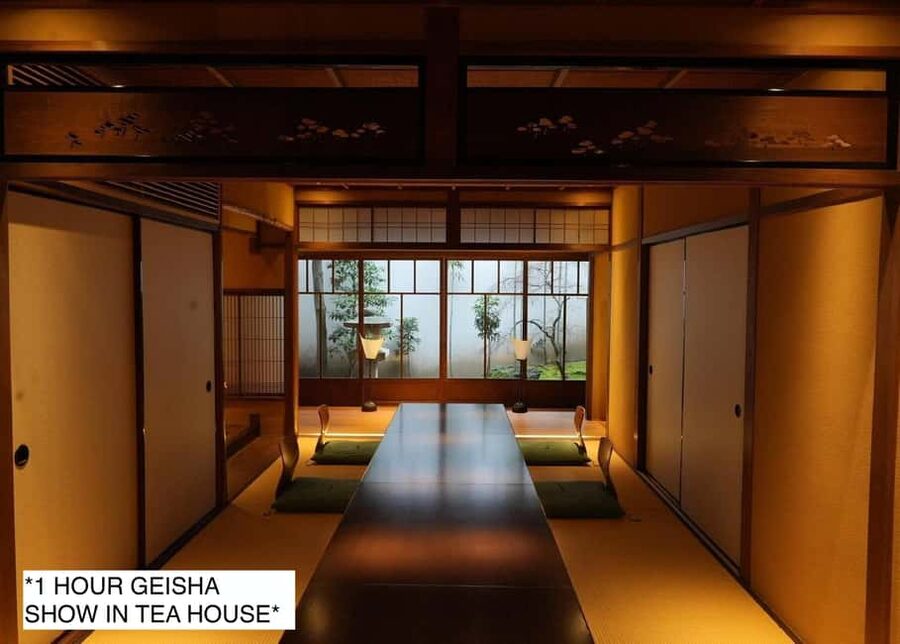
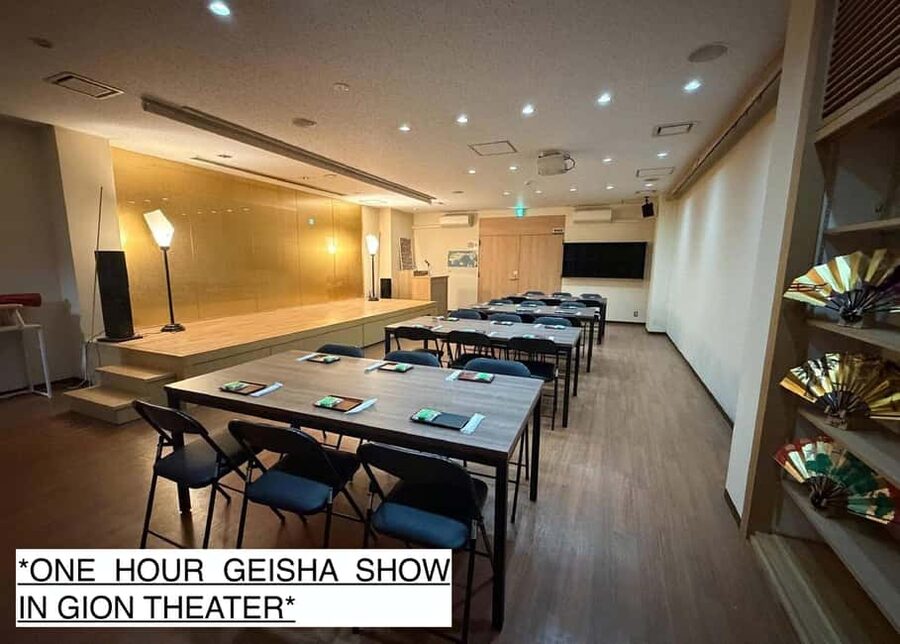
The atmosphere depends partly on which option you book. The tea house takes place in a Kyoto-style Kyo-Machi-ya house, while the Gion Theater option is held in a showhouse. Both give you a chance to see the performance and interact with the Maiko, but only the tea house option includes the shrine walk.
Key things to know before you book
- Two dances, about five minutes each: The rest of the session includes explanations, Q&A, a game, and photos.
- Tea house means a Kyoto-style house: This option includes tea, traditional snacks, and a 30-minute Kitano Tenmangū Shrine session with the Maiko.
- The theater option is different: It takes place in a showhouse and is the wheelchair-accessible choice.
- Photos and videos are allowed: Bring a camera or phone if you want to keep a record of the meeting.
- Group sizes are limited but not tiny: The maximum is 23 people at the tea house and 30 at the theater.
- Wear socks: Bare feet are not allowed, and strollers, alcohol, and drugs are prohibited.
More geisha and maiko experiences in Kyoto:
- Kyoto Geisha Walking Tour: Gion District & Hidden Gems
★ 4.7 · 3,273 reviews - Kyoto: Gion Magical Night Walking Tour with Geisha Trivia
★ 4.9 · 2,393 reviews - Kyoto: Gion Geisha District Walking Tour – Stories of Geisha
★ 4.7 · 2,187 reviews
Tea house or theater: choose for the setting
The tea house option is the more complete cultural outing. It takes place in a Japanese Kyo-Machi-ya, a traditional Kyoto-style house, and includes tea and Japanese snacks. You also get a 30-minute guided session at Kitano Tenmangū Shrine with the Maiko, making this the option to choose if you want the performance connected to a short walk and a Kyoto landmark.
The trade-off is practical: the tea house is not wheelchair accessible. Its group limit is 23, smaller than the theater’s, though 23 is still large enough that you may not have an intimate one-to-one conversation. If accessibility matters, the Gion Theater option is the clear choice. It is wheelchair accessible and has a maximum group of 30.
The theater is a showhouse, not the Kyo-Machi-ya setting. You still get the performance and the opportunity to ask questions, play a game, and take photos, but the Kitano Tenmangū visit is only included with the tea house option. Check the exact option name when booking rather than assuming every version follows the same route.
What happens during the performance
The Maiko performs two dances, each roughly five minutes long. The dances are short by design, so give your attention to the details: the controlled movement, the gestures, the costume, and the way she holds herself. This is not a high-energy stage production. Its appeal is in the precision and restraint.
The guide helps make the performance understandable. Guides who have led sessions include Genki, Chihiro, Rin, Ai, Taira Yoshino, and Akari. They have explained the Maiko’s appearance, interpreted questions, and helped with communication between the performer and the audience. The guide’s role matters, especially if you do not speak Japanese.
After the dances, you can ask questions about the Maiko’s art and life. The Q&A is one of the most useful parts of the event: it turns an elegant but unfamiliar performance into something you can better understand. You may also get to play a traditional Japanese game with the Maiko. It is a lighthearted change of pace, and the game is not just a formality: it gives you a chance to interact rather than simply watch.
A photo opportunity follows, and photos and videos are welcome. Bring your phone or camera, but remember that the Maiko is a person at work, not a prop. Follow the guide’s instructions and keep the moment respectful.
Tea, snacks, and a shrine visit
At the tea house, tea and traditional Japanese snacks are included. Additional drinks and food are not. This is a small but welcome part of the visit, giving you a quiet moment around the program rather than making the event a dance-only appointment.
The tea house option also includes a 30-minute session at Kitano Tenmangū Shrine with the Maiko. That short visit adds a change of setting and a chance to see her outside the performance space. It is not part of the Gion Theater option, so do not book the theater expecting a shrine walk.
The stated itinerary gives three possible starting points: 梅乃 UMENO, 302-2 Daikokuchō, and KOHYO Kamishichikenten. Drop-off choices are 梅乃 UMENO, Kitano Tenmangū Shrine, and 302-2 Daikokuchō. Your meeting point can vary by option, so check the details for the version you choose and provide a phone number you can use in Japan and on WhatsApp. That helps the operator share instructions before the tour.
More shows in Kyoto:
- Kyoto Gion Cultural Walk & Geisha Show with Dining Options
★ 5.0 · 518 reviews - Kyoto Gion Cultural Walk & Geisha Show with Dining Options
★ 5.0 · 483 reviews - 1 Hour Geisha Show in Kyoto
★ 5.0 · 452 reviews - Kyoto: Samurai Kenbu Traditional Sword Dancing Show
★ 4.5 · 426 reviews
Is $50 a fair price?
At about $50 per person, this is not simply a ticket to watch two short dances. The price covers a guide, the Maiko performance, a Q&A, a traditional game, and photo time. With the tea house option, tea, Japanese snacks, and the shrine session are included as well. The value is strongest if you want personal context and a chance to interact, not just a stage show.
The group limit helps set expectations. The tea house can hold up to 23 people, and the theater up to 30. Those are manageable group sizes for a guided cultural activity, but they are not private sessions. You will share the Q&A and performance with others, and a guide may need to translate or repeat information for the group.
Language is another point to weigh. The tour is offered with English- and Korean-speaking guides. If the group includes people using different languages, explanations may take longer or be less smooth. The event remains accessible to English speakers, but a mixed-language session can make it harder to follow every detail.
Timing, clothing, and practical details
The activity is listed as lasting from one hour to 105 minutes, depending on the option. The performance portion is described as one hour, while the tea house itinerary also includes a 30-minute shrine session. Plan for the longer end if you are booking the tea house option, and check the available start times before arranging the rest of your day.
Wear socks. Bare feet are not allowed, so this is a simple detail worth remembering before you leave your hotel. Baby strollers, alcohol, and drugs are not permitted. The activity is not suitable for people over 95.
The booking terms offer free cancellation up to 24 hours in advance and a reserve-now, pay-later option. Those terms can help if your Kyoto plans are still shifting, but do confirm the current details when you book.
Who will enjoy this most
I would choose this for anyone curious about Maiko culture who wants more than a quick performance from a distance. The Q&A and game make it especially appealing if you like asking questions and joining in. It can also suit visitors who have already spent time around Gion and want a structured introduction to the art, rather than relying on a chance encounter.
It is a good fit for photography-minded visitors, since pictures and video are allowed. Just keep your expectations grounded: the dances are brief, and the value comes from the full program. If your main goal is a long performance or a private meeting, this is not the right format.
For the broadest experience, I would lean toward the tea house option if you can manage its access limitations. You get the Kyoto-style setting, tea and snacks, and the shrine visit. If wheelchair access is needed, choose the theater option and accept that it does not include the shrine walk.
Should you book the Maiko experience?
Book it if you want a close, guided introduction to a rare Kyoto art form, and if you value conversation as much as the dance itself. The short performances are part of the tradition, not a shortcoming to be hidden, but they may disappoint anyone expecting a full hour of dancing.
Before paying, decide which setting matters more: a Kyo-Machi-ya with tea and a shrine visit, or a wheelchair-accessible theater. Check the meeting point, bring socks, and leave room in your schedule for up to 105 minutes. If those details suit your plans, this is a worthwhile way to meet a Maiko with context and care.
FAQ
How long does the experience last?
The listed duration is one hour to 105 minutes, depending on the option. The tea house option includes a 30-minute Kitano Tenmangū Shrine session.
How much dancing should I expect?
The Maiko performs two dances of about five minutes each. The rest of the program includes explanations, a Q&A, a traditional game, and time for photos.
Can I take photos and videos?
Yes. Photos and videos are welcome during the experience.
What is included with the tea house option?
It includes the Maiko performance, tea and traditional Japanese snacks, a professional tour guide, and a 30-minute Kitano Tenmangū Shrine session with the Maiko.
Which option is wheelchair accessible?
The Gion Theater option is wheelchair accessible. The tea house option is not.
What should I bring or avoid?
Wear socks, since bare feet are not allowed. Baby strollers, alcohol, and drugs are not permitted.
More 1-Hour Experiences in Kyoto
- Ninja 1-hour Hands-on Lesson by Japanese master in Kyoto -Entry
★ 5.0 · 489 reviews - One Hour Geisha Show in Gion Kyoto
★ 5.0 · 59 reviews - Kyoto: Hands-on Takoyaki and Okonomiyaki Cooking (1 Hour)
★ 4.7 · 25 reviews - Kyoto: Ginkakuji, Silver Pavilion Guided Tour in 1 Hour
★ 4.5 · 5 reviews
Newly added in Kyoto
- Uji: Private immersion into Kyoto’s tea and reglious culture★ 5.0 · 17 reviews
- Whisk Your Own Matcha: A Zen Matcha Experience at Temple★ 3.6 · 7 reviews
- Kyoto tea town for matcha lovers★ 5.0 · 16 reviews
- Treasures of Kyoto: Gion & historical Walking Tour★ 5.0 · 6 reviews
- Kyoto Matcha Green Tea Tour★ 4.5 · 23 reviews
- Uji and Wazuka Matcha Farm Half Day Private Guided Tour★ 5.0 · 21 reviews
- Uji Tea Ceremony and UNESCO Heritage Walking Tour★ 5.0 · 20 reviews
- Utilising upcycled Matcha! Creating matcha incense (Uji, Kyoto)★ 5.0 · 6 reviews
Kyoto Geisha Tours, compared.
Kyoto Geisha Walking Tour: Gion District & Hidden Gems
Read our review →
Gion Magical Night Walking Tour with Geisha Trivia
Read our review →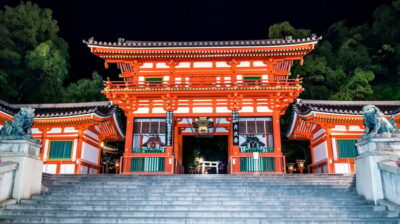
Gion Geisha District Walking Tour – Stories of Geisha
Read our review →
Best of Kyoto: Gion, Geisha, Pagodas & Cobblestones
Read our review →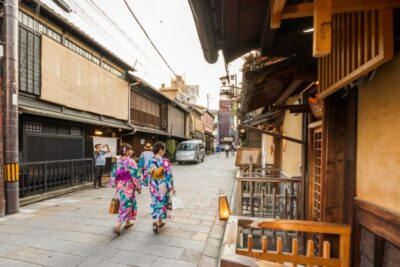

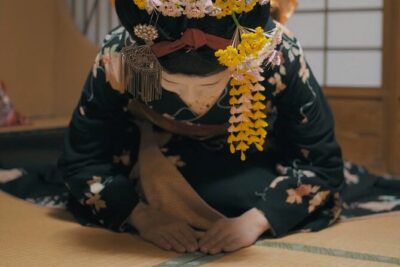
Kyoto Gion Cultural Walk & Geisha Show with Dining Options
Read our review →
Browse the lists this tour appears in