
Reviewed · KYOTO TEA CEREMONIES
Kyoto Private Tea Ceremony with Tea Master at Home
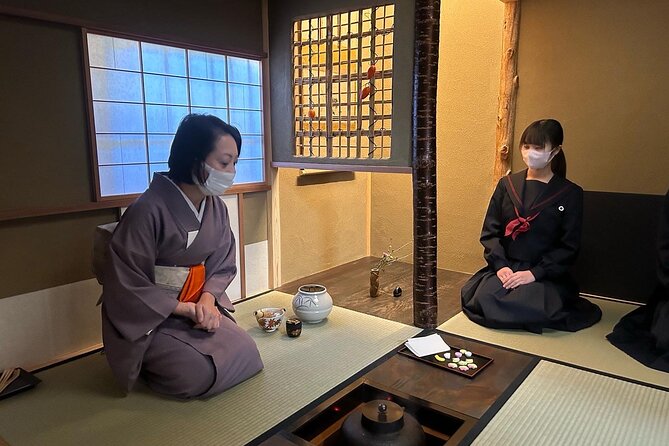
Kyoto’s tea ceremony is easier to appreciate when you see its small details up close: the bowl, the whisk, the measured gestures, and the attention given to each person in the room. At this private session in a local home, tea master Aya Ito explains the ritual and guides you through preparing matcha yourself.
I like two things in particular: the setting is a real home rather than a large class, and the hour includes three seasonal sweets and two bowls of Uji matcha. Aya also explains the etiquette in clear English, so you can follow the ceremony without needing prior experience.
One consideration: this is a quiet, etiquette-focused class, not a costumed show. Kimono rental is not included, children aged 13 and under cannot attend, and you’ll need socks and suitable clothing to enter the tatami room.
What to know before you book
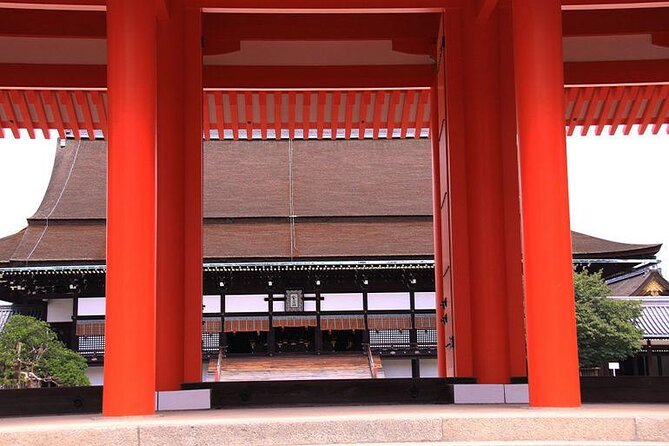
- A private home near Nijo Castle: Only your group takes part, in a traditional tea room at Sakura Experience Japanese Culture.
- Tea with Aya Ito: Expect a guided explanation, a demonstration, and hands-on matcha preparation.
- Two bowls of matcha: The tea is made with the host’s original blend from Uji, a historic tea-growing area near Kyoto.
- Three seasonal wagashi: These handcrafted Japanese sweets come from a long-established Kyoto confectioner and are gluten-free and vegan.
- A small take-home guide: You receive a booklet on the spirit and etiquette of the tea ceremony.
- Plan your clothing and arrival: Wear socks, long pants or a long skirt, and a top with sleeves. Arrive on time, since guests more than 15 minutes late cannot join.
A quiet tea room, not a stage
The experience takes place at Sakura Experience Japanese Culture, a private home in Kyoto’s Nakagyo Ward, near Nijo Castle. The setting matters: you are welcomed into a domestic space where tea is presented as a practiced tradition, rather than as a brief demonstration for a crowd.
The home has two traditional tea rooms, Koma and Hiroma. The precise room used for your session is not specified, but either way the format stays intimate: your own group meets with the instructor, without other parties joining in.
That privacy gives you room to ask questions and watch the ceremony at a human pace. The aim is not to memorize a long list of rules. It is to notice how the preparation, serving, sweets, and room come together as one carefully considered ritual.
More tea ceremonies in Kyoto:
- Kyoto: Tea Ceremony in a Traditional Tea House in Kiyomizu
★ 4.9 · 3,519 reviews - Kyoto: Tea Ceremony Ju-An at Jotokuji Temple
★ 4.9 · 3,207 reviews - Kyoto: 45-Minute Tea Ceremony Lesson Experience
★ 4.3 · 2,378 reviews
Aya explains the ceremony before you take part
Aya introduces the background and etiquette before guiding you through the tea. Her approach, as described by people who have attended, is patient and warm, with English explanations that make the steps easy to follow. That is useful if this is your first encounter with matcha or Japanese tea practice.
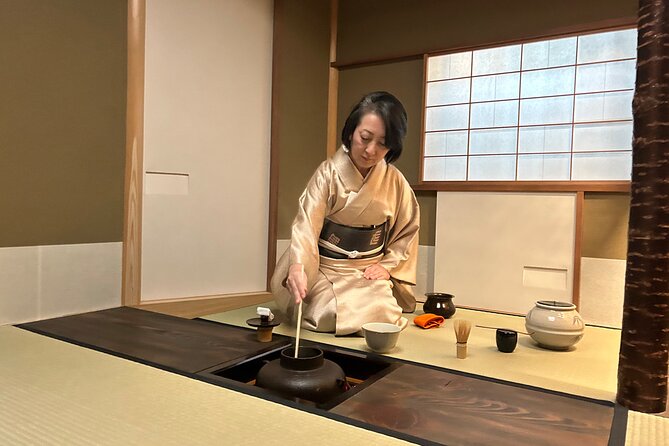
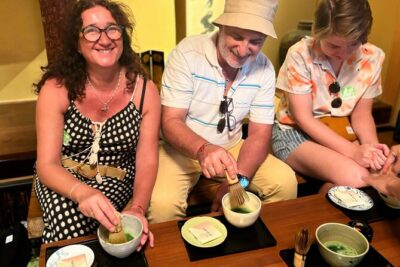
You can expect to see the tea master prepare matcha using a bamboo whisk, then take part yourself with her direction. The experience is hands-on, but you are not left to guess what to do. Aya explains the procedure and helps you understand why the details matter.
The ceremony’s gestures can look simple from a distance. Up close, the focus shifts to how the bowl is handled, how the tea is prepared, and how the host attends to the people in the room. The session gives you time to notice these choices, rather than rushing through a photo opportunity.
Three Kyoto sweets and two bowls of Uji matcha
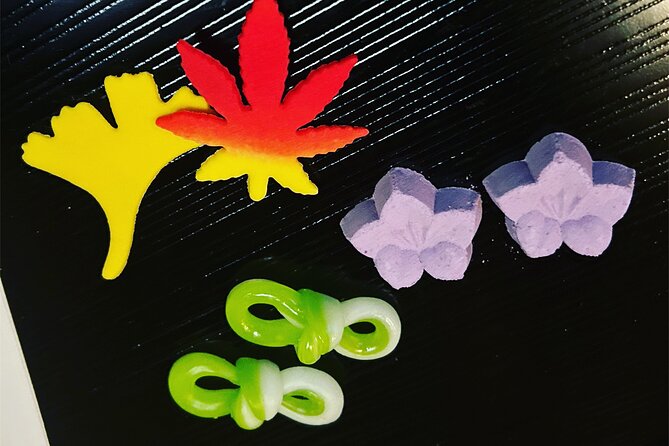
Seasonal wagashi are part of the experience, not just a snack on the side. You receive three different types of handcrafted sweets from a long-established Kyoto confectioner. Their seasonal character offers a taste of local food craft, while their gluten-free and vegan preparation makes them suitable for many dietary needs.
The sweets also help you understand the tea service as a whole. You are not simply sampling matcha on its own; the sweets and tea are presented together as part of the ceremony. If you have a dietary concern beyond gluten or animal products, ask the provider before booking, since the available information only confirms those two accommodations.
You receive two bowls of matcha made with the host’s original blend from Uji. Uji is closely associated with Japanese tea, and the use of a specific regional blend gives the drink a stronger connection to Kyoto’s tea culture than a generic café-style matcha. The experience is about the preparation as much as the flavor, so pay attention to how the tea is whisked and served.
What the one-hour session gives you
An hour is a compact introduction, not a full course in tea ceremony. That works well if you want a clear, practical lesson during a busy Kyoto visit. You get an explanation, a demonstration, a chance to prepare matcha, sweets, two servings of tea, and a booklet to help you remember the main ideas.
The booklet is a useful extra because the ceremony can involve more detail than you can absorb in one sitting. It offers a concise guide to the spirit and etiquette, giving you something to refer to later rather than relying on memory alone.
The short duration is also a limit. If you want extensive instruction in tea history or a long, meditative ceremony, an hour may feel brief. Think of this as a thoughtful introduction that can sharpen your appreciation of tea culture for the rest of your time in Japan.
More private tours in Kyoto:
- Fushimi Inari Hidden Hiking Tour (Private Option Available)
★ 5.0 · 1,750 reviews - Private Kyoto Tour with a Local, Highlights & Hidden Gems, Personalised
★ 5.0 · 1,543 reviews - Kyoto 6hr Private Tour with Government-Licensed Guide
★ 5.0 · 1,369 reviews - 10 Must-see Spots in Kyoto One Day Private Tour (up to 7 people)
★ 5.0 · 1,108 reviews
Why the home setting adds value
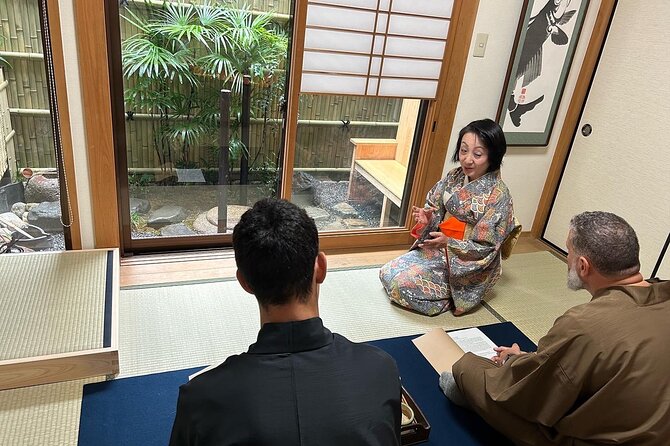
A tea room in a private home changes the feel of the lesson. You are not watching from the back of a large group or being moved through a set piece. You can focus on Aya’s explanation, ask questions, and take part without competing for a view.
The host uses tea bowls commissioned from Kiyomizu and Raku potters, and matcha sourced from Uji. These details link the ceremony to local makers and tea producers. You may not leave knowing the full story of each craft, but you will see that the objects are chosen with care and that the tea is tied to a specific source.
The experience is best for someone who appreciates quiet settings and traditional etiquette. If you prefer a lively, highly interactive show or want to dress up in kimono, this may not be the right fit. The class is centered on learning and participation, and kimono rental is not offered.
Getting there and preparing for the tatami room
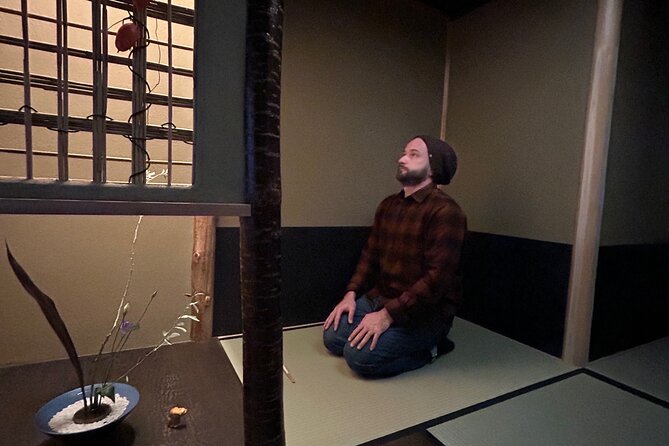
The meeting point is Sakura Experience Japanese Culture Nijo Home, at 660 Izumichō, Nakagyo Ward, Kyoto. It is near public transportation, and Nijo Castle is a useful nearby landmark when planning your day. The activity ends back at the meeting point.
Arrive on time. If you are more than 15 minutes late, you cannot participate and will not receive a refund. The host asks you to wear socks to protect the tatami and maintain hygiene; if you forget, socks are available to buy on site.
Dress with the room and movements in mind: long pants or a long skirt, plus a top with sleeves. Sleeveless tops, shorts, and mini skirts are not permitted. Leave perfume and other strong fragrance at home, since scent can disturb the tea room atmosphere and you may be asked to remove it before entering.
Small chairs are available for anyone who needs them, but tell the host in advance. The class does not allow children aged 13 and under. If you are traveling with a teenager, check the age rule carefully rather than assuming the class is open to all ages.
Is $99.08 a fair price?
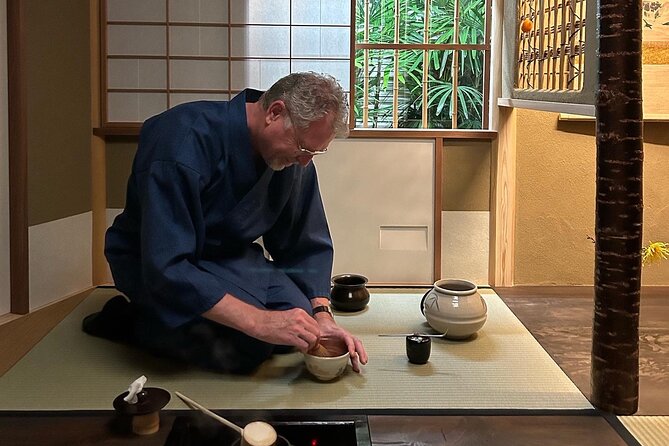
At $99.08 per person, this costs more than a casual matcha tasting, but it includes a private session, direct instruction from a tea master, hands-on preparation, two bowls of Uji matcha, three sweets, and a take-home booklet. You are paying for the setting and personal guidance as much as the tea itself.
The private format is especially valuable if you want to ask questions or learn at your own pace. Group discounts are available, which may improve the per-person value if you are booking with family or friends who meet the age requirement. The session is typically booked about 48 days in advance, so do not assume you can always fit it in at the last minute.
For comparison, a quick matcha drink gives you the taste but not the context. Here, you learn the basics of etiquette and preparation, and you see how a tea master handles the ritual. If that cultural context matters to you, the price is reasonable for a one-hour private lesson. If you mainly want a cup of tea or a kimono photo, you can spend less elsewhere.
Who will enjoy this most
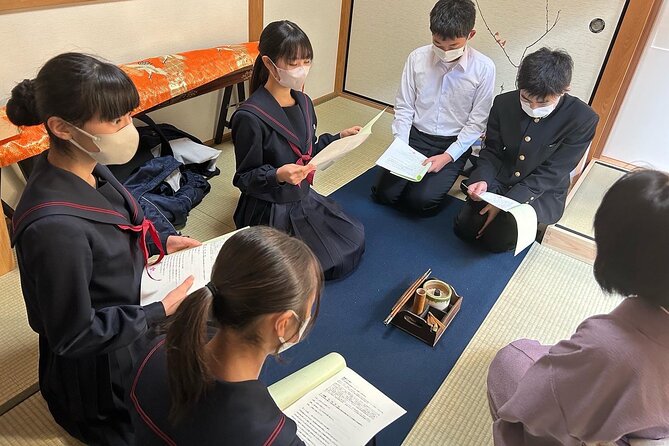
Book this if you want to understand a traditional practice through participation, not just observation. It suits couples, friends, and families with children aged 14 or older who are comfortable with a calm room and basic etiquette. It can also be a good fit for a solo participant, though the private format means you will not be grouped with strangers.
The hour can be a welcome pause between visits to Kyoto’s temples and historic sites. It also works well early in a stay: once you understand a few ideas behind tea ceremony, you may notice more in other Japanese settings where tea is served.
Skip it if you need a flexible arrival time, dislike quiet rituals, or cannot meet the clothing and fragrance requirements. There is no kimono rental, and the ceremony is not designed as a children’s activity. Those are clear limits, not minor surprises to discover at the door.
Should you book the Kyoto tea ceremony?
I’d book this if you want a personal introduction to tea culture in Kyoto, with enough explanation to make the ritual meaningful and enough participation to make it memorable. Aya’s warmth, clear English, and careful guidance are central to the experience, while the sweets, Uji matcha, and traditional bowls give the lesson a strong local character.
Choose it for cultural depth, not spectacle. If you can arrive promptly, dress for the tatami room, and give an hour to a quiet practice, this is a worthwhile way to see Kyoto through one of its living traditions.
FAQ
How long is the tea ceremony?
The session lasts about one hour.
Where does the experience take place?
It takes place at Sakura Experience Japanese Culture Nijo Home, at 660 Izumichō in Nakagyo Ward, Kyoto. The activity ends at the same meeting point.
Is the activity private?
Yes. Only your group participates.
What is included in the price?
The experience includes a demonstration and guided hands-on matcha preparation, two bowls of matcha, three seasonal types of wagashi, and a tea ceremony booklet.
Are the sweets suitable for vegan or gluten-free diets?
The sweets are described as both vegan and gluten-free. No other dietary accommodations are specified.
How much does the experience cost?
The listed price is $99.08 per person. Group discounts are available.
Can children attend?
Children aged 13 and under are not permitted. The age policy states that you will not be able to join if you arrive with a child in this age group without prior notice, and no refund will be given.
What should I wear?
Wear socks, long pants or a long skirt, and a top with sleeves. Shorts, mini skirts, and sleeveless tops are not permitted.
Can I wear perfume, and are chairs available?
You are asked not to wear perfume or strong fragrance. Small chairs are available for people who need them, but tell the host in advance.
Can I cancel for a refund?
You can cancel for a full refund at least 24 hours before the start time. Cancellations or changes made less than 24 hours before the experience are not accepted for a refund or change.
Newly added in Kyoto
- Uji: Private immersion into Kyoto’s tea and reglious culture★ 5.0 · 17 reviews
- Whisk Your Own Matcha: A Zen Matcha Experience at Temple★ 3.6 · 7 reviews
- Kyoto tea town for matcha lovers★ 5.0 · 16 reviews
- Treasures of Kyoto: Gion & historical Walking Tour★ 5.0 · 6 reviews
- Kyoto Matcha Green Tea Tour★ 4.5 · 23 reviews
- Uji and Wazuka Matcha Farm Half Day Private Guided Tour★ 5.0 · 21 reviews
- Uji Tea Ceremony and UNESCO Heritage Walking Tour★ 5.0 · 20 reviews
- Utilising upcycled Matcha! Creating matcha incense (Uji, Kyoto)★ 5.0 · 6 reviews
Kyoto Tea Ceremonies, compared.

Tea Ceremony in a Traditional Tea House in Kiyomizu
Read our review →

World Heritage Kyoto & Nara Uji Authentic Matcha Experience
Read our review →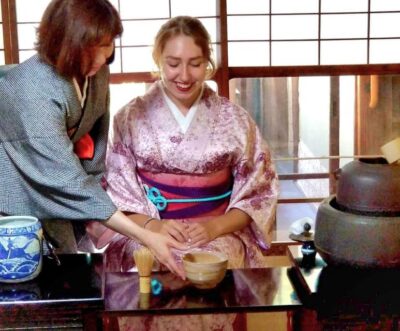

Arashiyama Bamboo Forest, Monkeys, Matcha & Temple Tour
Read our review →
Tea Museum Tickets and Matcha Grinding Experience
Read our review →Browse the lists this tour appears in