
Reviewed · KYOTO TEA CEREMONIES
Oboro | Mindful Tea Ceremony in a 100-Year-Old Kyoto Teahouse
A candlelit room, a bowl of freshly whisked matcha, and the careful cleaning of each utensil: Oboro’s tea ceremony asks you to slow down and pay attention. It’s a welcome change of pace in Kyoto, where a quiet half-hour can feel like its own small discovery.
I like two things in particular: the small group, capped at eight, gives you room to watch and ask questions, and the English-speaking guide helps explain what you’re seeing. The ceremony also includes tea and sweets, plus a small handmade candle to take with you.
One consideration: this is a reflective ritual, not a fast-paced demonstration or a full tea-making class. You have about 50 minutes, and the experience may not suit you if you’re hoping to spend most of that time practicing the preparation yourself.
What Makes This Tea Ceremony Special
- A century-old Kyoto teahouse: The setting is a traditional house, not a café made to look like one.
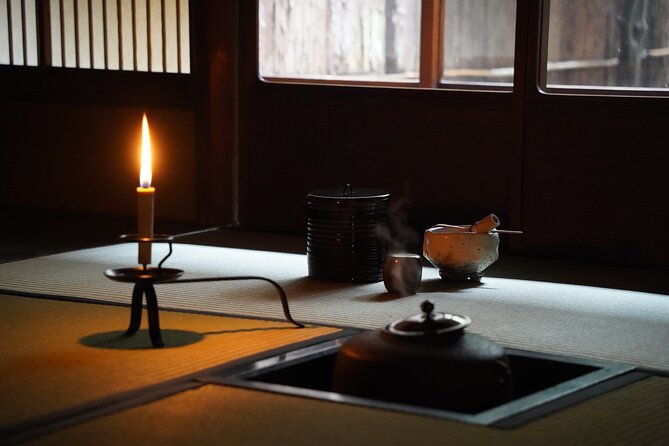
- Candlelit calm: Handmade candles and minimal décor help keep attention on the ritual.
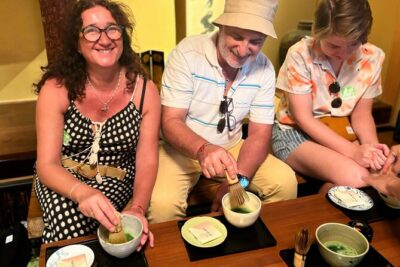
- Matcha prepared in front of you: Watch the host clean the utensils and whisk a bowl of organic green tea.
- English-language guidance: A guide translates and helps you follow the ceremony, even if you don’t speak Japanese.
- A small group: No more than eight people take part, which makes it easier to see and listen.
- A modest keepsake: You leave with a small handmade candle, a reminder of the quieter mood of the session.
Arriving at Oboro’s Old Kyoto Teahouse
The meeting point is 237 Nakaogawachō, Kamigyo Ward, Kyoto, 602-0053. The venue is near public transportation, and the experience ends at the same place, so you won’t need to arrange a ride to a separate drop-off point.
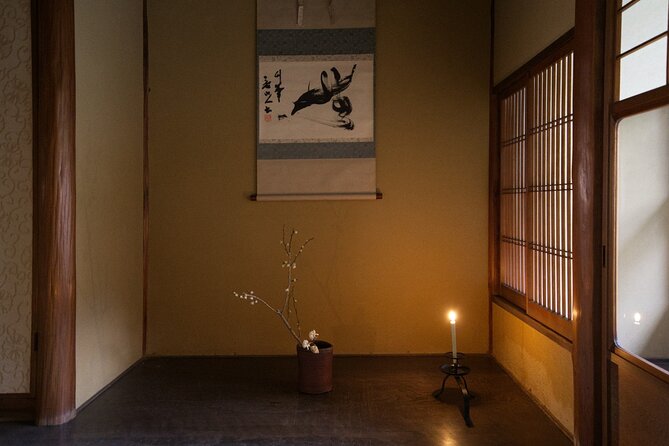
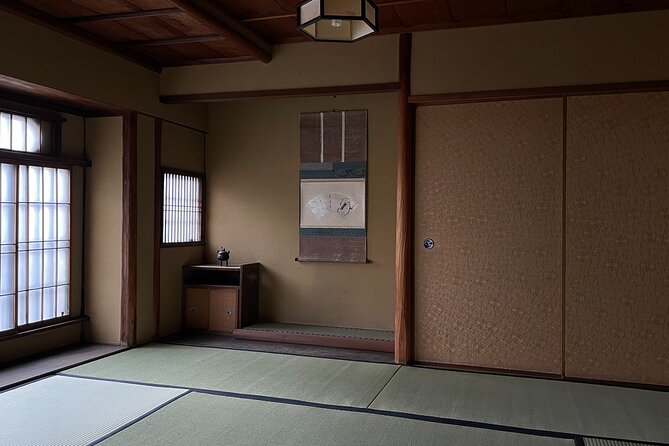
On arrival, you’re guided into a softly lit room with minimal decoration. The setting does some of the work before the tea is served: subdued light and gentle sounds make a clear contrast with the noise and pace of the city outside. This is not a grand hall or a showy stage. The smaller, quieter space helps you notice the objects and movements that could be easy to miss in a larger group.
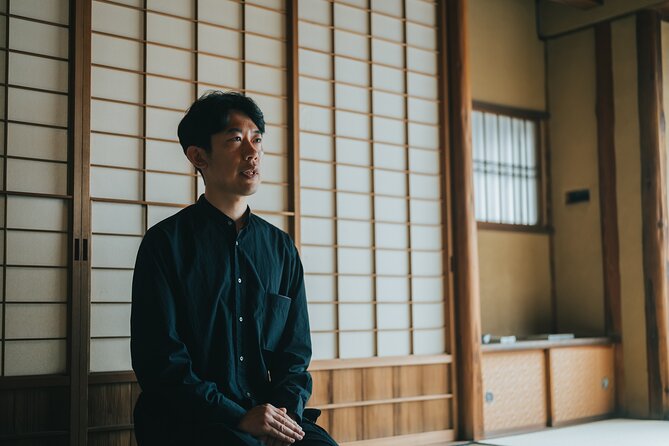
The teahouse is described as 100 years old, giving the ceremony a sense of place without asking you to study a long history lesson first. You’re there to watch a practice unfold, with a guide on hand to explain what matters and answer questions. Past sessions have named hosts including Taku and Naoki, with Ryoko also thanked for her part in the experience. The host for your particular date may vary.
More tea ceremonies in Kyoto:
- Kyoto: Tea Ceremony in a Traditional Tea House in Kiyomizu
★ 4.9 · 3,519 reviews - Kyoto: Tea Ceremony Ju-An at Jotokuji Temple
★ 4.9 · 3,207 reviews - Kyoto: 45-Minute Tea Ceremony Lesson Experience
★ 4.3 · 2,378 reviews
Welcome Tea, Sweets, and a Change of Pace
The session starts with welcome tea and sweets. This gentle opening gives you a moment to settle in before moving into the main ritual. The sweets are not just a snack between activities; they help mark the transition from daily routines to a more attentive way of tasting and watching.
The ceremony’s emphasis is mindfulness, but you don’t need prior experience with meditation or Japanese tea customs to follow along. You can simply listen, look closely, and notice how the room feels. The guide’s translation is useful here: without it, a quiet ritual can be beautiful but hard to understand. With explanation, you have a better sense of why the host moves with care and what to watch for.
The pace is deliberately slow. That can be a strength if you’re ready for a calm pause in your day. If you prefer a lively class with lots of hands-on activity, the welcome portion may feel more reflective than you expect.
Watching the Host Prepare Matcha
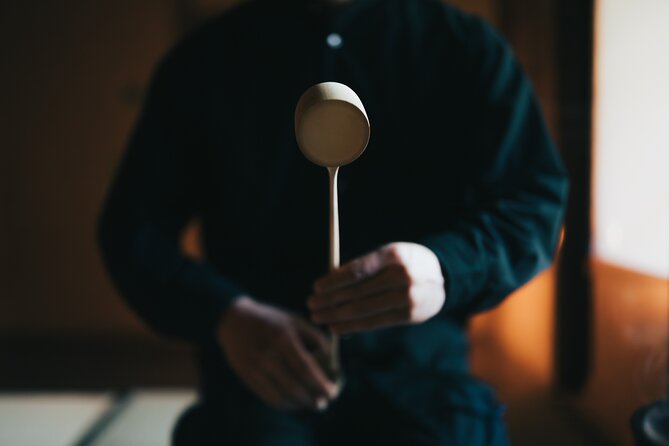
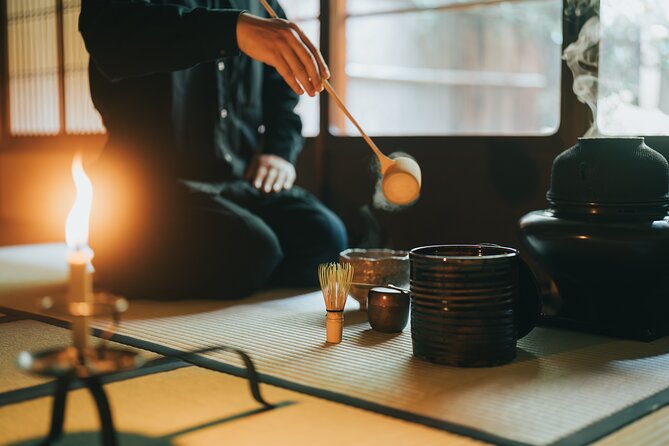
The main event is the preparation of matcha. Before whisking the tea, the host carefully cleans and prepares the utensils. These gestures are a central part of what you’re here to see: the ceremony is not simply about getting a drink into a bowl, but about giving each step attention.
You watch as the host makes the tea, then it is served one bowl at a time. The English-speaking guide helps you understand what’s happening, so you can focus on the details rather than trying to guess the meaning of each movement. You’re also welcome to ask questions, and the experience is designed to be less rigid than a highly formal ceremony. Its focus is shared respect and quiet attention.
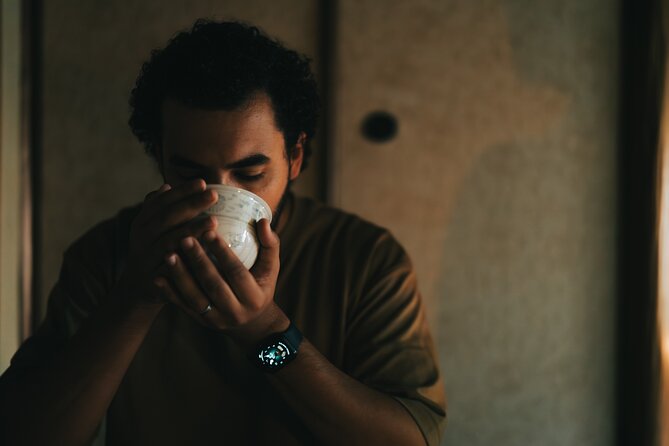
The tea is described as rare organic green tea. You’re encouraged to notice its flavor, the warmth of the bowl in your hands, and the candlelight around you. The sensory details are a useful part of the experience: they give you something specific to attend to, rather than leaving mindfulness as an abstract idea.
Some people in past sessions have chosen black tea instead of matcha, but that option is not stated as a guaranteed feature. If you have a strong preference or need to avoid a particular tea, ask the provider before booking rather than counting on a choice being available.
Why the Candlelight and Small Group Matter
The room’s handmade candles are more than decoration. Their soft light sets a slower tone, and the flicker gives you a natural point of focus as you watch the tea being prepared. The minimal décor also means there is less to compete with the ritual itself.
With a maximum of eight people, you’re not trying to peer past a crowd. That cap matters for a ceremony where quiet observation is part of the experience. It also creates a better setting for questions. Several hosts have been described as patient and welcoming, and the English-speaking guide makes it easier to get more out of the demonstration than you would from watching in silence alone.
Still, small group does not mean private. You may share the room with other people, and the exact number can vary. The intimate scale is a plus, but if you’re expecting a one-on-one lesson, this is not billed as one.
More Kyoto tours in Kyoto:
- PERFECT KYOTO 1-Day Bus Tour
★ 5.0 · 13,518 reviews - Kyoto: Fushimi Inari, Kinkakuji, Bamboo Grove 1 Day Bus Tour
★ 4.8 · 4,316 reviews - Kyoto Geisha Walking Tour: Gion District & Hidden Gems
★ 4.7 · 3,273 reviews - Kyoto: Gion Magical Night Walking Tour with Geisha Trivia
★ 4.9 · 2,393 reviews
The Tea, the Taste, and the Takeaway
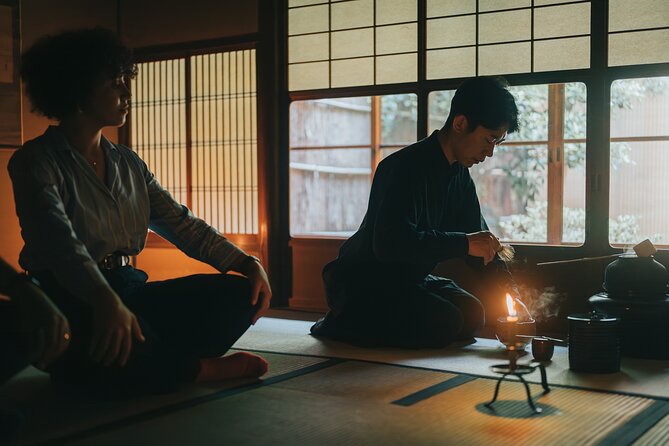
When the matcha reaches you, the host invites you to take your time with it. Notice the flavor, the temperature, and the feel of the bowl rather than treating it as a quick refreshment. That shift is the point: the experience asks you to approach tea as a ritual of attention and company, not merely as a drink.
Tea and coffee are included in the listed inclusions, though the ceremony itself centers on tea. Sweets are part of the welcome, and the activity ends with a small handmade candle. It’s a simple souvenir, but one that fits the mood of the session better than a generic trinket.
The ceremony lasts about 50 minutes. That’s long enough to follow the preparation and enjoy the tea, but short enough to fit into a day of sightseeing without taking over your schedule. You leave from the same meeting point, and the closing moment encourages you to carry some of the calm into the rest of your day.
Is $45.98 Good Value?
At $45.98 per person, this costs more than ordering matcha at a café. You’re paying for a guided cultural experience in a century-old setting, a small group, a translation into English, the tea and sweets, and time to watch a host prepare matcha with care. The handmade candle adds a modest keepsake rather than a large extra.
I think the value depends on what you want from tea in Kyoto. If you simply want a drink, this is not the economical choice. If you want context, a quiet setting, and a close look at a tea ritual that you might not encounter in a restaurant, the price is easier to justify.
The experience has a 4.9 rating from 19 reviews, with 100 percent recommending it. The most consistent praise centers on the peaceful setting, considerate hosts, and the chance to watch the ceremony up close. A few comments also note that the tea itself is very good. Those are meaningful strengths, though the short length and limited hands-on element are worth keeping in mind.
Who Will Enjoy This Experience Most
This ceremony is a good fit if you’re curious about Japanese tea culture but want a manageable introduction rather than a long formal lesson. It also suits anyone who wants a calmer interlude between Kyoto’s busier sights, or who enjoys learning by watching a skilled host work.
You don’t have to be a matcha fan to appreciate the ritual. One person who described the experience strongly recommended it even for people who don’t like tea, because the ceremony itself is the draw. Still, if you dislike the taste of tea and have little interest in cultural customs, the tasting portion may not be enough to hold your attention.
Families may find the short duration helpful, and one account mentions a daughter who enjoyed the matcha while a parent chose black tea. But the ceremony is quiet and reflective, so it may be a better match for children who can sit calmly and follow a short demonstration. The information provided does not set an age limit.
Practical Details Before You Book
The activity runs for approximately 50 minutes, and the group can include up to eight people. An English-speaking guide is included, along with coffee and/or tea. Tips and gratuities are not included.
Pay close attention to the arrival time. The activity information says you cannot join if you arrive more than 10 minutes after the start. The meeting point is near public transportation, but check your route in advance so you don’t lose the session by arriving late.
Free cancellation is available until 24 hours before the start time. Cancellations made less than 24 hours before the activity are not refunded, and changes inside that window are not accepted. The experience also requires good weather and a minimum number of participants. If the provider cancels for either reason, you’ll be offered another date or experience, or a full refund.
Should You Book Oboro’s Tea Ceremony?
Book it if you want a quiet, guided introduction to matcha and tea ceremony in an old Kyoto setting. The candlelight, small group, English translation, and careful preparation make this more than a quick cup of tea, while the 50-minute length keeps it easy to fit into a day.
Skip it if you’re looking for extensive hands-on practice, a long lesson, or the cheapest way to drink matcha. For a calm cultural pause with a clear sense of place, though, Oboro offers a thoughtful use of an hour.
FAQ
How long does the tea ceremony last?
It lasts approximately 50 minutes.
How much does the experience cost?
The listed price is $45.98 per person.
Is the ceremony guided in English?
Yes. An English-speaking guide is included to translate and help you follow the ceremony.
How many people can join?
The activity has a maximum group size of eight people.
Where does the experience start?
It starts at 237 Nakaogawachō, Kamigyo Ward, Kyoto, 602-0053, Japan.
Where does the experience end?
It ends back at the meeting point.
What is included?
Coffee and/or tea and an English-speaking guide are included. The experience also describes welcome tea and sweets, followed by a small handmade candle at the end.
What happens if I arrive late?
You cannot join if you arrive more than 10 minutes after the start time.
Can I cancel for a refund?
You can cancel at least 24 hours before the start time for a full refund. Cancellations made less than 24 hours before the start are not refunded.
Newly added in Kyoto
- Uji: Private immersion into Kyoto’s tea and reglious culture★ 5.0 · 17 reviews
- Whisk Your Own Matcha: A Zen Matcha Experience at Temple★ 3.6 · 7 reviews
- Kyoto tea town for matcha lovers★ 5.0 · 16 reviews
- Treasures of Kyoto: Gion & historical Walking Tour★ 5.0 · 6 reviews
- Kyoto Matcha Green Tea Tour★ 4.5 · 23 reviews
- Uji and Wazuka Matcha Farm Half Day Private Guided Tour★ 5.0 · 21 reviews
- Uji Tea Ceremony and UNESCO Heritage Walking Tour★ 5.0 · 20 reviews
- Utilising upcycled Matcha! Creating matcha incense (Uji, Kyoto)★ 5.0 · 6 reviews
Kyoto Tea Ceremonies, compared.

Tea Ceremony in a Traditional Tea House in Kiyomizu
Read our review →

World Heritage Kyoto & Nara Uji Authentic Matcha Experience
Read our review →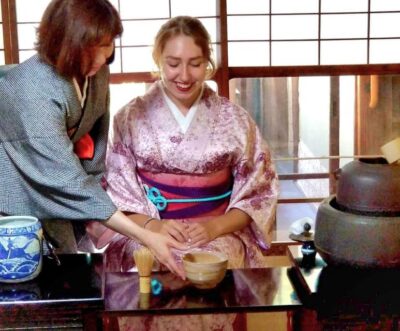

Arashiyama Bamboo Forest, Monkeys, Matcha & Temple Tour
Read our review →
Tea Museum Tickets and Matcha Grinding Experience
Read our review →Browse the lists this tour appears in