
Reviewed · KYOTO TEA CEREMONIES
Authentic Kyoto Tea Ceremony: Camellia Flower Teahouse
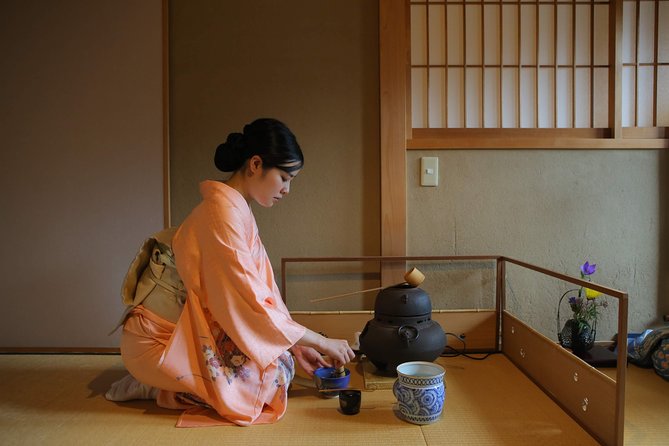
Kyoto’s tea ceremony is not just a lesson in making matcha. It is a short introduction to the care, gestures, and quiet attention that shape this centuries-old ritual. At Camellia Flower, you watch the host perform the ceremony, then get the bowl and whisk in your own hands.
I like two things in particular: the small group size, capped at eight, leaves room to ask questions, and the practical finale lets you try making matcha yourself. A seasonal sweet comes with the tea, and the instructor explains the utensils and the room as well as the steps.
One consideration: 45 minutes is a compact introduction, not an in-depth course. The room may feel plain rather than grand, and the experience is not wheelchair accessible. Chairs and tables are available if sitting on the floor does not suit you.
At a glance
- Make your own matcha: Learn the basic whisking technique and prepare a bowl yourself.
- Hear the meaning behind the ritual: Your instructor explains the utensils, steps, and room layout.
- Keep the group small: A maximum of eight participants makes questions and conversation easier.
- Taste a seasonal sweet: A small bite accompanies the matcha.
- Consider a kimono: You can request rental for an extra charge, but it is not part of the price.
- Plan for the setting: The session is in Higashiyama, lasts about 45 minutes, and is not wheelchair accessible.
A 45-minute introduction to Kyoto’s tea ritual
The ceremony at Camellia Flower is designed to be both a demonstration and a hands-on lesson. First, the instructor gives a short introduction to matcha and the tradition surrounding it. Then you watch the host carry out the tea-making steps, with explanations of the utensils and the room’s arrangement.
That mix is useful. The ceremony has a set sequence, and watching it first helps you understand why the movements are deliberate. The host also explains ideas such as respect, mindfulness, and preparing tea for another person. You are not expected to arrive knowing the customs, and questions are welcome.
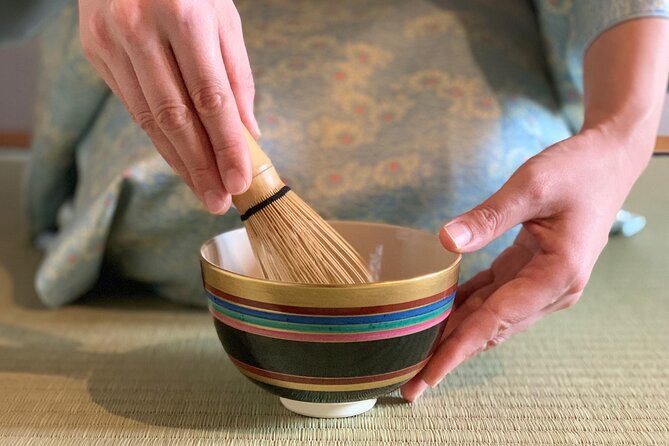
The final part gives each participant a chance to make a bowl of matcha. You receive a tea bowl, scoop, and whisk, and the instructor shows you the basics. It is a simple, satisfying way to put the demonstration into practice. You will not master a discipline that takes years to learn in one session, but you will leave with a clearer sense of the care involved.
More tea ceremonies in Kyoto:
- Kyoto: Tea Ceremony in a Traditional Tea House in Kiyomizu
★ 4.9 · 3,519 reviews - Kyoto: Tea Ceremony Ju-An at Jotokuji Temple
★ 4.9 · 3,207 reviews - Kyoto: 45-Minute Tea Ceremony Lesson Experience
★ 4.3 · 2,378 reviews
The room, utensils, and seasonal sweet
The ceremony’s setting is part of the lesson. Before the host begins, the instructor explains why the room’s decoration and layout matter. A flower arrangement may be among the details you notice, and the teaching helps you look beyond the objects themselves to the choices behind them.
The utensils are practical as well as symbolic. You see the bowl, scoop, and whisk used during the demonstration, then handle them when it is your turn to prepare tea. Learning how each tool fits into the process can make matcha at home feel less like a mystery and more like a craft.
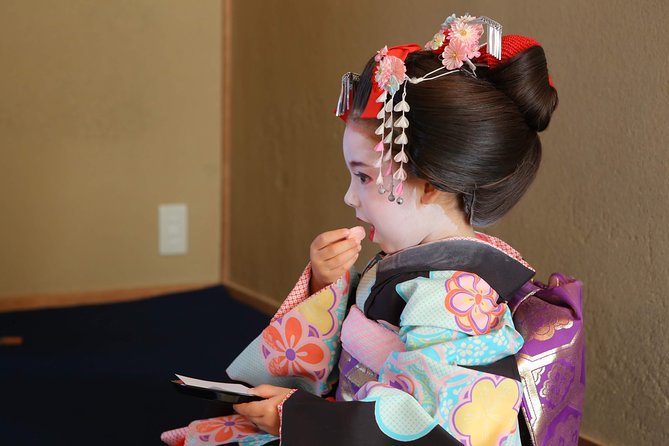
You also have matcha with a seasonal sweet. It is a small but important part of the experience: the sweet gives you something to taste alongside the tea, while the instructor can explain how the ceremony brings its elements together. Matcha’s flavor may be unfamiliar if you usually drink sweetened tea, so take a moment to notice its texture and taste.
English instruction and space for questions
All instructors speak English fluently and come from one of Kyoto’s three main schools of tea ceremony. No individual instructor is named in the booking details, so you should not count on a specific teacher. The teaching style, however, is intended to make the custom accessible, whether you are curious about tea, Japanese culture, or the details of the ritual.
I like that questions are encouraged rather than squeezed into a rushed closing minute. You can ask about the ceremony, the utensils, or tea in Japan while the explanations are still fresh. The small group limit helps: with no more than eight people, the session has a more personal scale than a large demonstration.
The instructors are described as patient and welcoming, and the structure supports that approach. You watch, listen, taste, and then try the process yourself. It is a good fit if you prefer learning by doing, but still want enough background to understand what you are doing.
What the 45 minutes feel like
The short duration is a plus if your Kyoto days are packed. The session provides a calm change of pace from sightseeing without taking half a day, and its central activity is clear from the start: learn about the ritual, watch it performed, and make matcha.
There is a trade-off. Forty-five minutes gives you an introduction, not an extensive study of tea schools, history, or technique. If you want a long, private lesson or time to practice several rounds, this may feel brief. One possible option is to ask about a private ceremony, though no price or specific private arrangement is provided here.
The session can also work as a pause between visits in Higashiyama. The meeting point is at Tea Ceremony Camellia FLOWER, 349-13 Masuyachō, Higashiyama Ward. It is near public transportation, but pickups and drop-offs are not included, so plan to reach the teahouse on your own.
More Kyoto tours in Kyoto:
- PERFECT KYOTO 1-Day Bus Tour
★ 5.0 · 13,518 reviews - Kyoto: Fushimi Inari, Kinkakuji, Bamboo Grove 1 Day Bus Tour
★ 4.8 · 4,316 reviews - Kyoto Geisha Walking Tour: Gion District & Hidden Gems
★ 4.7 · 3,273 reviews - Kyoto: Gion Magical Night Walking Tour with Geisha Trivia
★ 4.9 · 2,393 reviews
Is $36.48 a fair price?
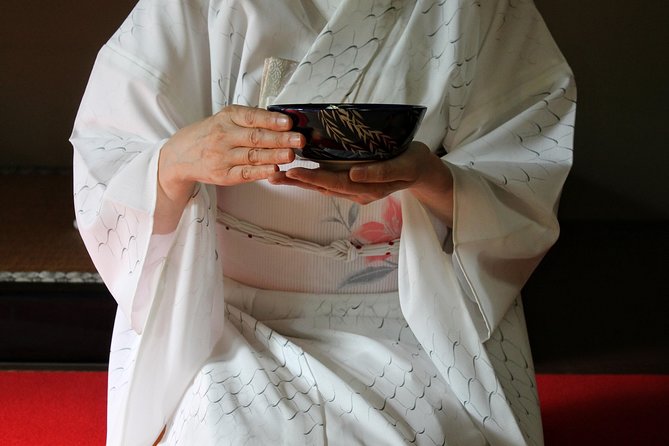
At $36.48 per person, you are paying for more than a cup of matcha. The price covers an instructor-led explanation, a demonstration, a seasonal sweet, and the chance to prepare your own bowl with the necessary utensils provided. For a cultural activity that takes less than an hour, that is a reasonably contained way to learn something you can recognize and appreciate during the rest of your time in Japan.
The value depends on what you want. If you are mainly after a drink, this is an expensive way to have tea. If you want context for the gestures, tools, and etiquette, the instruction is the point. The opportunity to try whisking your own matcha makes the session more useful than a demonstration alone.
Group discounts are available, though the exact savings are not specified. Kimono rental is an optional extra that you can request by message. Some people find dressing for the ceremony adds to the occasion, but it is not required, and the rental cost is not included in the $36.48 price.
Sitting on the floor, chairs, and access
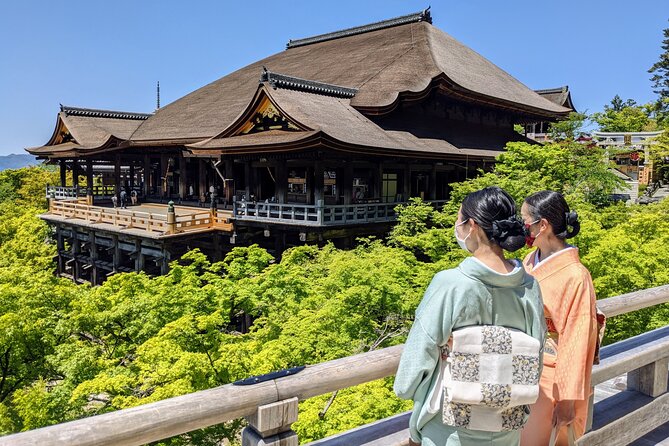
Guests usually sit on the floor, which is part of the traditional setting. If that is uncomfortable, chairs and tables are available. It is worth asking about your seating needs when planning, rather than assuming you will have to sit on the floor for the full session.
The venue is not wheelchair accessible. That is an important limitation for anyone who needs step-free access or wheelchair access, and it should be part of your decision before booking. Service animals are allowed.
Children under six cannot join. The experience is described as suitable for all ages beyond that restriction, and children aged seven and eight have enjoyed it. Still, the calm, instructional format will suit children best if they can listen, wait their turn, and take part in a short guided activity.
Should you wear a kimono?
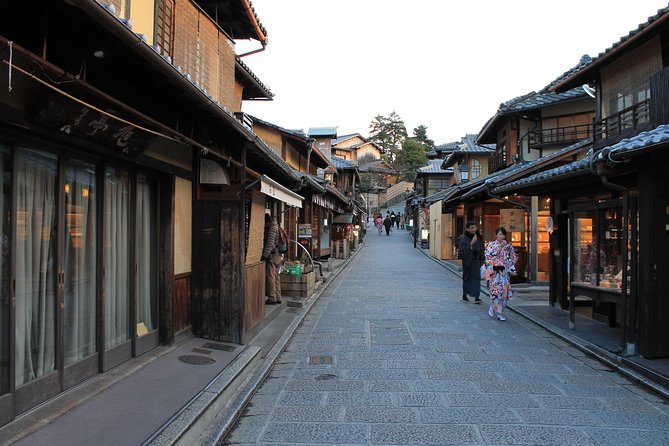
Kimono rental is not included, but you can request it by message for an extra charge. If wearing one is part of what you hope to do in Kyoto, ask about the option before you book so you understand the added cost and arrangements.
A kimono can make the occasion feel more ceremonial, and some participants value the dressing and styling as part of the experience. But it is an optional extra, not a condition of taking part. You can learn the steps, taste the tea, and make your own matcha in ordinary clothing.
Photos and short videos are permitted. Be considerate during the ceremony, especially while the host is demonstrating the sequence. The point is to watch the movements closely, and a phone in front of your face can make that harder.
Who will get the most from this ceremony?
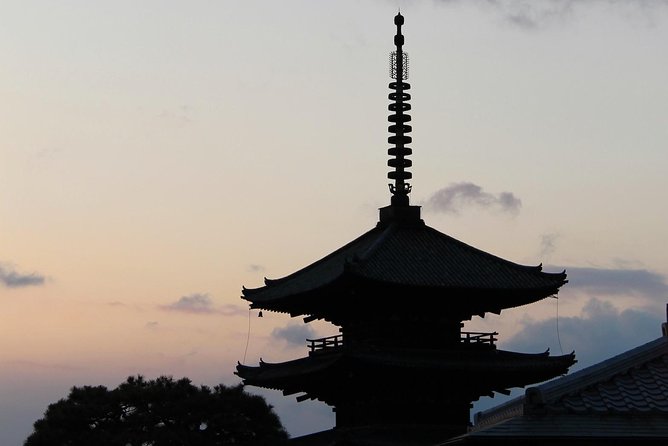
This is a good choice for a first visit to Japan, or for anyone who wants a straightforward introduction to an important cultural custom. You do not need prior knowledge of matcha. The instructor explains the process and gives you a chance to practice, so the activity works for curious beginners and families with children aged six and older.
It also suits people who want a quiet, structured activity rather than another fast-paced attraction. The ritual offers a moment to slow down, and the explanations give you a way to understand the precision behind each step. If you are already well versed in tea ceremony, however, the short format may cover familiar ground.
The group limit is another reason to consider it. With no more than eight participants, you have a better chance to ask a question and follow the demonstration closely. It is still a group activity, not a private lesson, so book a private option only if you want a more individual format and have confirmed what is available.
Before you book
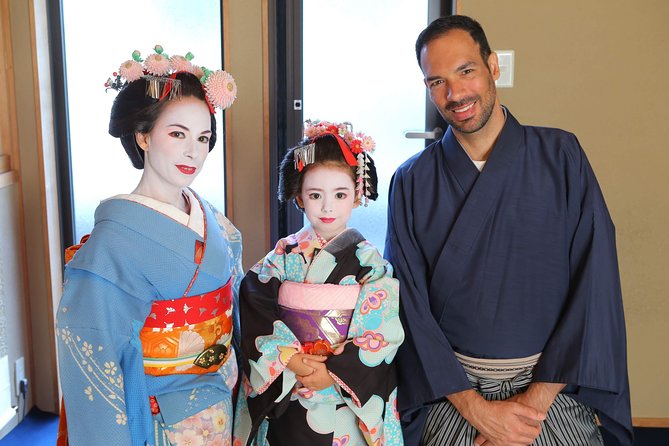
Allow about 45 minutes for the ceremony, plus time to get to and from the meeting point. The activity ends where it begins. It is near public transportation, but transport to the teahouse is your responsibility.
The experience requires good weather. If poor weather causes the activity to be canceled, you will be offered a different date or a full refund. You can cancel for a full refund up to 24 hours before the start time. Changes or cancellations made less than 24 hours before the start time are not accepted for a refund.
Is Camellia Flower worth booking?
Book this ceremony if you want a concise, hands-on introduction to matcha and the customs around it. The strongest reasons are the clear English instruction, the small group, and the chance to make your own bowl after seeing the host perform the ritual. The seasonal sweet and explanation of the room add welcome context.
Skip it if you want an extended course, a guaranteed grand setting, or wheelchair access. At $36.48, the experience offers good value for a focused cultural lesson, but it is not a substitute for a longer study of tea ceremony. If the format fits what you want, it is an easy way to bring a little stillness and substance into a busy Kyoto itinerary.
FAQ
How long does the tea ceremony last?
Plan for about 45 minutes.
Where does the experience take place?
It starts at Tea Ceremony Camellia FLOWER, 349-13 Masuyachō, Higashiyama Ward, Kyoto, Japan, and ends at the same meeting point.
How many people can join?
The group has a maximum of eight participants.
Is the ceremony taught in English?
Yes. All instructors speak English fluently.
Can I make matcha myself?
Yes. The instructor demonstrates the process, then each participant has the opportunity to make a bowl of matcha.
Are the tea utensils provided?
Yes. Tea bowls, tea scoops, and tea whisks are provided.
Is a sweet included?
Yes. You have a seasonal sweet with your tea.
Can children take part?
Children under six cannot join. The experience is open to children aged six and older.
Is the venue wheelchair accessible?
No. The activity is not wheelchair accessible. Chairs and tables are available for those who prefer not to sit on the floor.
Is kimono rental included?
No. Kimono rental is an optional extra that can be requested by message.
Newly added in Kyoto
- Uji: Private immersion into Kyoto’s tea and reglious culture★ 5.0 · 17 reviews
- Whisk Your Own Matcha: A Zen Matcha Experience at Temple★ 3.6 · 7 reviews
- Kyoto tea town for matcha lovers★ 5.0 · 16 reviews
- Treasures of Kyoto: Gion & historical Walking Tour★ 5.0 · 6 reviews
- Kyoto Matcha Green Tea Tour★ 4.5 · 23 reviews
- Uji and Wazuka Matcha Farm Half Day Private Guided Tour★ 5.0 · 21 reviews
- Uji Tea Ceremony and UNESCO Heritage Walking Tour★ 5.0 · 20 reviews
- Utilising upcycled Matcha! Creating matcha incense (Uji, Kyoto)★ 5.0 · 6 reviews
Kyoto Tea Ceremonies, compared.

Tea Ceremony in a Traditional Tea House in Kiyomizu
Read our review →


World Heritage Kyoto & Nara Uji Authentic Matcha Experience
Read our review →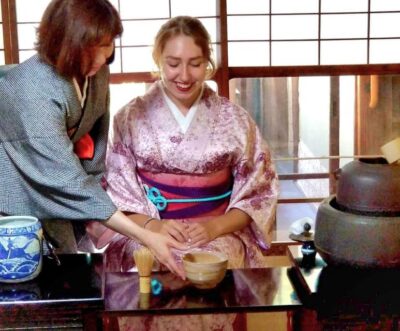


Arashiyama Bamboo Forest, Monkeys, Matcha & Temple Tour
Read our review →
Tea Museum Tickets and Matcha Grinding Experience
Read our review →Browse the lists this tour appears in