
Reviewed · KYOTO TEA CEREMONIES
Authentic Tea Ceremony & Sushi in The Museum of Kyoto
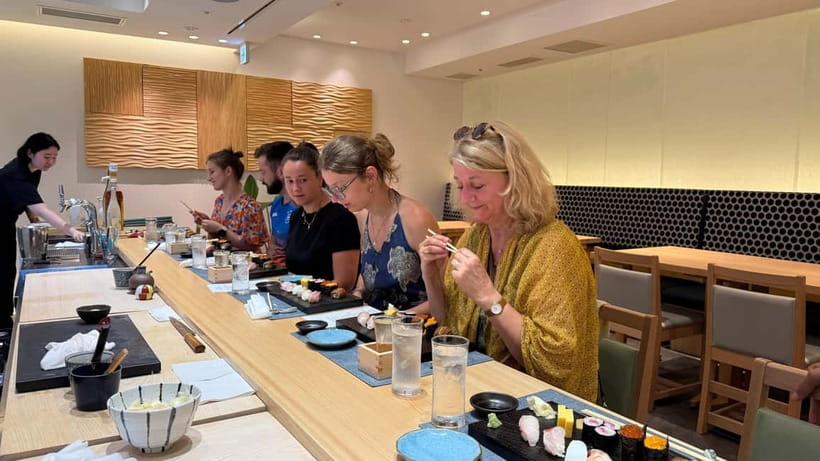
The heart of this Kyoto experience is an unusual pairing: sushi prepared in front of you, followed by a tea ceremony in a traditional house on the Museum of Kyoto’s basement floor. A carefully designed garden provides a calm backdrop, and the ceremony gives you a chance to make your own bowl of matcha rather than simply watch.
I like two things in particular: the sushi is made before your eyes, so the meal feels personal, and the tea portion explains the meaning of the utensils and customs instead of treating them as props. You also wear a haori, a kimono-style jacket, which makes the transition into the ceremony feel more considered.
The main limitation is dietary: this experience is not suitable for vegetarians or vegans, and allergies should be reported in advance. At $133 per person, it makes most sense if you value the food and cultural instruction as a single experience, not if you are looking only for a quick tea tasting.
- Sushi made to order: A master chef prepares the sushi in front of you at Sushi Shin in the Museum.
- Two session orders: At 11:00, sushi is served at the end; at 13:30, it comes first.
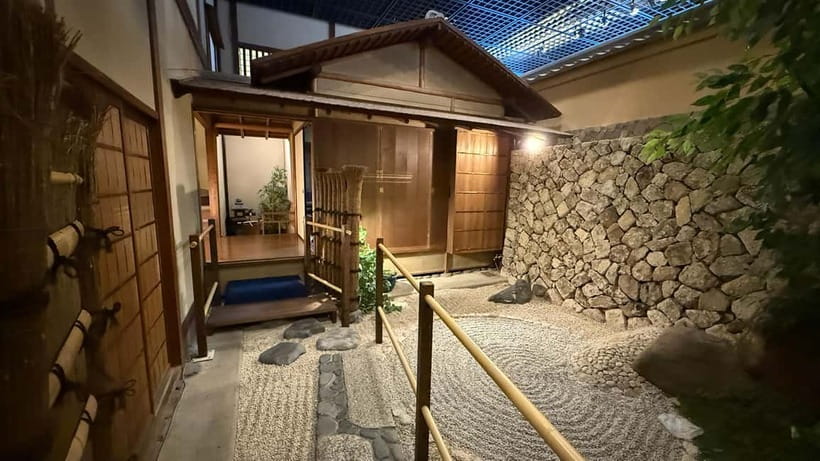
- A traditional house below the museum: The ceremony takes place in a Japanese-style setting with views of a miniature garden.
- Hands-on matcha: Learn about chanoyu, then whisk your own bowl and enjoy it with a Kyoto sweet.
- A haori to wear: The kimono-style jacket adds a traditional touch without requiring a full kimono.
Sushi first, or sushi last
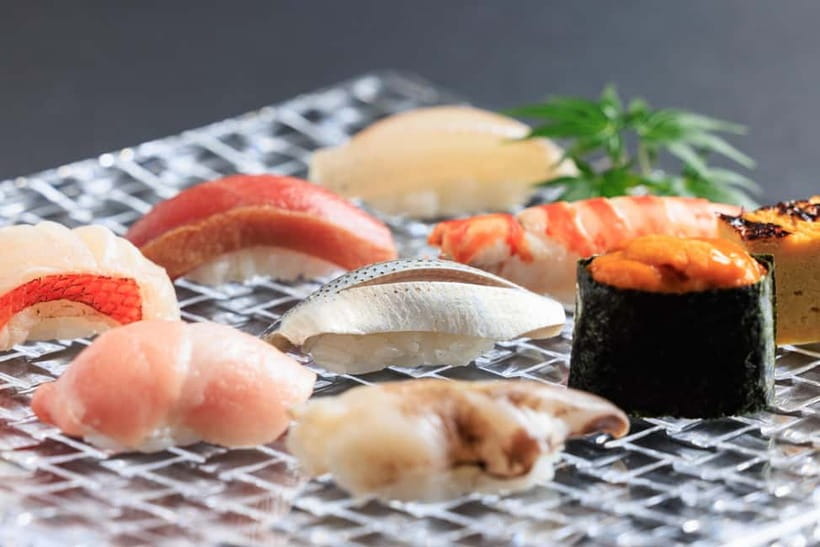
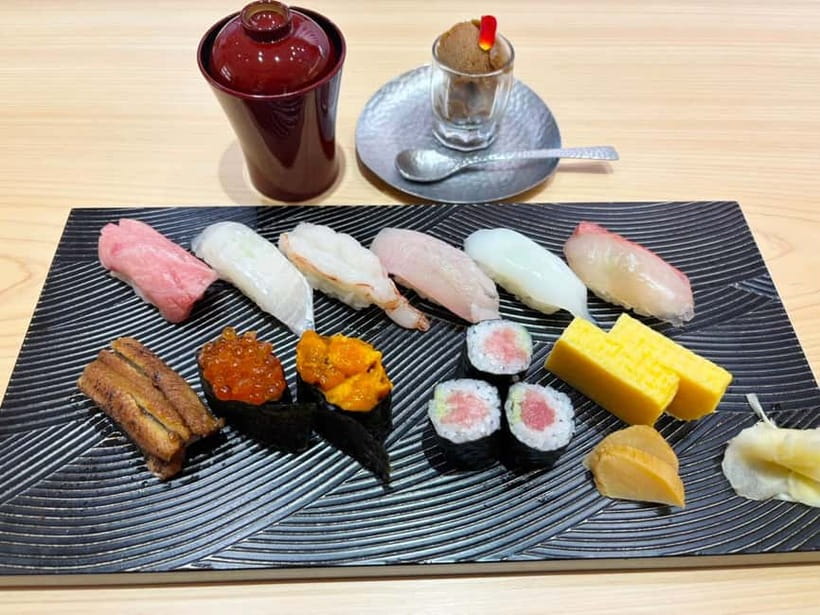
The experience begins at Sushi Shin in the Museum, inside the Museum of Kyoto. It combines a meal with a tea ceremony, but the order depends on which session you choose. At 11:00, the sushi is served at the end; at 13:30, it is served at the beginning.
That detail matters if you are planning your day around lunch. The later session starts with the sushi, while the earlier one reserves it for the finish. The supplied information does not give a precise duration, so leave room in your schedule rather than assuming you can fit another timed activity immediately afterward.
The sushi is prepared by a master chef with years of training, and the preparation takes place in front of you. That is an important part of the appeal: you are not simply being handed a plate from a kitchen you cannot see. You can watch the chef’s work and then eat the sushi while it is fresh.
The food receives particularly strong praise for its freshness and quality. I would treat that as a real part of the experience, not just a prelude to the ceremony. If you care about sushi as much as Japanese tradition, the combination gives you two distinct reasons to book.
A quiet house beneath the museum
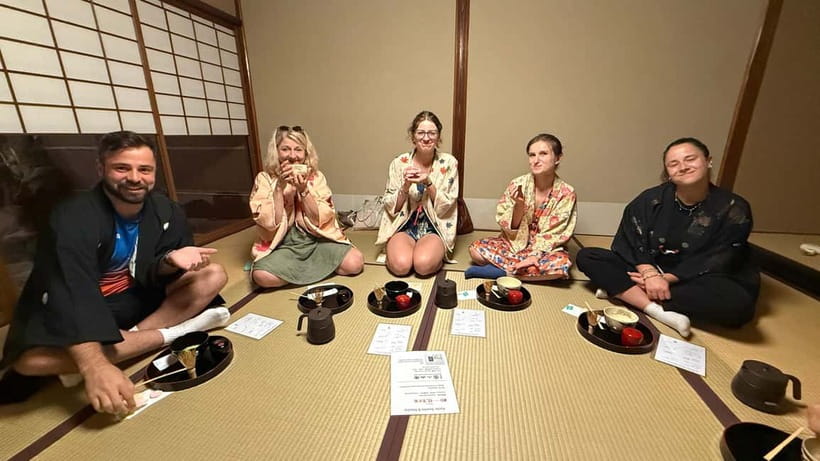
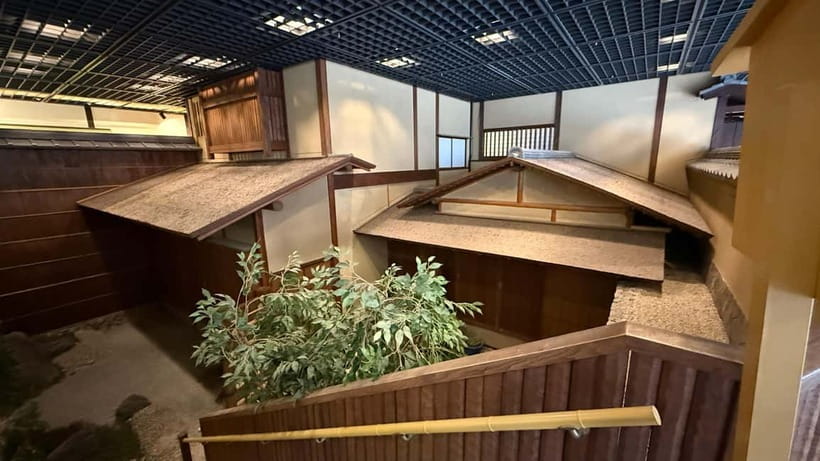
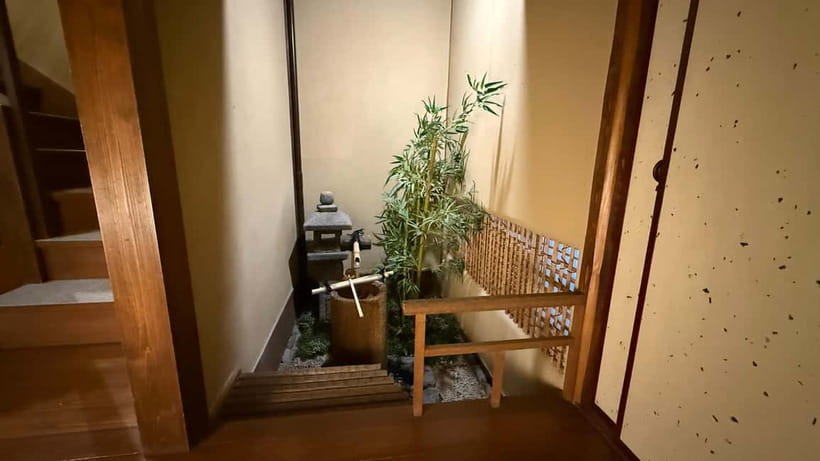
From the restaurant, you are guided to a traditional Japanese house on the museum’s basement floor. The setting is described as having the atmosphere of the Edo period, with views of a meticulously designed miniature garden. The change from restaurant to quiet tea room is central to the experience: you move from watching food being made to slowing down and paying attention to a bowl, a sweet, and a set of utensils.
The garden is a visual feature, not a separate stop or a walk through a larger outdoor space. You view it from within the house. That can suit you if you like a calm setting where small details matter, but it is worth setting expectations: the focus is on the ceremony and the carefully made garden, rather than a tour of the museum or a broad sightseeing itinerary.
Before the ceremony, you wear a traditional haori, a jacket in the style of a kimono. This gives the occasion a sense of ritual without requiring you to arrive dressed for it. The information provided does not specify clothing sizes or other dressing details, so ask the operator ahead of time if you have a practical concern.
More tea ceremonies in Kyoto:
- Kyoto: Tea Ceremony in a Traditional Tea House in Kiyomizu
★ 4.9 · 3,519 reviews - Kyoto: Tea Ceremony Ju-An at Jotokuji Temple
★ 4.9 · 3,207 reviews - Kyoto: 45-Minute Tea Ceremony Lesson Experience
★ 4.3 · 2,378 reviews
Chanoyu explained, then practiced
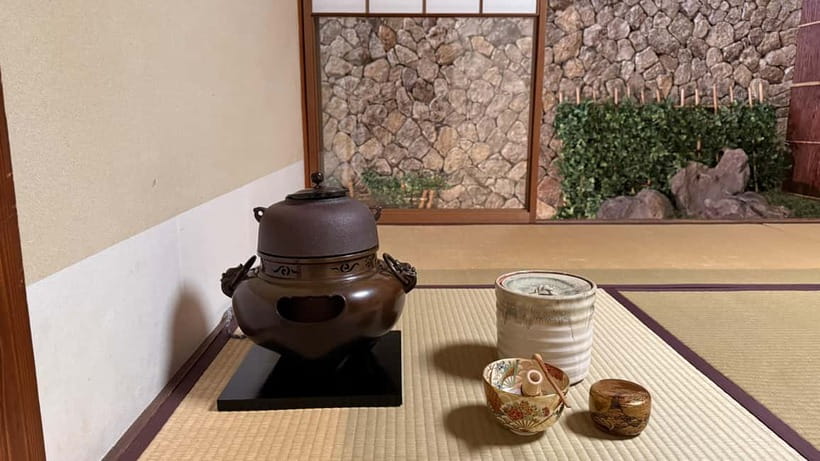
The tea portion includes a brief explanation of chanoyu, the Japanese tea ceremony, and its cultural origins. You are also introduced to the utensils used in the ceremony. That context helps you understand why the preparation is deliberate: the bowl, tools, and motions are part of the experience, not merely equipment for making a drink.
The explanation is described as brief, so this is not a long lecture on tea history. I see that as a good fit for an experience that also includes sushi and a hands-on activity. You get enough background to follow what is happening, then have a chance to take part yourself.
You whisk your own bowl of matcha and enjoy it with a traditional Kyoto sweet. The matcha is described as premium and rare, and the tea is one of the elements repeatedly singled out for its quality. If your usual matcha is a sweetened café drink, expect this to be a different kind of tasting: the focus here is on the tea itself and the method of preparing it.
The sweet is paired with the matcha, giving you a simple way to notice how the two work together. The exact sweet is not specified, so do not book expecting a particular confection. The appeal is the pairing and the chance to enjoy it in the ceremony setting.
What the session order means for your day
The two listed start times are 11:00 and 13:30. The most practical difference is when the sushi arrives. Choose 11:00 if you prefer to begin with the ceremony and finish with sushi; choose 13:30 if you would rather eat first and then move into the tea experience.
There is no stated difference in what is included between the sessions. Both cover the haori, introduction to tea utensils, a short explanation of chanoyu, the garden view, matcha, a Kyoto sweet, and sushi. If you have a preference about eating before or after the quieter portion, this is the detail to weigh when choosing a time.
The meeting point is Sushi Shin in the Museum, inside the Museum of Kyoto, and the activity ends back at that same point. The experience is offered in English and Japanese. No group size or exact running time is specified, so check those details directly if they affect your plans.
Is $133 a fair price?
At $133 per person, this is a premium-priced experience. The value comes from combining several things that are often booked separately: sushi prepared by a trained chef, a traditional setting, a guided introduction to tea customs and utensils, a chance to whisk matcha, and a Kyoto sweet. The haori and garden view add to the setting, though the strongest reasons to pay are the food and the hands-on ceremony.
I would consider the price worthwhile if you want an organized cultural activity that also includes a substantial food component. It is less compelling if your priority is a long, scholarly account of tea culture, since the history is described as a brief explanation. It is also not an economical choice if you mainly want a bowl of matcha or a sushi meal on its own.
The available rating is five stars, based on three ratings. The comments point to the same strengths: sushi prepared in front of you, a peaceful setting, an engaging explanation, and notably good matcha. That is a small sample, so it is better read as a useful indication of what the experience does well than as a guarantee of how every session will feel.
More food tours in Kyoto:
- Ramen Cooking Class at Ramen Factory in Kyoto
★ 5.0 · 1,937 reviews - Kyoto Night Foodie Tour in Gion (9+ dishes + 6 Sake tastings)
★ 5.0 · 1,762 reviews - Kyoto: Izakaya Bars Guided Walking Tour
★ 4.9 · 815 reviews - Sushi Making in Kyoto! Same-day bookings welcome!
★ 5.0 · 713 reviews
Who will enjoy this experience
This pairing suits you if you want more than a meal, but do not want a full-day cultural program. You get a close look at sushi preparation, a taste of matcha, and an introduction to the ceremony in one visit. It is also a natural choice if you are curious about Japanese tea customs but would rather participate than simply observe.
It may be especially appealing to couples or small groups with shared interest in food and culture, though the group size is not stated. The calm setting and garden view give the tea portion a quieter pace than the sushi preparation. If you enjoy both lively craft and stillness, that contrast is part of the value.
This is not suitable for children under 10, vegans, vegetarians, or people over 95. If you have an allergy, inform the provider in advance. Because the meal and tea are both part of the experience, dietary needs deserve attention before booking, not at the table.
A few practical details before booking
The experience is provided by ideal co.,ltd. You can reserve now and pay later, and cancellation up to 24 hours in advance is eligible for a full refund. Those terms offer flexibility, but the more important planning question is whether the menu works for you and whether the 11:00 or 13:30 food order suits your day.
If you have a question about ingredients, allergy handling, the exact duration, or what to wear beneath the haori, contact the provider before confirming. The stated language options are English and Japanese, which should help you follow the introduction and ceremony if you choose either language.
Should you book it?
Book this if you want a carefully structured Kyoto experience that brings together fresh sushi, premium matcha, and a quiet introduction to chanoyu. Its best feature is the balance between watching skilled preparation and doing something yourself: you see the sushi made, learn about the tea utensils, then whisk your own matcha.
Skip it if you need a vegetarian or vegan meal, are booking for a child under 10, or want an extensive tea-history lesson. For the right appetite and interests, the $133 price buys more than lunch: it gives you a measured, hands-on encounter with two Japanese food traditions in one distinctive setting.
FAQ
Where does the experience begin?
It begins at Sushi Shin in the Museum, inside the Museum of Kyoto. The activity ends back at the same meeting point.
What is the difference between the 11:00 and 13:30 sessions?
At 11:00, the sushi is served at the end. At 13:30, it is served at the beginning.
Is the sushi prepared in front of me?
Yes. The sushi is crafted in front of you by a master chef.
Do I get to make matcha myself?
Yes. You whisk your own bowl of matcha and enjoy it with a traditional Kyoto sweet.
What is included in the tea ceremony?
You receive a brief explanation of chanoyu and its cultural origins, an introduction to traditional tea utensils, a view of the miniature garden, premium matcha, and a Kyoto sweet. Wearing a haori is also included.
Which languages are offered?
The experience is offered in English and Japanese.
Can children or vegetarians take part?
It is not suitable for children under 10, vegetarians, or vegans. If you have allergies, inform the provider in advance.
More museum visits in Kyoto
- Kyoto: Tea Museum Tickets and Matcha Grinding Experience
★ 4.9 · 739 reviews - Skip the lines Basic Ticket at SAMURAI NINJA MUSEUM KYOTO
★ 4.5 · 632 reviews - Kyoto : Geiko Maiko Dance of Kyoto & Visits of Gion Museum
★ 4.6 · 415 reviews - Kyoto Sword Experience – includes Museum Ticket/Ninja Experience
★ 4.5 · 149 reviews
Newly added in Kyoto
- Uji: Private immersion into Kyoto’s tea and reglious culture★ 5.0 · 17 reviews
- Whisk Your Own Matcha: A Zen Matcha Experience at Temple★ 3.6 · 7 reviews
- Kyoto tea town for matcha lovers★ 5.0 · 16 reviews
- Treasures of Kyoto: Gion & historical Walking Tour★ 5.0 · 6 reviews
- Kyoto Matcha Green Tea Tour★ 4.5 · 23 reviews
- Uji and Wazuka Matcha Farm Half Day Private Guided Tour★ 5.0 · 21 reviews
- Uji Tea Ceremony and UNESCO Heritage Walking Tour★ 5.0 · 20 reviews
- Utilising upcycled Matcha! Creating matcha incense (Uji, Kyoto)★ 5.0 · 6 reviews
Kyoto Tea Ceremonies, compared.

Tea Ceremony in a Traditional Tea House in Kiyomizu
Read our review →

World Heritage Kyoto & Nara Uji Authentic Matcha Experience
Read our review →

Arashiyama Bamboo Forest, Monkeys, Matcha & Temple Tour
Read our review →
Tea Museum Tickets and Matcha Grinding Experience
Read our review →Browse the lists this tour appears in