
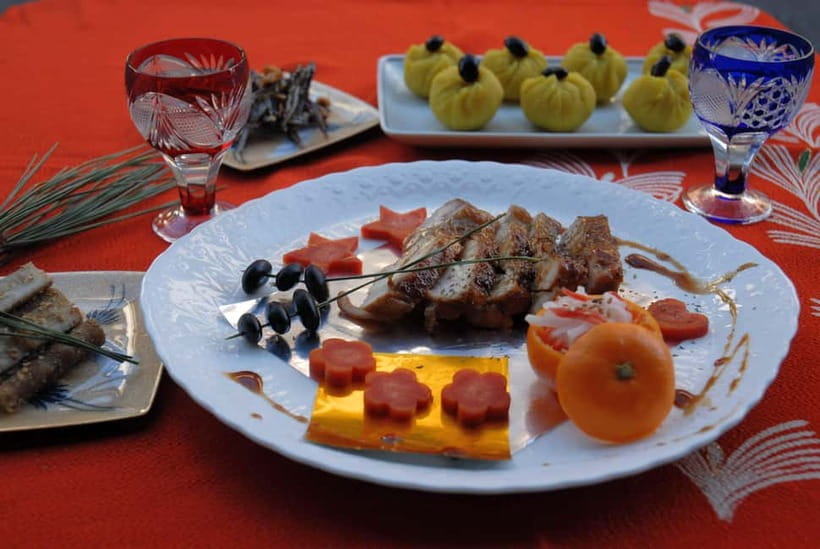
Reviewed · KYOTO COOKING CLASSES
Experience Authentic Japanese Home Cooking in Kyoto
A bowl of Japanese home cooking begins with dashi, a clear broth made from kelp and bonito flakes. In this Kyoto class, you make that foundation yourself, then use it in dishes such as rolled omelet and miso soup. The setting is a traditional townhouse more than 100 years old, and the cooking is built around food Japanese families prepare at home, not restaurant showpieces.
I like two things in particular: you learn techniques you can repeat in your own kitchen, and the menu gives you a practical taste of how dashi, seasonal vegetables and simple seasonings work together. Instructor Kayo’s teaching is described as warm and accessible, and even an experienced kitchen worker came away with new tricks. One point to sort out before booking: the directions name both Shijo Station and Sanjo Keihan or Sanjo Station as meeting references, so confirm exactly where you’ll be picked up.
What to know before you book
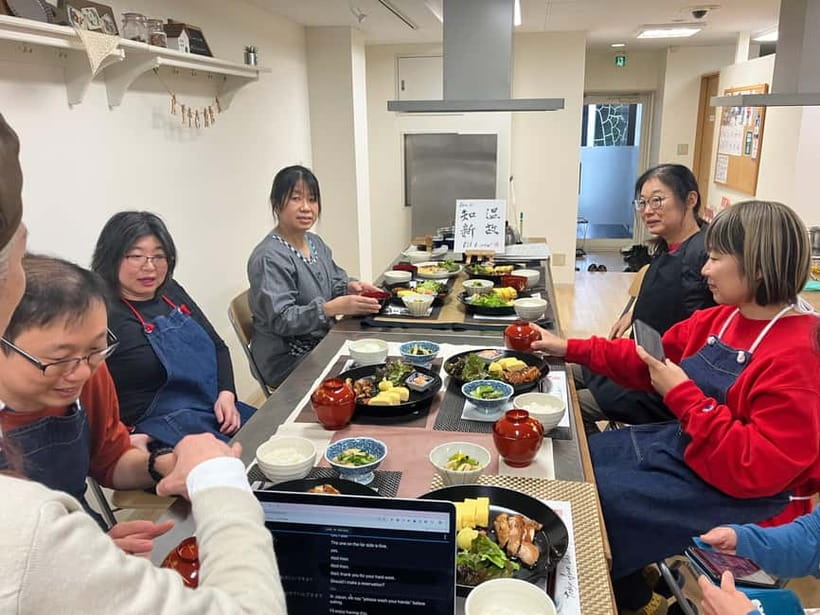
- Start with real dashi: Make broth from katsuobushi, or bonito flakes, and kombu, or kelp, rather than relying on a ready-made stock.
- Cook a home-style menu: Prepare dashi-maki tamago, simmered seasonal vegetables, chicken teriyaki and miso soup.
- Learn with Kayo: The instructor teaches in English, and the lesson is designed to welcome beginners as well as more experienced cooks.
- Cook in a century-old townhouse: The class takes place in a traditional Kyoto home, offering a glimpse of domestic life beyond the city’s temples and shrines.
- Plan for a private group: The class is listed for private groups. Men-only bookings cannot take place at this home, though a separate rental kitchen may be possible by message.
- Allow about two and a half hours: The class details give a 2.5-hour cooking time, though the activity duration is also shown as one day. Check the available start time when booking.
Start with dashi, not a shortcut
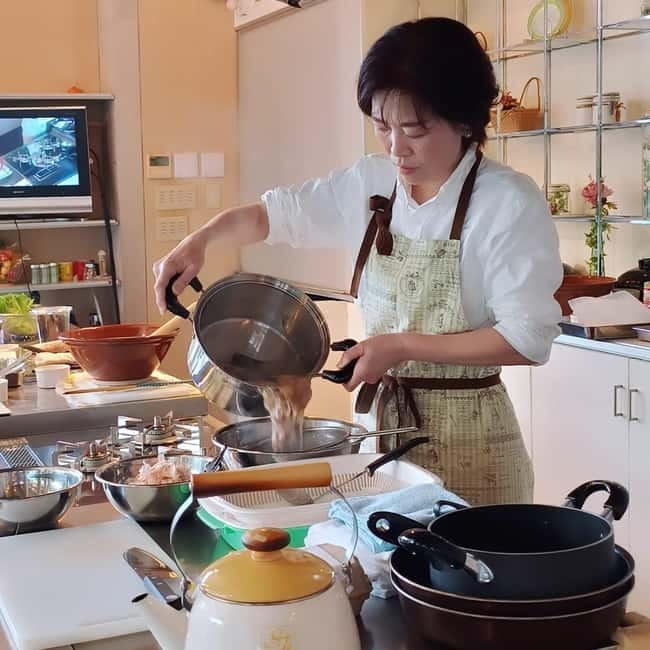
The class begins with the basic stock at the heart of many Japanese dishes: dashi made from bonito flakes and kelp. You’ll handle the ingredients and learn how to draw flavor from them, then put the fresh broth to work in the dishes that follow.
That first step is more than a cooking demonstration. Dashi helps explain why Japanese food can taste full and savory without relying on heavy sauces. The class also emphasizes additive-free seasonings, so you can pay attention to the ingredients themselves and how small amounts of seasoning shape the final dish.
As the broth warms, the aroma becomes part of the experience. The class describes it as calming, though that is best taken as a sensory pleasure rather than a health promise. The useful lesson is how a few basic ingredients can provide a starting point for several different dishes.
If you’ve never made Japanese stock, the process may feel unfamiliar at first. That is precisely why it’s a good place to begin: once you understand dashi, the rest of the menu makes more sense. You’ll use it in the rolled omelet and miso soup, and learn how it can support the flavor of simmered vegetables.
More cooking classes in Uji:
- Ramen Cooking Class at Ramen Factory in Kyoto
★ 5.0 · 1,937 reviews - Sushi Making in Kyoto! Same-day bookings welcome!
★ 5.0 · 713 reviews - Kyoto: Ramen Cooking Class at a Ramen Factory with Souvenir
★ 4.9 · 532 reviews
Make a rolled omelet with fresh stock
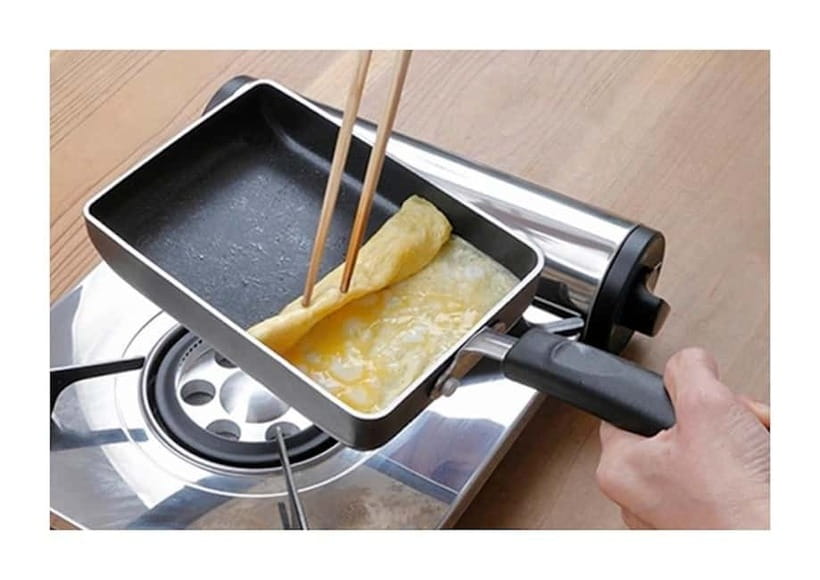
Dashi-maki tamago, a rolled omelet made with dashi, is one of the class’s central dishes. The freshly made broth goes into the egg mixture, giving you a chance to see how one preparation carries through the meal.
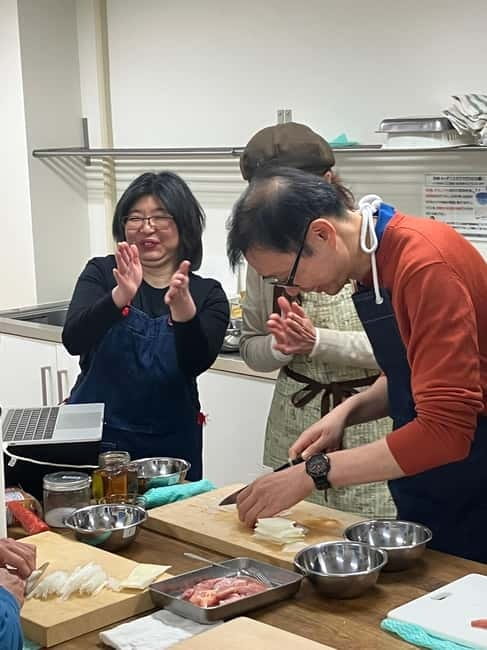
The class includes instruction in using delicate Japanese knives, as well as ingredient preparation and cutting techniques. That detail matters: home cooking is not just about following a recipe. How you cut vegetables, handle ingredients and prepare each component affects the finished dish.
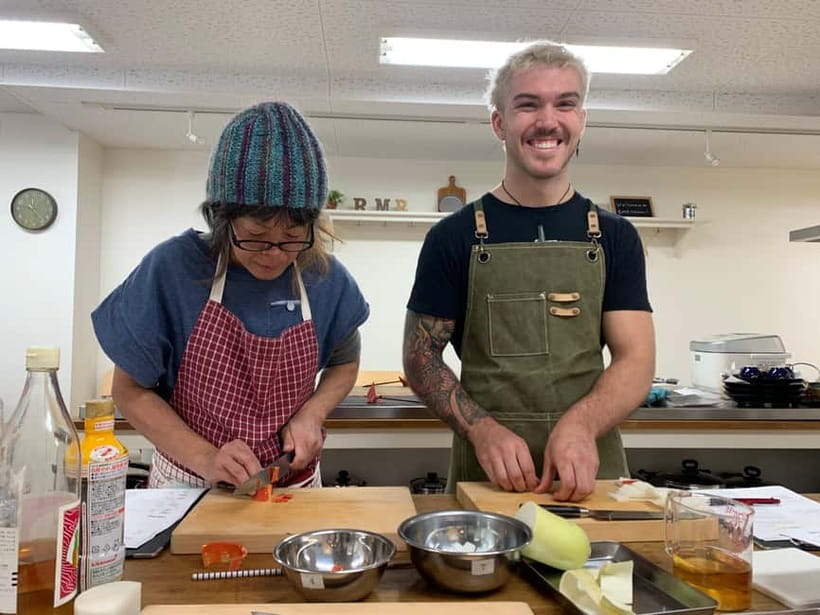
You should expect to work through the cooking step by step, rather than simply watch a teacher prepare everything. The class is aimed at people with different levels of experience, and its practical focus makes it a good fit if you want to leave with skills you can use again. One participant who had spent years working in kitchens still learned new tricks, which suggests the lesson can hold the interest of confident cooks, too.
Don’t expect a restaurant-style performance or a polished tasting menu. The point is to learn a familiar home dish and understand the choices behind it. The payoff is less about a dramatic presentation and more about being able to make a satisfying omelet yourself after you return home.
Prepare seasonal vegetables and teriyaki
The menu also includes simmered vegetables, prepared with seasonal ingredients. Japanese cooking often changes with the seasons, and this dish gives the class a practical way to introduce that idea. What is available will depend on the time of year, so the vegetables and flavors may vary.
You’ll learn that different ingredients call for different preparation and cutting methods. That can make a simple vegetable dish feel more considered than its short ingredient list suggests. The aim is balanced, everyday food, rather than elaborate techniques for their own sake.
Chicken teriyaki adds a familiar, savory main dish to the menu. Here, the focus is on traditional flavors and seasonings, not on reproducing a restaurant plate. Making it alongside the stock, egg and vegetables helps you see how a home meal can bring several preparations together without making any one dish overly complicated.
The mix of dishes is a strength for anyone who wants a useful introduction to Japanese home cooking. You’re not spending the session on a single recipe; you’re learning how the parts of a meal relate. The trade-off is that a 2.5-hour class can offer an introduction, not a full course in Japanese cooking. Treat it as a set of good foundations rather than an exhaustive lesson.
Finish with miso soup and a shared meal
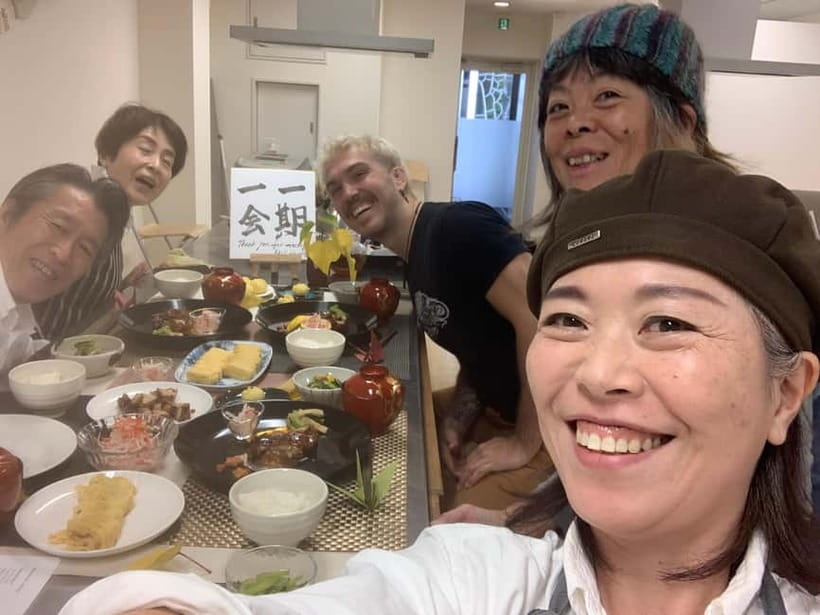
Miso soup is also part of the class. The fresh dashi becomes the base, connecting the first step of the session to the meal at the end. You’ll plate the dishes and set the table, then eat what you have prepared.
That shared meal is an important part of the experience. It gives you time to taste the results together and notice how the broth, egg, vegetables and chicken work as a meal. You’re not just collecting recipes; you’re seeing how everyday Japanese dishes can add up to something nourishing and complete.
The meal is included in the $122 per-person price, along with the cooking experience, ingredients, apron and cloths. You won’t need to buy a separate meal afterward to get the full value of the class. A dashi soup set is not included, however, so don’t assume you’ll leave with a kit or ingredients to take home.
The class’s emphasis on cooking for health and flavor follows the philosophy of Katsuo Doi, a well-known Japanese home-cooking expert. That does not mean you’ll get a lecture on nutrition. The practical idea is simpler: use sound ingredients, prepare them carefully and cook food that people might make for a normal family meal.
More Kyoto tours in Uji:
- World Heritage Kyoto & Nara Uji Authentic Matcha Experience
★ 5.0 · 1,573 reviews - Osaka: Nara and Uji Day Trip with Deer Park and Hot Spring
★ 4.4 · 302 reviews - Uji: Green Tea Tour with Byodoin and Koshoji Temple Visits
★ 4.8 · 72 reviews - Uji: UNESCO Heritage & Tea Ceremony Walking Tour
★ 4.6 · 54 reviews
Learn inside a Kyoto townhouse
The home itself is part of the appeal. It is described as a traditional Japanese townhouse more than a century old, which gives the class a domestic setting quite different from a restaurant kitchen or a purpose-built cooking studio.
The small-scale setting suits the subject. You’re learning about everyday food in a home, from an instructor who can guide you through each step. The private-group format can also make it easier to ask questions and work at a comfortable pace, though the exact group size is not specified.
The location is convenient for sightseeing, with Heian Shrine, Gion, Yasaka Shrine and Kyoto Imperial Palace described as roughly 15 to 20 minutes away on foot. That makes the class a sensible addition to a day of exploring central Kyoto, though you’ll want to leave enough time for the lesson and meal rather than try to squeeze it between tightly timed visits.
Pay close attention to the meeting point. The activity information gives Subway Shijo Station as the meeting point, about a 10-minute walk away, while the class location details refer to Sanjo Keihan or Subway Sanjo Station, also about a 10-minute walk away. It says the instructor will meet you at the station after your reservation is confirmed. Since those are different stations, message the provider to confirm the exact meeting place before setting out.
Weigh the price against what you take home
At $122 per person, this is not a budget lunch. But the price covers a 2.5-hour guided cooking session, ingredients, apron and cloths, plus the meal you prepare. You also get hands-on practice with a full set of home-style dishes and a chance to ask an English-speaking instructor about Japanese ingredients and cooking methods.
The strongest value is practical. If you want to recreate dashi, rolled omelet, miso soup, teriyaki and simmered vegetables at home, the class offers more than a meal and a pleasant afternoon. One useful touch is advice on choosing good brands of ingredients, which can help when you’re shopping outside Japan and trying to work out what is worth buying.
The class may be less compelling if you’re looking mainly for a quick cultural demonstration or a lavish meal. Its appeal is participation and everyday cooking, not a large menu of restaurant specialties. You’re paying for instruction and a home setting as much as for the food.
There are a few booking details to keep in mind. Aprons, cloths, ingredients and the meal are included; merchandise and a dashi soup set are not. The class is listed as English-language and private-group, and the provider allows cancellation up to 24 hours beforehand for a full refund. You can also reserve without paying immediately, with payment later.
Who will get the most from the class
This suits curious cooks who want to understand how Japanese home food is made, especially if you enjoy learning techniques you can repeat rather than watching a chef work from a distance. Beginners should be comfortable: the instruction is step by step, and the menu is made up of approachable everyday dishes.
It can also suit experienced cooks who want to compare methods and learn about Japanese ingredients. The class is not restricted to novices, and the reported experience of a long-time kitchen worker suggests there can be useful details for people who already know their way around a stove.
If you’re traveling with children, note that the class is not suitable for children under six. Men-only groups cannot attend at this home. The provider says a separate rental kitchen may be arranged for an all-male group, so contact them before booking if that applies to you.
Language is worth checking if you need more support than English instruction. English is the listed teaching language. One participant also had a translator arranged, but that does not establish that translation is available for every class, so ask the provider directly if you need it.
Should you book this Kyoto cooking class?
Book it if you want a grounded introduction to Japanese cooking, value hands-on instruction and like the idea of learning inside an old Kyoto home. The combination of fresh dashi, seasonal vegetables and familiar home dishes gives you techniques and context to carry beyond the class.
Think twice if your main goal is a restaurant-style feast, a very short activity or a cooking session for an all-male group at this location. Before paying, confirm the meeting station and check the available start time: the class itself is described as 2.5 hours, while the activity duration is also shown as one day. If those details suit your plans, this is a worthwhile way to spend part of a Kyoto day and bring home more than a souvenir.
FAQ
How long does the cooking class take?
The class information gives a cooking time of 2 hours and 30 minutes. The activity is also described as lasting one day, so check the available start time and confirm the schedule before booking.
What dishes will I make?
The menu includes dashi, dashi-maki tamago, or rolled omelet, chicken teriyaki, simmered vegetables and miso soup. You’ll also plate the food and set the table.
Is the class taught in English?
Yes. English is listed as the teaching language. If you need translation beyond English instruction, contact the provider to ask what can be arranged.
What is included in the price?
The cooking experience, apron and cloths, ingredients, all menu items and the meal are included. Merchandise and a dashi soup set are not included.
Where do I meet the instructor?
The meeting information names Subway Shijo Station, while the class access details refer to Sanjo Keihan or Subway Sanjo Station. The instructor is described as meeting you at the station after your reservation is confirmed. Contact the provider to confirm the exact station.
Can an all-male group join at the townhouse?
No. Men-only groups cannot take the class at this location. The provider says it may be possible to arrange a separate rental kitchen, so send a message to ask.
Newly added in Uji
- Uji: Private immersion into Kyoto’s tea and reglious culture★ 5.0 · 17 reviews
- Uji and Wazuka Matcha Farm Half Day Private Guided Tour★ 5.0 · 21 reviews
- Uji Tea Ceremony and UNESCO Heritage Walking Tour★ 5.0 · 20 reviews
- Utilising upcycled Matcha! Creating matcha incense (Uji, Kyoto)★ 5.0 · 6 reviews
- Slow Cycling Tour at Uji’s Matcha Green Tea Fields and Heritage★ 5.0 · 25 reviews
- Uji Walking Tour – Byodo-in temple and Tea Ceremony from Kyoto★ 3.5 · 3 reviews
- Matcha Grinding Experience and Walking Tour in Uji Kyoto★ 5.0 · 26 reviews
- Kyoto & Uji: Full Day Sightseeing Tour from Osaka or Kyoto★ 5.0 · 25 reviews
Kyoto Cooking Classes, compared.

Ramen Cooking Class at Ramen Factory in Kyoto
Read our review →
Sushi Making in Kyoto! Same-day bookings welcome!
Read our review →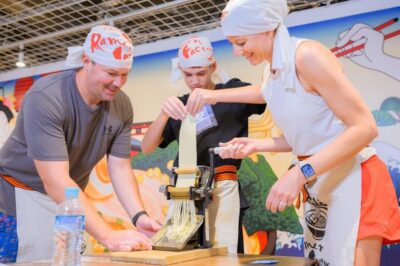
Ramen Cooking Class at a Ramen Factory with Souvenir
Read our review →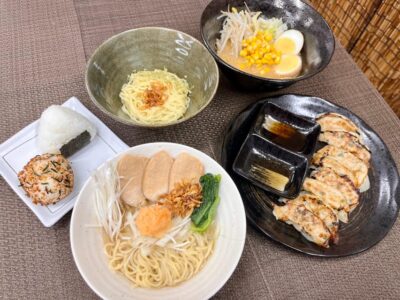
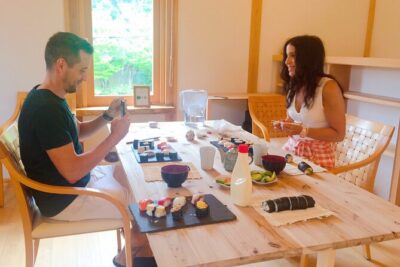
The Original Small-Group Sushi Making Class in Kyoto
Read our review →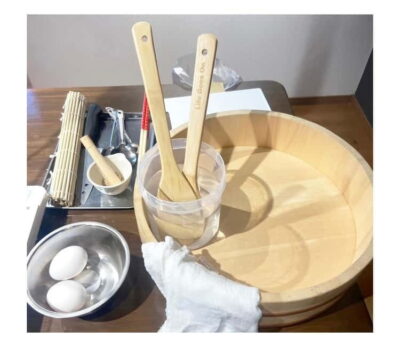
Japanese Washoku Bento Small Group Cooking Class
Read our review →
Japanese Traditional Sweets Making and Tea Ceremony
Read our review →
Kyoto Ramen and Gyoza Cooking Class with Professional Chefs
Read our review →Browse the lists this tour appears in