
Reviewed · KYOTO TOURS
Full Day Hiroshima and Miyajima Tour by Bullet Train from Kyoto
Hiroshima’s Peace Memorial Museum and the preserved Atomic Bomb Dome make this a moving day trip, while Miyajima offers a striking change of pace: a ferry crossing, a celebrated shrine, and deer roaming the island. You cover two very different places in one long day from Kyoto.
I like the reserved Shinkansen seats and organized transfers, which take much of the planning out of a complicated route. I also like having a guide explain Hiroshima’s history and recovery, context that can make the memorials more meaningful than a quick solo visit.
The trade-off is time. You’ll be out for about 13 hours and 20 minutes, and the museum and island visits happen within a tightly scheduled day. If you want to study every exhibit or linger over lunch, an overnight stay in Hiroshima may suit you better.
Key points to know before you book
- The Shinkansen does the long-distance work: Round-trip train travel between Kyoto and Hiroshima is included, with reserved seating.
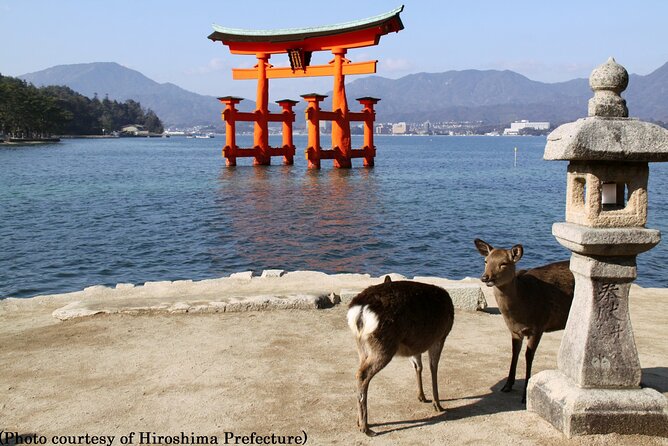
- Miyajima brings a quieter counterpoint: Reach the island by boat and visit Itsukushima Shrine, famous for its torii gate and setting over the water.
- Hiroshima’s history is the heart of the afternoon: Visit the Peace Memorial Park, Peace Memorial Museum, Atomic Bomb Dome, and nearby memorials.
- Lunch costs extra: You’ll have time to eat on Miyajima, where local options include oysters, conger eel rice bowls, and Hiroshima-style okonomiyaki.
- Expect a full, structured day: The group can include up to 40 people, and the schedule includes train, road, and boat transfers.
- Meet inside Kyoto Avanti: The starting point is the Sunrise Tours Desk on B1F, across from Kyoto Station’s Hachijo Exit. Finding the downstairs desk can take a little attention.
From Kyoto Station to Hiroshima by Shinkansen
Meet at 7:30 am at the Sunrise Tours Desk on the basement level of Avanti, across from Kyoto Station’s Hachijo Exit. Tour staff walk with the group to the station, where you board the Shinkansen for Hiroshima. The ride is listed at about 1 hour and 40 minutes each way, and reserved seating is included.
This first stretch is one of the tour’s practical strengths. Hiroshima is a long way from Kyoto for a day trip, but the bullet train makes the journey manageable without asking you to plan separate tickets, transfers, and meeting arrangements. The ride is part of the day, not a sightseeing stop, so settle in and treat it as a chance to rest before the busy schedule begins.
Do not assume the meeting desk will be obvious from the station concourse. It is inside Avanti on B1F, and the location has been a source of confusion for some people. Give yourself time to find the building and go downstairs rather than cutting it close.
After arriving in Hiroshima, you meet the English-speaking guide who leads the Hiroshima portion. The tour includes a National Government Licensed English Guide Interpreter during this segment. Guides vary by departure; past tours have included guides named Masako, Azusa, Takeshi, Hiro, and Akiko. A good guide matters here, because the sites carry stories and details that are easy to miss when you are moving at day-trip speed.
A few more Kyoto experiences worth booking
- From Osaka: Sagano Train Ride and Kyoto Guided Day Tour
★ 4.3 · 180 reviews - Kyoto Railway Museum Admission Ticket
★ 4.3 · 23 reviews - Kyoto: Arashiyama Tour with optional Sagano Romantic Train
★ 4.7 · 18 reviews
Miyajima’s shrine, sea views, and lunch stop
From Hiroshima, travel toward Miyajimaguchi by vehicle or train, then board a boat for Miyajima, also known as the Sacred Island. Itsukushima Shrine is the island’s signature sight. Established in the sixth century, it is known for its Shinden-zukuri style, associated with the residences of Heian-period nobility, and its memorable setting beside the sea.
The famous torii gate appears to float at high tide. The view changes with the water, so the scene you find depends on the conditions that day. The shrine is a UNESCO World Heritage site, and the boat ride adds a welcome shift in pace after the train and road transfers.
You may see tame deer roaming around the island. They add to the sense of place, but the main reason to come is the shrine and its setting. The visit is relatively brief, so keep an eye on the group’s meeting time and don’t count on having hours to explore every lane.
Lunch is on your own and not included in the tour price. Miyajima is known for oysters, Hiroshima-style okonomiyaki, and conger eel rice bowls, with shops along the island’s shopping street. The free-choice meal is a useful chance to pick what appeals to you, but it also means budgeting both money and time. If you have dietary needs, plan ahead: the tour does not provide a meal, and you should not assume every option will suit you.
The island stop is a highlight for its beauty and contrast with Hiroshima’s memorial sites. Still, the balance between Miyajima and the Peace Memorial Museum is a real consideration. If you are most interested in Hiroshima’s wartime history, you may feel the island visit takes time you would rather spend in the museum.
Hiroshima Peace Memorial Park and the Atomic Bomb Dome
Back in Hiroshima, the tour turns to the events of August 6, 1945, and the city’s recovery after the atomic bombing. The Peace Memorial Park is a place for reflection, with memorials that give the history a human scale. Nearby, the Children’s Peace Monument is covered with paper cranes made by children.
The Atomic Bomb Dome, also called the Genbaku Dome, is one of the few buildings left standing after the bombing. Preserved as a memorial, it is a stark, visible reminder of the destruction. The nearby Atomic Bomb Memorial Mound holds the ashes of 70,000 victims, many unidentified or without surviving relatives to claim them.
These stops are emotionally powerful, but they are not interchangeable with the museum. The park and memorials help you understand the scale and public memory of the event; the museum gives more detail about its human cost. The tour includes both, which is valuable, but you should be ready for difficult material.
The museum visit: important, moving, and time-limited
The Hiroshima Peace Memorial Museum is the day’s most demanding stop. Its exhibits document the atomic bombing and its effects, and your guide helps put the displays in context. The museum is a major part of understanding Hiroshima, but the visit has to fit into a packed itinerary.
The allotted time may not be enough to read every display at length. Some people find they have to focus on the main building or move quickly through exhibits. If the museum is your priority, head first to the sections you most want to see and keep track of the group’s return time. The schedule can shift with road conditions and congestion, so don’t count on being able to extend the visit.
The subject matter is also intense. Photographs and exhibits may be disturbing, especially for younger children. The tour allows most people to participate, but parents should consider whether the material is appropriate for their children.
The quality of the guide can make a marked difference here. Many guides have been praised for clear explanations, warmth, humor, and care with the group. Some past departures have had less engaging guidance or problems with audio equipment, so the experience can vary. The guide is a valuable part of the day, but the museum’s displays remain worth your attention even when you prefer to read at your own pace.
More full-day trips in Kyoto:
- 5 Top Highlights of Kyoto Full Day Bike Tour (E-bike option)
★ 5.0 · 511 reviews - Full Day Biking Tour Exploring the Best of Kyoto
★ 5.0 · 498 reviews - Full Day Guided Tour to Kyoto and Nara from Osaka by Van
★ 5.0 · 420 reviews - Nara Park, Osaka & Kobe from Kyoto Full Day tour
★ 5.0 · 207 reviews
The return train and the long day’s rhythm
After the Hiroshima visits, you travel back to Hiroshima Station by vehicle or train, then board the Shinkansen for Kyoto. The tour ends at Kyoto Station, usually around 9:00 pm. There is no hotel drop-off, so you’ll need to arrange your own onward journey from the station.
The day involves a lot of movement: two long train rides, road transfers, a boat crossing, and several walks between sites. The group size can reach 40, which helps explain the need for clear meeting times and a steady pace. Be ready to stay with the group and listen for instructions, especially during transfers.
The tour’s organization is a central part of its value. The train, local transport, boat, admissions, and Miyajima visitor tax are included, and tour staff help you get from the Kyoto meeting point to the Shinkansen. That structure removes much of the coordination work from a complicated day trip. But the same structure means you follow a fixed schedule rather than deciding to stay longer at a favorite stop.
Is $399.71 good value?
At $399.71 per person, this is not a low-cost outing. The price includes round-trip Shinkansen travel, local transportation and boat transfers, admission fees, the Miyajima visitor tax, and an English-speaking licensed guide during the Hiroshima portion. Reserved train seating is included, though the seat may be in a standard or Green Car; the details provided do not promise a particular car class.
Lunch is extra, as are any other costs not listed as included. Add a meal and any snacks or purchases you want, and your day’s total will be higher than the tour price.
The strongest case for the price is convenience and time. You can visit Miyajima and Hiroshima in one day without independently arranging the trains, ferry, local transfers, and museum admission. A guide also adds historical context that signs alone cannot provide. On the other hand, if you are comfortable planning transport and want more time at each site, a self-organized visit or an overnight stay may give you more freedom. The tour is best value for someone who wants a guided overview and needs to return to Kyoto that evening.
Who should choose this Kyoto day trip?
Choose it if you have limited time in Kyoto and want to see both Miyajima and Hiroshima without building the transport plan yourself. It suits people who value a guide, appreciate organized connections, and are comfortable with a full day that moves at a set pace.
It is also a strong choice if you want to pair Miyajima’s shrine and island setting with Hiroshima’s memorial sites. The contrast makes the day feel broader than a museum visit alone, while the guide can connect the places to the region’s history.
Think twice if your main goal is an unhurried museum visit, long meals, shopping, or independent exploration. The museum may feel rushed if you want to study every exhibit, and Miyajima’s free time is limited too. For a slower, more personal visit, spend a night in Hiroshima and separate the island from the memorial sites.
Should you book it?
Book this tour if a guided, well-coordinated day from Kyoto is worth more to you than setting your own pace. Its best features are the included Shinkansen and local transport, the contrast between Miyajima and Hiroshima, and the chance to learn from a guide at emotionally important sites.
Skip it if you want several hours in the museum or dislike a tightly timed itinerary. Before booking, consider how you handle a long day, budget separately for lunch, and make a plan for finding the B1F meeting desk. If those trade-offs work for you, this is an efficient way to see two memorable places without turning the trip into a transport puzzle.
FAQ
How long is the tour?
The tour lasts approximately 13 hours and 20 minutes. It starts at 7:30 am and returns to Kyoto Station around 9:00 pm.
Where is the meeting point in Kyoto?
Meet at the JTB Sunrise Tours Desk on B1F of Avanti, across from Kyoto Station’s Hachijo Exit. Tour staff guide the group on foot from there to Kyoto Station.
Is the bullet train included?
Yes. Round-trip Shinkansen travel between Kyoto and Hiroshima is included, with reserved seating. The return journey is listed as either standard or Green Car seating.
Is lunch included?
No. Lunch is at your own expense on Miyajima. The island has options including oysters, Hiroshima-style okonomiyaki, and conger eel rice bowls.
Which sites are included in Hiroshima?
The tour visits Hiroshima Peace Memorial Park, the Peace Memorial Museum, the Atomic Bomb Dome, the Children’s Peace Monument, and the Atomic Bomb Memorial Mound.
Is there an English-speaking guide?
Yes. A National Government Licensed English Guide Interpreter is included during the Hiroshima segment. The assigned guide varies by departure.
Does the tour return to my hotel?
No. The tour ends at Kyoto Station, and you must make your own way to your next destination.
Can I cancel for a refund?
You can cancel at least 24 hours before the experience’s start time for a full refund. Cancellations or changes made less than 24 hours before the start time are not accepted for a refund.
Newly added in Kyoto
- Uji: Private immersion into Kyoto’s tea and reglious culture★ 5.0 · 17 reviews
- Whisk Your Own Matcha: A Zen Matcha Experience at Temple★ 3.6 · 7 reviews
- Kyoto tea town for matcha lovers★ 5.0 · 16 reviews
- Treasures of Kyoto: Gion & historical Walking Tour★ 5.0 · 6 reviews
- Kyoto Matcha Green Tea Tour★ 4.5 · 23 reviews
- Uji and Wazuka Matcha Farm Half Day Private Guided Tour★ 5.0 · 21 reviews
- Uji Tea Ceremony and UNESCO Heritage Walking Tour★ 5.0 · 20 reviews
- Utilising upcycled Matcha! Creating matcha incense (Uji, Kyoto)★ 5.0 · 6 reviews
Kyoto Tours, compared.

Fushimi Inari, Kinkakuji, Bamboo Grove 1 Day Bus Tour
Read our review →
Tea Ceremony in a Traditional Tea House in Kiyomizu
Read our review →
Kyoto Geisha Walking Tour: Gion District & Hidden Gems
Read our review →
Gion Magical Night Walking Tour with Geisha Trivia
Read our review →
Gion Geisha District Walking Tour – Stories of Geisha
Read our review →Browse the lists this tour appears in