

Reviewed · FUSHIMI INARI TOURS
Gion and Fushimi Inari Shrine Kyoto Highlights with Government-Licensed Guide
Gion’s narrow lanes are best understood on foot, and a guide can help you read the difference between a teahouse street and an ordinary Kyoto back alley. I like the chance to hear how maiko and geiko training differs, and the small group limit of 10 should make it easier to hear the guide and ask questions.
I also like that this experience links Gion with major sights such as Fushimi Inari-taisha and Kiyomizu-dera, rather than treating the geisha district as a quick photo stop. One caution: the meeting point is in Gion, while Fushimi Inari is listed as the first stop, and no private vehicle is included. Confirm the route and how you travel between areas before paying.
Key points to know before you book
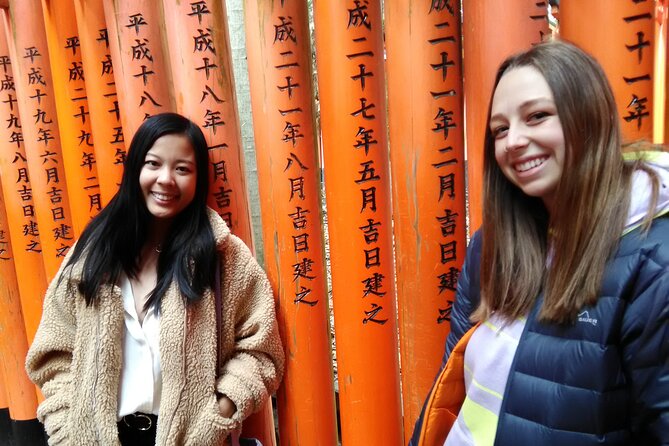
- A guide helps you make sense of Gion: Expect context about the geiko and maiko traditions, as well as the district’s lanes and shrines.
- The group is capped at 10: A smaller party is useful on foot, especially in narrow streets where it is easy to lose the guide.
- The route covers several parts of Kyoto: Fushimi Inari, Gion, Yasaka Shrine, Kiyomizu-dera, and Kennin-ji are named, with Pontocho and Miyagawacho also featured in the tour description.
- Some temple admission is extra: Kiyomizu-dera and Kennin-ji are marked as not included.
- Check the route logistics: The meeting point is Tatsumi Shrine in Gion, but Fushimi Inari is shown first. Private transport is not included.
- The listed price is $154.37 per person: Consider whether a six-hour guided walk and included guide service suit your plans and budget.
Gion’s lanes make more sense with a guide
Gion is Kyoto’s best-known geisha district, but it is not a single street or a theme park. The area around Shijo Avenue includes teahouses, shops, restaurants, and quiet lanes where the setting changes quickly. First-time visitors can find it hard to tell what is open to the public, what is a private entrance, and where the district’s history fits into the scene around them.
That is where a licensed local guide can add real value. Instead of simply walking past a row of old-looking buildings, you can ask about the traditions of the district and the difference between a maiko, an apprentice geiko, and a geiko. A guide can also help you understand why these customs are part of a working culture, not just a photo opportunity.
The tour focuses on walking routes that cars cannot use. That is a practical plus: the most atmospheric corners are often reached on foot, and a guide can keep you from spending your evening checking a map at every turn. A past account names Mari as a particularly engaging guide, but you should not count on receiving a specific guide.
The group limit is 10, a sensible size for a walk through tight lanes. Small groups are easier to keep together and give you a better chance to hear the guide without turning the outing into a lecture from the back of a crowd.
More Fushimi Inari tours in Kyoto:
- Kyoto: Fushimi Inari, Kinkakuji, Bamboo Grove 1 Day Bus Tour
★ 4.8 · 4,316 reviews - Fushimi Inari Hidden Hiking Tour (Private Option Available)
★ 5.0 · 1,750 reviews - Kyoto/Osaka: Nara, Fushimi Inari Taisha, Arashiyama Bus Tour
★ 4.7 · 1,275 reviews
Shirakawa, Tatsumi Shrine, and the quieter side of Gion
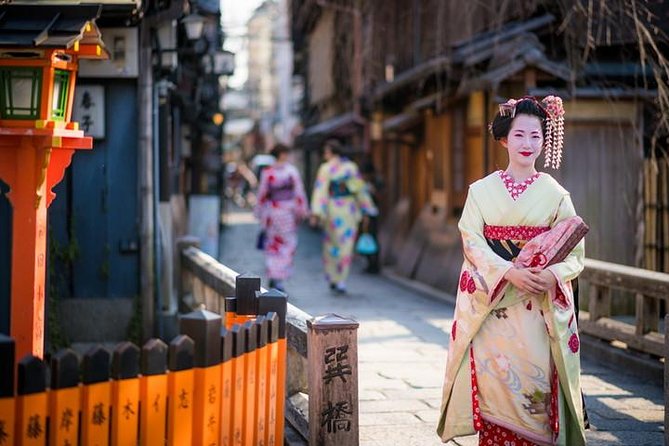
The Shirakawa area follows a canal lined with willow trees, restaurants, and teahouses. It offers a different mood from Gion’s main streets: water, greenery, and traditional buildings create a calmer setting, though the area is still part of a popular district. It is a good place to slow down and notice details rather than hurry from one landmark to the next.
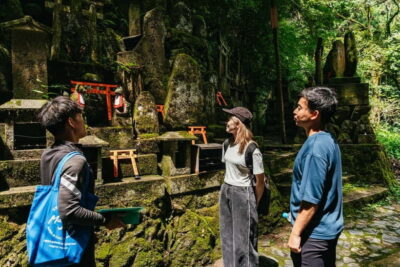
Tatsumi Daimyojin Shrine sits near Shirakawa and is a small Shinto shrine associated with the area’s teahouse culture. Its story is not clearly established in the information provided, so expect a local stop and explanation rather than a long, settled account of its origins. The meeting point is also here, at 595 Motoyoshicho in Higashiyama Ward.
The tour’s emphasis on small neighborhood shrines and side streets is appealing if you want more than a checklist of famous buildings. The trade-off is that Gion’s lanes can be busy, and no guide can promise an encounter with a maiko or geiko. Treat any sighting as luck, not a scheduled part of the tour, and follow the guide’s instructions about respectful behavior.
Yasaka Shrine and the edge of Higashiyama
Yasaka Shrine, also known as Gion Shrine, lies between Gion and Higashiyama. The shrine is more than 1,350 years old and has a convenient position between the district’s lanes and the eastern side of central Kyoto. Its grounds offer a useful pause from the narrow streets, and the listed visit is about 10 minutes.
That short stop is enough for an introduction and a look around, but not a slow, detailed visit. If you want time to explore the grounds independently, check whether the schedule allows it. Admission is listed as free, so you can also return on your own if the tour’s pace is brisk.
The value here comes partly from location. Yasaka Shrine gives the walk a clear point of reference, helping you understand how Gion and Higashiyama connect. It is not a substitute for an extended shrine visit, but it fits naturally into a guided neighborhood walk.
Fushimi Inari’s torii gates require a route check
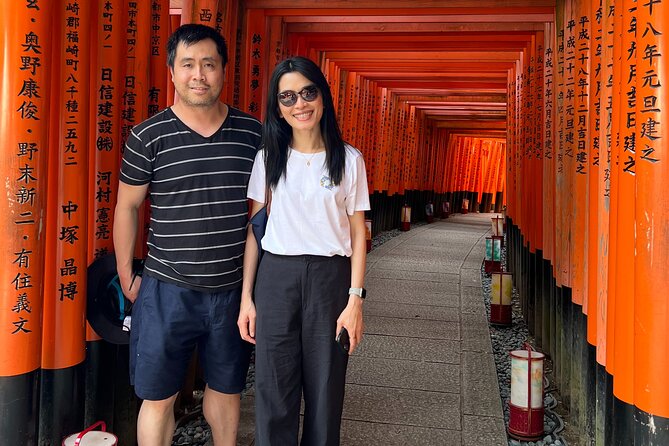
Fushimi Inari-taisha is one of Kyoto’s most recognizable sights, known for its thousands of vermilion torii gates along trails behind the main shrine. The stated stop is one hour, and admission is free. Even a short visit can introduce you to the shrine and the first stretch of gates, though one hour is not enough to explore the full trail network at a relaxed pace.
Here is the practical question to settle before booking: the listed meeting point is Tatsumi Shrine in Gion, but Fushimi Inari is presented as the first stop. The tour is described as a walking experience, pickup is on foot, and a private vehicle is not included. Ask the operator how the group gets between Fushimi and Gion, which location comes first in practice, and whether public transport or another transfer is involved.
This matters because the tour lasts about six hours, but the scheduled stop times do not explain all of that time. The named durations include one hour at Fushimi Inari, one hour at Kiyomizu-dera, 10 minutes at Yasaka Shrine, 10 minutes at Tatsumi Shrine, and one minute at Kennin-ji. Gion and Shirakawa have no duration shown. That may reflect flexible walking time, but it is worth confirming rather than guessing.
More Gion tours in Kyoto:
- Kyoto Geisha Walking Tour: Gion District & Hidden Gems
★ 4.7 · 3,273 reviews - Kyoto: Gion Magical Night Walking Tour with Geisha Trivia
★ 4.9 · 2,393 reviews - Kyoto: Gion Geisha District Walking Tour – Stories of Geisha
★ 4.7 · 2,187 reviews - Best of Kyoto: Gion, Geisha, Pagodas & Cobblestones
★ 4.9 · 2,058 reviews
Kiyomizu-dera and Kennin-ji: temple time and extra costs
Kiyomizu-dera stands partway up Mt. Otowa in the Higashiyama range and has a history stretching back more than 1,250 years. The planned stop is one hour. That gives you a chance to see a major temple and its setting, but it may feel brief if you like to linger, explore, and take your time.
Admission to Kiyomizu-dera is not included. Add that cost to your budget, and check the current admission price separately before the day of the tour. The listed tour price does include a licensed English-speaking guide, but it does not cover every expense connected with visiting the sights.
Kennin-ji is close to Hanamikoji and Shijo streets. Its grounds include two dry landscape gardens, a welcome change of pace after the more crowded lanes outside. The stated duration is just one minute, an unusually brief stop for a temple with gardens. Do not assume you will have time for a full visit; ask whether the group enters the grounds or simply passes by.
Kennin-ji admission is also marked as not included. The tour covers guide entry fees only for sights named in its route details, so clarify exactly which costs you are expected to pay yourself. This is a small but important distinction when comparing the price with a self-guided walk.
Pontocho and Miyagawacho add breadth, with one uncertainty

Pontocho and Miyagawacho are named among the areas the experience aims to cover, alongside Gion. That wider scope is attractive if you want a quick introduction to more than one traditional district in a single evening. The tour description does not give separate timings for either area, however, so you should ask how much time is spent there and whether both are definite stops.
The same applies to Gion’s main streets and the Shirakawa canal. Their inclusion offers a fuller sense of the district than a walk focused on one famous lane, but the actual pace will depend on the guide, group, and route. The experience is best approached as an overview, not a promise of lengthy visits to every named place.
Is $154.37 good value?
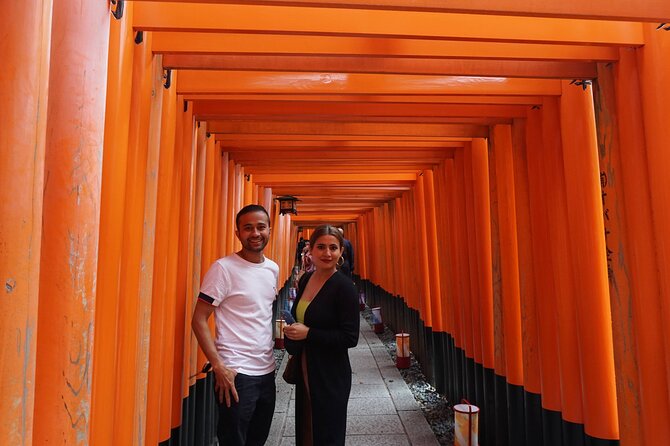
At $154.37 per person, this is a significant spend for a walking tour, especially once you add any temple admissions that are not included. Its strongest value is the guide: you get an English-speaking, government-licensed local guide for about six hours, plus help navigating several districts and understanding geisha culture. The group limit of 10 also makes personal questions more practical than they would be on a large coach outing.
Value depends on how much context matters to you. If you would otherwise walk Gion on your own, a guide can turn a maze of attractive streets into a clearer story. If you mainly want to see the torii gates and temples at your own pace, you may prefer to visit them independently and spend less.
The biggest uncertainty is not the guide service but the logistics. The meeting point and the stated first stop are in different areas, and the tour does not include a private vehicle. Before booking, get a clear answer about transport, the order of stops, and which admissions you will pay. The experience is booked an average of 89 days in advance, so plan early if your dates are fixed, but do not let that average pressure you into booking without resolving the route questions.
Who will enjoy this walk most?
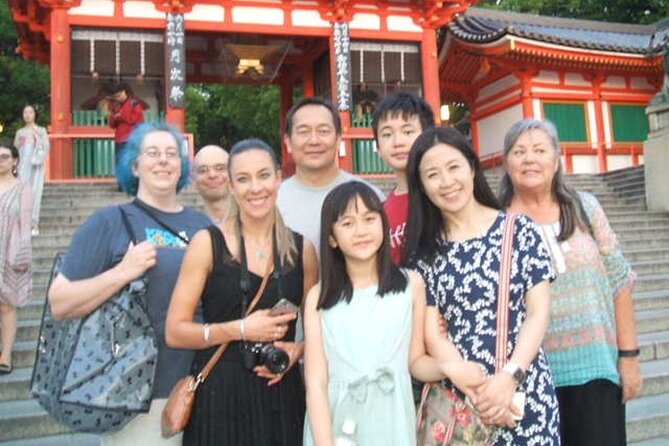
I would consider this tour if you are new to Kyoto, want help finding your way around Gion, and value cultural explanation as much as landmark photos. The guide’s account of maiko and geiko traditions is one of the most distinctive parts of the experience. A small group and a walking format also suit people who prefer to explore lanes and shrine grounds at street level.
It is less suited to anyone who wants a leisurely, in-depth visit at each temple. The named stop durations are short or absent, and Kennin-ji is given only one minute. It may also be a poor fit if you need a clear door-to-door transport plan; the tour meets on foot, and private transport is excluded.
Most participants can take part, service animals are allowed, and the meeting point is near public transportation. Still, this is a walking tour, so consider whether several hours on foot suits you. You can cancel for a full refund up to 24 hours before the start time; changes made inside that period are not accepted.
Should you book it?
Book if you want a guided introduction to Gion’s lanes and traditions, and you are comfortable with a brisk, multi-stop outing. The guide’s cultural explanations and the small group size are strong reasons to choose it over wandering without context.
Before you commit, confirm how the group travels between Tatsumi Shrine and Fushimi Inari, whether the route order is accurate, how much time is allocated to Pontocho and Miyagawacho, and which entry fees you will pay. If those answers are clear and the six-hour format fits your plans, this can be a useful way to connect Kyoto’s geisha district with some of its best-known shrines and temples.
FAQ
How long is the tour?
It lasts approximately six hours.
Where does the tour start?
The meeting point is Tatsumi-jinja Shrine at 595 Motoyoshicho, Higashiyama Ward, Kyoto.
Where does the tour end?
The activity ends back at the meeting point.
How large is the group?
The maximum group size is 10 travelers.
Is the tour guided in English?
Yes. A licensed local English-speaking guide is included.
Is private transport included?
No. Private vehicle service is not included, and the tour is described as a walking tour with pickup on foot.
Are entrance fees included?
Admission is listed as free at Fushimi Inari-taisha and Yasaka Shrine. Admission to Kiyomizu-dera and Kennin-ji is not included.
Can I cancel for a refund?
You can cancel at least 24 hours before the start time for a full refund. Cancellations made less than 24 hours before the start time are not refundable.
Are service animals allowed?
Yes. Service animals are allowed.
More temple and shrine tours in Kyoto
- Kyoto: Tea Ceremony Ju-An at Jotokuji Temple
★ 4.9 · 3,207 reviews - World Heritage Kyoto & Nara Uji Authentic Matcha Experience
★ 5.0 · 1,573 reviews - Arashiyama Bamboo, Temple, Monkeys, or Secret Sake Brewery
★ 4.8 · 886 reviews - Kyoto: Arashiyama Bamboo Forest, Monkeys, Matcha & Temple Tour
★ 5.0 · 759 reviews
More private and custom tours in Kyoto
- Kyoto 6hr Private Tour with Government-Licensed Guide
★ 5.0 · 1,369 reviews - 10 Must-see Spots in Kyoto One Day Private Tour (up to 7 people)
★ 5.0 · 1,108 reviews - Kyoto 4hr Private Tour with Government-Licensed Guide
★ 5.0 · 629 reviews - Kyoto: Private Tour with Local Licensed Guide
★ 4.8 · 463 reviews
Newly added in Kyoto
- Uji: Private immersion into Kyoto’s tea and reglious culture★ 5.0 · 17 reviews
- Whisk Your Own Matcha: A Zen Matcha Experience at Temple★ 3.6 · 7 reviews
- Kyoto tea town for matcha lovers★ 5.0 · 16 reviews
- Treasures of Kyoto: Gion & historical Walking Tour★ 5.0 · 6 reviews
- Kyoto Matcha Green Tea Tour★ 4.5 · 23 reviews
- Uji and Wazuka Matcha Farm Half Day Private Guided Tour★ 5.0 · 21 reviews
- Uji Tea Ceremony and UNESCO Heritage Walking Tour★ 5.0 · 20 reviews
- Utilising upcycled Matcha! Creating matcha incense (Uji, Kyoto)★ 5.0 · 6 reviews
Fushimi Inari Tours, compared.
Fushimi Inari, Kinkakuji, Bamboo Grove 1 Day Bus Tour
Read our review →
Fushimi Inari Hidden Hiking Tour (Private Option Available)
Read our review →
Nara, Fushimi Inari Taisha, Arashiyama Bus Tour
Read our review →
Arashiyama, Nara & Fushimi Inari Shrine w/Lunch
Read our review →
Nijo Castle, Kiyomizu & Fushimi Inari Guided Tour
Read our review →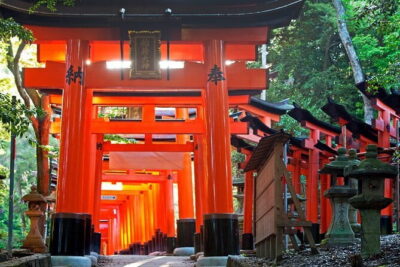
Nijo, Kinkaku-ji, Arashiyama, Kiyomizu & Fushimi Inari
Read our review →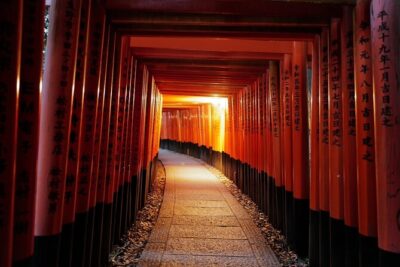
Browse the lists this tour appears in