
Reviewed · KYOTO TEA CEREMONIES
Kyoto Newly Opened Tea Ceremony – Sanjo Chasuian
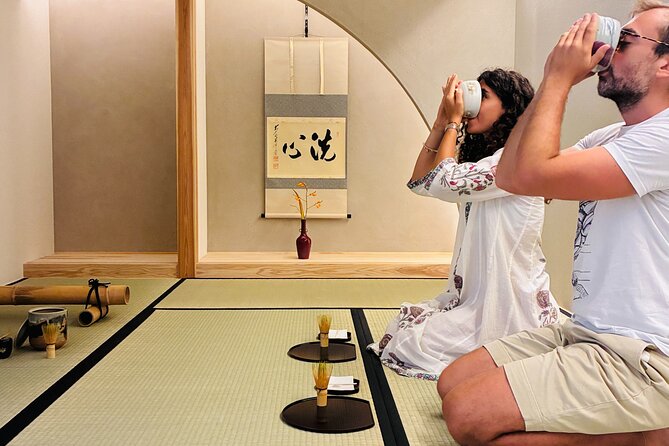
Matcha is more than a drink here: you watch a tea host prepare it with deliberate movements, learn why the steps matter, then whisk a bowl yourself. The hour-long ceremony takes place in a small tea room with a traditional crawl-in entrance called a nijiriguchi.
I like two things in particular: you get two bowls of matcha, one prepared by the host and one you make, and a seasonal Japanese confection from a Kyoto sweet shop with more than a century of history. The group limit of 10 also leaves room for questions without turning the session into a crowd scene.
One thing to plan for: arrive on time and wear socks. Entry is allowed from five minutes before the start, but the door is locked once the session begins, and late arrivals cannot join or receive a refund. The room is quiet, and you may sit on the floor, though chairs are available.
At a glance
- You make your own matcha: Choose a tea bowl and whisk a serving yourself, alone or with a companion.
- The host demonstrates first: Learn the sequence, utensils, and meaning behind the preparation.
- Two bowls are included: One is made for you, and one is your turn to prepare.
- A seasonal sweet comes with the tea: It is from a Kyoto confectioner with more than 100 years of history.
- The tea room has a nijiriguchi: This low, crawl-in entrance is a distinctive traditional feature.
- Groups are capped at 10: The small scale suits questions and close observation.
A Kyoto tea ceremony you can take part in
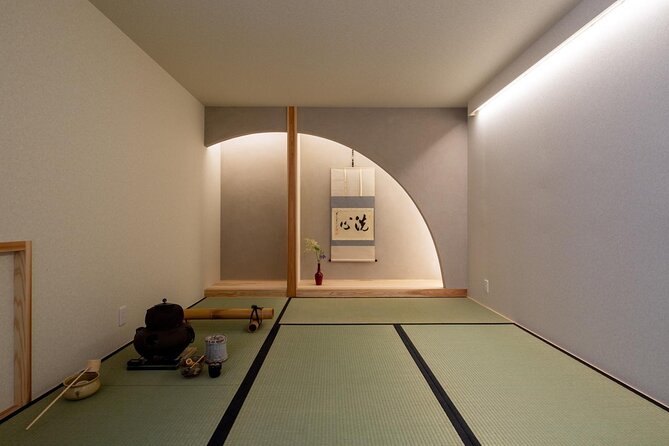
A tea ceremony can be beautiful to watch, but it makes more sense when you understand what you are seeing. At Sanjo Chasuian, the host explains the history and purpose of the ceremony, demonstrates how matcha is prepared, and invites you to try the whisking yourself. That hands-on step turns a quiet performance into a cultural lesson you can feel in your hands.
The experience lasts about an hour, a useful length if you want more than a quick photo stop but do not want to give up half a day. The setting is designed to be serene, and the group can include no more than 10 people. With fewer people around the tea bowl, it is easier to follow the host’s movements and ask a question when something puzzles you.
The activity takes place at Tea Ceremony & Sake Tasting Kyoto, Sanjo Chasuian, at 324-2 Sanjōchō in Kyoto’s Nakagyo Ward. The session ends where it begins. There is no hotel pickup or private transport, so you will need to make your own way to the venue.
More tea ceremonies in Kyoto:
- Kyoto: Tea Ceremony in a Traditional Tea House in Kiyomizu
★ 4.9 · 3,519 reviews - Kyoto: Tea Ceremony Ju-An at Jotokuji Temple
★ 4.9 · 3,207 reviews - Kyoto: 45-Minute Tea Ceremony Lesson Experience
★ 4.3 · 2,378 reviews
First, learn what the movements mean
Expect the host to introduce the history and significance of the tea ceremony before preparing matcha. The emphasis is not just on copying a series of actions. You learn the reason behind the steps and the care involved in preparing and serving the tea.
That explanation is a strong part of the hour. Without it, the careful handling of bowls and whisk can look like a set of rules to memorize. With context, you can see how the ceremony asks you to slow down, pay attention, and treat a simple cup of tea as a shared moment.
English explanations are part of the experience. A host named Yuko is praised for clear instruction and a friendly manner, though the person leading your session may vary. If you have questions, there is an opportunity to ask them during the explanation, rather than having to guess at the meaning of each gesture.
Watch the host prepare a bowl
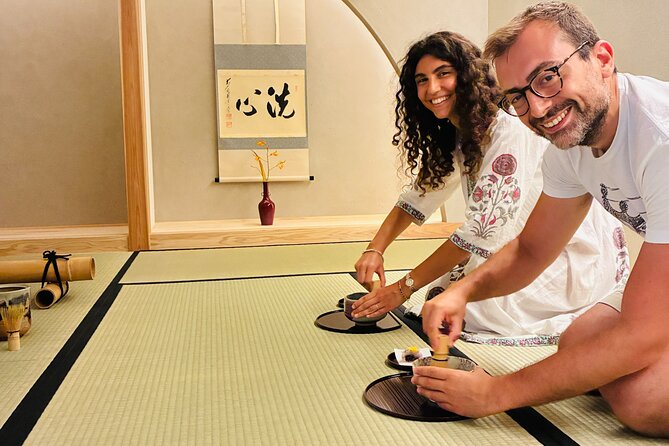
The host demonstrates how to make matcha using traditional utensils and techniques. Watch the details: how the tea bowl is handled, how the whisk is used, and how the preparation follows a set order. You are not expected to arrive knowing any of this. The point is to observe first, then try.
Your first serving is prepared by the host. That gives you a chance to taste matcha made by someone who knows the technique before you take up the whisk yourself. The experience includes two bowls in total, a useful distinction from a demonstration where you might only watch someone else drink the tea.
Matcha can taste unfamiliar if this is your first cup. The ceremony gives you a chance to try it in a traditional setting, with a sweet served alongside it. If you already drink matcha, the value is less about discovering the flavor and more about understanding the preparation and its place in the ceremony.
Whisk your own matcha
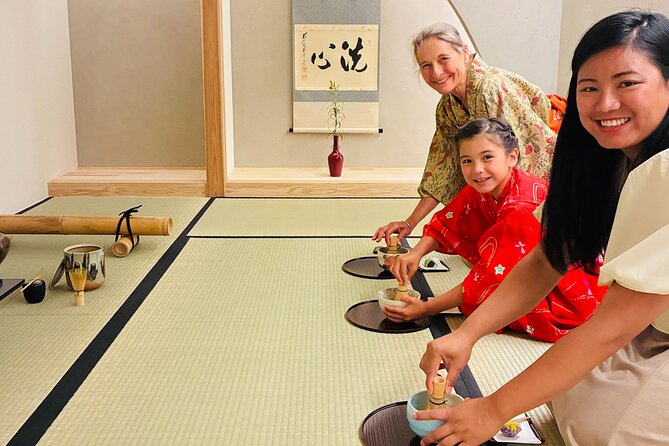
After watching, you choose a tea bowl and make a serving yourself. You can whisk your own matcha or do it with a companion. The host’s demonstration gives you a model to follow, but the hands-on attempt is where the tools and steps become easier to remember.
This is a beginner-friendly way to learn a practical skill. You are not simply told how matcha is made; you handle the bowl and whisk, and see how the process feels. The activity does not promise that you will leave as a tea expert, but you should leave with a clearer idea of how to prepare a bowl and why the movements are done with care.
The second serving also makes the price easier to assess. You receive both a prepared bowl and the chance to make one, rather than paying only to watch a short demonstration. If you are travelling with family or friends, making tea gives each person a small role in the experience.
More Kyoto tours in Kyoto:
- PERFECT KYOTO 1-Day Bus Tour
★ 5.0 · 13,518 reviews - Kyoto: Fushimi Inari, Kinkakuji, Bamboo Grove 1 Day Bus Tour
★ 4.8 · 4,316 reviews - Kyoto Geisha Walking Tour: Gion District & Hidden Gems
★ 4.7 · 3,273 reviews - Kyoto: Gion Magical Night Walking Tour with Geisha Trivia
★ 4.9 · 2,393 reviews
A seasonal sweet, not just a garnish
Traditional seasonal Japanese confectionery is included, from a Kyoto sweet shop that has been operating for more than 100 years. The sweet is served with the matcha, adding a local food detail to the ceremony rather than leaving the tea to carry the whole experience.
The confection is described as beautiful as well as delicious. That appearance is part of the pleasure: take a moment to look before eating. The sweet is not an optional extra, so you do not need to budget separately for it.
The pairing also gives the tasting a little context. You are not sampling matcha in isolation; the sweet is part of the planned experience. If you have dietary restrictions or food allergies, the available details do not specify substitutions or ingredients, so contact the provider before booking if that matters to you.
The nijiriguchi and the quiet room
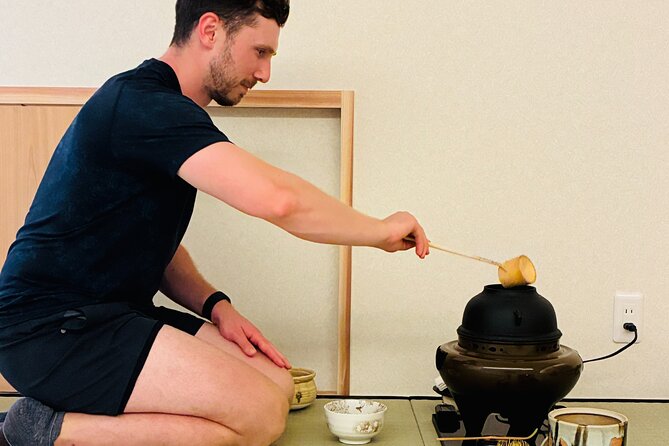
One unusual feature is the nijiriguchi, a small entrance that requires you to crouch or crawl into the tea room. The doorway reflects the ceremony’s invitation to leave the outside world behind before entering. It is a memorable architectural detail, but it is also a practical one: if bending or getting low is difficult for you, ask the provider about the entrance before booking.
Once inside, expect a calm, quiet setting. This is not a lively, theatrical show, and the hushed atmosphere is part of the point. You may find it restorative after a busy day in Kyoto, but it may feel slow if you want constant activity or broad sightseeing.
Some of the ceremony can involve sitting on the floor. Chairs are available, and you are not required to sit in a way that makes you uncomfortable, but it is sensible to ask the host about seating when you arrive. Wear or bring socks, as requested. Matcha, tea bowls, and selected items are also available for purchase, though they are not included in the price.
Is $32.77 good value?
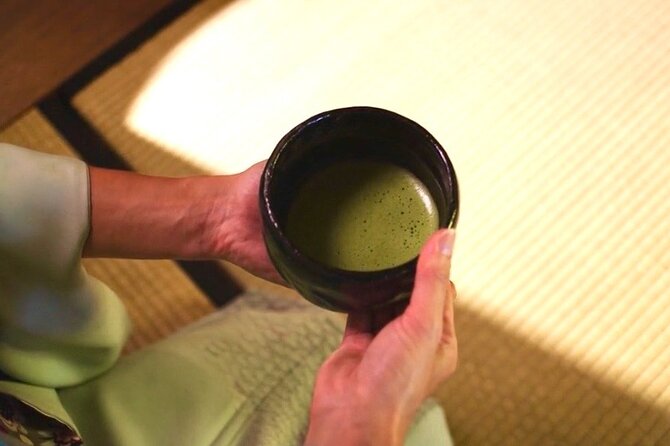
At $32.77 per person, this is a modestly priced cultural activity for an hour in Kyoto. The fee includes a guided explanation, a host-prepared bowl of matcha, a second bowl you prepare, and a seasonal sweet. The small-group limit and chance to ask questions add value if you want more than a quick demonstration.
The price makes most sense if you are curious about Japanese tea customs or want a calm activity that gives you a specific skill to take home. If you only want to taste matcha, you can find simpler ways to do that. Here, you are paying for the explanation, the setting, the utensils, and a chance to participate.
The session is also a good fit for first-timers. You do not need prior knowledge, and the host shows the process before asking you to try it. Families and small groups can share the experience, though the quiet atmosphere and possible floor seating may not suit every child or every visitor.
Getting there and arriving on time
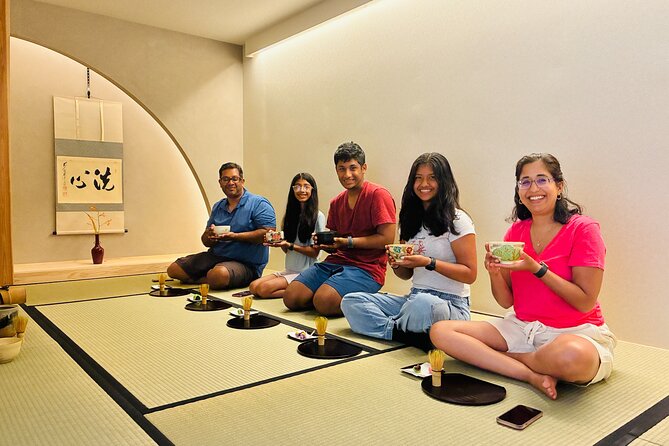
The meeting point is 324-2 Sanjōchō, Nakagyo Ward, Kyoto, and the activity ends at the same place. It is near public transportation, but transfers and hotel pickup are not included. Allow enough time to find the entrance and settle in before the start.
A practical navigation tip: Google Maps may direct you to a smaller street near the corner. Stay on the main street and look for a green matcha ice cream cone outside the venue. That visual marker can save you a short but irritating detour.
You may enter from five minutes before the start time. Once the ceremony begins, the door is locked. Even arriving one minute late means you cannot join, and the fee is not refunded, so do not plan to arrive at the last possible moment.
You can cancel for a full refund up to 24 hours before the experience. Cancellations or changes made within 24 hours are not accepted, and the cut-off follows local time in Kyoto.
Who should book this ceremony?
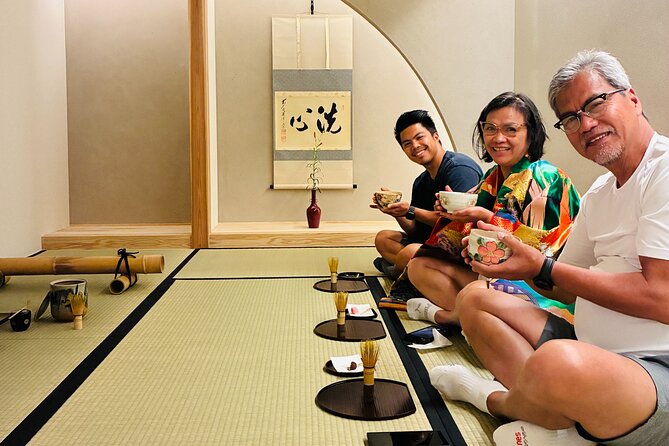
Book it if you want a hands-on introduction to matcha and the customs around it, rather than a brief photo opportunity. It is especially well suited to first-time visitors who want a measured, clearly explained cultural experience, or to anyone who enjoys learning by doing.
It is less suitable if you dislike quiet settings, cannot arrive punctually, or would rather spend an hour visiting a landmark. Consider the low entrance and possible floor sitting if mobility is a concern. Chairs are available, but the nijiriguchi is an important feature of the room and may require crouching.
If you have an hour to spare in Kyoto and want to leave with more than a cup of tea, this is a practical choice. You see the ceremony, hear why its steps matter, taste a bowl made by the host, and whisk one yourself. That combination makes the experience feel worthwhile without asking for a full day or a large budget.
FAQ
How long does the tea ceremony last?
The experience lasts approximately one hour.
What is included in the price?
You receive two bowls of matcha, one prepared by the host and one you make yourself, plus a seasonal traditional Japanese confection.
Will I get to make matcha myself?
Yes. You choose a tea bowl and whisk matcha yourself, either on your own or with a companion.
How large is the group?
The activity has a maximum of 10 people.
Are chairs available?
Yes. Chairs are available, though some parts of the ceremony may involve sitting on the floor.
Should I wear socks?
Yes. The provider asks you to bring or wear socks during the experience.
What happens if I arrive late?
Entry is allowed from five minutes before the start. Once the session begins, the door is locked, and even one minute late means you cannot join. There is no refund for a late arrival.
Newly added in Kyoto
- Uji: Private immersion into Kyoto’s tea and reglious culture★ 5.0 · 17 reviews
- Whisk Your Own Matcha: A Zen Matcha Experience at Temple★ 3.6 · 7 reviews
- Kyoto tea town for matcha lovers★ 5.0 · 16 reviews
- Treasures of Kyoto: Gion & historical Walking Tour★ 5.0 · 6 reviews
- Uji and Wazuka Matcha Farm Half Day Private Guided Tour★ 5.0 · 21 reviews
- Kyoto Matcha Green Tea Tour★ 4.5 · 23 reviews
- Uji Tea Ceremony and UNESCO Heritage Walking Tour★ 5.0 · 20 reviews
- Utilising upcycled Matcha! Creating matcha incense (Uji, Kyoto)★ 5.0 · 6 reviews
Kyoto Tea Ceremonies, compared.

Tea Ceremony in a Traditional Tea House in Kiyomizu
Read our review →


World Heritage Kyoto & Nara Uji Authentic Matcha Experience
Read our review →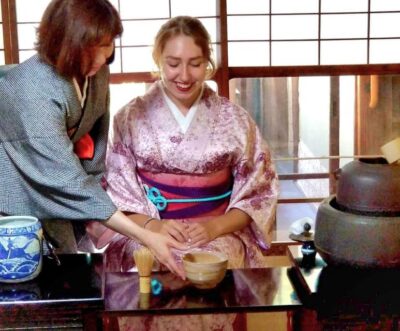


Arashiyama Bamboo Forest, Monkeys, Matcha & Temple Tour
Read our review →
Tea Museum Tickets and Matcha Grinding Experience
Read our review →Browse the lists this tour appears in