
Reviewed · KYOTO TEA CEREMONIES
KYOTO Tea Ceremony with kimono near by Imamiya Jinjya Shrine
Kyoto’s tea ceremony is not just a cup of matcha. Here, you first choose a kimono, get help putting it on, and then take part in a ceremony led by a tea master in a room used by the same family for three generations. The format makes the ritual easier to understand because you see it, hear its meaning, and try it yourself.
Two things I like about this experience are the care given to the kimono and photos, and the chance to make tea after watching the master. You are not simply dressed for a snapshot; the clothing becomes part of learning how ceremony, manners, and attention to detail fit together.
One consideration: the 90-minute session includes dressing, hair styling, photos, explanation, and tea, so it is a compact introduction rather than a long course in tea practice. You will also need to travel to the meeting point in northern Kyoto, and private transportation is not included.
At a glance
- Choose a kimono from a Kyoto collection: Staff help you dress, and hair styling is included before the ceremony.
- Meet a tea master with 30 years of study: The master demonstrates the ceremony and explains its customs.
- Taste matcha with a seasonal sweet: Tea and a sweet are part of the session.
- Try preparing tea yourself: After watching and learning, you get a chance to make a cup.
- Expect a small group: The maximum is 12 people, with the activity lasting about 90 minutes.
- Plan for your own ride to the venue: The meeting point is in Kita Ward near Daitoku-ji, and the experience ends there.
Picking a kimono before the ceremony
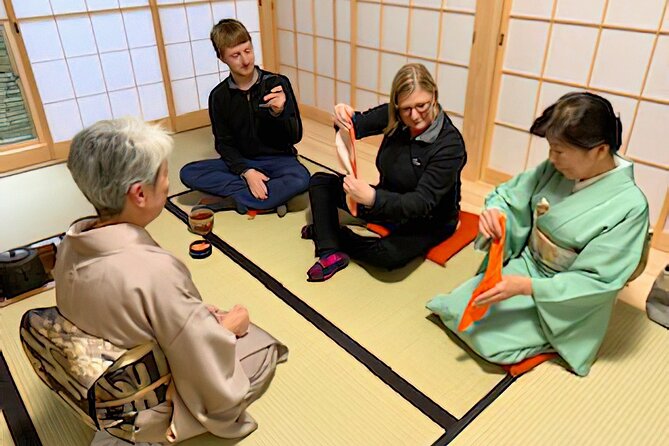
The session begins at Tea Ceremony – Caren, at 74-4 Murasakino Daitokujichō in Kyoto’s Kita Ward. You choose a kimono from a collection described as coming from Nishijin, an area associated with Kyoto’s textile tradition. Rather than being handed a costume without a say, you can select a color and pattern you like.
Dressing takes time and several layers. That practical detail matters: a kimono is not simply a robe to throw on, and the process gives you a first glimpse of the care involved in wearing one properly. Staff help with the dressing, and hair styling is included before you go on to the tea portion.
If you already have a color in mind, decide before arriving. The selection can move quickly once everyone is choosing, and a clear preference helps you avoid feeling rushed. The range of patterns also makes this a good chance to pick something that suits your taste, rather than treating the outfit as a standard uniform.
The styling and dressing are part of the value, especially if this is your first time wearing a kimono. They also mean the session is not 90 minutes of tea alone. Keep that in mind if you are comparing it with a ceremony that focuses only on tea, or if you hope to spend a long time studying every step.
More tea ceremonies in Kyoto:
- Kyoto: Tea Ceremony in a Traditional Tea House in Kiyomizu
★ 4.9 · 3,519 reviews - Kyoto: Tea Ceremony Ju-An at Jotokuji Temple
★ 4.9 · 3,207 reviews - Kyoto: 45-Minute Tea Ceremony Lesson Experience
★ 4.3 · 2,378 reviews
Photos that capture more than the outfit
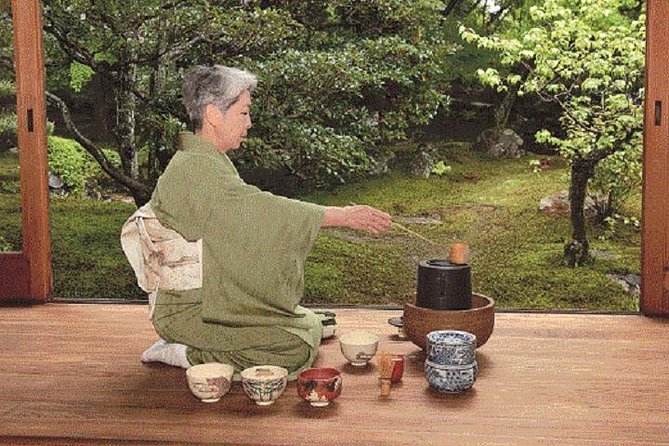
Once dressed, you have a simple photo session. The staff help with photos and posing, so you do not need to rely only on a quick phone selfie. The opportunity is useful for couples, families, and solo visitors alike, and the group size is capped at 12.
Photos are a pleasant extra, but the stronger reason to choose this activity is how they sit within the whole session. You get a record of the kimono before moving into the quieter tea-room setting. That helps make the clothing feel like part of the cultural activity, not a separate dress-up stop.
Some visitors have especially valued the care taken to help people feel comfortable in front of the camera. Still, the photo session is described as simple, not a professional portrait package. If polished, individual portraits are your main goal, check what is included before booking rather than assuming there will be an extended shoot.
A tea room near Daitoku-ji
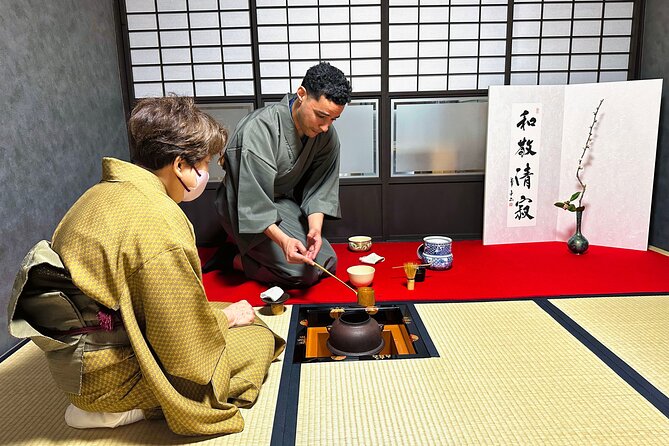
The tea room is near Daitoku-ji, a temple with strong ties to Japanese tea culture. The venue is described as a little old and used by the same family for three generations. That age is part of its character, though it also means you should expect a traditional setting rather than a newly fitted event space.
The location gives the ceremony a useful sense of place. You are not learning about tea in an anonymous hotel room; you are in a neighborhood connected to the practice. The meeting point is in Kita Ward, and the activity returns to that same location. Private transportation is not included, though the venue is listed as near public transportation.
The activity’s title mentions Imamiya Jinjya Shrine, while the venue details place the tea room near Daitoku-ji. Treat the tea ceremony itself as the central activity, not a guaranteed shrine visit. The stated start and end point is the tea room; no shrine entry or transport is listed as part of the program.
Watching the master prepare matcha
The tea ceremony begins with a demonstration by a tea master who has studied the practice for 30 years. You watch the preparation and receive an explanation of the ceremony’s history and etiquette. The point is not speed. The measured movements and attention to each stage help you see why tea preparation is treated as a formal practice rather than an everyday pour.
The ceremony is presented with commentary, and some sessions have included an interpreter. Akira has been named as an interpreter, while Mera has been identified as one of the hosts. Staffing can vary, so consider those names useful context rather than a promise that a particular person will lead your session.
You also taste tea with a seasonal sweet. That pairing gives you a chance to pause and take in the ceremony instead of treating it as a lecture. The tea is the focal point, while the sweet adds a small seasonal detail to the tasting.
The teaching is meant for people new to the ceremony, and you do not need prior experience. The format makes room for questions and explanation, so you can follow the process even if you are unfamiliar with Japanese tea customs. If you already know a great deal about tea, the introductory nature may feel less substantial than a specialist workshop.
More kimono rentals and experiences in Kyoto:
- Kimono Tea Ceremony at Kyoto Maikoya, NISHIKI
★ 5.0 · 911 reviews - Kyoto: Kimono Rental with Hairstyling and Accessories
★ 4.8 · 653 reviews - Kyoto: Kimono Tea Ceremony at Orizuruya Gion
★ 4.9 · 618 reviews - Kyoto: Kimono and Tea Ceremony Experience at Cultural Asset
★ 4.3 · 306 reviews
Your turn to prepare tea
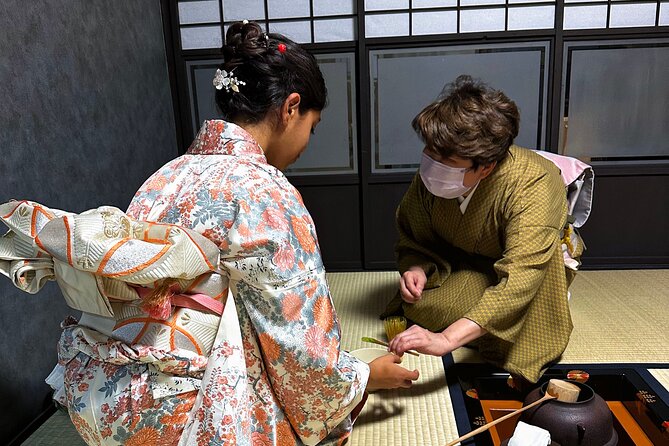
After watching the tea master, you have the chance to prepare tea yourself. This is an important part of the program: observation helps you understand the form, but taking a turn makes the sequence more memorable. You are not expected to perform with a master’s precision. The experience is an introduction, and the chance to try is about learning by doing.
The small-group limit of 12 makes this practical. Everyone has a better chance of following the explanation and taking part than in a large demonstration. The program does not promise that every person will have an identical role, so if making tea is a priority for you, ask the operator when booking.
The ceremony is conducted in Japanese with translation in some sessions, a detail that can add context to the performance. You learn about the history and manners surrounding the ritual as well as the actions themselves. That combination gives the activity more substance than simply wearing a kimono and drinking matcha.
Is $99.49 good value?
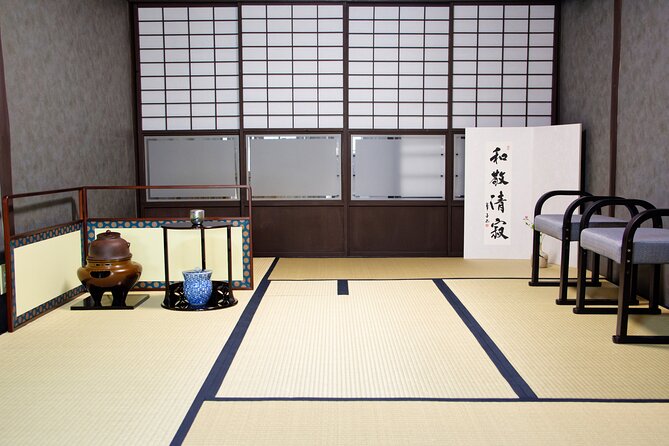
At $99.49 per person, this costs more than a quick tea tasting. The fee covers the kimono, assistance dressing, hair styling, photos, instruction from a professional, the tea ceremony, and the chance to prepare tea. If you would otherwise book a kimono dressing session and a separate tea ceremony, combining them can make the price easier to justify.
The value depends on what you want from the time. If you want a quiet introduction to tea, with the added context of traditional clothing, the program brings several elements together in about 90 minutes. If you are mainly looking for a long, technical lesson on tea preparation, you may want a more specialized class.
The group size also matters when judging the price. With no more than 12 participants, the session is designed to stay small enough for explanation and participation. It is not a private ceremony, however, so you may share the room and photo time with other people.
Coffee and/or tea and a professional instructor are included. Private transportation is not. Factor in the time and cost of reaching the venue when comparing this with activities closer to your accommodation or other Kyoto sights.
Who will get the most from it
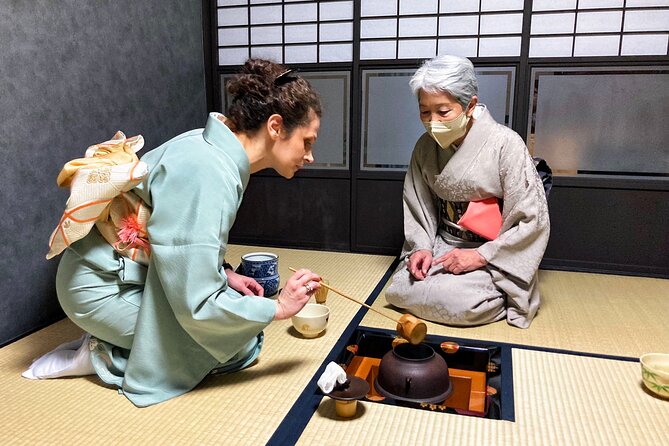
I would put this on the itinerary if you are curious about tea ceremony but want more than a demonstration. The kimono, dressing assistance, and photos make the experience especially appealing for first-time visitors, couples, and families. The activity has also suited teenagers and solo participants, though the precise group mix changes.
It is a good fit if you value guided cultural context and are happy to participate in a group. You do not need to bring a companion to take part, and the chance to prepare tea has been offered to solo participants. For families, the combination of clothing, photos, and hands-on activity can give younger visitors something to engage with beyond listening.
It may be less suitable if you have very limited time in Kyoto and want a central, transport-inclusive outing. The venue is in the city’s northern Kita Ward, the session is short but includes several stages, and you arrange your own transport. It is also not the best match if your priority is an in-depth study of tea ceremony technique.
What to know before you book
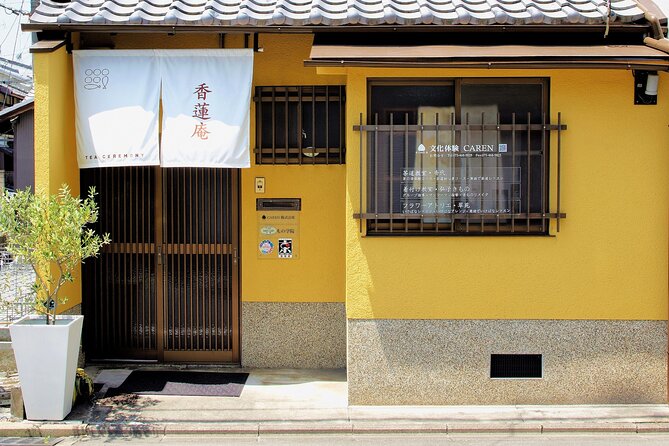
Allow about 90 minutes for the activity, from the kimono and hair preparation through the ceremony and tea-making opportunity. Arrive with a kimono color preference in mind, and leave enough time to reach the meeting point without rushing. The venue is near public transportation, but no private ride is provided.
The activity uses mobile tickets, and confirmation is provided at booking. The group maximum is 12. Cancellation is free up to 24 hours before the start time; cancellations within 24 hours are not refunded, and changes inside that period are not accepted. If poor weather or a minimum-group requirement causes cancellation, you are offered another date or a full refund.
Should you book this Kyoto tea ceremony?
Book it if you want a well-rounded first encounter with tea ceremony, including the kimono, an expert demonstration, a seasonal sweet, and a chance to prepare tea. The strongest reason to go is the combination: you learn the ritual while taking part in it, rather than watching from the sidelines.
Skip it if you want a private, highly technical tea lesson or need transportation included. For everyone else, especially first-timers and families, it offers a memorable way to connect clothing, etiquette, and tea in a traditional Kyoto setting.
FAQ
How long does the tea ceremony experience last?
It lasts approximately 1 hour and 30 minutes.
Where does the activity begin and end?
It begins and ends at Tea Ceremony – Caren, 74-4 Murasakino Daitokujichō, Kita Ward, Kyoto.
Is a kimono included?
Yes. You choose a kimono, and staff help you put it on. Hair styling is also included.
Will I learn to make tea?
Yes. The tea master demonstrates the ceremony, and you have the chance to prepare tea yourself.
Is tea served with food?
The experience includes tea with a seasonal sweet.
How many people can join?
The maximum group size is 12 participants.
What is the cancellation policy?
You can cancel for a full refund up to 24 hours before the start time. Cancellations made less than 24 hours before the experience are not refunded.
More temple and shrine tours in Kyoto
- World Heritage Kyoto & Nara Uji Authentic Matcha Experience
★ 5.0 · 1,573 reviews - Arashiyama Bamboo, Temple, Monkeys, or Secret Sake Brewery
★ 4.8 · 886 reviews - Kyoto: Arashiyama Bamboo Forest, Monkeys, Matcha & Temple Tour
★ 5.0 · 759 reviews - Osaka/Kyoto: Arashiyama, Nara & Fushimi Inari Shrine w/Lunch
★ 4.4 · 754 reviews
Newly added in Kyoto
- Uji: Private immersion into Kyoto’s tea and reglious culture★ 5.0 · 17 reviews
- Whisk Your Own Matcha: A Zen Matcha Experience at Temple★ 3.6 · 7 reviews
- Kyoto tea town for matcha lovers★ 5.0 · 16 reviews
- Treasures of Kyoto: Gion & historical Walking Tour★ 5.0 · 6 reviews
- Kyoto Matcha Green Tea Tour★ 4.5 · 23 reviews
- Uji and Wazuka Matcha Farm Half Day Private Guided Tour★ 5.0 · 21 reviews
- Uji Tea Ceremony and UNESCO Heritage Walking Tour★ 5.0 · 20 reviews
- Utilising upcycled Matcha! Creating matcha incense (Uji, Kyoto)★ 5.0 · 6 reviews
Kyoto Tea Ceremonies, compared.

Tea Ceremony in a Traditional Tea House in Kiyomizu
Read our review →


World Heritage Kyoto & Nara Uji Authentic Matcha Experience
Read our review →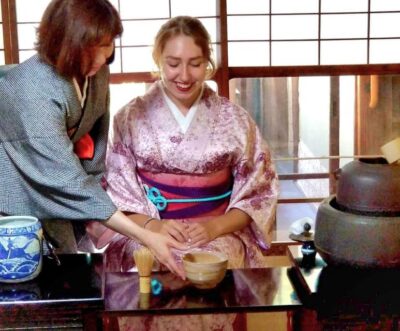


Arashiyama Bamboo Forest, Monkeys, Matcha & Temple Tour
Read our review →
Tea Museum Tickets and Matcha Grinding Experience
Read our review →Browse the lists this tour appears in