
Reviewed · KYOTO PRIVATE TOURS
Nara 6hr Private Tour with Government-Licensed Guide
Nara’s appeal is more than its famous deer: this is where ancient temples, Shinto shrines, and the story of Japan’s early capital come together within a day’s walk. With a private, licensed English-speaking guide, you can choose three or four places that fit your interests instead of following a fixed group route.
I like the freedom to spend your time on major sights such as Todaiji or choose a quieter garden and the old merchant district. I also like that guides can explain how Buddhism and Shinto have shaped Nara, not just point out buildings. The trade-off is that six hours on foot can feel long, and entrance fees, meals, and transport are extra.
The points that matter before you book
- You choose three or four sites: Pick from a broad list of temples, shrines, gardens, museums, and historic areas.
- The tour is private: Your group joins the guide, so the day can reflect your interests and pace.
- The Great Buddha is a compelling centerpiece: Todaiji is one of Nara’s best-known temples and a major draw for first-time visitors.
- Walking is part of the deal: This is a walking tour, not a vehicle tour, and some routes include hills or stairs.
- Budget for extras: Admission fees, meals, transport, and personal expenses are not included.
- Guide styles vary: Junichi, Ken, Rie, Toshi, and other guides have led tours, with a strong emphasis on history and cultural context.
A private day built around your interests
The tour gives you six hours with a government-licensed local English-speaking guide. You meet on foot in a designated area near Nara Station, then explore Nara together. It is not a private-car outing: transportation fees and private vehicle use are excluded, so if you want to visit sites farther apart, ask about the route and likely transport before settling on your choices.
The freedom to select three or four sites is the main advantage. You might focus on Nara Park, Todaiji, and Kasuga Taisha for a first visit, or pick gardens and older districts if you have already seen the big temple. The guide can add context that is difficult to get from signs alone, including how Nara’s Buddhist and Shinto traditions relate to one another.
That flexibility is valuable, but it works best if you are clear about what you want. Tell your guide if you prefer a slower pace, more time inside each site, or fewer stairs. One account describes a mismatch over pace and time spent at stops, a useful reminder that customizable does not automatically mean perfectly paced unless you discuss expectations together.
More Nara trips in Nara:
- World Heritage Kyoto & Nara Uji Authentic Matcha Experience
★ 5.0 · 1,573 reviews - Kyoto/Osaka: Nara, Fushimi Inari Taisha, Arashiyama Bus Tour
★ 4.7 · 1,275 reviews - Nara Half Day Trip Walking Tour (Private Option Available)
★ 5.0 · 937 reviews
Todaiji: a powerful first stop
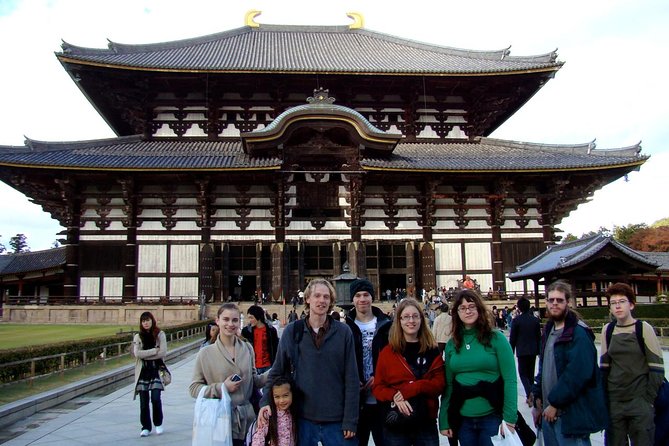
Todaiji, or the Great Eastern Temple, was built in 752 and became the head temple for provincial temples across Japan. Its immense Great Buddha is the sort of sight that makes a guided visit worthwhile: the scale is striking, and a guide can help place the temple in the context of Nara’s time as Japan’s capital.
The listed visit time is 30 minutes, and admission is not included. That is a short window for a major temple, especially if you want to look around carefully. If Todaiji is your priority, ask how much of the six hours can be spent there and whether the suggested stop time fits your pace.
Nara Park: deer, paths, and nearby landmarks
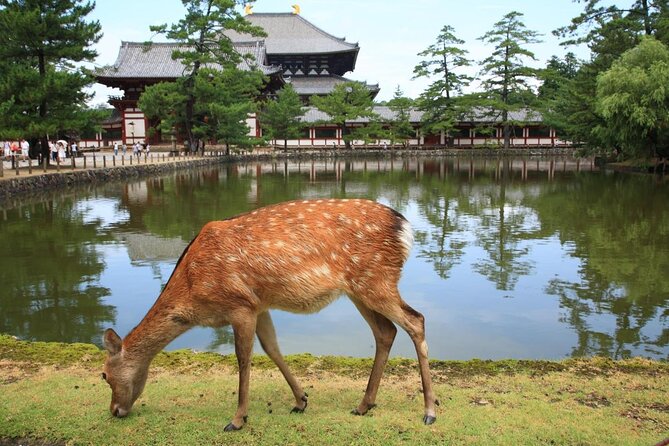
Established in 1880, Nara Park is the broad green space around several of the city’s major sights, including Todaiji, Kasuga Taisha, Kofukuji, and the Nara National Museum. The park’s free admission makes it an easy choice, and the deer are a memorable part of the visit.
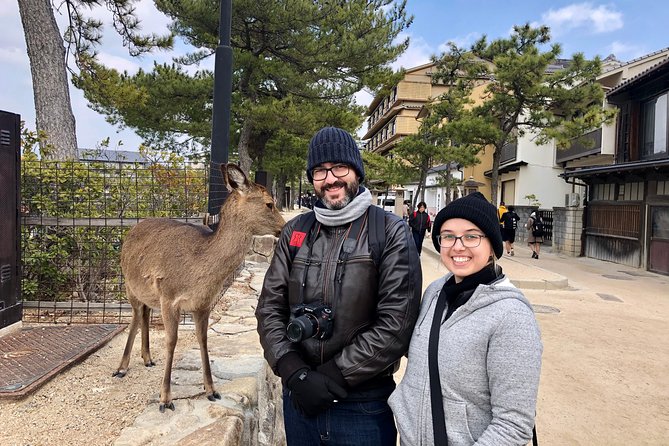
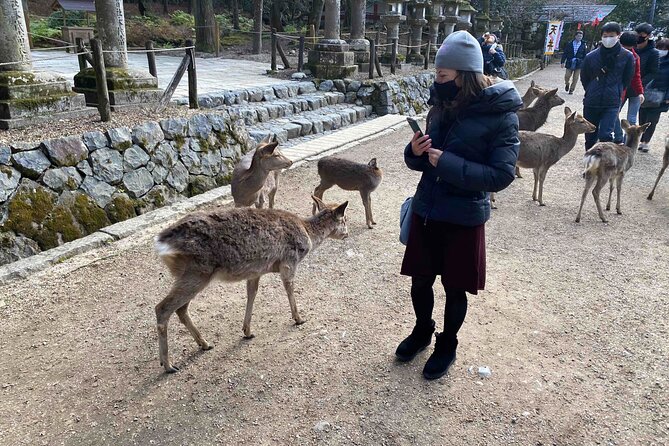
The deer are beautiful, but they are not simply decorations. One practical note from the tour experience is that they can be assertive, so keep a watchful eye, especially if you are with children. You may see people feeding them, but give yourself room to move and follow your guide’s advice.
A 30-minute park stop may be enough to enjoy the setting, but it is not a full visit to every landmark within it. Treat the park as a setting that connects several sights, not as a single attraction you can exhaust in half an hour.
Kasuga Taisha: a shrine with a long local role
Kasuga Taisha is Nara’s best-known Shinto shrine. Founded around the time the city became the capital, it is dedicated to a deity associated with the city’s protection. Its history offers a useful contrast with the Buddhist temples nearby.
The shrine is listed as a 30-minute stop with no admission fee. If you are curious about how Shinto and Buddhism developed alongside one another, this is a good place to ask questions. A guide can help make the distinction clear without reducing either tradition to a quick checklist of customs.
More private and custom tours in Nara:
- Kyoto/Osaka: Kyoto and Nara Customized Private Guided Tour
★ 4.6 · 258 reviews - Nara 8hr Private Tour – Kyoto DEP. with Licensed Guide
★ 5.0 · 115 reviews - Private Tour Kyoto-Nara w/Hotel Pick Up & Drop off from Kyoto
★ 4.5 · 77 reviews - Nara: Private Tour with Private Guide
★ 4.8 · 66 reviews
Wakakusa Hill: views for willing walkers
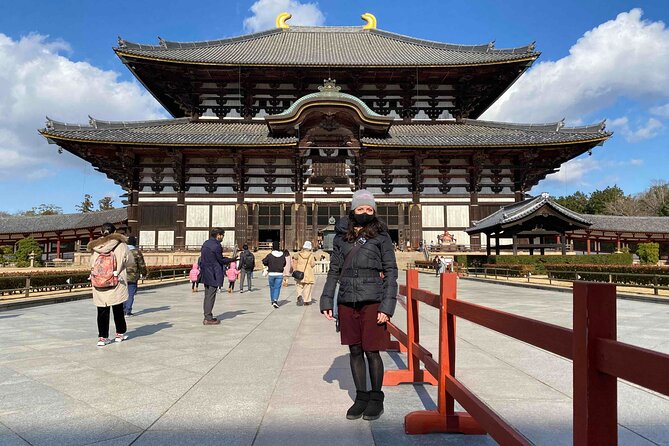
Mount Wakakusa rises behind Nara Park, between Todaiji and Kasuga Shrine. At about 350 meters, it offers open views over Nara, but the climb makes it a different sort of stop from a temple visit.
The listed stop is 30 minutes, and admission is not included. That time may not cover every visitor’s preferred pace on the hill, so discuss the climb with your guide before choosing it. Several people describe a lot of walking on this tour, and one specifically advises preparing for stairs and uphill effort. If a view is high on your list, bring comfortable walking shoes and be realistic about your energy.
Horyuji: an older chapter of Japanese Buddhism
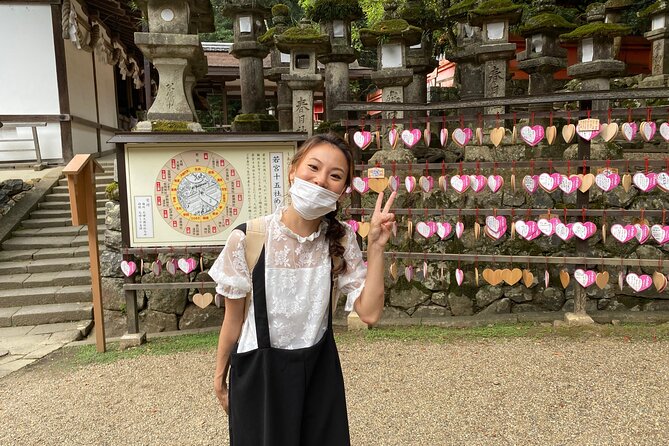
Horyuji was founded in 607 by Prince Shotoku, who helped promote Buddhism in Japan. It is known for its early temple buildings, including structures regarded as among the world’s oldest surviving wooden buildings.
This is a compelling choice for history enthusiasts, but it is not one to pick casually without checking the route. The tour includes no private vehicle, and the cost of transportation is not included. A guide can help plan a route, but you should confirm what travel time and expenses would mean for your six-hour day.
Naramachi and Kofukuji: everyday history beside a landmark
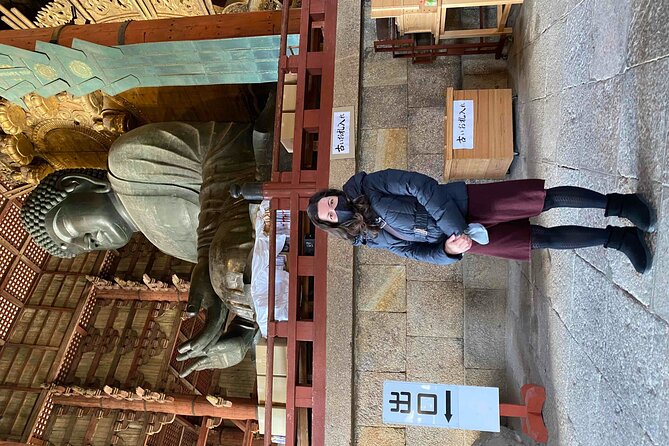
Naramachi is Nara’s former merchant district, where traditional homes and storehouses remain among shops, cafes, and boutiques. It gives the day a different texture from temple grounds: you can see how people lived and worked in the old city.
Admission is free, and the stop is listed at 30 minutes. The area may appeal if you like architecture, local streets, and a pause from major religious sites. Kofukuji, meanwhile, was the family temple of the powerful Fujiwara clan and was founded in Nara around the time the capital was established. Its admission is extra, and a 30-minute visit lets you add another important temple without devoting the whole day to one site.
Yakushiji, Shin-Yakushiji, and Toshodaiji
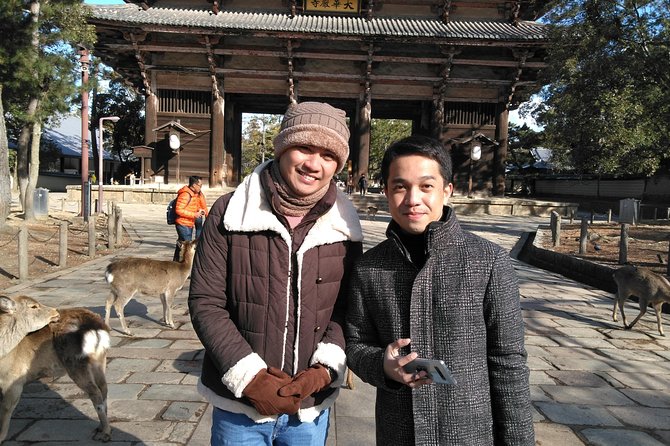
Yakushiji was built in the late seventh century by Emperor Tenmu, who prayed for his sick wife’s recovery. Its symmetrical layout is a point of interest, and the temple adds a different architectural story to a Nara itinerary.
Shin-Yakushiji, also founded during the Nara Period, is devoted to Yakushi Buddha, associated with medicine. Toshodaiji was founded in 759 by the Chinese priest Ganjin, who came to Japan to train priests and strengthen Buddhist practice. Each gives you a distinct angle on the spread and development of Buddhism.
These temples are listed as short stops, ranging from 15 to 30 minutes, and admission is extra. Since not all sites are close together, ask the guide which combination makes practical sense. Choosing several temples can be rewarding, but a day spent racing between them is less satisfying than a smaller selection with time to look and talk.
Isuien and Yoshikien: space to slow down
Isuien Garden uses borrowed scenery, including Todaiji’s Nandaimon Gate and Mount Wakakusa, to make the surroundings part of the garden’s design. It is a strong choice if you want quiet and careful looking alongside the grand temples.
Yoshikien, named for the nearby Yoshikigawa River, occupies the site of a former Kofukuji priest’s residence. Both gardens are listed as 15-minute stops, and admission is extra. Those short times are worth discussing if gardens are a priority. One guide’s account of a guest listening quietly to the stream at Isuien captures what a garden stop can offer: a chance to pause rather than collect another landmark.
Museums and the old capital site
The Nara National Museum, established in 1889, focuses mainly on Japanese Buddhist art. It sits in Nara Park, so it can pair naturally with nearby temple visits. Admission is extra, and a 30-minute stop is brief for anyone who wants a thorough museum visit.
Heijo Palace Site Historical Park marks the location of the palace at Heijo-kyo, Nara’s capital during much of the period from 710 to 794. The palace grounds once covered about a kilometer by a kilometer. The listed stop is only 15 minutes, so think of it as a quick introduction unless your guide agrees that more time fits the day.
What the guide adds, and what to clarify
The strongest reason to book is the guide’s interpretation. Guides named in past tours include Junichi, Ken, Rie, Toshi, Hiro, and Haru. Accounts of their guiding describe clear English, thoughtful explanations, and an ability to adapt to interests ranging from Japanese history to gardens, food, and the relationship between Shinto and Buddhism. Your assigned guide may differ, so do not assume you can book a particular person unless the provider confirms it.
Some guides have also helped with practical details, such as directions to Nara, planning a route, and finding places for lunch. A few have added interests such as sake tasting, a historic merchant house, mochi, or a sword collection. These extras are not guaranteed parts of the tour, so treat them as possibilities to raise in advance, not promises.
Before the day, tell the guide what matters most. If you want extensive explanations at each site, say so. If you would rather see more places at a brisker pace, make that clear too. One negative experience involved feeling rushed, unexpected stops, and a long walk that was not anticipated. That does not cancel out the strong record of positive experiences, but it does show why a shared plan and candid talk about walking matter.
What six hours and $155.86 buy you
At $155.86 per person, the cost buys a private six-hour guide, not a packaged day with transport, lunch, and entry tickets. That distinction matters when you compare it with a group tour or an independent visit. If you mainly want to see a famous temple and stroll through the park, you can explore on your own for less. If you want a local guide to connect the sites and answer your questions, the added cost may be worthwhile.
Your final spend will depend on which sites you choose, the admission fees, and whether transport is needed. Meals and personal expenses are also extra. For a group, the private format can be especially appealing because the guide’s attention is not split with unrelated participants, but the listed price is per person, and group discounts are offered. Confirm the total for your party before booking.
The tour is best suited to curious visitors who want cultural context, can walk for several hours, and value a flexible route. Families and mixed-interest groups may benefit from being able to shape the day, though children should be prepared for the walking and the lively deer. History enthusiasts have plenty to ask about, but the range of possible sites means you will need to choose rather than try to see everything.
Should you book this Nara tour?
Book it if you want a guide to help turn Nara’s temples, shrine, deer, and old streets into a connected story. The private format and choice of three or four stops offer real value when you want a day shaped around your interests, particularly if Japanese history and religion are more than a passing curiosity.
Skip it if you prefer to wander independently, want a vehicle included, or dislike walking. Before you commit, agree on your priority stops, pace, expected walking, and any transport needs. That short conversation can make the difference between a day that feels personal and one that feels hurried.
FAQ
How long is the tour?
The tour lasts approximately six hours.
Is this a private tour?
Yes. Only your group participates, and the tour does not combine multiple groups.
Where do I meet the guide?
You meet the guide on foot within a designated area of Nara, with Nara Station named as the meeting point.
How many sites can I choose?
You can customize the tour by selecting three or four sites from the prepared list of Nara highlights.
Is transportation included?
No. Transportation fees and a private vehicle are not included. This is a walking tour, with pickup on foot.
Are entrance fees included?
No. Entrance fees are at your own expense. The guide’s entry fees are covered only for sights listed under the tour’s What to Expect section.
Are meals included?
No. Lunch and other meals are not included.
What languages does the guide speak?
The included guide is a licensed local English-speaking guide.
Can I cancel for a refund?
You can cancel for a full refund if you do so at least 24 hours before the experience starts. Changes or cancellations made less than 24 hours before the start time are not accepted for a refund.
Newly added in Nara
- Nara Private Day Trip – Enjoy Your First-Time Visit to Nara!★ 5.0 · 10 reviews
- Relax in Nara: Deer Park, Todai-ji Temple and Merchants’ Town★ 5.0 · 6 reviews
- Nara Todaiji Lazy Bird Walking Tour★ 5.0 · 11 reviews
- Nara: Authentic Onigiri Cooking Class & Meal in a Local Home★ 5.0 · 4 reviews
- Private Nara Tour and Sake Tasting (Departing from Kyoto/Nara)★ 5.0 · 40 reviews
- Nara World Heritage PRIVATE TOUR★ 4.5 · 15 reviews
- Private Journey in Nara’s Historical Wonder★ 5.0 · 3 reviews
- Nara Private Tour: Flexible Pickup from Kyoto, Osaka, or Nara★ 5.0 · 17 reviews
Kyoto Private Tours, compared.
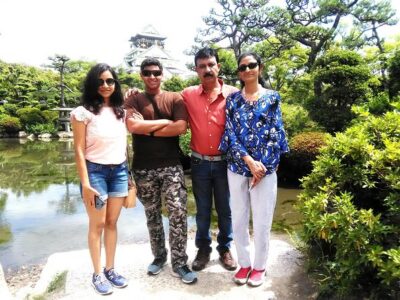
Kyoto 6hr Private Tour with Government-Licensed Guide
Read our review →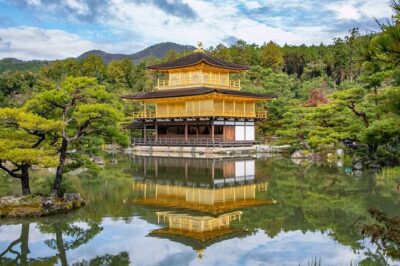
10 Must-see Spots in Kyoto One Day Private Tour (up to 7 people)
Read our review →
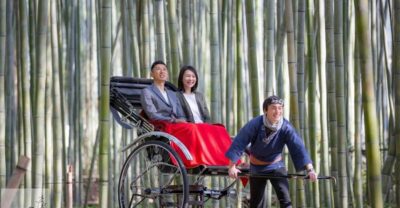
Arashiyama Customized Rickshaw Tour & Bamboo Forest
Read our review →
Private Kyoto Tour with Licensed Guide & Vehicle (Max 15 persons)
Read our review →
Private Customized Walking Tour with a Local Insider
Read our review →
Kyoto Customized Private Tour: See Top Attractions in 1 Day
Read our review →
Browse the lists this tour appears in